Designing black and white wedding centerpieces provides an enduring visual foundation that anchors reception tables with clean geometric contrast, refined symmetry, and understated elegance. The juxtaposition of deep…
Designing black and white wedding centerpieces provides an enduring visual foundation that anchors reception tables with clean geometric contrast, refined symmetry, and understated elegance. The juxtaposition of deep black and crisp white transcends seasonal fads, adapting seamlessly to minimalist industrial venues, opulent historic ballrooms, and contemporary open-air pavilions. However, executing a dual-toned scheme requires precise balancing of visual weights to prevent dark elements from overwhelming tables or white florals from appearing flat under venue lighting. This comprehensive guide examines ten distinct centerpiece concepts that integrate monochrome ceramics, metallic structures, architectural glassware, and lush botanical textures. Readers will discover the foundational mechanics of floral hydration engineering, tonal ratio management, candlelight elevation, and textural contrast layering. Applying these structural principles enables planners and hosts to transform ordinary tables into curated visual statements that photograph with crisp definition. By combining sculptural black vessels, ivory garden roses, textured taper candles, and modern geometric risers, you can establish an elevated banquet aesthetic. These ideas streamline event planning, providing practical, repeatable design frameworks that guarantee timeless sophistication for any wedding celebration.
Why This Idea Is Trending or Useful
Monochromatic black and white tablescapes continue to dominate modern Pinterest inspiration boards because they bridge contemporary minimalism and classic formal hospitality. Current reception trends prioritize intentional, high-contrast focal points over complex, multi-hued color schemes that risk clashing with venue architecture or bridal party palettes. Adopting a black and white theme delivers immediate practical value by simplifying sourcing logistics across table linens, stoneware, and floral arrangements. The clear visual boundaries make this design framework beginner friendly, allowing couples to assemble professional-grade tablescapes without extensive prior floral training. The DIY appeal remains exceptionally high; simple modifications—such as spraying glass vessels matte black or grouping white single-variety stems—produce dramatic results on accessible budgets. The minimalist style inherent in high-contrast styling prevents tabletop clutter, leaving ample space for functional dinnerware, glassware, and comfortable guest interaction. Furthermore, black accents ground bright reception spaces, adding rich depth that accentuates delicate petals and candle flames alike. This reliable aesthetic offers endless inspiration for designing sophisticated, cohesive table settings that look stunning in both daylight and evening settings.
Materials and Preparation
Crafting stable black and white centerpieces requires sourcing durable structural hardware, moisture-resistant floral foam, and specialized styling accessories designed for banquet environments. Essential materials include matte black ceramic compote bowls, fluted clear glass cylinders, white garden roses, black calla lilies, Italian anemones with dark centers, drip-free wax taper candles, floral preservative, and black waterproof binding tape. Crucial assembly tools encompass heavy-duty wire cutters, carbon-steel floral shears, stem-stripping tools, adhesive florist putty, and micro-fiber polishing cloths to remove smudges from glossy surfaces. Preparation begins with deep hydration conditioning: trim two inches off flower stems at a forty-five-degree angle underwater and place them in cool, preservative-treated water buckets for four to six hours prior to arrangement. Ensure all glass and ceramic vessels are scrubbed, disinfected, and thoroughly dried before assembly to eliminate bacterial growth that wilts delicate white blossoms prematurely. Planning considerations involve evaluating table dimensions, banquet seating configurations, and ambient venue lighting levels to ensure centerpieces do not obstruct guest sightlines. Calculating stem counts and vessel heights beforehand guarantees structural balance across every table setting.
Sophisticated Black and White Tabletop Concepts
Idea 1: Sculptural White Calla Lilies in Fluted Matte Black Pedestals
Step-by-Step Guide
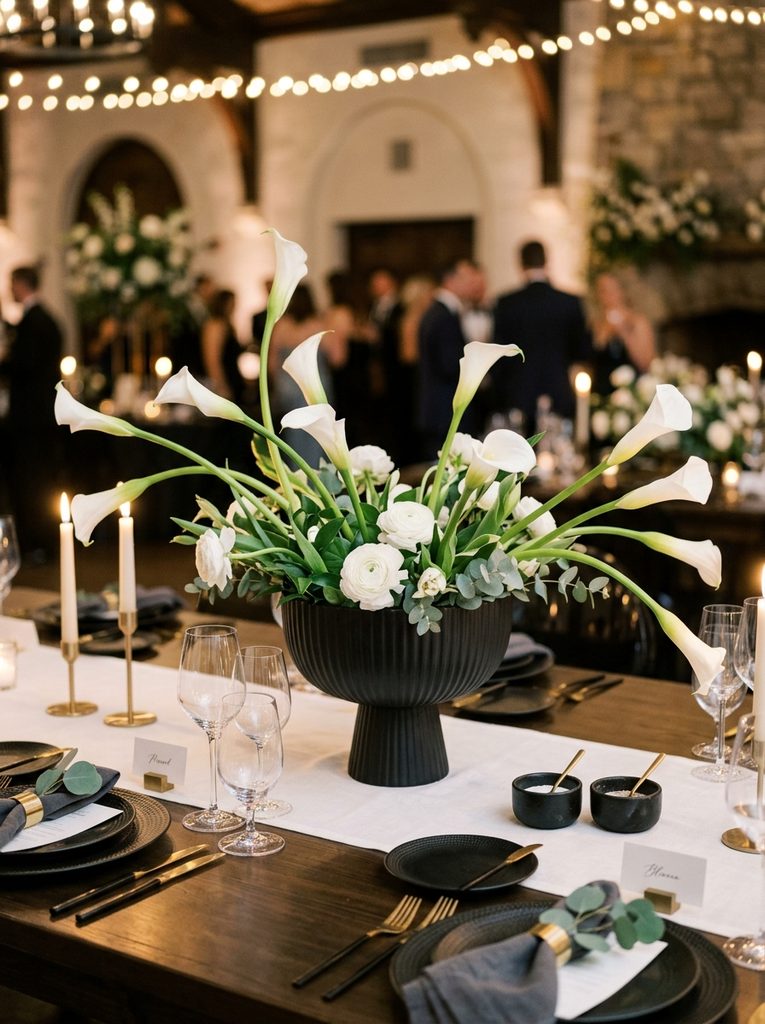
The sculptural white calla lily arrangement set inside a fluted matte black pedestal bowl delivers an architectural silhouette that emphasizes clean linear form and dramatic negative space. White calla lilies possess thick, fleshy stems that curve gracefully, providing natural movement that softens the rigid lines of ceramic pedestal vessels. The deep charcoal or black finish of the container absorbs ambient lighting, creating a grounding visual base that allows the stark ivory blooms to project outward with crisp definition. This arrangement functions exceptionally well in contemporary warehouse venues or mid-century ballrooms, where strong graphic statements take precedence over dense, bushy foliage. The deliberate absence of filler greenery highlights the pure form of each stem, capturing an intentional modern design aesthetic that looks striking on rectangular banquet tables.
To assemble this centerpiece, secure a saturated brick of black floral foam inside a matte black ceramic pedestal bowl using waterproof anchor tape applied in an X-pattern across the rim. Strip all lower leaves and foliage nodes from twelve to fifteen long-stemmed white calla lilies using floral shears. Insert five stems vertically into the center of the foam to establish maximum height, keeping them approximately eighteen inches above the bowl rim. Position the remaining stems around the perimeter at staggered forty-five-degree angles, gently bending the upper shafts with warm hands to coax them into an outward, weeping contour. Insert small clusters of white ranunculus at the base of the foam to cover the mechanics and conceal the tape lines entirely. Place the completed pedestal bowl atop a crisp white linen runner, flanked by black ceramic salt cellars to complete the look.
Idea 2: Floating Monochromatic Candles in Alternating Black and Clear Cylinders
How to Create
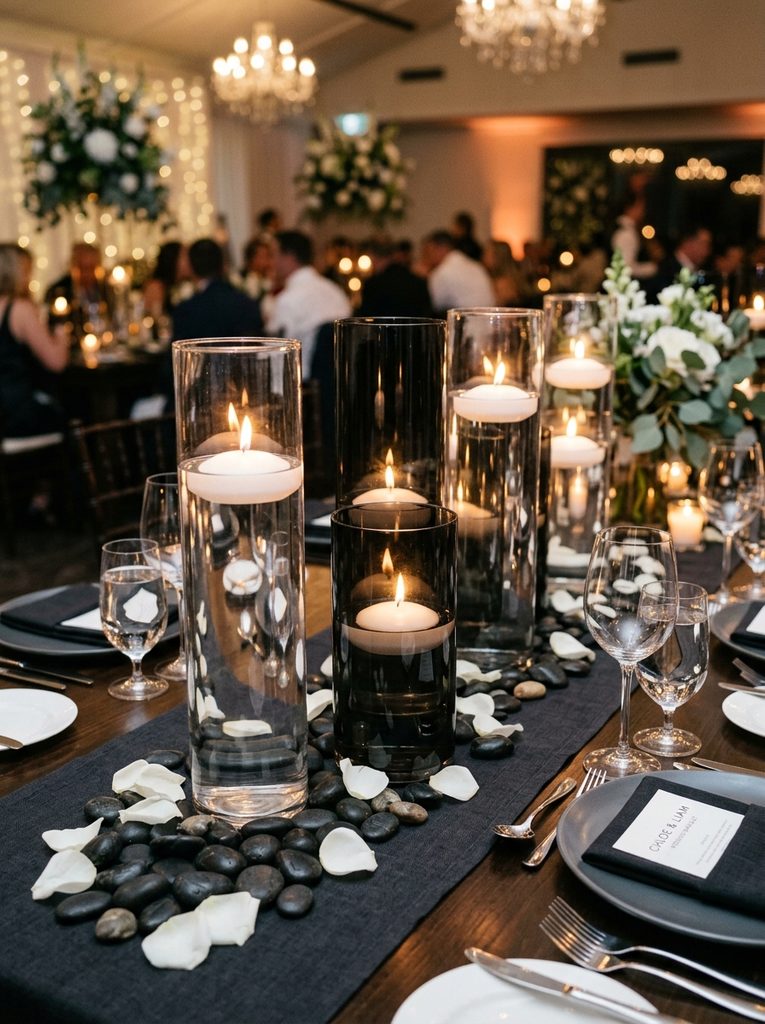
The floating monochromatic candle array utilizes alternating clear and tinted black glass cylinder vases to create layered, luminous reflections along banquet tables. Varying heights of transparent glass and translucent smoke-black containers produce a dynamic optical display that amplifies candle glow without obstructing cross-table conversation. The clean water surface mirrors the burning wick, while the stark contrast between pure white floating wax discs and deep obsidian glassware introduces modern luxury. This layout provides high practical value for long communal tables, as the modular grouping can be stretched or condensed to suit varying table lengths. The clean simplicity of floating water elements keeps the atmosphere relaxed yet deeply sophisticated, making it a reliable choice for evening receptions.
Begin by arranging sets of three cylinder vases—measuring six, nine, and twelve inches in height—in an alternating cadence along the center axis of each table. Select heavy-base clear glass cylinders paired with smoky obsidian or matte black wrapped glass sleeves. Fill each cylinder with room-temperature distilled water, stopping exactly two inches below the rim to prevent accidental spillages during guest seating. Gently lower a three-inch wide, disc-shaped white floating candle onto the water surface of each vase, using a dry cloth to prevent water droplets from dampening the cotton wick. Surround the base of the cylinders with a delicate perimeter of black satin river pebbles and scattered white rose petals to anchor the glassware visually. Light the wicks fifteen minutes before reception doors open to establish an ambient, flickering glow.
Idea 3: White Italian Anemone Clustered Trio in Ribbed Obsidian Bud Vases
Execution Process
The clustered trio of white Italian anemones displayed in ribbed obsidian bud vases offers an effortless, high-contrast focal point that highlights delicate botanical anatomy. Italian anemones naturally feature paper-thin, pure ivory petals surrounding a prominent, velvet-black central button, making them an ideal organic component for a monochromatic palette. By separating stems into three individual ribbed black ceramic or glass bud vases of slightly varying heights, the arrangement creates visual interest through grouping rather than sheer volume. This minimalist style reduces floral consumption while maximizing individual flower impact, providing a budget-conscious yet upscale option that suits circular dining tables and intimate cocktail high-tops alike.
Start by preparing three ribbed black bud vases measuring four, six, and eight inches tall, ensuring the interior cavities are sanitized and filled with fresh floral nutrient water. Trim six white Italian anemone stems to lengths that allow their blossoms to sit between two and four inches above each vase mouth. Place one to two stems per vessel, adjusting angles so the prominent dark centers face slightly upward and outward toward surrounding seating positions. Add a single sprig of black preserved bunny tails or delicate nigella seed pods to each vase to introduce tactile variety alongside the smooth anemone petals. Arrange the three vessels in a tight, asymmetrical triangular cluster on a circular black slate charger placed at the center of the table, ensuring the arrangement remains entirely below eye level.
Idea 4: Overhead Black Metal Hanger with Suspended White Wisteria and Hydrangeas
Setup Method
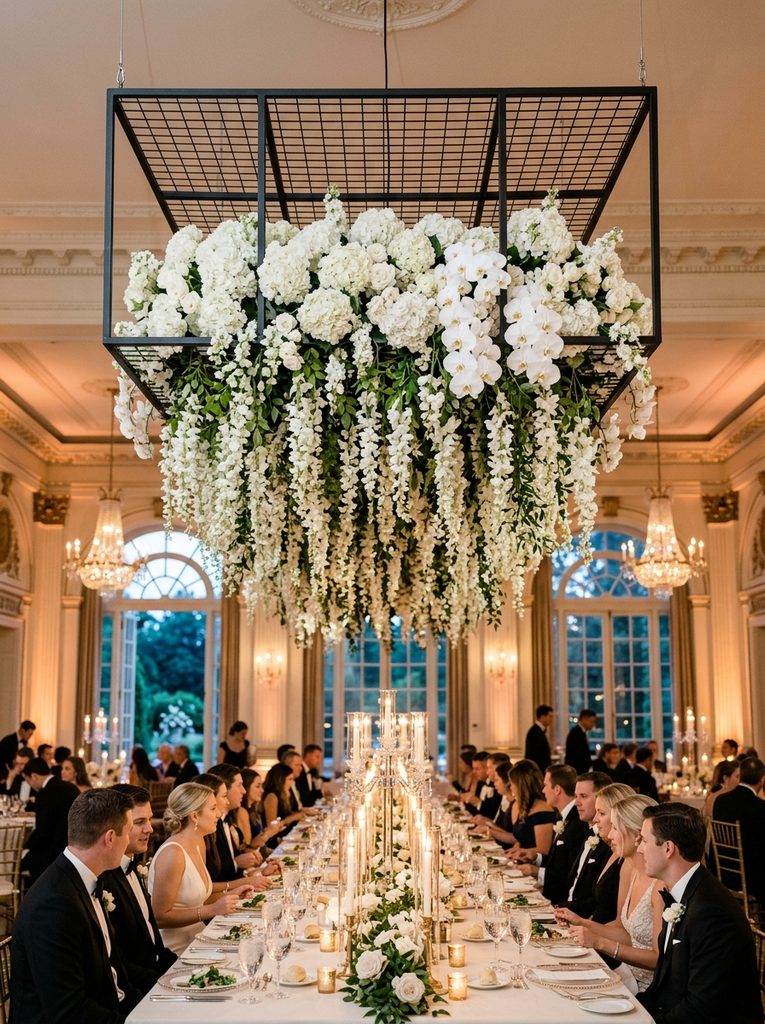
The overhead black metal hanging armature suspended above reception tables elevates the monochromatic design into three-dimensional space, drawing eyes toward the ceiling. A rigid rectangular steel framework finished in satin black provides structural anchoring for dense, downward-trailing cascades of white wisteria, dendrobium orchids, and fluffy white hydrangeas. Suspending florals above the tables leaves the dining surface entirely open for tableware, wine buckets, and place settings, eliminating clutter while creating an immersive floral canopy. The dark framework establishes bold geometric boundaries that contrast sharply against bright ceiling drapery or exposed industrial trusses, giving the venue an upscale, customized architectural atmosphere.
To construct this suspended installation, mount a lightweight four-foot black metal rectangular utility grid horizontally to secure ceiling load points using certified aircraft cable and locking carabiners. Soak four commercial floral cages containing floral foam in water until fully saturated, and attach them securely to the interior metal frame using heavy-duty black zip ties. Insert dense, sturdy white hydrangea blooms into the base of the foam to conceal the mechanics completely. Push the wired stems of faux or fresh white wisteria and trailing white orchids upward into the undersides of the foam blocks, letting the weeping blossoms hang twelve to twenty-four inches below the metal grid. Keep the dining tabletop beneath simple, using low black stoneware taper holders and white linen napkins to balance the overhead volume.
Idea 5: Layered Black Taper Candles on Mirrored Runners with White Orchids
How to Make
The layered black taper candle display on mirrored runners accented with white phalaenopsis orchids blends high-gloss reflection with moody, dramatic illumination. Placing slender black taper candles across a beveled black or silver mirrored table runner doubles the visible light sources, creating dazzling linear reflections that lengthen the perspective of long dining halls. The cascading white phalaenopsis orchid stems introduce organic curving lines that cut across the rigid vertical geometry of the candles, softening the contrast. This styling direction provides exceptional visual value for black-tie evening weddings, where candle flames provide the primary light source to create an intimate, luxurious ambiance for seated dinner service.
Begin by laying a twelve-inch-wide smoked black or silver mirrored glass runner along the center of the banquet table, wiping the surface with glass cleaner to remove all fingerprints. Arrange ten to fourteen matte black cast-iron taper holders down the runner, varying heights between six and twelve inches in a continuous zigzag pattern. Insert drip-free black paraffin wax taper candles into the holders, using adhesive candle snuggers at the bases to keep them perfectly plumb. Lay two long-stemmed white phalaenopsis orchid sprays directly onto the mirrored surface, weaving the flowering stems between the iron bases so the white blooms curve naturally around the candle shafts. Add water tubes to the cut ends of the orchid stems, hiding the clear plastic caps beneath overlapping petals for freshness.
Idea 6: Geometric Black Iron Terrariums Filled with Preserved White Botanicals
Step-by-Step Guide
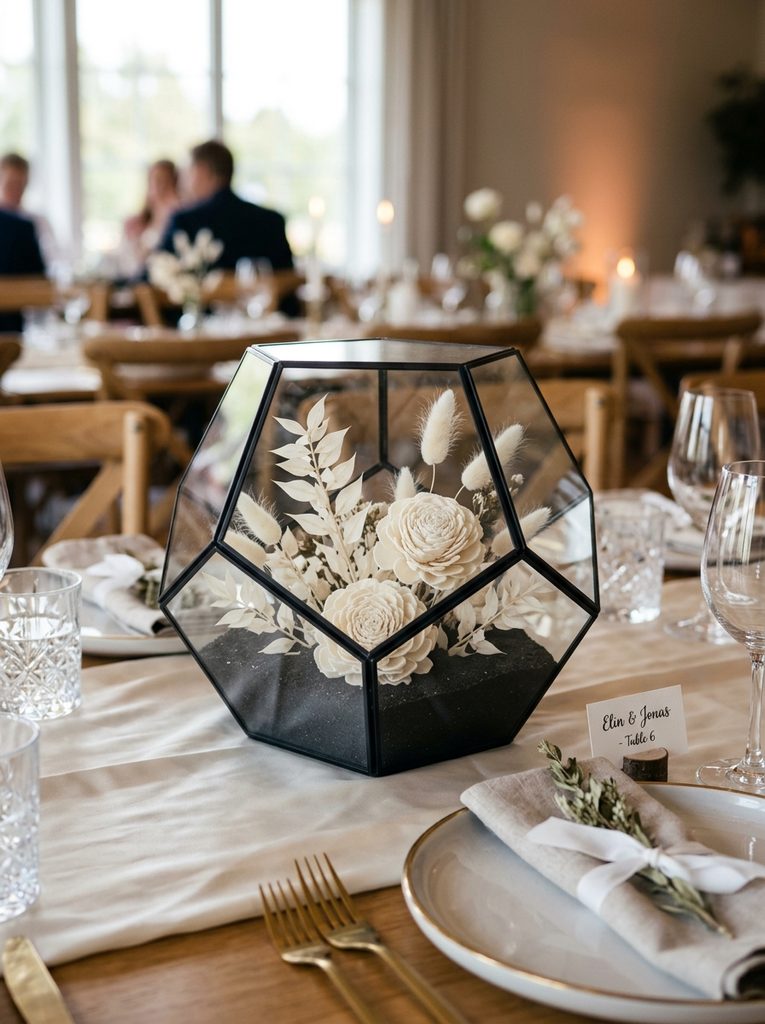
The geometric black iron terrarium centerpiece incorporates faceted metal outlines to frame preserved, sculptural white botanicals in an enduring, weather-proof display. Polyhedral glass-and-iron terrariums offer sharp lines that resonate with urban architectural settings, protecting delicate dried florals from outdoor breezes or air conditioning drafts. Filling the enclosures with textured bleached ruscus, preserved white ferns, cotton pods, and white sola wood roses creates a tactile, everlasting arrangement that requires zero water maintenance during the event. This concept represents an exceptional project for couples wishing to assemble centerpieces weeks in advance, completely eliminating the time-sensitive morning-of assembly pressures common with fresh botanicals.
Acquire faceted geometric terrariums made with black soldered iron frames, ensuring each unit has a functional hinged access door. Line the interior base of each terrarium with a thin, uniform layer of crushed black volcanic basalt stone or black glass sand to a depth of one inch. Cut pieces of dried floral foam to fit snugly within the sand, keeping the foam height below the outer lower frame edge. Insert dried bleached ruscus stems and white preserved bunny tails into the rear of the foam to establish an airy vertical background. Anchor three textured white sola wood flowers and two natural dried cotton pods into the center, trimming stems short to keep the arrangement contained entirely within the geometric glass walls. Close the latch securely and place the terrarium atop an ivory raw-silk table overlay.
Idea 7: Monochromatic Black Urn Overflowing with Ivory Garden Roses and Smilax
Execution Process
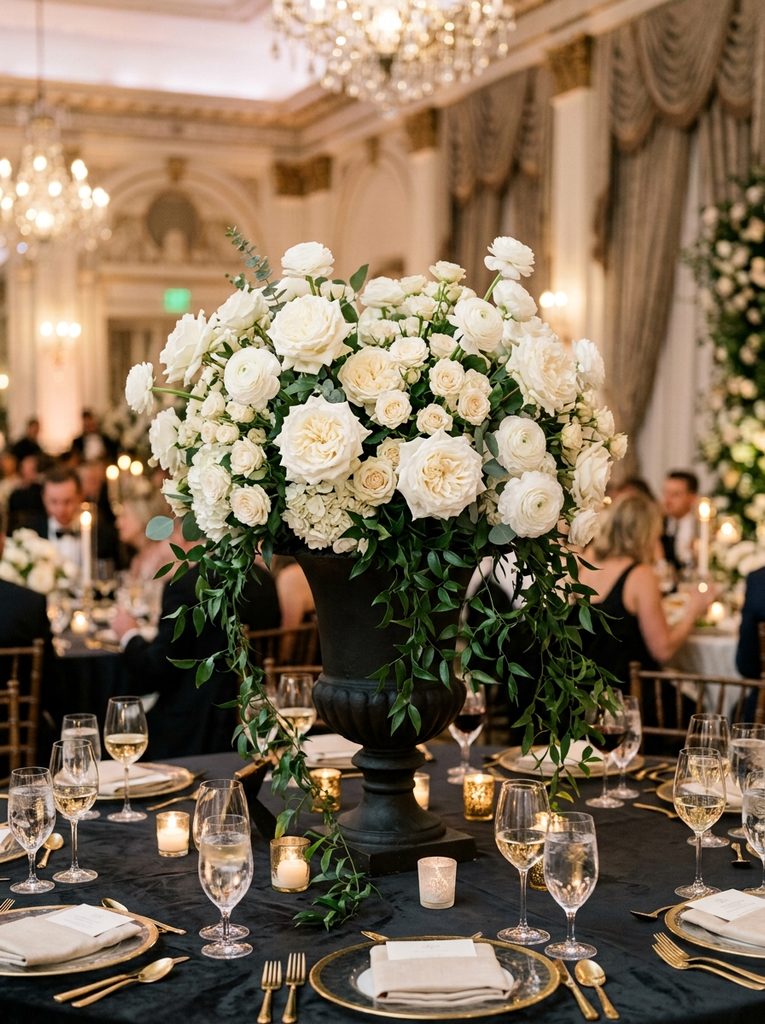
The monochromatic black urn overflowing with ivory garden roses and dark smilax vines updates classic Baroque floral styling for modern celebrations through high-contrast coloration. A flared, antique-style cast stone or metal urn painted in a smooth matte black finish provides a formal visual anchor with timeless proportions. The interior arrangement bursts with voluminous, multi-petaled ivory garden roses, ruffled white carnations, and snowy ranunculus, creating a dense cloud of white blooms that spills generously over the dark rim. Weaving dark, glossy smilax or tinted black Italian ruscus through the florals introduces deep contrast within the botanical cluster itself, producing a luxurious, abundant centerpiece that commands attention.
Position a wide-mouthed black urn in the center of your work surface and place an eight-inch plastic floral bowl containing saturated water-absorbing foam inside the reservoir. Secure the bowl to the urn using waterproof green floral tape wrapped twice around the perimeter. Form an outer foliage collar by inserting dark, glossy ruscus and trailing smilax vines into the lower foam perimeter, angling stems downward so the leaves drape over the dark urn lips. Insert twenty to twenty-five large ivory garden roses into the top and center of the foam, cutting stems at varied lengths between six and ten inches to build a rounded, domed canopy. Intersperse smaller white spray roses and white snapdragons into open pockets, ensuring all foam mechanics are entirely concealed by dense floral layers.
Idea 8: Black Marble Tile Pedestals with Clustered White Pillar Candles
How to Make
The black marble tile pedestal centerpiece uses heavy, veined stone bases to elevate grouped white pillar candles into an architectural, low-profile focal point. Solid black Nero Marquina marble tiles feature delicate, organic white calcite veins running through an inky field, naturally mirroring the event’s dual-toned palette within the table surface. Grouping smooth, flat-topped white paraffin or beeswax pillar candles of staggered heights atop the polished stone creates a dense cluster of light that reflects off the marble face. This layout is practical for gusty outdoor tents or venues with strict open-flame height limits, providing a grounded centerpiece that cannot easily be knocked over by dining activity.
Acquire twelve-inch square or round polished black marble tiles with beveled edges, applying adhesive felt protective pads to the underside corners to prevent scratching table surfaces. Place one marble pedestal cleanly in the center of each guest table over a charcoal or slate-grey linen tablecloth. Select five white pillar candles measuring three inches in diameter, with heights ranging from three, six, and nine inches. Position the tallest candle slightly off-center on the marble slab, arranging the remaining four candles closely around it to create an organic, tiered grouping. Use small dabs of floral adhesive putty beneath each pillar base to hold the wax firmly against the stone surface. Finish by encircling the base of the marble tile with a tight ring of white hypericum berries.
Idea 9: Tall Matte Black Candelabras with Draped Pearl Strands and White Hydrangeas
Step-by-Step Guide
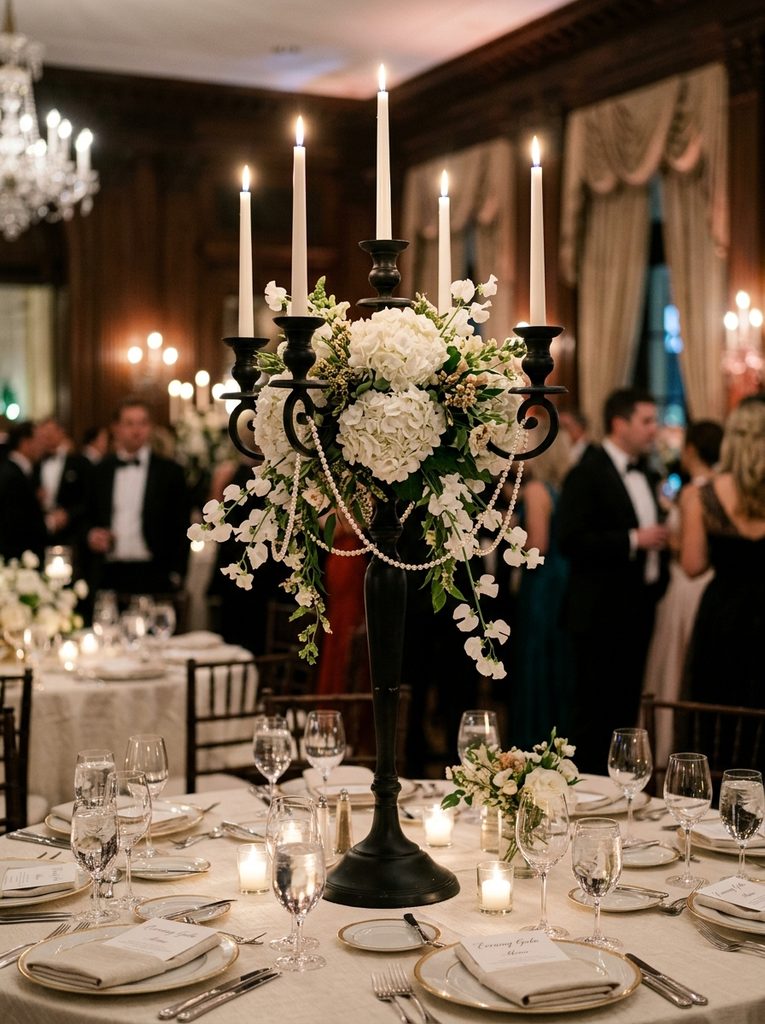
The tall matte black candelabra centerpiece merges vintage European candelabra design with crisp contemporary finishes, elevating floral and candlelight well above guest eye levels. Standing thirty to thirty-six inches high, a multi-arm iron candelabra keeps taper flames elevated, maintaining open sightlines across the table for seamless guest interaction. The matte black powder-coated finish gives the traditional ornate casting a modern, graphic profile. Positioning a sphere of lush white hydrangeas and cascading white sweet peas at the central junction of the arms softens the rigid metal frame, while optional draped ivory pearl garlands add a delicate, vintage-inspired finish.
Select a thirty-two-inch five-arm metal candelabra finished in non-reflective matte black. Fasten a pre-soaked, round plastic floral bowl equipped with a foam ring to the central post just below the candle cups using zip ties. Insert eight large, dense white hydrangea heads around the foam collar, pressing stems firmly inward to create an unbroken, spherical botanical base beneath the candle branches. Insert trailing stems of white sweet pea and white dendrobium orchids around the lower foam tier, allowing them to hang twelve inches down the main support shaft. Seat five twelve-inch drip-resistant white taper candles securely into the upper cups, using candle adhesive to ensure vertical alignment. Drape a single strand of matte ivory craft pearls loosely between the candelabra arms, letting them rest gently across the floral petals.
Idea 10: Charcoal Slate Slabs with Spray Roses and Black Calligraphed Acrylic
Setup Method
The charcoal slate slab centerpiece combines natural raw-edge mineral textures with modern polished acrylic signage for an informative, multi-dimensional table setting. A rough-cut natural black slate slab acts as a textured mat that contrasts cleanly with crisp white tableware. Resting directly on the stone, low glass troughs filled with tight clusters of ivory spray roses and white lisianthus provide vibrant organic freshness. A clear or translucent smoked-black acrylic arch standing upright on the slate displays customized table numbers written in sharp white calligraphy. This dual-purpose installation unifies decorative floral styling with functional event signage, eliminating tabletop clutter while delivering a modern design statement.
Obtain a fourteen-inch natural cleft black slate serving board with unfinished, chiseled edges, cleaning the stone thoroughly with slate oil to enrich its dark charcoal depth. Place a shallow eight-inch rectangular clear glass trough in the center of the slab, placing a pre-soaked strip of floral foam inside. Cut stems of ivory spray roses, white lisianthus, and white freesia down to three inches, inserting them closely into the foam to produce a dense, low floral hedge that completely hides the glass container. Mount an eight-inch arched black-tinted acrylic table number sign into a slotted wooden or brass base, setting it directly behind the floral hedge on the slate. Scatter three miniature white votive cups holding tea lights around the stone perimeter to illuminate the white calligraphy after dark.
Common Beginner Mistakes and How to Avoid Them
The most frequent error when designing black and white wedding centerpieces is misjudging the visual weight ratio, resulting in tablescapes that feel excessively dark and somber. Black absorbs immense amounts of ambient light; utilizing solid black tablecloths paired with oversized dark vessels without sufficient ivory floristry or reflective glassware can make a dining room appear dim and uninviting. To prevent this, adhere to an intentional 70-30 color balance: allocate roughly seventy percent of the visual space to white florals, clear glass, and neutral linens, using black across the remaining thirty percent for structural hardware, candle accents, and vessels. Another critical mistake is placing white flowers directly against pure, high-gloss white linens without a dark charger or runner in between, which causes the intricate texture of pale petals to disappear into the background. Always place a black ceramic charger, slate tile, or dark runner beneath white floral bases to provide visual contrast. Additionally, failing to source true drip-free taper candles often leads to dark, molten wax leaking onto expensive venue linens; always test candle performance in drafty conditions prior to event day.
Practical Tips for Better Results
Achieving professional florist-grade precision with monochromatic centerpieces depends on meticulous stem processing, proper hydration mechanics, and intentional vessel selection. Always use floral preservative packets in water reservoirs, as clean, nutrient-rich water keeps white flower varieties—such as garden roses, ranunculus, and anemones—translucent and pure without developing brown petal edges. When working with pure white flowers, inspect each bloom under bright daylight; remove damaged outer guard petals from roses using clean shears rather than bare fingers to prevent oil transfer that accelerates browning. Incorporate diverse floral textures within the white category—combining ruffled petals, velvety florets, and glossy leaves—to build visual depth that prevents single-color arrangements from looking flat in wedding photography. Use matte finishes on black elements rather than high-gloss coatings whenever possible, as matte surfaces absorb flash photography smoothly without producing distracting white glare spots. Finally, prepare a wedding day emergency kit containing extra floral shears, floral tape, extra pre-cut candle snuggers, and microfiber rags to quickly correct last-minute shifts or smudges before reception doors open to guests.
Styling, Presentation, or Organization Ideas
Organizing your reception tables around a black and white centerpiece requires a unified, cohesive design language that extends across every place setting. Frame your centerpieces by coordinating flatware and tableware: pair matte black stainless steel flatware with crisp white porcelain plates, or choose classic polished silver cutlery set atop black ceramic dinnerware to mirror the dual-toned palette. Use crisp cotton or linen napkins in contrasting shades—such as black napkins folded neatly across white dinner plates—to carry the graphic theme outward from the center of the table. When designing circular tables, ensure centerpieces do not exceed eleven inches in total height or twelve inches in width, preserving clear lines of sight across the diameter so guests can converse easily. On long rectangular banquet tables, establish an alternating rhythm by repeating one focal centerpiece idea every four feet, filling intermediate spaces with low glass votives and minimalist floral bud vases. Coordinating your paper goods—such as printed menus featuring charcoal backgrounds with white serif typography—creates a curated, high-end hospitality environment that feels completely unified.
Budget or Time Planning
Executing cohesive black and white centerpieces does not require an extravagant floral budget; intentional material selection and structured assembly schedules maximize financial and labor resources. To manage expenses, select high-impact, volume-building white flowers like hydrangeas, carnations, and spray roses as primary structural fillers, reserving premium varieties like white calla lilies and imported garden roses for focal placements. Purchasing multi-packs of black glass cylinder vases, slate tiles, and iron taper holders in bulk online typically saves forty to sixty percent compared to renting hardware from specialty rental companies. Establish a strict production timeline across wedding week: clean all glassware and assemble dried structural bases three days prior, hydrate all fresh white stems two days prior, and complete fresh floral assembly twenty-four hours before the event. Store completed fresh arrangements in a dark, cool space held between thirty-six and forty degrees Fahrenheit to preserve peak petal crispness. Planning transport logistics with sturdy plastic crates divided by cardboard cells prevents vessel collisions during venue transit, saving valuable setup hours on the morning of the event.
Creative Expansion and Advanced Inspiration
Once you have mastered foundational black and white centerpiece formulas, you can explore advanced stylistic variations that incorporate subtle metallic accents and contemporary architectural materials. Introduce fine metallic accents—such as brushed brass taper holders, gold-rimmed glassware, or antique pewter chargers—to add luxurious warmth without diluting the primary monochromatic contrast. You can also experiment with contemporary lighting technologies, such as installing discreet, warm-white LED uplights directly inside translucent black glass vessels to cast striking uplight shadows through white floral canopies. For avant-garde themes, explore graphic floral treatments by selectively airbrushing the outer edges of white monstera foliage with floral-safe matte black pigment, creating customized, multi-tonal botanicals that bridge the palette directly. You can also construct floating, illuminated tablescapes by placing black acrylic light boxes down the table center, topped with frosted glass panels that softly diffuse light beneath sculptural white orchid sprays. These creative expansions allow you to customize the black and white theme, keeping your reception decor dynamic, memorable, and aligned with your personal design vision.