Crystal decor serves as one of the most luminous and sophisticated foundations for modern wedding reception styling, transforming dining halls through optical refraction and light dispersion. Event planners and couples turn to cut crystal vessels, hanging prisms, multifaceted pedestals, and geode elements to construct an upscale atmosphere across every guest table. This comprehensive tutorial details ten unique crystal wedding centerpiece concepts, blending geometric balance, mechanical stability, and timeless event elegance. Readers will learn how to balance tabletop scale, construct steady floral mechanics, position ambient light sources to maximize sparkle, and source budget-friendly glassware. Mastering these structured techniques enables event decorators, florists, and couples to elevate plain crystal tableware into breathtaking focal displays that illuminate evening receptions. A thoughtful lighting and crystal scheme does far more than fill empty linen space; it directs the visual energy of the room, frames wedding photography with radiant warmth, and establishes a celebratory dining environment. By understanding proper weight distribution, glass cleaning protocols, and stem-anchoring methods, you can craft captivating tablescapes that remain securely positioned and brilliantly lit throughout the entire wedding celebration.
Why This Idea Is Trending or Useful
Crystal-centric wedding tablescapes continue to gain popularity across modern Pinterest inspiration boards due to their versatile light manipulation, clean elegance, and remarkable visual depth. Standard floral arrangements often require high stem volumes to achieve visual mass, which quickly escalates event expenses. In contrast, crystal elements provide immediate architectural presence, reflecting both natural daylight and warm evening candlelight to double the perceived illumination in the room. The clean aesthetic of multifaceted glass complements an expansive spectrum of wedding aesthetics, ranging from classic ballroom luxury to minimalist style modernism and bohemian geode concepts. Furthermore, assembling crystal centerpieces is an accessible creative project for dedicated planners, as non-perishable glassware, candelabras, and raw mineral stones can be arranged and tested well before the wedding day. The practical value of crystal lies in its reusability; crystal compotes, cut-glass goblets, and quartz clusters easily transition from the banquet hall into permanent home decor. Modern couples appreciate this functional longevity, combining durable crystal materials with thoughtful botanical accents to craft an unforgettable reception design.
Materials and Preparation
Executing a secure and visually balanced crystal wedding display requires disciplined materials sourcing, systematic glass preparation, and sturdy base mechanics. Primary materials include cut-crystal bowls, fluted glass vases, multifaceted glass prisms, raw quartz crystal clusters, mirrored display bases, and professional-grade waterproof adhesive putty. Essential floral and lighting tools consist of lead-free floral frogs, clear waterproof floristry tape, stem clippers, long-reach gas lighters, micro-fiber polishing cloths, and specialized glass cleaners free of ammonia. Preparation begins by confirming venue guidelines regarding open flames and table weight capacities, especially when using heavy crystal candelabras or water-filled compotes. Measure reception tables to ensure crystal structures leave adequate clearance for dinnerware, wine service, and cross-table sightlines. Polish every glass prism and bowl thoroughly with a mixture of warm water and distilled white vinegar to eliminate cloudiness, grease, and fingerprints. Organize all delicate glassware into padded, cell-divided plastic crates, keeping them protected during transit and ready for rapid installation on the wedding morning.
1. Cascading Prismatic Crystal Candelabra
Step-by-Step Guide
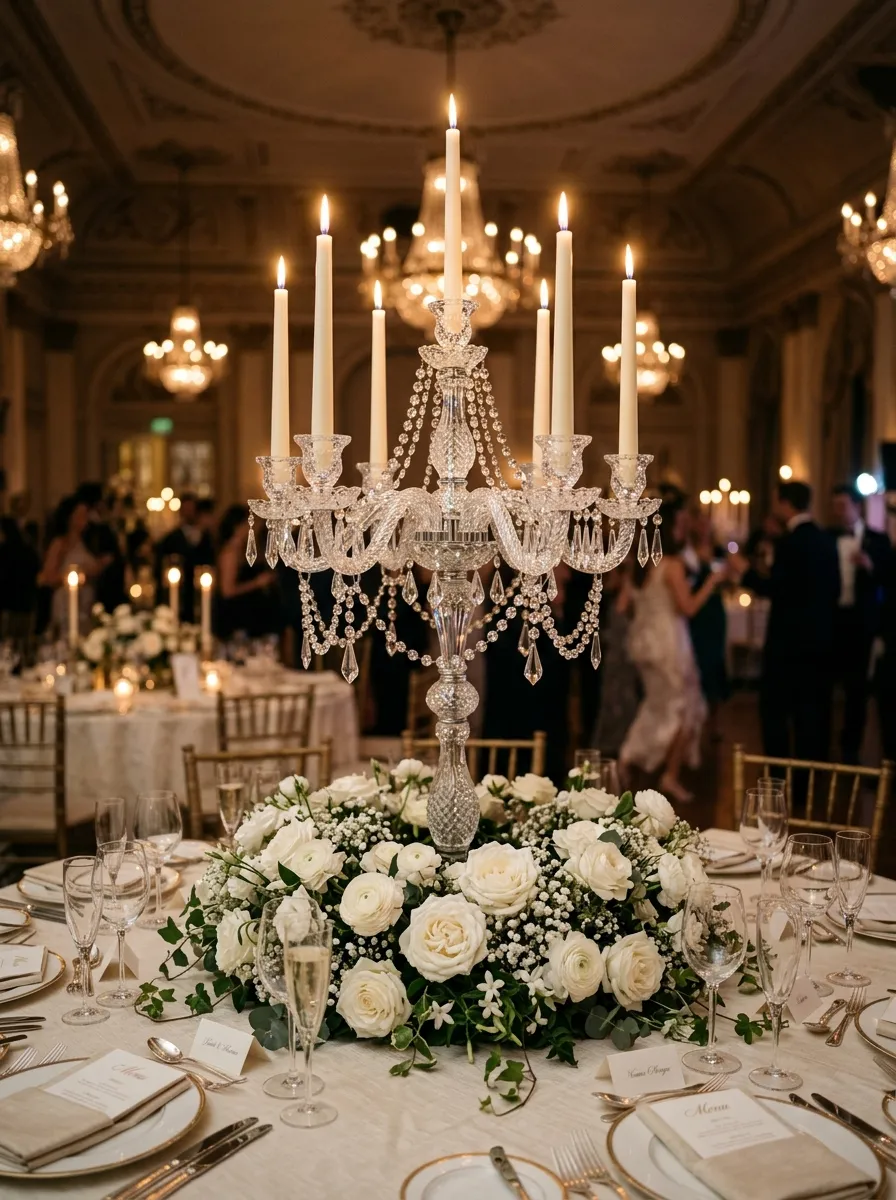
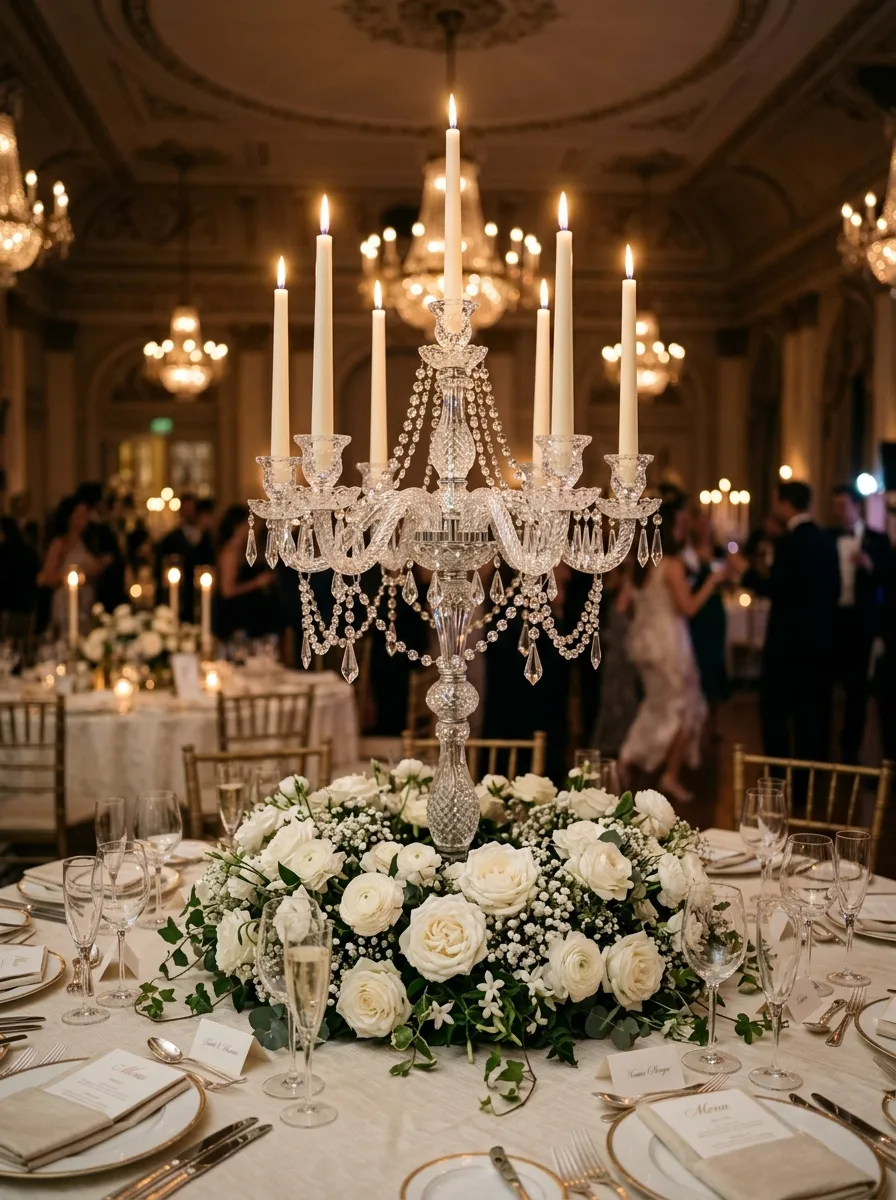
The cascading prismatic crystal candelabra combines traditional aristocratic grandeur with dynamic vertical refraction, serving as a commanding centerpiece for spacious ballroom venues. This design features a tall crystal candelabra base equipped with multiple curved glass arms, draped with multifaceted crystal bead swags and teardrop prisms that catch overhead chandeliers. Long, slender taper candles in warm ivory or soft champagne rise above the crystal frame, drawing the eye upward into the architectural heights of the reception room. When illuminated, the dancing candle flames cast fractured light across table linens and place settings, creating a lively diamond-like glow. The sheer height of the candelabra clears the sightlines of seated guests, keeping conversations unobstructed across the table. This setup functions exceptionally well on large round banquet tables, providing a sense of classical luxury that anchors the space without demanding heavy floral coverage.
To assemble this centerpiece, place a heavy-based four-arm crystal candelabra standing twenty-eight to thirty-four inches tall squarely at the center of the table. Fasten each connecting joint firmly and verify that the base sits completely flat on the tabletop. Attach strands of faceted crystal glass beads between each curved candelabra arm, hanging teardrop crystal prisms from each candle cup’s perimeter loops. Insert standard dripless taper candles into each candle socket, securing the bottom ends with melted wax dots or silicone positioning rings to prevent leaning. Position a shallow clear glass floral ring at the foot of the candelabra base, filled with soaked floral foam wrapped in clear cellophane. Insert short stems of white garden roses, pale ranunculus, and trailing green ivy into the foam ring to create a soft botanical base that conceals the plate. Light the tapers shortly before guest arrival using a long-stem utility lighter.
2. Raw Quartz Geode and Wildflower Terrarium
How to Create
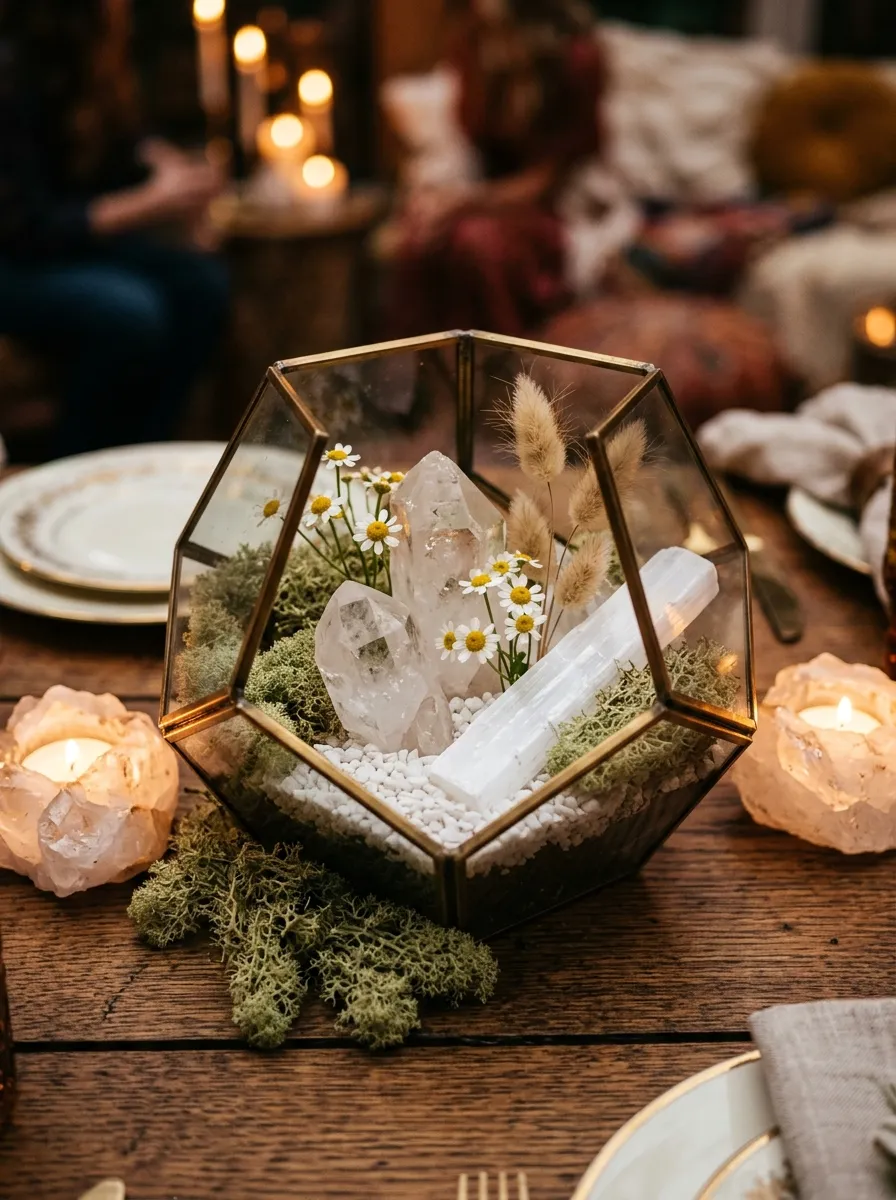
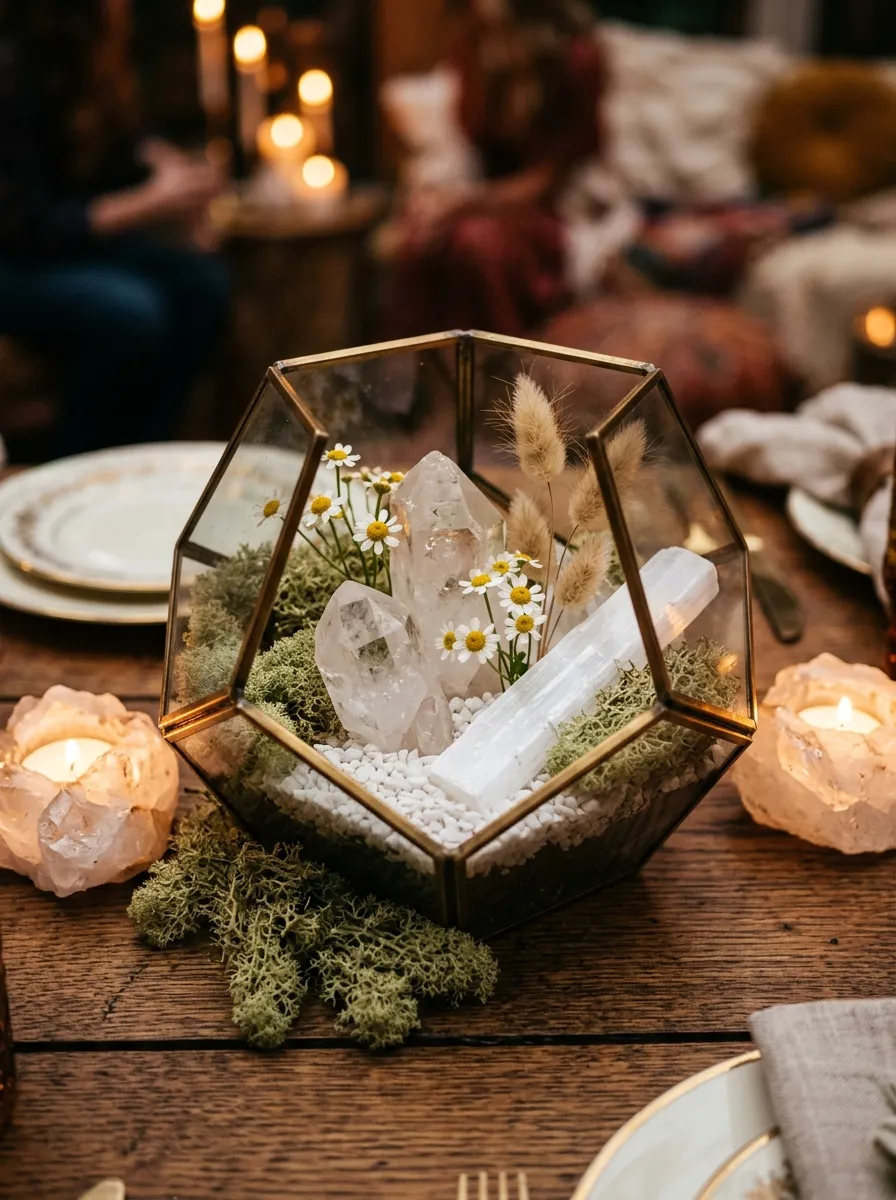
The raw quartz geode and wildflower terrarium merges organic geological formations with loose, romantic botanicals, offering a contemporary take on earthy luxury. This concept features large, uncut natural quartz crystals, amethyst points, or white selenite rods nestled inside geometric glass and brass terrarium cases. Surrounding these mineral spikes are clusters of delicate field blooms, dried bunny tails, and preserved sheet moss that soften the jagged crystalline edges. The contrast between rough mineral facets and delicate flower petals introduces an engaging tactile dialogue that aligns with modern bohemian and artistic aesthetics. Rather than projecting formal ballroom glamour, this centerpiece brings a grounded, natural beauty to wooden farm tables or linen-draped dining setups. The mineral crystals reflect ambient room light from varied angles, producing subtle, luminous reflections that feel authentic, modern, and deeply connected to nature.
Begin by sourcing a clean hexagonal or faceted glass terrarium container with brass framework, measuring approximately eight to ten inches wide. Layer the bottom interior with a two-inch bed of washed white quartz pebbles to create a stable, level foundation for internal components. Nestle two or three large raw clear quartz crystal points upright into the pebble bed, turning their sharp faceted terminations outward toward the glass panes. Place miniature water tubes concealed beneath small clumps of preserved green sheet moss around the bases of the quartz points. Insert short stems of dried scabiosa pods, white astrantia, chamomile daisies, and delicate sweet pea sprigs into the water vials, allowing stems to spill naturally over the open terrarium lip. Position two raw quartz tea light holders directly beside the terrarium, inserting unscented white tea lights to illuminate the stone formations from the side.
3. Tiered Crystal Compote Botanical Tower
Execution Process
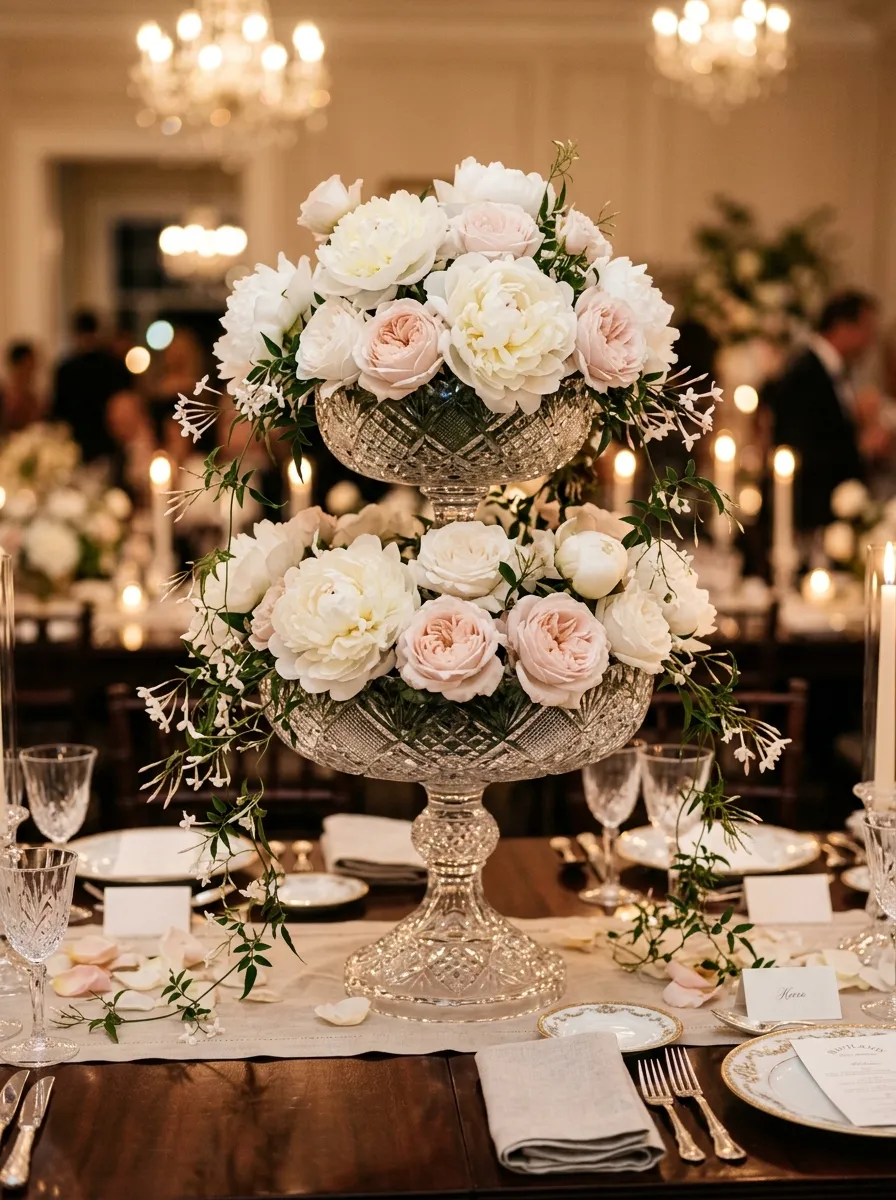
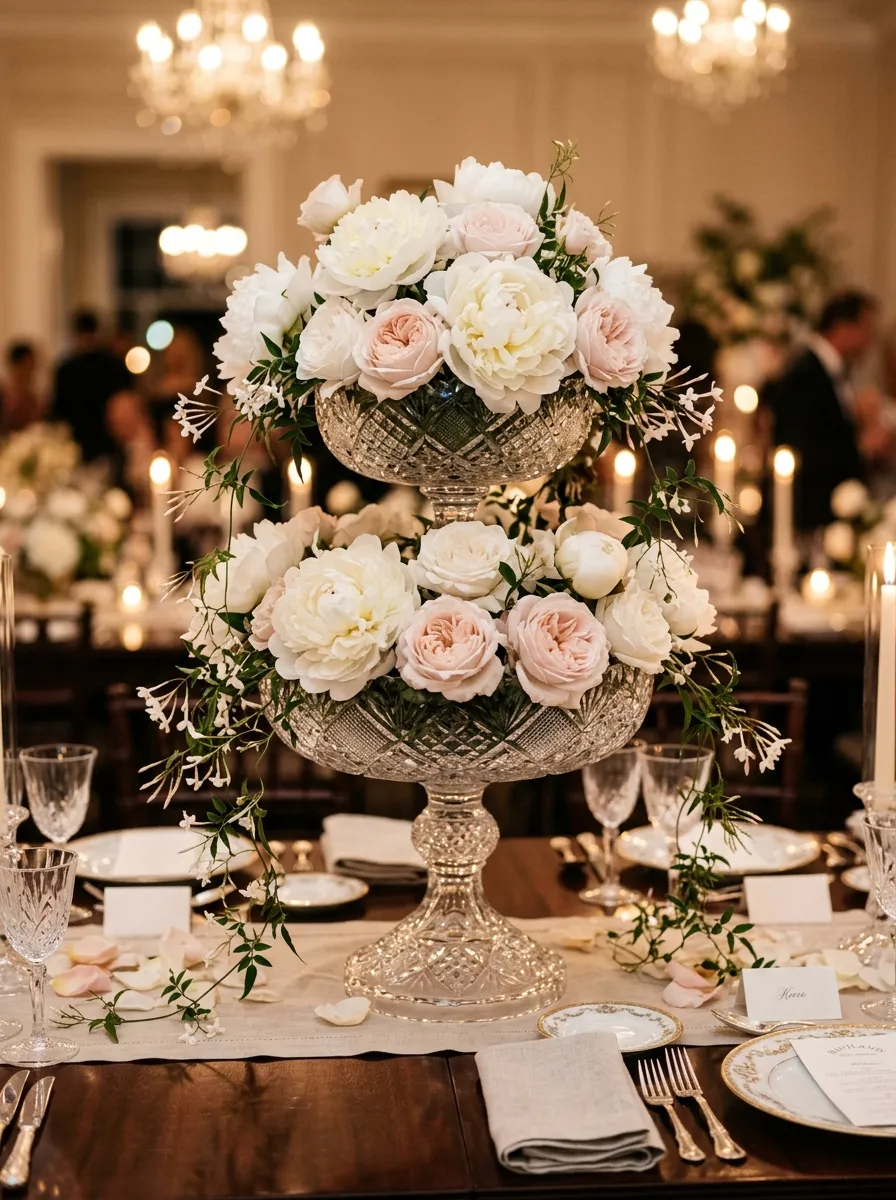
The tiered crystal compote botanical tower builds architectural presence through stacked antique cut-glass vessels, combining vintage heirlooms with lush garden flowers. This arrangement stacks two or three graduated cut-crystal footed compote dishes, decreasing in diameter from base to top, joined by concealed glass risers. Each tier overflows with dense seasonal florals, trailing greens, and delicate cascading berry stems, creating a multi-level fountain of blooms and reflective crystal rims. The deeply cut patterns in the vintage glass capture ambient lighting, scattering fractured reflections through the floral foliage below. This design works exceptionally well for classic estate weddings, vintage romantic celebrations, and garden receptions. Stacking the vessels vertically concentrates the floral mass in the center of the table, leaving ample room around the perimeter for wine glasses, bread plates, and formal place settings.
Select three graduated cut-crystal compote dishes measuring ten, eight, and six inches in diameter, cleaning all surfaces until completely streak-free. Secure a heavy clear glass cylinder riser between the bottom and middle compotes using industrial-grade clear floristry adhesive putty, ensuring the bond is stable and level. Repeat the process to attach the smallest compote dish to the top tier. Place fitted floral foam rings, thoroughly soaked in water and flower food, inside each compote bowl, securing the foam with crossed strips of clear waterproof floral tape. Insert focal flowers—such as ruffled white peonies, blush garden roses, and creamy carnations—densely around the circumference of each tier. Weave trailing tendrils of variegated ivy and jasmine vine around the crystal stems to soften the transitions between tiers, allowing the cut glass edges to remain visible beneath the flowers.
4. Submerged Crystal Prisms and Orchid Cylinders
Setup Method
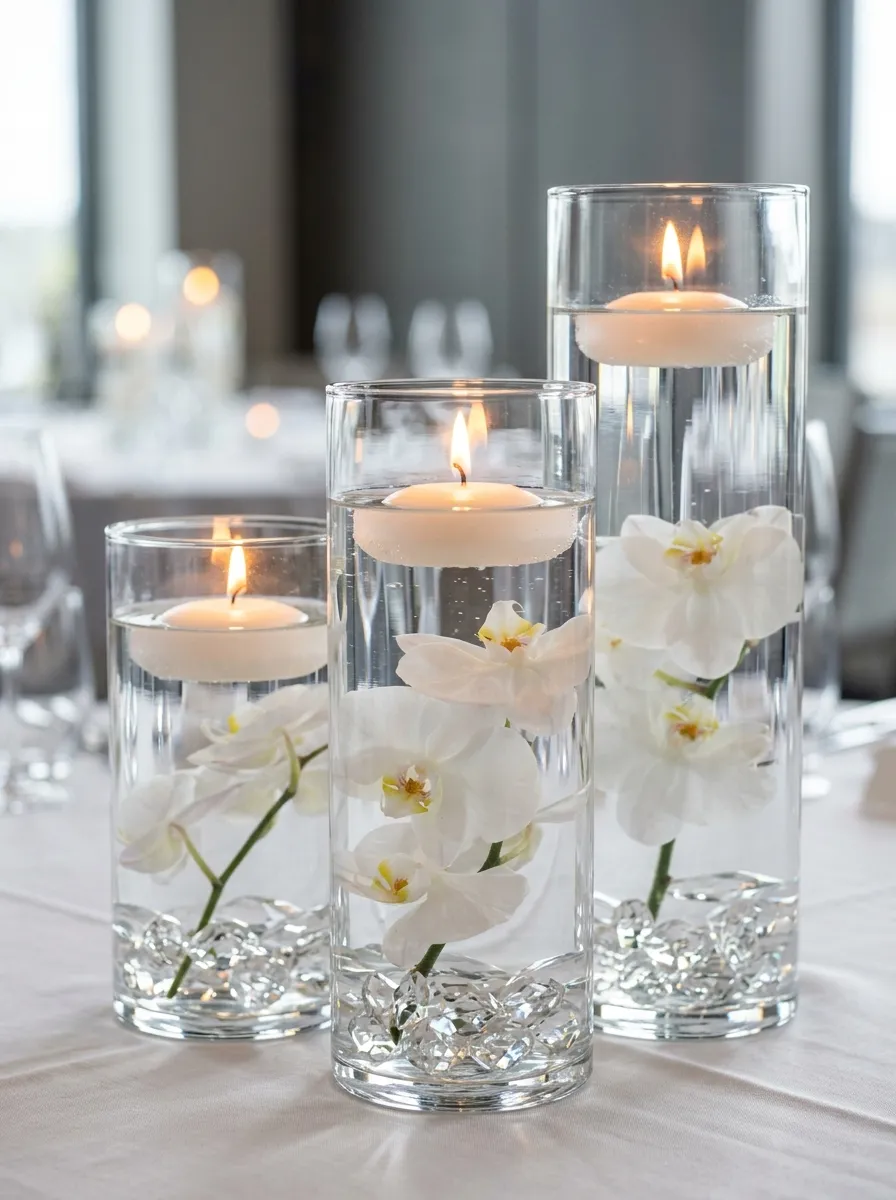
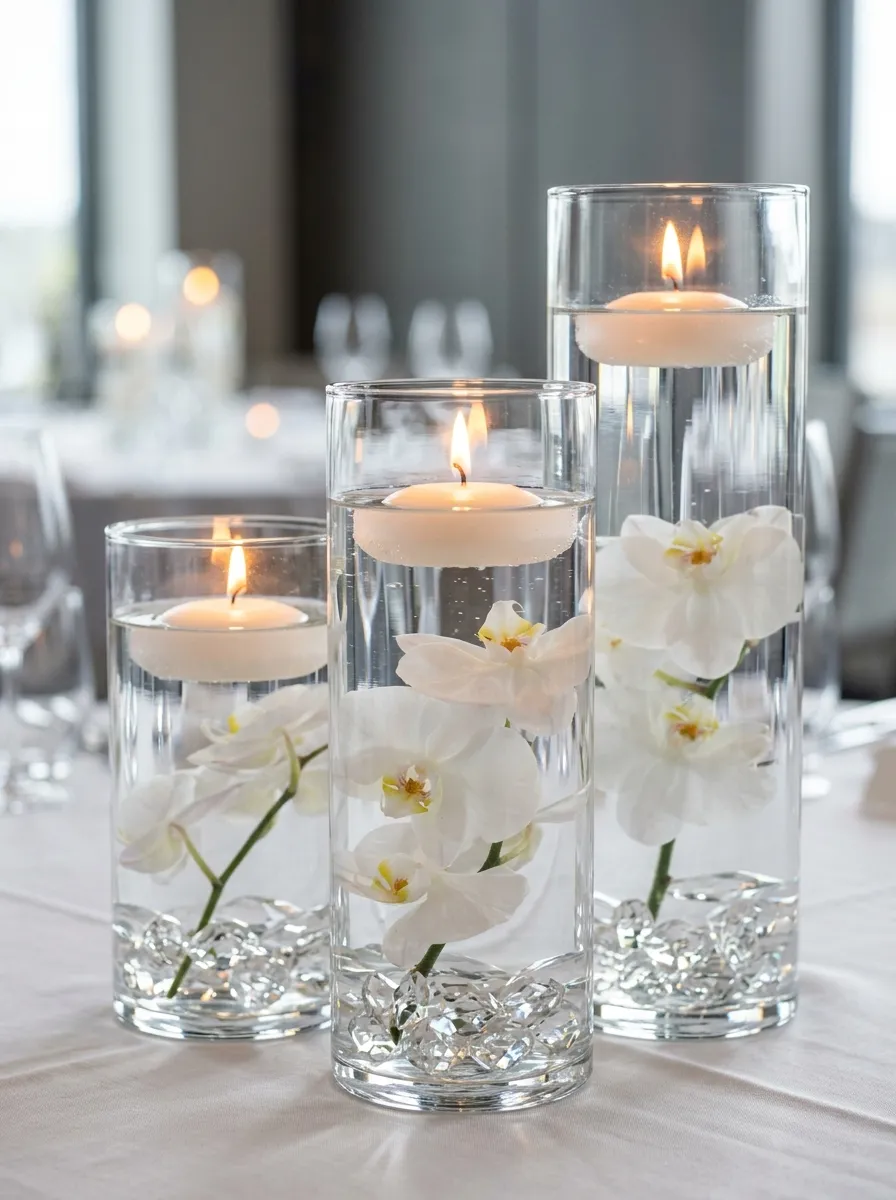
The submerged crystal prisms and orchid cylinder setup uses water refraction to create a clean, luminous tablescape with a modern minimalist style. This design utilizes a trio of straight-sided clear glass cylinder vases of varied heights, filled completely with distilled water to submerge blooming floral stems and faceted crystal chandelier prisms. The water acts as a magnifying lens, enlarging the delicate petals while causing the faceted crystals at the bottom to sparkle brilliantly under candlelight. Topping each cylinder with a gently burning white floating candle completes the vertical light column, casting rippling highlights across the dining table. This centerpiece is exceptionally durable and wind-resistant, making it a reliable choice for outdoor marquee tents, breezy coastal pavilions, or modern art gallery receptions. The low-maintenance mechanics keep the blooms fresh and hydrated throughout long wedding receptions without needing water refills.
Gather three heavy-base clear glass cylinders measuring eight, eleven, and fourteen inches in height, cleaning both inside and outside surfaces with a microfiber cloth. Line the bottom of each cylinder with two inches of clear, multifaceted cut-glass crystals or crystal chandelier pendalogues. Anchor a single stem of white phalaenopsis or dendrobium orchids to the crystal bed, securing the bottom stem with a clear floristry sinker weight so the flower remains submerged. Slowly pour distilled water down the interior wall of the cylinder until the water line sits one inch below the rim; distilled water prevents cloudy mineral residue and eliminates air bubbles. Allow any tiny bubbles along the petals to rise and pop for ten minutes. Place a round white wax floating candle onto the water surface, and arrange the three cylinders in a tight cluster at the center of the table.
5. Cut-Glass Decanter and Taper Candle Meadow
How to Make
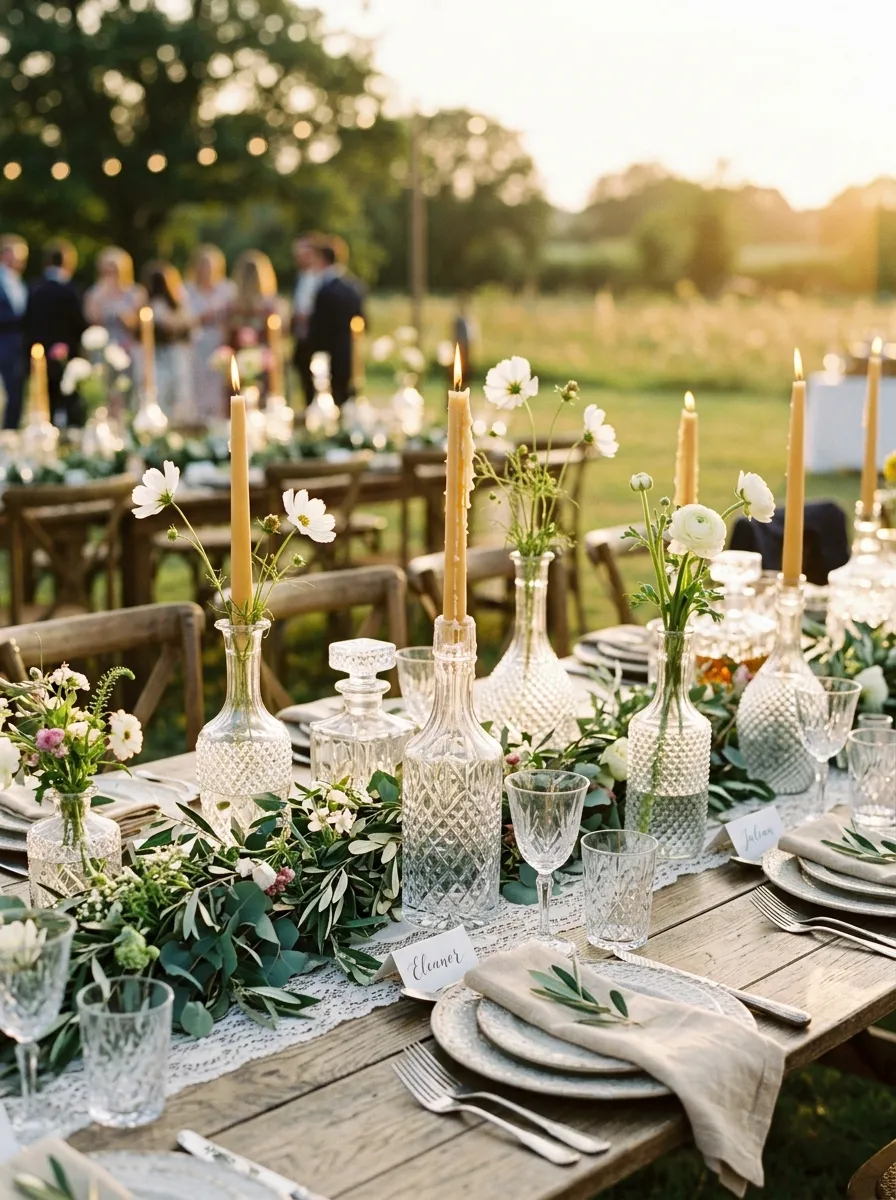
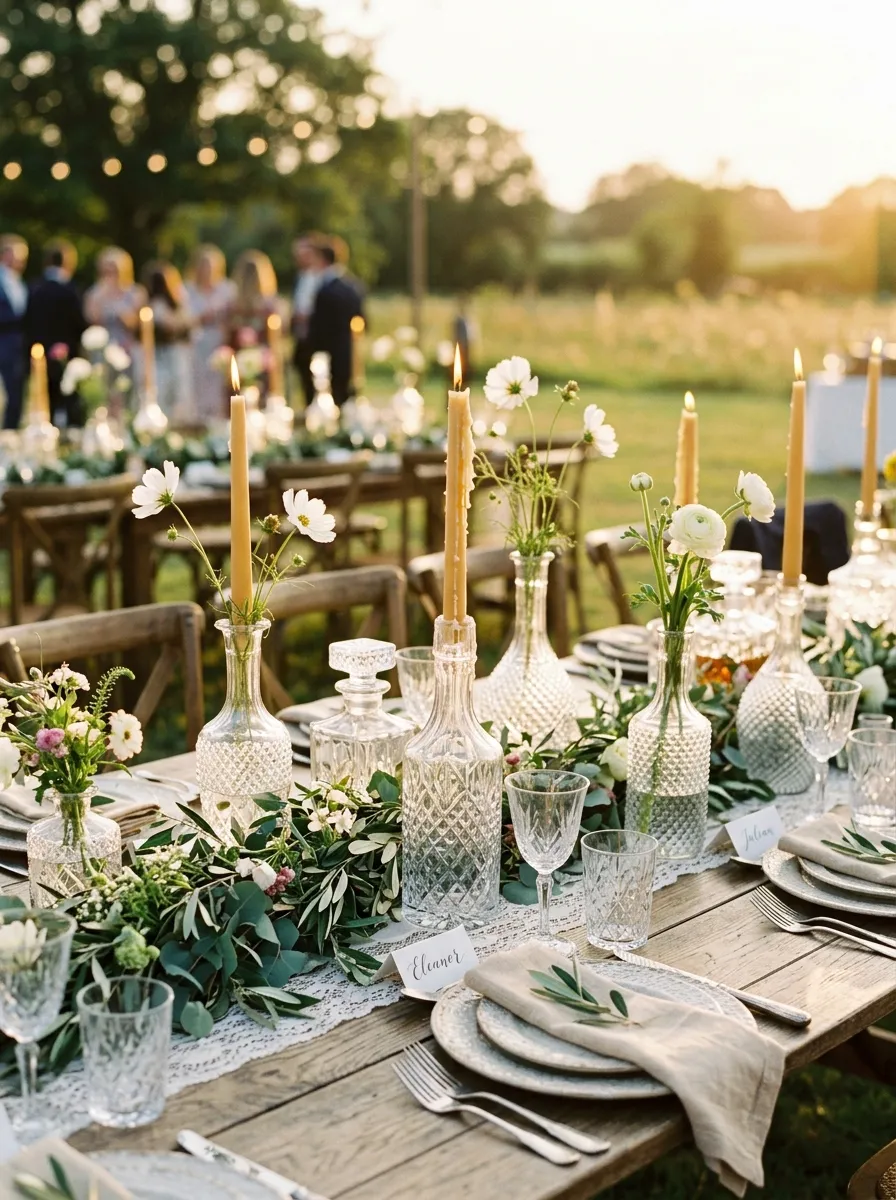
The cut-glass decanter and taper candle meadow combines vintage pressed-glass containers with loose, meadow-inspired floral styling. Instead of a single heavy centerpiece, this design scatters an assortment of antique cut-crystal wine decanters, spirit bottles, and crystal perfume flacons along the table runner. Several decanters serve as elegant candleholders for tall taper candles, while companion bottles hold delicate single-stem garden flowers. The varying geometric cuts across the antique glass—such as diamond grids, fluted ribs, and starbursts—scatter candlelight into intricate patterns across the table linens. This scattered arrangement provides flexibility for long banquet or farmhouse tables, distributing visual interest down the entire table spine. The combination of sparkling cut glass, dancing taper flames, and dancing wildflower stems produces a nostalgic, relaxed dining environment suited for romantic vineyard or countryside celebrations.
Source five to seven vintage cut-crystal decanters and heavy perfume bottles of varied shapes per table, cleaning the interior glass to remove old liquid stains. Fit two of the taller decanters with tapered candle adapters or insert twelve-inch dripless taper candles directly into the bottle necks, shaving the wax bases slightly for a snug fit. Fill the remaining decanters two-thirds full with fresh water and flower preservative. Cut single stems of lisianthus, butterfly ranunculus, white delphinium, and fluttering cosmos to varied lengths between six and twelve inches. Place one or two stems into each open bottle, letting the natural curves of the stems direct the blooms outward. Weave a continuous runner of silver dollar eucalyptus and olive branches around the decanter bases, tucking ribbed glass votive cups into the foliage to illuminate the cut-glass facets from below.
6. Mirrored Tray and Floating Crystal Goblet Reflection
Step-by-Step Guide
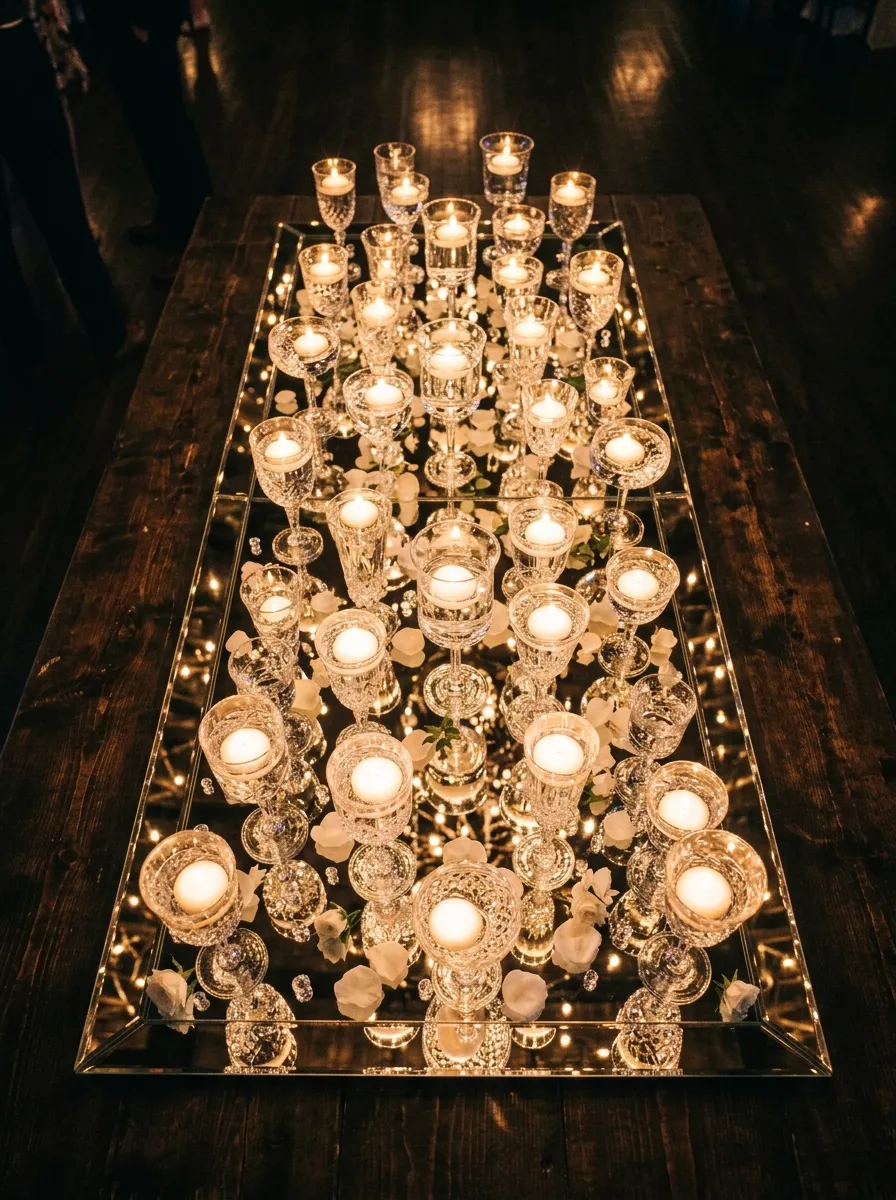
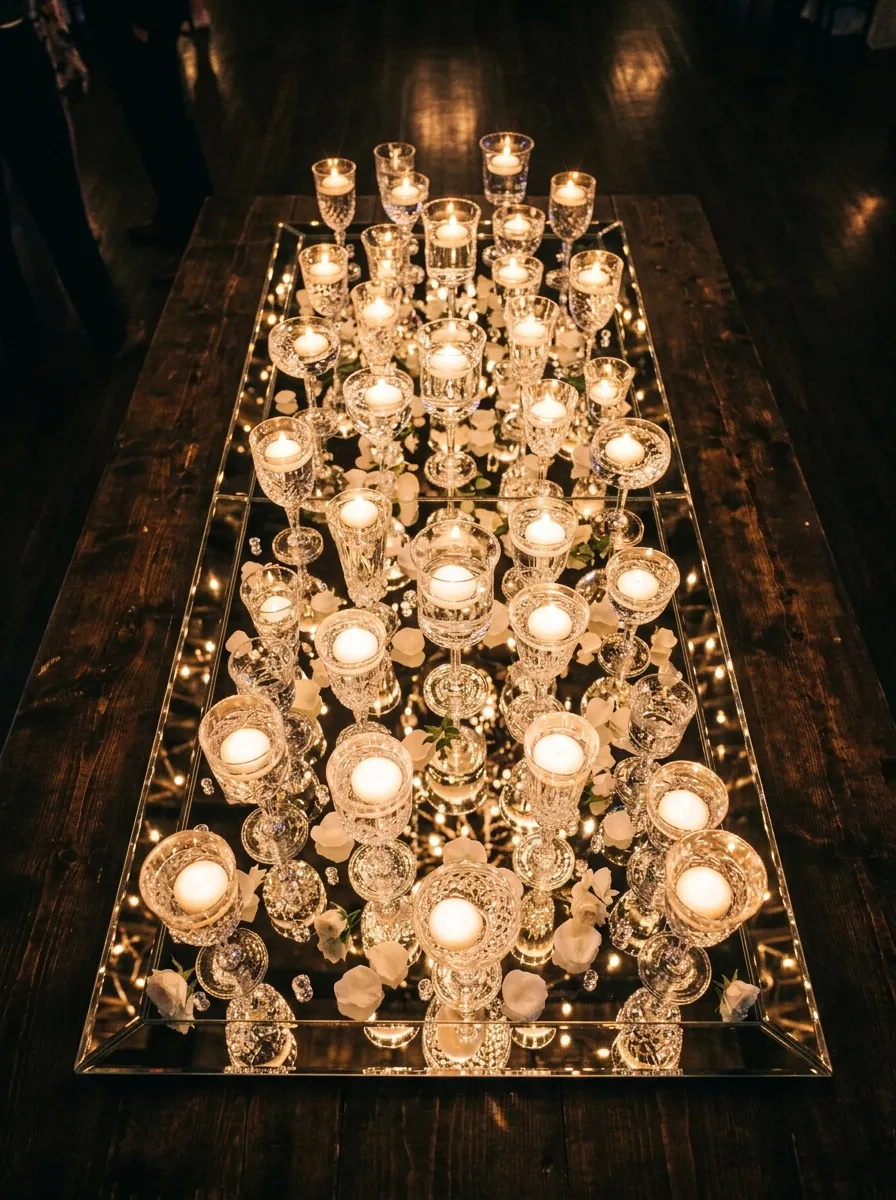
The mirrored tray and floating crystal goblet reflection tablescape amplifies ambient light through optical multiplication, making dining rooms feel brighter and more expansive. This setup centers on a large beveled rectangular or circular glass mirror tray placed flat on the tablecloth, layered with vintage cut-crystal wine goblets, champagne coupes, and low crystal rose bowls. Filling these diverse crystal vessels with water and floating tea lights produces hundreds of reflections that bounce off the mirrored tray below. The varied diamond cuts and scalloped rims of the vintage stemware refract the moving flames, creating a shimmering carpet of light that serves as the visual anchor of the table. This concept is effective in dimly lit venues, historic ballrooms, and evening marquee weddings, providing maximum drama with minimal floral material. The flat mirrored base keeps sightlines completely open, facilitating easy guest interaction across the table.
Position a twenty-inch beveled-edge mirror plate at the center of the dining table, wiping both surfaces thoroughly with glass cleaner to eliminate streaks and dust. Arrange seven to nine mismatched cut-crystal wine glasses, champagne coupes, and small crystal bowls in an organic grouping across the mirror. Fill each glass vessel three-quarters full with room-temperature water using a slender pouring pitcher to prevent splashing the mirror. Place a clear-cupped white floating candle or standard tea light gently into each glass, checking that the cotton wicks remain completely dry. Tuck short cuttings of white spray roses, waxflower, and delicate greenery between the bases of the goblets directly on the mirror surface to soften the hard glass lines. Ignite the candles sequentially from the center outward, checking that the reflections display a continuous field of dancing light.
7. Gilded Geometric Stand with Hanging Crystal Droplets
How to Create
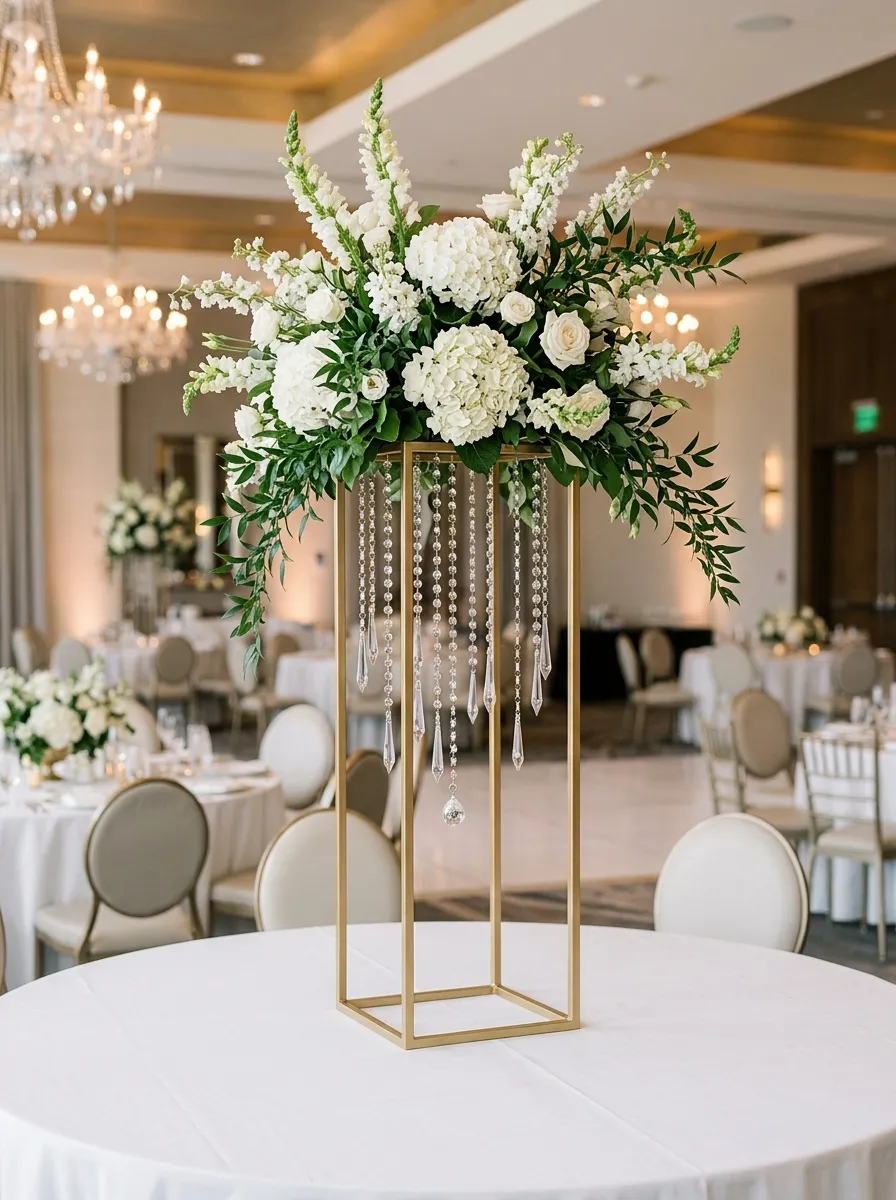
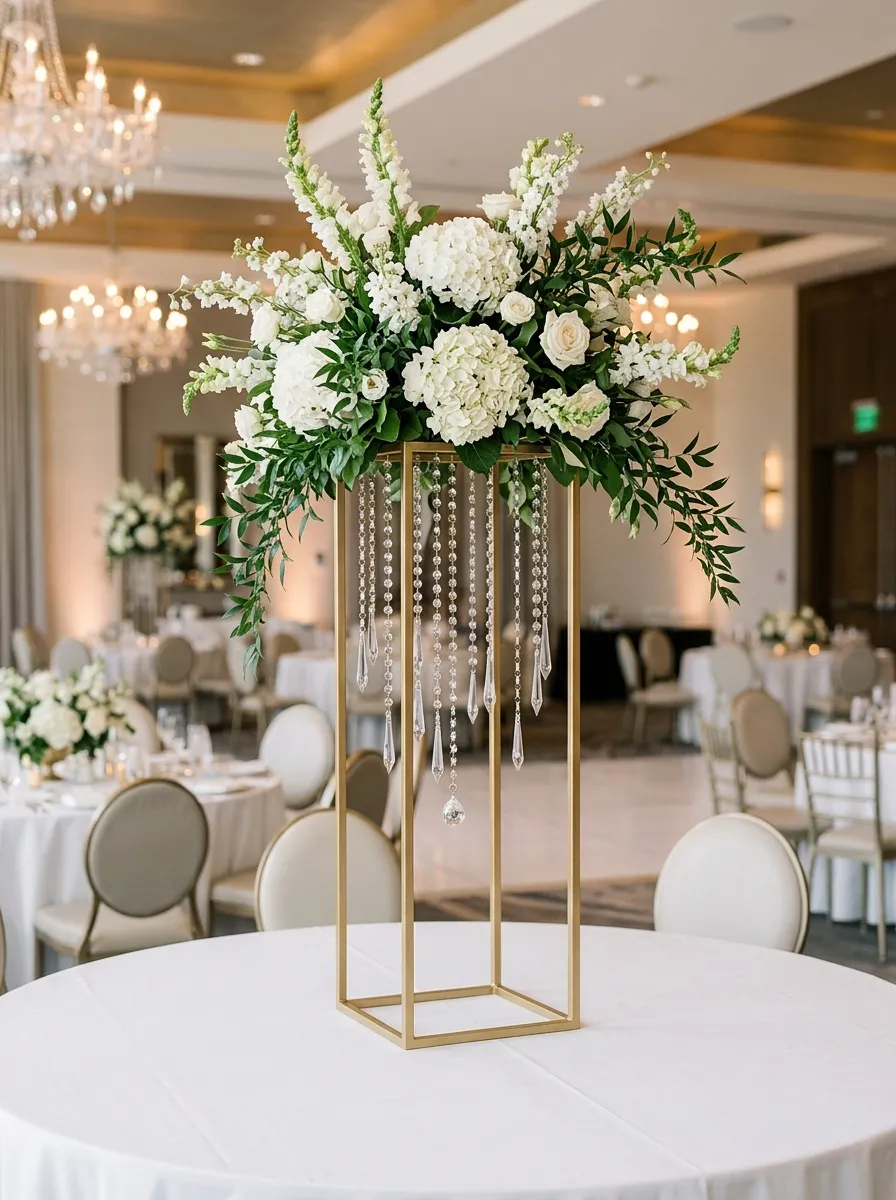
The gilded geometric stand with hanging crystal droplets blends modern metallic lines with the timeless sparkle of hanging crystal prisms. This concept utilizes a slender matte-gold or brass open-frame rectangular pedestal that elevates a lush floral arrangement twenty-four inches above the table. Suspended beneath the elevated floral plate are delicate rows of faceted crystal drops and glass prisms of varying lengths that shimmer in the ambient light. Lifting the main floral mass overhead preserves complete visibility for seated guests, while the hanging crystal pendants bring sparkle down into the dining space. The contrast between warm, modern brass framework and cool, brilliant crystal pendalogues produces a balanced transitional aesthetic. This design works exceptionally well in high-ceilinged industrial venues, contemporary hotel ballrooms, and sleek modern spaces that require vertical height to fill the room.
Erect a twenty-four-inch four-post open geometric metal stand finished in brushed brass, confirming all base connections are balanced and wobble-free. Secure an elevated plastic design dish to the top platform using heavy-duty clear zip ties or waterproof anchor tape. Soak a block of structural floral foam, carve the corners with a knife, and place it into the top dish, securing it with crossed floristry tape. Insert sweeping branches of Italian ruscus, salal leaves, and white hydrangea around the outer perimeter to establish a full, wide silhouette, filling the center with white standard roses and spires of snapdragons. Attach ten to twelve multifaceted crystal chandelier droplets along the lower rim of the top metal plate using thin gold jewelry wire, spacing the drops three inches apart. Ensure the crystal pendants hang straight down, catching the light from ambient room fixtures and low tabletop candles.
8. Ice-Carved Crystal Urn with Cascading White Wisteria
Execution Process
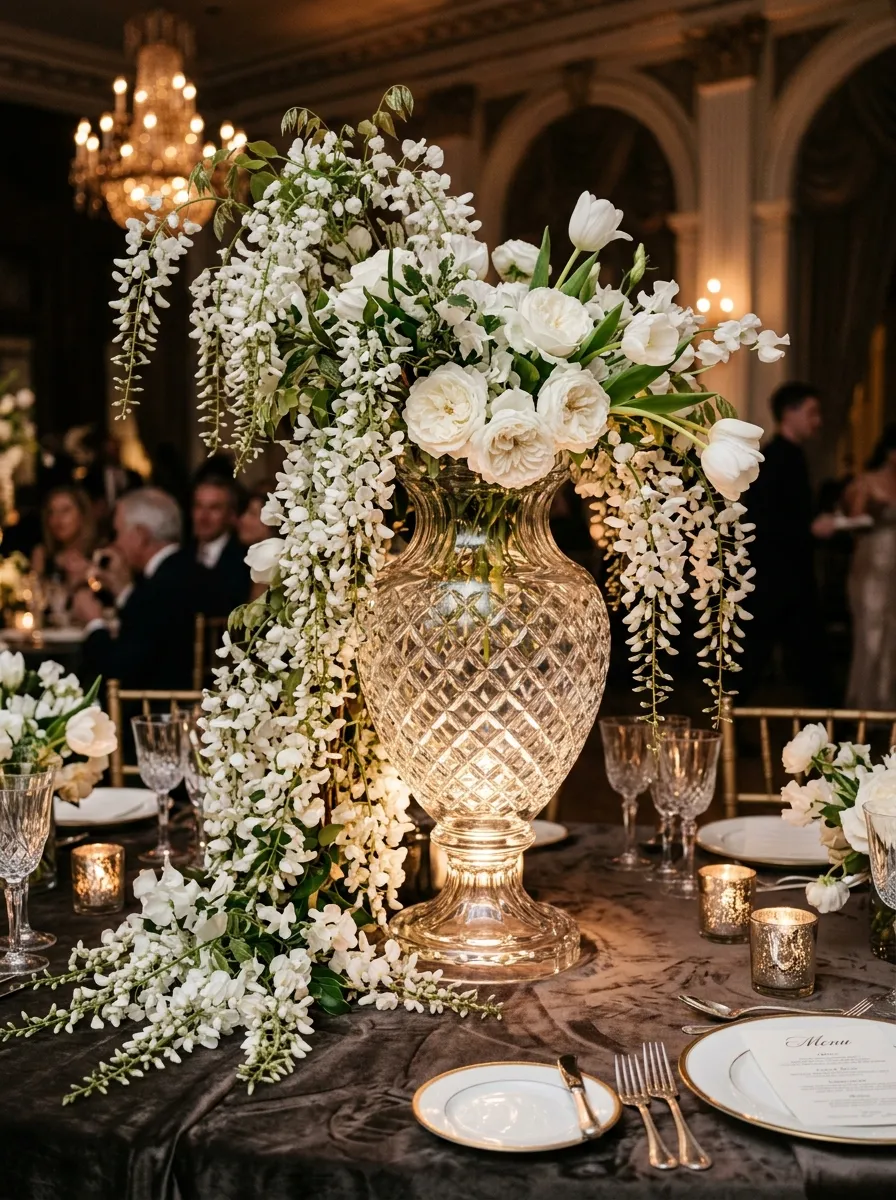
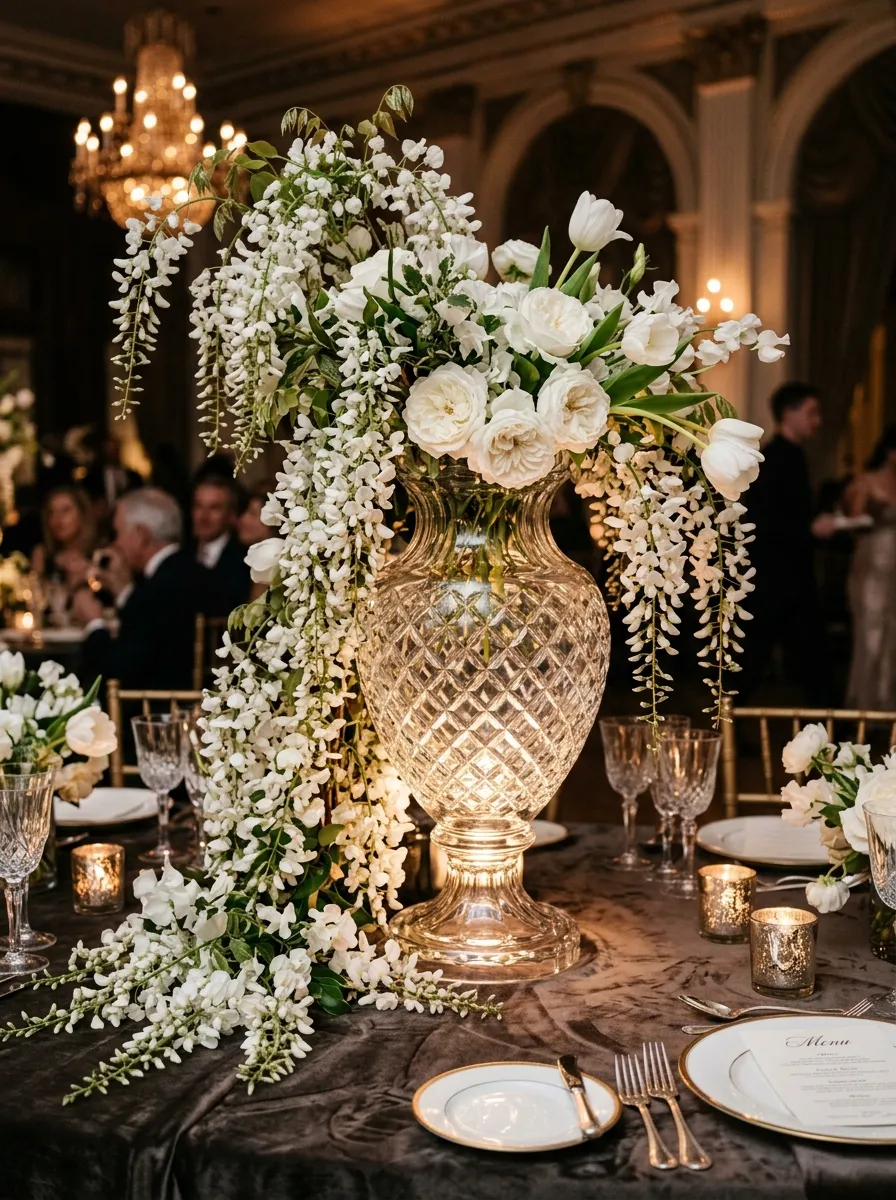
The ice-carved crystal urn concept creates dramatic focal impact through clean, heavy cut-crystal urns paired with flowing, asymmetrical floral installations. The centerpiece utilizes a large, leaded crystal footed urn featuring diamond faceting that creates prism reflections when hit by table uplighting. Exploding from the mouth of the urn is an asymmetric cascade of white wisteria branches, cascading phalaenopsis orchids, and trailing white lilacs that sweep down toward the table linens. The contrast between the rigid, heavy cut crystal base and the soft, arching botanical stems produces a dynamic, high-fashion aesthetic. This bold, sculptural design is suited for estate weddings, black-tie celebrations, and grand head tables where memorable visual statements are required. The weight of the solid crystal vessel provides stability, ensuring that long cascading floral stems do not tip the arrangement during the evening.
Select a heavy cut-crystal footed urn measuring ten to twelve inches tall, verifying that the glass thickness can support asymmetric weight distribution. Place a heavy lead-free floral pin frog inside the bottom of the urn, anchoring it with waterproof floral putty pressed firmly into dry glass. Fill the urn two-thirds full with fresh water and floral preservative solution. Insert sturdy woody branches of flowering dogwood or wisteria onto the brass pins of the frog, angling the stems so they cascade forward and downward across one side of the vessel. Build the core floral volume inside the urn mouth using large white garden roses, reflexed tulips, and stems of white hydrangeas to support the cascading branches. Position two warm-white LED micro spotlights flat on the table directed up at the base of the crystal urn, illuminating the cut patterns and casting prismatic patterns through the flowers.
9. Monochromatic White Floral Ring with Central Crystal Hurricane
Setup Method
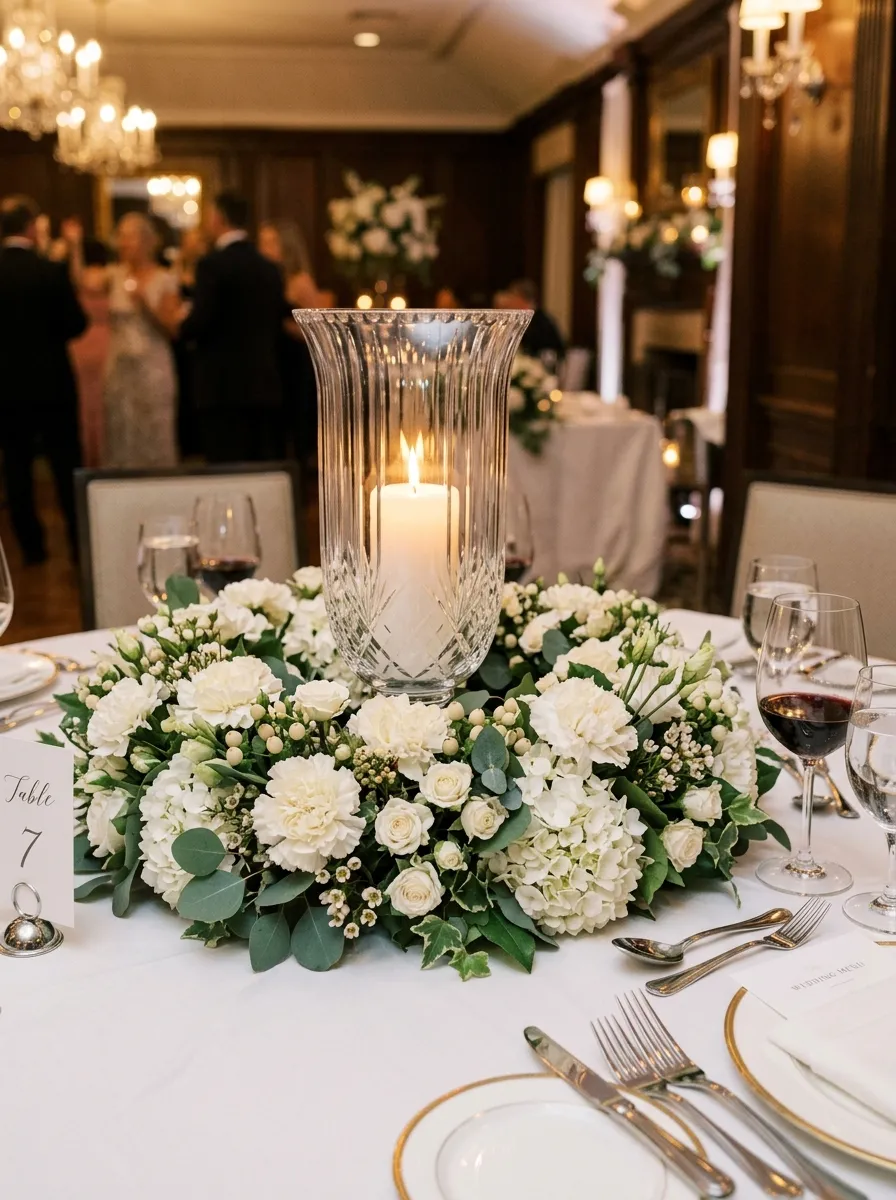
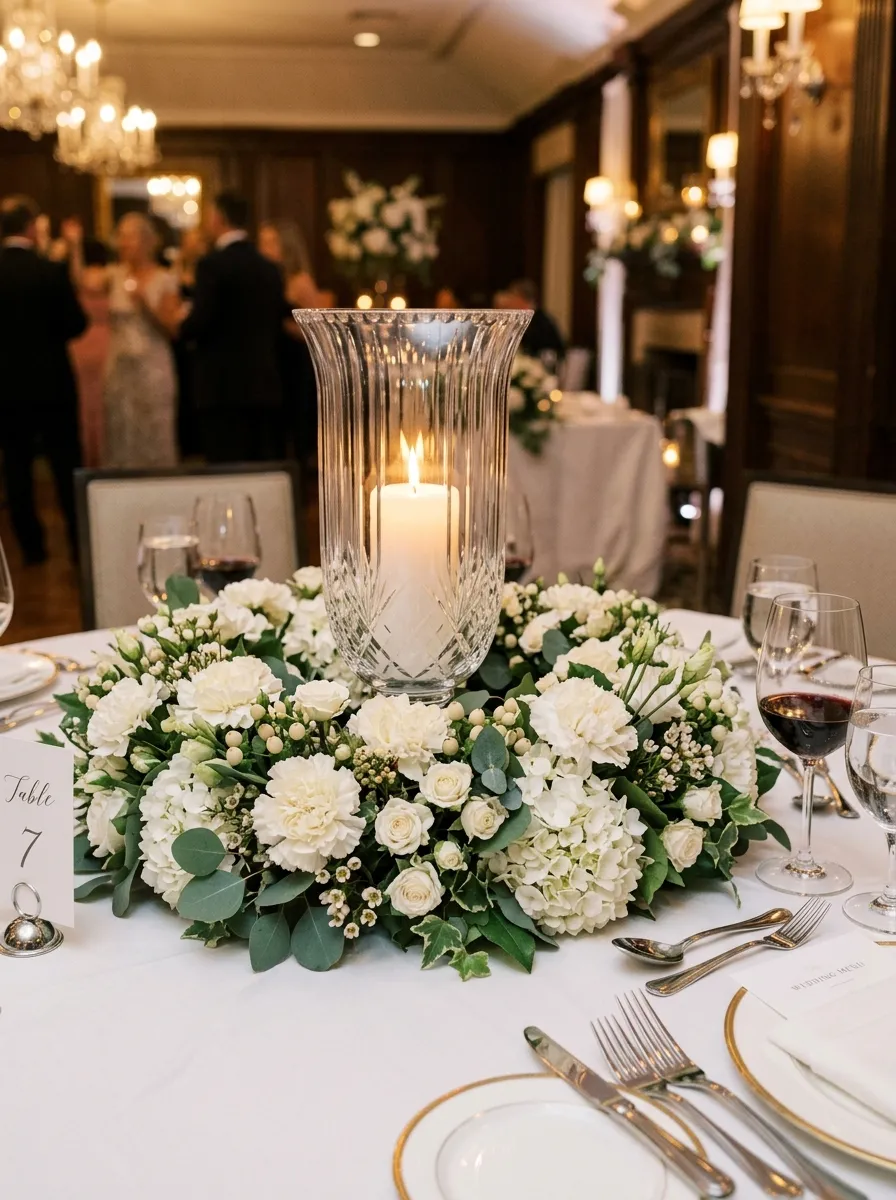
The monochromatic white floral ring with a central crystal hurricane balances timeless floral beauty with the safe protection of enclosed candlelight. This design features a lush, low-profile circular wreath of dense white blossoms encircling a tall cut-crystal hurricane sleeve. Inside the crystal hurricane, a thick white pillar candle burns safely, shielded from indoor ventilation drafts and passing guests. The cut details on the hurricane sleeve—such as vertical fluting or diamond cuts—soften the direct candlelight into a warm, glittering halo. Because the floral wreath rests low against the table linen, it provides abundant color and fragrance without blocking eye contact between guests across the table. This practical, timeless design suits traditional church receptions, formal country club dinners, and elegant estate celebrations, delivering steady, draft-free illumination through the entire dinner service.
Begin with a fourteen-inch circular plastic floral foam wreath form, soaking the foam thoroughly in water mixed with commercial flower preservative. Center the soaked wreath form on the table, verifying that it sits flat on a protective plastic tray to prevent moisture from damaging the table linens. Cut stems of white carnations, spray roses, lisianthus, and compact white hydrangeas to three inches long, inserting them densely into the foam ring until all plastic mechanics are hidden. Place a tall, straight-sided cut-crystal hurricane chimney measuring twelve to fourteen inches high squarely inside the center opening of the floral wreath. Secure a three-inch-wide by six-inch-tall white paraffin pillar candle inside the base of the crystal sleeve using a double-sided wax adhesive dot. Trim the candle wick to one-quarter inch to ensure a clean, smokeless flame when lit before the reception starts.
10. Crystal Lotus Bowl Floating Blossom Display
How to Make
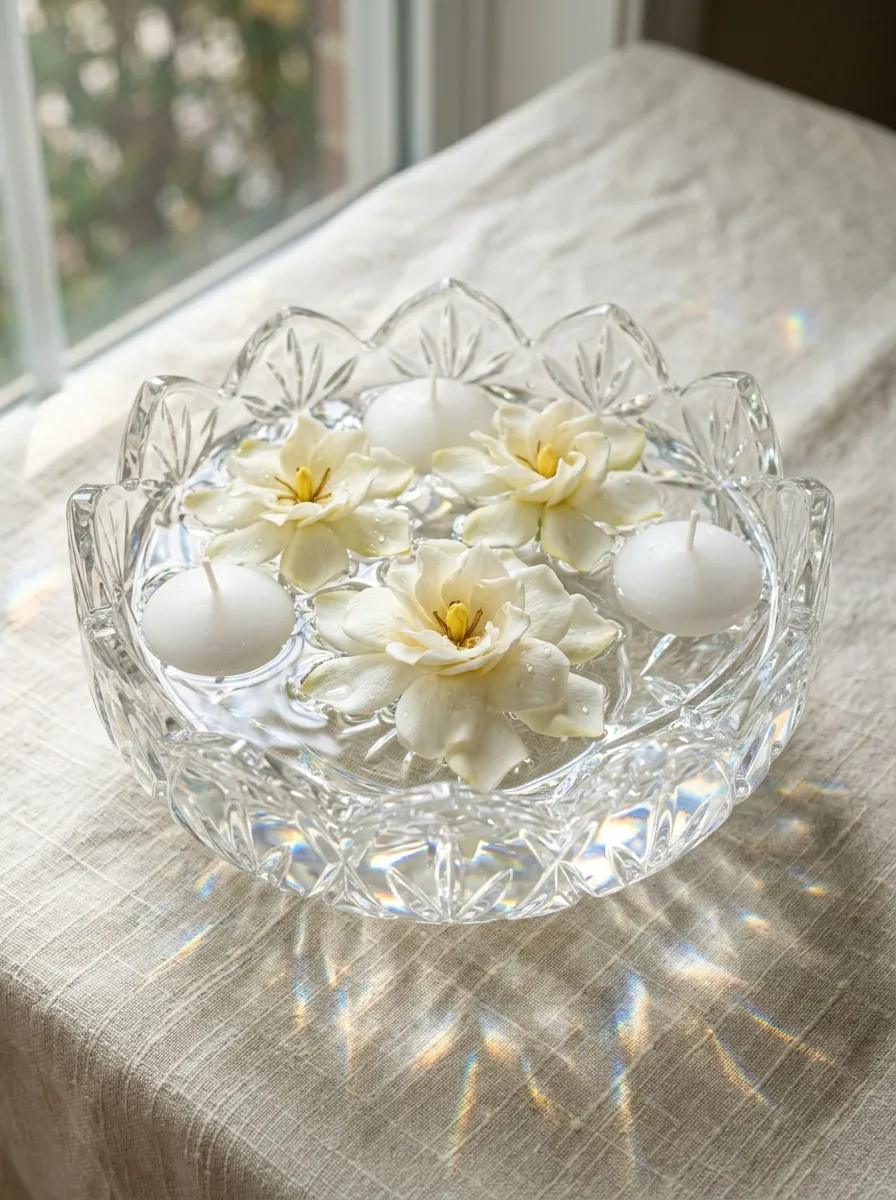
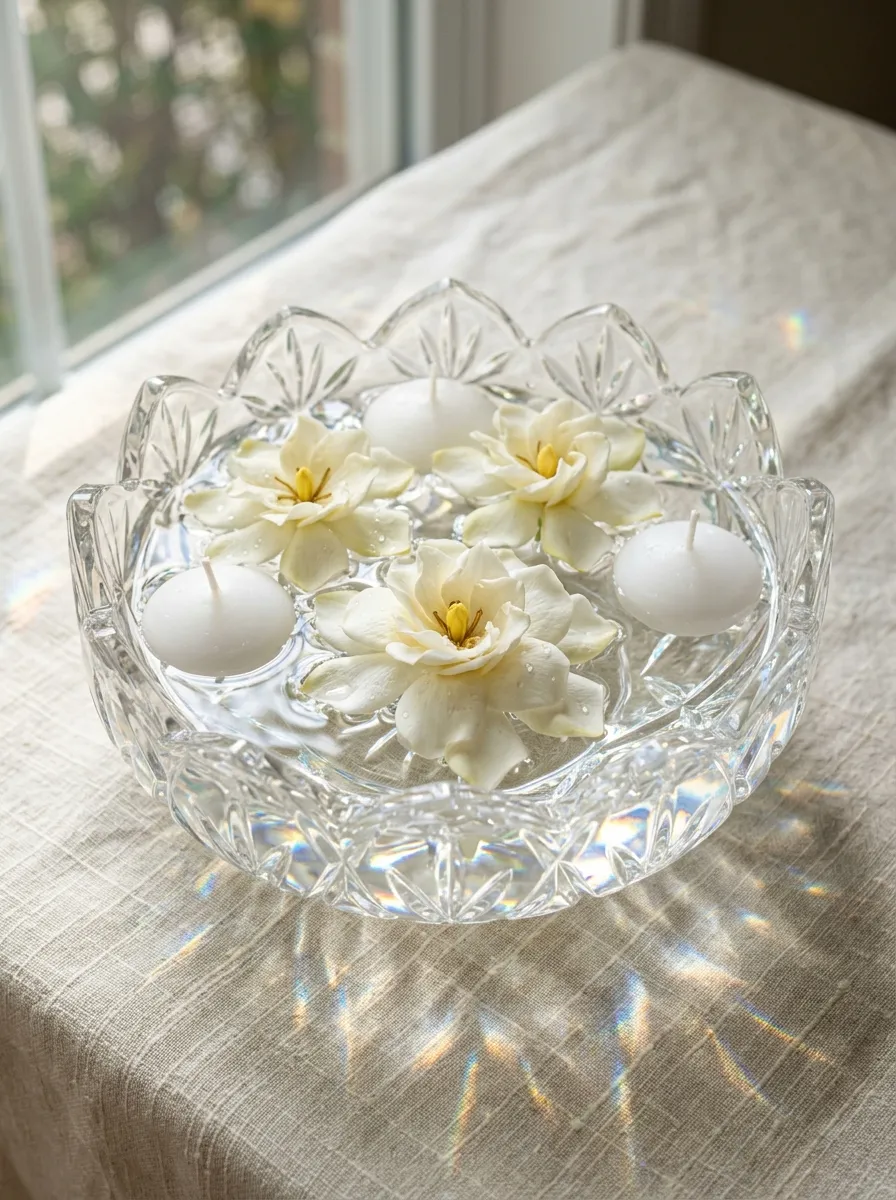
The crystal lotus bowl floating blossom display offers a low-profile, water-focused centerpiece that captures light through surface reflections and glass petal facets. This concept uses a wide, shallow cut-crystal bowl shaped like an open lotus flower, filled with crystal-clear water, floating floral heads, and glowing floating candles. The petal-like faceting along the crystal bowl rim bends and refracts light from the floating flames, casting dancing wave patterns across the surrounding dinnerware. Floating delicate blossoms—such as open gardenia heads, camellias, or reflexed rose blooms—creates an organic, fragrant display that stays hydrated and fresh all evening. This centerpiece is especially practical for family-style wedding dinners, leaving plenty of tabletop space for shared food platters, wine bottles, and glassware while providing an elegant focal point.
Source an authentic cut-crystal lotus-form bowl measuring ten to twelve inches in diameter, cleaning the glass thoroughly with distilled water to remove mineral spots. Position the empty bowl at the exact center of the table before adding water to avoid heavy lifting and accidental spills. Pour distilled water into the bowl until the liquid rests half an inch below the cut glass rim. Select four to five fully opened, firm flower heads—such as ivory gardenias, white water lilies, or wide-petaled garden roses—trimming the stems completely flush with the base of the calyx. Float the blossoms gently on the water surface, arranging them in a balanced cluster. Place three two-inch disc floating candles between the flower heads, keeping the wicks dry during placement. Light the floating wicks using a long gas match, allowing the gentle movements of the water to create shimmering reflections through the crystal bowl.
Common Beginner Mistakes and How to Avoid Them
A frequent mistake in DIY crystal centerpiece design is overlooking the impact of dust and cleaning residue on multifaceted glassware. Cut crystal displays its characteristic brilliance only when pristine; finger oils, dust, and water spots quickly dull the glass facets under direct light. Always polish all crystal pieces forty-eight hours before the event with a lint-free microfiber cloth and a mild vinegar-water solution, wearing white cotton gloves during final table placement to avoid fresh smudges. Another common error is using standard unweighted containers for tall floral or candle installations, creating top-heavy arrangements that risk tipping when tables are bumped. Always anchor vertical mechanics with weighted metal pin frogs or heavy base pedestals secured with professional floral putty. Furthermore, beginners often crowd tables with competing crystal items, resulting in visual clutter that confuses the eye and obstructs dining service. Maintain at least twelve inches of clear table space between centerpiece elements and guest place settings to allow room for glassware, flatware, and bread service. Finally, avoid placing hot candle glassware directly onto delicate tablecloths without protective trays, as radiant heat can mark or scorch luxury fabrics.
Practical Tips for Better Results
Achieving professional, gallery-worthy results with crystal wedding centerpieces requires disciplined lighting coordination, stem preparation, and meticulous hardware management. When styling crystal elements, remember that ambient lighting directly dictates how brilliantly the glass sparkles. Position warm-white pin-spot lighting or overhead spotlights to hit crystal candelabras and prisms at a forty-five-degree angle; this angle maximizes internal refraction and casts dazzling light spreads across dining tables. To prevent taper candles from leaning inside loose crystal sockets, wrap the base of each candle in a strip of floral tape or use silicone candle snuggers to create a tight, vertical fit. When floating flowers or candles inside cut-crystal bowls, always use distilled water rather than mineral-heavy tap water, which clouds the glass and creates tiny bubbles along the vessel walls. If incorporating fresh floral arrangements with crystal compotes, use clear waterproof floral tape to construct support grids across the vessel openings; this mechanical framework stabilizes stems while keeping the internal glass structure invisible to seated guests.
Styling, Presentation, or Organization Ideas
Styling cohesive crystal tablescapes requires considering how reflective glass interacts with linens, dinnerware, and the broader wedding color scheme. Pair crisp, cut crystal with textured, matte linens—such as crinkled cotton gauze, raw silk runners, or brushed velvet cloths—to balance the high-shine glass with grounding tactile warmth. When decorating long banquet tables, alternate tall crystal candelabras with low cut-glass votives and crystal bowls to establish an engaging visual rhythm down the length of the room. Match the metallic elements in your centerpieces, such as gold-rimmed chargers, brass flatware, and crystal rim detailing, to create a unified design thread across the reception space. For table numbers, use clean acrylic stands or pressed-glass photo frames, placing them beside crystal votives that illuminate calligraphed lettering during dinner. When documenting your reception tables for your portfolio or archives, capture photographs during the golden hour just before dusk; this window balances soft natural light with the emerging glow of crystal-refracted candlelight, producing rich, atmospheric imagery.
Budget or Time Planning
Creating an upscale crystal wedding reception tablescape on a realistic budget relies on strategic sourcing, early purchasing, and organized assembly timelines. Purchasing brand-new lead crystal in large quantities can strain event budgets; instead, source vintage cut-crystal bowls, decanters, and goblets gradually from thrift stores, estate sales, and wedding buy-back platforms. Mismatched vintage cut glass carries distinct artisanal character and reflects light just as brilliantly as uniform modern sets. When planning your preparation schedule, finish non-perishable tasks—such as washing glassware, wiring prisms, attaching candle snuggers, and organizing display boxes—two to three weeks before the event. Pick up fresh botanicals two days before the wedding, trim and hydrate stems overnight, and assemble floral foam rings twenty-four hours in advance. Pack all prepped centerpieces into durable, padded plastic totes categorized by table number, ensuring transport teams can position complete sets quickly on the wedding morning. Organizing a reliable crew to execute specific setup tasks ensures your decor is placed efficiently, leaving you free to enjoy a stress-free celebration.
Creative Expansion and Advanced Inspiration
Once you feel comfortable with foundational crystal centerpiece mechanics, you can explore advanced variations that combine mixed media, dramatic scales, and interactive guest elements. Consider incorporating colored crystal glassware, such as smoky quartz, blush pink, or amber-tinted cut glass, to introduce rich seasonal color while maintaining radiant optical qualities. You can also explore multi-sensory designs by adding fragrant essential oils or rosewater to crystal floating bowls, releasing a subtle, refreshing scent as candles warm the water surface. Another compelling direction involves integrating structural lighting, such as placing battery-operated micro-LED uplights directly beneath raw quartz mineral slabs to make the stones glow from within like natural lanterns. For grand modern ballrooms, experiment with suspending crystal prism curtains from overhead ceiling trusses directly above long banquet tables, echoing the lines of the tabletop crystal arrangements below. Exploring these layered, mixed-media concepts expands your decorative repertoire, transforming ordinary wedding tables into unforgettable, radiant environments filled with light, texture, and refined craftsmanship.