Fruit wedding centerpieces bring an organic, vibrant, and sculptural elegance to reception tablescapes, offering a refreshing departure from conventional floral arrangements. Exploring fresh Pinterest ideas for edible accents allows couples, event designers, and DIY enthusiasts to craft striking visual statements that combine natural harvest bounty with romantic wedding themes. This extensive guide covers foundational color blocking, structural vessel balancing, fruit preservation, and floral integration necessary to build long-lasting reception focal points. Readers will learn how to stabilize heavy citrus boughs, prepare exposed fruit halves without attracting garden insects, layer diverse textures, and construct dynamic tablescapes with complete confidence. Embracing this creative project offers remarkable practical utility because whole and sliced fruits yield generous visual volume, lush color depth, and architectural substance at a fraction of the cost of out-of-season blossoms. Whether outfitting expansive banquet tables or intimate round dining arrangements, fruit centerpieces deliver an artisanal richness that feels both timeless and contemporary. By following proven stabilization methods, correct hydration routines, and aesthetic arrangement principles, anyone can design breathtaking centerpieces that maintain peak freshness throughout an entire evening celebration.
Why This Idea Is Trending or Useful
Fruit-forward reception decor has surged in popularity across modern styling boards because it combines accessible DIY execution with high-end editorial flair. From a practical perspective, fresh produce provides incredible structural versatility, filling large urns, compotes, and runner pathways quickly without requiring thousands of delicate floral stems. In terms of design relevance, fresh fruits introduce rich saturation, waxy gloss, and tactile matte surfaces that reflect ambient candlelight better than soft petals alone. A beginner friendly centerpiece tutorial allows hosts to assemble professional displays without advanced floristry certificates or complex wire armature construction. The sensory appeal of ripe figs, fragrant lemons, and velvety stone fruits brings an inviting abundance to celebratory spaces, bridging classic Dutch still-life romance with clean modern design sensibilities. Furthermore, working with seasonal produce serves as an accessible easy project that eliminates the stress of rapid floral wilting during outdoor summer and autumn events. Trending ideas consistently highlight sustainable sourcing, multi-layered tablescapes, and colorful accents that harmonize effortlessly with linen runners, taper candles, and fine dinnerware.
Materials and Preparation
Thorough planning and meticulous materials preparation ensure that fruit arrangements remain structural, vibrant, and clean throughout the wedding festivities. Necessary physical materials include firm, unblemished seasonal fruits, floral foam cages or heavy brass pin frogs, floral preservative spray, fine wooden skewers, toothpicks, and heavy-duty pruning shears. You will also need stable display vessels, such as ceramic compote bowls, low footed urns, stone pedestals, or wide wooden risers, along with protective parchment runners to shield formal linens from natural fruit juices. Surface preparation begins by inspecting every individual piece of fruit, choosing specimens that are slightly underripe to guarantee firmness during assembly. Wash all produce in cold water with a gentle vinegar rinse to eliminate surface residues, then pat each item dry with clean microfiber cloths. For sliced elements, apply clear lemon juice, vegetable glaze, or floral sealing spray across exposed pulp surfaces to prevent oxidation, browning, and insect interest. Plan tablescape heights carefully, keeping the primary visual mass below fifteen inches so seated wedding guests can converse across tables without obstructed sightlines.
Idea 1: Mediterranean Lemon and Olive Branch Compote
How to Make
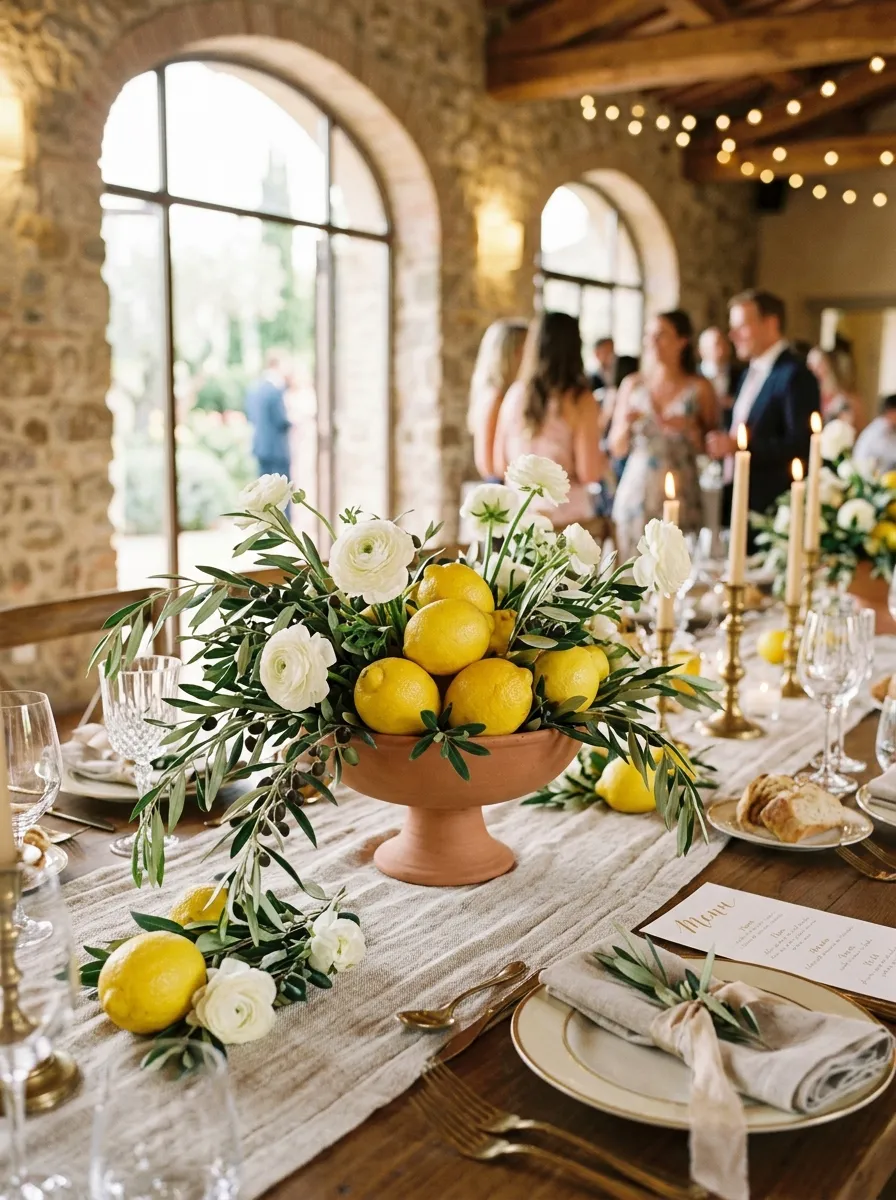
The Mediterranean lemon and olive branch compote channels the sun-drenched romance of coastal Europe through vibrant citrus and silvery-green foliage. This design utilizes a low-profile ceramic or terracotta footed compote bowl filled with an abundance of whole, bright yellow lemons nestled within leafy olive boughs. The primary aesthetic relies on the dramatic contrast between the glossy, saturated yellow rind surfaces and the soft, matte texture of olive foliage. To prevent a rigid, artificial appearance, several stems of olive branches extend outward horizontally, spilling naturally over the vessel rim toward the tabletop. Small clusters of white garden roses or delicate ranunculus tuck into the negative spaces, softening the fruit structure without overpowering its bright citrus presence. The arrangement provides a vibrant focal point for rustic vineyard settings, al fresco garden receptions, or minimalist modern dining tables. Its low physical height maintains open sightlines across the dining setting, ensuring smooth guest interaction while providing continuous visual texture from every seated vantage point.
Begin by anchoring a pre-soaked cylinder of floral foam inside a low ceramic compote bowl, securing the block with waterproof floral tape across the bowl rim. Insert dense, woody stems of fresh olive branches around the perimeter, angling them downward to drape gracefully across the table linens. Pierce whole, firm lemons through their base calyx using eight-inch wooden floral skewers, leaving approximately four inches of exposed wood beneath each fruit. Insert the skewers firmly into the foam core at varied heights, clustering larger lemons toward the center to build a mounded silhouette. Intersperse smaller lemons, allowing a few to rest freely along the base of the compote without skewers for a natural harvest appearance. Fill interior crevices between the citrus with short stems of white ranunculus and sprigs of fragrant rosemary to conceal all visible mechanics. Mist the finished display with cold water, and position two whole lemons directly onto the linen runner beside the compote base to establish a seamless connection with the tabletop.
Idea 2: Dusky Fig and Blackberry Romantic Pedestal
Step-by-Step Guide
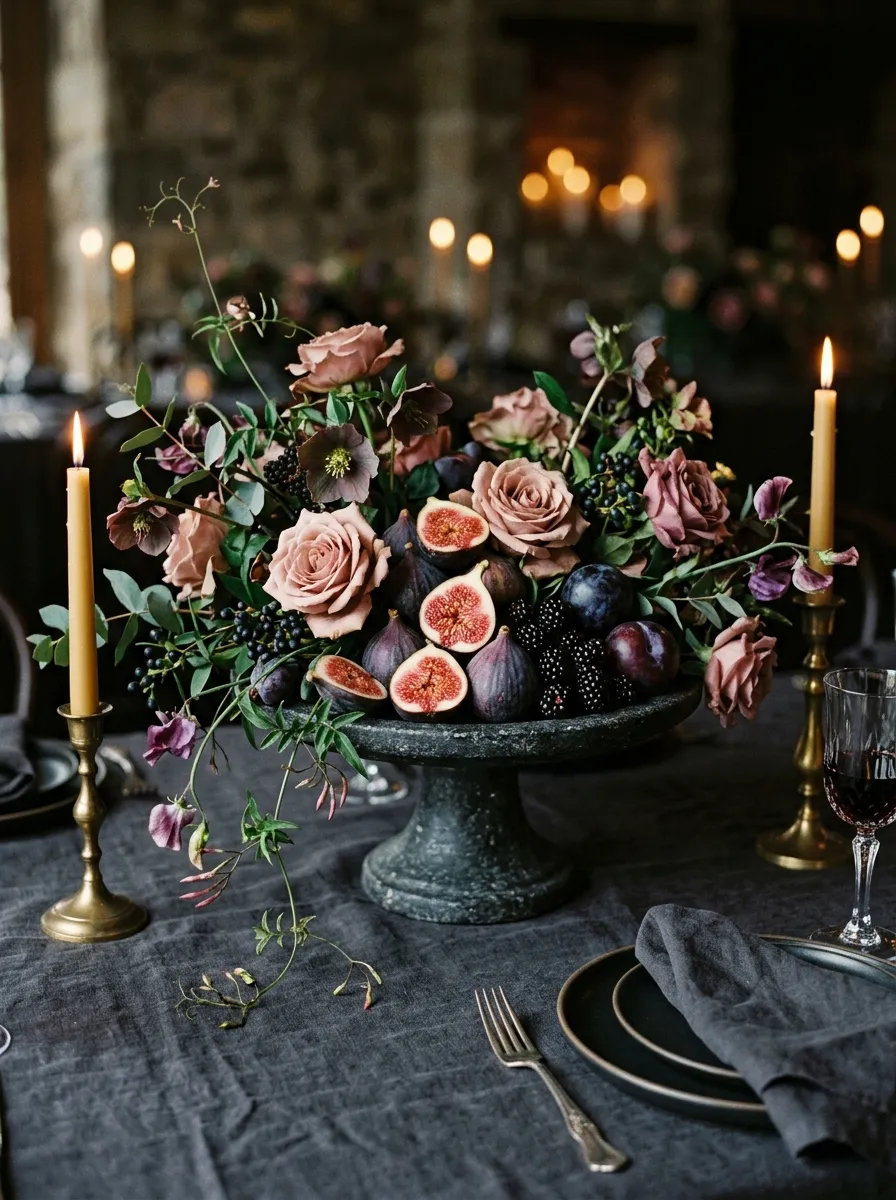
The dusky fig and blackberry romantic pedestal captures the moody, rich ambiance of Old World Dutch still-life paintings through dark, jewel-toned fruits and trailing vines. This sophisticated concept pairs deep violet mission figs with clusters of ripe blackberries, dark plums, and antique dusty rose blooms atop a raised stone pedestal. The visual impact centers on velvety, matte skin surfaces accented by the glistening interior flesh of gently torn fruit halves. Soft trailing sweet pea vines and dark burgundy foliage soften the edges, creating a luxurious, cascading silhouette that feels collected from an overgrown estate orchard. This opulent design pairs exquisitely with brass taper holders, dark charcoal linens, and textured ceramic chargers at formal evening receptions. The dark tonal depth adds instant warmth to autumn or winter celebrations, offering an intimate, regal atmosphere that standard pale floral arrangements often fail to achieve. Constructing this piece sharpens skills in color grading, delicate fruit anchoring, and establishing asymmetric visual balance without causing top-heavy structural instability.
Secure a heavy brass pin frog into the base of a dark stone pedestal dish using a generous strip of waterproof floral clay. Form a loose framework of dark foliage, such as purple plum branches or agonis, pressing the woody stem ends into the brass pins to dictate the outward cascade. Insert wooden skewers halfway through the stem bases of whole purple figs, positioning them centrally within the foliage framework at staggered elevations. Halve three ripe figs lengthwise, coat the exposed pink seeds with a light film of food-grade vegetable glaze to retain gloss, and balance them carefully along the front rim. Weave slender stems of thorny blackberry vines around the fig cluster, allowing heavy fruit clusters to hang over the pedestal edge. Nestle individual deep burgundy garden roses and mauve sweet peas between the dark fruit forms to introduce floral softness and pleasant fragrance. Complete the setup by scattering loose blackberries and a solitary cracked walnut around the pedestal base to echo the rich banquet theme.
Idea 3: Tuscan Pomegranate and Terracotta Runner
How to Create
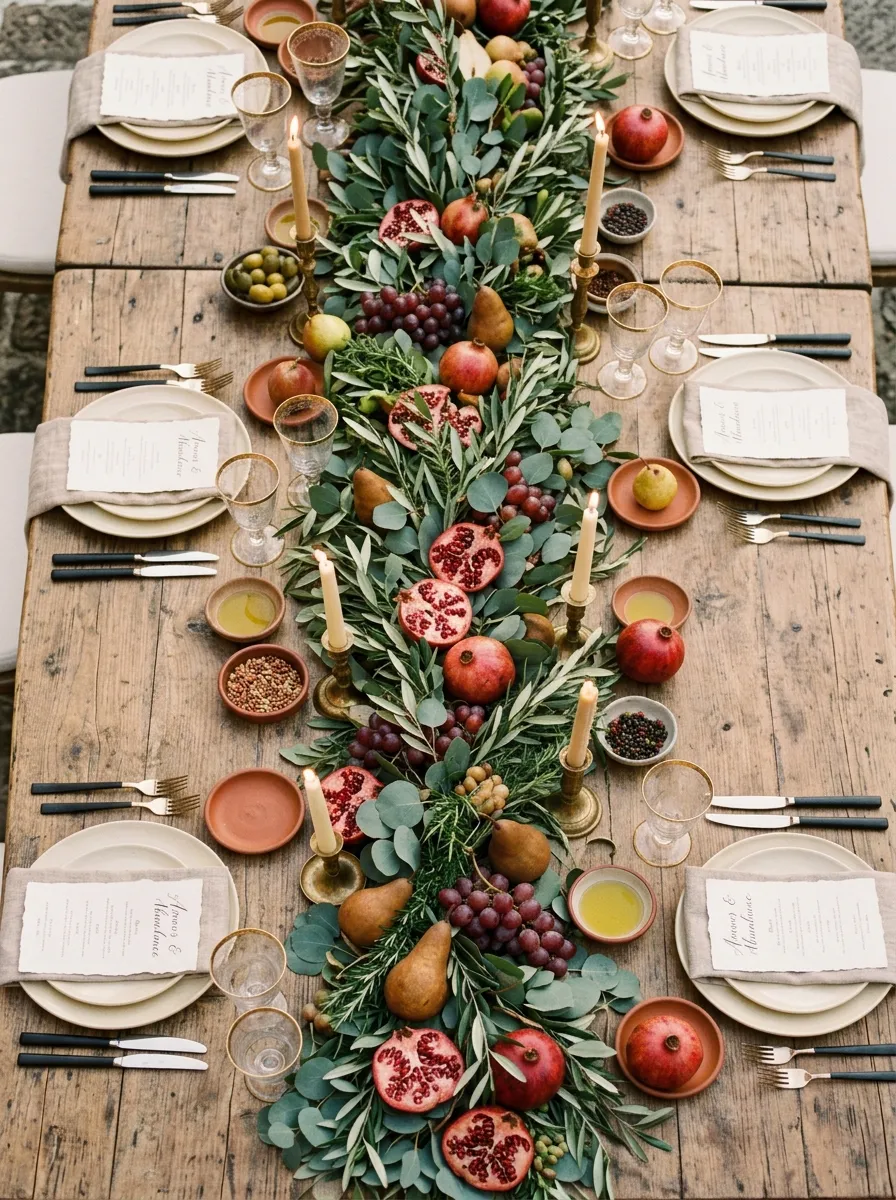
The Tuscan pomegranate and terracotta runner provides a lavish, continuous tablescape ideal for long wooden banquet tables and family-style wedding receptions. This design abandons traditional elevated vases in favor of a low, garland-style runner composed of split pomegranates, russet pears, and wild eucalyptus branches. The visual signature features the deep ruby red tones of glossy pomegranate seeds catching candlelight against earthy, matte terracotta surfaces. By running the organic elements down the entire center of the table, this layout unifies the dining space while leaving ample room for shared dinner platters and wine carafes. The dynamic combination of whole fruits, cracked rinds, and loose textured foliage generates a welcoming, bountiful atmosphere that invites touch and celebration. Pomegranates possess thick rinds that withstand ambient room temperatures for days, making this installation exceptionally durable for long receptions. Crafting a low runner develops spatial awareness, teaches progressive volume distribution, and allows designers to integrate taper candles safely among organic materials.
Lay a wide strip of neutral parchment paper along the center of the wooden dining table to protect the wood grain from potential fruit juices and sap. Lay broad-leaf silver dollar eucalyptus and seeded eucalyptus along the parchment, overlapping the stem ends to construct a dense, unbroken green runner. Score the leathery skins of four large pomegranates with a paring knife, gently pulling the fruit halves apart with your hands to expose jagged clusters of ruby arils. Spray the exposed red seeds with floral moisture sealant to preserve their reflective sheen without dripping sticky moisture onto table surfaces. Arrange the cracked pomegranates at alternating angles along the foliage runner, positioning whole russet bosc pears and deep red grapes in between to create a lush, staggered progression. Place slender, warm terracotta saucers beneath the juiciest split fruits to catch incidental moisture while reinforcing the rustic ceramic design theme. Weave unscented ivory taper candles in varied brass holders throughout the foliage, ensuring flames remain safely clear of overhanging leaves.
Idea 4: Citrus Orchard Glass Cylinder Display
Execution Process
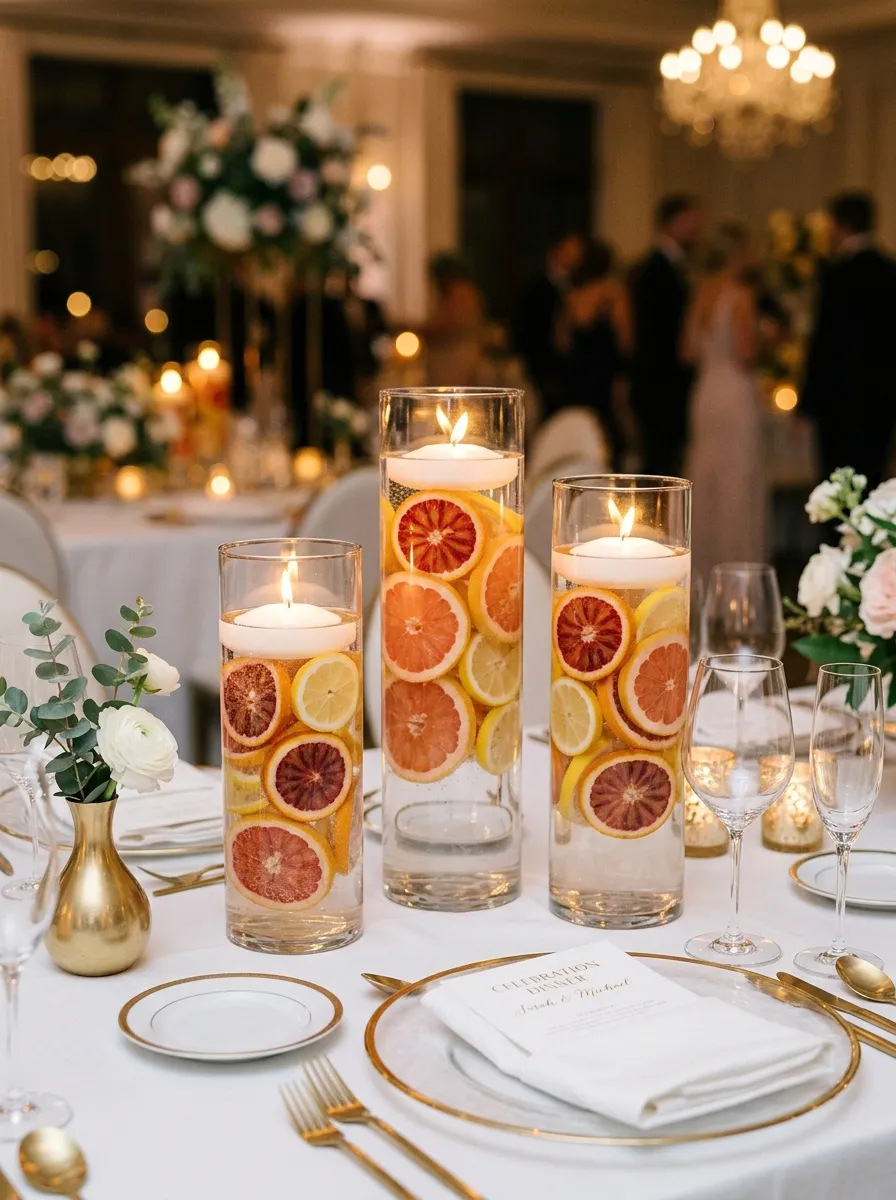
The citrus orchard glass cylinder display offers a clean, contemporary interpretation of fruit decor that marries crisp modern design with bold, radiant coloration. This method relies on transparent glass hurricane vases filled with submerged citrus slices, topped with floating candles or clean white floral spheres. Submerging citrus discs under clear water creates an optical magnification effect, transforming ordinary orange, grapefruit, and lime cross-sections into glowing graphic patterns. The vertical glass structures add desirable height to reception tables without consuming excessive table surface area or blocking conversations. Furthermore, enclosing the fruit completely within water prevents insect intrusion, eliminates oxidation concerns, and guarantees complete stability during indoor or outdoor dining events. The clean lines of clear glass harmonize seamlessly with minimalist banquet halls, industrial loft venues, and modern hotel ballrooms. Assembling submerged citrus cylinders teaches precision cutting techniques, buoyancy management, and methods for achieving crystal-clear water clarity in large event centerpieces.
Select three heavy-bottomed glass cylinder vases of varying heights, such as six, nine, and twelve inches, cleaning the glass thoroughly with lint-free microfiber cloths. Slice fresh grapefruits, blood oranges, and navel lemons into uniform wheels measuring approximately one-quarter inch in thickness using a sharp mandoline or chef’s knife. Press the citrus wheels against the interior glass walls in an overlapping spiral pattern, inserting an internal clear acrylic tube or floral foam block to pin slices firmly against the glass. Pour chilled, distilled water slowly down the interior wall of each cylinder until the water level rests two inches below the top rim, taking care not to dislodge the arranged fruit. Skim any floating seeds or pulp fragments from the water surface with a fine mesh tea strainer to maintain optical clarity. Place a premium white floating wax candle on the water surface of each cylinder, or crown the cylinder opening with a compact orb of white hydrangeas. Group the three completed cylinders tightly together in the table center to create a dynamic, multi-level glowing centerpiece.
Idea 5: Peach Blossom and Wild Strawberry Low Bowl
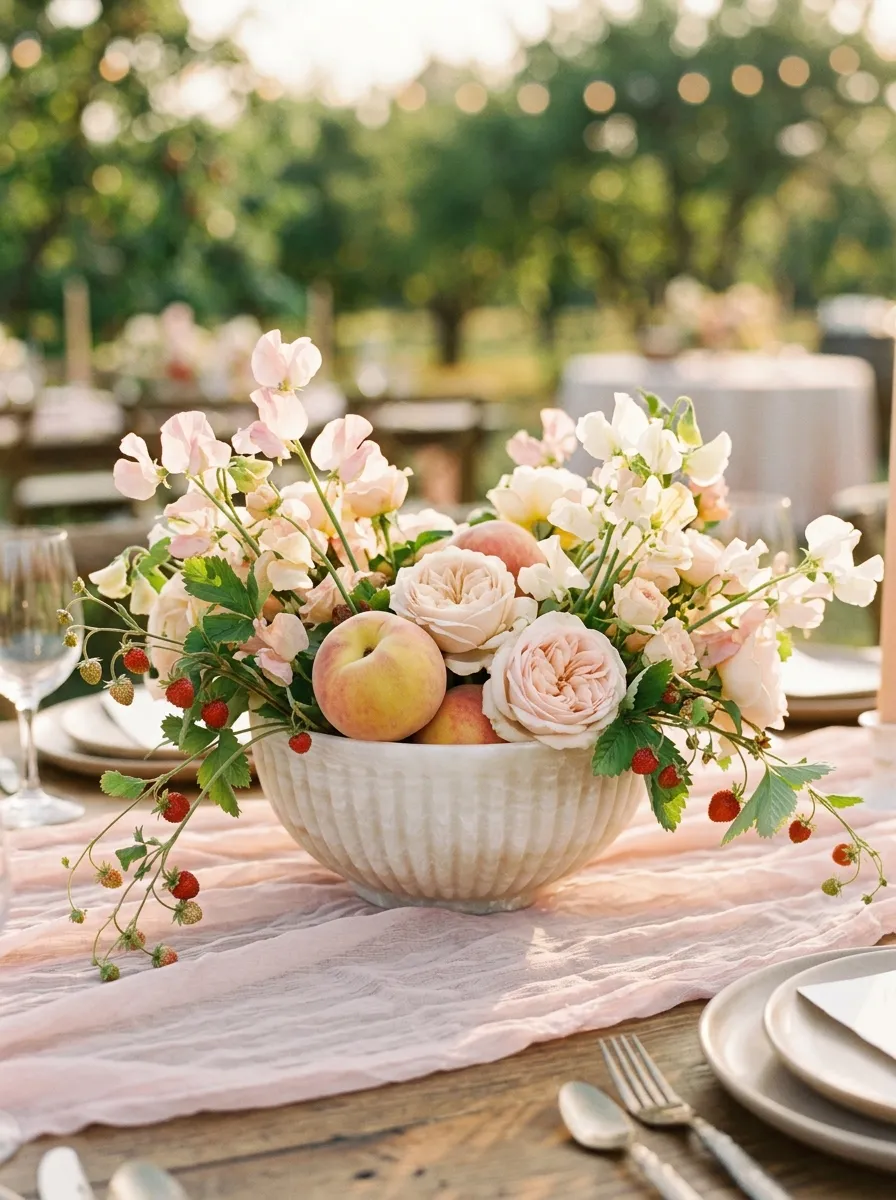
Setup Method
The peach blossom and wild strawberry low bowl captures the sweetness and delicate charm of early summer orchards within an understated, fine-art arrangement. This romantic concept features velvety ripe peaches, delicate wild strawberries on the vine, and soft blush spray roses arranged inside a fluted alabaster or cream ceramic vessel. The tactile appeal centers on the soft, fuzzy skin of whole yellow-pink peaches contrasted with the miniature, pointed forms of bright red strawberries. Delicate fruiting branches and pale green strawberry foliage spill lazily over the low bowl rim, establishing an organic, gathered-from-the-garden profile. The gentle pastel palette complements airy chiffon runners, warm rose-gold flatware, and outdoor tented receptions. Peaches provide substantial physical volume, allowing designers to achieve a full, luxurious presence with fewer delicate floral stems. Creating this sweet summer display provides excellent practice in balancing soft-skinned, bruise-sensitive produce, harmonizing subtle warm gradients, and integrating delicate fruiting vines into formal dining centerpieces.
Attach a lightweight, pre-soaked circular floral foam ring to the bottom of a shallow, footed cream ceramic bowl using waterproof anchor tape. Build an airy foliage base by inserting delicate peach tree branches, honeysuckle vines, and trailing strawberry leaves around the rim at gentle downward angles. Push four-inch bamboo cocktail picks halfway into the firm underside of five whole peaches, mounting them securely into the center of the foam ring at slight, natural angles. Nestle small bunches of ripe strawberries—preferably still attached to their natural green leafy vines—between the peach forms, letting them dangle over the vessel edge. Fill remaining gaps with clusters of pale blush garden roses, delicate white sweet peas, and tiny white strawberry blossoms to soften the transitions. Lightly mist the floral elements with cold water, taking care to avoid saturating the fuzzy skin of the peaches, which preserves their natural velvet texture. Set the completed low bowl atop an ivory silk runner, surrounded by slender clear glass votives to illuminate the arrangement from beneath.
Idea 6: Gilded Grape and Bosc Pear Cornucopia
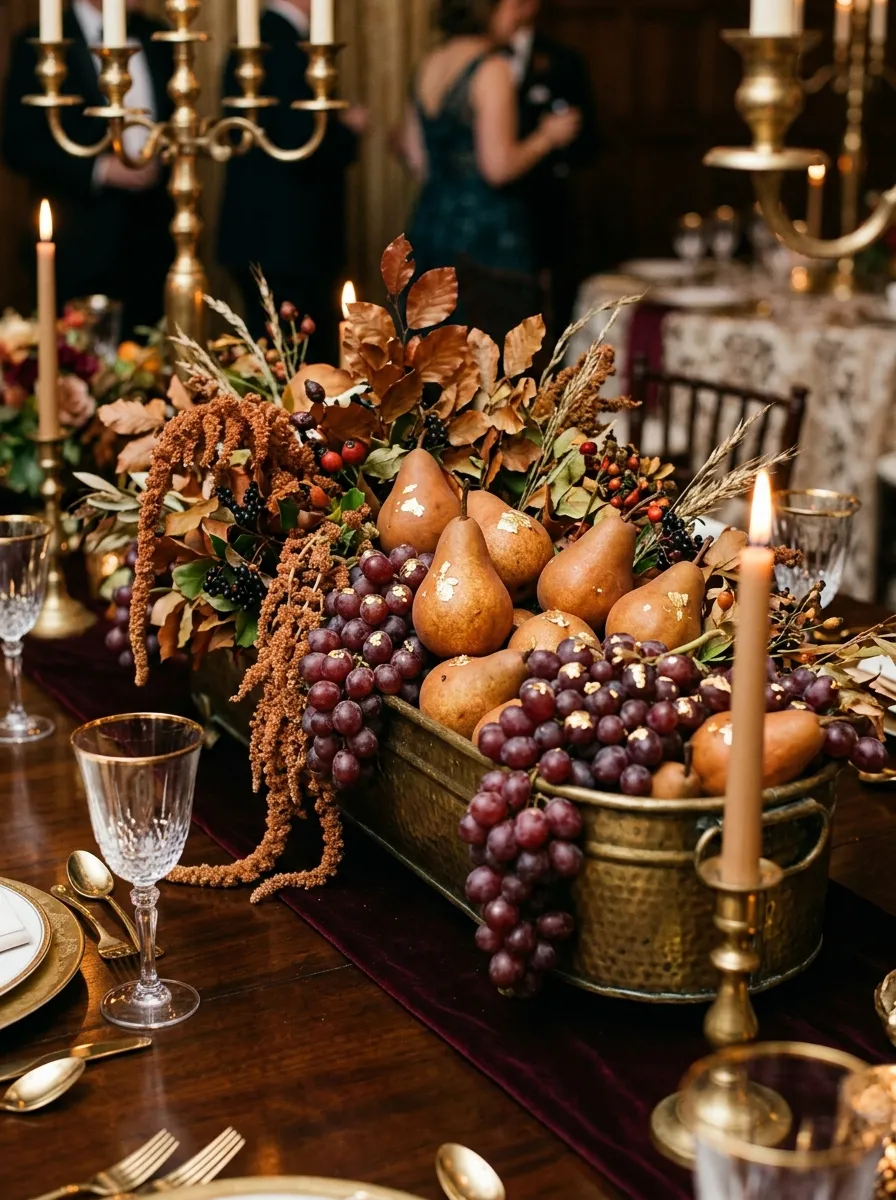
How to Make
The gilded grape and bosc pear cornucopia reinterprets classic harvest symbolism through an elegant, high-fashion lens suited for formal autumnal weddings. This luxurious centerpiece pairs rich golden-russet bosc pears and cascading bunches of red globe grapes with subtle accents of edible gold leaf and burnished foliage. Rather than using traditional woven baskets, this design utilizes sleek, elongated brass troughs or hammered metal trays to hold the opulent arrangement. The visual focus relies on the metallic sheen of warm brass harmonizing with the natural cinnamon speckles of ripe pear skins and the dusting of metallic gold on selected grape clusters. This grand, generous aesthetic brings a formal, regal sophistication to historic estate venues, ballroom receptions, and library settings. The substantial weight and density of the fruit pieces establish a grounding presence along wide banquet tables. Crafting this gilded display develops skill in applying delicate metallic foils to organic surfaces, mastering linear weight balance, and curating rich monochromatic palettes.
Thoroughly clean and dry several dense clusters of dark red globe grapes and six symmetrical bosc pears, selecting specimens with their natural woody stems fully intact. Use a soft, dry craft brush to apply tiny specks of edible gold leaf foil across the shoulders of three pears and over random grape surfaces, allowing the metal to adhere naturally to the skins. Place a long, narrow antique brass trough down the center of the table, lining the interior with clean bubble wrap covered by dark green moss to cushion the produce. Arrange the bosc pears along the trough, angling some upright and resting others on their sides to create an undulating, dynamic ridge line. Drape the heavy grape clusters over the edges of the brass vessel, allowing the gilded fruit to spill down toward the table surface in luxurious folds. Intersperse stems of dried gilded eucalyptus, preserved bronze beech leaves, and dark copper amaranth along the base to introduce feathery textural contrast. Wipe the brass vessel exterior clean with a polishing cloth to ensure a gleaming, professional presentation.
Idea 7: Tropical Papaya and Lime Architectural Centerpiece
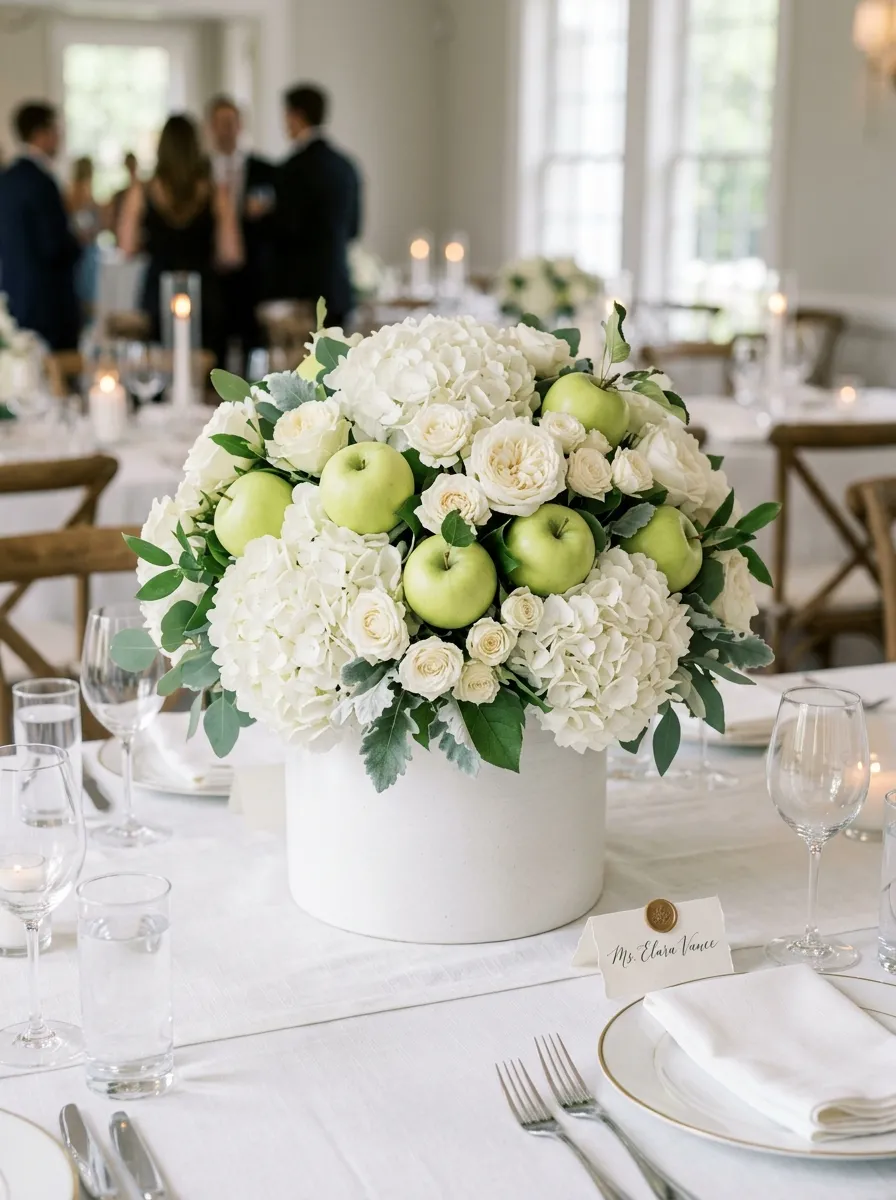
Step-by-Step Guide
The tropical papaya and lime architectural centerpiece presents a bold, modern vision of exotic wedding styling that relies on vibrant colors, unique interior seed textures, and graphic green foliage. This striking concept highlights the brilliant salmon-orange interior of sliced papayas alongside clusters of bright green key limes and deep orange mangoes arranged across a flat black slate or raw concrete plinth. The star feature is the open papaya, where glossy, caviar-like black seeds provide a captivating contrast against rich, buttery orange flesh. Oversized tropical leaves, such as glossy monstera and pleated palm fronds, frame the arrangement, producing a sculptural silhouette that commands attention. This energetic aesthetic works wonderfully for destination weddings, modern coastal celebrations, and tropical botanical conservatory venues. The bold color saturation stands out vividly against crisp white linens or natural bamboo tables. Building this architectural centerpiece teaches bold scale balance, methods for stabilizing sliced tropical produce, and strategies for working with heavy, broad-leaf foliage.
Place a heavy, dark slate serving board in the table center, applying small felt adhesive pads beneath the stone to protect the reception table finish. Cut a firm, large papaya in half lengthwise using a sharp chef’s knife, leaving the glistening black interior seeds intact within the hollow cavities. Brush the exposed orange flesh generously with an odorless, food-safe pectin glaze or lemon water to seal the surface against air exposure and maintain a fresh appearance. Rest the cut papaya halves on the slate board at opposing forty-five-degree angles, propping them securely with small mounds of florist clay hidden beneath the rinds. Layer whole yellow mangoes, whole papayas, and bright green key limes around the focal halves, creating an asymmetrical cascade that slopes toward the tabletop. Insert single stems of glossy monstera leaves and split-leaf philodendron beneath the slate edges, pinning them flat to anchor the arrangement visually. Tuck a few stems of bright orange bird-of-paradise flowers or fiery coral anthuriums into the fruit cluster to complete the tropical tablescape.
Idea 8: White Ceramic Apple and Pale Hydrangea Sphere
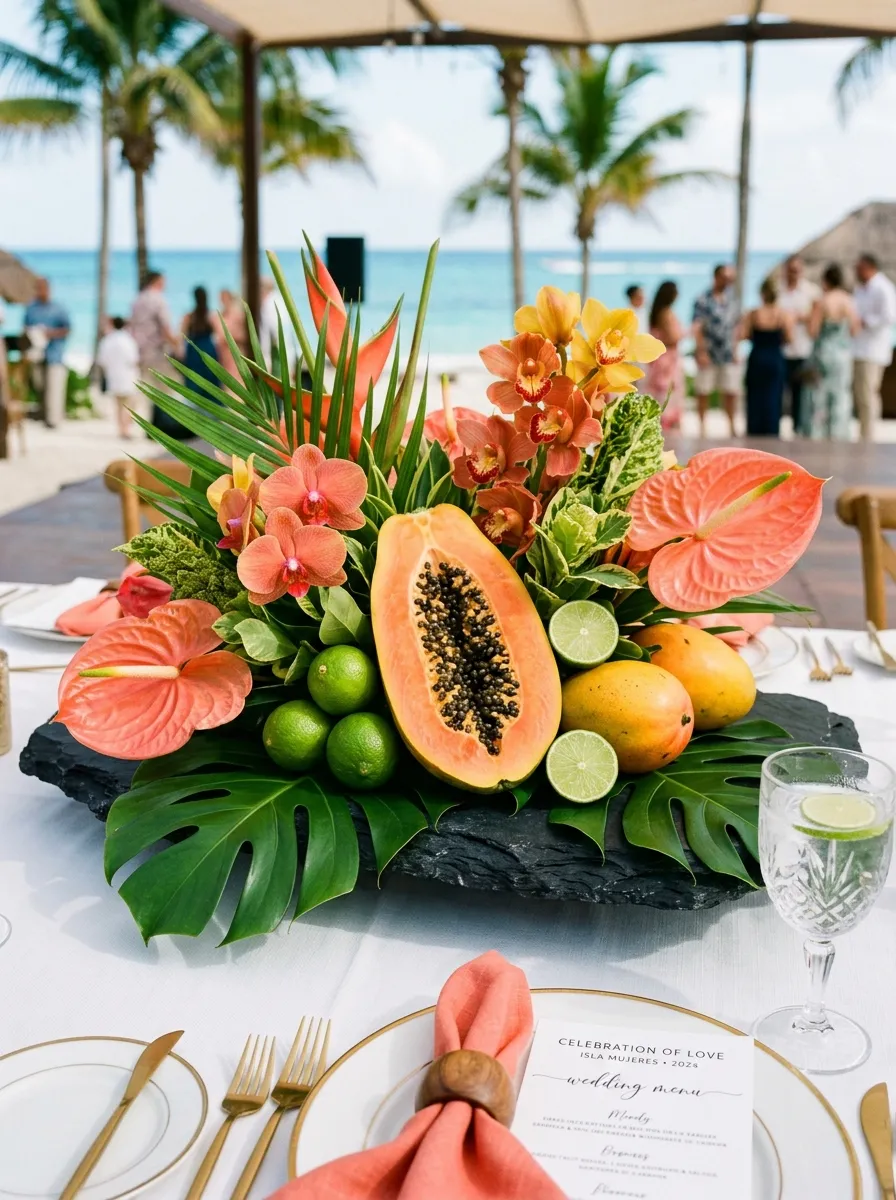
How to Create
The white ceramic apple and pale hydrangea sphere delivers a serene, monochromatic aesthetic that embodies refined minimalist style for classic, timeless weddings. This design features crisp Granny Smith green or pale blush apples nestled within a cloud-like mound of white hydrangeas and ivory garden roses inside a modern white ceramic cylinder. The concept relies on subtle texture shifts between the hard, waxy sheen of the apple skins and the soft, ruffled density of the surrounding hydrangea petals. By keeping the color palette restricted to ivory, soft cream, and delicate pale green, the arrangement feels light, airy, and modern. This design works effortlessly in historic churches, tented summer lawn receptions, and clean gallery venues where understated sophistication is desired. The rigid spherical shape of whole apples provides dependable support for neighboring flower stems, helping the arrangement maintain its dome structure throughout the event. Constructing this piece refines skills in dome geometry, working with water-thirsty blooms, and balancing diverse densities within a compact vessel.
Fit a wide, cylindrical white ceramic bowl with a pre-soaked oasis foam dome, securing it firmly with crisscrossed waterproof white floral tape. Cut four large stems of white antique hydrangeas short, inserting them into four cardinal points around the rim to establish a broad, billowy floral foundation. Insert four-inch floral wooden picks securely into the base cores of eight pale green or blush pink apples. Position the skewered apples within the crevices between the hydrangea heads, stepping their heights upward toward the top center to maintain a harmonious, rounded dome. Fill any visible mechanical voids between the apples and hydrangeas with short stems of ivory spray roses and delicate green hypericum berries. Ensure the lowest tier of apples rests snugly against the ceramic bowl lip, concealing all wooden skewers and foam mechanics completely from view. Mist the completed dome thoroughly with cold water to hydrate the delicate hydrangea petals, and place the modern bowl directly onto a clean linen runner.
Idea 9: Autumn Persimmon and Walnut Footed Urn
Execution Process
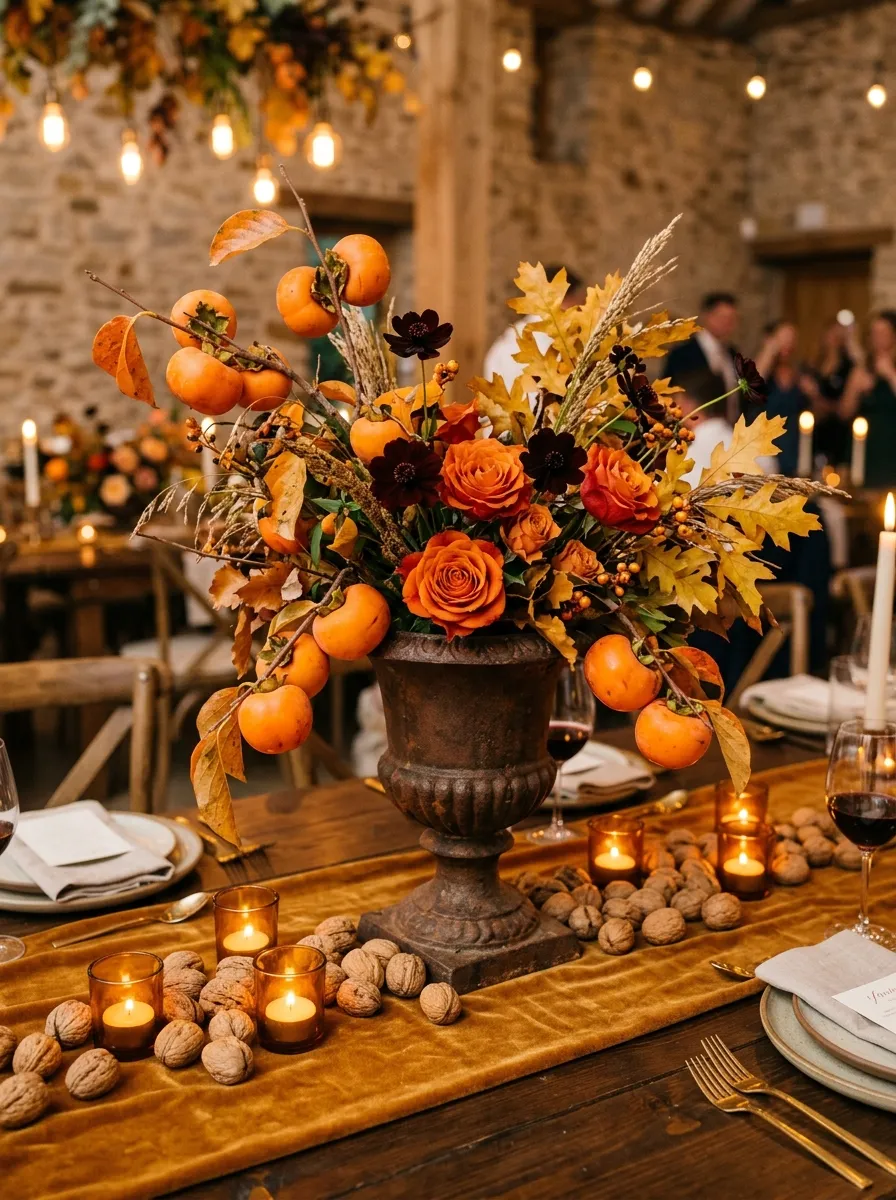
The autumn persimmon and walnut footed urn celebrates the cozy, rustic abundance of late fall through warm orange tones, woody textures, and natural orchard foliage. This concept utilizes a classic cast-iron or dark bronze footed urn loaded with glossy, flame-orange Fuyu persimmons, whole unshelled walnuts, and branches of golden oak leaves. The visual appeal centers on the saturated, warm orange tones of the persimmons glowing against the dark metal of the urn and the rugged, matte surfaces of walnut shells. Long, arching persimmon branches with attached fruit extend upward and outward, giving the arrangement an architectural, tree-like scale that anchors large reception rooms. This style pairs beautifully with velvet table runners, raw wood banquet tables, and copper chargers at rustic barn weddings or woodland celebrations. The durable nature of hard persimmons and unshelled nuts ensures complete resistance to temperature shifts, making it an exceptional choice for unheated autumn venues. Assembling this arrangement sharpens skills in anchoring heavy branches, staging natural nut scatters, and building dramatic vertical dimension.
Secure a large, water-filled plastic design bowl inside the opening of a heavy bronze footed urn, fixing it in place with floral putty. Secure a dome of galvanized chicken wire over the top of the bowl, wrapping the wire edges under the container rim to create a sturdy stem grid. Insert two sturdy, branching stems of natural persimmon or golden beech leaves through the wire grid, allowing them to rise twenty inches above the urn to establish height. Thread heavy gauge wire through the bases of five large, firm Fuyu persimmons, twisting the wire ends into artificial stems and anchoring them deep into the chicken wire core. Layer deep orange garden roses, chocolate cosmos, and bronze chrysanthemums around the base of the persimmons to build a lush, velvety floral collar. Fill a low wooden tray around the footed base of the urn with a generous scatter of whole walnuts, hazelnuts, and fallen golden autumn leaves. Mist the foliage lightly, and position warm amber glass candle holders among the walnuts to cast a golden glow across the tablescape.
Idea 10: Romantic Cherry and Sweet Pea Low Trough
Setup Method
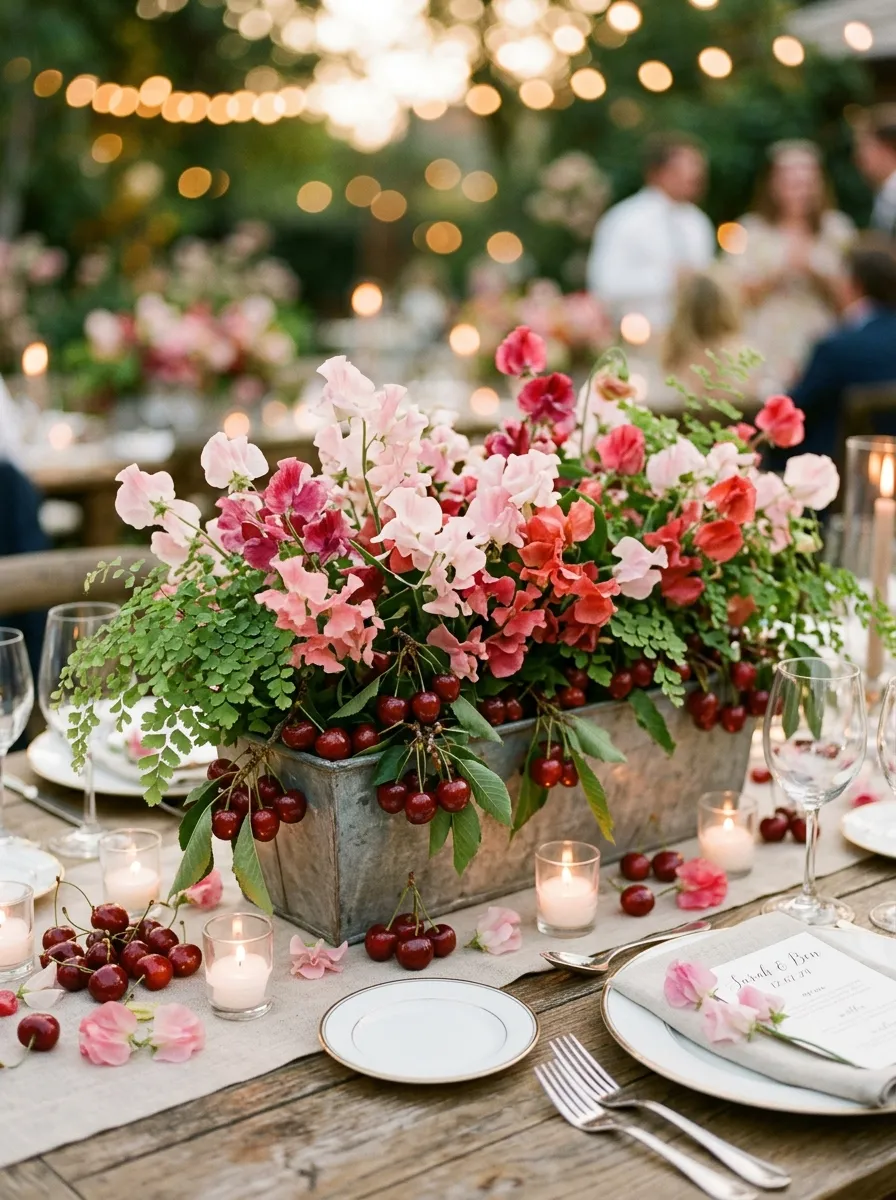
The romantic cherry and sweet pea low trough offers a whimsical, textural tablescape filled with early summer sweetness and playful botanical charm. This design incorporates clusters of deep red, glossy Bing cherries on the stem woven through an airy, floating cloud of ruffled sweet peas and trailing maidenhair ferns. Arranged within a slender, low-profile wooden or zinc trough, the display stays close to the tabletop, creating a relaxed, intimate garden dining experience. The visual signature relies on the gleaming surfaces of the dark cherries popping against the translucent, fluttery petals of the sweet peas. Stems of cherries drape lazily over the container lip, inviting guests to admire their glossy surfaces under soft dinner lighting. This romantic presentation fits garden pavilion receptions, relaxed winery gatherings, and intimate backyard celebrations. The long, narrow format maximizes table space, leaving plenty of room for glassware, place cards, and family-style serving platters. Constructing this trough develops proficiency in managing delicate, short-lived blooms, weaving fine fruit stems, and curating balanced low-profile dining centerpieces.
Line an eighteen-inch zinc or cedar planter trough with a waterproof plastic liner, placing two small pre-soaked floral foam bricks snugly inside. Cut stems of white, blush, and soft raspberry sweet peas to varied lengths between four and eight inches, inserting them into the foam to create an airy, fluttering cloud. Take small bunches of fresh cherries with their natural green twin stems still joined, looping the stems around delicate wooden picks or fine green wire. Insert the cherry picks into the foam base beneath the sweet pea petals, allowing the heavy fruit pairs to hang naturally over the trough sides. Weave small fronds of delicate maidenhair fern between the fruit clusters to introduce fine, feathery texture and hide the mechanics along the rim. Check that the overall height of the sweet peas remains under ten inches, maintaining clear sightlines across the table. Finish the display by scattering several loose, stem-on cherries directly onto the table runner at both ends of the trough, flanked by clear glass tea light candles.
Common Beginner Mistakes and How to Avoid Them
Beginners designing fruit centerpieces often encounter challenges with fruit stabilization, juice leaks, and fruit oxidation that can compromise their displays. A common mistake is balancing heavy, spherical fruits loosely on top of floral foam without internal skewer supports. As the foam softens with water, unsecured produce can easily roll off onto table linens; always anchor heavy fruits with sturdy wooden skewers pushed directly into the foam core. Another frequent oversight is failing to properly seal sliced fruits, leaving exposed pulp to brown, oxidize, and attract unwanted fruit flies during afternoon receptions. Brush all cut fruit surfaces with a light coating of lemon juice, food-safe pectin glaze, or commercial floral sealant to preserve moisture and color without dripping. Additionally, selecting overripe produce can cause fruit to bruise under its own weight or release sticky juices onto expensive tablecloths. Always source firm, slightly underripe fruit specimens two to three days before the event, storing them in a cool, dry area away from direct sunlight. Finally, remember that whole fruits add significant physical weight to vessels; balance urns and pedestals carefully to prevent top-heavy arrangements from tipping over during lively reception dinners.
Practical Tips for Better Results
Achieving professional results with fruit centerpieces requires thoughtful prep work and attention to subtle design details. When shopping for produce, choose specimens that still have their natural green leaves, woody stems, and calyxes attached; these natural elements add authentic orchard charm that bare, polished supermarket fruits lack. Always wipe whole fruits with a clean, dry cloth to remove packing dust, or apply a drop of mineral oil on a cloth to give citrus and apples a gentle, camera-ready sheen. If you are integrating fresh flowers with fruit, keep your floral stems in dedicated water tubes or pre-soaked foam blocks so they stay fully hydrated without drawing moisture away from the fruit skins. When building long runners along tables, lay down clear cellophane or parchment beneath the greenery to protect delicate linens from fruit sap, condensation, and natural oils. Finally, keep extra wooden skewers, toothpicks, and backup fruit in your on-site emergency styling kit; this allows you to quickly swap out any bruised items during final table setup before guests arrive.
Styling, Presentation, or Organization Ideas
Curating the styling around your fruit centerpieces ensures that the entire reception room feels cohesive, thoughtful, and visually balanced. Pair fruit arrangements with table linens that complement their natural tones; for example, warm terracotta and lemon displays look stunning against cool French blue or crisp white linens, while dark figs and berries shine against rich forest green or charcoal velvet. Carry the fruit theme into your place settings by resting a single fruit, such as a small pear, fig, or clementine, atop each folded linen napkin alongside a calligraphed name card. For long banquet tables, intersperse your main fruit centerpieces with matching elements, using small ceramic dishes of loose cherries, grapes, or walnuts placed beside taper candles to create a continuous, rhythmic tablescape. Vary the heights of your lighting, pairing low glass votives with tall, slender taper candles so light bounces beautifully off both the glossy fruit skins and the textured foliage. When organizing multi-table setups, build your arrangements in batches by fruit variety to keep colors and proportions consistent across every table in the room.
Budget or Time Planning
Fruit centerpieces are wonderful for wedding decor because they provide an opulent, bountiful look while keeping materials costs and assembly hours under control. Fresh produce is typically much more affordable by volume than premium out-of-season flowers, allowing couples to fill large vessels and long runners on a friendly budget. To maximize cost savings, source your fruit in bulk from local wholesale produce markets or commercial food suppliers rather than paying retail grocery prices. Plan your production timeline efficiently: wash, inspect, and prepare whole fruits two days before the wedding, and save any fruit slicing or delicate floral additions for the morning of the event to ensure peak freshness. Most low compote designs can be assembled in twenty to thirty minutes once your materials are prepped, while long garland runners take about forty-five minutes per table. Grouping your preparation steps—skewering all fruits first, inserting base greenery next, and finishing with accent flowers—streamlines your workflow and keeps your styling team working smoothly during venue setup.
Creative Expansion and Advanced Inspiration
Once you feel comfortable with basic fruit styling techniques, you can explore creative design variations by mixing unique materials and experimental concepts into your arrangements. Try incorporating dried elements, such as dehydrated orange wheels, preserved seed pods, or cinnamon sticks, to add textural contrast and subtle fragrance to autumn and winter centerpieces. You can also experiment with unique vessel alternatives, arranging produce inside vintage wooden crates, carved stone troughs, or hollowed-out gourds to suit rustic or bohemian wedding themes. For evening celebrations, tuck waterproof micro-fairy lights or submerged LEDs into glass fruit cylinders to create glowing, ethereal illumination throughout the dining space. Advanced designers can also explore sculptural fruit carving, using linoleum cutters to carve delicate botanical patterns into the rinds of melons and citrus for an artisanal touch. Pushing beyond traditional floral boundaries allows you to transform simple, seasonal produce into unforgettable reception art that brings natural warmth, generous abundance, and distinct personality to your wedding celebration.