Designing memorable wedding reception tables requires an intentional approach to floral styling, balanced spatial arrangement, and visual texture. Glass vase wedding centerpieces have emerged as an essential design…
Designing memorable wedding reception tables requires an intentional approach to floral styling, balanced spatial arrangement, and visual texture. Glass vase wedding centerpieces have emerged as an essential design choice, offering a luminous, elegant foundation that adapts seamlessly to diverse floral styles and venue aesthetics. This complete tutorial delivers practical advice, step by step assembly methods, and actionable design strategies to help decorators create professional-grade tabletop displays. Readers will explore ten distinct glass vessel concepts, essential stem processing practices, clear mechanics management, and structural balance guidelines tailored to reception floor plans. Beyond their undeniable visual charm, clear glass arrangements provide remarkable practical value by refracting ambient room lighting and candle glow across dining surfaces. Working with transparent containers allows decorators to showcase architectural stems, submerged botanicals, or lush blooming crowns without visually blocking dinner guests. Through clear preparation instructions, budget ideas, and dependable assembly techniques, you will learn how to build cohesive, long-lasting table arrangements that capture modern design sensibilities with absolute technical confidence.
Why This Idea Is Trending or Useful
Transparent vessel styling continuously leads modern Pinterest ideas because contemporary couples prioritize airy elegance, clean silhouettes, and versatile decor elements over heavy, opaque table fixtures. Utilizing clear glass containers delivers immense practical value by creating an open, clutter-free look that lets sightlines remain open across banquet seating. From an aesthetic perspective, the reflective clarity of glass complements every reception palette, harmonizing with polished silverware, textured linens, and warm ambient candlelight. For those pursuing a DIY approach, glass vase arrangements offer an accessible, beginner friendly medium with lower technical barriers than complex floral foam structures. Glass vessels such as cylinders, bud vases, and compotes are readily available, easy to sanitize, and endlessly reusable as home decor after the event. The clean lines of glassware enhance natural botanical forms, showcasing stems and leaves as intentional design details. This combination of budget-conscious versatility, structural simplicity, and enduring sophistication keeps glass vase arrangements firmly among the top trending ideas in wedding decoration.
Materials and Preparation
Assembling durable, high-impact glass centerpieces requires purposeful materials, reliable tools, and consistent hydration management before assembly begins. Essential supplies include varied glassware silhouettes, such as heavy-base cylinders, fluted pedestals, and apothecary bud bottles, along with fresh cut flowers and sturdy greens like garden roses, ranunculus, delphinium, and salal. Gathering proper tools ensures efficient execution: equip your workstation with bypass floral shears, stem strippers, waterproof floral tape, clear adhesive dots, clean buckets, and heavy metal flower frogs or pin holders. Prior to styling, process all fresh stems immediately upon delivery: trim the bottoms at a sharp forty-five-degree angle under cool running water, strip foliage from the lower portions to prevent submerged rot, and let the blooms hydrate in clean water mixed with floral preservative for twelve hours. Planning considerations should account for table dimensions, guest sightlines, and ambient venue temperature to ensure flower longevity. Preparing your materials methodically guarantees that every vase arrangement remains fresh, stable, and visually balanced throughout the wedding celebration.
Idea 1: Tiered Floating Candle and Cylinder Trio
Step-by-Step Guide
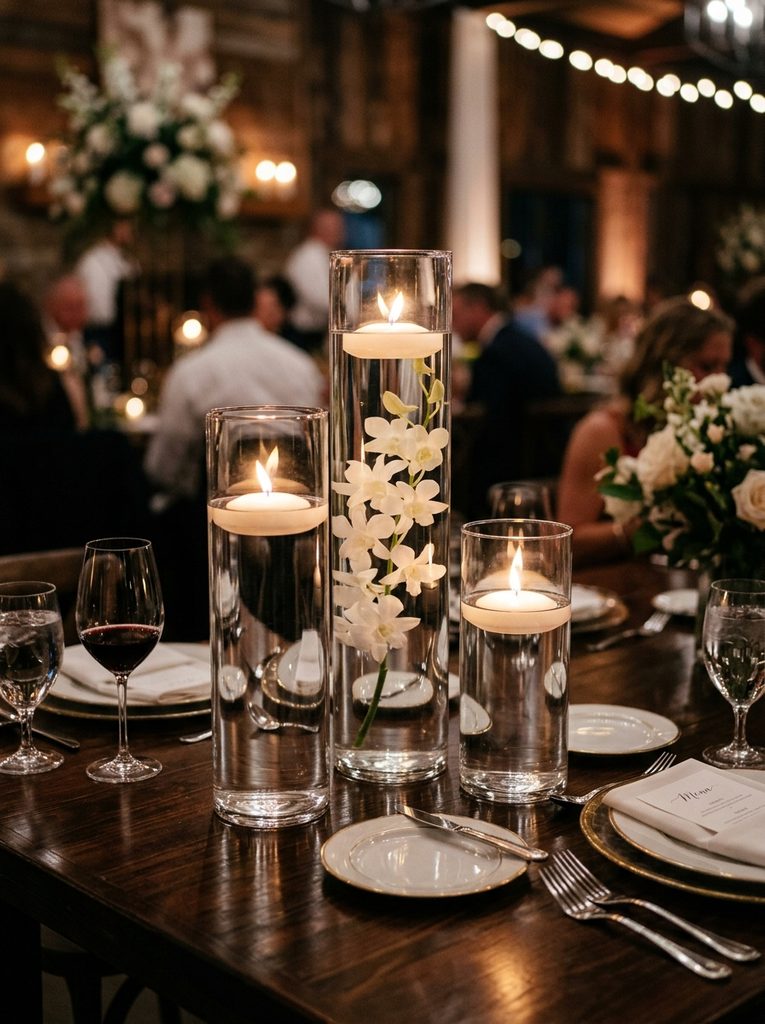
The tiered floating candle and cylinder trio creates a clean, architectural centerpiece along round or long banquet tables, producing an inviting glow through simple geometric repetition. This design pairs three heavy-base glass cylinders of varying heights, such as six, nine, and twelve inches, each filled with crystal-clear water and topped with a smooth paraffin floating candle. The graduated heights draw the eye upward without blocking dinner conversations across the table. The transparent walls reflect the golden candlelight downward, illuminating the surface below with a warm, romantic glow. This concept suits contemporary minimalist style venues, modern loft spaces, and sleek hotel ballrooms where uncluttered, luminous decor creates a serene visual atmosphere.
To build this arrangement, clean each glass cylinder thoroughly using an alcohol-soaked microfiber towel to eliminate surface dust, smudges, and fingerprints. Place the three cylinders in the center of the table, arranging them in a compact triangle formation with their bases spaced roughly one inch apart. Pour room-temperature distilled water into each cylinder, leaving exactly two inches of clearance below the top rim to prevent overflows when candles are placed. For an organic touch, submerge a single stem of Italian ruscus or a spray of white dendrobium orchids along the inner curved wall, anchoring the stem base under clean river pebbles. Gently blot the bottom of each floating candle with a dry paper towel to remove moisture, then lower it flat onto the water surface. Light the wicks twenty minutes before guest arrival using an extended grill lighter.
Idea 2: Minimalist Monofloral Bud Vase Cluster
How to Create
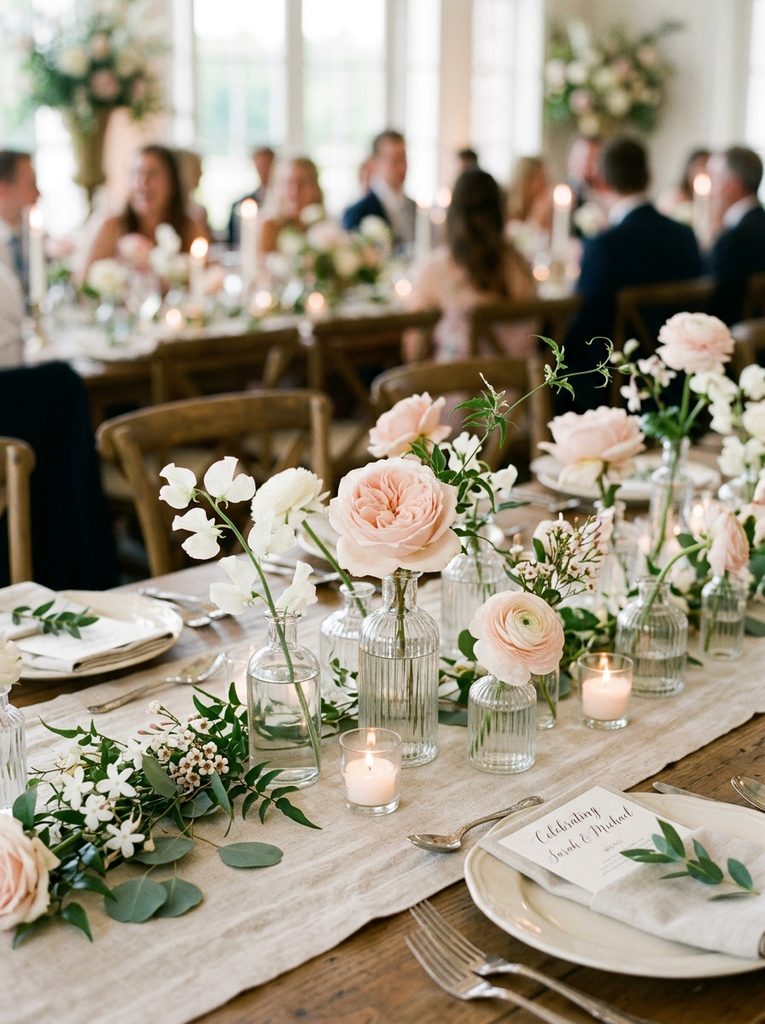
The minimalist monofloral bud vase cluster reinterprets traditional wedding table runners by scattering slender glass vessels down the center of the table, each holding one or two sculptural flower stems. This concept utilizes varied vintage-style or modern apothecary bottles in clear, uncolored glass, creating an organic rhythm of heights, neck widths, and textures. Focusing on single flower varieties—such as open garden roses, delicate sweet peas, or fluttery ranunculus—gives each individual blossom room to shine without dense crowding. The open negative space between the vases keeps the tabletop light, airy, and uncluttered. This arrangement works beautifully across long wooden farm tables, pairing natural wood grain with delicate glass and fresh botanical color.
To assemble this design, gather five to seven clear glass bud vases ranging from four to eight inches tall for each six-foot table section. Fill each bottle two-thirds full with fresh water mixed with commercial flower food, using a narrow-spout watering can to keep the exterior glass dry. Trim your flower stems individually, cutting them at varying lengths so the flower heads hover anywhere from one to four inches above the bottle rims. Insert a single statement bloom into each narrow-neck bottle, angling the stems naturally so the petals face outward toward the guest seating areas. In slightly wider vessels, pair one focal flower with a slender sprig of olive foliage or airy plumosus fern to introduce delicate texture. Stagger the bottles in a loose, winding line along the center of the table, interspersing clear glass ribbed tealight holders between them to complete the look.
Idea 3: Submerged Botanical Architectural Cylinder
Setup Method
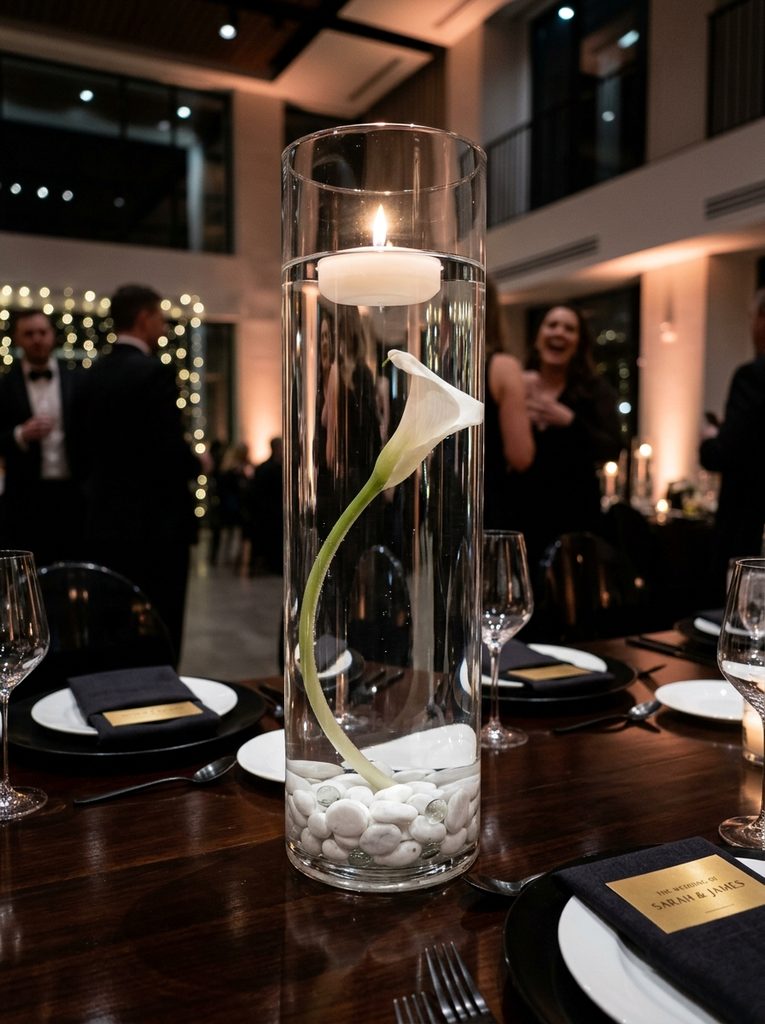
The submerged botanical cylinder centerpiece encases fresh floral stems entirely within tall, water-filled glass vessels, creating a dramatic, magnified underwater display. This design features tall, structural botanicals—such as long-stemmed calla lilies, whole cymbidium orchid sprays, or broad monstera leaves—curved inside clear glass cylinders. The surrounding water acts as a magnifying lens, highlighting the natural textures, veining, and colors of the submerged plant tissue. Encasing the blooms completely under water eliminates wilting concerns caused by dry air conditioning or outdoor breezes, ensuring a crisp display from ceremony to send-off. This clean, sculptural arrangement provides a striking focal point for contemporary, black-tie, or modern art museum receptions.
Execute this design by selecting heavy, high-clarity glass cylinder vases measuring fourteen to eighteen inches in height. Prepare your botanicals by trimming stem ends to match the interior height of the vessel, gently massaging pliable stems like calla lilies between your palms to encourage a graceful curve without snapping the fibers. Position a heavy metal floral pin frog at the bottom interior of the vase, securing its base with waterproof floral putty. Press the stem base firmly onto the brass pins to keep the flower anchored underwater, adding a layer of smooth white marble chips over the frog to conceal the mechanics. Slowly pour room-temperature distilled water down the interior side of the glass to prevent cloudiness and avoid dislodging the stem. Top the water surface with a matching floating candle, ensuring the flame hovers cleanly above the submerged bloom.
Idea 4: Footed Glass Compote Garden Gathering
Execution Process
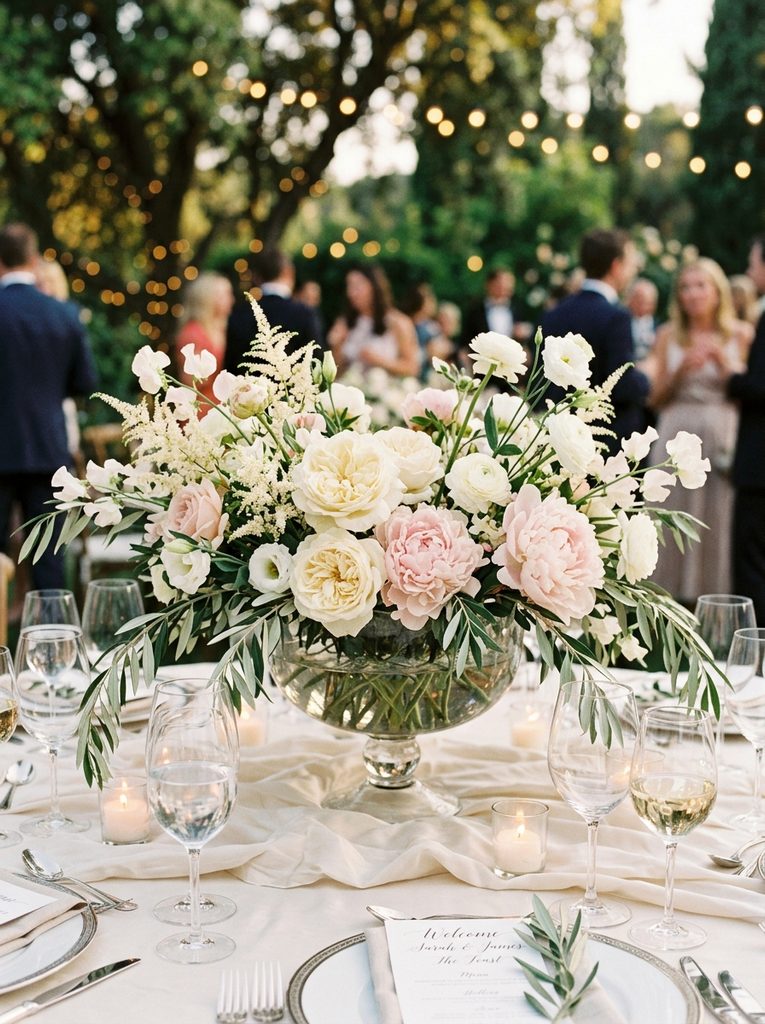
The footed glass compote centerpiece brings romantic garden abundance to the table through a shallow, wide-rimmed clear glass bowl elevated on an elegant pedestal. This concept features a loose, cascading arrangement of lush blooms and trailing foliage that spills over the curved glass lip, creating a soft, just-gathered aesthetic. The clear footed base lifts the floral dome off the table surface, giving the centerpiece presence while leaving room beneath for place settings. Because the container is completely transparent, the stems and inner mechanics must be styled with precision, turning the inner structural support into an intentional, natural part of the display. This style complements garden weddings, romantic vineyard celebrations, and historic estate settings.
Begin construction by placing a small, heavy kenzan pin frog into the center of an eight-inch clear glass compote dish, anchoring it with clear floral adhesive tape in an X-pattern. Fill the compote basin halfway with clean water treated with flower preservative. Form a loose framework using sturdy foliage, such as salal leaves and flexible olive branches, pressing the stem bases into the pin frog so the foliage cascades naturally over the rim. Insert focal flowers like open garden roses, ruffled peonies, and dahlias into the center of the pin frog at varying angles to build a rounded, dimensional dome. Fill intermediate openings with delicate secondary blooms, such as spray roses, astrantia, and textured scabiosa, checking that the clear glass base remains clean and free of crushed leaves. Rotate the bowl as you work to ensure full, balanced coverage from every viewing angle.
Idea 5: Elevated Glass Trumpet Statement Stand
How to Make
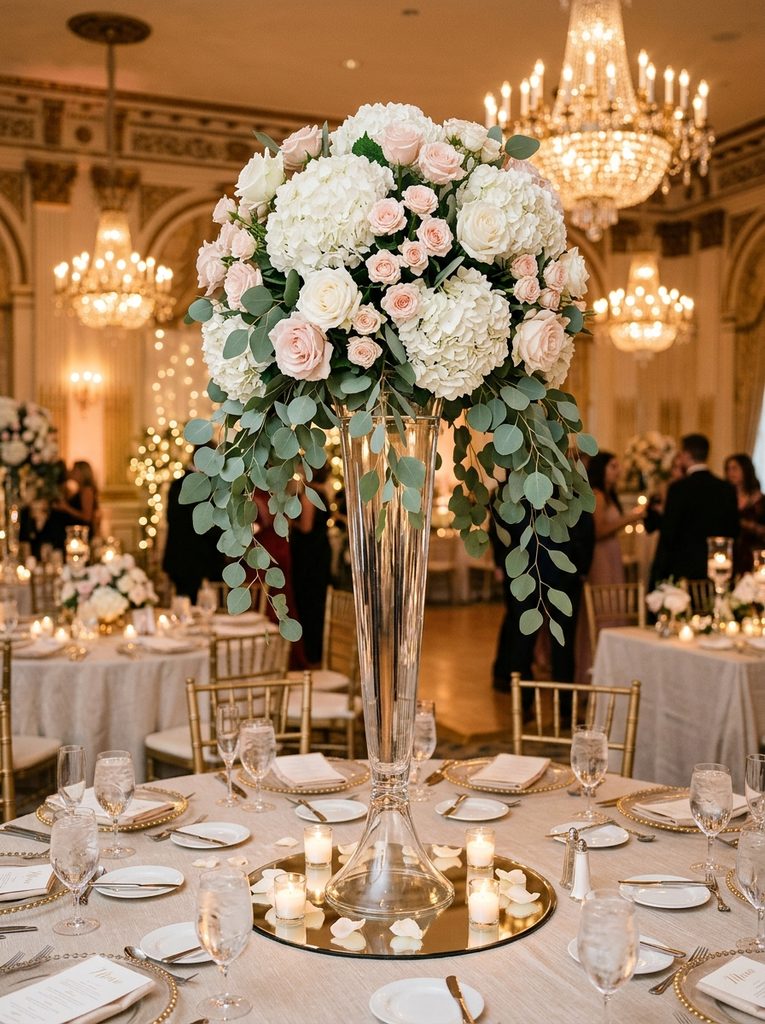
The elevated glass trumpet centerpiece uses tall, fluted glass stands to lift voluminous floral arrangements high above the dining surface, preserving clear sightlines for seated guests. This design features an elongated trumpet vase standing twenty-four to thirty-two inches high, with a slender glass waist that flares outward into a supportive top bowl. Crowning the tall stand with a lush canopy of hydrangeas, cascading eucalyptus, and spray roses creates dramatic vertical impact in venues with high ceilings or grand architectural details. The transparency of the slender glass pedestal prevents the arrangement from feeling visually heavy, maintaining an open, elegant atmosphere across the reception room. This classic layout brings timeless luxury to formal ballrooms and tented evening receptions.
To construct this elevated piece, select a sturdy trumpet vase with a wide, weighted foot to prevent tipping. Secure a pre-soaked floral foam cage or a moss-wrapped chicken wire pillow onto the top flared bowl using clear waterproof anchor tape wrapped firmly around the glass rim. Begin by inserting broad hydrangea stems into the core of the foam to establish an expansive foundation, followed by inserting long branches of silver dollar eucalyptus around the bottom edge so they trail down the glass neck. Add long-stemmed focal flowers, like standard roses, snapdragons, and delphinium, inserting them at forty-five-degree angles to build a balanced, rounded canopy. Check that the base of the trumpet vase remains completely clear of tape residue or stray foliage, wiping the glass column clean with glass cleaner before moving the arrangement to the guest table.
Idea 6: Mirrored Pedestal with Mixed Cylinder Clusters
Setup Method
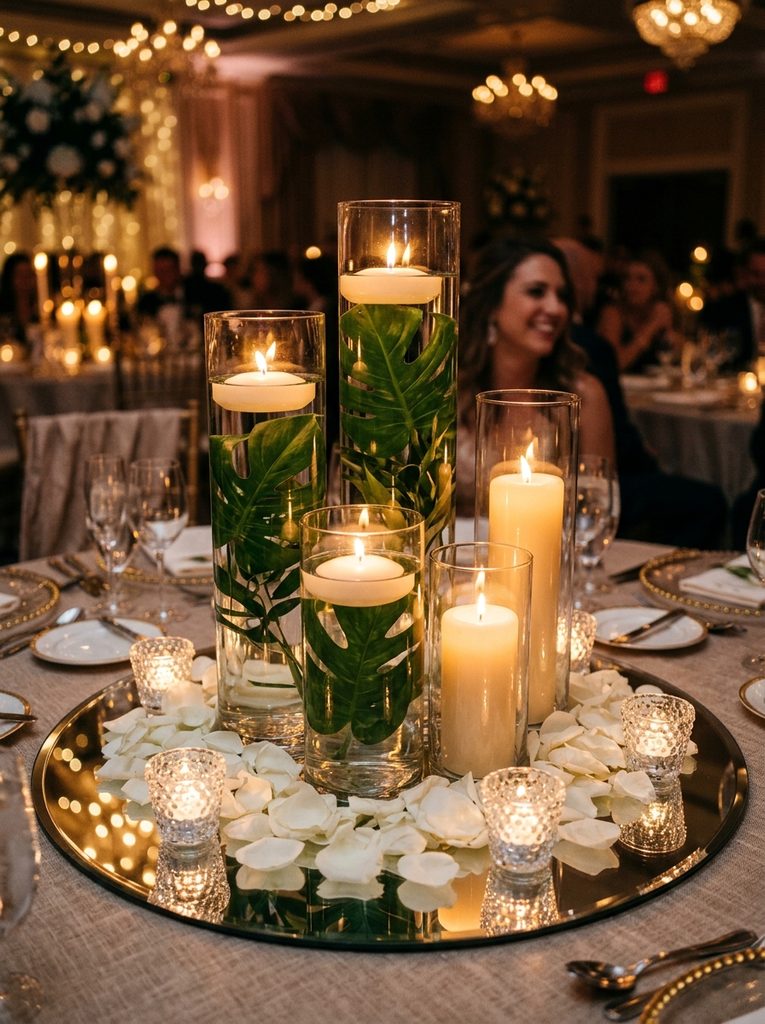
The mirrored pedestal with mixed cylinder clusters combines reflective glass surfaces with diverse vessel sizes to create a dynamic centerpiece full of light and dimension. This design features a flat, bevel-edged circular mirror tile that serves as the base for a cluster of five distinct glass cylinder vases of varied heights and diameters. Some cylinders hold floating candles, while others feature dense submerged greenery or single upright blooms, producing varied textures within a unified footprint. The horizontal mirror plate doubles the visual impact of the flickering flames and clear glass vessels, creating a sparkling focal point that enlivens simple table linens. This configuration works exceptionally well in dimly lit evening venues, adding warmth and energy to the space.
Prepare this arrangement by placing a twelve-inch round, beveled glass mirror tile squarely in the center of the dining table. Position five clear glass cylinders across the mirror surface, placing the tallest twelve-inch vase slightly off-center and arranging four-inch, six-inch, and eight-inch vases around it in an asymmetric cluster. Fill two cylinders with water and floating candles, fill one with a submerged stem of monstera foliage, and leave two cylinders for upright floral groupings featuring white hydrangeas and lisianthus. Ensure every cylinder base rests securely on the mirror surface without wobbling, using small clear adhesive dots beneath the glass bottoms if necessary for stability. Scatter loose, clear glass votive cups and a few white rose petals around the perimeter of the mirror tile to soften the edge and blend the display into the tabletop.
Idea 7: Ribbed Fluted Glass and Romantic Florals
Step-by-Step Guide
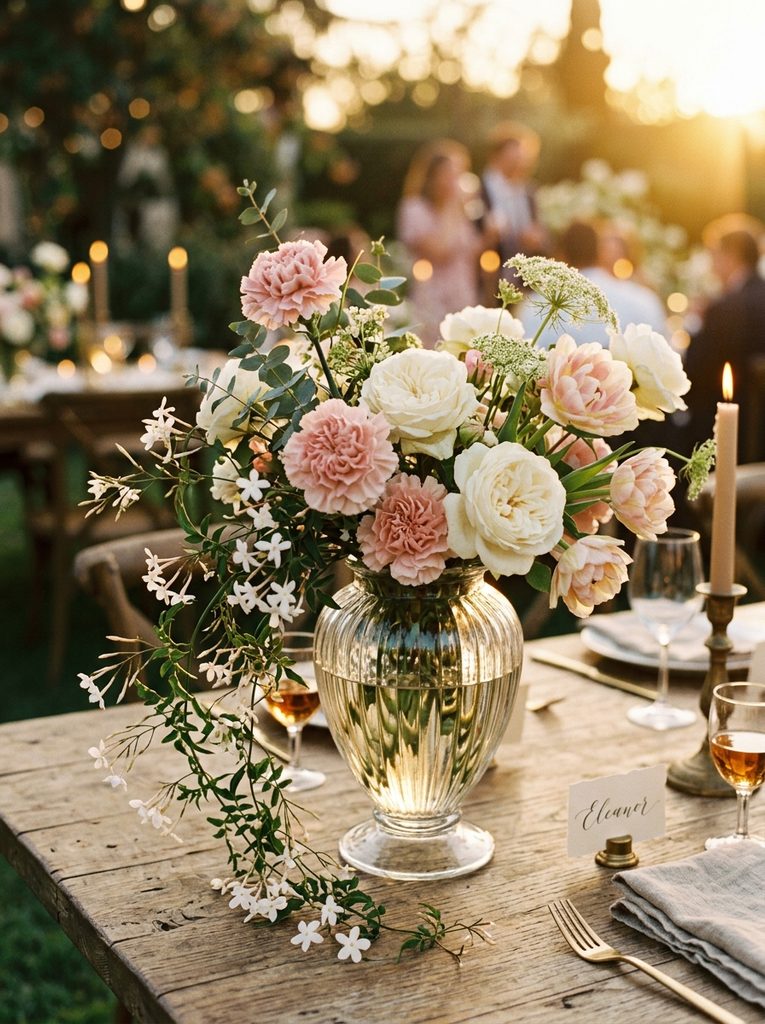
The ribbed fluted glass centerpiece introduces subtle texture and vintage character through vessels featuring delicate vertical glass ridges. This design utilizes medium-sized fluted glass urns or jars that catch and bend ambient light, softening the stems visible through the glass walls. The vertical grooves add decorative interest that complements romantic, textured flower varieties like ruffled carnations, double-petal tulips, and sweet peas. The ribbed texture also helps conceal internal floral mechanics, allowing decorators to use simple clear tape grids without visible tape lines. This style fits beautifully into romantic vintage weddings, historic library receptions, and relaxed greenhouse celebrations.
Begin by selecting an eight-inch tall fluted glass cylinder or wide-mouth urn with distinct vertical ridges. Create a floral tape grid across the mouth of the clean, dry vase using clear quarter-inch floral tape, pressing the tape ends firmly down the outer collar to keep the grid secure under water weight. Fill the vessel three-quarters full with fresh, room-temperature water mixed with floral food, avoiding splashing the exterior tape line. Insert sturdy greenery stems, like variegated pittosporum and spiral eucalyptus, through the perimeter squares of the tape grid to build a full, outward-angled foliage base. Place your focal flowers—such as blush garden roses and ruffled carnations—into the central squares of the grid, trimming stems at staggered heights to build a soft, mounded shape. Finish by tucking delicate cosmos and trailing jasmine vines through the outer grid spaces, letting them drape naturally over the textured glass lip.
Idea 8: Glass Bubble Bowl Terrarium Landscape
How to Create
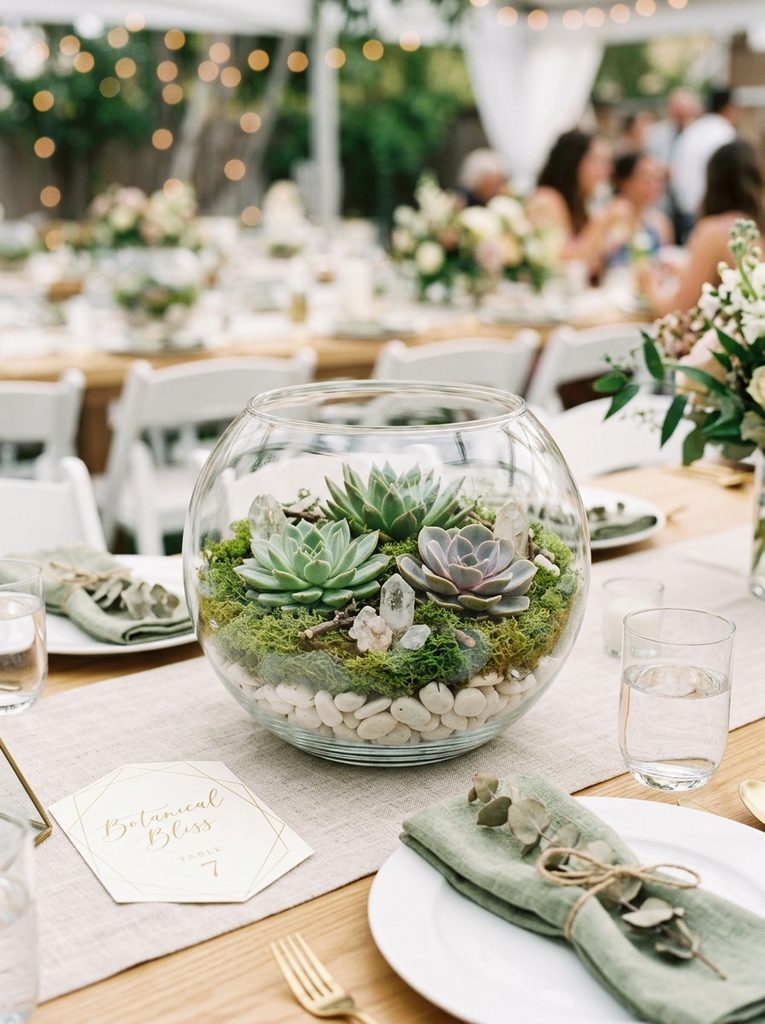
The glass bubble bowl terrarium centerpiece provides a modern botanical display by arranging living succulents, velvety sheet moss, and polished river stones inside a spherical glass orb. This design features a wide-aperture round bubble bowl that showcases layered natural textures through its curved transparent walls. Unlike traditional tall arrangements, this low-profile spherical vessel sits well below eye level, encouraging guests to admire the miniature landscape from above. The enclosed glass sphere retains moisture well, keeping succulent rosettes crisp and fresh throughout the reception. This sustainable, long-lasting design suits bohemian outdoor celebrations, relaxed courtyard dinners, and modern botanical weddings.
To construct this terrarium display, clean a ten-inch glass bubble bowl thoroughly, ensuring the interior walls are completely free of dust or streaks. Pour an even one-inch layer of decorative white quartz pebbles or natural river stones across the bottom of the bowl to provide drainage and a clean base. Add a thin layer of preserved emerald sheet moss over the pebbles, keeping the moss pushed firmly against the interior glass perimeter for a clean line. Nestle three healthy, root-trimmed echeveria succulent rosettes into the moss, placing the largest rosette slightly off-center and angling the two smaller succulents toward the front opening. Tuck small pieces of natural driftwood, polished black stones, and miniature air plants into the remaining gaps around the succulents. Wipe the interior glass walls clean with a dry cotton swab to remove any stray dirt particles before placing the bowl on the table.
Idea 9: Apothecary Glass Bottle and Wildflower Meadow
Execution Process
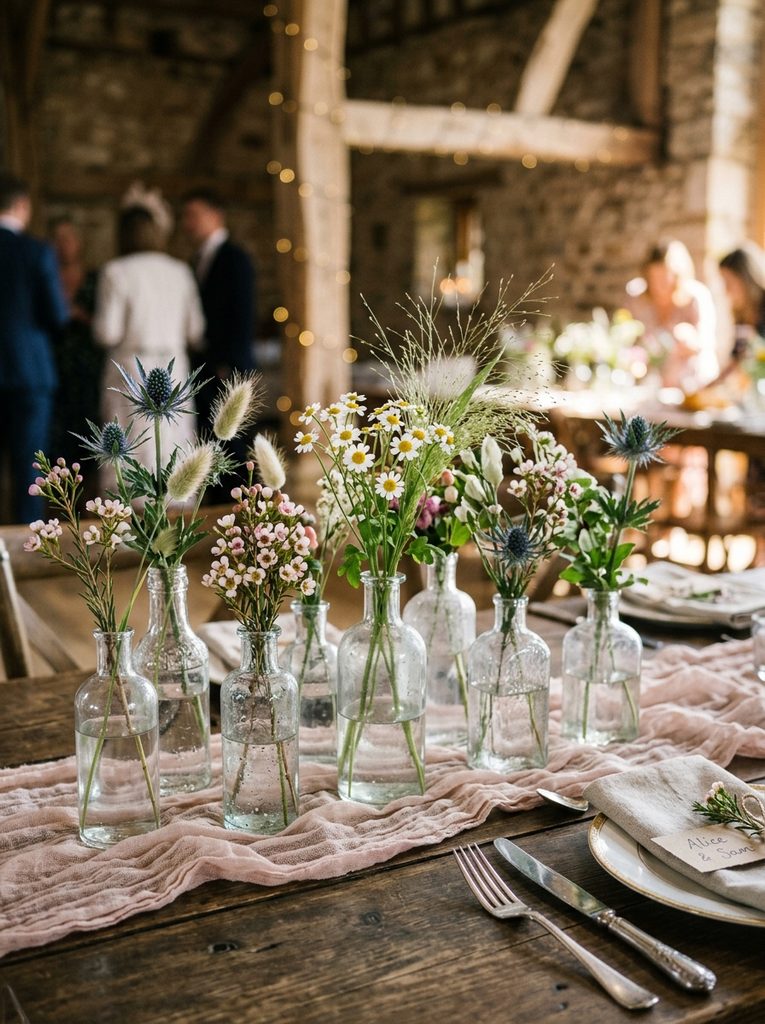
The apothecary glass bottle and wildflower meadow centerpiece captures the carefree charm of an open meadow by grouping eclectic, vintage-style glass bottles along a textured runner. This concept features a curated mix of clear, recycled-glass apothecary bottles with varied neck shapes, embossed lettering, and cork-ring collars. Rather than dense, formal blooms, each bottle holds airy, informal botanical stems—such as blue thimble eryngium, delicate waxflower, chamomile daisies, and fluttering wild grasses. The varied glass shapes and delicate flowers create a relaxed, natural tablescape that feels effortlessly assembled. This charming layout is an ideal fit for rustic barn weddings, outdoor garden receptions, and countryside celebrations.
Gather seven to nine assorted clear apothecary bottles measuring between five and nine inches in height, cleaning them thoroughly in warm water. Arrange a raw linen or cheesecloth runner down the center of the dining table, gathering the fabric gently to create soft, undulating folds. Distribute the glass bottles along the length of the runner in a relaxed zigzag pattern, ensuring the varied bottle shapes and heights balance each other naturally. Fill each bottle halfway with clean, room-temperature water using a slender funnel to prevent spills on the fabric runner. Trim your wildflower stems to different heights, stripping lower foliage to keep the water clear, and place two or three stems into each bottle. Allow tall stems of blue sea holly, airy cosmos, and trembling ornamental grasses to lean naturally from the bottle necks, finishing the tablescape by nestling clear glass votive candles into the linen folds.
Idea 10: Slender Glass Hurricane and Pillar Candle Trio
How to Make
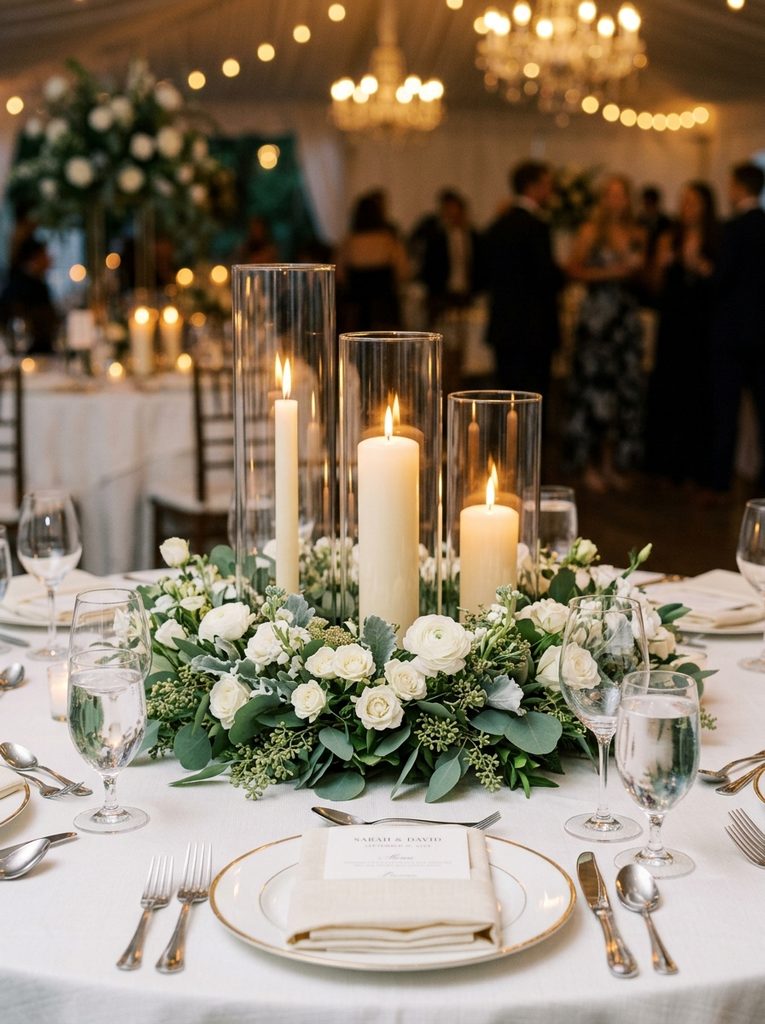
The slender glass hurricane and pillar candle centerpiece delivers timeless warmth through tall, open-ended glass chimney sleeves enclosing classic wax pillar candles. This design features three straight glass hurricane cylinders of equal or graduated heights resting over ivory candles, shielding the open flames from passing breezes while directing light across the dining table. The straight, clean glass lines create an architectural look that pairs beautifully with a low ring of fresh greenery around the base. The glass chimneys protect guests and linens from dripping wax, offering a safe, dependable lighting solution for both indoor halls and outdoor evening receptions. This refined style brings sophisticated warmth to classical, formal, and transitional wedding themes.
Set up this centerpiece by selecting three clear glass hurricane sleeves measuring ten, twelve, and fourteen inches tall, paired with matching three-inch-wide ivory pillar candles. Place the three candles in a neat cluster in the center of the table, securing each candle base with a small disc of clear floral putty to prevent shifting. Carefully lower the glass hurricane cylinders over the candles, ensuring each candle sits dead-center within its glass sleeve to prevent heat buildup on the glass walls. Crochet or weave a low, circular wreath of fresh salal leaves, seeded eucalyptus, and white spray roses around the exterior base of the hurricane cylinders, keeping the foliage below three inches in height. Clean the exterior glass sleeves with a lint-free cloth to remove handling marks. Light the pillar candles just before guests enter the dining room, allowing the glass sleeves to funnel the glowing candlelight upward.
Common Beginner Mistakes and How to Avoid Them
Creating glass vase centerpieces presents unique technical challenges that differ from arranging in opaque ceramic or metal containers. The most critical mistake beginners make is overlooking the appearance of stems and mechanics below the water line; murky water, crushed foliage, and visible green tape quickly ruin the clean look of transparent vessels. Always strip stems of all submerged leaves, wash stems thoroughly before arranging, and use clear waterproof floral tape or discreet metal pin frogs instead of green foam blocks. Another frequent issue is improper water management, which leads to cloudy water, unsightly water lines, and drifting air bubbles in submerged displays. Avoid this by filling vases using distilled, room-temperature water poured slowly down the inner glass wall, and change the water on the morning of the event if vessels were pre-arranged. Finally, decorators often misjudge the scale and weight of tall glass arrangements, creating top-heavy displays that risk tipping over when bumped. Prevent accidents by choosing heavy-base vessels, adding weighted river stones or glass marbles to the container bottom, and confirming that the tabletop remains level and sturdy.
Practical Tips for Better Results
Achieving a clean, professional finish with glass vase wedding centerpieces relies on meticulous glass preparation, sharp cutting tools, and disciplined stem arrangement. Always clean both the interior and exterior of your glassware with a fifty-fifty solution of warm water and isopropyl alcohol using a lint-free microfiber towel; this removes fingerprints, dust, and manufacturing oils that create visible streaks when lit by candlelight. When creating open floral arrangements in wide-mouth glass cylinders or compotes, build a clear tape grid across the rim using quarter-inch transparent floral tape, keeping the tape edges firmly anchored along the dry outer collar. Recut all flower stems underwater at a sharp forty-five-degree angle immediately before placing them into the vase, which prevents air embolisms from blocking water uptake. If designing arrangements with submerged flowers, run your fingers gently along submerged petals to release trapped air bubbles that can cause blooms to float or look distorted. Finally, always pack extra pre-cut stems, spare glass cylinders, and a small squeegee bottle in your on-site setup kit to handle last-minute adjustments without disruption.
Styling, Presentation, or Organization Ideas
A thoughtful presentation enhances the visual beauty of glass centerpieces, whether you are styling a formal ballroom or a relaxed garden terrace. Layer diverse lighting elements around your primary glass vessels: nestle small ribbed votives, delicate glass tea-light cups, and tall, slender taper candles among your arrangements to maximize light refraction across the table. Pair transparent glassware with textured linens, such as washed Belgian linen, crushed velvet overlays, or raw-edge silk runners, which ground the light containers with tactile warmth. Select flatware and dinnerware finishes that complement the clean clarity of glass: polished chrome, brushed silver, and cut-crystal wine goblets create a crisp, modern aesthetic, while antique brass and warm gold flatware draw out the golden glow of candlelight through the glass. For an organized, cohesive layout across large reception spaces, vary your centerpiece heights across tables—pairing tall trumpet stands on half the tables with low bud vase clusters on the others—to create dynamic visual movement across the room.
Budget or Time Planning
Careful project planning helps you balance your creative goals with realistic material costs and setup timelines, ensuring your wedding decor stays within budget. Purchasing basic glassware—such as standard straight-sided cylinders and bud bottles—in bulk cases from wholesale suppliers significantly lowers your container expenses, often bringing vessel costs down to just a few dollars per piece. Save money on florals by focusing on high-impact greenery and seasonal blooms, utilizing single statement flowers in bud vases rather than packing containers with dense, costly floral heads. Structure your production schedule into organized, stress-free stages across the wedding week: spend two days prior to the event unboxing, washing, and polishing all glassware, storing the clean vessels in closed cardboard boxes to keep off dust. Prepare and hydrate your flower bunches twenty-four hours in advance, trimming stems and stripping foliage in clean buckets. Reserve the morning of the wedding for on-site water filling, final floral placement, and candle positioning. This organized workflow prevents last-minute panic and ensures every table arrangement looks fresh, pristine, and beautifully finished.
Creative Expansion and Advanced Inspiration
Once you master basic glass vessel arrangements, you can explore creative variations that expand the style, texture, and visual impact of your table centerpieces. Consider experimenting with colored glass vessels—such as smoky gray, amber, or soft sea-glass green—to introduce subtle tinted color washes that complement your wedding palette while retaining clear transparency. You can also explore mixed-media styling by placing small glass bud vases inside open geometric metal frames, woven rattan lanterns, or natural stone rings, creating an attractive contrast between sleek glass and organic textures. Another striking approach involves incorporating dynamic illumination, such as concealing tiny, waterproof micro-LED light strands beneath submerged river pebbles to illuminate floral cylinders from below. After the wedding celebration concludes, these versatile glass containers can be easily repurposed as timeless home decor pieces, gifted to guests alongside table blooms, or stored for future family gatherings. These thoughtful creative expansions keep your styling fresh, functional, and endlessly adaptable for years to come.