Curating an exceptional dining environment remains a foundational element of celebration planning, and reception tablescapes set the physical and visual tone for the entire event. This comprehensive guide outlines ten distinct wedding reception table setting ideas, providing structured, practical methods to transform dining tables into balanced, memorable focal points. Readers will learn the essential mechanical steps required to layer base linens, position dinnerware, balance cutlery geometry, assemble glassware suites, and integrate complementary centerpiece decor. Designing cohesive tablescapes enhances guest comfort, ensures smooth dinner service, and creates photogenic visual harmony across your venue. Beyond simple aesthetic decoration, an organized place setting establishes an intuitive flow for multi-course meals, keeping practical necessities within arm’s reach while eliminating unnecessary clutter. By exploring varied design directions ranging from clean minimalist geometry to textured Mediterranean earthiness, event hosts can customize layouts to reflect specific themes, seasons, and architectural environments. Mastering these step-by-step layout techniques allows planners, couples, and stylists to approach reception styling with confidence, achieving professional, magazine-worthy finishes that stand the test of time.
Why This Idea Is Trending or Useful
Reception table setting ideas continue to lead modern event inspiration boards because the dining experience occupies the largest portion of any wedding timeline. Modern couples increasingly view the dinner tablescape as an immersive design canvas, trading generic catering setups for intentional styling that emphasizes tactile quality, sustainable materials, and personalized touches. The practical value of an organized tablescape lies in its ability to balance functional dining ergonomics with artistic visual depth. By implementing thoughtful place settings, hosts ensure that servers can navigate service smoothly without disturbing personal items or floral installations. The DIY appeal of table styling has expanded dramatically, as sourcing curated napkins, textured ceramic plates, and vintage flatware provides an accessible creative project for design-conscious planners. Because foundational setting principles follow clear, repeatable measurements, beginners can easily execute sophisticated layouts without professional staging backgrounds. This intersection of functional dining efficiency, budget-conscious styling flexibility, and contemporary design relevance solidifies table styling as a paramount consideration in modern event planning.
Materials and Preparation
Executing clean, durable reception table settings requires thorough preparation, accurate spatial measurements, and systematic staging prior to guest arrival. Begin by selecting high-quality core materials, focusing on durable woven linens such as washed flax or textured cotton, ceramic or porcelain charger plates, multi-piece flatware sets, and crystal-clear stemware. Essential utility tools include measuring tapes to standardize place setting intervals, fabric steamers to eliminate packaging creases, microfiber polishing cloths for glassware, and clean cotton handling gloves to avoid leaving fingerprints on polished metals. Preparation begins with a detailed venue walkthrough to record exact table dimensions, distinguishing between standard sixty-inch round banquet tables and eight-foot rectangular estate configurations. Calculate the required clearance between place settings, preserving at least twenty-four inches of width per guest to guarantee comfortable dining elbow room. Plan your floral vessels, stationery menus, and candlelight protection well in advance, verifying that open flames are safely enclosed within hurricane cylinders and floral water reserves are sealed to prevent spills onto fine table textiles.
1. Classic Monochromatic White-on-White Elegance
Step-by-Step Guide
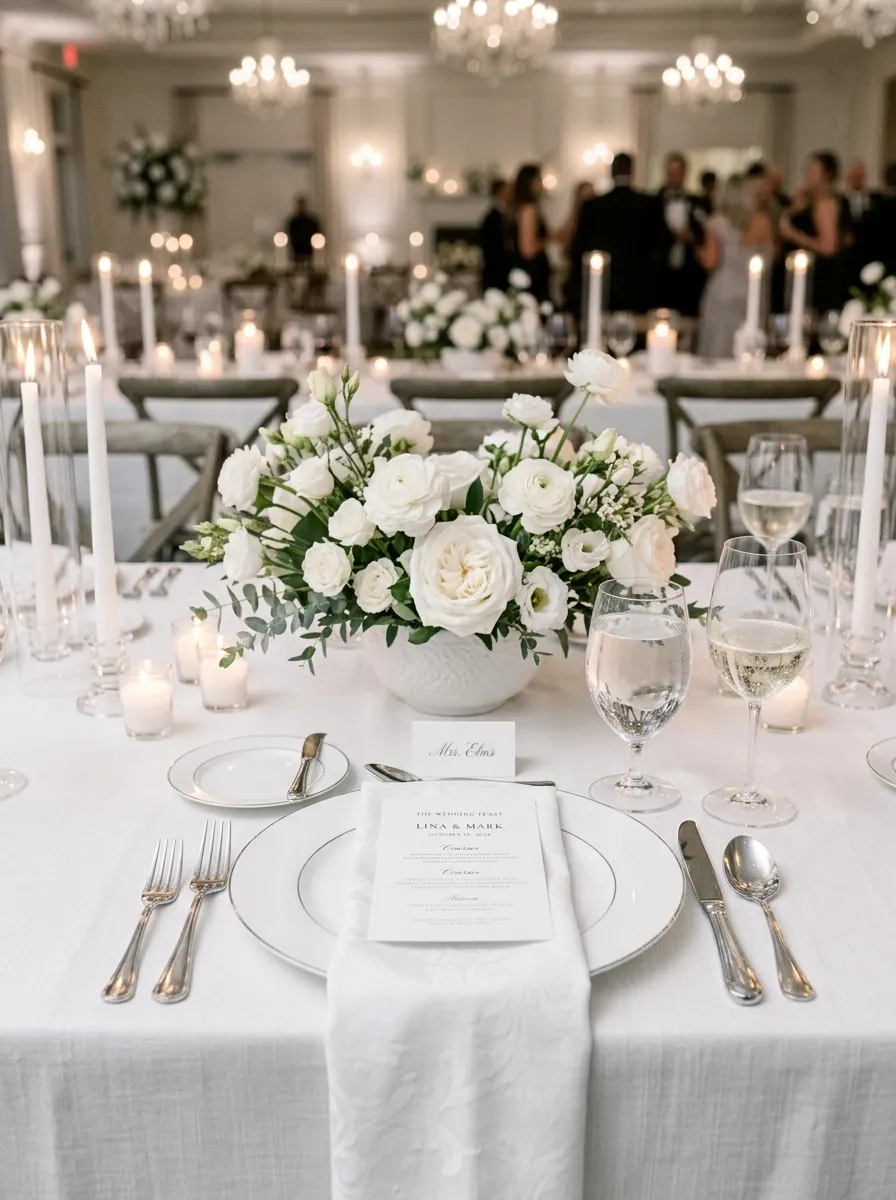
The classic monochromatic white-on-white setting celebrates timeless luxury through layered textures, subtle tonal variations, and crisp geometric precision. This design pairs a floor-length heavy linen tablecloth with bone-white porcelain dinnerware, polished silver flatware, and crystal glassware to form an airy, luminous dining environment. By relying on a single hue, the layout highlights the subtle interplay between matte woven fibers, glossy ceramic glazes, and reflective metal finishes without visual distraction. The bright foundation acts as a light amplifier, reflecting ambient chandeliers and candlelight to make banquet halls and historic ballrooms feel open, grand, and impeccably maintained. The clean profile suits formal black-tie receptions, traditional church celebrations, and high-end hotel environments. Its symmetrical precision establishes an orderly visual rhythm that guides the eye naturally down long banquet rows.
To execute this setting, spread a freshly pressed, heavy white linen tablecloth over the table, ensuring an even floor-length drop on all sides. Position a twelve-inch white porcelain charger plate precisely one inch from the table edge, centering an eight-inch salad plate and folded white damask napkin directly on top. Place the polished dinner fork and salad fork to the left of the charger, maintaining half-inch spacing between utensils, and arrange the dinner knife, cutting blade facing inward, alongside the soup spoon to the right. Align a crystal water goblet directly above the dinner knife tip, placing a white wine glass to its lower right. Finish the setting by placing a letterpress printed menu card vertically across the napkin, centering a delicate white calligraphed place card atop the plate, and completing the centerpiece with a low array of white garden roses in low ceramic bowls.
2. Earthy Terracotta and Raw Linen Bohemian Setting
How to Make
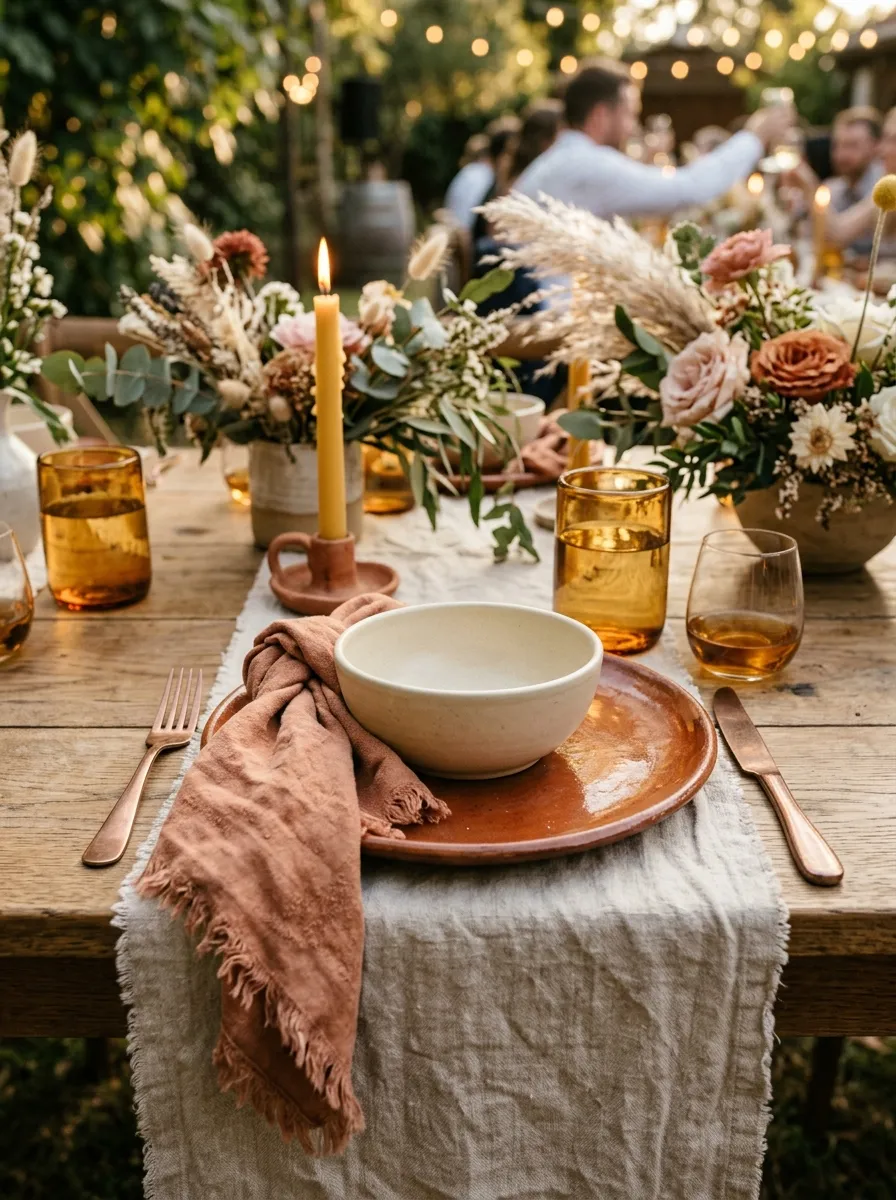
The terracotta and raw linen setting brings warm Mediterranean earthiness and relaxed artisanal charm to wedding reception tables. This concept abandons rigid formal symmetry in favor of organic textures, pairing hand-thrown terracotta or matte stoneware plates with raw-edged, washed flax runners running across bare wooden tables. The rich, sun-baked clay tones harmonize effortlessly with sand, olive, and dusty peach accents, bringing tactile warmth to vineyard pavilions, barn venues, and outdoor coastal gatherings. The natural imperfections of unglazed ceramic edges and textured linen weave provide a grounded, inviting atmosphere that encourages relaxed, celebratory family-style dining. By mixing warm matte ceramics with soft, unpressed fabric folds, this setting bridges casual rustic comfort with contemporary design-forward styling, offering visual interest through varied natural elements.
Begin by rolling an unhemmed, natural oatmeal linen runner down the center axis of a rustic wooden banquet table, allowing the fabric to gather into gentle, organic ripples. Place a hand-thrown terracotta dinner plate in front of each guest chair, nesting a matte cream ceramic salad bowl within the center. Lay a stone-washed terracotta linen napkin across the plate, allowing its softly frayed edge to drape naturally over the table lip. Set brushed antique copper or matte bronze flatware on either side, positioning the fork on the left and the knife on the right atop the bare wood surface. Place an amber-tinted water tumbler alongside a clear, stemless wine glass above the right knife edge. Complete the layout by scattering miniature clay bud vases filled with dried bunny tails and olive branches between low terracotta candle pots holding dripless beeswax tapers.
3. Modernist Matte Black and Brushed Gold Symmetry
Execution Process
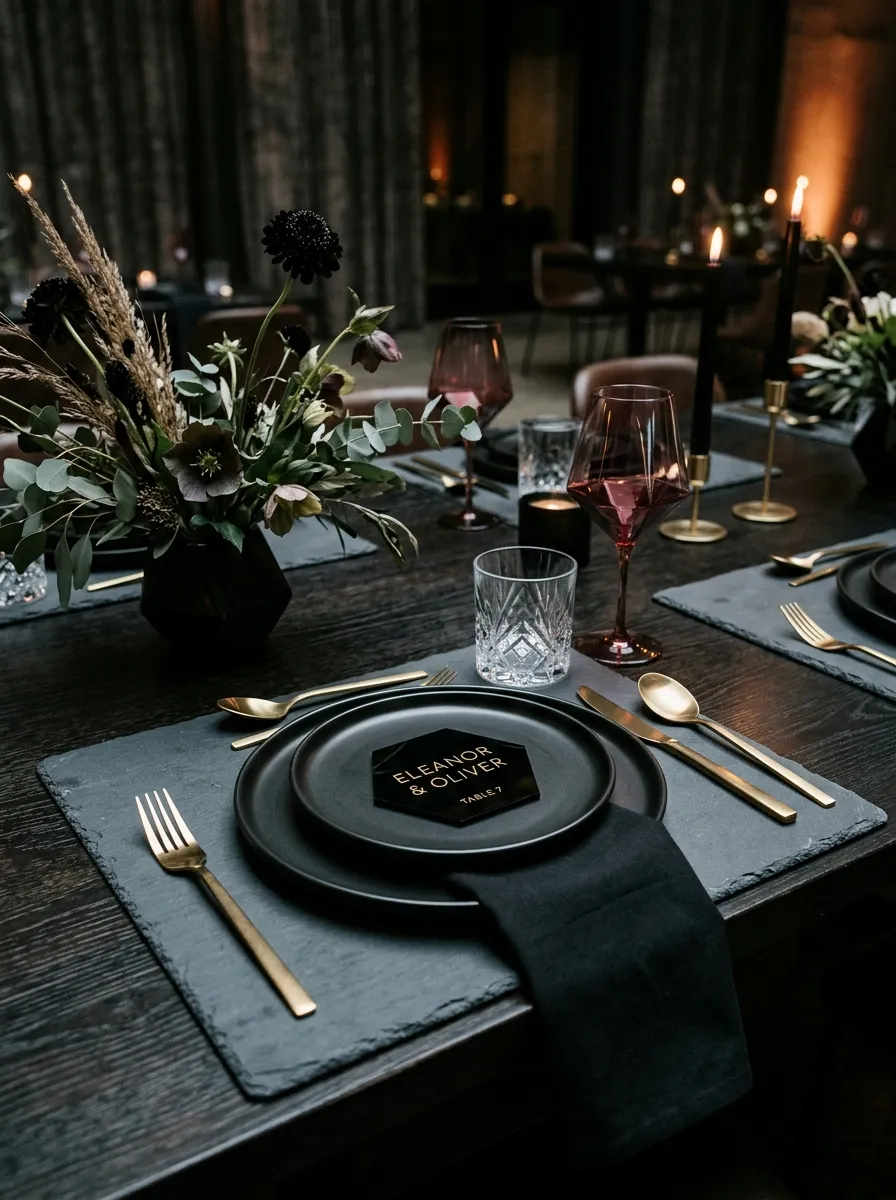
The modernist matte black and brushed gold setting embraces bold architectural contrast, clean lines, and graphic minimalism. This high-impact design utilizes stark matte black ceramic dinnerware set against a stark charcoal or concrete-toned tabletop, illuminated by sleek brushed brass flatware. The absence of traditional ornate scrollwork or glossy porcelain shifts the viewer’s attention to crisp silhouettes, negative space, and modern industrial elegance. This styling direction works exceptionally well within urban industrial lofts, contemporary art galleries, and modern architectural spaces where clean structures dominate. The deep matte plates absorb ambient lighting, creating a dramatic visual base that makes metallic gold cutlery and crisp typographic menu cards stand out prominently. The resulting setting delivers a sophisticated, gallery-grade atmosphere that appeals to design-forward couples seeking an alternative to conventional wedding styling.
Start by placing a dark slate-gray or textured charcoal fabric placemat flat on the table surface, aligning its outer edge flush with the perimeter. Center a ten-inch matte black stoneware dinner plate directly within the mat boundaries, topping it with an eight-inch matte black appetizer plate to build structural depth. Arrange slim brushed-gold flatware beside the plates, keeping spacing tight at precisely one-quarter inch between utensils to emphasize crisp, linear geometry. Fold a black cotton napkin into a crisp, sharp vertical rectangle, sliding it beneath the bottom of the plate stack so it hangs straight down over the table edge. Position a modern, angular clear crystal wine glass and a matte black ceramic water cup in a straight diagonal line above the right flatware. Place a minimalist black acrylic place card printed with gold typography directly in the plate center to anchor the composition.
4. Vintage Botanical Pressed Glass Garden Party
Setup Method
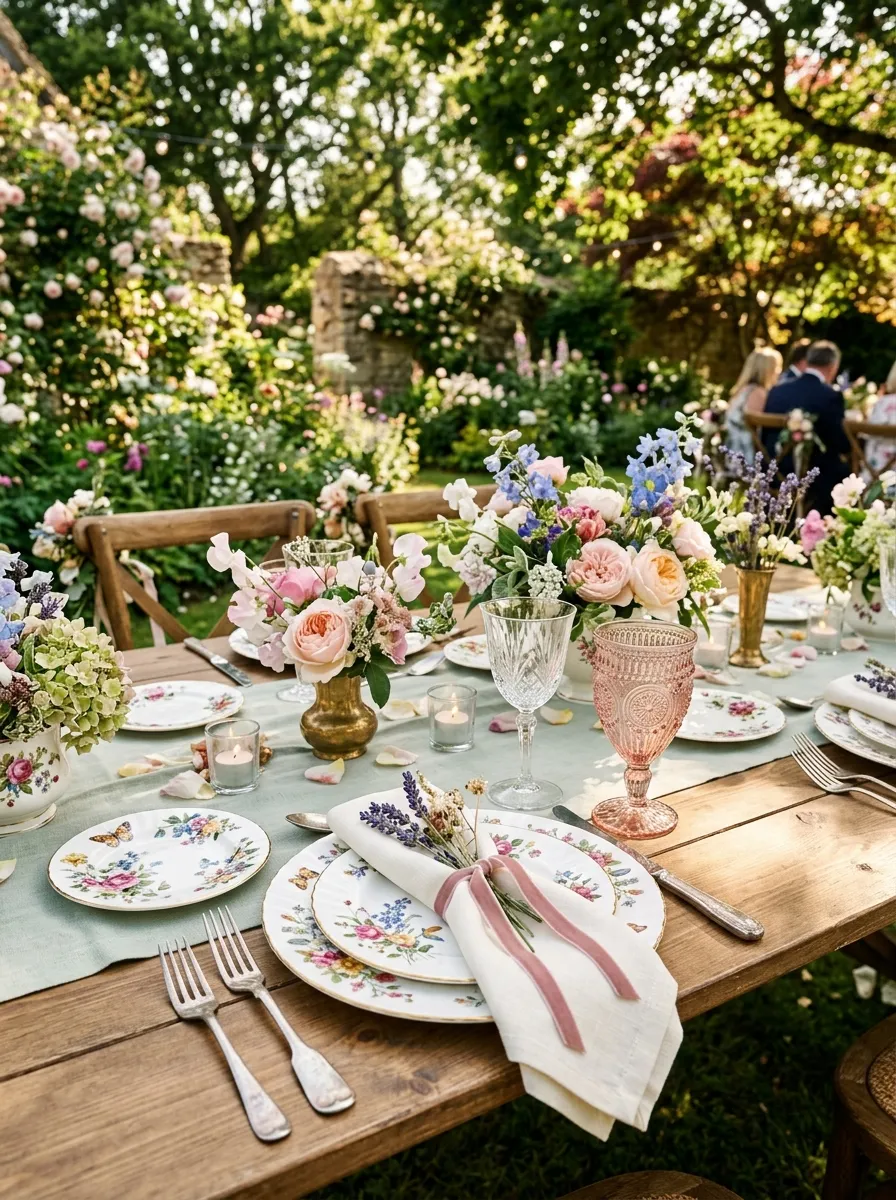
The vintage botanical pressed glass setting channels the romantic nostalgia of English country gardens, combining delicate pattern layering with heritage glassware. This design incorporates pastel floral vintage china, intricately patterned pressed glass goblets, and polished vintage silver-plated cutlery set atop delicate lace or soft moss-green runners. Each place setting features slightly varied floral motifs, creating an eclectic, heirloom-collected aesthetic that feels personal, charming, and deeply romantic. This approach thrives in outdoor garden marquees, historic manor courtyards, and sunlit greenhouse celebrations where natural light filters through the textured glass surfaces. The combination of intricate glass facets and blooming botanical patterns creates whimsical light patterns across the table, evoking nostalgic warmth while maintaining a refined, cohesive presentation through coordinated pastel tones.
Begin by laying a pale sage-green or floral-embroidered cotton table runner along the length of the table over a soft ivory base cloth. Position a mismatched vintage china dinner plate featuring delicate botanical rim patterns in front of each guest, topping it with a smaller pastel dessert plate in a coordinating rose or mint tone. Place antique silver-plated cutlery on either side of the plates, allowing natural vintage patina to add historical character to the table. Fold an ivory linen napkin into a loose, soft square, securing it with a sprig of fresh lavender tied with thin velvet ribbon before placing it atop the plate stack. Arrange an ornate pink or clear pressed-glass goblet next to a fluted champagne coupe above the plate to catch passing sunlight. Finish by nestling small vintage silver salt cellars and low pressed-glass footed bowls filled with sweet peas and ranunculus between settings.
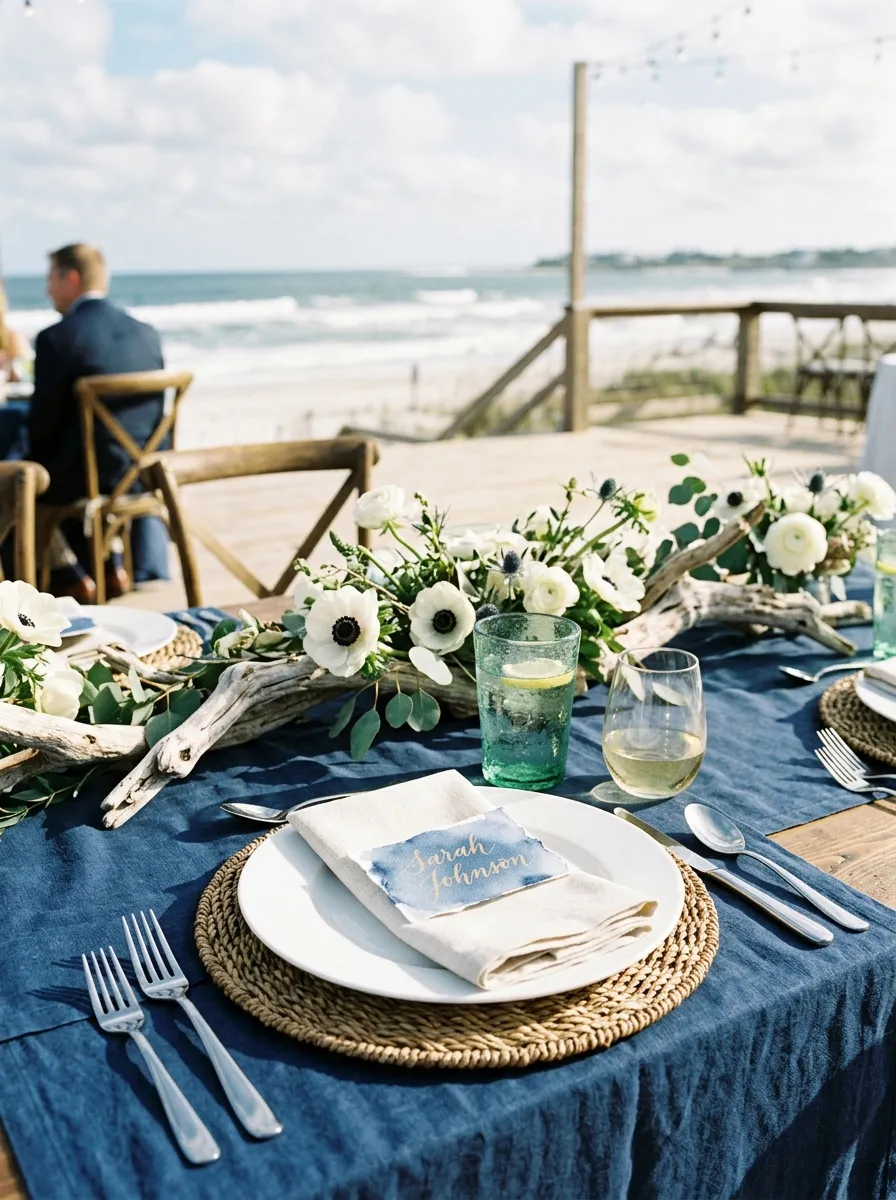
5. Coastal Indigo and Driftwood Seaside Setting
How to Create
The coastal indigo setting interprets maritime elements with refined maturity, avoiding literal nautical cliches in favor of deep oceanic hues and organic coastal textures. This concept pairs deep navy or watercolor indigo linens with crisp white ceramic dinnerware, brushed pewter or silver flatware, and subtle accents of bleached driftwood. The deep blue tones evoke ocean depths, while bright white ceramics and natural woven grass chargers introduce fresh coastal brightness. This styling is ideal for waterfront celebrations, beachside resort verandas, and harbor pavilions, harmonizing with natural marine surroundings. The contrast between rich blue textiles and clean white porcelain creates an invigorating, clean ambiance that complements fresh seafood menus and sunny seaside breezes without feeling contrived or kitschy.
Lay a rich navy blue or hand-dyed indigo linen tablecloth across the dining table, smoothing surface wrinkles while allowing the heavy natural drape to fall cleanly. Position a woven sea grass or natural rattan charger plate at each setting, centering a smooth, bright white porcelain dinner plate inside the woven rim. Fold a crisp white cotton napkin into a neat square, sliding an indigo-dyed watercolor place card on top to define each guest station. Arrange clean-lined stainless steel flatware along the sides, keeping lines straight and functional. Place a sea-glass green water tumbler alongside a classic clear white wine glass at the upper right of the plate. Complete the tablescape by placing smooth, bleached driftwood segments down the table center, winding delicate strands of dried sea lavender and white anemones around clear glass cylinder pillar candles.
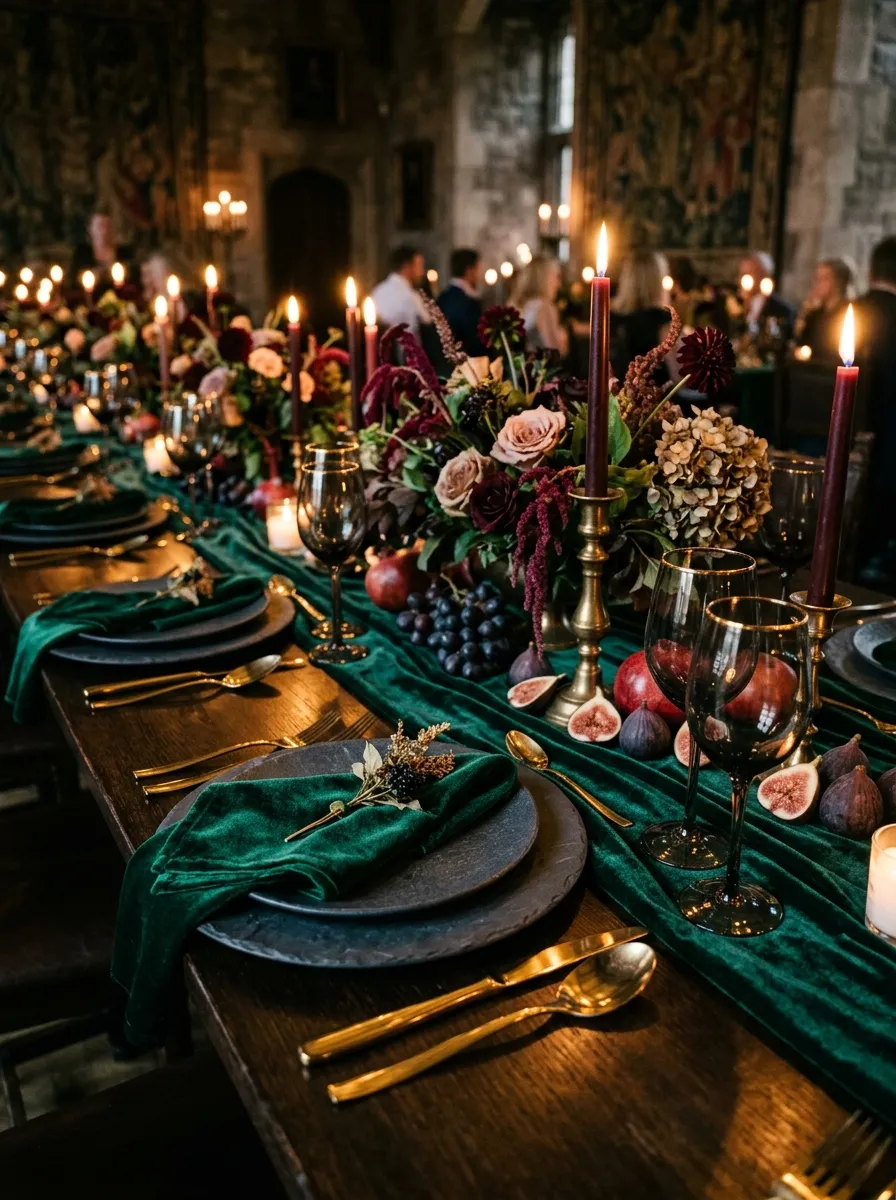
6. Moody Velvet and Gilded Autumn Banquet
Step-by-Step Guide
The moody velvet and gilded banquet captures the rich, atmospheric warmth of late autumn and winter celebrations through saturated jewel tones and tactile fabrics. This setting features a plush emerald green, midnight blue, or deep burgundy velvet runner paired with dark rimmed ceramic dinnerware and polished gold flatware. The light-absorbing nap of the velvet fabric introduces luxurious physical depth to the table, while gold cutlery and brass candlesticks provide radiant, shimmering accents that break up the shadows. This approach is well suited for evening castle receptions, rustic stone wine cellars, and moody winter warehouse weddings where low lighting predominates. The deep, opulent textures create an intimate, cocooning atmosphere that invites guests to linger over long, candlelit multi-course dinners and rich seasonal menus.
Begin by rolling an eight-foot runner of deep emerald green or plum velvet down the center of an exposed dark wood table, allowing the fabric to puddle gracefully onto the floor at both ends. Set a dark slate or charcoal stoneware dinner plate at each seat, topping it with a matte black salad plate to establish a deep, dark base. Place an emerald green velvet napkin folded into a neat vertical strip between the two plates, allowing the bottom three inches to hang over the table rim. Lay polished gold flatware alongside the plates, aligning utensil handles precisely one inch from the table edge. Position a smoked-glass wine goblet and a clear water glass above the knives, letting the dark glass tone mirror the moody aesthetic. Scatter antique brass taper candle holders of varying heights down the runner, filling them with black or burgundy tapers, and accent the space with dark figs and pomegranates.
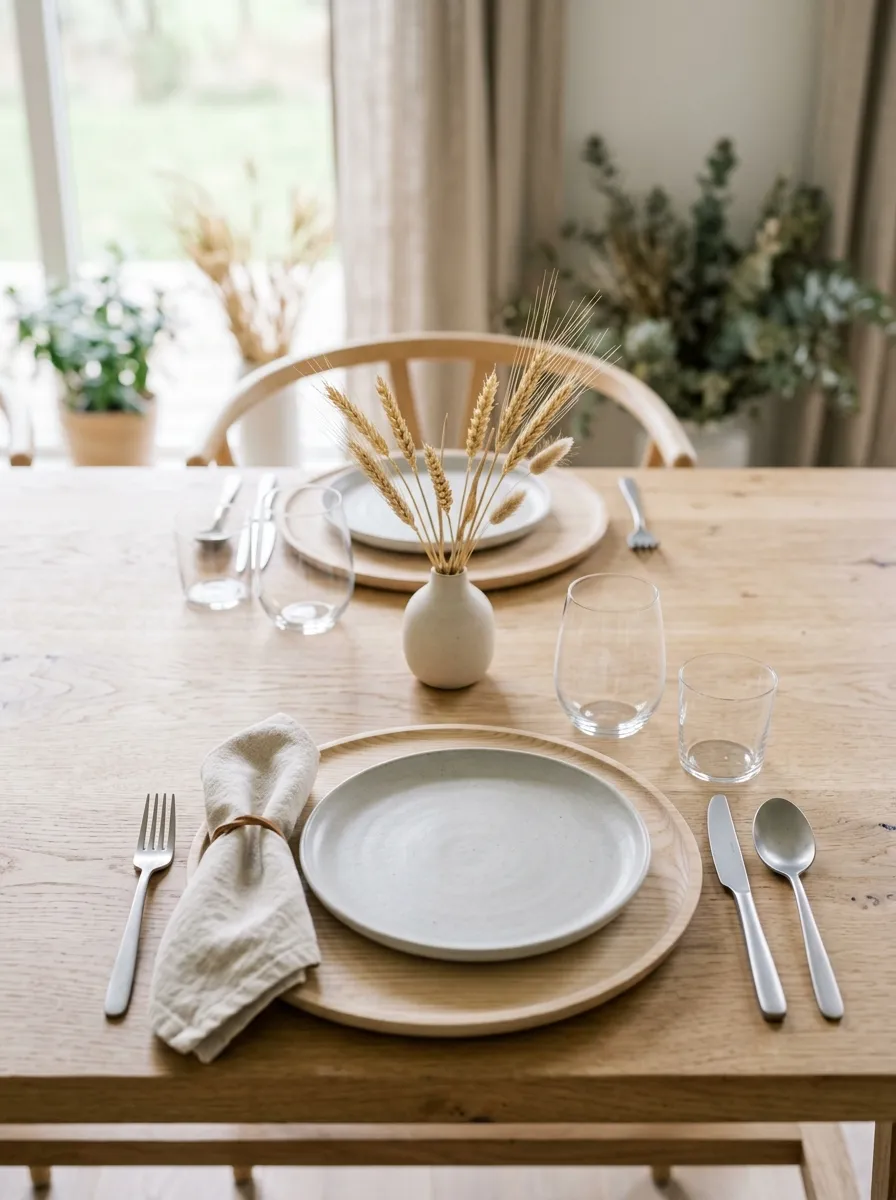
7. Minimalist Scandinavian Neutral Setting
Execution Process
The minimalist Scandinavian setting prioritizes clean design, natural elements, and functional restraint, proving that understated simplicity can achieve immense visual power. This design relies on a neutral color palette of chalk white, warm ash, and pale stone gray, incorporating unglazed ceramic plates, light wooden charger trays, and matte silver cutlery. Rather than relying on heavy decoration or dense floral displays, this setting emphasizes negative space, allowing the clean textures of light oak and unbleached cotton to breathe naturally. This layout works beautifully in Nordic-inspired venues, sunlit modern barns, and open loft spaces with ample natural daylight. The serene, uncluttered surface provides a calming sensory environment for guests, keeping functional dining necessities organized and easily accessible without overwhelming visual distractions.
Start by leaving a clean, light oak or blonde pine dining table completely unadorned, bypassing tablecloths to showcase the natural wood grain. Place a flat, round light ash wooden tray or raw stone disc at each seat to serve as an architectural charger. Center a light gray, unglazed ceramic dinner plate atop the wooden base, nesting an unbleached organic cotton napkin folded into a simple, unadorned rectangle across its face. Place matte silver or brushed steel flatware on either side, aligning the items with clean, geometric symmetry. Position a single, low-profile stemless crystal wine tumbler and a clear glass water carafe above the setting. Finish by resting a simple handmade paper menu card printed with charcoal typography on the napkin, completed by a slender ceramic vase holding three dried wheat stalks and a low glass tealight cup.
8. Citrus Orchard Mediterranean Feast Setting
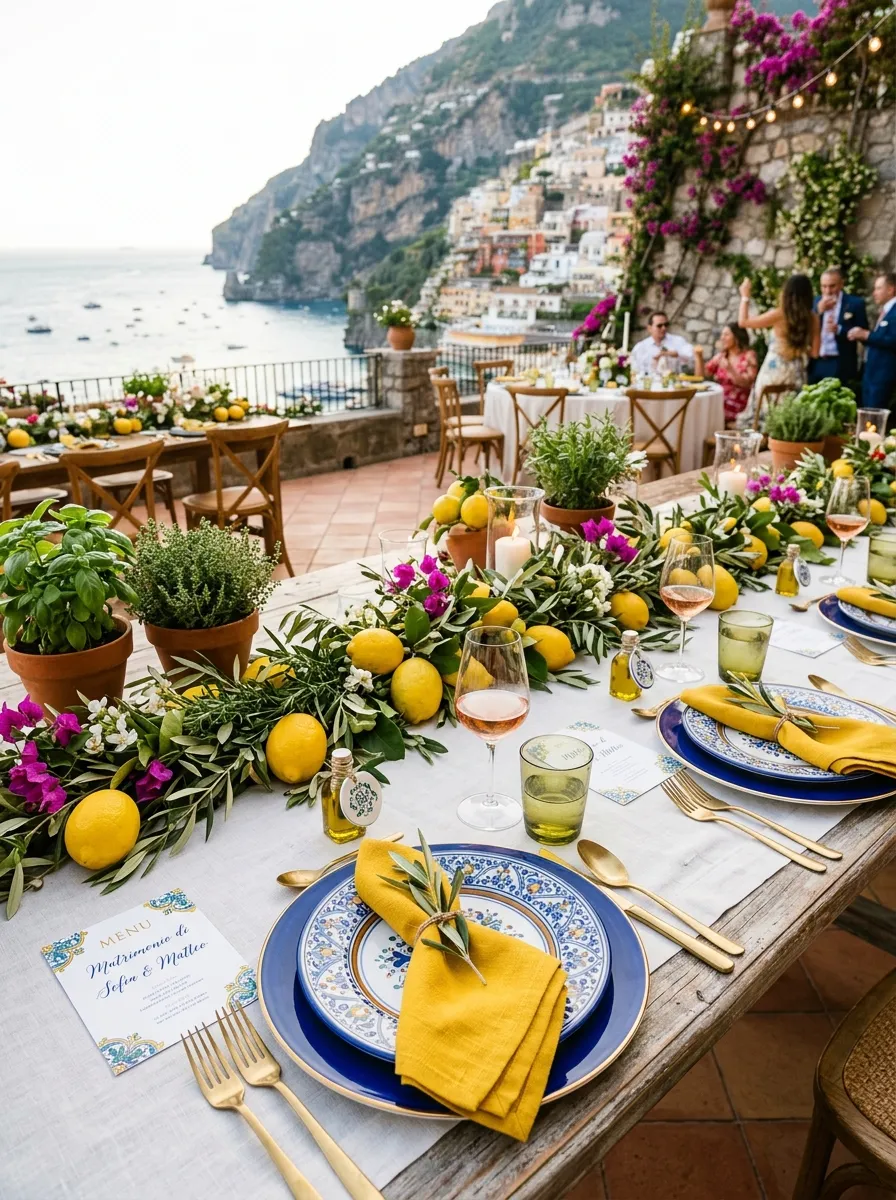
Setup Method
The citrus orchard Mediterranean setting captures the vibrant warmth of southern European celebrations, incorporating fresh orchard fruits into structured dining displays. This concept pairs crisp white or soft yellow linens with patterned blue-and-white majolica ceramic plates, polished brass flatware, and overflowing displays of fresh whole lemons, oranges, and olive foliage. The bright citrus tones introduce energetic splashes of natural color that contrast sharply against deep green leaves and crisp patterned tableware. This layout is tailor-made for outdoor summer celebrations, vineyard terraces, and garden courtyards, creating a lively, festive atmosphere filled with botanical scent. The fresh fruit doubles as decorative sculptural accents and visual anchors, providing an abundant, organic tablescape that feels generous, celebratory, and full of vitality.
Lay a crisp, bright white cotton tablecloth over the banquet table, pinning the corners neatly to maintain a tailored, formal drape across the dining area. Set an oversized cobalt blue glass or ceramic charger plate at each position, centering a decorative Italian majolica-style patterned salad plate on top. Place polished brass dinner forks to the left and matching brass knives and spoons to the right, aligning their bases cleanly. Fold a bright mustard or sunshine-yellow linen napkin into a neat pocket, sliding a personalized calligraphy place card inside before resting it in the plate center. Arrange an olive-green tinted water goblet next to a tall clear crystal champagne flute above the place setting. Down the center of the table, weave fresh olive branch garlands generously studded with whole, fresh lemons and cut citrus halves, surrounded by low brass votives that illuminate the vibrant fruit tones.
9. French Country Woven Bistro Setting
How to Make
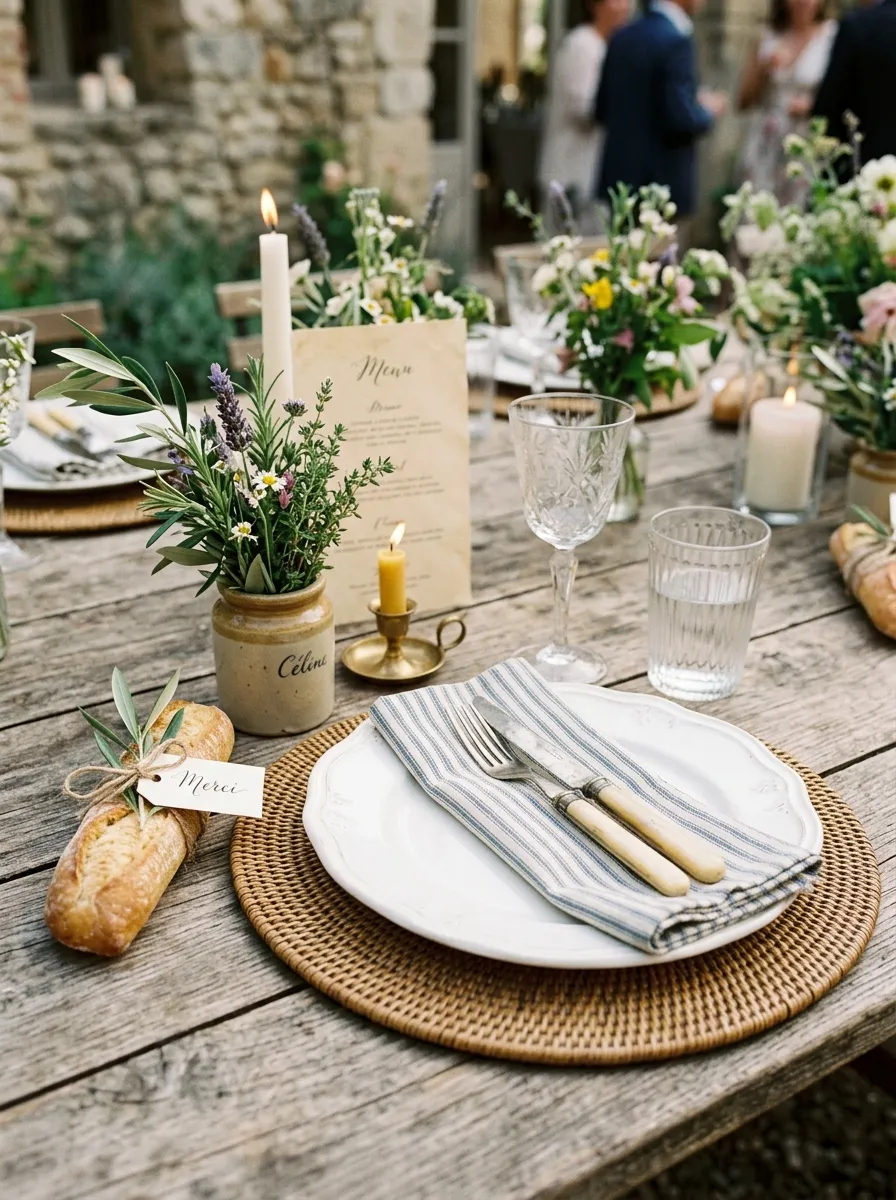
The French country woven bistro setting blends rustic provincial charm with classic bistro dining elegance, creating a comfortable, timeless atmosphere. This design pairs natural woven rattan or woven willow placemats with classic white porcelain plates featuring subtle scalloped edges, vintage horn-handled or bone-handled flatware, and simple glass bistro carafes. The tactile woven textures bring natural warmth and sound-dampening comfort to the table, while the crisp white porcelain maintains dining refinement. This styling adapts effortlessly to historic farmhouses, open-air barn conversions, and casual country club verandas where relaxed European hospitality is desired. The balance of woven fibers, durable ceramics, and clear glassware crafts an unpretentious yet elevated dining experience that celebrates artisanal textures, good wine, and relaxed conversation.
Begin by centering an individual circular woven wicker or natural rattan placemat at each guest chair along a natural wood or neutral linen-covered table. Place a classic scalloped white porcelain dinner plate directly upon the woven mat, topping it with a matching salad plate to establish clean porcelain tiers. Fold a red-and-white or blue-and-white French ticking-striped linen napkin into a long vertical panel, draping it across the center of the plates so it falls neatly over the placemat edge. Lay vintage bone-handled or polished stainless steel bistro cutlery on either side of the woven charger. Position a classic French Picardie ribbed water tumbler alongside a sturdy stemmed red wine glass to the upper right. Finish by placing a miniature individual baguette tied with raw baker’s twine on each bread plate, adding small ceramic crocks holding seasonal field herbs down the center line.
10. Glamorous Mirror-Reflective Champagne Banquet
Step-by-Step Guide
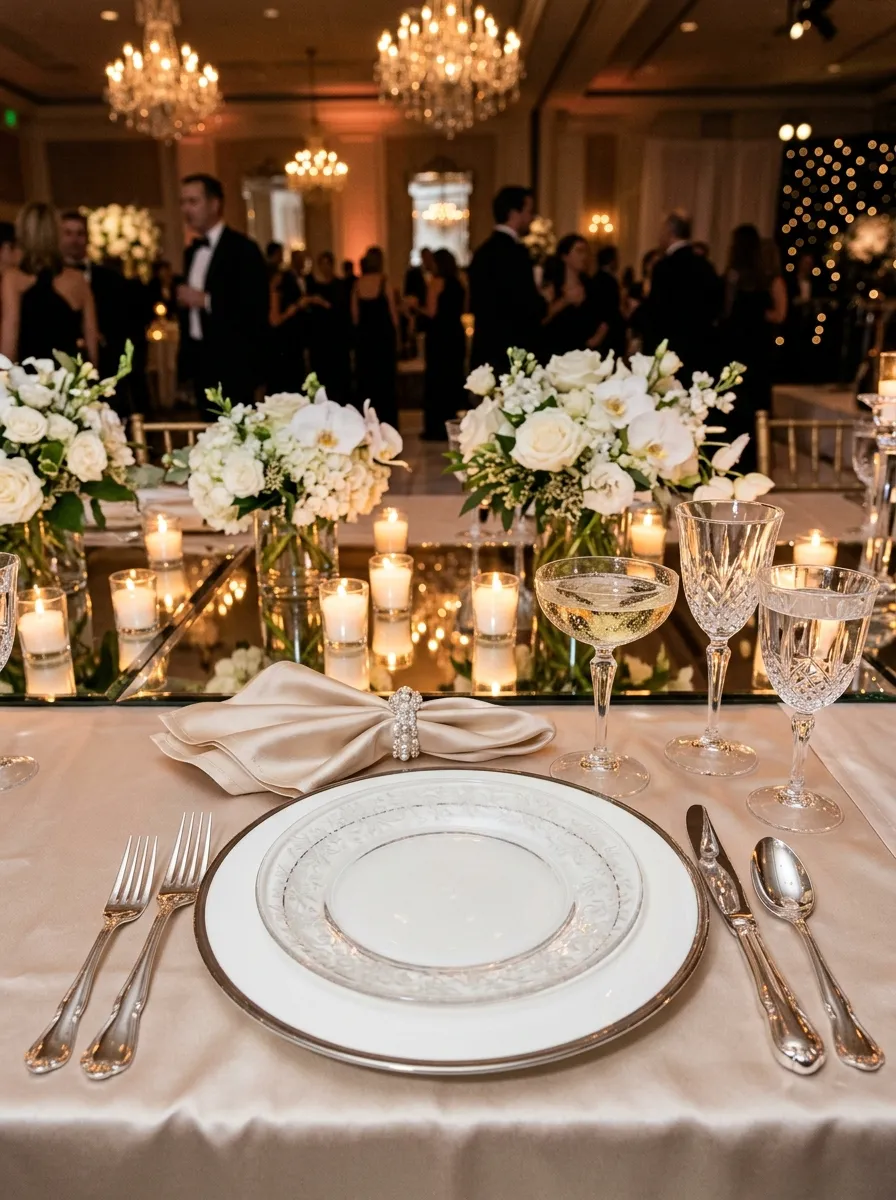
The glamorous champagne banquet setting utilizes reflective glass, mirror runners, and polished metallic accents to create an opulent, luminous dining environment for evening celebrations. This design incorporates a high-shine mirror table runner or polished glass surface paired with metallic-rimmed porcelain dinnerware, multi-faceted crystal glassware, and polished chrome or silver cutlery. Every light source—from overhead chandeliers to flickering table candles—reflects off the polished surfaces, creating a shimmering, dynamic glow across the entire reception space. This aesthetic is well suited for luxury hotel ballrooms, formal evening galas, and glamorous urban celebrations that demand sophisticated polish. The reflective planes give the table an expansive, floating quality, elevating the dining experience into a radiant celebration of light, reflection, and formal luxury.
Spread a pale champagne satin or shimmering jacquard tablecloth across the table, smoothing the fabric flat to eliminate wrinkles and surface imperfections. Lay a narrow, beveled-edge mirror runner down the center of the table, securing it with clear non-slip rubber pads beneath. Place a polished platinum or silver-rimmed fine bone china charger plate at each setting, topping it with a translucent glass salad plate etched with subtle starburst patterns. Set heavy, high-polish sterling silver or mirror-finished stainless steel flatware along the sides, polishing each piece with a dry microfiber cloth before placement to ensure a spotless shine. Fold a champagne-colored silk-blend napkin into an elegant fan fold, setting it directly atop the glass plate. Position a multi-piece crystal glassware suite—including a water goblet, red wine glass, and crystal champagne coupe—in a gentle arc above the right side of the charger. Scatter floating candles in clear crystal cups along the mirror runner to maximize light reflection across the tablescape.
Common Beginner Mistakes and How to Avoid Them
Beginner event planners and DIY couples frequently encounter structural and logistical pitfalls when designing reception tables, with overcrowding serving as the most prevalent error. Squeezing too many plates, oversized floral vessels, and excessive glassware onto a table severely limits dining elbow room, causing guests to knock over glasses or struggle while cutting food. Prevent this by strictly maintaining a minimum width of twenty-four inches per place setting, testing your full layout on a sample table before ordering rental quantities. Another frequent mistake is selecting centerpieces that stand right at seated eye level—between fourteen and twenty inches tall—which obstructs conversation across the table and disconnects guests. Solve this by keeping floral arrangements either strictly low beneath fourteen inches, or elevating floral masses on slender risers above twenty-four inches to preserve open cross-table sightlines. Additionally, placing scented candles on dining tables disrupts the culinary experience by clashing with food aromas; always ensure all reception table candles are completely unscented, dripless, and protected from drafts using tall glass hurricane cylinders.
Practical Tips for Better Results
Achieving a polished, magazine-worthy finish on reception tables depends on strict consistency, meticulous preparation, and disciplined alignment practices. Always use a wooden ruler or measuring tape during the initial table setup, standardizing the distance of every charger plate, napkin hem, and flatware base to precisely one inch from the table perimeter. When handling polished cutlery, charger rims, and crystal glassware, wear clean white cotton gloves to eliminate unsightly fingerprints and grease marks that show prominently under bright venue lighting. Iron or steam your table linens directly on the tables after placement to eliminate hard packaging creases that disrupt an otherwise flawless presentation. If you are combining different metallic accents—such as brass candlesticks with silver cutlery—keep the ratio intentional, choosing one dominant metal for seventy percent of the items and using the secondary metal purely as an accent to avoid visual chaos. Finally, confirm that place cards are securely anchored to menus or plates using wax seals, ribbon ties, or small paper clips, preventing air conditioning currents or outdoor breezes from scattering name cards across the room.
Styling, Presentation, or Organization Ideas
Organizing the visual hierarchy of your reception space requires balancing table setting designs with the broader architectural features of your venue. If your reception hall features dramatic, high ceilings or exposed industrial beams, anchor the space by alternating between tall floral risers and low, intimate candlelit settings across different tables to create a rhythmic, dynamic landscape. Coordinate your table stationery directly with your place settings: use matching paper weights, complementary typography, and consistent ink tones across menu cards, table numbers, and place cards to maintain visual continuity. For round tables, arrange place settings with radial symmetry, ensuring that every guest’s alignment points directly toward the center floral focal point. When working with long banquet configurations, run continuous design runners down the table axis to visually tie the tables together into an integrated installation. Provide designated space for table numbers where they remain visible to entering guests without crowding bread plates or water glasses, ensuring smooth, effortless seating transitions when dinner service begins.
Budget or Time Planning
Curating an elevated reception table setting does not require an excessive budget; rather, it thrives on strategic allocation and disciplined time management. Direct the largest portion of your tabletop decor budget toward items guests touch and interact with directly, such as soft cloth napkins, polished flatware, and quality glassware, while saving money on foundational base linens by utilizing venue-provided plain white cloths. Maximize your setup efficiency by creating a complete place setting mock-up at home weeks before the event, photographing the approved layout and noting exact utensil placements to serve as an assembly guide for your venue styling team. On the event day, establish an assembly-line setup workflow: assign one person to lay base linens and chargers, a second to place flatware using a measuring guide, a third to position glassware, and a final stylist to add stationery and light candles. This structured workflow reduces setup time by half, prevents chaotic last-minute adjustments, and ensures that every table across the entire reception hall presents a uniform, professional finish ready for guest arrival.
Creative Expansion and Advanced Inspiration
Once you master baseline table setting mechanics, explore advanced design concepts that integrate interactive, personalized elements into each place setting. Consider transforming traditional menu cards into interactive culinary keepsakes, utilizing deckled-edge cotton paper calligraphed with personal thank-you notes on the reverse side, or providing personalized wax-sealed envelopes for each attendee. Experiment with natural, seasonal foraging to supplement floral budgets, integrating delicate olive branches, autumn oak leaves, or fragrant rosemary sprigs tied around cloth napkins with raw velvet ribbon. You can also explore customized culinary accents at each seat, such as miniature bottles of local olive oil, small ceramic pots of infused salt, or individual artisanal bread loaves resting on personal bread boards. Extending these styling principles beyond the main reception tables allows you to construct complementary settings for cocktail high-tops, dessert tables, and the bridal party head table, establishing a seamless, immersive aesthetic across your entire wedding celebration. Keeping a dedicated event design journal documenting fabric swatches, color codes, and table proportions will provide endless inspiration, helping you continuously refine your creative vision across future celebrations.