Fruit centerpiece designs have become a staple across modern event styling, offering an organic, visually striking alternative to traditional floral arrangements. This comprehensive guide details ten distinctive DIY fruit centerpiece concepts, guiding you through the design principles, structural assembly, and color balancing techniques needed for any dining setting. You will learn practical methods for preserving whole and sliced produce, securing heavy items within varied vessels, and pairing fresh harvests with seasonal foliage. Using fruit as a primary decorative medium introduces deep tonal contrast, rich natural luster, and architectural substance that standard cut blooms cannot provide on their own. Whether you are orchestrating an intimate outdoor dinner, styling a seasonal holiday banquet, or assembling everyday kitchen island decor, these concepts deliver practical, adaptable frameworks. By mastering these step by step methods, creators of all experience levels can craft stunning, professional-grade displays that maintain structural stability, resist wilting throughout prolonged events, and minimize total material expenditure.
Why This Idea Is Trending or Useful
Fruit-forward table styling dominates digital inspiration boards because it seamlessly aligns with the growing appreciation for organic, sensory-rich design. Modern hostesses and interior enthusiasts frequently seek decorative elements that convey effortless abundance while remaining rooted in earth tones and natural textures. Whole fruits like pomegranates, citrus, figs, and grapes offer sculptural geometry and vibrant color saturation without requiring artificial dyes or costly imported botanicals. From a practical perspective, produce is accessible at neighborhood markets, eliminating the complex sourcing and perishable storage demands associated with commercial floral varieties. This project approach is exceptionally beginner friendly, allowing crafters to achieve high-end aesthetic results through simple stacking, slicing, and layering methods. In addition to aesthetic appeal, fruit styling emphasizes sustainability and mindful resource use. Intact, unpierced fruit used in these displays remains entirely edible after the event concludes, virtually eliminating the biological waste often left behind by single-use party decorations.
Materials and Preparation
Producing clean, structurally stable fruit arrangements requires careful ingredient curation, foundational mechanics, and deliberate workspace organization. Begin by purchasing unblemished, firm produce two to three days before your event, avoiding overripe specimens that might bruise, leak juices, or soften prematurely under warm room conditions. Your tool kit should feature sharp paring knives for clean slicing, heavy-duty wooden skewers for securing floating produce, floral frog pins, wire clippers, and pruning shears for greenery branches. For foundational support, gather food-safe containers, pedestal compotes, wire urns, or shallow ceramic platters fitted with clear waterproof liners to prevent moisture damage to fine table linens. Planning also involves measuring table dimensions and guest sightlines to ensure the completed pieces remain stable and low enough to allow conversation across the table. Thoroughly wash and air-dry all produce to eliminate commercial wax or orchard debris, and prepare cutting stations with food-grade sealing solutions to preserve cut fruits before final assembly.
1. Sculptural Citrus and Olive Branch Footed Compote
Setup Method
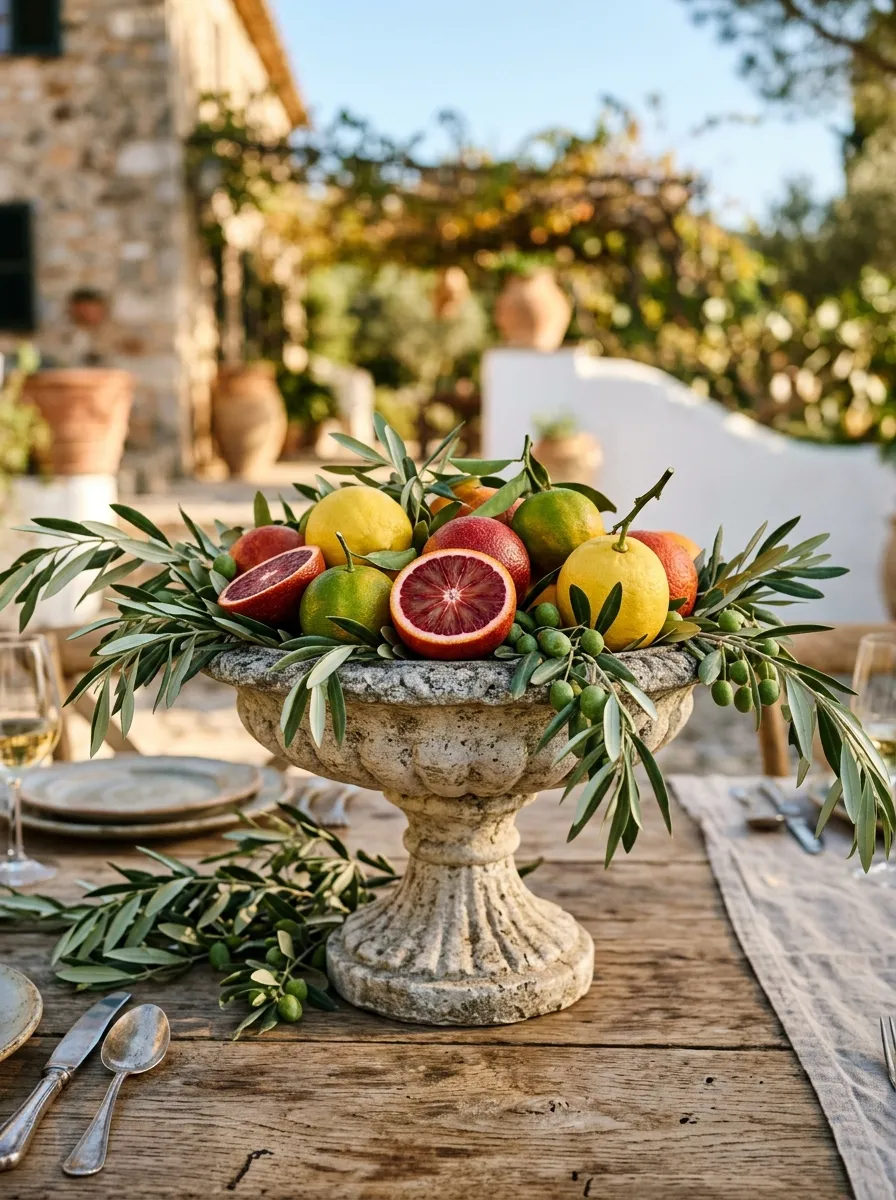
The sculptural citrus and olive branch compote emphasizes Mediterranean simplicity, combining the vibrant, sun-drenched tones of whole citrus with the dusty, silver-green hues of fresh olive foliage. This arrangement rests inside an elevated ceramic or weathered stone compote bowl, lifting the vibrant fruit above the tabletop to establish an architectural focal point. Lemons, blood oranges, and tiny green mandarins are clustered tightly within the vessel basin, while mature woody olive branches drape over the rim to soften the structural edges. The contrasting textures between the glossy, pebbled citrus rinds and the matte, delicate olive leaves yield a balanced aesthetic suitable for al fresco dinners, summer wedding tables, or minimalist kitchen islands. Its low horizontal spread keeps eye levels unobstructed while providing dense visual weight.
To assemble this centerpiece, place a weighted brass floral frog into the center of a wide footed stone compote, anchoring it securely with waterproof floral putty. Insert short, sturdy clippings of fresh olive branches into the outer perimeter pins, angling the stems outward so the leaves spill gracefully over the vessel rim. Fill the interior bowl cavity with a hidden base layer of unblemished whole lemons to build initial volume without adding exterior weight. Layer smaller blood oranges, whole limes, and stem-on mandarins over the base fruit, nesting them tightly into natural crevices to prevent rolling. Weave secondary sprigs of olive foliage and small clusters of bay laurel directly between the fruit layers, concealing all gaps and anchoring the produce naturally without the need for skewers or internal wire framing.
2. Low-Profile Pomegranate and Fig Harvest Runner
Step-by-Step Guide
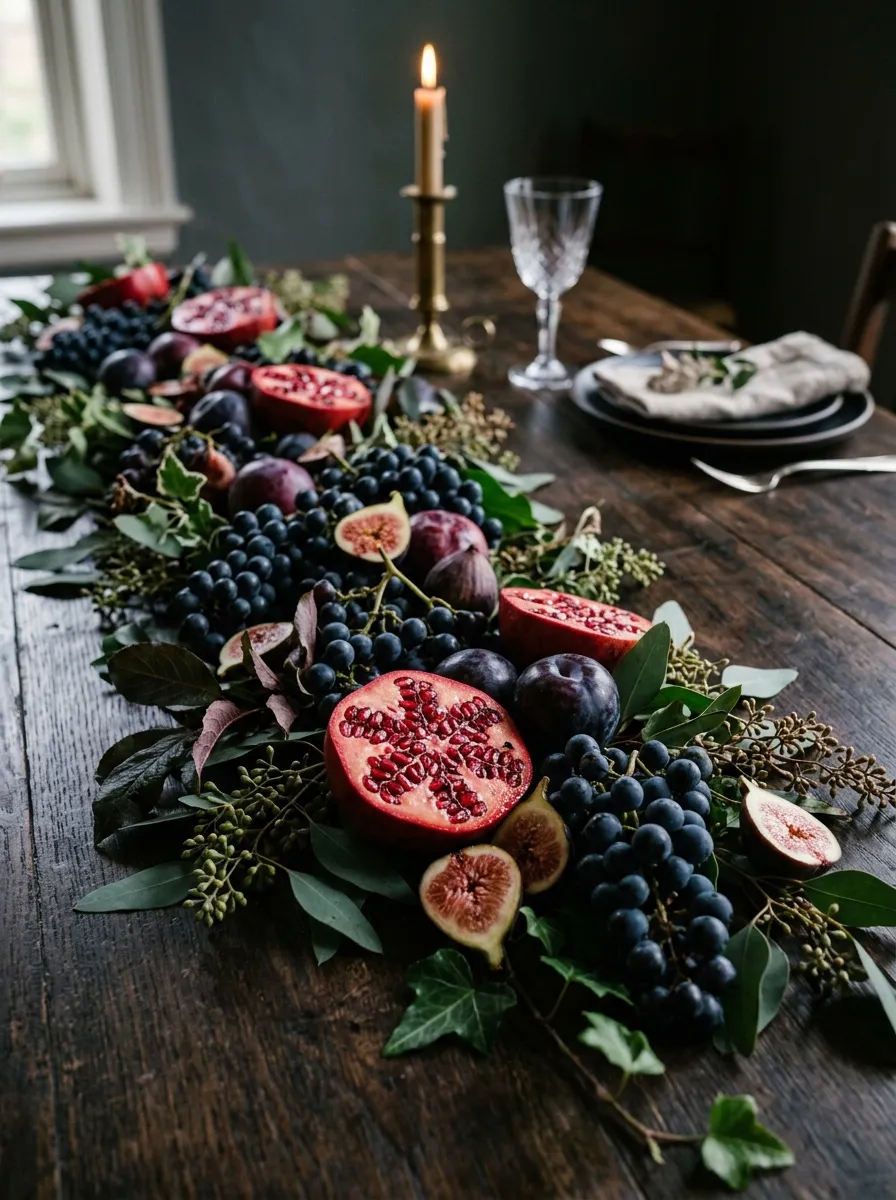
The low-profile pomegranate and fig harvest runner creates an uninterrupted garland designed specifically for long wooden harvest tables and rectangular banquet layouts. This concept combines deep crimson pomegranates, velvety black mission figs, and dark purple plums, evoking the moody, luxurious lighting of classical Dutch still life oil paintings. By placing whole, intact fruits alongside carefully cleaved fruit halves, the display showcases the glistening, jewel-toned interior arils and seeds against deep burgundy and emerald foliage. The runner lies completely flat along the center of the table, making it especially effective for family-style dining where food platters must navigate easily around centerpiece decor without tipping tall vases.
Begin construction by unrolling an unbleached linen or natural cheesecloth runner down the centerline of the table, gathering the fabric gently into loose, organic folds. Lay a foundational spine of seeded eucalyptus and dark plum cotinus branches directly over the runner, staggering the stem directions to create a continuous bed of foliage. Place whole, heavy pomegranates at alternating angles every twelve inches along the greenery base to establish rhythm and structural weight. Cut three or four pomegranates into irregular quarters, slicing several fresh figs in half vertically to expose their rich interior seed patterns. Brush the cut surfaces lightly with a solution of water and lemon juice to prevent oxidation, then nestle the cleaved fruits directly against the foliage, finishing by weaving small clusters of dark grapes around the base to anchor the entire runner.
3. Tiered Glass Hurricane and Floating Lime Luminary
How to Create
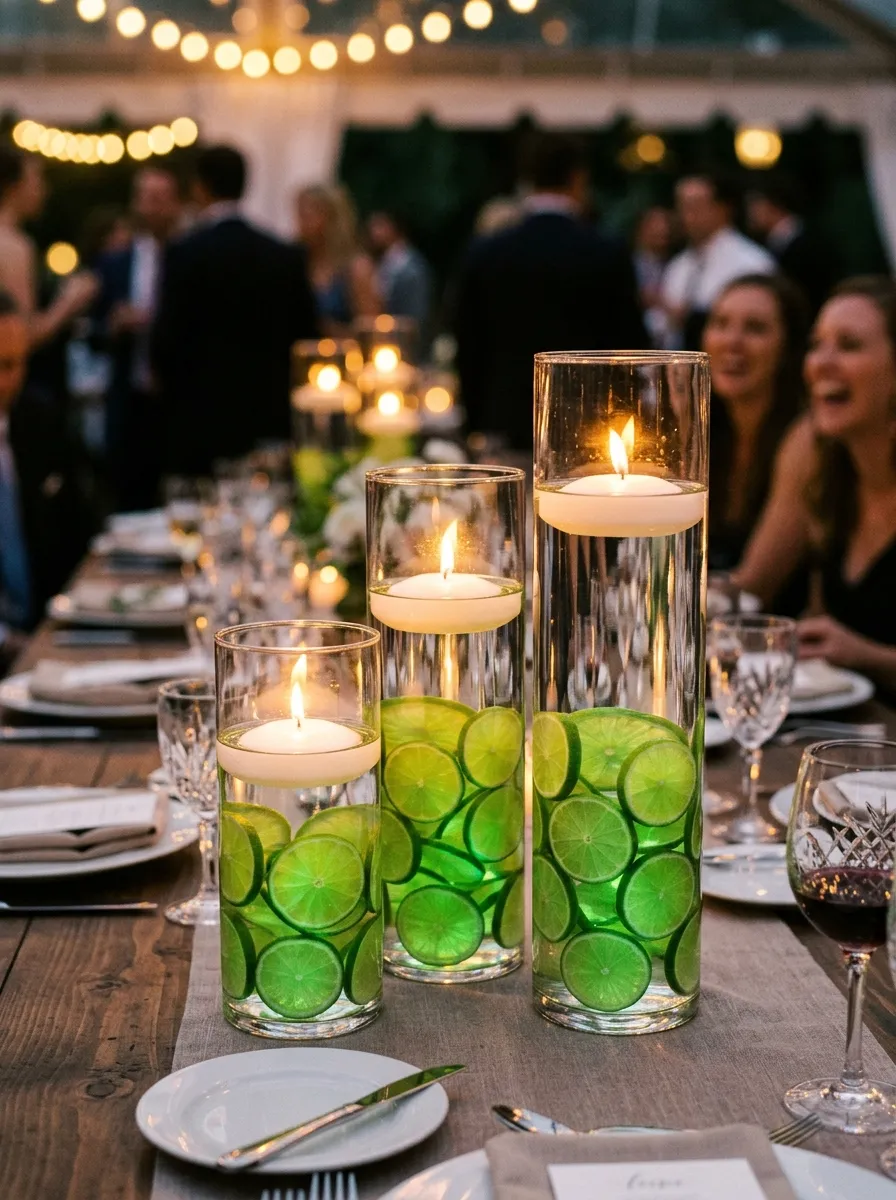
The tiered glass hurricane and floating lime luminary centerpiece harnesses the optical refraction of clear water and the vivid energy of sliced green citrus to produce an ambient evening tablescape. This design utilizes sets of three cylindrical glass hurricane vases of graduated heights, each filled with crystal-clear water, submerged lime rounds, and crowned with a smooth white floating candle. The water acts as a magnifying lens, intensifying the cellular texture, pale pith, and vivid chartreuse flesh of the citrus slices. When the candles are lit, the warm flame reflects downward through the submerged fruit, casting gentle, flickering emerald light across the table. This concept suits modern indoor celebrations, cocktail lounges, and breezy patio gatherings because the submerged components remain protected from wind and outdoor drafts.
To build this luminary set, select three glass cylinder vases measuring six, nine, and twelve inches in height, thoroughly cleaning the glass with white vinegar to remove smudges and dust. Slice six to eight firm green limes into uniform quarter-inch discs using a sharp chef knife or kitchen mandoline, discarding the uneven end caps. Arrange the lime discs flat against the interior vertical walls of each vase, overlapping them slightly to form an interlocking mosaic along the glass perimeter. Slowly pour distilled room-temperature water into the center of each cylinder, allowing the hydrostatic pressure to hold the lime slices firmly against the glass walls without floating loose. Fill each vase until water reaches two inches below the rim, then gently place a wide paraffin or soy floating disc candle onto the water surface, repeating the process for all three tiers.
4. Gilded Pear and Walnut Minimalist Trough
Execution Process
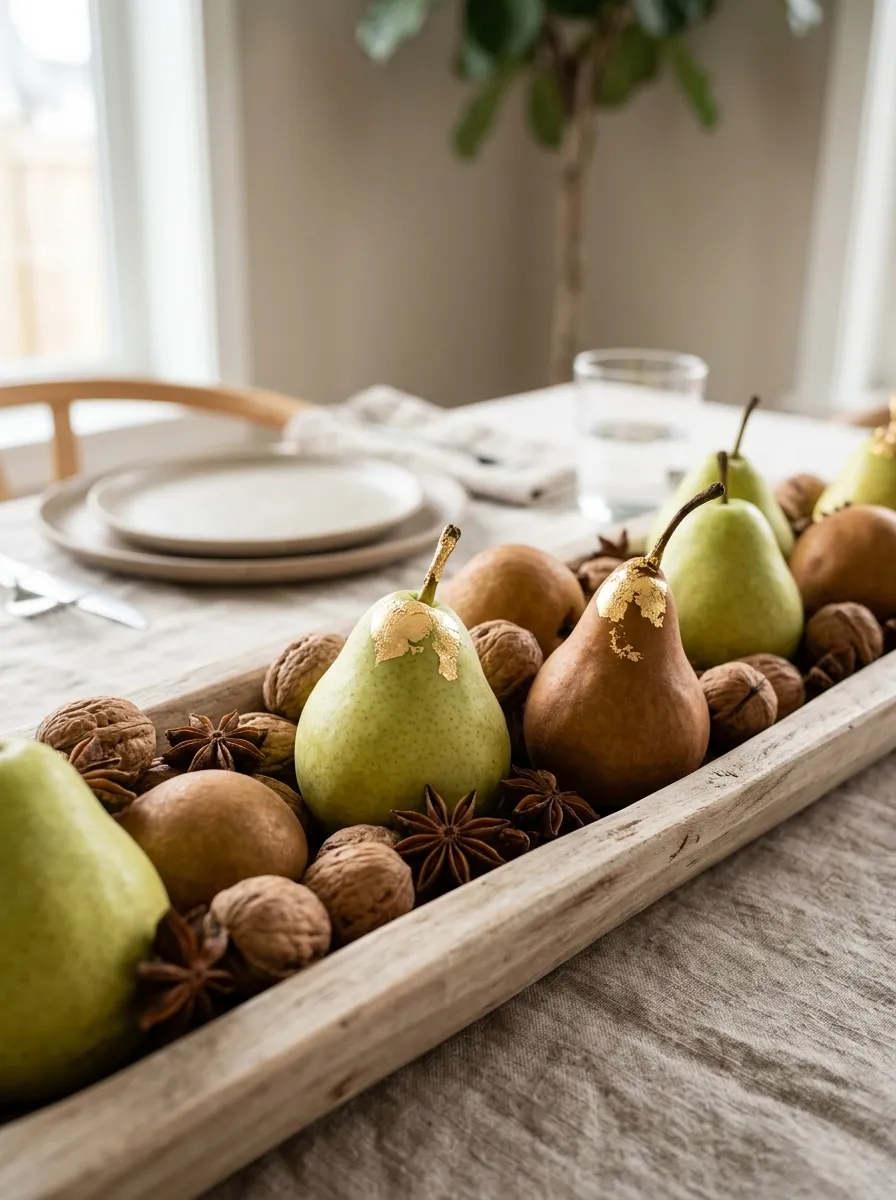
The gilded pear and walnut minimalist trough brings a refined, Scandinavian-inspired aesthetic to modern dining tables by combining soft muted neutrals with subtle metallic luster. This design features an elongated, shallow wooden trough or matte white ceramic tray filled with pale green Anjou pears, russet Bosc pears, and natural whole unshelled English walnuts. Select pears receive delicate accents of gold leaf along their upper shoulders and stems, introducing a polished, reflective element that contrasts with the rough, organic shells of the nuts and matte fruit skins. The resulting display embraces an uncluttered, modern design philosophy, avoiding overwhelming floral fillers in favor of pure sculptural forms, organic symmetry, and restrained seasonal color harmony.
Prepare this arrangement by wiping whole, firm Anjou and Bosc pears clean using a damp microfiber cloth, inspecting each fruit to ensure its natural wooden stem remains fully intact. Apply tiny dabs of water-based metal leaf sizing adhesive to the upper shoulder of several pears with a fine artist brush, allowing the glue to become tacky for ten minutes. Gently press small sheets of loose gold leaf onto the tacky areas using a dry, soft-bristled brush, burnishing the surface lightly and brushing away excess metallic flakes to leave an organic, distressed gold finish. Lay a thin sheet of protective parchment paper inside a narrow wooden table trough, arranging the pears in an alternating pattern so their stems point gracefully in opposing directions. Fill the negative spaces between the pears with whole, cleaned walnuts and dried star anise pods to lock the fruit into position and impart a warm, understated spice aroma.
5. Rustic Berry and Foraged Apple Wooden Crate
How to Make
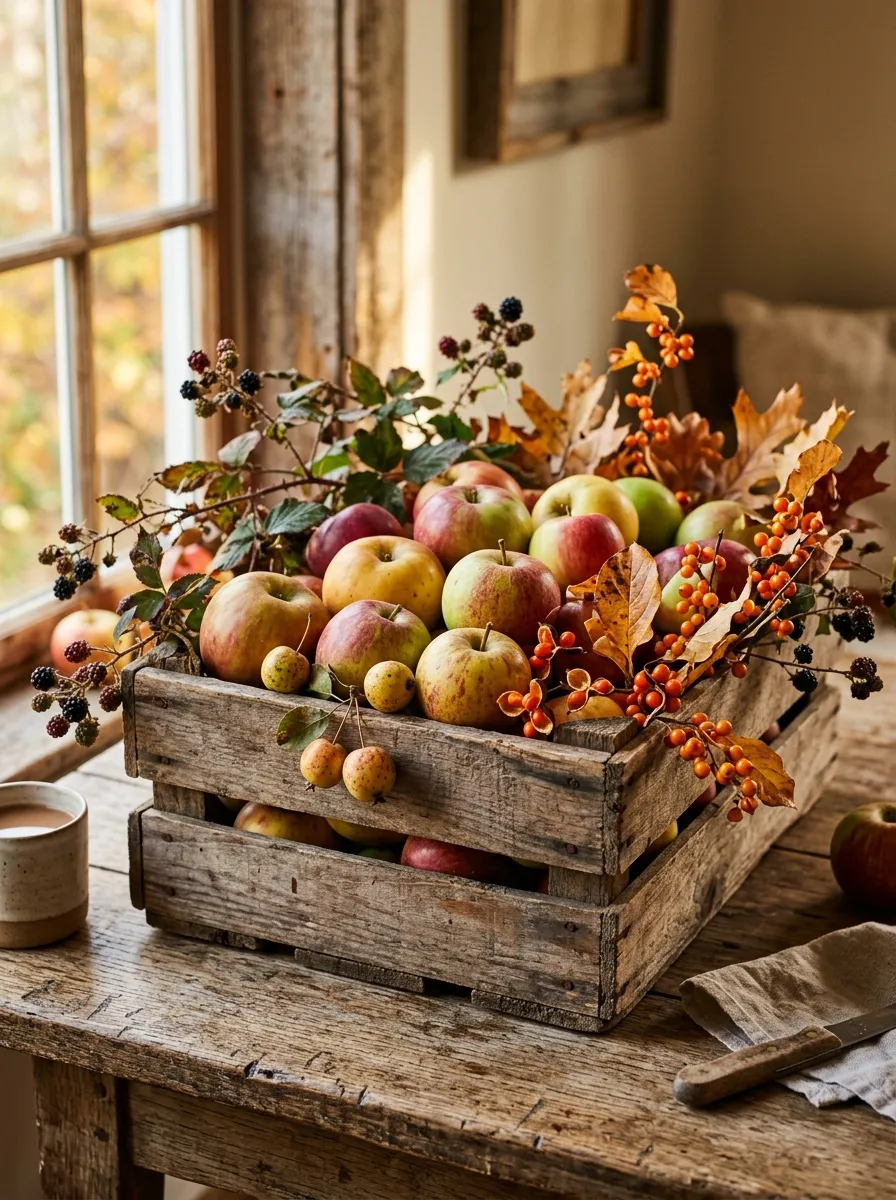
The rustic berry and foraged apple wooden crate centerpiece delivers an authentic orchard-inspired look, making it an ideal choice for fall weddings, country gatherings, and farmhouse kitchen tables. This display utilizes a low, weathered wooden apple crate filled with a vibrant assortment of heirloom apples, speckled crabapples, wild blackberries, and woody branches of orange bittersweet. By incorporating apples in diverse stages of coloration, including mottled russet, pale blush, and deep crimson, the arrangement captures the untamed abundance of a late-autumn harvest. The rough-hewn timber of the crate grounds the vibrant tones of the fruit, providing structural containment that keeps the table tidy, cohesive, and easy to transport or relocate during busy event transitions.
Begin by sourcing a shallow, reclaimed wooden slat crate measuring approximately twelve by eight inches, lining the interior base with a layer of heavy brown craft paper or food-safe wax paper to prevent small debris from sifting onto table linens. Place three small blocks of water-soaked floral foam inside plastic protective cups within the crate corners, leaving the center clear for bulk fruit stacking. Fill the central cavity of the crate with whole heirloom apples, angling them so their most colorful cheeks face outward and upward. Insert clipped branches of fresh rosehips, crabapple twigs, and woody bittersweet vines into the soaked foam blocks, allowing the branches to arch outward across the crate edges. Weave small clusters of fresh blackberries still attached to their natural vine sprigs into the top gaps, finishing the look by nestling dried autumn leaves around the fruit base.
6. Monochromatic Green Artichoke and Muscat Grape Pedestal
Setup Method
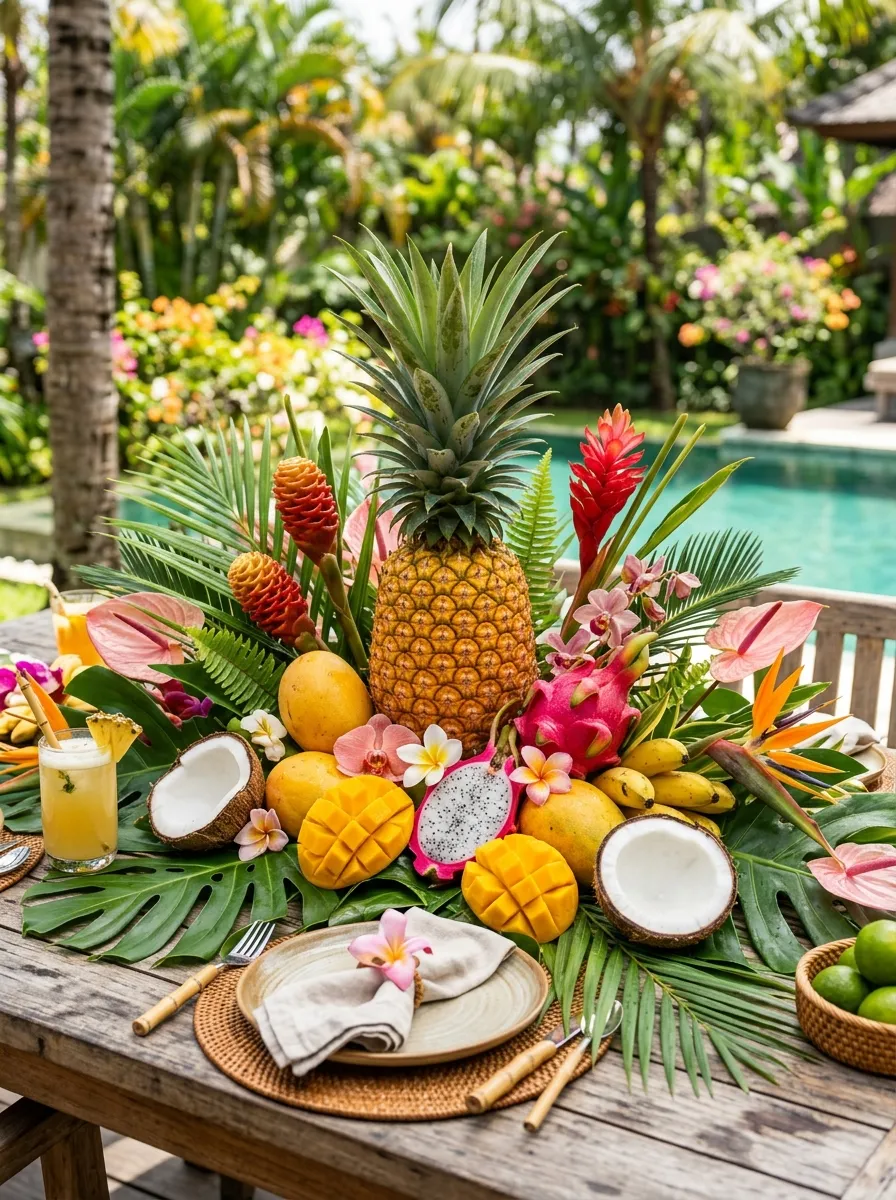
The monochromatic green artichoke and muscat grape pedestal explores tone-on-tone elegance by curating produce strictly within the cool emerald, chartreuse, and sage spectrum. Displayed upon an elevated white marble or polished pewter pedestal, this arrangement features heavy globe artichokes as its architectural anchor, framed by cascading clusters of translucent green Muscat grapes and pale green Seckel pears. The deeply serrated, geometric bracts of the artichokes offer a striking floral appearance, rivaling the complexity of exotic blooms while offering superior durability and structure. This restrained color palette creates a sophisticated, modern focal point that complements high-end formal dinner parties, clean minimalist interiors, and elegant spring gatherings where understated luxury is desired.
To build this sculptural green display, position an eight-inch marble pedestal compote in the center of the table, placing a small silicone ring or disc of florist tack on the marble surface to prevent heavy produce from shifting. Place a large, trimmed globe artichoke upright in the center of the pedestal, trimming its stem flat so it rests securely on its base. Flank the central artichoke with two smaller baby artichokes, tilting them outward at thirty-degree angles to establish a wide, dynamic triangular foundation. Drape generous bunches of cold, firm Muscat grapes over the front and rear lips of the marble pedestal, allowing the heavy grape clusters to cascade downward toward the tablecloth. Fill the remaining openings with miniature green Seckel pears and delicate sprigs of fresh rosemary, ensuring every gap is filled while maintaining an uninterrupted monochromatic green palette throughout the entire perimeter.
7. Carved Melon Floral Basin Centerpiece
How to Create
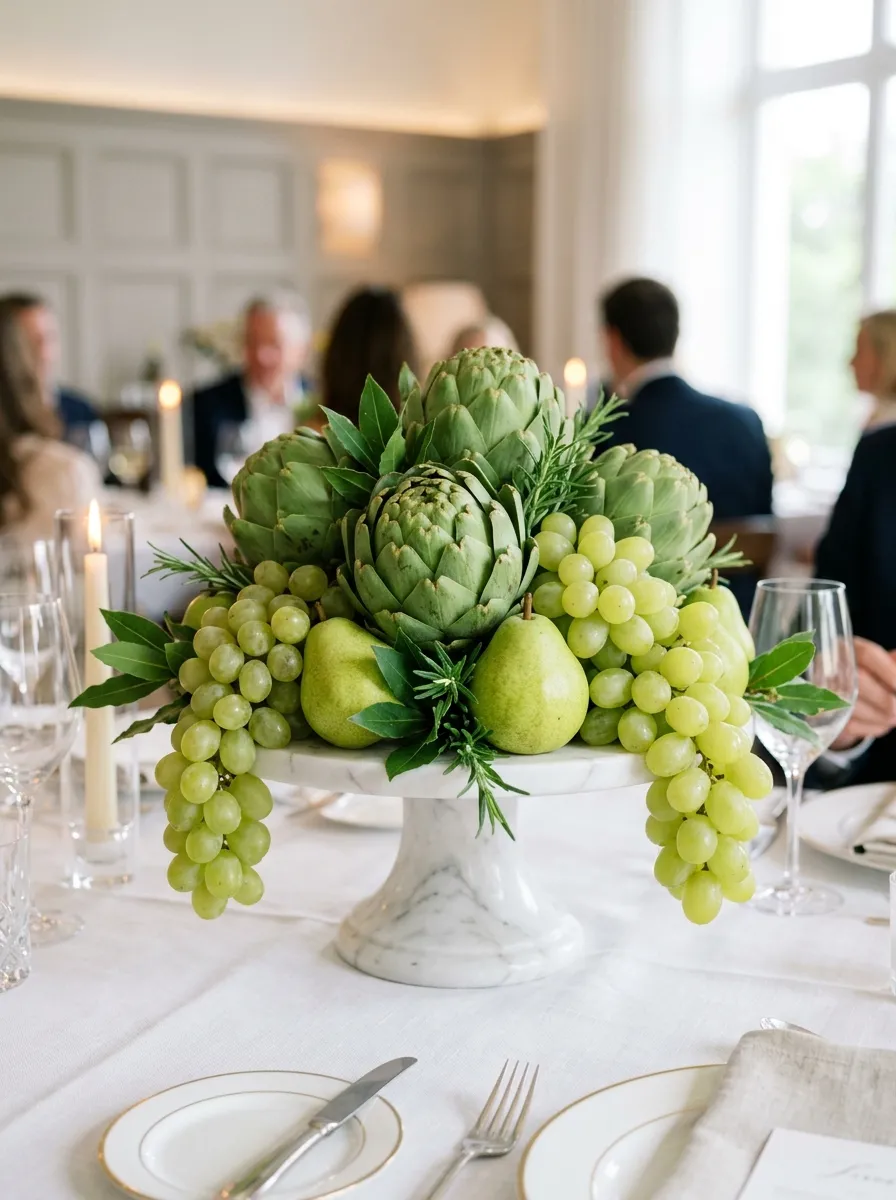
The carved melon floral basin centerpiece transforms fresh produce into both the decorative container and the organic anchor of the table arrangement. This inventive concept utilizes a hollowed honeydew melon, cantaloupe, or small personal watermelon as a natural botanical vase, filled with water and packed with coordinating garden flowers, herbs, and berry sprigs. The smooth, pastel exterior of the melon rind provides a fresh, clean vessel surface that harmonizes naturally with the living stems it supports. This display is ideal for summer brunch tables, garden baby showers, and outdoor luncheons, providing a conversation-starting decorative piece that merges floral artistry with fresh harvest aesthetics.
Begin by selecting a firm, symmetrical cantaloupe or honeydew melon, using a large chef knife to slice a thin, level sliver off the bottom rind to create a flat, stable base that sits without wobbling. Slice off the top quarter of the melon horizontally, then scoop out the inner seeds and soft pulp with a metal spoon, leaving a clean, hollow cavity with thick, sturdy walls. Cut a small block of fresh-flower foam to fit snugly inside the melon interior, soaking the foam in water treated with flower nutrient solution before insertion. Insert short, sturdy stems of garden roses, white snapdragons, and flowering mint into the foam, keeping the stems compact and dense so the blooms radiate outward from the melon rim. Surround the melon base with whole fresh cherries or strawberries scattered across the table to visually anchor the organic vessel to the dining surface.
8. Cascading Tropical Pineapple and Mango Tablescape
Step-by-Step Guide
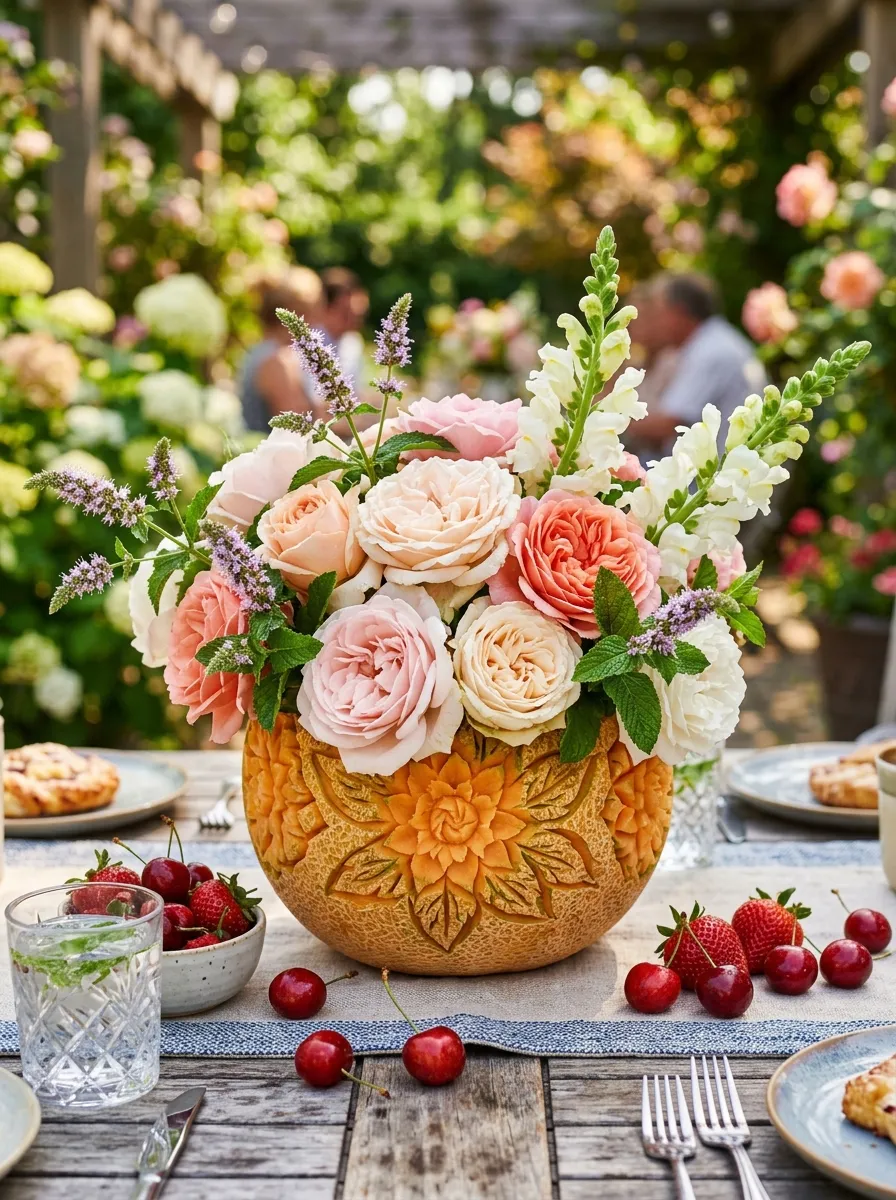
The cascading tropical pineapple and mango tablescape channels bold resort elegance through oversized textures, architectural leaves, and vivid golden tones. Centered around a majestic whole pineapple with its crown intact, this design integrates ripe golden mangoes, bright pink dragon fruits, split coconuts, and vibrant papayas, producing a dramatic, multi-layered visual feast. The bold silhouettes of the tropical fruits are framed by wide, glossy monstera leaves and split-leaf philodendron frills that form an expansive base runner. This concept is tailor-made for summer poolside dinner parties, destination wedding celebrations, and vibrant celebratory gatherings where high visual energy, exotic textures, and rich color saturation are celebrated.
Initiate the build by laying two large, polished monstera leaves flat along the center of the table, overlapping their stems so the broad, glossy leaves face outward toward opposite table ends. Place a tall, ripe pineapple upright directly over the center stem overlap, ensuring its heavy base rests completely flat and stable. Arrange three golden mangoes and two whole pink dragon fruits around the pineapple base, nestling them closely to conceal the central leaf stems. Halve a fresh brown coconut using a mallet, drain the water, and wedge the two open halves into the fruit cluster with their stark white flesh facing outward to provide bright visual contrast. Tuck long, slender stems of fresh flowering ginger or bird of paradise blossoms beneath the pineapple, misting the entire display lightly with cool water to enhance the tropical luster of the fruit rinds.
9. Glass Cloche Preserved Citrus and Moss Terrarium
Execution Process
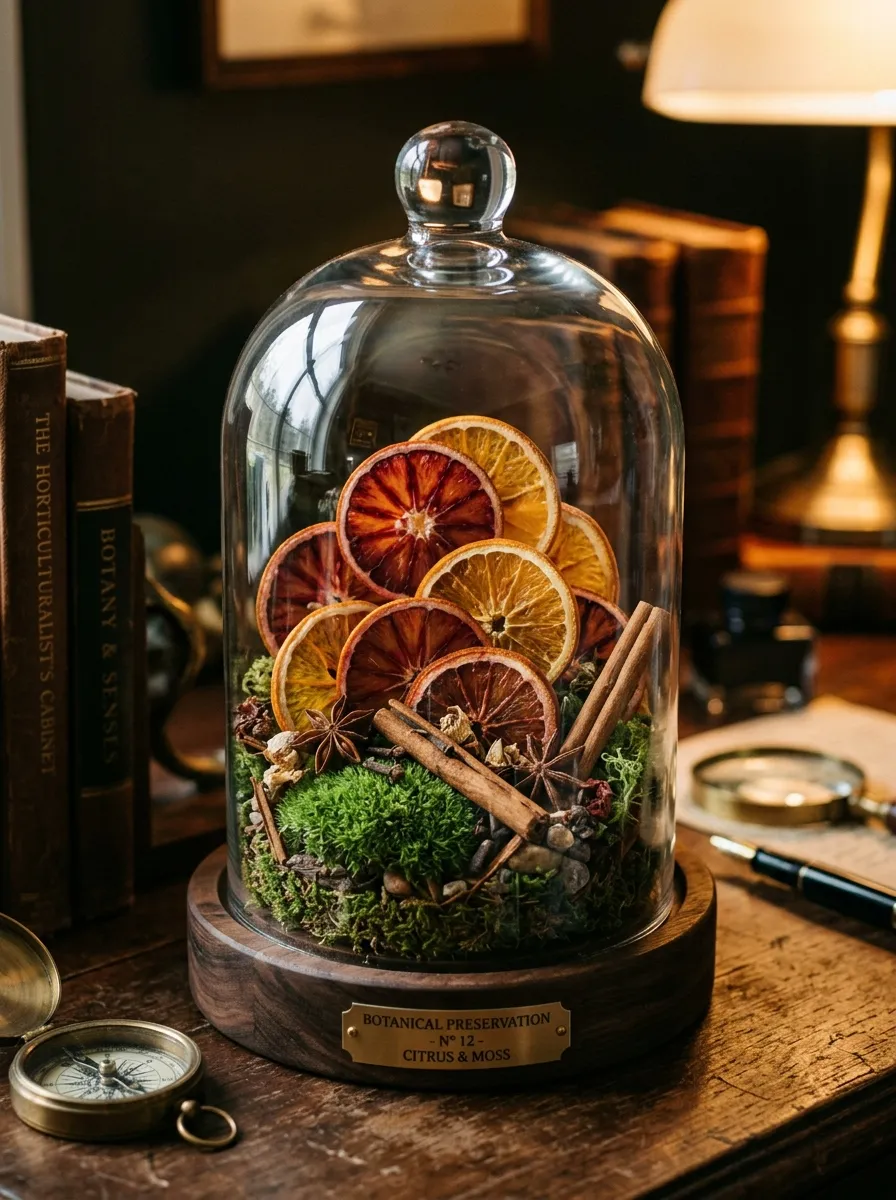
The glass cloche preserved citrus and moss terrarium applies a museum-style curatorial approach to fruit decor, encasing dehydrated citrus discs and living forest mosses beneath heavy glass bell jars. This arrangement pairs dehydrated orange, blood orange, and grapefruit slices with preserved pillow moss, lichens, and slender cinnamon bark sticks resting upon an unglazed ceramic or dark walnut base. The glass dome protects the delicate botanicals from dust and environmental air currents while magnifying their intricate inner pulp membranes and seed geometry. This long-lasting, mess-free centerpiece suits book club meetings, autumn harvest sideboards, and quiet study desks, providing an enduring botanical installation that requires zero daily water maintenance.
To construct this terrarium, prepare dehydrated citrus rounds in advance by slicing oranges and grapefruits into uniform one-eighth-inch slices and drying them in a food dehydrator or low-temperature oven at one hundred seventy degrees Fahrenheit for six hours until brittle and translucent. Select a clean wooden base fitted with a matched glass cloche, laying a dense carpet of preserved green cushion moss across the wood surface. Arrange upright stacks of dehydrated citrus wheels into the moss bed, staggering varying diameters to form layered, geometric botanical towers. Interlock slender cinnamon sticks and whole star anise pods around the moss base, adding a delicate, warm spice fragrance inside the chamber. Clean the interior of the glass bell jar with an alcohol wipe to remove interior fingerprints, then lower the cloche carefully over the botanical arrangement, seating it flush within the base groove.
10. Floating Cranberry and Rosemary Water Basin
How to Make
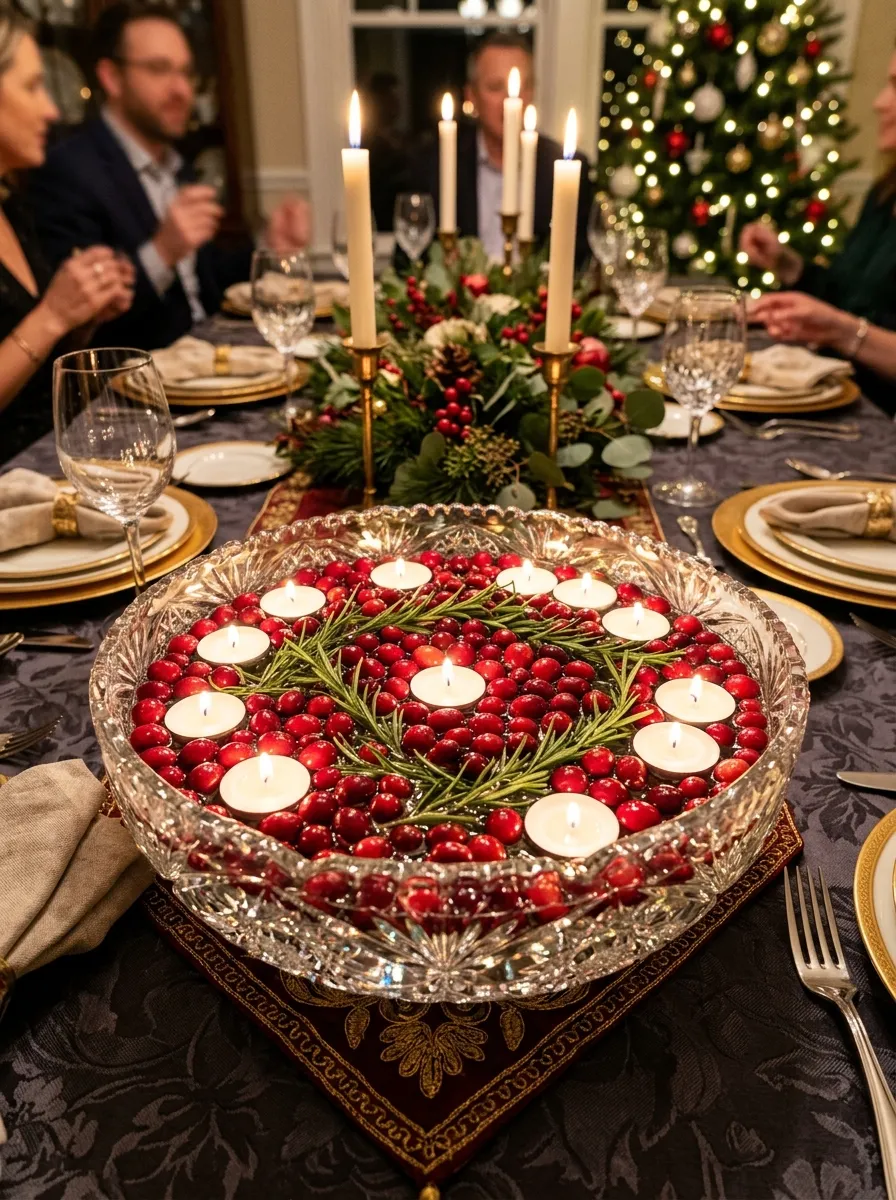
The floating cranberry and rosemary water basin provides a luminous, holiday-ready centerpiece that relies on buoyancy, festive crimson hues, and aromatic herbal notes. This design features a wide, shallow glass compote or vintage crystal punch bowl filled with cool water, topped with a dense floating layer of tart red cranberries, fresh sprigs of rosemary, and floating tea lights. Because raw cranberries contain internal air pockets, they float effortlessly, creating a dense, bobbing surface mosaic that completely conceals the water beneath. The deep scarlet berries provide a stark, graphic contrast against the dark green needle sprigs and warm candle glow, making this an ideal, effortless solution for Thanksgiving dinners, holiday banquets, and winter wedding receptions.
Begin by selecting a wide, clear glass serving bowl or pedestaled footed punch dish with a diameter of at least ten to twelve inches, washing the glass thoroughly to ensure optical clarity. Fill the vessel two-thirds full with cold, filtered tap water, adding a small tray of ice cubes to keep the water temperature low and preserve fruit crispness. Gently pour two cups of fresh, sorted whole cranberries onto the water surface, using your fingers to spread the berries into an even, single-layer floating carpet. Float several short, three-inch sprigs of fresh rosemary between the cranberries, allowing their needle-like leaves to rest horizontally on the berry bed. Place three to five white floating disc candles onto the surface among the berries, taking care to keep the wicks dry, and light the candles immediately prior to welcoming guests into the dining room.
Common Beginner Mistakes and How to Avoid Them
The most frequent error in fruit centerpiece assembly is selecting produce that is overly ripe or already showing soft pressure spots. Overripe fruit deteriorates rapidly under room temperatures and ambient dining room lighting, releasing sticky sugary juices that attract fruit flies, damage rental linens, and produce unpleasant fermentation aromas. Avoid this issue by purchasing firm, slightly underripe fruit specimens forty-eight hours prior to the event, inspecting every piece for unbroken rinds and solid stems. Another common pitfall is failing to stabilize spherical produce, resulting in runaway apples or rolling oranges whenever guests bump the dining table. Prevent rolling disasters by anchoring fruit bases with discreet florists putty, nesting rounded items into shallow beds of foliage, or utilizing hidden wooden skewers anchored into concealed base blocks. Finally, avoid exposing cut, unsealed fruit surfaces to open air without preventative care; bare cut apples and pears oxidize into an unappealing brown tone within an hour. Treat every exposed fruit surface immediately with an ascorbic acid bath or dilute lemon juice spray to preserve bright, appetizing cellular clarity throughout the event.
Practical Tips for Better Results
Achieving florist-level refinement with produce arrangements requires mastering simple conditioning and finishing protocols used by commercial event stylists. To give whole citrus, apples, and pomegranates an editorial, high-gloss sheen, wipe their rinds with a microfiber cloth treated with a single drop of food-grade mineral oil or fractionated coconut oil, buffing the surface lightly to accentuate natural highlights under chandelier lighting. When utilizing cut fruit within wet floral arrangements, always insert an invisible barrier, such as a square of wax paper or clear cellophane, between wet floral foam and raw fruit flesh to prevent chemical absorption and premature fruit degradation. For arrangements that incorporate both fresh flowers and ethylene-producing fruits like apples, bananas, or pears, ensure adequate room ventilation, as ethylene gas accelerates petal drop in delicate blooms like sweet peas and hydrangeas. Furthermore, always build your heavy fruit foundations from the bottom upward, placing larger, heavier structural specimens at the base and reserving delicate berries or fragile cleaved fruit slices for the crowning top layer to maintain balanced equilibrium.
Styling, Presentation, or Organization Ideas
Integrating fruit centerpieces successfully into an overall tablescape demands thoughtful coordination with your surrounding table linens, dinnerware, and ambient lighting. For rustic and Mediterranean themes, pair rough stone compotes and citrus with textured, unbleached linen runners, raw timber chargers, and matte ceramic plates to emphasize tactile organic warmth. In modern, formal dining environments, set clean glass cylinders or marble pedestals against crisp white tablecloths, modern black matte flatware, and tall, slender taper candles in minimalist brass holders. Enhance the multi-sensory nature of the table by carrying the centerpiece produce directly into the dining experience; place an individual whole plum, clementine, or rosemary-garnished pear upon each guest’s folded linen napkin accompanied by a handwritten menu card. Maintain a strict vertical height profile across your centerpiece compositions, keeping the central bulk of the fruit below fourteen inches so dining guests maintain direct eye contact across the table, ensuring an engaging, comfortable, and visually balanced social atmosphere throughout the evening.
Budget or Time Planning
Designing table decor around fresh fruit offers major financial advantages over traditional floral concepts, but realizing these savings requires disciplined timeline execution and smart grocery sourcing. Fresh seasonal produce purchased from wholesale markets or bulk produce outlets typically costs seventy percent less than equivalent volumes of commercial cut flowers, making fruit styling an exceptional choice for budget-conscious event planning. To streamline production, purchase non-perishable hard materials, compotes, hurricane vases, and preserved moss weeks in advance, verifying all containers are clean, leak-tested, and ready for immediate deployment. Acquire your hard fruits like citrus, pomegranates, and apples three days prior to the event, reserving soft berries and tender figs for pickup the afternoon before assembly. Construct your foundational greenery bases and position empty vessels on the venue tables the morning of the event, executing the final fruit stacking and slicing one to two hours before guest arrival. This structured schedule keeps delicate produce pristine, eliminates stress on the day of the event, and ensures cut surfaces remain moist, vibrant, and completely fresh.
Creative Expansion and Advanced Inspiration
Once you have mastered foundational fruit styling methods, explore innovative conceptual variations that incorporate interactive dining elements and mixed artisan craft media. Consider constructing an edible living charcuterie runner by interweaving artisan cheeses, clusters of honeycomb, seeded crackers, and cured meats directly among the fruits, inviting guests to actively graze from the centerpiece during cocktail hour. You can also experiment with botanical preservation techniques, such as dipping whole pears or green grapes into warm egg-white washes followed by superfine granulated sugar, creating sparkling, frosted fruit centerpieces reminiscent of Victorian winter banquets. For elevated evening drama, incorporate battery-operated micro-fairy lights concealed within leafy foliage bases, casting an enchanting, magical underglow through translucent grape clusters and citrus rinds. These advanced techniques showcase the limitless versatility of fresh produce, transforming simple, budget friendly pantry staples into breathtaking, museum-quality fiber and food installations that elevate any celebration to an unforgettable artistic experience.