Eucalyptus foliage serves as a foundational botanical element in modern wedding styling, offering silvery green tones, organic movement, and a refreshing herbal scent. Couples and floral designers consistently…
Eucalyptus foliage serves as a foundational botanical element in modern wedding styling, offering silvery green tones, organic movement, and a refreshing herbal scent. Couples and floral designers consistently seek natural, cost-effective tablescape elements that produce a lavish visual presence without requiring expensive exotic blooms. In this comprehensive guide, readers will explore ten distinct wedding centerpiece concepts designed to elevate reception tables across diverse venue themes, from rustic barns to industrial lofts. This guide explains how to construct running table runners, elevated floral arrangements, floating candle displays, and geometric metallic pairings using accessible botanical varieties like silver dollar, seeded, and baby blue eucalyptus. Crafters and planners will discover structural mechanics that ensure long-lasting freshness throughout long reception events, proper stem hydration protocols, and balanced foliage density. Additionally, this guide outlines critical planning factors including vessel stability, guest eye-line sight paths, and practical budget ideas for DIY assembly. By understanding the functional properties and structural integrity of eucalyptus leaves, hosts can create cohesive, high-end handmade tablescapes that streamline venue setup while delivering professional aesthetic impact.
Why This Idea Is Trending or Useful
Eucalyptus centerpieces dominate contemporary Pinterest ideas due to their exceptional resilience, versatile neutral color palette, and high-volume leafy coverage. Fresh eucalyptus varieties possess waxy leaf cuticles that dramatically reduce water evaporation, allowing them to remain crisp and vibrant without immediate water sources for twelve to twenty-four hours. This physiological durability provides immense practical value for DIY decorators who must assemble reception tables well before ceremony start times. From an architectural perspective, the muted blue-gray and sage undertones integrate seamlessly into modern design aesthetics, pairing harmoniously with neutral linens, warm wood grains, and metallic hardware. The wide surface area of round silver dollar leaves and the cascading texture of seeded eucalyptus provide expansive table coverage with fewer total stems, making it a reliable choice for budget ideas. Beginners appreciate eucalyptus because its organic, irregular branch forms naturally mask floral design imperfections, producing relaxed, professional-looking centerpieces without rigorous floristry training. This blend of structural flexibility, visual sophistication, and botanical dependability positions eucalyptus as an essential staple of modern event styling.
Materials and Preparation
Flawless wedding tablescapes require disciplined preparation, appropriate materials, and the correct mechanical supplies to support stem architecture. Key botanical varieties include broad-leaf silver dollar eucalyptus for base coverage, seeded eucalyptus for dimensional droop, and upright spiral or baby blue eucalyptus for height. Mechanical supplies consist of floral shears with bypass cutting blades, green paddle wire, heavy-duty waterproof floral tape, plastic floral cages, and dense wet floral foam bricks. Decorative accessories require clean cylinder vases, raw timber rounds, taper candle sleeves, and brass or matte black stands. Preparation must begin forty-eight hours before the event date with wholesale stem conditioning. Trim stem ends at a sharp forty-five-degree angle underwater using sterilized shears to prevent air embolisms from blocking water channels. Strip away all foliage from the bottom five inches of each branch to eliminate bacterial growth in water reservoirs. Submerge the conditioned branches in cool water fortified with professional floral preservative, storing buckets in a dark, temperature-controlled room between forty and fifty-five degrees Fahrenheit until final on-site arrangement.
Idea 1: Flowing Seeded Eucalyptus Table Runner
Execution Process
The continuous garland table runner represents an iconic wedding decor concept that unifies long banquet and harvest tables with sweeping greenery. This design uses a dense backbone of broad silver dollar foliage layered beneath draping seeded eucalyptus clusters that spill naturally over table edges. The intentional absence of tall vessels keeps centerlines clear, promoting comfortable cross-table dialogue among wedding guests. Small berry clusters from the seeded variety catch downward lighting, adding textural contrast to smooth linen fabrics or exposed dark walnut tabletops. The horizontal flow establishes a minimalist style that feels simultaneously lush and disciplined, fitting outdoor vineyard settings or clean indoor dining rooms.
To construct this living table runner, lay down a single-ply strip of natural burlap or parchment paper down the table center to protect wood surfaces from moisture. Begin at one outer end of the table, placing three overlapping main branches with leaf tips pointing outward toward the table edge. Secure the stem bases firmly using fine 22-gauge paddle wire, wrapping tightly around the wood without severing the bark. Continue working inward toward the table center by layering fresh branches over the previous exposed wire bindings, staggering stem placements left and right to build a full, twelve-inch-wide foliage bed. When reaching the center point, begin assembling from the opposite table end so both sides flow outward symmetrically, tucking the final meeting stems under dense leafy sprays to conceal the terminal wire joins.
Idea 2: Elevated Brass Riser with Cascading Foliage
Step-by-Step Guide
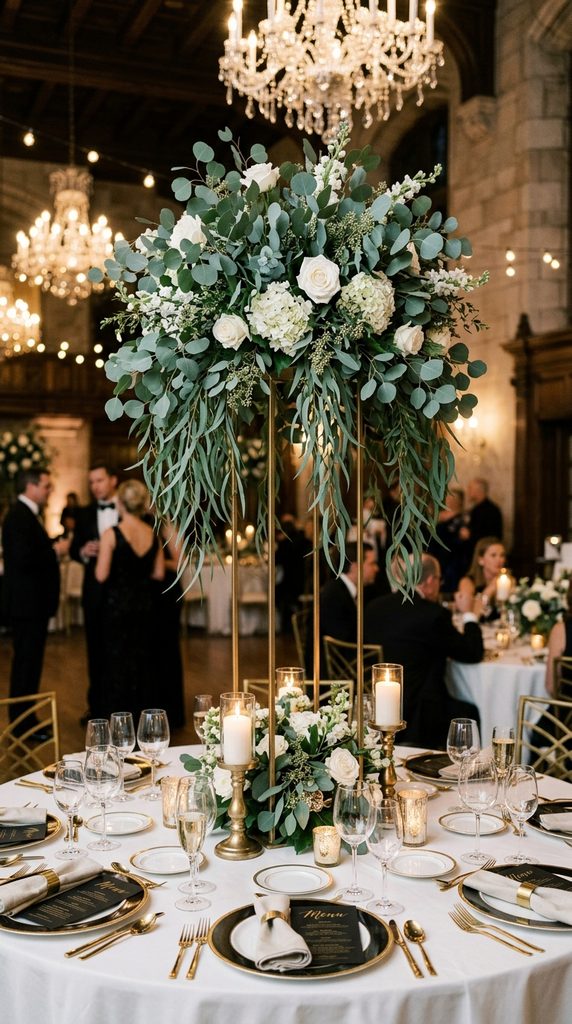
Elevated centerpieces introduce architectural height into reception ballrooms featuring high ceilings, drawing the eye upward without blocking dinner conversations. This arrangement utilizes a tall, slender matte brass or gold metal riser measuring between twenty-four and thirty inches in height, topped with an overflowing canopy of mixed greenery. Silver dollar eucalyptus branches arch outward horizontally, while long tendrils of weeping willow or baby blue eucalyptus cascade down the metal legs toward the linen. The contrast between warm, reflective metal and cool, matte sage leaves creates a balanced modern aesthetic suitable for formal black-tie events.
Start assembly by soaking a standard floral foam brick in water enriched with commercial cut-flower food until completely saturated through natural submersion. Place the wet foam block inside a shallow plastic floral dish, strapping it securely across the top and sides with waterproof green adhesive tape. Anchor the prepared floral dish onto the top platform of the brass riser using dense industrial mounting adhesive putty or zip ties passed through platform slots. Insert thick, woody eucalyptus stems into the lower perimeter of the foam block at a downward sixty-degree angle, allowing the natural branch curves to drape toward the tabletop. Work progressively toward the top center of the foam block, inserting shorter, upright stems to form a balanced, dome-shaped canopy, taking care to cover all exposed green foam surfaces completely.
Idea 3: Submerged Foliage Cylinders with Floating Flame
Setup Method
Water-submerged botanical displays provide a luminous, clean centerpiece option that maximizes ambient candlelight through liquid refraction. This setup uses sets of three thick-walled glass cylinder vases in graduated heights, such as six, nine, and twelve inches, filled with crystal-clear water. Slender sprigs of baby blue eucalyptus and seeded eucalyptus remain entirely suspended beneath the water surface, topped by clean white disc candles that float at the rim. As night falls, the flickering candlelight illuminates the silvery leaf veins and creates dancing water reflections across the dining area, establishing a serene, romantic atmosphere with minimal table clutter.
Begin by thoroughly washing all glass cylinder vases with warm soapy water followed by an isopropyl alcohol wipe to remove interior fingerprints, dust, and water spots. Measure individual eucalyptus sprigs against the height of each respective vase, trimming the bottom woody stem so the top leaf cluster sits two inches below the intended water surface line. Wrap a small fishing weight or clear glass floral marble around the base of each stem with thin monofilament line to anchor the buoyant greens securely to the bottom of the container. Fill each vase with distilled water rather than tap water to prevent cloudiness, mineral residue, and air bubble formation on the leaf surfaces. Once filled, gently lower the weighted stem into the center, verify it stands upright, and carefully place a three-inch paraffin or soy floating disc candle onto the water surface.
Idea 4: Rustic Wood Slab with Clustered Bud Vases
How to Create
Combining natural timber textures with petite botanical groupings creates an approachable, organic centerpiece design well-suited for countryside, garden, or modern barn celebrations. The arrangement centers around an eight-to-ten-inch cross-section of kiln-dried cedar or birch wood, presenting smooth grain surfaces and natural exterior bark edges. Arranged upon this wooden riser are three to five mismatched miniature clear or amber glass apothecary bottles. Each bottle holds a delicate, curated pairing of single eucalyptus tips with small white spray roses or textured astrantia, producing a relaxed, hand-gathered presentation that highlights delicate leaf architecture.
To prepare the foundation, inspect each wood slab to ensure it sits completely level on the table without rocking, using self-adhesive felt pads beneath the bark rim to protect venue linens. Arrange the glass bud vases atop the wood slab in an asymmetric triangular configuration, varying container shapes to provide visual balance. Fill each small vessel two-thirds full with fresh water mixed with liquid floral preservative. Select slender branch tips from seeded and gunnii eucalyptus varieties, cutting each piece between four and seven inches in length with clean, forty-five-degree stem cuts. Strip the bottom foliage bare, slide one to two stems into each bud vase along with an accent flower, and scatter loose eucalyptus leaves around the timber base to integrate the components.
Idea 5: Geometric Terrarium with Enclosed Pillar Candle
Step-by-Step Construction
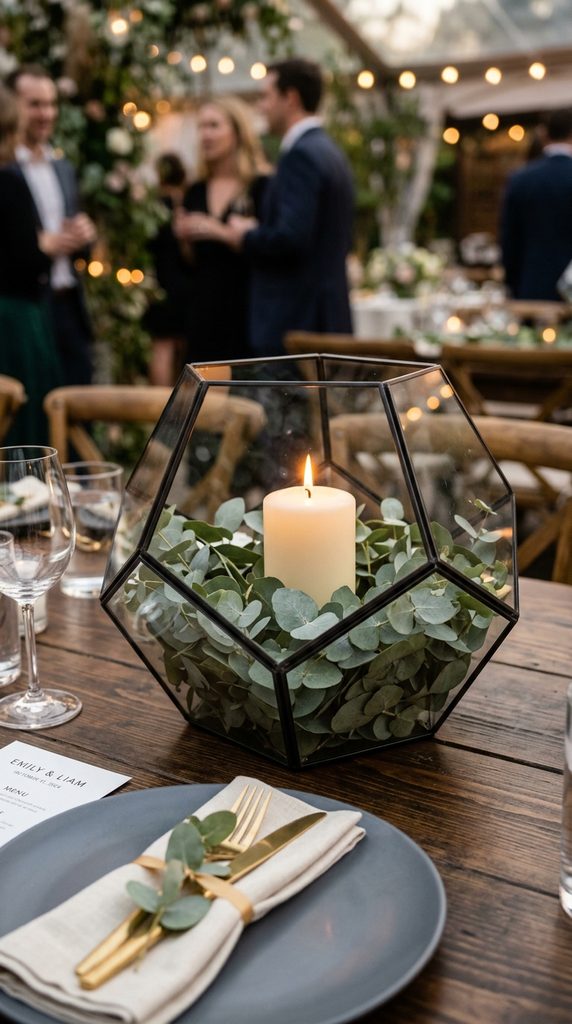
Geometric glass terrariums constructed with black iron or brushed brass metal framing supply clean lines and structural containment for modern minimalist decor. This centerpiece concept places a stout, unscented ivory pillar candle inside a multifaceted glass enclosure, surrounding the candle perimeter with a dense, tailored bed of fresh eucalyptus cuttings. The clear glass walls shelter the flame from air conditioning drafts or outdoor breezes while magnifying the natural green hues of the foliage. This self-contained presentation remains exceptionally safe, compact, and simple to transport, making it an outstanding choice for venues with strict open-flame policies.
Place the clean geometric terrarium centrally on the table and open the access panel door or top lid. Place a three-inch-diameter, dripless ivory pillar candle directly onto the center of the metal base, stabilizing the candle foot with a pea-sized dot of floral adhesive putty to prevent shifting. Prepare small three-inch clusters of silver dollar and True Blue eucalyptus, ensuring all cut stem ends are clean and dry to avoid internal glass condensation. Carefully weave the individual foliage sprigs around the base of the pillar candle, layering the leaves flat against the metal floor while keeping all vegetation at least two inches away from the candle wick. Seal the terrarium access panel, wipe the exterior glass panels with a microfiber cloth to erase handling smudges, and verify that the flame will have adequate ventilation from top openings.
Idea 6: Terracotta Bowl with Low Crescent Greenery
Fabrication Method
Low-profile compote arrangements built inside matte earthenware bowls emphasize artistic shape and textural richness without interrupting cross-table sightlines. This concept utilizes shallow, unglazed terracotta or ceramic compote vessels with low pedestals, overflowing with an asymmetrical crescent arrangement of dense greenery. The dusty earth tone of the clay vessel enhances the blue-gray undertones of eucalyptus foliage, blending Mediterranean warmth with clean contemporary botanical lines. Small touches of white ranunculus, lisianthus, or dried seed pods can be woven into the foliage to build subtle depth, producing a centerpiece that feels sculptured, grounded, and tailored.
Fit a small four-inch metal floral pin frog (kenzan) into the center of the shallow terracotta dish, securing it with sticky floral clay applied to a completely dry bowl base. Fill the bowl three-quarters full with fresh, room-temperature floral water. Select two curved branches of seeded eucalyptus, inserting the thick, woody stems firmly down onto the brass pins of the frog at opposing horizontal angles to establish a dynamic, sweeping crescent boundary. Infill the central zone with broader silver dollar eucalyptus cuts, placing them at varied upright angles to create internal structural mass and conceal the mechanical frog. Insert individual accent blooms along the lower central rim between foliage layers, keeping the entire height of the completed arrangement under twelve inches to preserve conversational lines across the table.
Idea 7: Woven Grapevine Ring with Pillar Trio
Setup Method
Natural grapevine rings offer an organic, structural perimeter that keeps foliage tightly organized around radiant central candlelight. This design uses an eight-to-ten-inch circular woven wreath base placed flat on table linens, surrounding a central cluster of three staggered glass hurricane sleeves containing white pillar candles. Fresh sprigs of diverse eucalyptus varieties are woven directly into the interlocking branches of the grapevine, transforming a plain brown wood frame into a lush botanical ring. The wreath structure acts as a durable, self-contained border that prevents loose leaves or rolling accessories from creeping into individual dinner place settings.
Begin by placing three clear glass hurricane cylinders in five, seven, and nine-inch heights in a compact triangle at the table center, inserting a matching white pillar candle into each sleeve. Position the natural grapevine wreath directly over the glass cluster so the vessels sit sheltered within the inner opening. Trim fresh eucalyptus sprigs into manageable six-inch lengths, preserving their natural stem forks for anchoring purposes. Slide the cut stem ends deeply into the tight, overlapping vine channels of the wreath, working in a continuous clockwise direction around the circular perimeter. Alternate between the rounded leaves of silver dollar varieties and the delicate, dangling seeds of seeded eucalyptus to build even foliage density, confirming the inner diameter fits closely against the candle glass without pressing leaves over the open top edges.
Idea 8: Suspended Greenery Chandelier Over Dining Center
Execution Process
Suspending botanical elements directly above reception tables clears valuable tabletop surface area for family-style dining service while framing the space with aerial greenery. This installation features a lightweight suspended timber ladder, metal hoop, or wire grid hung horizontally above the table line, enveloped in cascading eucalyptus boughs. The foliage hangs gracefully overhead, catching soft ambient venue lighting and releasing natural botanical oils into the surrounding dining air. This elevated creative project produces exceptional visual drama for photography, transforming high-ceilinged spaces into intimate, botanical dining environments.
Verify ceiling attachment points and suspend an eight-foot by twelve-inch metal wire ladder horizontally above the dining table using high-strength wire rope and locking carabiners, leveling the frame at seven feet above finished floor height. Soak several blocks of caged wet floral foam, securing them with heavy cable ties across the upper horizontal crossbars of the suspended ladder. Insert long, trailing branches of silver dollar and gunnii eucalyptus directly into the bottom and sides of the foam blocks, guiding the leafy branches downward so they drape naturally into the open air space above dinner guests. Fill the upper and lateral areas of the foam with shorter, dense eucalyptus sprigs to hide the hanging frame and water mechanics, finishing by threading battery-operated micro-fairy lights or hanging glass tea light globes throughout the foliage matrix on fire-rated monofilament lines.
Idea 9: Taper Candle Candelabra with Wrapped Foliage
How to Create
Traditional candelabras receive a modern, botanical update when paired with flowing natural greenery wound along their sculptural arms. This centerpiece pairs a classic five-arm bronze or wrought iron candelabra with slender, dripless beeswax taper candles in soft ivory, olive green, or taupe. Fine stems of baby blue and willow eucalyptus are wrapped directly around the candelabra stem and curving candle branches, softening the hard metal angles with organic curves. The elevated flames cast a flattering, warm glow over dining guests, while the twisting foliage brings dynamic, garden-inspired romance to traditional reception table layouts.
Secure five tall, dripless taper candles firmly into the candelabra candle cups, ensuring each stick stands perfectly plumb using candle adhesive wax dots at the base. Prepare long, flexible stems of baby blue or small-leaf gunnii eucalyptus by gently working the branches between your hands to relax the wood fibers and increase flexibility. Fasten the base of a long branch to the central upright post of the candelabra using thin, color-matched floral wire, winding the branch spirally upward toward the branching arms. Extend secondary foliage stems out along each horizontal candelabra arm, securing the branches beneath the candle cups with tight wire wraps while ensuring all leaves remain at least three inches below the base of the candle wicks. Snip away any erratic leaf shoots pointing directly toward candle flame points to ensure complete fire safety.
Idea 10: Mirrored Riser with Silver Dollar Sprigs and Votives
Setup Method
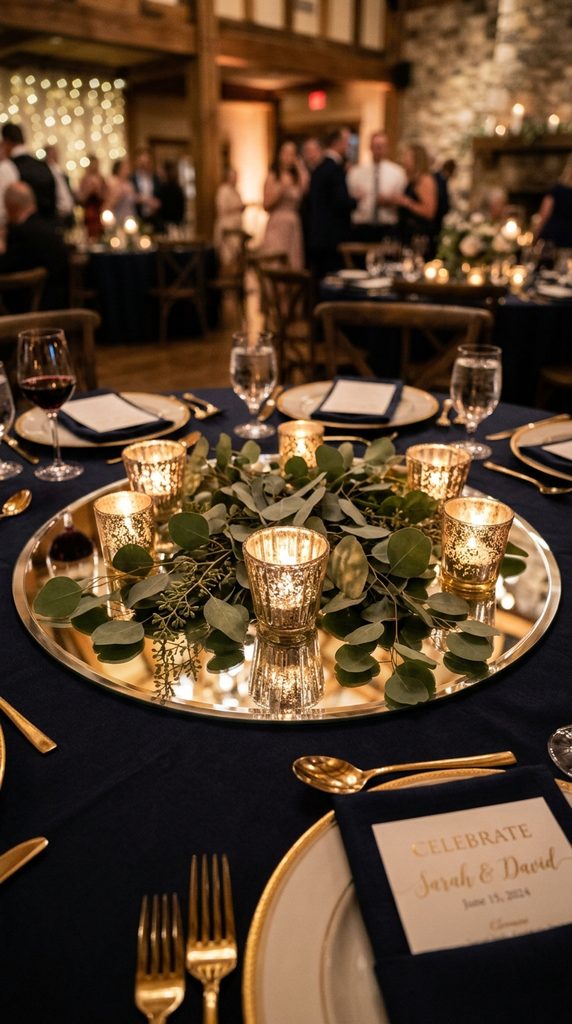
Mirrored base platforms reflect light and expand visual space, making this arrangement an effective solution for intimate indoor venues or evening winter receptions. A clean, beveled twelve-inch round or square glass mirror serves as the centerpiece base, bouncing overhead lighting and candle flames back upward through the botanical layers. Loosely arranged along the mirror surface is a deconstructed garland of broad silver dollar eucalyptus sprigs, punctuated by six to eight faceted mercury glass votive holders. The reflective properties of both the mirror and metallic votive cups illuminate the underside of the eucalyptus leaves, accentuating their powdery, silvery-green tones and creating a radiant, multi-dimensional tablescape.
Clean the beveled glass mirror thoroughly on both sides with glass cleaner, placing it flat upon the center of the reception tablecloth over non-slip rubber pads. Arrange an array of six clear and metallic mercury glass votive cups in an organic, scattered layout across the mirror surface, placing small tea light candles inside each holder. Take individual, pre-cut sprigs of silver dollar eucalyptus measuring between four and eight inches, weaving the stems in a soft circular trail between and around the votive cups. The flat, disc-shaped leaves should overlap the mirror edge slightly to soften the glass boundary without fully obscuring the reflective central floor. Light the tea light candles immediately prior to guest arrival to generate shimmering reflections through the leaves, creating a warm, illuminated floral focal point.
Common Beginner Mistakes and How to Avoid Them
The most critical mistake in DIY wedding floral design is neglecting proper hydration and conditioning protocols before assembling greenery. Beginners frequently place fresh-cut eucalyptus stems directly into arrangements without a full twenty-four-hour conditioning period in clean water, which causes premature wilting, leaf shriveling, and limp branch drop during the reception. Always trim stems at forty-five-degree angles and rest them in cool water supplemented with floral food. Another common hazard involves placing fresh foliage too close to open candle flames; dry air and ambient heat from wicks can scorch eucalyptus leaves quickly, creating smoke and serious fire risks. Ensure a minimum clearance of three inches between any leaf and open flame, or use glass hurricane chimneys around all candles. Furthermore, decorators often assemble centerpieces too tall or too dense, building visual walls that prevent guests from conversing naturally across dining tables. Restrict low arrangement heights to under twelve inches, or elevate canopy displays above twenty-four inches on narrow risers to preserve clear, comfortable sightlines throughout the reception meal.
Practical Tips for Better Results
To achieve clean, professional floral arrangements that match high-end wedding portfolios, decorators must master specific handling techniques and stem mechanics. Combine multiple eucalyptus varieties within a single centerpiece—pairing broad silver dollar leaves, textured seeded clusters, and upright baby blue stems—to build multidimensional depth and natural contrast. When constructing table runners or low compote designs, gently massage stiff woody stems with warm hands to relax internal fibers, allowing branches to curve organically rather than snapping under pressure. Always utilize cold water mists from a clean spray bottle over finished arrangements several hours prior to the event, which rehydrates waxy leaf coatings and locks in moisture. When working with floral foam, allow the bricks to saturate naturally by floating them on the water surface; forcing bricks down traps internal air pockets, starving stem ends of essential water. Finally, transport all arranged vessels in shallow plastic storage totes fitted with non-slip foam inserts, preventing water spills, bruised foliage, and vessel tipping during transit to the reception venue.
Styling, Presentation, or Organization Ideas
Achieving a cohesive reception space requires thoughtful integration between centerpieces, place settings, and overall table styling. Pair cool eucalyptus foliage with textured natural fabrics such as washed linen table runners, crinkled cotton gauze napkins, or raw silk ribbons to complement organic botanical textures. For dinnerware, select warm matte ceramics or clean white porcelain, framing place settings with brushed gold, brass, or blackened steel flatware to draw out specific foliage tones. Small eucalyptus sprigs tied to folded menu cards or placed across linen napkins create visual harmony across individual place settings. To maintain consistent presentation across large reception halls, establish a repeating pattern of alternating tall and low centerpiece designs across adjacent tables. This rhythmic variation introduces dynamic elevation changes across the room while managing overall decor expenses. When styling outdoor venues, shelter taper candles inside tall glass chimneys to maintain steady, windproof illumination, and frame the base of all vessels with loose, scattered greenery to blend table decor into the natural landscape.
Budget or Time Planning
Disciplined budget management and systematic production timelines prevent last-minute stress while maximizing the financial advantages of DIY floral design. Purchasing eucalyptus wholesale by the full bundle case dramatically reduces unit expenses compared to retail floristry prices, with bulk cases providing abundant volume for table runners, arrangements, and accent styling. For an average wedding with fifteen dining tables, plan to order approximately fifteen to twenty bunches of mixed eucalyptus, budgeting ten to fifteen percent extra volume for stem grading and trimming loss. Structure your production schedule across three days: dedicate the first day to unpacking, cutting, and conditioning bulk stems in hydration buckets; spend the second day constructing mechanical bases, assembling runners, and wiring wreaths; and reserve the morning of the event exclusively for on-site vessel placement, water top-offs, and final candle lighting. Implementing a standardized assembly-line workflow for multi-vessel setups—cutting all stems simultaneously before arranging—cuts total assembly hours in half, ensuring all arrangements remain fresh, organized, and structurally secure for the ceremony and reception.
Creative Expansion and Advanced Inspiration
Once you master basic eucalyptus mechanics, you can expand these principles to construct larger wedding installations and personalized styling accents. Combine fresh eucalyptus branches with preserved and dried botanical elements, integrating bleached ruscus, dried pampas grass plumes, or preserved bunny tails to introduce contrasting textural movement. Experiment with botanical dyeing or metallic leaf tipping, applying delicate dustings of rose gold or champagne floral spray paint along leaf margins for modern winter celebrations. Designers can also extend table themes to other venue zones by constructing matching eucalyptus floral swags for welcome entry signs, seating charts, and sweetheart table backdrops. Incorporate fragrant fresh herbs such as rosemary, silver sage, or lavender into eucalyptus centerpieces to enrich the sensory atmosphere with delicate herbal aromatics. For elevated architectural interest, integrate structural branches like curly willow, manzanita, or flowering cherry blossoms into tall eucalyptus displays, creating dramatic, nature-inspired tablescapes that leave lasting memories with wedding couples and their guests.