Gold accent elements serve as a transformative foundation in celebratory event styling, introducing warmth, reflective luminance, and timeless visual prestige to reception banquet tables. Incorporating metallic finishes into…
Gold accent elements serve as a transformative foundation in celebratory event styling, introducing warmth, reflective luminance, and timeless visual prestige to reception banquet tables. Incorporating metallic finishes into tabletop design elevates organic botanicals, enhances ambient illumination, and defines spatial boundaries across broad banquet halls. In this comprehensive tutorial, readers will explore ten distinct centerpiece concepts designed to integrate metallic gold detailing into diverse wedding themes, spanning from contemporary city lofts to classic estate gardens. The guide outlines practical construction mechanics, vessel stabilization, optical sightline preservation, and balance between reflective metal surfaces and matte organic foliage. Crafters and wedding planners will discover actionable instructions for preparing hardware, working with gilding sheets, managing cut florals, and setting up secure candle installations. Beyond singular design elements, this instructional guide addresses strategic logistics including wholesale material sourcing, table density coordination, and multi-piece breakdown workflows. Understanding how metallic gold interacts with event lighting ensures that centerpieces maintain an inviting, high-end visual presence from the initial grand entrance through late-night dancing. Following these structured methodologies enables decorators of every experience level to construct cohesive, durable, and sophisticated reception tablescapes with complete structural confidence.
Why This Idea Is Trending or Useful
Metallic gold wedding centerpieces consistently dominate modern Pinterest ideas because they supply architectural definition, elevated glamour, and versatile design relevance across all seasons. In contemporary event styling, couples gravitate toward decor that produces maximum visual impact while utilizing streamlined material quantities. Metallic finishes accomplish this by reflecting natural daylight and evening candlelight, which doubles the perceived luminosity of the reception room without increasing lighting fixtures. From an architectural viewpoint, gold tones harmonize with virtually any color story, complementing rich autumnal jewel tones, crisp monochromatic whites, soft bridal pastels, and earthy forest greens. The practical value of gold metallic elements extends to their long-term durability; metal vessels, brass risers, and gilded frames are fully reusable, making them practical investments for independent planners or functional home decor accents after the wedding concludes. Beginners appreciate gold accent projects because simple metallic geometric stands and spray-treated glassware instantly impart a professional finish to humble DIY florals. This seamless balance between visual luxury, structural dependability, and accessible assembly makes gold accent centerpieces an enduring staple of creative inspiration.
Materials and Preparation
Deliberate planning and disciplined material procurement form the structural foundation of durable, visually balanced gold wedding centerpieces. Essential metallic bases include brushed brass pedestals, cast iron candelabras, geometric metal terrariums, and heavy brass compote dishes, along with fine gilding supplies such as liquid leaf enamel, metal sizing adhesive, and imitation gold leaf sheets. Floral mechanics require green floral foam blocks, heavy steel pin frogs, clear waterproof florists tape, 22-gauge floral paddle wire, and bypass pruning shears. For illuminated concepts, gather dripless paraffin or soy taper candles, clear glass hurricane sleeves, submerged LED disc lights, and commercial candle adhesive putty. Workspace preparation demands establishing an organized, well-ventilated assembly area equipped with protective drop cloths, lint-free microfiber rags, and isopropyl alcohol for wiping vessel surfaces. Planners must calculate table proportions forty-eight hours in advance, ensuring that vessel heights either remain under twelve inches or rise above twenty-four inches to safeguard comfortable guest eye contact across dining tables. Pre-conditioning fresh botanical stems in sanitized buckets containing floral food guarantees that biological materials remain vibrant throughout extended wedding receptions.
Idea 1: Brushed Gold Geometric Terrarium with Pillar Candle
Step-by-Step Guide
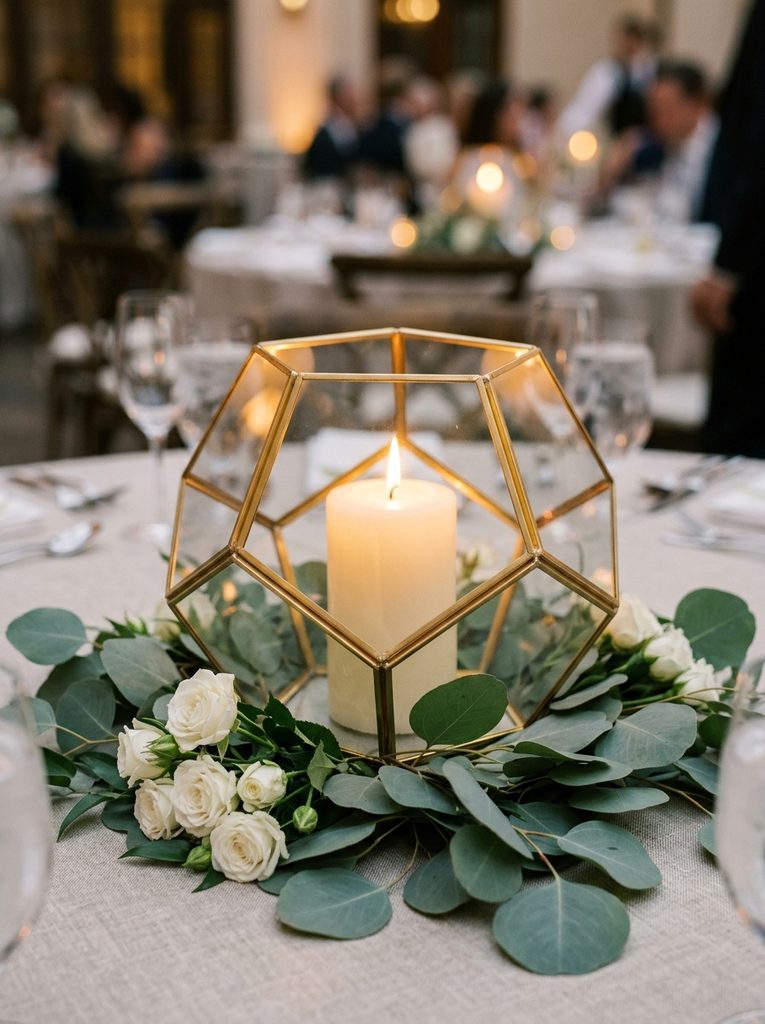
Geometric glass terrariums with brushed gold metal framing provide clean lines, modern design symmetry, and reliable flame containment for contemporary tablescapes. This centerpiece concept utilizes a multi-faceted dodecahedron or pyramid glass terrarium featuring brass-welded seams, enclosing an ivory pillar candle nestled upon an organic bed of greenery. The metallic edging creates sharp geometric shadows when illuminated, while the clear glass panels shield the flame from indoor drafts and outdoor breezes. The brushed satin gold finish avoids harsh, distracting glare, creating a soft, warm reflective boundary that pairs effortlessly with neutral table linens. Because the candle flame is entirely surrounded by protective glass, this design complies with standard venue fire regulations while delivering a refined, minimalist style statement.
Begin by cleaning the interior and exterior glass panels of an eight-inch brushed gold geometric terrarium using a microfiber cloth and glass cleaner to remove dust and fingerprints. Secure a three-inch-diameter, dripless ivory pillar candle onto the metal base of the terrarium, applying two pea-sized drops of commercial candle adhesive putty to the candle bottom to prevent slipping during transport. Cut short sprigs of silver dollar eucalyptus, Italian ruscus, and white spray roses, ensuring each stem measures between two and four inches in length. Arrange the foliage sprigs flat along the metal base surrounding the candle perimeter, keeping all botanical materials at least two inches below the candle wick to eliminate fire hazards. Close the terrarium door or leave the top aperture open depending on the specific vessel geometry, wiping the outer brass frame one final time before placing the finished display in the table center.
Idea 2: Gilded Rim Glass Hurricane Trio with Submerged Blooms
Setup Method
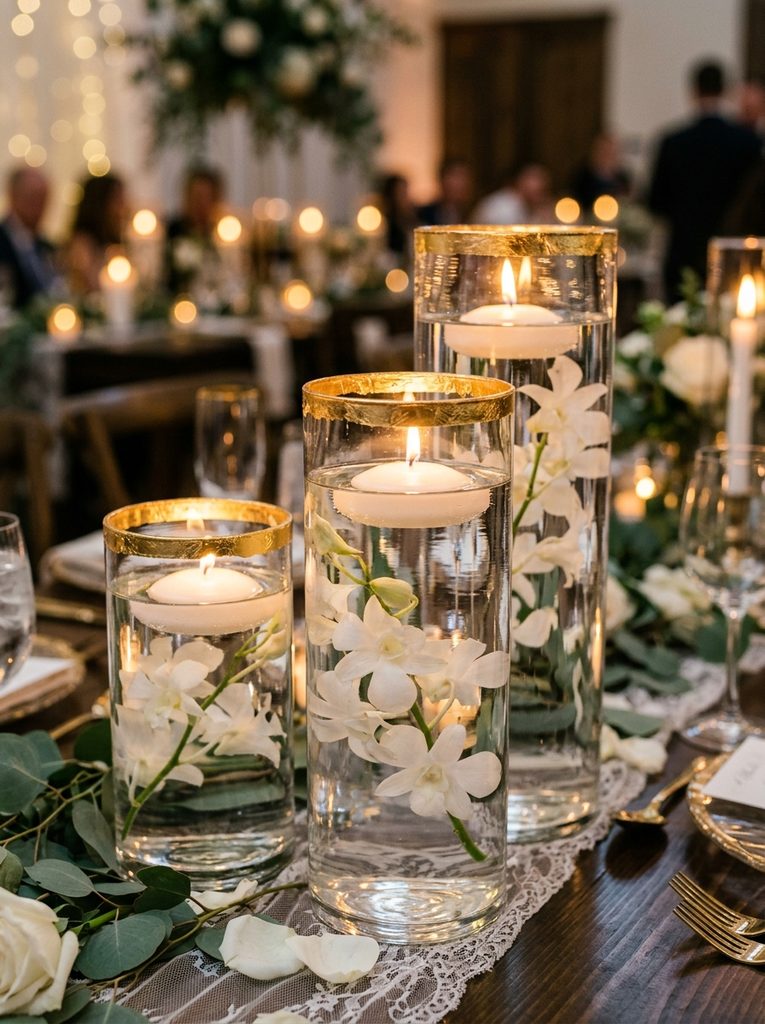
Submerged floral arrangements accented with metallic gold rims combine clean optical refraction with luminous evening warmth. This design uses a set of three cylindrical glass hurricane vases in staggered heights of eight, ten, and twelve inches, each featuring a hand-applied gold leaf band around the upper rim. Inside each cylinder, a pristine white dendrobium orchid spray or calla lily stem floats suspended in crystal-clear water beneath an unscented floating disc candle. The gilded upper border conceals the water meniscus line, adding a tailored metallic frame that catches the flickering flame above. This arrangement remains exceptionally stable on banquet tables, resisting tipping while offering guests clear sightlines through the transparent glass columns.
To apply the gold accent, thoroughly degrease the upper two inches of each clean glass cylinder using rubbing alcohol. Apply a clean strip of blue painters tape two inches below the top lip, paint the exposed upper glass with clear water-based leaf sizing adhesive, and allow the adhesive to reach a clear, tacky state for fifteen minutes. Press loose imitation gold leaf sheets onto the tacky surface, brushing away excess flakes with a soft squirrel-hair brush, and seal the rim with an acrylic gloss sealer to ensure water resistance. Anchor the base of a conditioned orchid stem to the inside bottom of each vase using clear waterproof floral adhesive tape or a transparent glass weight. Fill each container with room-temperature distilled water up to one inch below the gilded rim to prevent air bubble formation on the flower petals, and place a white three-inch floating disc candle gently onto the water surface.
Idea 3: Tall Matte Gold Candelabra with Taper Tapestry
How to Create
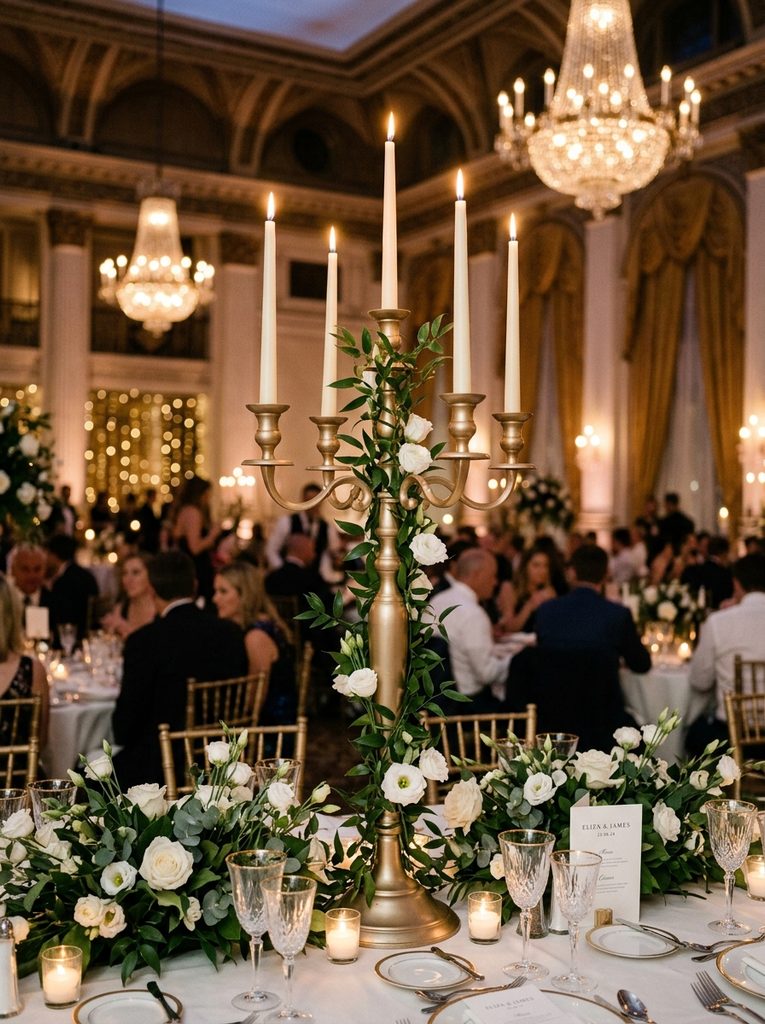
Traditional candelabras receive an updated, modern look through matte gold finishes, asymmetric botanical garnishes, and clean vertical taper lines. This centerpiece features a five-arm cast brass or steel candelabra standing twenty-eight inches tall, finished in a matte, non-reflective champagne gold coating. Slender, dripless ivory taper candles rise from each arm, elevating open flames well above guest eye level to optimize room visibility and dining comfort. Soft botanical vines, such as jasmine vine or variegated ivy, wrap delicately around the central column, softening the rigid metal structure without concealing the refined metallic contours. This stately arrangement brings vertical grandeur to historic ballrooms, vaulted barn venues, and high-ceiling reception spaces.
Prepare the candelabra by placing a firm adhesive wax dot inside each of the five candle cups, inserting twelve-inch dripless taper candles and ensuring each stick is perfectly plumb and upright. Affix a small, soaked round plastic floral cage (igi cage) to the central column below the candle cups using zip ties or waterproof floral tape, verifying the mechanical mount is completely rigid. Insert short stems of Italian ruscus, olive branch foliage, and white lisianthus into the wet foam cage, angling the stems downward and outward to create an organic, balanced foliage collar. Take a long, flexible length of seeded eucalyptus or honeysuckle vine, secure its base beneath the floral cage with fine gold wire, and wrap the vine loosely around the vertical candelabra stem toward the table base. Inspect the finished installation to confirm that all candle wicks maintain at least six inches of clear space from any foliage leaf.
Idea 4: Gold Leaf Footed Compote Bowl with Garden Florals
Execution Process
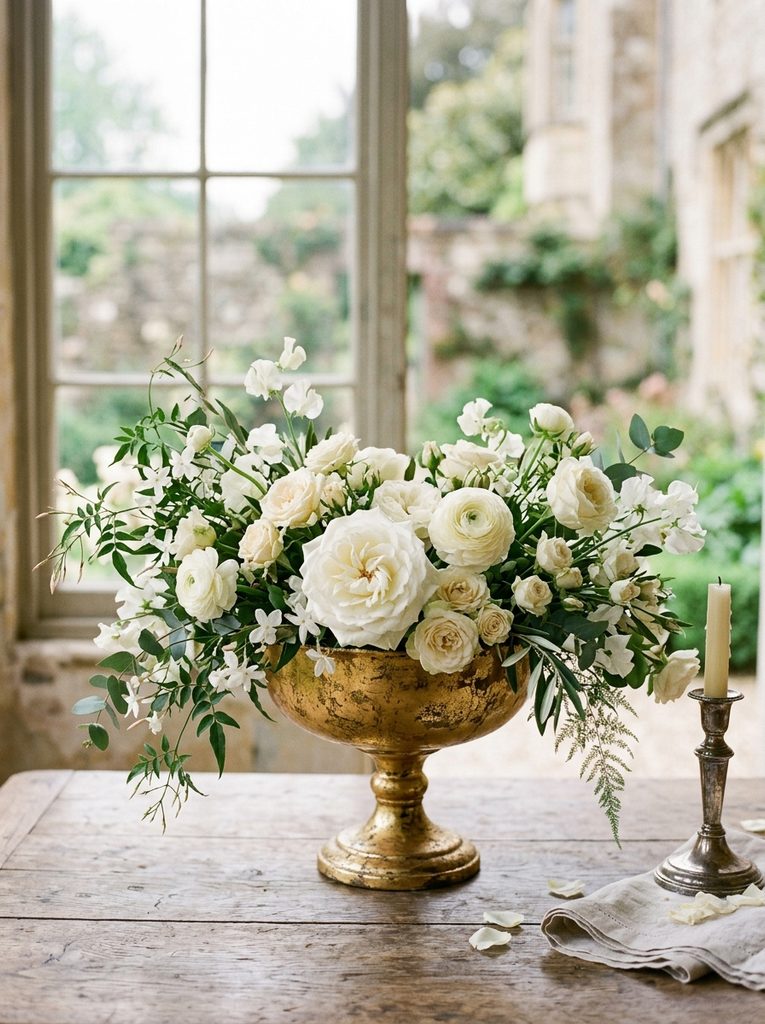
Low-profile compote arrangements built inside gold-leaf footed ceramic or metal bowls emphasize lush floral texture, romantic asymmetry, and classic centerpiece proportions. This concept utilizes a wide, shallow pedestal bowl measuring ten inches across, coated in a distressed, antiqued gold leaf finish that evokes vintage European dining aesthetics. The low height allows guests to converse freely across the table without physical or visual obstruction. Dense garden florals—including garden roses, white ranunculus, and ruffled carnations—spill over the gilded rim, contrasting soft organic petals against the reflective metallic pedestal. The wide base ensures remarkable stability, preventing the vessel from shifting during lively family-style reception dining.
To craft the base, coat an inexpensive ceramic compote bowl with spray-on dark primer, brush randomly with metal sizing, and apply gold leaf sheets, intentionally leaving small distressed gaps to expose the darker undercoat for antique depth. Once sealed with clear matte varnish, secure a soaked half-brick of wet floral foam into the compote basin using a criss-cross pattern of half-inch green floral tape anchored to the dry vessel rim. Insert broad salal and lemon leaf foliage around the perimeter at a downward angle, fully disguising the mechanical foam edge and framing the gold rim beneath. Build the arrangement’s core structure using focal white garden roses and cream spray roses inserted at varying depths to produce dimensional layering. Conclude the design by inserting delicate, dancing stems of white cosmos and sweet peas rising slightly above the primary floral mound, allowing the gold pedestal base to ground the lush arrangement visually.
Idea 5: Elevated Brass Floral Riser with Cascading Greenery
Assembly Technique
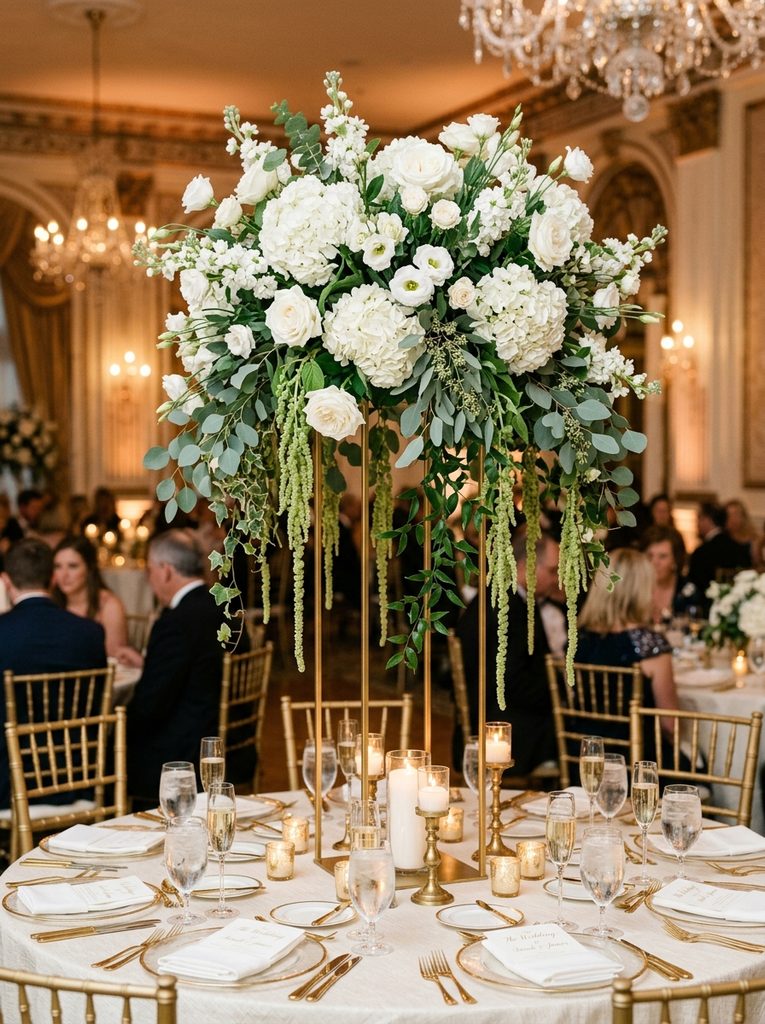
Elevated centerpiece risers introduce dramatic volume into reception rooms featuring tall architectural ceilings, maximizing floral coverage without crowding valuable table space. This design uses a slender, four-post rectangular metal stand or a single-stem brass floral trumpet riser standing thirty inches tall, finished in a polished gold coating. At the top of the tower rests a broad, overflowing floral canopy of ivory blooms, trailing amaranthus, and broad eucalyptus that cascades gracefully downward toward the dining surface. The slender vertical posts take up minimal tabletop space, leaving ample room for formal dinnerware, wine carafes, and personalized bread service baskets.
Position the thirty-inch gold metal riser on a level, stable work table, ensuring all threaded base screws are tightened firmly with an adjustable wrench to eliminate frame wobble. Soak a large, caged double-brick floral foam block in water fortified with floral preservative, strapping the cage securely onto the top plate of the riser using heavy-duty plastic zip ties. Insert long, weeping stems of green hanging amaranthus, silver dollar eucalyptus, and weeping podocarpus into the lowest underside of the foam, letting the greenery drape two feet down the metallic vertical posts. Fill the crown of the foam block with sturdy focal flowers, including white hydrangeas, open Tibet roses, and long-stemmed snapdragons, distributing the stems evenly to create an expansive, domed silhouette. Verify that the center of gravity remains directly over the riser base by ensuring balanced botanical distribution across all four sides.
Idea 6: Gilded Manzanita Branch Tree with Suspended Crystals
Structural Fabrication
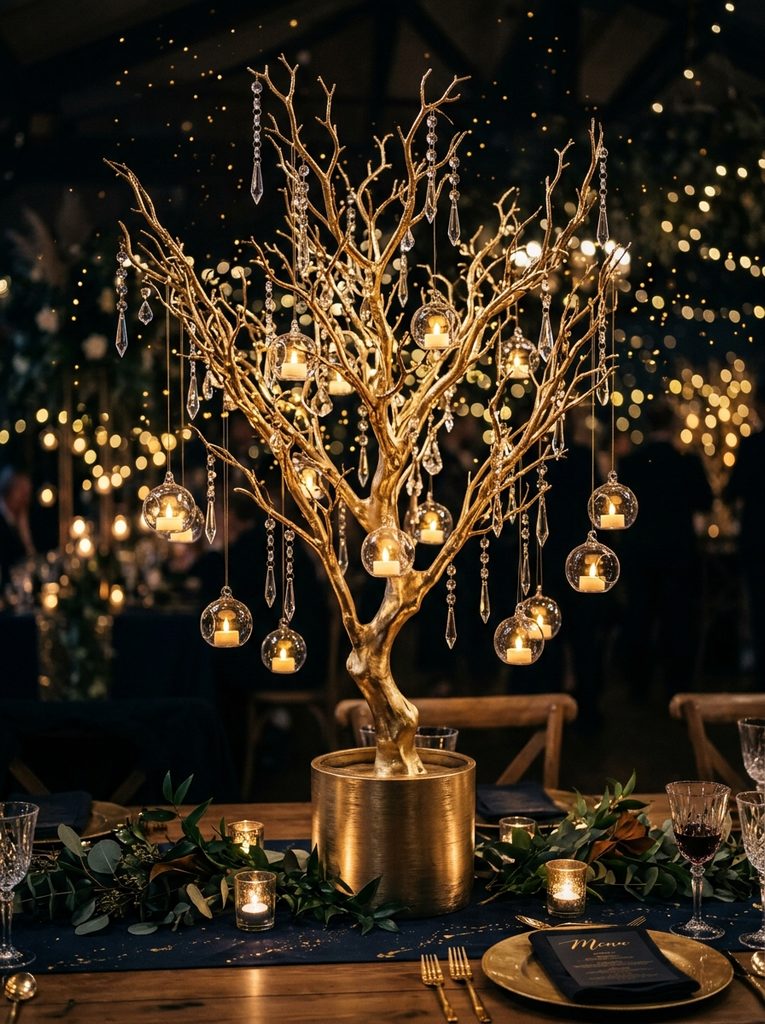
Branch-style centerpieces introduce natural, sculptural forms into wedding reception decor, using metallic gold coatings to transform raw timber into luminous modern sculptures. This arrangement centers on a multi-forked, sandblasted manzanita branch measuring twenty-four to thirty inches in height, spray-coated in a brilliant metallic gold enamel. Suspended from the delicate branch tips are miniature glass or acrylic crystal prisms and small hanging glass globes holding warm LED tealights. The sprawling, organic branch network catches overhead lighting and evening candlelight, creating an enchanting winter wonderland or luxury enchanted forest theme. The lack of dense foliage ensures that room sightlines remain open while the branches animate the upper air space of the venue.
Secure the base of a dried, sandblasted manzanita branch into a heavy concrete-filled plastic urn liner or dense plaster base, ensuring the branch stands plumb and rigid as the foundation cures. Once fully hardened, spray the entire branch structure with two coats of rich metallic gold lacquer spray paint in a well-ventilated space, allowing two hours of drying time between applications. Place the weighted base inside a decorative brushed-gold cylindrical urn, filling the negative perimeter space with floral foam and covering the mechanical surface with preserved sheet moss. Using fine metallic wire or monofilament line, suspend six faceted crystal pendants and three clear glass hanging baubles containing battery-operated warm LED tealights from the strongest branch forks. Space the suspended ornaments evenly around the branch perimeter to prevent uneven weight distribution that could compromise the physical stability of the tree.
Idea 7: Dipped Gold Ombre Glass Cylinder Vases
Finishing Guide
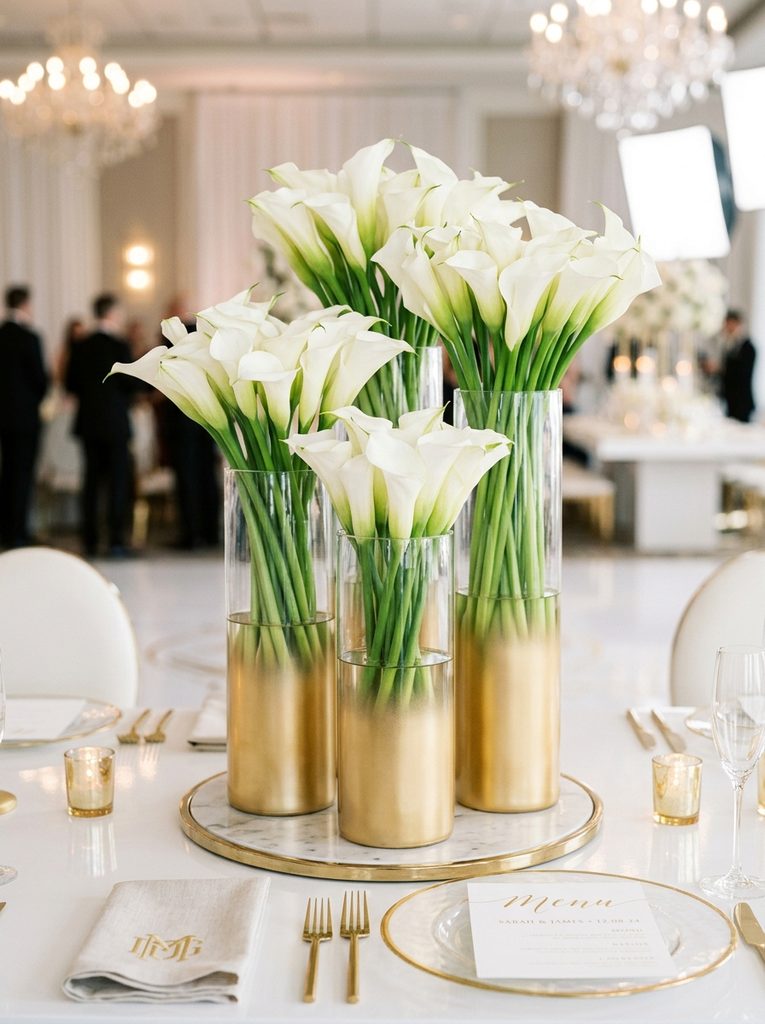
Ombre metallic paint treatments offer a creative, budget-friendly method for elevating basic glass vessels into modern, two-tone decor pieces. This centerpiece utilizes a cluster of three clear glass cylinder vases treated with an upward-fading metallic gold gradient along their lower halves. The reflective gold base gradually transitions into clean, transparent glass near the top, allowing the green flower stems to remain visible while anchoring the arrangement with warm metallic weight. Filled with simple groupings of monochromatic white flowers, such as calla lilies, tulips, or baby’s breath clouds, this concept bridges minimalist Scandinavian simplicity with festive metallic warmth.
To create the ombre gradient, clean three glass cylinder vases of varying heights with rubbing alcohol, allowing them to air dry completely. In an outdoor or well-ventilated workspace, invert the vases onto sheets of protective newspaper. Shake a can of high-gloss metallic gold lacquer spray paint vigorously, holding the nozzle twelve inches away from the vase bottoms. Apply a concentrated, solid coat of paint around the base two inches of each vase, then sweep the spray can upward quickly in light, misting passes to create a soft, feathering gradient that naturally fades out midway up the vessel wall. Allow the paint to cure for twenty-four hours before handling. Fill each vase with four inches of water, carefully wiping the glass interior to avoid scraping the cured paint layer, and insert tightly massed stems of fresh white blooms cut to sit neatly above the rim.
Idea 8: Mirrored Brass Tray with Clustered Mercury Votives
Arrangement Method
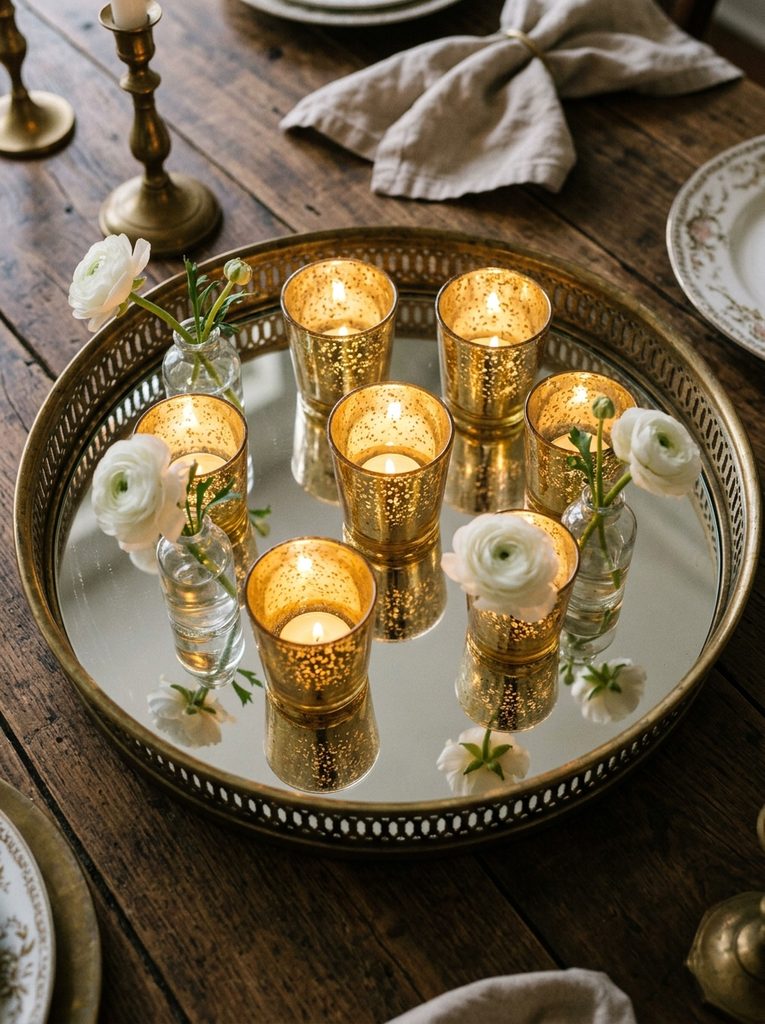
Grouping varied votive holders on a reflective tray produces a multi-dimensional, luminous focal point that maximizes candle reflections across dinner tables. This centerpiece features a round or octagonal tray bordered by a pierced, antique brass or gold-plated gallery rim, backed by a polished mirror base. Arranged across the reflective floor is a curated collection of seven to nine gold mercury glass votives, faceted tealight holders, and miniature ribbed bud vases containing single floral heads. The mirrored tray reflects the golden candlelight upward through the room, generating a warm, glittering optical field that requires minimal floral upkeep throughout long wedding evenings.
Clean the mirrored tray surface with an ammonia-free glass cleaner and a lint-free cloth, placing the tray squarely in the center of the dining table over non-slip silicone pads. Select an assortment of nine gold mercury glass votive cups displaying varied textures, including ribbed, speckled, and faceted geometric exteriors. Place an eight-hour unscented clear-cup tealight inside each votive holder, ensuring the wicks stand straight and centered. Intersperse three petite clear glass bud vases among the votives, filling each half-full with water and inserting a single open bloom, such as a white ranunculus, gardenia, or spray rose bud cut short to match votive heights. Scatter loose, dried gold metallic confetti flakes or individual olive leaves sparingly around the base of the cups, creating an integrated, cohesive composition that glows brightly as twilight approaches.
Idea 9: Gold Wire Birdcage Enclosing Trailing Ivy and Blooms
Installation Process
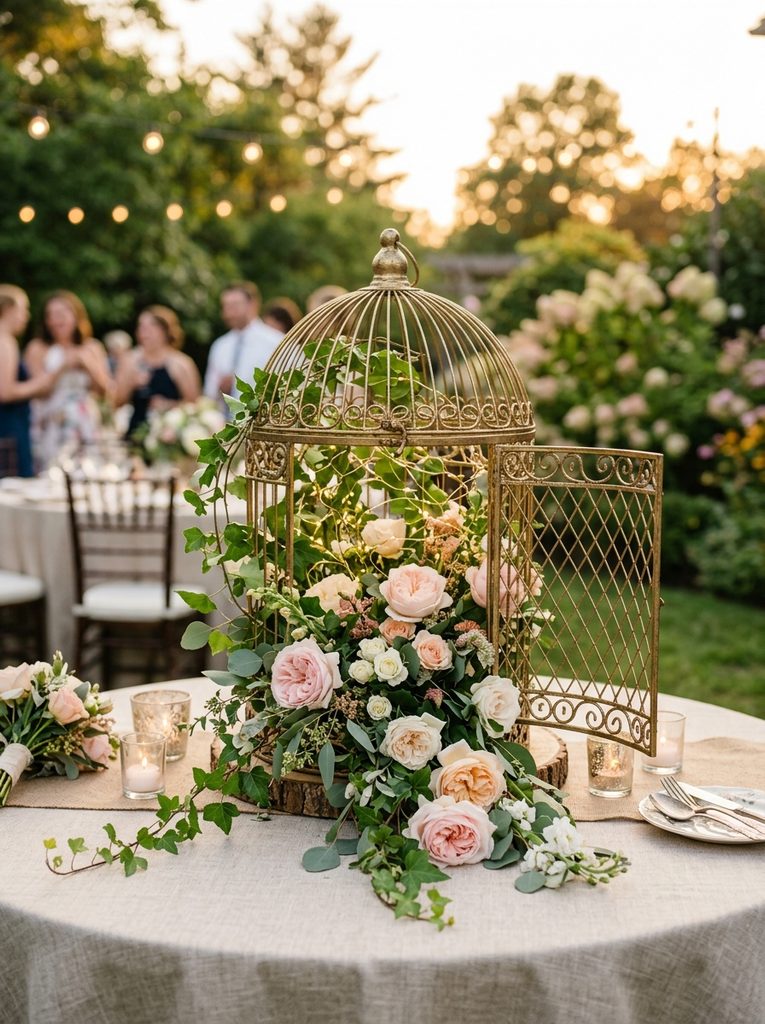
Vintage-inspired birdcages finished in antique gold introduce romantic whimsy, architectural structure, and enclosed floral volume to reception styling. This centerpiece concept utilizes a domed, wire-framed metal birdcage with an openwork lattice pattern, finished in an antique, semi-distressed gold patina. The cage door is secured in an open, welcoming posture, with trailing English ivy, silver dollar eucalyptus, and blush roses spilling outward from the interior across the tabletop linen. The structural wire frame protects the interior floral installation while providing dynamic linear interest, making it especially fitting for outdoor garden weddings, rustic farm estates, and vintage afternoon tea receptions.
Prepare the vintage gold wire birdcage by opening the hinged top or side access door, using fine gold wire to fix the door securely in a half-open position. Place a low plastic saucer inside the cage base, anchoring a soaked half-block of green floral foam onto the saucer using floral clay. Insert long, trailing stems of English ivy and variegated vinca vine into the lower edge of the foam, guiding the foliage outward through the open cage door so it cascades onto the table surface. Pack the central foam zone with blush David Austin roses, cream carnations, and textured waxflower, positioning several larger flower heads directly against the wire bars to create the illusion of botanicals bursting through the structure. Conclude by weaving a delicate battery-operated warm micro-fairy light strand throughout the interior floral foam and around the outer metal dome to illuminate the cage lattice from within.
Idea 10: Slender Brass Bud Vase Runner with Floating Tealights
Layout Design
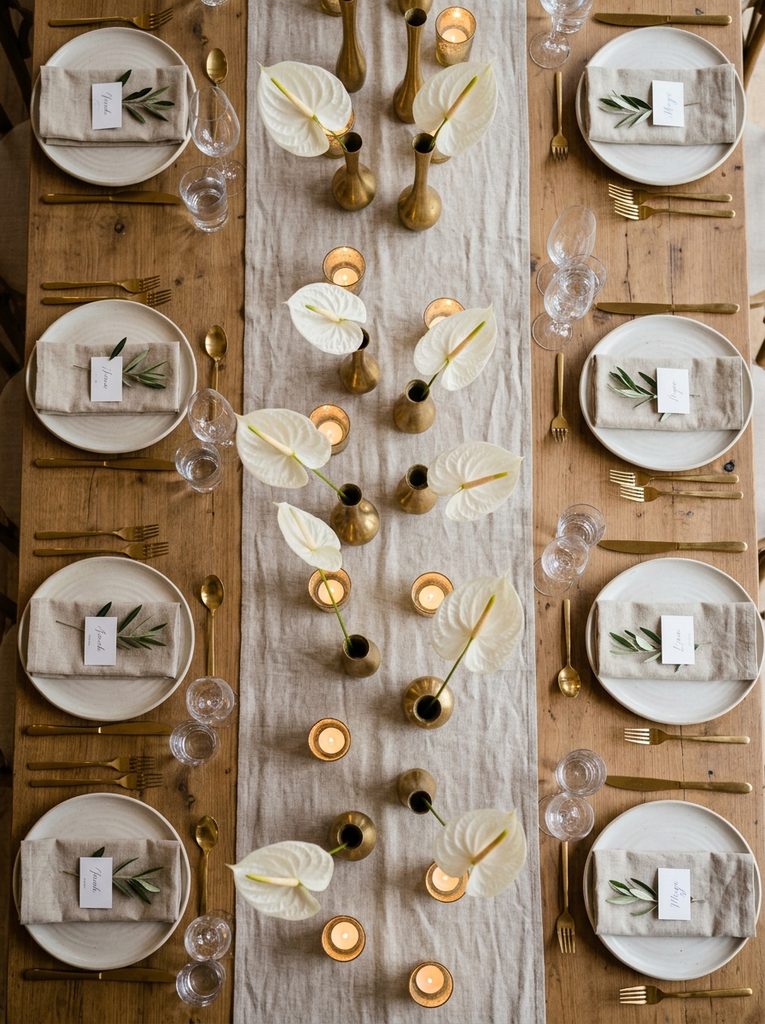
Linear bud vase runners offer an approachable, minimalist centerpiece format that flatters long banquet tables without introducing bulky physical obstructions. This design consists of a continuous, rhythmic line of five to seven slender, spun-brass bud vases running down the center of the table, interspersed with low gold metallic tealight cups. Each miniature brass vase holds one to two sculptural botanical stems, such as white anthuriums, single stems of Japanese sweet pea, or bleached ruscus fronds. The repetitive rhythm of polished brass vessels creates an elongated metallic spine down harvest tables, providing an uncluttered, modern aesthetic that leaves abundant surface space for family-style platters and glassware.
Begin by laying a crisp neutral linen runner down the center spine of an eight-foot rectangular banquet table to provide an acoustic and protective base. Space five spun-brass bud vases at eighteen-inch intervals along the runner centerline, alternating between vases of five, seven, and nine inches in height to establish vertical rhythm. Fill each brass vase two-thirds full with fresh water mixed with liquid floral preservative. Trim the stems of delicate accent flowers on a sharp forty-five-degree bias, inserting only one or two architectural blooms per vessel to preserve the minimalist style of the display. Position two gold mercury glass tealight holders between each adjacent pair of brass vases, aligning them slightly off-center to produce an organic zigzag pattern. Light the tealights shortly before guest arrival to generate a continuous, flickering golden pathway down the length of the dining table.
Common Beginner Mistakes and How to Avoid Them
The most widespread error in designing gold accent wedding centerpieces is using unsealed, cheap metallic spray paint on smooth glass vessels. When paint is applied to unprepared surfaces, water condensation from cold floral vases causes the paint to bubble, peel, or scratch away during transit, revealing raw glass underneath. Always clean glassware thoroughly with isopropyl alcohol, apply a specialized bonding primer, and protect completed metallic coatings with an acrylic lacquer topcoat. Another frequent oversight involves neglecting vessel weight and center of gravity on elevated gold risers. Placing heavy, saturated floral foam atop lightweight, narrow-base stands without mechanical ballast creates a severe tip hazard if tables are bumped by guests or servers. Ensure all elevated stands have broad, heavy iron bases, or anchor the footplates discreetly beneath table linens using heavy disc weights. Additionally, novice decorators often mix competing metallic undertones indiscriminately, pairing cool green-yellow brass with warm reddish copper tones. Maintain a unified gold temperature across all table elements by selecting either cool champagne gold or warm classic antique brass, ensuring cohesive metallic harmony across the reception room.
Practical Tips for Better Results
Achieving professional, boutique-grade elegance with gold accent centerpieces requires mastering specific finishing touches and disciplined handling protocols. When handling polished gold and high-gloss brass vessels on the day of the event, wear clean white cotton gloves to prevent skin oils and acidic fingerprints from dulling the reflective metal surfaces. To maximize the luminous reflective properties of gold elements, place candles slightly behind or within metallic vessels rather than in front of them, allowing the metallic surfaces to act as natural reflectors that bounce warm light into the room. When using wet floral foam inside metal urns, always line the metal containers with heavy plastic bowl liners; prolonged direct contact with wet, acidic floral foam can oxidize and corrode metal surfaces, causing permanent discoloration. When designing arrangements for long banquet tables, maintain consistent spatial intervals between repeating metallic elements to create visual rhythm, using a simple wooden spacer stick to ensure uniform vessel placement down the entire table line without slow tape measuring.
Styling, Presentation, or Organization Ideas
Integrating gold accent centerpieces into a larger wedding tablescape demands careful coordination between linens, tableware, and stationery. Pair warm, antique gold vessels with natural woven fabrics like crushed ivory linen, dusty terracotta gauze, or deep emerald velvet tablecloths, allowing the metallic sheen to stand out against rich, tactile backdrops. When selecting dinnerware, frame place settings with polished gold or brass flatware and gold-rimmed charger plates to mirror the centerpiece metals across the entire table width. Incorporate small metallic gold elements into paper goods, such as gold foil calligraphy on matte cardstock menu cards, gilded wax seals on place cards, or gold-dipped table number holders. For large reception venues with varied ceiling heights, create dynamic spatial interest by alternating between low gold compote arrangements and tall elevated brass risers on adjacent tables. This rhythmic variation draws the eye across the room, balances overall decor expenses, and prevents broad banquet halls from feeling flat or repetitive.
Budget or Time Planning
Disciplined budget management and systematic production schedules ensure that crafting gold accent centerpieces remains cost-effective and stress-free. Purchasing glass hurricane cylinders, basic bud vases, and metal stands in bulk wholesale master cases reduces unit costs by fifty percent compared to retail craft store purchases. For an average reception requiring fifteen tables, decorators can acquire standard glass vessels affordably and transform them using DIY gold leaf or liquid gilding supplies, achieving a bespoke aesthetic on a modest decor budget. In terms of production scheduling, separate the assembly workflow into distinct operational phases. Complete all metallic painting, gold-leafing, and vessel degreasing three weeks in advance, storing the dry vessels in bubble-wrap dividers to prevent surface abrasions. Assemble all dry mechanics, candle placement, and non-perishable garland frameworks forty-eight hours before the event date. Reserve the final twenty-four hours strictly for cutting, hydrating, and inserting fresh botanicals into foam bases. This structured, assembly-line timeline prevents last-minute assembly bottlenecks, preserves floral freshness, and ensures a calm, organized setup on the wedding morning.
Creative Expansion and Advanced Inspiration
Once the foundational assembly and gilding methods are mastered, these gold accent techniques offer boundless possibilities for advanced creative customization. Experiment with natural, botanical gilding by applying delicate touches of genuine gold leaf directly onto the edges of broad magnolia leaves, succulents, or preserved monstera frills, introducing metallic shimmer directly into organic foliage layers. Designers can expand table themes upward by constructing suspended gold hoop chandeliers wrapped in greenery and micro-fairy lights, hanging them directly over head tables to create breathtaking aerial installations. Explore mixed-material pairings by mounting polished brass geometric stands onto raw, rough-cut white marble blocks or live-edge walnut slabs, combining industrial metallic precision with organic earth textures. Another refined concept involves integrating personalized, laser-cut gold acrylic table names or quotes directly into the floral canopy, creating bespoke artistic accents. These creative expansions transform ordinary floral containers into memorable, multi-dimensional art installations, creating a cohesive visual signature that leaves a lasting impression on wedding guests.