Burgundy wedding centerpieces remain one of the most sought-after concepts across visual bridal boards, offering deep visual warmth, regal richness, and timeless sophistication. As couples and event stylists seek high-impact reception designs, handcrafted floral and botanical displays provide an elevated aesthetic without commercial floral costs. This comprehensive guide details ten distinctive DIY burgundy wedding centerpiece concepts, providing practical instructions to help readers transform event spaces with confident artistic precision. Readers will learn the mechanics of structural floral arranging, foliage proportioning, vessel selection, and balanced palette coordination. Focusing on burgundy as an anchoring tone allows creators to merge complementary hues like dusty blush, forest green, champagne gold, and warm amber into harmonious tablescapes. Handcrafting your reception elements provides complete creative control over presentation themes, scale, and placement, ensuring every tabletop display coordinates with personal wedding aesthetics. The following sections provide step-by-step methodologies, workshop preparation protocols, and practical assembly advice, equipping both beginners and experienced makers with realistic tools to construct stable, long-lasting wedding centerpieces suitable for intimate banquet halls, grand rustic barns, or modern minimalist receptions.
Why This Idea Is Trending or Useful
Deep wine, oxblood, and burgundy tones consistently trend on modern reception boards because they bridge classic luxury with modern botanical styling. From a practical perspective, burgundy acts as a grounding anchor on dining tables, introducing depth that prevents pale linens and glass dinnerware from looking washed out under event lighting. The color palette transitions effortlessly across seasons, suiting autumn vineyard celebrations, cozy winter ballroom galas, and moody late-summer soirees. For independent planners and couples on practical wedding budgets, burgundy floral elements offer exceptional visual volume. Large-headed blooms such as burgundy dahlias, carnations, garden roses, and calla lilies provide wide coverage per stem, allowing designers to achieve full, lavish presentations using fewer stems. The DIY approach transforms floral styling into an accessible, beginner-friendly endeavor that bypasses excessive floral service fees. Because these tablescapes rely on clear geometric balances, layering principles, and secure mechanics rather than complex floral sculpture, novice creators can achieve professional, photography-ready results. This versatile color palette continues to capture modern design inspiration, establishing memorable, photo-ready focal points for guest dining experiences.
Materials and Preparation
Producing cohesive, fresh burgundy wedding centerpieces requires disciplined preparation and appropriate workshop supplies. Essential floral elements include burgundy focal flowers such as dahlias, ranunculus, and spray roses, paired with secondary filler blooms like astilbe, hypericum berries, and rich foliage including seeded eucalyptus and Italian ruscus. Non-floral essentials include structural vessels such as ceramic bowls, glass compotes, lanterns, metallic pedestals, floral shears, thorn strippers, and water-activated green foam bricks or brass floral frogs. Clean, sanitized water buckets and floral nutrient packets are critical for proper flower conditioning prior to construction. Begin preparation forty-eight hours before event day by trimming botanical stems at a forty-five-degree angle under running water, stripping foliage beneath the waterline to prevent bacterial buildup. Allow cut stems to hydrate in a cool, sun-shielded workspace. Plan your table configurations in advance, noting table dimensions, guest sightlines, and linen textures. Measuring your vessels against mock dining setups ensures every arrangement remains beneath eye level to permit comfortable conversation across guest tables.
Idea 1: Burgundy Dahlia and Antique Brass Footed Compote
How to Create
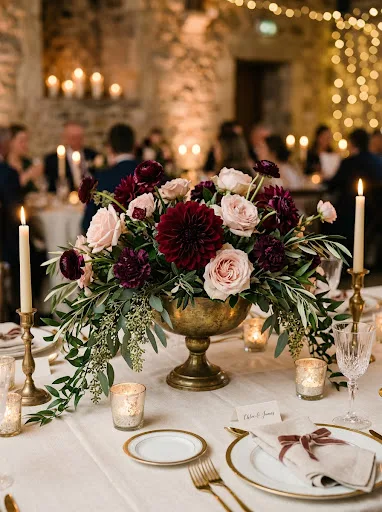
The burgundy dahlia and antique brass compote centerpiece pairs rich crimson blooms with aged metallic textures to create an elevated botanical display. The design features a low, wide brass footed vessel that raises the floral arrangement slightly above the tabletop, producing gentle dimension without obstructing cross-table dialogue. Large, velvety dinnerplate dahlias serve as the primary visual anchors, their rich burgundy tone contrasted with soft greenery and muted blush spray roses. Seeded eucalyptus stems drape over the metallic lip of the bowl, softening structural lines and creating an organic, overflowing aesthetic. The antique brass finish reflects candlelight, casting a warm ambient glow across dinnerware settings. This arrangement balances traditional formality with modern garden styling, making it an exceptional focal point for round banquet tables or sweetheart seating. The low center of gravity ensures absolute stability during the reception.
Begin by securing a saturated brick of floral foam inside your antique brass footed compote using waterproof floral tape applied in a crossed grid over the rim. Strip lower leaves from stems using floral shears. Insert eucalyptus sprigs along the base perimeter at downward angles to establish an asymmetrical green framework that cloaks the edge of the brass bowl. Insert three fully opened burgundy dahlias into the upper center of the foam at differing stem heights to establish an organic apex. Intersperse smaller blush garden roses, deep plum carnations, and burgundy hypericum berry sprigs into empty spaces between the dahlias, angling stems outward to maintain an open, rounded dome. Check the arrangement from all angles to eliminate flat spots and ensure no mechanical foam remains visible. Mist the petals lightly with water and store in an air-conditioned room until banquet placement.
Idea 2: Floating Burgundy Ranunculus and Glass Cylinder Trio
Step-by-Step Guide
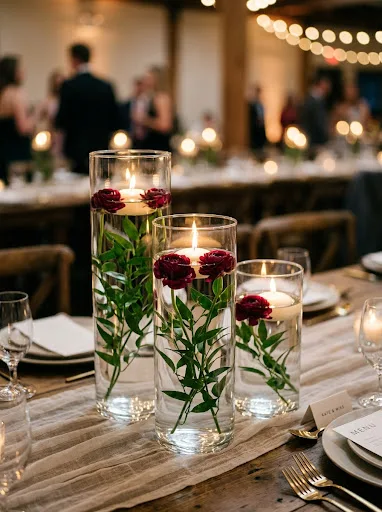
This modern minimalist centerpiece uses a staggered cluster of three clear glass cylinder vases filled with water, featuring submerged greenery and floating burgundy ranunculus blooms. The transparent glass aesthetic highlights crisp simplicity, while multiple vase heights create architectural interest down long family-style banquet tables. The deep burgundy petals of the ranunculus contrast cleanly against clear water, catching overhead pin-spot lighting and candlelight. Submerged sprigs of fresh rosemary or Italian ruscus add green textures that anchor the floating blossoms. This water-based installation offers immense practical appeal for beginners due to its simplicity, quick assembly, and zero reliance on structural floral foam. The clean vertical silhouette preserves valuable surface space for shared catering platters and wine glasses, ensuring a clutter-free dining environment.
Source sets of three clear glass cylinder vases measuring six, eight, and ten inches in height with matching diameters. Thoroughly clean and dry the interior of each cylinder using lint-free microfiber towels to remove dust and smudges. Coil a fresh sprig of Italian ruscus inside the base of each vase, anchoring the lower end under smooth glass river stones to hold the foliage submerged. Fill each cylinder with room-temperature distilled water, stopping two inches beneath the rim to prevent water displacement spills. Using sharp craft scissors, trim the stems of fresh burgundy ranunculus blooms completely flush beneath the base calyx. Gently place one to two prepared ranunculus blooms onto the water surface of each vase, letting the petals float naturally. Group the three completed cylinders centrally on the guest table atop a neutral fabric runner, spacing them two inches apart for structural cohesion.
Idea 3: Rustic Wooden Lantern with Enclosed Burgundy Garland
Execution Process
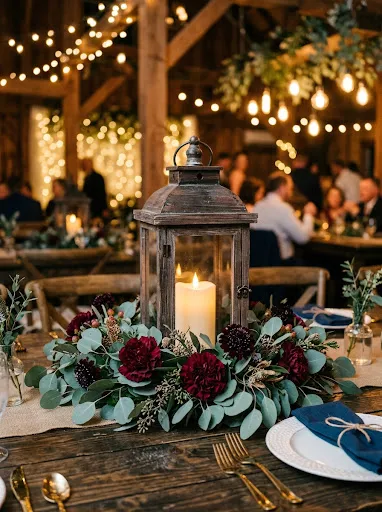
The rustic wooden lantern centerpiece pairs warm architectural woodwork with a lush, enclosed garland of rich burgundy flora and neutral greenery. A square wooden lantern frame serves as the geometric anchor, framing a safe flameless pillar candle or dense floral nest inside its glass-paneled chamber. The base exterior is bordered by an organic ring of deep wine-toned flowers, dark berries, and trailing silver dollar eucalyptus that softens the hard corners of the woodwork. This concept brings structured rustic appeal to barn venues, outdoor garden weddings, and country club pavilions. Burgundy tones introduce richness to weathered pine, walnut, or oak wood stains, elevating rustic decor to an upscale, photo-ready aesthetic. The enclosed structural format protects candles from sudden breezes, making it a reliable solution for open-air dining pavilions.
Select a clean wooden lantern measuring twelve to fourteen inches in height with removable glass panes and a sturdy base. Position a battery-operated, warm-white LED pillar candle directly in the center of the lantern floor to avoid heat issues. Build a flexible floral collar around the outside base of the lantern using grapevine wire as an underlying circular ring. Secure sprigs of silver dollar eucalyptus and dark plum cotinus leaves around the grapevine wire using fine paddle wire. Insert short-stemmed burgundy carnations, mini calla lilies, and deep red scabiosa flowers into the foliage ring using floral water tubes to maintain hydration. Wrap the assembled floral ring snug against the exterior perimeter of the wooden lantern base. Adjust trailing foliage outward so the wreath rests evenly against the table runner, creating a seamless connection between wooden lantern and floral foundation.
Idea 4: Burgundy Calla Lily and Matte Black Minimalist Stem Vases
Setup Method
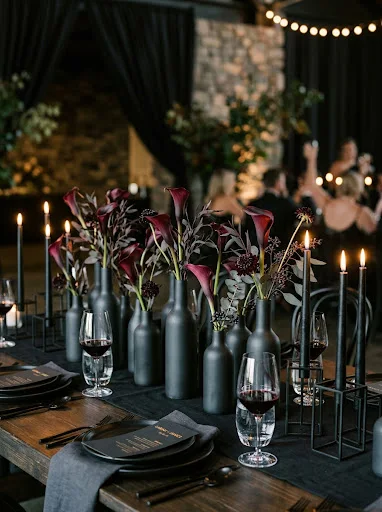
Minimalist black bud vases clustered in calculated arrangements provide a sharp, contemporary alternative to bulky table arrangements. This design pairs ultra-slender matte black ceramic bottles with long, architectural burgundy calla lilies and single stems of dark foliage. The deep, uniform coloration of the matte ceramic complements the dark saturation of the calla lilies, achieving a moody, gallery-inspired tablescape. Using singular floral stems per vessel emphasizes the sculptural form, sleek stems, and pointed trumpets of the calla lilies, giving the display a modern designer profile. This setup is ideal for narrow rectangular banquet tables, occupying minimal table space while providing continuous color along the entire length of the seating layout.
Assemble a collection of five slender ceramic bud vases in assorted matte black silhouettes ranging from four to seven inches tall. Fill each vessel halfway with conditioned water enriched with floral nutrient solution. Cut fresh burgundy calla lily stems at varying angles using a clean razor blade, staggering heights so some blossoms rise four inches above the vase rim while others stand taller. Insert a single calla lily into three of the vessels, allowing the natural curve of each stem to dictate its outward angle. In the remaining two vessels, place single stems of textured burgundy amaranth or deep red smoke bush foliage to break up floral uniformity. Arrange the five vases down the center of the table in a gentle zigzag configuration, keeping five to six inches of open space between each vessel. Position slim black taper candles alongside the vases to complete the modern design.
Idea 5: Elevated Burgundy Elevated Hoop Floral Installation
How to Make
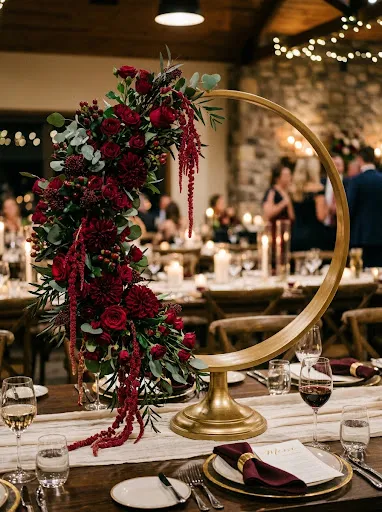
The elevated hoop floral installation combines modern metalwork with suspended burgundy botanicals, creating a statement centerpiece that leaves dining surfaces completely open. A large circular metal hoop mounted on a weighted wooden or metallic pedestal frames the table space, providing an architectural structure for climbing floral elements. The floral treatment occupies one side of the circular frame, where burgundy spray roses, deep wine dahlias, and cascading greenery cluster organically before tapering into bare metal. This asymmetrical balance provides modern visual tension while maintaining functional sightlines through the open hoop. The elevated profile photographs well across reception halls, catching ambient room lighting and adding structural height without crowding guest place settings.
Secure an eighteen-inch freestanding gold or black metal hoop onto a wide, stable tabletop base, ensuring the entire structure stands steady without wobbling. Secure a block of floral foam inside a small plastic floral cage to the lower right curve of the metal hoop using zip ties, trimming excess plastic ends flush. Insert trailing strands of plum-colored hanging amaranthus and Italian ruscus into the base of the foam cage, letting the vines trail down toward the tabletop. Work upward along the metal curve by inserting medium burgundy spray roses, deep crimson carnations, and wine-colored scabiosa blooms into the foam, graduating from dense clusters at the base to single stems higher on the arch. Conceal all mechanical ties and foam edges with broad salal leaves pinned flush to the cage. Ensure the opposite half of the metallic hoop remains bare, highlighting the geometric contrast between metal and botanical textures.
Idea 6: Burgundy Velvet Runner with Terracotta Floral Cluster
How to Create
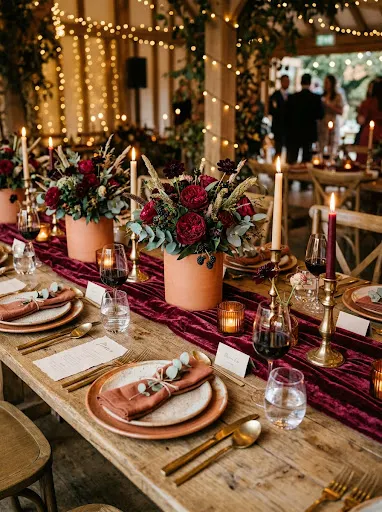
This tablescape pairs an opulent burgundy velvet textile runner with earthy terracotta pots filled with deep red florals, contrasting plush and matte textures. A continuous crushed velvet runner runs down the length of the table, pooled on the floor at each end, its sheen catching candlelight. Matte terracotta vessels in varied cylindrical profiles sit along the velvet path, holding tight, rounded bouquets of burgundy garden roses, deep chocolate cosmos, and bronze-tipped foliage. The warm orange-brown hue of the clay warms the deep wine petals, creating an approachable palette well-suited for bohemian and transitional autumn weddings. The textural contrast between reflective velvet and chalky terracotta creates a luxurious tablescape using accessible, reusable materials.
Unroll a clean, wrinkle-free burgundy velvet runner along the center of a bare wood or neutral-linen banquet table, allowing twelve to eighteen inches of fabric to drape over both ends. Prepare small terracotta pots by sealing their interior surfaces with clear waterproof craft sealer to prevent moisture from seeping through porous clay walls onto table linens. Cut plastic liner cups to fit snugly inside each pot, placing hydrated floral foam discs inside each liner. Insert dense clusters of deep burgundy garden roses, chocolate cosmos, and dark red spray roses into the pots, trimming stems short so blooms rest compact against terracotta rims. Position the finished pots along the center of the velvet runner in clusters of three, interweaving loose stems of seeded eucalyptus and brass votive cups between pots to soften transitions along the fabric.
Idea 7: Geometric Gold Terrarium with Burgundy Bloom Nest
Step-by-Step Guide
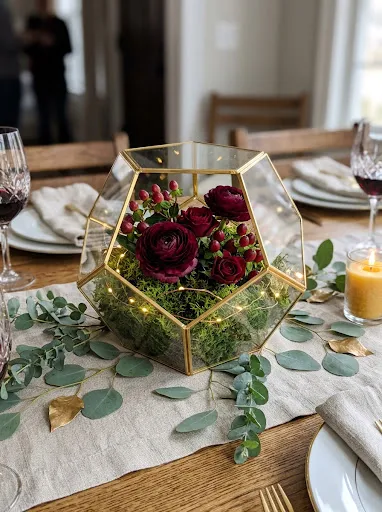
The geometric gold terrarium centerpiece uses faceted metallic frameworks to house an enclosed bed of deep burgundy flowers, moss, and warm illumination. Modern glass-and-brass terrariums with hexagonal or dodecahedron profiles protect floral elements while providing a multi-angled reflective surface for event lighting. Inside the glass chamber, a cushion of preserved sheet moss supports deep burgundy ranunculus, dark red carnations, and textural berries, creating an enclosed terrarium vignette. This contained design prevents fragile petals from drying out during long reception events. Its geometric shape and warm brass finish bring a tailored look to guest tables, pairing nicely with both modern industrial urban venues and traditional hotel ballrooms. The self-contained unit allows for simple transport and swift setup on event day.
Procure faceted geometric glass terrariums featuring gold-soldered metal seams and an accessible open side panel. Clean all glass facets with glass cleaner and dry thoroughly. Place a clean sheet of preserved green moss across the interior floor of the terrarium to establish an organic base layer. Conceal a mini plastic floral saucer containing water-soaked foam beneath the moss layer. Trim short stems of burgundy ranunculus, deep red spray roses, and hypericum berries, pressing their stems through the moss layer directly into the hidden wet foam base. Insert an LED micro-fairy light wire with a warm copper cord into the floral bed, concealing the battery pack beneath the moss edge. Position the completed terrarium at the center of each table, weaving trailing eucalyptus leaves around the exterior metal base to integrate the geometric form with the surrounding tablescape.
Idea 8: Burgundy Calla Lily and White Hydrangea Contrast Bowl
Execution Process
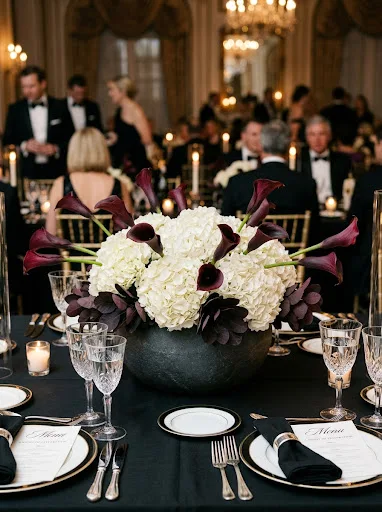
This design relies on high-contrast floral staging, pairing voluminous creamy white hydrangeas with sculptural burgundy calla lilies in a low ceramic bowl. The pale hydrangeas create a cloud-like base that fills the vessel, against which the dark, structured trumpets of burgundy calla lilies stand out in sharp relief. This stark contrast highlights the individual silhouettes of the calla lilies while softening the overall aesthetic with rounded hydrangea petals. A low, wide ceramic pedestal bowl keeps the arrangement close to the table surface, providing stability and comfortable sightlines for seated guests. This arrangement is well-suited for classic ballroom receptions, black-tie events, and traditional dining halls where balanced floral contrast is desired.
Secure a pre-soaked floral foam brick inside a low, white or stone-colored ceramic bowl using cross-taped waterproof floral tape. Cut two large, conditioned stems of white hydrangeas at sharp angles, inserting them deeply into opposing sides of the foam base so their broad heads create a dense foundation that conceals the bowl edges. Take five to seven burgundy calla lilies and gently warm their stems with your hands to make them pliable for slight curvature. Insert calla lily stems through the hydrangea foundation into the underlying foam at deliberate diagonal angles, allowing the dark trumpets to rise two to three inches above the white hydrangea petals. Add deep burgundy smokebush leaves around the lower rim to ground the composition, verify stability from all viewing angles, and place the finished bowl at the center of the dining table.
Idea 9: Vintage Amber Glass Bottles with Burgundy Botanical Sprigs
Setup Method
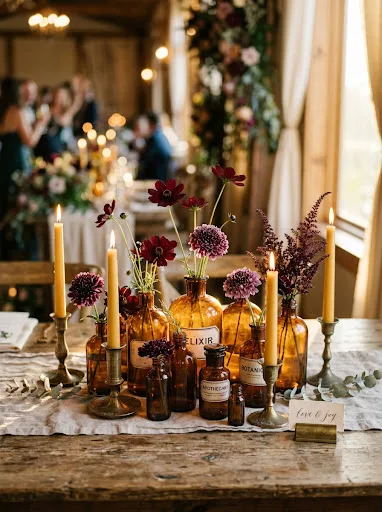
The vintage amber glass centerpiece uses assorted pharmaceutical and beverage bottles to showcase loose burgundy botanicals, creating a warm, historical tablescape. Rich amber glass filters light, casting a cozy golden-red glow across table linens while matching the warmth of burgundy florals. Each bottle holds one to two delicate stems, such as burgundy cosmos, dark astilbe, hanging amaranth, or deep plum scabiosa, accompanied by light foliage. The variety of bottle heights, neck widths, and embossed surface textures creates visual interest across the length of the table. This scattered bud-vase arrangement works well on narrow rectangular tables where large arrangements might crowd dinnerware, allowing for flexible spacing between place settings.
Collect clean, vintage amber glass bottles in varied heights ranging from five to nine inches tall, ensuring rims are chip-free. Fill each bottle two-thirds full with fresh water and nutrient solution. Trim stems of burgundy cosmos, plum scabiosa, dark astilbe, and single sprigs of cotinus foliage at varied lengths using floral snips. Place a single focal flower or foliage stem into each bottle, keeping stem angles natural and unforced. Arrange clusters of five to seven amber bottles centrally down long banquet tables, varying heights to create an undulating silhouette. Intersperse slender beeswax taper candles in brass holders between the amber bottles to enhance the golden glow, ensuring all glassware sits securely away from plate margins to maintain practical dining comfort.
Idea 10: Suspended Wreath Chandelier with Cascading Burgundy Florals
How to Make
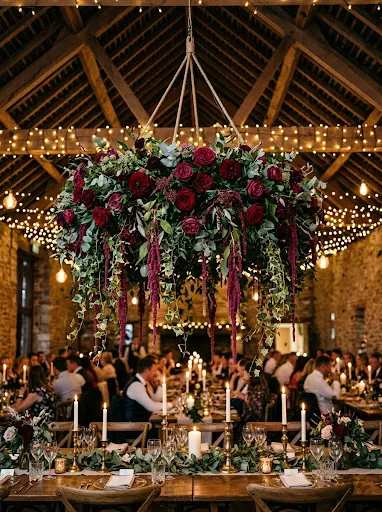
The suspended floral chandelier elevates burgundy floral elements above the tabletop, creating a dramatic hanging installation that leaves dining surfaces completely open. Built on a lightweight circular grapevine or metal hoop frame, this chandelier features hanging burgundy amaranthus, deep wine roses, and trailing ivy that cascade downward toward dining guests. The elevated installation commands attention, drawing the eye upward into high ceilings and transforming open barn spaces or industrial warehouse venues. Suspending floral decor directly over sweetheart tables or central bridal party tables creates a distinct visual focal point across the reception hall. This approach eliminates tabletop clutter entirely, leaving generous space for table service, shared menu platters, and elaborate dinnerware settings.
Begin with a sturdy thirty-inch circular metal wire wreath form, securing heavy ceiling-suspension monofilament or braided wire at four equidistant points around the ring to guarantee balanced suspension. Wrap the wire frame with dampened sheet moss, binding it firmly with green floral paddle wire to establish a moisture-retaining base. Insert trailing stems of fresh green ivy, plum hanging amaranthus, and preserved burgundy eucalyptus into the moss foundation, allowing them to hang twelve to eighteen inches below the frame. Insert sturdy stems of burgundy carnations, deep red garden roses, and plum dahlias upward into the lower perimeter of the moss ring, creating a dense floral underside visible to guests seated below. Verify that all components are secured with wire clips before using approved ceiling load hooks to suspend the wreath over the table, ensuring it hangs safely above standing height.
Common Beginner Mistakes and How to Avoid Them
Beginner floral designers often encounter practical hurdles that can compromise the visual balance and structural durability of burgundy wedding centerpieces. One common mistake is creating top-heavy arrangements that easily tip over when tables are bumped by guests or servers. Prevent balance issues by selecting wide-bottomed vessels, weighing down lightweight containers with clean river stones, and keeping stem lengths proportionate to container depth. Another frequent misstep is using deep burgundy blooms exclusively without balancing foliage or lighter accent tones, which results in dark, indistinct clusters that absorb light and photograph poorly in dim reception venues. Prevent this visual flattening by integrating complementary foliage textures, such as silvery eucalyptus, and incorporating lighter secondary blooms like blush spray roses or ivory accents to create depth. Hydration oversights also cause premature wilting during wedding receptions. Always condition cut flowers in cool, water-filled buckets with floral preservatives for twenty-four hours before assembly, and keep finished arrangements out of direct sunlight and away from heating vents. Finally, avoid constructing centerpieces that sit directly at guest eye level; keep arrangements either below fourteen inches or elevated above twenty-four inches to maintain comfortable cross-table conversation throughout the event.
Practical Tips for Better Results
Achieving professional results with handcrafted burgundy centerpieces requires systematic floral care, thoughtful tool selection, and careful staging. Always use clean, dedicated floral shears or sharp floristry knives rather than household scissors, as dull blades crush delicate stem capillaries and impede water uptake. When working with delicate hollow-stemmed flowers like dahlias and ranunculus, insert floral support wire or toothpicks into stem bases to prevent snapping during foam insertion. Prepare your floral foam properly by letting bricks sink naturally in a water bucket rather than pushing them down, which creates dry internal air pockets that can starve inserted stems of moisture. When designing multi-angle centerpieces for round tables, place your vessel on a rotating cake turntable during assembly; spinning the arrangement regularly ensures even balance and prevents sparse gaps. To enhance evening photography, position warm-white votive candles or submersible micro-lights around the base of dark burgundy arrangements; uplighting illuminates rich wine-red undertones that might otherwise appear black in dimly lit reception halls. Finally, lightly mist finished arrangements with a professional anti-transpirant floral spray to lock in petal moisture and keep blooms vibrant throughout the reception.
Styling, Presentation, or Organization Ideas
Effective styling transforms individual floral centerpieces into cohesive reception tablescapes that unify the dining space. Anchor centerpieces on long banquet tables using textural runners made from natural linen, dark crushed velvet, or lightweight silk chiffon, creating a defined foundation that protects tablecloths from moisture. Pair deep burgundy floral arrangements with complementary metallic tabletop hardware, such as brushed gold cutlery, antique brass candlesticks, or modern matte black flatware, to enhance color saturation and add visual warmth. Frame the central floral pieces with staggered taper candles in glass hurricane chimneys, varying heights across the tabletop to create ambient lighting layers. When styling round banquet tables, arrange table numbers, menu cards, and individual place settings in a balanced radius around the centerpiece, leaving ample space for bread baskets and wine service. To maintain an organized presentation, match the scale of your centerpiece to table dimensions: reserve full compote arrangements for large 72-inch round tables, and employ slender bud-vase runs or compact low bowls on narrow rectangular dining tables. This structural balance ensures your decorative focal points remain practical, comfortable, and visually compelling for dining guests.
Budget or Time Planning
Handcrafting wedding centerpieces provides significant budget savings when planned with structured timelines and calculated bulk floral orders. Maximize your floral budget by following a balanced stem formula: allocate forty percent of your floral count to hardy, budget-friendly burgundy varieties like standard carnations and spray roses, thirty percent to textured greenery, and reserve thirty percent for focal blooms like dahlias or garden roses. Ordering fresh stems in bulk from reputable wholesale floral distributors cuts per-stem expenses compared to retail florists. Structure your project across a disciplined three-day production window to minimize stress and preserve floral freshness. Dedicate two days prior to the wedding to stem processing, trimming, stripping lower leaves, and hydrating blooms in nutrient water. Assemble structural foam arrangements, vessels, and non-perishable decor elements thirty-six hours before the event, storing finished displays in a cool, dark room. Reserve the morning of the wedding exclusively for transport, water replenishment, and final tabletop placement at the reception venue. Preparing a floral emergency kit containing shears, waterproof tape, spare jump wire, and backup flower stems ensures your team can resolve unexpected assembly issues swiftly on-site.
Creative Expansion and Advanced Inspiration
Once you master foundational floral arranging and color coordination, consider advanced variations to further elevate your burgundy wedding concepts. Experiment with dynamic botanical textures by introducing dried floral elements alongside fresh blooms, such as bleached Italian ruscus, preserved plum eucalyptus, or dried seed pods, creating high-contrast arrangements that reflect modern bohemian styling. Another compelling direction involves incorporating dark, seasonal edible accents directly into your centerpieces; skewered fresh mission figs, dark concord grapes, and split pomegranates bring rich, Old World Flemish still-life appeal to burgundy floral arrangements. You can also explore suspended architectural hanging ladders or modern acrylic pedestals that elevate dense burgundy runners above long guest tables, maximizing surface area while creating an immersive overhead botanical canopy. For modern minimalist venues, consider dip-dyeing delicate white ceramic bud vases with deep wine-red glazes to mirror the botanical tones within the vessels themselves. These creative expansions illustrate the versatility of burgundy palettes, enabling planners to customize centerpieces to match unique wedding aesthetics, architectural spaces, and individual design preferences.