Vintage bottle wedding centerpieces provide an elegant and approachable method for styling event tablescapes with historic character, refined glass textures, and tailored floral arrangements. Wedding planners and couples actively seek out curated Pinterest ideas that replace mass-produced commercial vases with authentic, collected-over-time glass vessels. In this comprehensive tutorial, readers will discover ten actionable centerpiece concepts that convert antique apothecary flasks, embossed soda containers, colored glass vials, and wine carafes into polished reception focal points. Learning these methods provides immense practical value because it eliminates the steep expenses of commercial floral mechanics while giving decorators complete creative control over color harmony, elevation, and table proportions. This guide explores essential steps including bottle sanitization, glass grouping formulas, floral stem conditioning, water clarity management, and integration with ambient candlelight. Vintage bottles feature compact openings that naturally support single blooms and delicate botanical sprigs, preventing floral arrangements from sprawling into dining zones. Whether styling a rustic barn, an outdoor garden terrace, or an urban loft, these step by step projects demonstrate how accessible glassware and mindful planning produce cohesive, high-end wedding decoration.
Why This Idea Is Trending or Useful
The sustained popularity of vintage bottle centerpieces across digital discovery boards stems from their practical balance of environmental sustainability, accessible DIY appeal, and modern design relevance. Standard reception styling often generates significant floral and plastic waste, whereas antique glass bottles represent a zero-waste vessel solution that can be repurposed in home decor, preserved as family heirlooms, or easily resold to other couples. From an aesthetic perspective, the design adapts seamlessly to diverse aesthetics ranging from rustic farmhouse to a crisp minimalist style, where the focus remains on authentic texture and negative space. The creative project remains exceptionally beginner friendly because narrow bottle necks eliminate the need for complicated floral foam cages, chicken wire grids, or complex floristry wiring. Novice decorators can achieve balanced, professional-looking centerpieces simply by pairing one or two focal blooms with textured greenery inside each vessel. Furthermore, collecting secondhand bottles from flea markets and thrift shops offers strong budget ideas that significantly lower reception costs without sacrificing visual quality or tactile charm.
Materials and Preparation
Achieving an elevated vintage bottle tablescape requires deliberate material sourcing, thorough sanitization, and structured layout testing well in advance of the event. Foundational materials include authentic antique bottles in clear, amber, cobalt, and seafoam tones, such as medicine vials, canning jars, inkwells, and milk bottles. Essential tools include sharp bypass floral pruners, bottle brushes, warm-water buckets, lint-free microfiber cloths, commercial flower food, and floral preservative sprays. Preparation begins with systematic glass cleaning: soak collected bottles in warm soapy water with sodium percarbonate to dissolve stubborn paper labels and adhesive residue, scrubbing internal corners with a flexible wire bottle brush. Wipe all exterior glass with rubbing alcohol to remove grease and fingerprints, ensuring high transparency under banquet lights. Planning considerations require measuring venue dining tables to determine whether circular groupings or elongated runners best suit guest spacing. Measure heights carefully to keep overall bottle-and-stem silhouettes below fourteen inches, preserving clear eye-level sightlines across active dinner conversations.
1. Amber Apothecary Medicine Bottle Clusters
Step-by-Step Guide
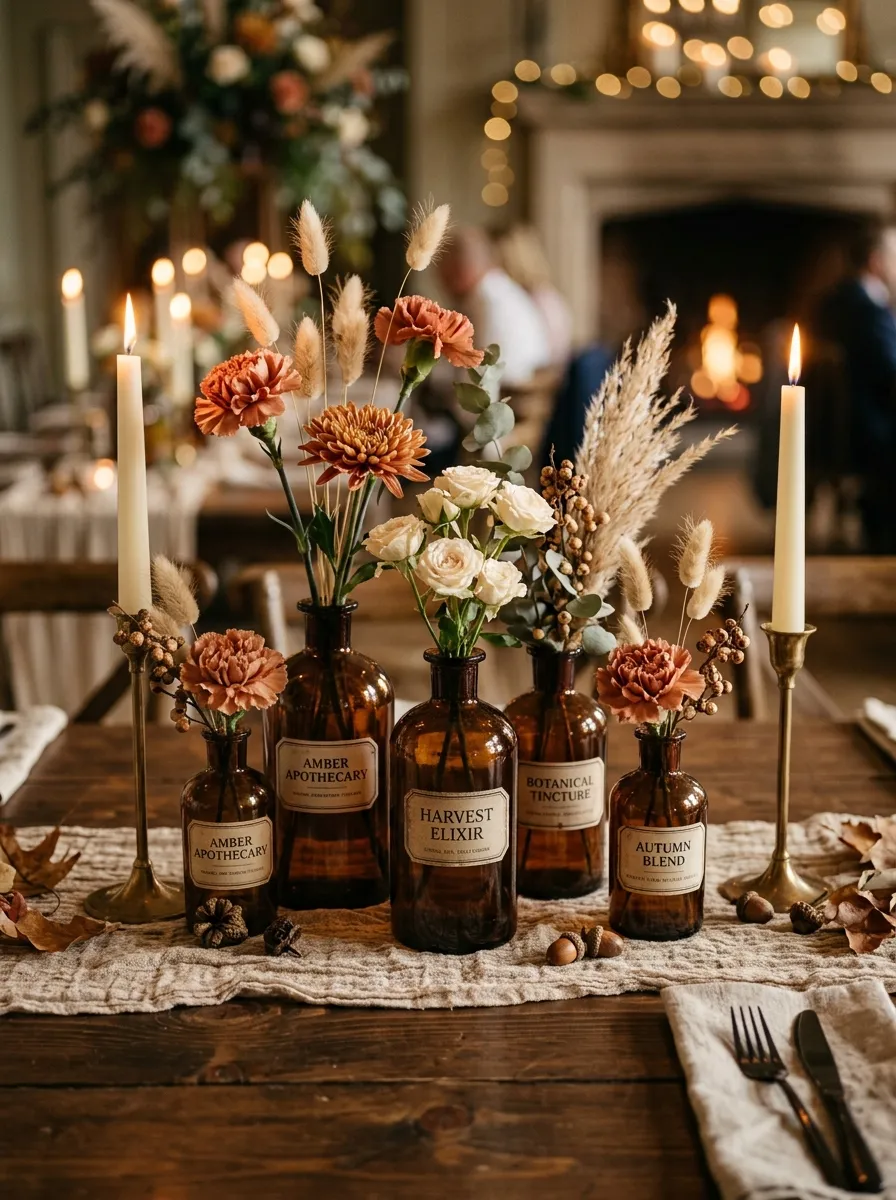
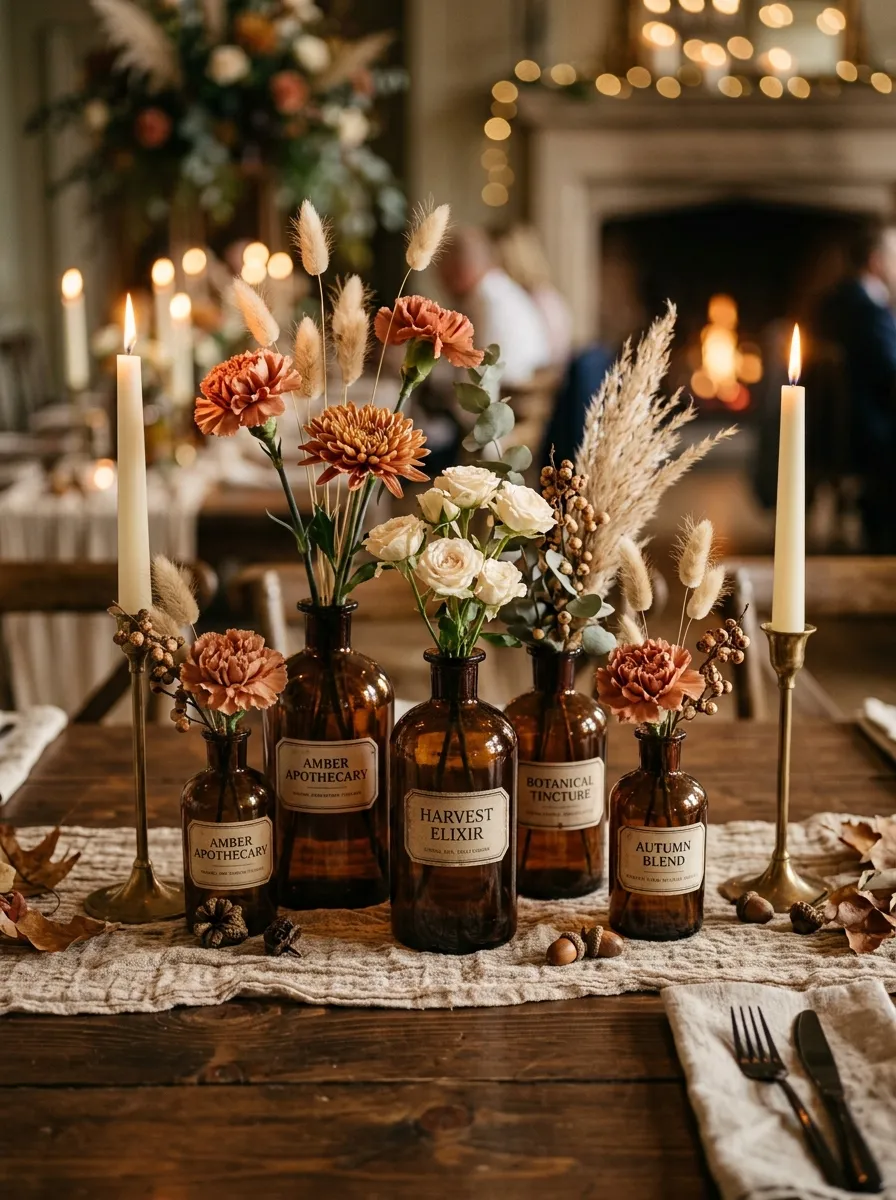
The amber apothecary medicine bottle cluster introduces warm, honey-toned light and historical pharmaceutical charm to reception tables. This concept groups five to seven genuine amber glass bottles of staggered heights, typically ranging from three to eight inches, clustered in the center of the table. The deep caramel glass filters venue illumination, creating a warm, golden glow that softens dining spaces and complements wooden banquet surfaces. By dispersing single stems across multiple small containers rather than grouping them in one large container, the centerpiece achieves expansive visual coverage while using minimal floral stems. The rich amber hue pairs naturally with warm earth tones, dried botanicals, and neutral linens, providing an inviting aesthetic suited for autumn, late summer, and rustic celebrations. The thick, molded glass of vintage medicine vials provides physical stability, preventing accidental tipping when guests reach across the table for food platters and glassware.
Begin by arranging five cleaned amber bottles of varying heights in a tight, asymmetrical grouping over an oatmeal cheesecloth table runner. Fill each bottle one-third full with room-temperature water mixed with clear commercial floral preservative using a narrow-spout watering can to keep the exterior glass dry. Trim stems of terra-cotta carnations, bronze chrysanthemums, and cream spray roses at a forty-five-degree angle, cutting them to heights that allow blooms to rest two inches above each bottle lip. Insert a single focal bloom into each bottle neck, pairing it with a delicate stem of dried lagurus, bleached wheat, or baby blue eucalyptus. Check the cluster from all sides, rotating bottles so raised embossing and historic measurements face outward. Position three slender brass candlestick holders with dripless ivory tapers around the perimeter of the glass cluster to complete the arrangement with warm evening illumination.
2. Embossed Seafoam Soda Bottle Runners
How to Create
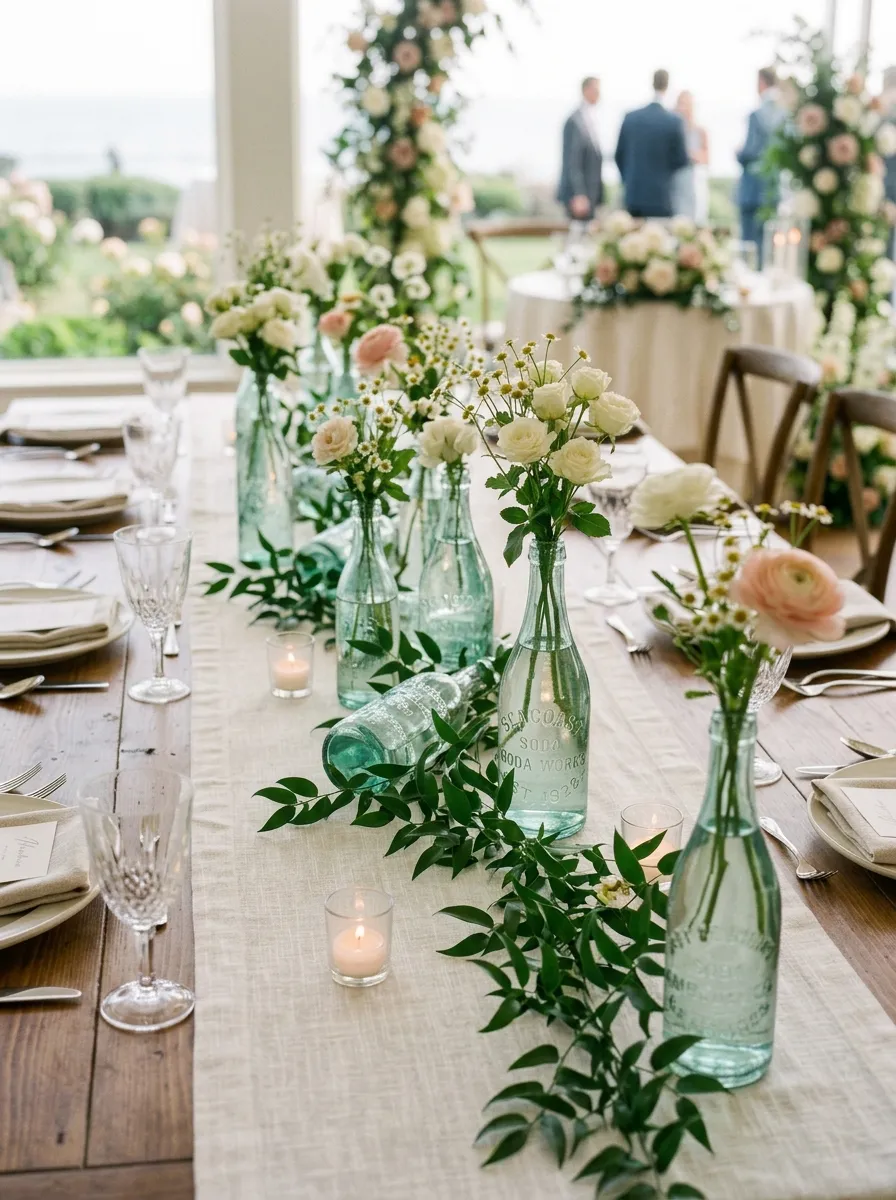
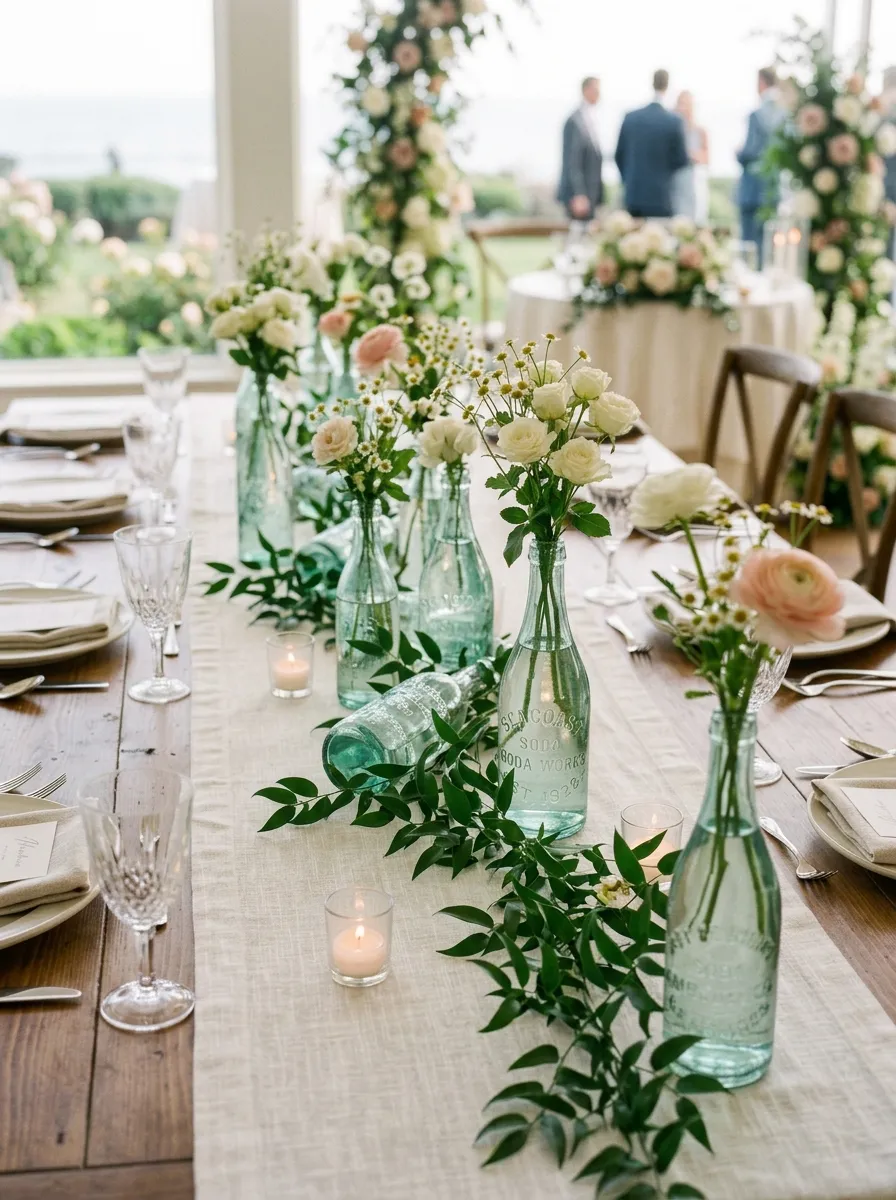
The embossed seafoam soda bottle runner brings refreshing coastal charm and vintage Americana character to long family-style banquet tables. This design arranges vintage pale green and seafoam soda bottles in a winding, linear path down the center axis of a wooden table, interspersed with fresh trailing greenery. The soft, mineral-tinted glass catches daylight and candlelight, casting delicate watery reflections across white tableware and neutral linens. Raised lettering, historic trademarks, and textured bottling seams on the glass introduce tactile interest that invites seated guests to inspect the containers. The low-profile runner format leaves ample surface space for shared dining dishes, water goblets, and printed menu cards, keeping table settings organized. This arrangement functions well for outdoor garden receptions, coastal celebrations, and open-air pavilion dinners, introducing fresh color without overwhelming the setting.
Select ten to twelve authentic seafoam glass soda bottles per eight-foot banquet table, verifying that all rims are smooth and free of chips. Lay a pressed ivory linen runner down the center of the table, bunching the fabric slightly along the center line to create organic texture and soft shadows. Distribute the seafoam bottles along the runner in an undulating serpentine path, leaving roughly six to eight inches of space between vessels. Fill each bottle halfway with clean water, inserting two stems of white majolica spray roses, delicate chamomile blooms, or pale blush ranunculus into each opening. Weave fresh branches of Italian ruscus or seeded eucalyptus around the bases of the bottles, allowing the green leaves to wrap around the glass to create a unified botanical runner. Finish the display by tucking clear glass votive holders with warm-white tea lights into open pockets along the greenery path.
3. Clear Antique Inkwell and Ranunculus Vignettes
Execution Process
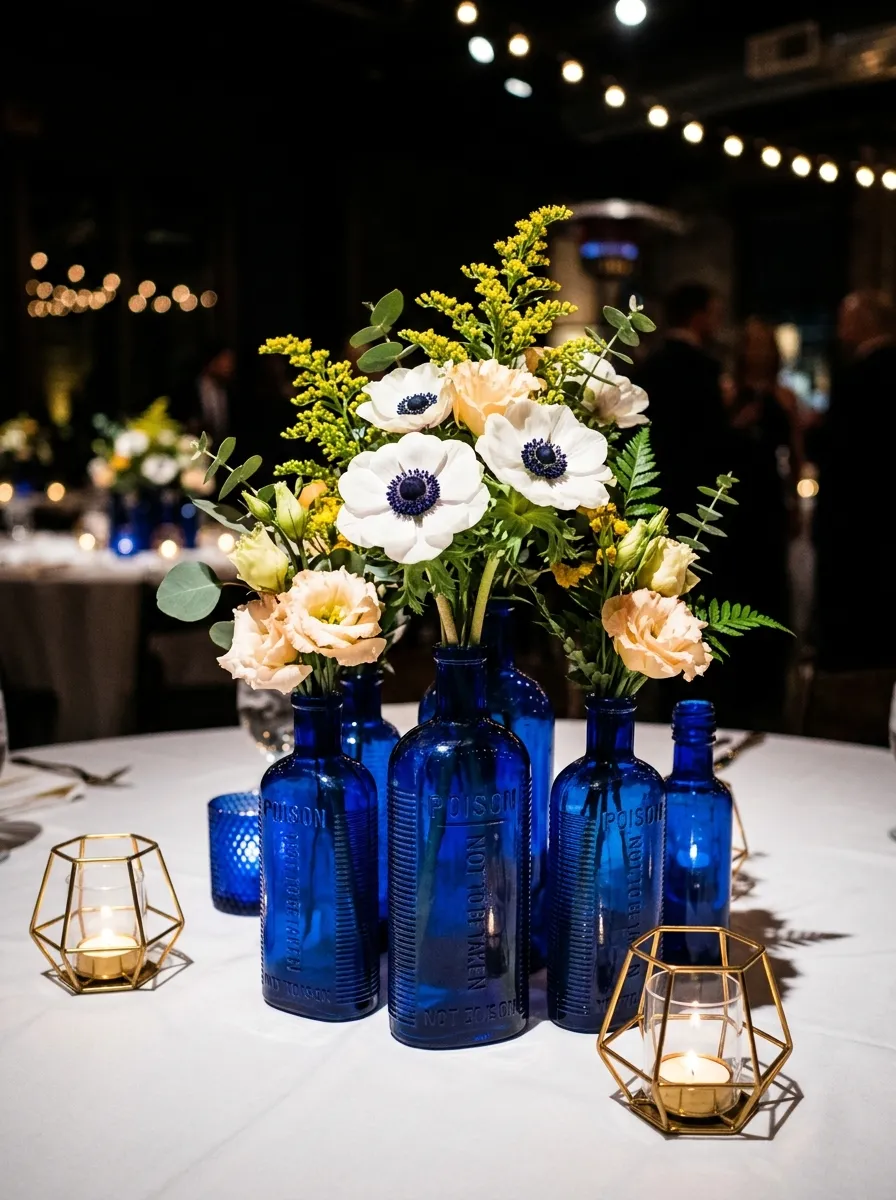
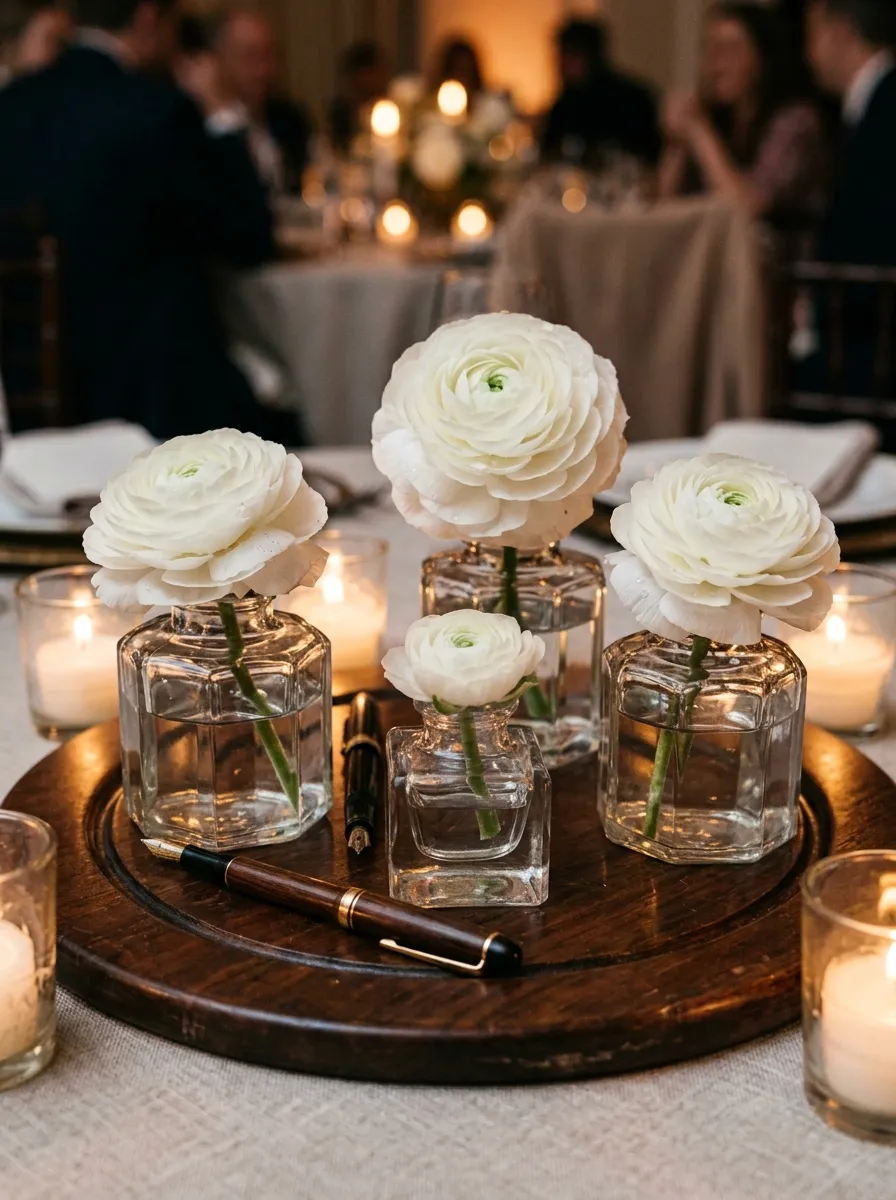
The clear antique inkwell and ranunculus vignette introduces delicate, low-profile botanical styling through miniature nineteenth-century writing vessels. This concept utilizes antique glass inkwells—featuring wide octagonal, round, or square bases with short, narrow necks—holding solitary, open flower heads. The low center of gravity makes inkwells remarkably stable, ensuring they stay upright throughout active dinner service. The transparent, thick-walled glass magnifies the submerged flower stems, celebrating organic botanical structures while keeping table silhouettes understated. This minimalist style fits library venues, historic manor houses, and intimate dinner parties where refined, subtle details are valued. Because inkwells sit just two to three inches high, the entire floral vignette hovers well below guest eye levels, creating an unobstructed conversational atmosphere across the table.
Collect four to five clear antique glass inkwells, washing the interiors thoroughly with warm water and vinegar to remove all traces of vintage carbon ink. Wipe the exterior glass with a lint-free cloth, placing the inkwells atop a polished dark wood charger or a clean slate slab in the center of the table. Fill each inkwell with fresh water using a clean kitchen syringe to prevent water spills across the display surface. Trim fresh ranunculus stems to three inches in length, stripping all lower leaves to maintain pristine water clarity inside the small vessels. Insert a single ranunculus bloom into each inkwell opening, letting the heavy floral head rest gently against the glass rim for structural support. Accent the base of the inkwell grouping with two vintage fountain pens and a scattering of ivory tea lights to reinforce the classic literary aesthetic.
4. Cobalt Blue Poison Bottle Centerpieces
Setup Method
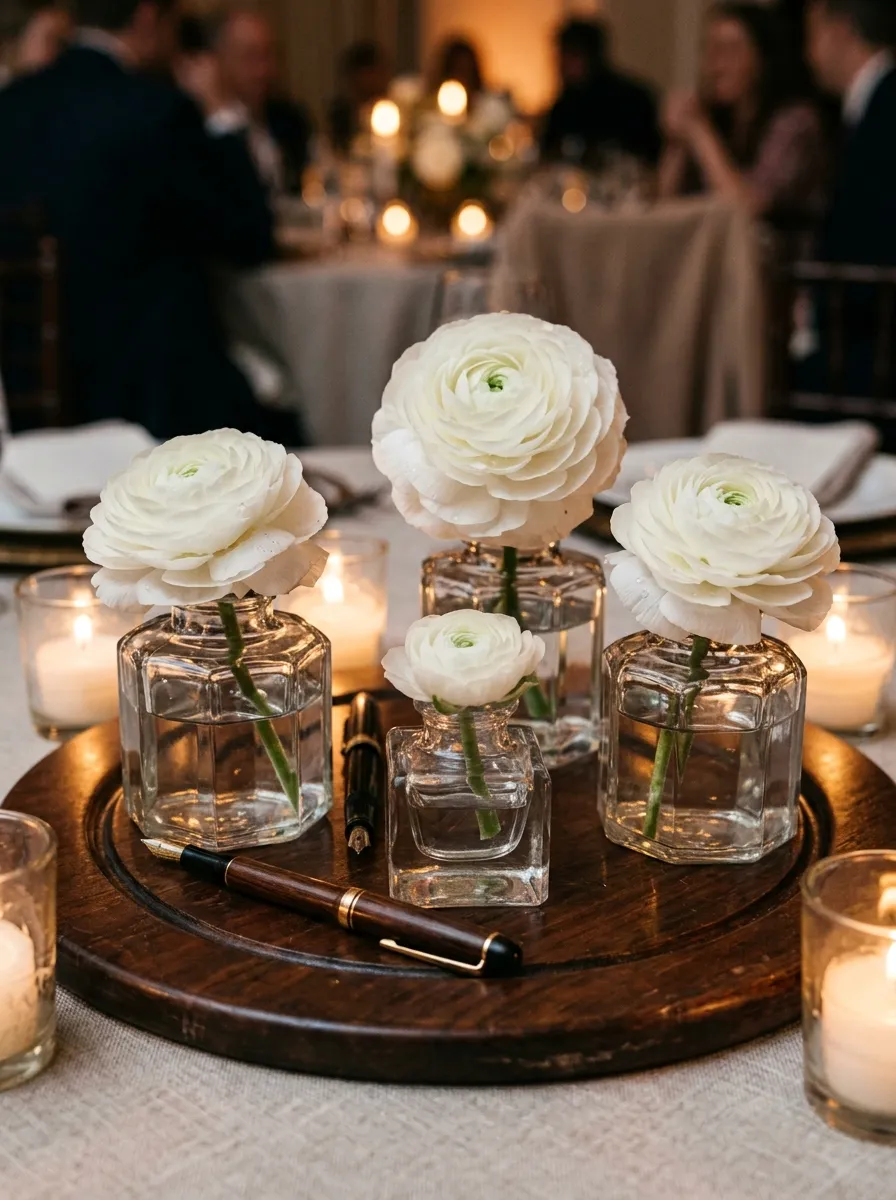
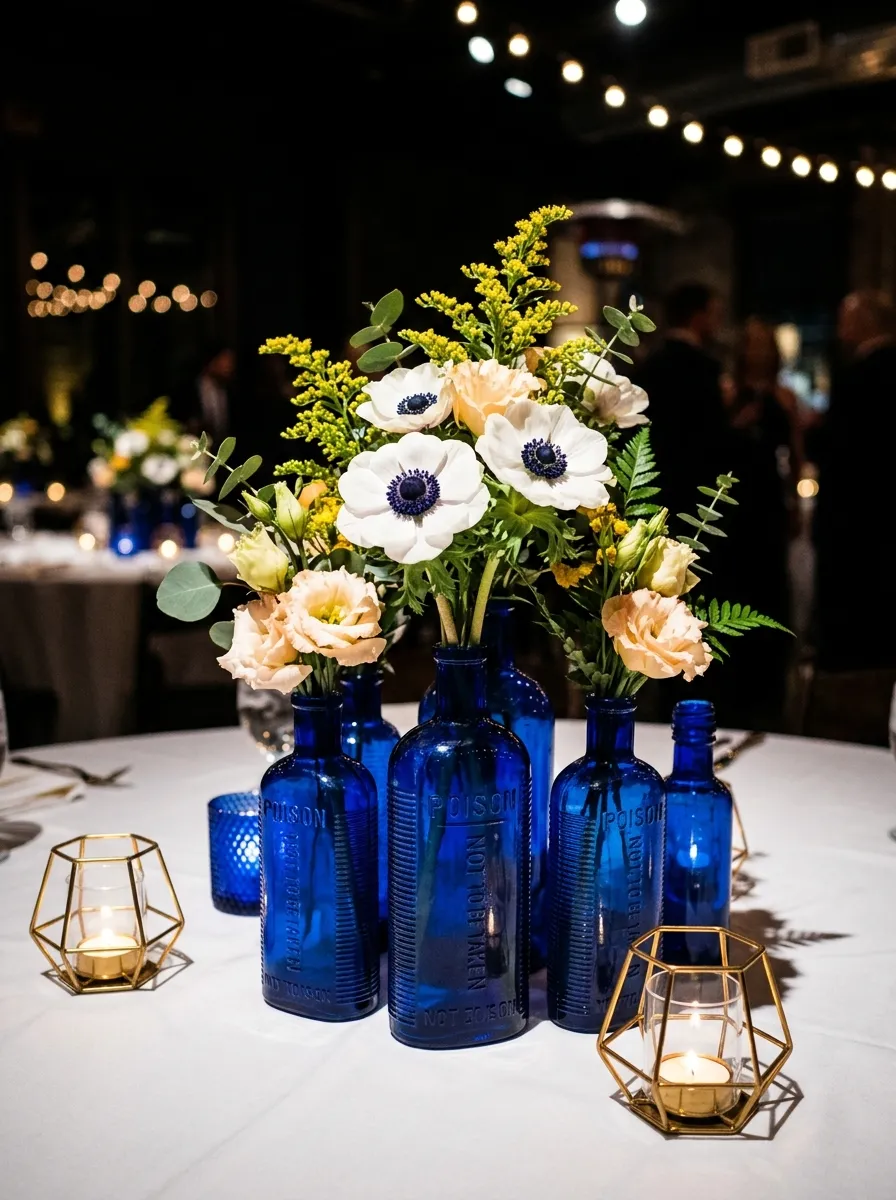
Cobalt blue poison bottle centerpieces introduce dramatic, jewel-toned contrast to reception tablescapes through saturated vintage glassware. This design utilizes antique cobalt blue pharmaceutical and household bottles, celebrated for their ribbed warning textures and vibrant color. The intense blue glass creates a bold visual contrast against crisp white tablecloths, brass flatware, and neutral paper goods. When placed near warm candlelight, the cobalt glass glows with rich sapphire tones, elevating evening dinners in industrial lofts, modern galleries, and dramatic ballroom venues. The vertical lines of hexagonal and rectangular poison bottles add architectural structure to banquet settings, grounding loose, organic florals. This concept provides high visual impact while requiring minimal floral material, allowing budget-conscious hosts to create memorable, photo-ready focal points.
Gather five cobalt blue bottles in assorted geometric shapes and heights, checking that all bottles are completely clean and free of interior film. Set the bottles in an offset triangular arrangement in the center of a white or pale gray linen-covered table. Fill the vessels halfway with water, using a funnel to avoid splashing liquid down the vibrant blue glass walls. Cut stems of pure white anemones, pale peach lisianthus, and delicate sprigs of yellow solidago to varying heights between six and ten inches. Place one to two stems into each bottle, using the contrasting floral colors to accentuate the deep sapphire tones of the glass. Encircle the base of the cobalt bottles with brushed gold geometric candle holders fitted with white votives, allowing the warm candlelight to reflect through the colored glass.
5. Muted Olive Wine Carafe Foliage Displays
Step-by-Step Guide
The muted olive wine carafe foliage display brings rustic vineyard elegance to reception dining through larger, utilitarian glass vessels. This design uses authentic European wine carafes and olive-tinted glass jugs, each holding an architectural branch of natural olive or fig foliage. The deep green, mossy tone of vintage olive glass introduces earthy warmth that pairs naturally with terracotta accents, raw linen runners, and dark wood tables. Unlike smaller medicine bottles, these broader carafes provide substantial visual mass, allowing decorators to anchor wide circular dining tables with a single primary container. The tall, reaching olive branches establish height and natural movement, evoking Mediterranean countryside dining. The heavy glass base ensures stability, preventing tall foliage stems from tipping the container during lively dinner celebrations.
Source clean, vintage olive-green wine carafes or demijohns measuring eight to ten inches in height, inspecting the bases to confirm they sit completely flat. Place one carafe in the center of a circular table, positioning it over a wide, cross-cut natural wood slice or a woven jute mat. Fill the carafe halfway with water conditioned with floral food to weigh down the container and support branch hydration. Select two fresh olive branches measuring sixteen to eighteen inches in length, trimming the woody stems with heavy-duty pruners at an angle. Insert the branches into the carafe neck, letting the silvery undersides of the leaves spread out into an airy canopy above the vessel. Surround the base of the carafe with four miniature amber dropper bottles, each holding a single white spray rose, to tie the elevated greenery smoothly to the tabletop.
6. Milk Glass Bottle and Blush Peony Trios
How to Make
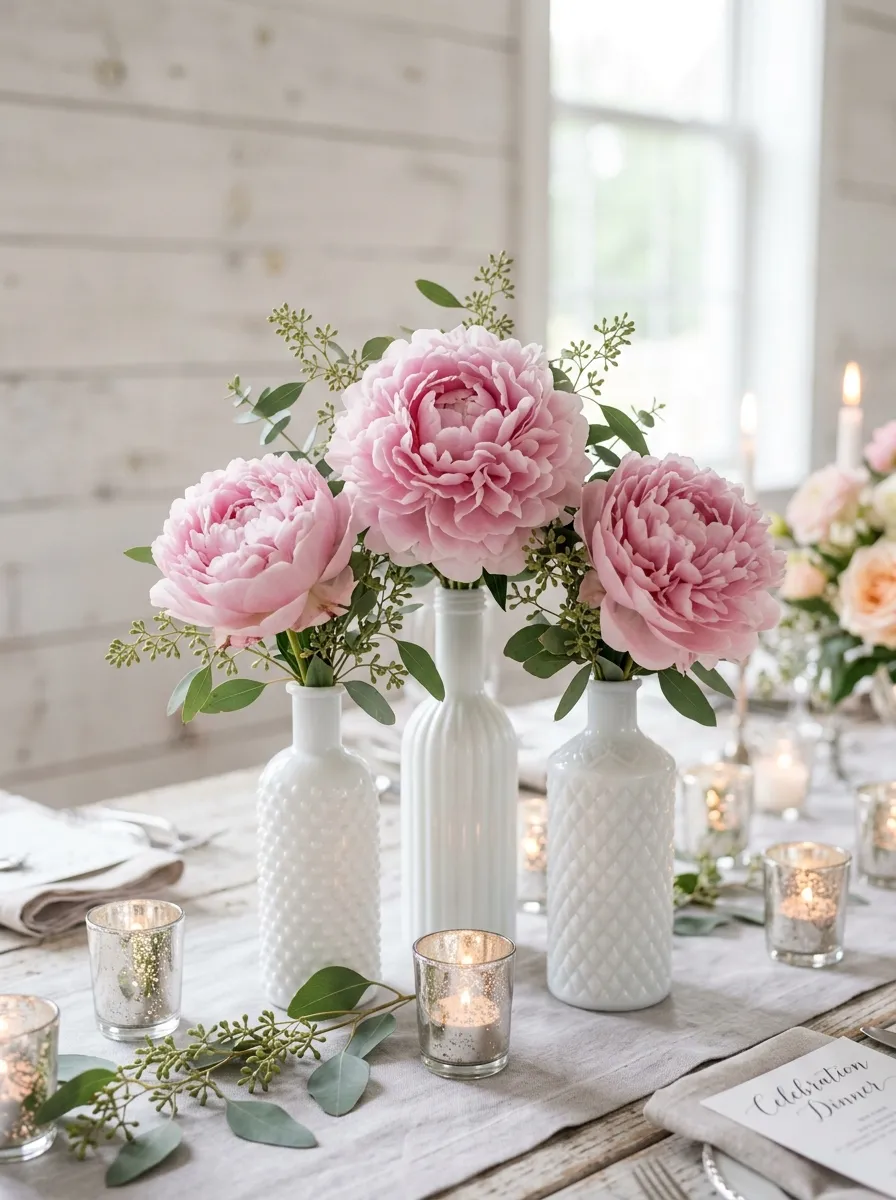
The milk glass bottle and blush peony trio combines creamy, opaque white vintage glass with romantic floral blooms for classic reception tables. This concept arranges three antique white milk glass bottles—featuring hobnail, fluted, or smooth surfaces—grouped in the center of a dining table. The opaque white surface conceals stems and resting water, maintaining a clean, uniform look that highlights the delicate colors of blush peonies and garden roses. Milk glass brings vintage bridal elegance to rustic barns, garden tents, and historic estates, fitting romantic and traditional themes. The contrast between textured glass relief and soft, layered petals produces an engaging tactile display that photographs clearly under diverse lighting conditions.
Collect three distinct milk glass bottles ranging from five to seven inches in height, scrubbing the textured hobnail exterior with a soft toothbrush and soapy water to clear dust. Arrange the three bottles in an offset cluster in the center of the table, placing the tallest bottle in the rear and the two shorter bottles stepped forward. Fill each bottle two-thirds full with fresh water, wiping away any stray droplets with a clean cloth. Trim blush peonies or garden roses so the blooms sit three inches above the bottle rims, cutting the stems under running water to ensure continuous hydration. Insert one large peony into each bottle opening, adding a small sprig of seeded eucalyptus or astilbe to frame the petals. Surround the milk glass base with three silver mercury glass votives to introduce reflective sparkle to the romantic floral setting.
7. Hanging Bottle Chandelier Above Banquet Tables
Execution Process
The hanging bottle chandelier elevates vintage glass above dining tables, transforming empty overhead space into an illuminated botanical installation. This design suspends an array of small, clear vintage glass bottles from a rustic timber ladder, iron grid, or venue rafters using natural jute twine or clear monofilament wire. Each hanging bottle holds a small stem of fresh greenery and water, floating above the center of long banquet dining tables. By lifting the decorative focal point off the table surface, dining space remains completely clear for food platters, beverage carafes, and place settings. The suspended glass catches overhead lighting, casting delicate reflections across the dinner tables below. This floating installation solves the challenge of decorating narrow tables, delivering high visual drama without cluttering guest dining zones.
Select twelve to fifteen small, clear vintage bottles of uniform weight, securing twenty-gauge galvanized wire or natural jute twine tightly under each bottle’s raised lip ring. Create an overhead hanging loop from the wire, testing each knot to ensure the bottle hangs plumb and holds water weight without slipping. Secure a six-foot wooden suspension beam or rustic ladder horizontally above the dining table using heavy-duty ceiling anchors and rated chains. Suspend the bottles from the overhead beam at staggered lengths between twelve and twenty-four inches, maintaining at least twenty-eight inches of clearance above the tabletop. Fill each bottle one-third full with water using a narrow-spout squeeze bottle, inserting a single stem of Italian ruscus, trailing ivy, or white lisianthus into each opening. Weave warm-white micro fairy light strands along the overhead beam, allowing the small lights to shine down through the floating glass vessels.
8. Mixed Clear Glass Bottles with Taper Candles
Setup Method
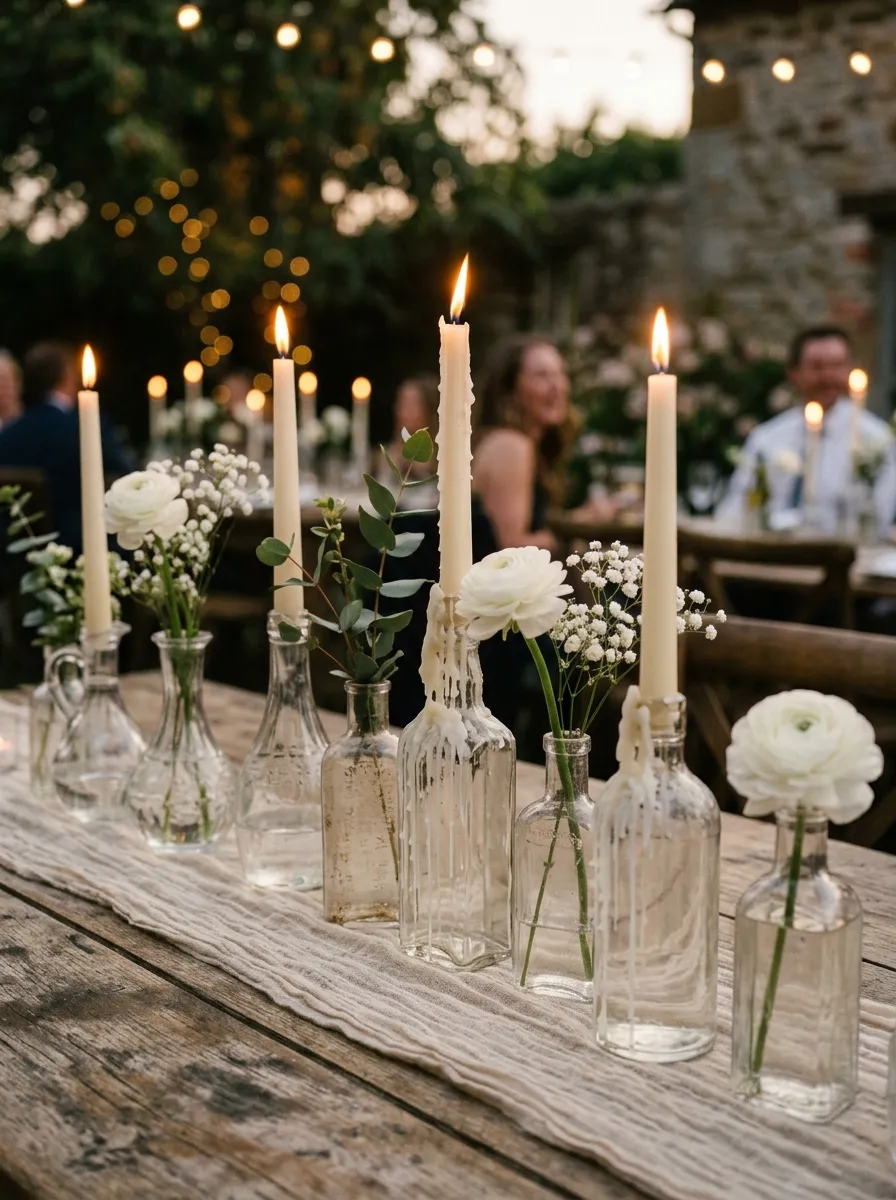
The mixed clear glass bottle and taper candle centerpiece merges antique bottle collection with ambient living flame, turning glassware into functional candelabras. This concept arranges seven to nine clear vintage bottles of varied shapes down the table spine, with select vessels holding slender taper candles while neighboring bottles display fresh floral sprigs. The transparent glass allows table surfaces to show through, creating an open, airy feeling that keeps banquet setups from feeling cluttered. As the tapers burn, melted wax drips down the glass necks, building romantic texture that enhances the vintage aesthetic. This design works across all seasons, pairing naturally with natural wood tables, white linens, and modern industrial venues. Combining illumination and floral accents within a single vessel type unifies the tablescape while keeping overall decor expenses low.
Collect eight assorted clear glass bottles, including vintage soda bottles, vinegar cruets, and extract flasks, ensuring the neck openings accommodate standard seven-eighths-inch taper candles. Arrange the bottles in an irregular, zigzag pattern down the center of an eight-foot table over a loose, wrinkled cheesecloth runner. Fill four of the bottles halfway with water, inserting single stems of white ranunculus, baby’s breath, or olive greenery into their openings. In the remaining four dry bottles, insert twelve-inch dripless ivory taper candles, shaving the candle bases slightly with a paring knife to ensure a snug, straight fit. Place a small drop of melted wax inside the dry bottle necks before inserting tapers to anchor them securely in place. Light the tapers fifteen minutes before guests arrive, checking nearby air currents to verify that the candles burn steadily and safely throughout the celebration.
9. Wood Crate Bottle Carrier Centerpieces
Step-by-Step Guide
The wood crate bottle carrier centerpiece uses antique wooden soda or dairy delivery crates to frame collections of vintage glass bottles. This design sets a partitioned wooden crate in the center of the table, with each interior cubby holding an antique bottle filled with seasonal field flowers. The weathered wood, metal corner brackets, and faded vintage typography bring authentic agricultural history to the tablescape, anchoring the center of the dining table. The crate walls enclose the glassware, providing a contained structure that prevents bottles from tipping over during lively family-style meals. This contained format makes event setup and strike fast, as entire table arrangements can be pre-filled offsite and placed onto tables in a single step. The contrast between rough reclaimed wood and smooth glass produces an engaging textural display suited for barn venues and outdoor farm receptions.
Source an authentic vintage wooden beverage crate with interior dividers, brushing away loose dirt and wiping the slats with a damp cloth to clean the wood. Apply a light coat of clear matte paste wax to the wood to seal the aged patina without adding an artificial modern shine. Place a matching vintage glass bottle inside each partitioned section of the crate, using a mix of clear and green glass for subtle color variety. Fill each bottle halfway with water, using a watering can with a narrow spout to keep the wooden crate dry. Cut stems of white cosmos, feverfew, blue cornflowers, and wild grasses to varied heights, inserting two to three stems into each bottle to build an airy, wildflower meadow look. Position the completed crate in the center of the table, tucking sprigs of fresh rosemary into the handles to add subtle fragrance to the display.
10. Monochromatic Green Glass and Fern Fronds
How to Create
The monochromatic green glass and fern frond centerpiece explores rich, botanical harmony by pairing emerald and forest-green vintage bottles with delicate woodland foliage. This concept arranges five deep green vintage wine and mineral water bottles down the table, each holding an architectural fern frond or leafy hosta stem. The green-on-green palette highlights varied botanical textures without relying on floral petals, producing a modern, nature-focused look that feels fresh and intentional. The deep green glass reflects candlelight with an emerald glow, introducing rich color to clean white tablecloths and raw wood surfaces. This design works exceptionally well for greenhouse venues, woodland gatherings, and minimalist modern receptions where leafy botanicals take center stage. Because ferns hold their structural shape well, these arrangements hold up through long events without drooping or shedding.
Collect five green glass bottles in varying deep tones, such as emerald, forest green, and dark olive, verifying that all bottles are thoroughly cleaned and dry on the outside. Place the bottles in an asymmetrical row down the center of the table, spacing them roughly four inches apart over a crisp white linen runner. Fill each bottle two-thirds full with fresh water conditioned with commercial leaf preservative to keep delicate fronds hydrated. Trim fresh leatherleaf, maidenhair, or sword fern fronds at a sharp angle, cutting stems so the leafy blades fan out four to six inches above the bottle mouths. Insert a single fern frond into each bottle, adjusting the angle so the leaves face slightly outward toward guest seating zones. Place small, unglazed white ceramic tea light cups around the bases of the green bottles to introduce soft, warm illumination that shines through the colored glass.
Common Beginner Mistakes and How to Avoid Them
Assembling vintage bottle centerpieces requires attention to spatial balance, glass hygiene, and water mechanics that beginners often overlook during early planning. A frequent mistake is using dusty, unwashed vintage bottles with cloudy residue or old label glue, which looks messy under dining lights. Always clean glassware thoroughly with warm water, vinegar, and bottle brushes, followed by an alcohol wipe to ensure the glass shines. Another common error is cutting flower stems too tall, creating top-heavy arrangements that easily tip over when tables are bumped. Keep flower stems proportional to the container, ensuring that blooms hover no more than two to three inches above the bottle lip to maintain a low, stable center of gravity. Beginners also frequently overfill dining tables with too many small bottles, creating visual clutter that encroaches on water glasses, bread plates, and silverware. Maintain balance by keeping centerpiece footprints within an eight-to-ten-inch central width on standard banquet tables. Finally, avoid using scented tapers inside candle bottles, as heavy synthetic fragrances clash with dinner service; always select unscented, dripless wax tapers for tabletop styling.
Practical Tips for Better Results
Elevating vintage bottle centerpieces from casual crafts to refined, photo-ready styling relies on disciplined material choices and clean finishing techniques. Always group bottles in odd numbers—such as clusters of three, five, or seven—because asymmetrical groupings look more natural and visually balanced to the eye. Limit your glassware palette to two harmonizing glass tones, such as clear with amber or seafoam with emerald, using consistent floral colors to maintain visual cohesion across the room. Use distilled water inside clear bottles to avoid cloudiness and prevent mineral air bubbles from clinging to the glass walls. To extend the life of delicate blooms, recut all stems under water at a forty-five-degree angle and let them hydrate in a cool room for twenty-four hours before arranging. If using vintage bottles as candle holders, shave the candle bases carefully with a utility knife for a snug fit, and secure them with a drop of melted wax to ensure tapers stand straight. Finally, carry an emergency styling kit on the day of the event containing extra precut stems, a squeeze bottle for water top-offs, paper towels, and matches to resolve unexpected adjustments quickly.
Styling, Presentation, or Organization Ideas
Presenting vintage bottle centerpieces within a thoughtful, coordinated environment elevates the entire reception space, creating an inviting atmosphere that celebrates handmade craftsmanship. Frame your bottle arrangements with textured table runners made from stonewashed linen, unbleached cotton gauze, or raw woven burlap to soften hard tabletop surfaces. Maintain consistent metal accents across the tablescape, matching brass candlestick holders with gold-rimmed glassware and brass flatware to establish a cohesive visual identity. When decorating long banquet tables, use modular spacing: alternate between tight bottle clusters and low taper candle pairings every three feet to create a pleasing visual rhythm down the room. Present table numbers on handcrafted materials that complement the vintage glass, such as calligraphed kraft paper tags tied around bottle necks with twine, or miniature framed prints set beside the vessels. For cocktail high-tops or dessert stations, adapt your centerpiece designs into compact, single-bottle versions that maintain design continuity without taking up plate space. Coordinated visual repetition across all dining zones ties the venue together, making the reception feel like a curated, welcoming celebration.
Budget or Time Planning
Executing a vintage bottle centerpiece plan affordably requires organized time management, early material sourcing, and efficient assembly schedules. Begin sourcing bottles six to nine months ahead of the celebration date, browsing thrift stores, flea markets, garage sales, and online classifieds to collect vessels affordably over time. Sourcing vintage glass early eliminates the high price spikes and shipping delays associated with ordering large quantities of modern commercial vases. Group your production schedule into focused blocks: spend early sessions soaking off labels and scrubbing glass, reserve middle phases for sorting bottles into table sets, and handle fresh floral trims during final countdown days. Source seasonal blooms and hardy filler foliage in bulk from local flower farms or wholesale distributors, selecting varieties like spray roses, carnations, and ruscus that hold up well without refrigeration. Pack completed bottle sets into compartmentalized cardboard wine boxes labeled by table number, keeping glassware protected, organized, and ready for fast venue drop-off. Early planning keeps costs contained while guaranteeing a smooth, stress-free setup on the wedding morning.
Creative Expansion and Advanced Inspiration
Once you feel confident executing basic vintage bottle centerpieces, you can expand your design with advanced mixed-media techniques and personalized artistic elements. Experiment with glass etching creams, using custom adhesive stencils to etch subtle table numbers, monograms, or delicate botanical illustrations permanently into the bottle surfaces. Introduce metallic accents by wrapping bottle necks with fine raw brass wire, copper bands, or frayed velvet ribbons that match your bridal party attire. You can also incorporate textured botanical elements like dried seed pods, cotton bolls, or dried pampas plumes to transition the arrangements smoothly into late autumn or winter aesthetics. Consider designing immersive guest installations, such as an interactive floral favor bar where guests select a single vintage bottle and fresh stem from a styled display shelf to take home at the end of the evening. For evening outdoor receptions, adapt these concepts by inserting thin, battery-operated micro-cork lights directly inside dry, colored bottles to turn the glassware into self-contained glowing lanterns. Approaching vintage glass styling as an adaptable, creative art form empowers couples to craft an inviting, authentic celebration that leaves a lasting visual memory for their guests.