Sage green has established a permanent presence in modern event styling, serving as an adaptable earthy neutral that elevates wedding tablescapes across diverse wedding aesthetics. This soft, desaturated botanical hue bridges organic foliage textures with refined celebration decor, establishing an inviting, serene atmosphere for reception guests. Constructing DIY table centerpieces with sage green elements allows couples to coordinate customized, cohesive reception themes while maintaining precise control over project expenditures. This tutorial provides step-by-step guidance on designing ten distinct, practical centerpiece concepts that feature sage foliage, muted textiles, textured ceramics, and complementary accent florals. Readers will learn the essential mechanics of stem stabilization, water containment, visual proportion balancing, and cohesive accessory styling for long and round banquet tables. By focusing on durable botanical elements such as silver dollar eucalyptus, lamb’s ear, and olive branches, these projects remain fresh throughout prolonged event celebrations. Engaging with these accessible design frameworks equips makers with reliable crafting skills, helping transform affordable raw materials into elevated, photogenic focal points. Sourcing and arranging your own wedding decor creates memorable personal value, blending intentional craftsmanship with timeless design.
Why This Idea Is Trending or Useful
The enduring prominence of sage green centerpieces across contemporary Pinterest ideas stems from the color’s compatibility with diverse wedding themes, including minimalist style receptions, rustic barn celebrations, and modern design gallery gatherings. Modern event planning increasingly prioritizes organic materials and muted botanical tones over artificial, rigid, and high-gloss party decor. Sage green functions effectively as a structural backdrop, allowing ivory garden roses, warm terracotta ceramics, antique brass candle accents, and raw wood grains to stand out clearly. From an operational standpoint, foliage-forward styling offers practical value: hardy leafy greens resist wilting under reception hall lighting or summer heat far better than delicate, petal-dense cut blooms. This durability makes sage-focused arrangements beginner friendly, giving hosts the flexibility to construct displays one to two days before the celebration without sacrificing freshness. Furthermore, these designs present substantial budget ideas, as green filler branches cost significantly less per stem than primary focal flowers while providing expansive volumetric table coverage. Working with these leafy arrangements delivers a timeless, calming visual quality that enhances guest dining experiences.
Materials and Preparation
Executing long-lasting centerpiece arrangements requires disciplined workspace preparation, proper tools, and systematic stem care prior to event assembly. Primary materials include fresh or preserved sage foliage varieties such as seeded eucalyptus, Italian ruscus, dusty miller, and silver leaf olive branches, supported by accent blooms like white lisianthus and ivory ranunculus. Essential mechanical supplies consist of saturated floral foam blocks, heavy metal floral frogs, clear water-resistant floral tape, sharp pruning shears, and non-spill table vessels. Table linens, including gauzy sage runners, unlacquered brass taper candlesticks, and clear glass hurricane sleeves, should be cleaned and pressed ahead of time. Preparation begins forty-eight hours before assembly by trimming botanical stems at sharp forty-five-degree angles under cool running water, followed by deep conditioning in clean buckets treated with commercial flower preservative. Inspect your reception venue layout to determine table shapes, ensuring chosen container dimensions preserve natural guest sightlines across dining surfaces. Organizing materials into dedicated assembly stations keeps group crafting sessions efficient, structured, and cleanly executed.
Idea 1: Flowing Eucalyptus and Pillar Candle Garland
Step-by-Step Guide
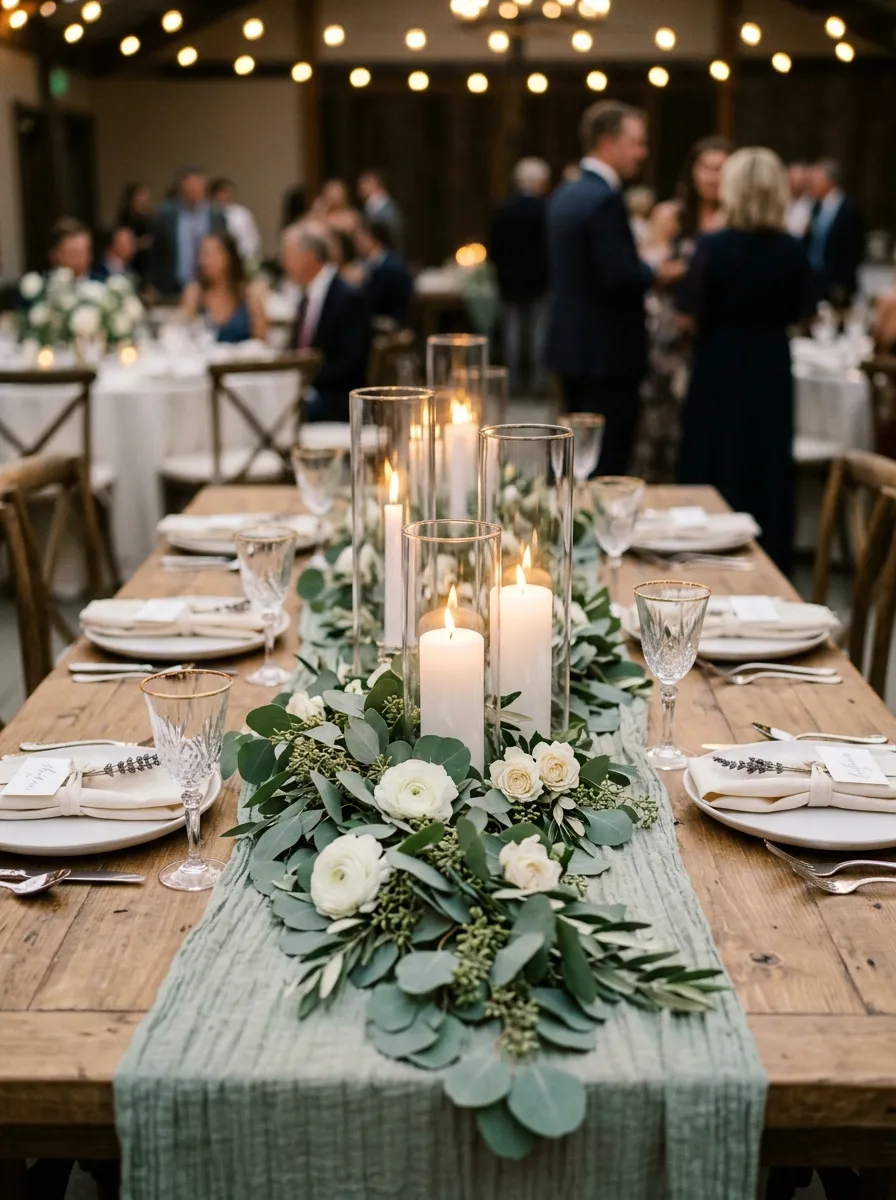
The flowing eucalyptus and pillar candle garland design introduces an elongated, low-profile botanical runner down the center of long farm tables, pairing dense sage foliage with warm, glowing pillar illumination. The structure utilizes silver dollar and seeded eucalyptus interwoven with delicate sprigs of olive leaf to build an undulating, natural texture. By setting the leafy branches directly along the tabletop, the arrangement leaves clear horizontal sightlines across the dining space, facilitating effortless conversation among seated attendees. Smooth, unscented white pillar candles encased in cylindrical glass hurricanes provide vertical structure, their varying heights breaking up the horizontal leafy path. This concept suits rustic outdoor settings, industrial brick venues, and traditional banquet halls, providing an organic foundation that softens wooden or linen table planes. The muted green leaves capture ambient candlelight, highlighting the silvery undertones inherent to Mediterranean foliage.
Begin the assembly by laying a washed sage cotton gauze runner flat along the length of your wooden dining table, allowing twenty centimeters to drape gracefully off each end. Arrange three glass hurricane cylinders of varying heights—fifteen, twenty, and twenty-five centimeters—in a staggered cluster at the table center, inserting unscented white pillar candles inside. Cut fresh eucalyptus branches into thirty-centimeter lengths, stripping lower foliage to expose clean central stems for easy layering. Form the garland base by laying two branches facing outward in opposite directions, binding their overlapping center stems with green paddle wire. Continue wiring alternating sprigs of silver dollar and seeded eucalyptus down each side, curving the branches gently around the glass hurricane bases to anchor the candles. Infill open gaps with short sprigs of pale dusty miller to add textural contrast, misting the entire leaf display with cool water to preserve freshness until dinner begins.
Idea 2: Terracotta Pedestal Bowl With Sage Florals
How to Create
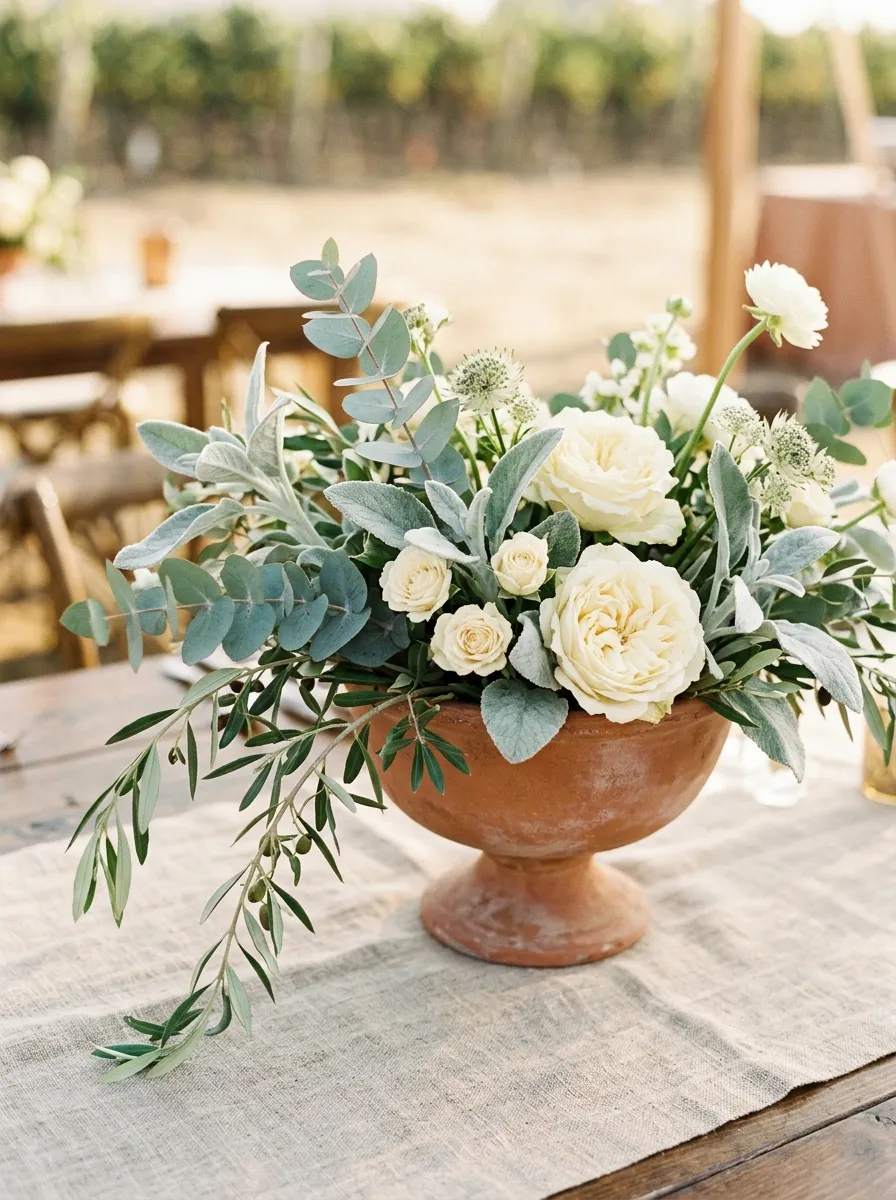
The terracotta pedestal bowl arrangement relies on warm earthenware clay to ground soft sage foliage, pale cream blossoms, and delicate textural seed pods. A wide, shallow compote vessel elevates the centerpiece slightly above the dining line, allowing cascading leafy elements to drape gracefully down the curved clay stem. This design emphasizes structural balance, positioning leafy eucalyptus, gray-green lamb’s ear, and ivory garden roses in a loose, asymmetrical profile that appears naturally gathered. The porous, warm peach-orange tone of raw terracotta provides an earthy, high-contrast complement to the cool, silvery pigments of the sage greenery. This visual pairing functions well in vineyard celebrations, southwestern receptions, and garden estate gatherings where natural textures take center stage. The wide basin shape accommodates a substantial water reservoir, keeping thirsty blooms fully hydrated throughout evening events.
Secure a soaked cylinder of floral foam into the basin of an eighteen-centimeter terracotta compote bowl using crossed strips of waterproof green floral tape. Begin building the leafy foundation by inserting five stems of weeping eucalyptus around the lower rim, angling them downward to brush the tabletop surface. Insert three stems of sturdy olive branch vertically into the center of the foam to establish an overall arrangement height of twenty-five centimeters. Position three ivory garden roses and four white lisianthus blossoms into the core, distributing them at alternating depths to build dimension. Infill remaining spaces with velvety lamb’s ear leaves and clustered white waxflower, hiding all exposed mechanics and foam edges. Check the centerpiece from all seated angles to ensure the profile remains balanced, symmetrical, and fully covered. Position the finished pedestal on a circular raw linen mat, flanking the earthen bowl with small terracotta tea light holders.
Idea 3: Vintage Brass Compote With Muted Botanicals
Execution Process
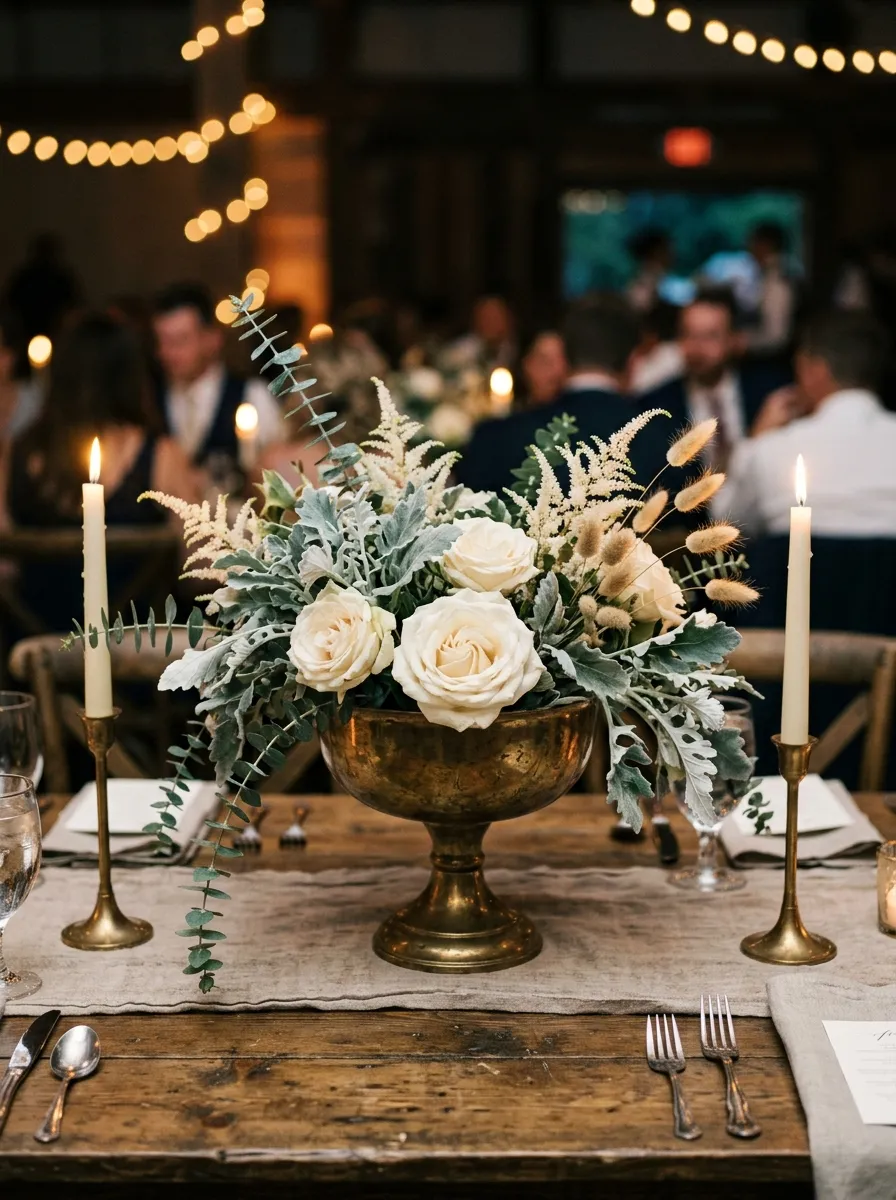
The vintage brass compote design pairs aged, tarnished metal finishes with soft, muted botanicals to establish an antique, heirloom tablescape aesthetic. The vessel features a wide, fluted chalice shape with natural surface oxidation, introducing metallic warmth that enriches soft sage foliage. Rather than constructing stiff, domed floral mounds, this approach focuses on an airy, dynamic form where branches reach outward organically. Silvery sage greenery, including dusty miller and spiral eucalyptus, blends with cream spray roses and antique blush carnations, creating a gentle gradient of pale tones. The elevated chalice shape keeps table linens uncluttered, leaving room for bread baskets and wine carafes below the floral perimeter. This centerpiece suits historic manor settings, romantic library venues, and intimate evening celebrations illuminated by amber candlelight.
Prepare a fifteen-centimeter tarnished brass compote chalice by placing a heavy metal floral frog inside the bottom, anchoring it firmly with floral adhesive putty. Fill the basin three-quarters full with cool water mixed with commercial floral preservative powder. Cut woody olive and spiral eucalyptus stems to twenty-centimeter lengths, pressing the cut ends firmly into the brass frog pins at forty-five-degree angles to establish a wide, horizontal silhouette. Insert three large ivory cabbage roses into the center of the arrangement to serve as the main focal blooms. Weave delicate sprigs of dusty miller, white astilbe, and pale dried bunny tails among the primary roses to soften the transition from metal rim to petals. Verify that no exposed mechanics remain visible from side viewpoints, rotating the compote continuously during assembly. Place the finished chalice at the center of the table alongside two slender unlacquered brass taper holders fitted with ivory taper candles.
Idea 4: Frosted Glass Apothecary Bottle Cluster
Setup Method
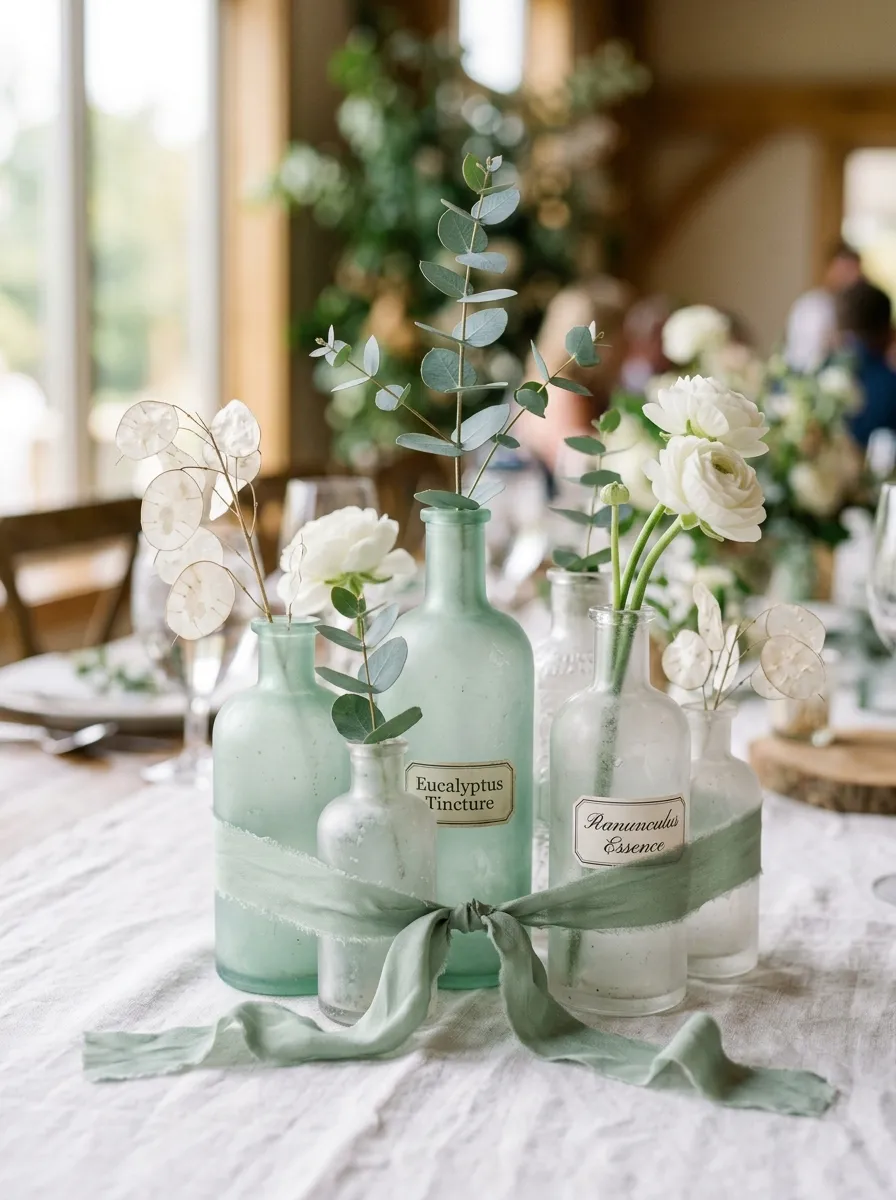
The frosted glass apothecary bottle cluster concept relies on a grouped arrangement of small vintage-style medicine bottles, finished in soft sea-glass tones of pale green and white. Varying in height from ten to twenty centimeters, these slender vessels collectively form an engaging centerpiece cluster without occupying excessive table surface space. By dedicating each bottle neck to only one or two botanical stems, this design highlights individual leaf geometries, delicate stems, and structural seed pods. The translucent, frosted glass diffuses incoming light, casting a soft, seafoam glow across tablecloth surfaces. This method offers an approachable, modular centerpiece solution for rectangular or round tables alike, allowing planners to expand or contract the cluster size to fit specific table dimensions. The low-profile components are simple to pack, transport, and assemble on-site without specialized floristry expertise.
Assemble a set of six frosted pale green and clear apothecary bottles of varying heights, cleaning the interiors with warm water to remove dust. Fill each bottle two-thirds full with fresh water using a narrow funnel to keep exterior glass surfaces dry. Arrange the bottles in an organic, staggered grouping at the table center, maintaining five to eight centimeters of negative space between individual vessels. Trim fresh stems of baby blue eucalyptus, white ranunculus, dried honesty money plant discs, and pale sage thistle to varied lengths matching the vessel proportions. Slide one or two stems into each bottle neck, letting taller olive branches extend from the tallest center bottles while low-lying ranunculus blossoms sit in the perimeter glassware. Weave a delicate four-centimeter silk chiffon ribbon in sage green loosely around the bottle bases on the table plane to visually unify the grouping.
Idea 5: Geometric Gold Terrarium With Sage Succulents
Step-by-Step Guide
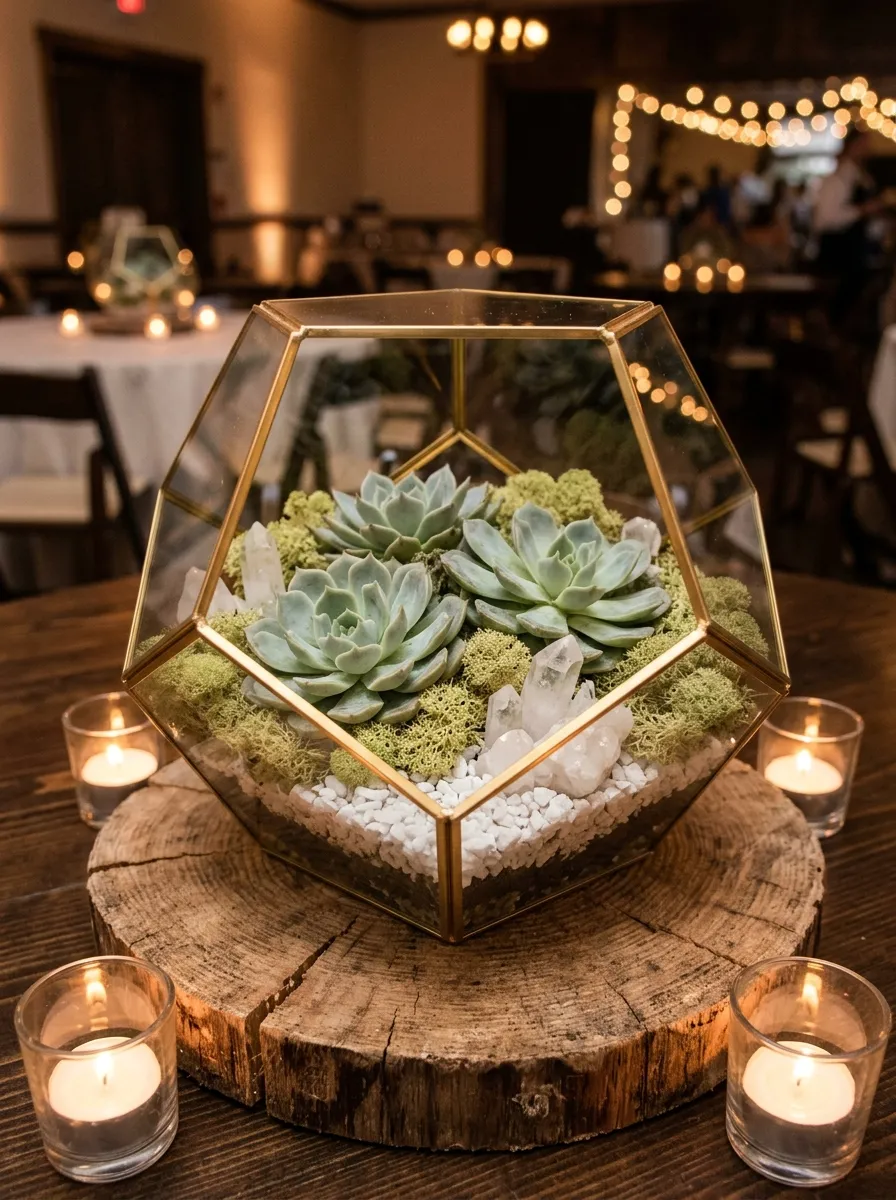
The geometric gold terrarium centerpiece pairs clean architectural glass facets with fleshy, resilient sage green succulents and natural moss foundations. A brass-framed polyhedron terrarium acts as the central protective display case, housing live echeveria succulents, preserved reindeer moss, and subtle ivory stone accents. The structured geometric metal edges contrast against the soft, organic rosettes of the plants, bridging modern urban styling with natural botanical elements. Because succulents store water within their leaves, this centerpiece remains completely stable without regular watering, making it a reliable solution for destination weddings, multi-day celebrations, or warm outdoor climates. The enclosed geometric display leaves zero risk of water spills, protecting fine table linens from moisture marks. After the wedding celebration, these terrarium displays transition effortlessly into permanent, low-maintenance home decor keepsakes.
Select a twenty-centimeter faceted glass geometric terrarium with a gold brass frame and an open side panel for plant placement. Pour a two-centimeter layer of washed white aquarium gravel across the terrarium floor to establish a stable decorative foundation. Arrange three varied echeveria succulents featuring pale sage and seafoam tones onto the gravel bed, keeping their roots bundled in moist floral paper or small concealed soil plugs. Fill the open spaces around the succulent bases with soft, preserved sage-colored reindeer moss, using wooden tweezers to tuck the moss strands cleanly against the glass panels. Add small pieces of natural white quartz crystals among the succulents to introduce light-refracting points that sparkle under venue lighting. Clean the exterior glass panels with a lint-free microfiber cloth to remove fingerprints and dust. Position the completed terrarium atop an untreated wooden slice, surrounding the geometric base with four clear glass tea light cups.
Idea 6: Distressed Wooden Trough With Lush Foliage
How to Create
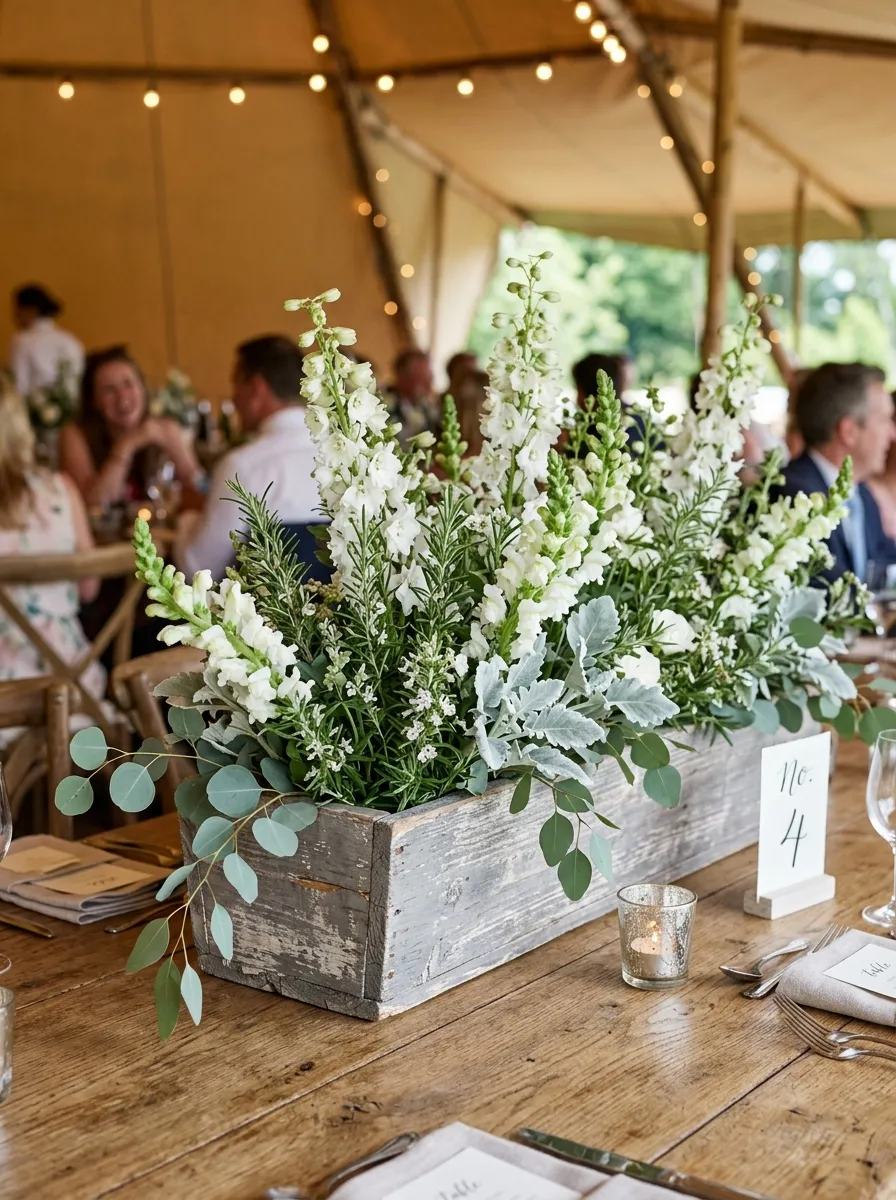
The distressed wooden trough arrangement uses a weathered, rectangular timber box to display a dense, linear arrangement of sage greenery and white wildflowers. This container style suits long banquet tables, matching the rectangular geometry of the furniture while holding a substantial volume of lush botanical textures. The rustic gray-washed wood surface mirrors the silvery tones found in sage leaves, creating a calm, monochromatic foundation. The design incorporates silver dollar eucalyptus, rosemary stems, seeded boxwood, and delicate white larkspur, building a full, garden-style display that appears to grow directly from the tabletop. The durable wooden sides hide all internal plastic liners and floral foam mechanics, allowing beginners to build full, expansive arrangements without worrying about visible construction flaws. This design provides sturdy, wind-resistant stability for outdoor tented receptions.
Source an unpolished sixty-centimeter wooden trough box lined with thick plastic sheeting, trimming the plastic edges flush with the inner rim. Cut three blocks of saturated floral foam to fit the trough cavity snugly, securing them in place with two bands of green floral tape. Begin building height by inserting tall white larkspur, snapdragons, and long olive branches vertically into the center foam line, reaching approximately thirty centimeters high. Work outward from the center, inserting dense clusters of silver dollar eucalyptus, fragrant rosemary sprigs, and broad dusty miller leaves along the perimeter, angling them over the wooden edges to soften the container lines. Fill remaining gaps with ivory spray roses and textured white scabiosa pods, ensuring a balanced distribution of color across the entire box length. Inspect all four sides of the trough to verify complete foliage coverage, misting the plants thoroughly with water, and place the finished wooden box directly on the bare wooden reception table.
Idea 7: Monochromatic Sage Velvet and White Florals
Execution Process
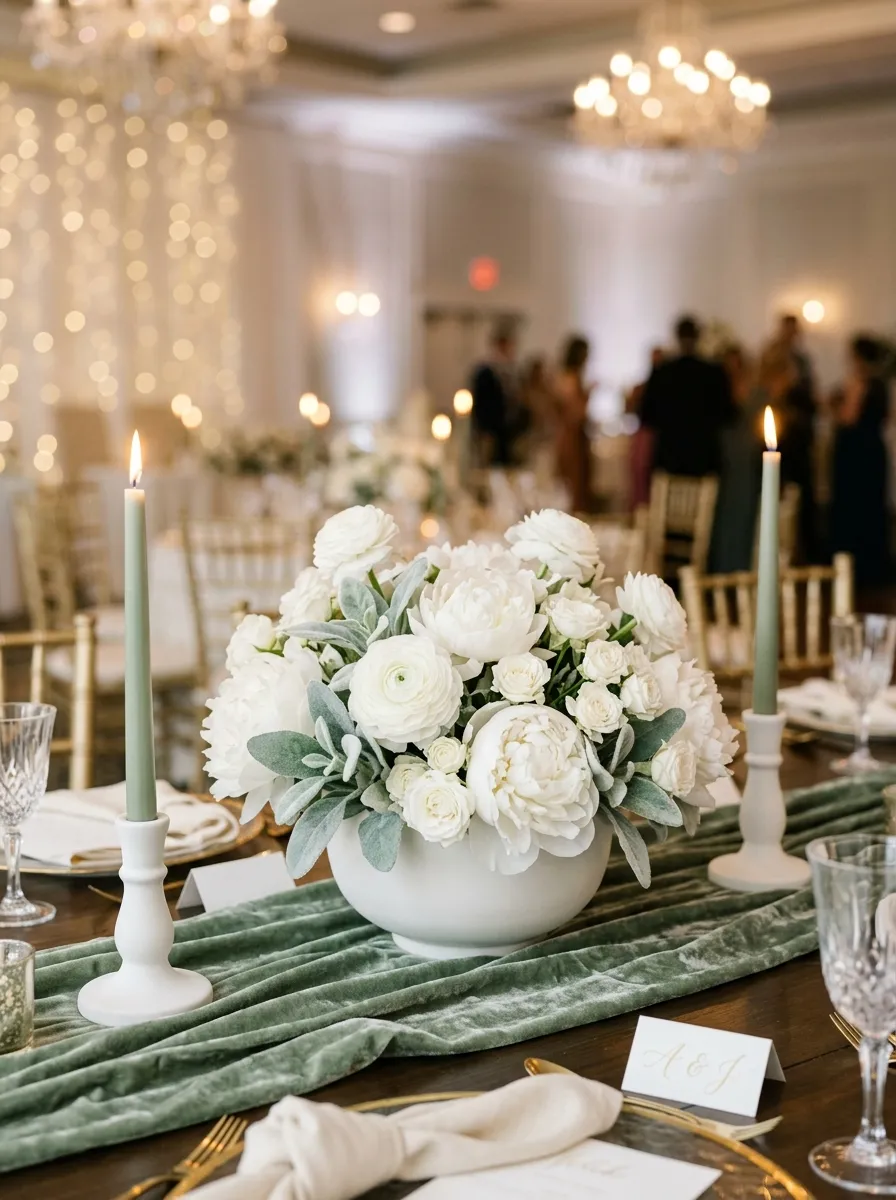
The monochromatic sage velvet and white floral centerpiece utilizes rich textile textures to elevate classic floral styling, pairing an opulent velvet fabric base with crisp white ceramic vessels. The centerpiece features a dense, tailored floral arrangement of white peonies, ranunculus, and garden roses, accented with structural sage foliage and set over a rich sage velvet table runner. The matte, light-absorbing qualities of the velvet fabric emphasize the bright, reflective petals of the ivory flowers, producing a polished, luxurious look. Keeping the foliage palette strictly focused on muted sage tones—such as silver leaf cotoneaster and lamb’s ear—ensures the display feels unified, elegant, and modern. This design works exceptionally well in ballroom settings, upscale hotel dining spaces, and evening winter weddings where tactile fabrics introduce cozy sophistication.
Lay a thirty-centimeter wide, crushed sage velvet runner down the table center, gently bunching the fabric lengthwise to create organic folds and shadows. Place a low, matte white ceramic cylinder bowl in the center of the bunched velvet runner, securing a round floral foam cage inside using floral tape. Insert three broad stems of silver-leaf lamb’s ear around the base of the ceramic bowl, allowing the soft velvety leaves to rest directly upon the matching fabric runner below. Position five large white open garden roses and seven white ranunculus stems in a tight, rounded dome formation that extends eight centimeters above the rim. Weave fine sprigs of baby blue eucalyptus and white sweet peas throughout the floral dome to create airy, delicate movement above the dense blooms. Flank the primary ceramic bowl with four tall matte white ceramic taper holders fitted with pale sage green taper candles.
Idea 8: Suspended Botanical Hoop Centerpiece
Setup Method
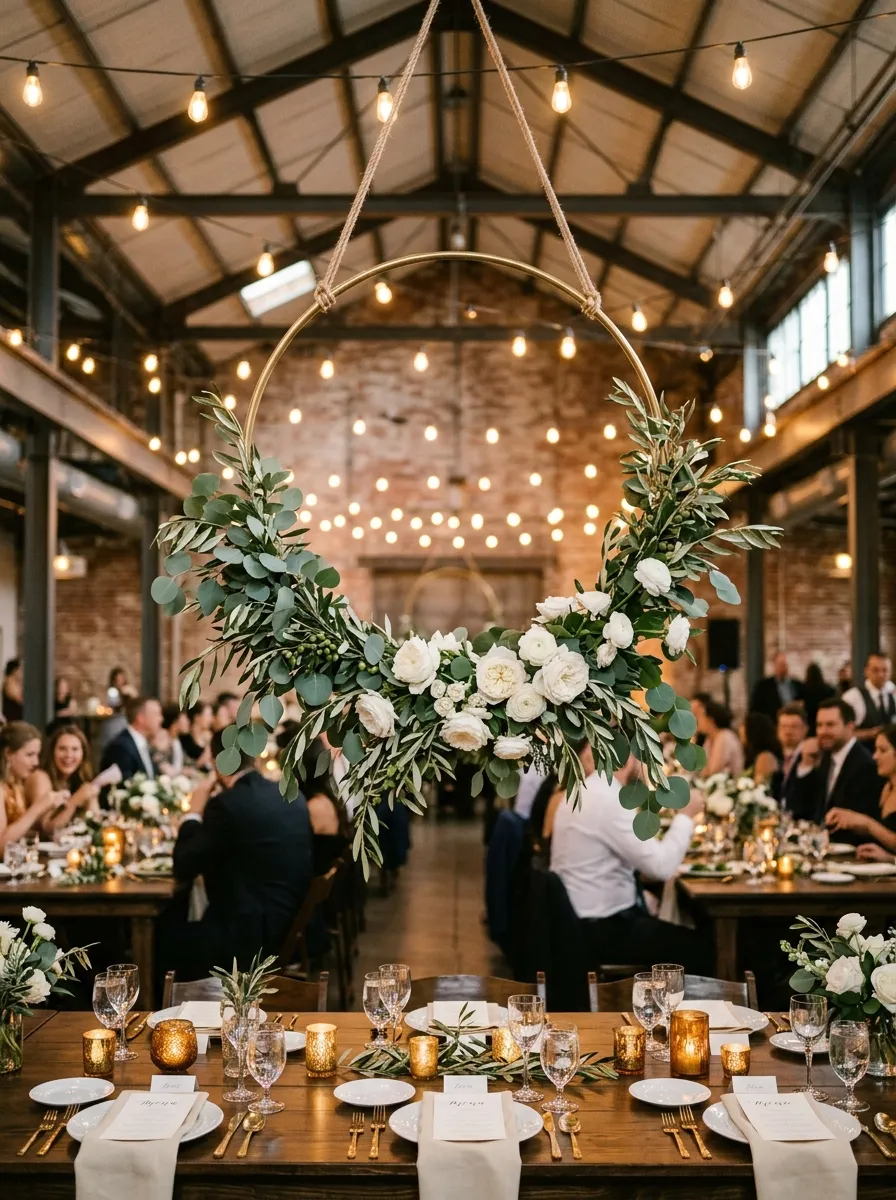
The suspended botanical hoop centerpiece concept takes floral styling vertical, displaying an open metal ring wrapped in sage foliage and floating just above the table plane. Suspended from ceiling trusses, tent framework, or an independent metal tabletop stand, this design clears dining surfaces while making an architectural visual statement. The circular metal frame is wrapped with weeping eucalyptus, olive branches, and trailing jasmine vines, framing the dining space like a suspended botanical wreath. By lifting the bulk of the greenery overhead, tables remain open for family-style food platters, multiple glassware courses, and low accent candles. This concept is particularly suited for high-ceilinged venues, outdoor pavilion tents, and modern industrial warehouses, drawing the eye upward to highlight venue architecture. The gentle movement of the suspended hoop in room air currents introduces dynamic visual energy to the celebration.
Secure a sixty-centimeter lightweight brass craft hoop to a stable ceiling anchor point or a tabletop arch frame using clear monofilament wire, adjusting the base of the ring to hover thirty-five centimeters above the table. Wrap flexible green floral bind wire around the lower half of the metal hoop to establish a secure, non-slip base for attaching plant stems. Bundle three-stem groupings of weeping eucalyptus, olive foliage, and preserved sage ferns together, securing each mini bundle to the metal ring with floral wire. Work sequentially from the top curve downward on both sides, ensuring leaf tips point naturally downward to create a balanced, cascading floral crescent. Tuck five white silk open garden roses into the thickest center portion of the foliage crescent using hot glue or stem wire, securing all blooms firmly against vibration. Beneath the floating hoop, style the tabletop with a low arrangement of brass tea lights and matching loose olive leaves to tie the levels together.
Idea 9: Woven Rattan Lantern With Dried Sage Accents
Step-by-Step Guide
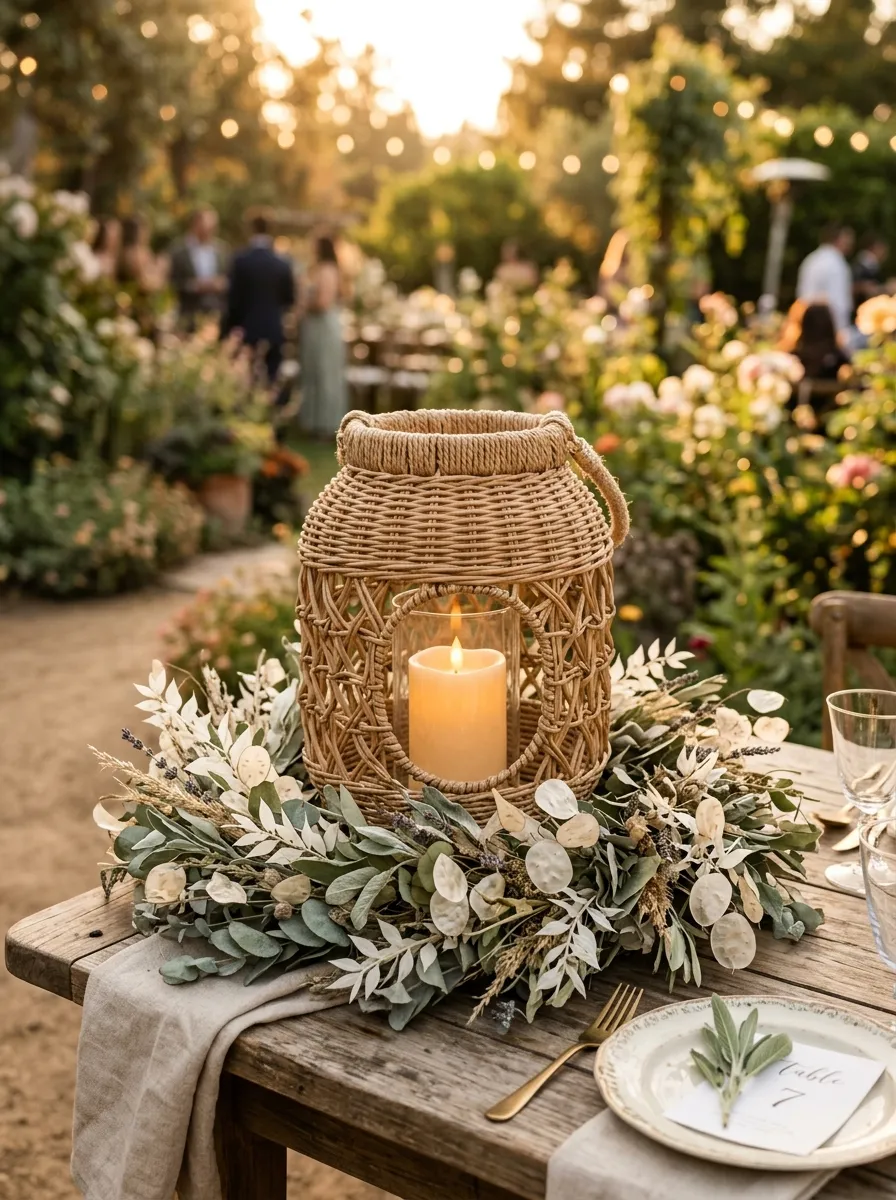
The woven rattan lantern design blends natural woven textures with dried and preserved sage foliage, creating an earthy, bohemian focal point for relaxed dining settings. A central open-weave wicker or rattan lantern houses an LED pillar candle, providing warm, safe lighting without open flame risks. Encircling the woven base is a tailored wreath made from preserved sage eucalyptus, dried silver dollar honesty pods, bunny tails, and bleach-white ruscus. The neutral honey tones of the woven wicker pair naturally with the matte, desaturated green leaves, introducing a rustic, tactile element to table settings. Because this centerpiece uses preserved and dried materials, it can be assembled weeks ahead of the wedding date, eliminating day-of floral assembly stress. This design fits coastal venues, garden courtyards, and relaxed greenhouse spaces, combining functional illumination with long-lasting botanical textures.
Center a thirty-centimeter tall woven natural rattan lantern on the dining table, placing an indoor-outdoor battery-operated LED pillar candle inside with an automated timer function. Take a twenty-five-centimeter circular grapevine wreath form, laying it flat on your work surface to serve as the lantern collar. Cut dried silver dollar eucalyptus, bleached Italian ruscus, and preserved sage-green spiral eucalyptus into fifteen-centimeter stems. Insert the woody ends of the dried stems into the interwoven grapevine branches, working clockwise around the circular frame until the wood is fully covered. Weave small clusters of natural dried lagurus bunny tails and white strawflowers into the foliage ring using hot craft glue to secure delicate components. Carefully slide the finished dried botanical wreath over the top of the rattan lantern, letting it rest around the base against the table plane, and verify that the candle remains easily accessible through the lantern door.
Idea 10: Mirrored Glass Box With Floating Sage Foliage
How to Create
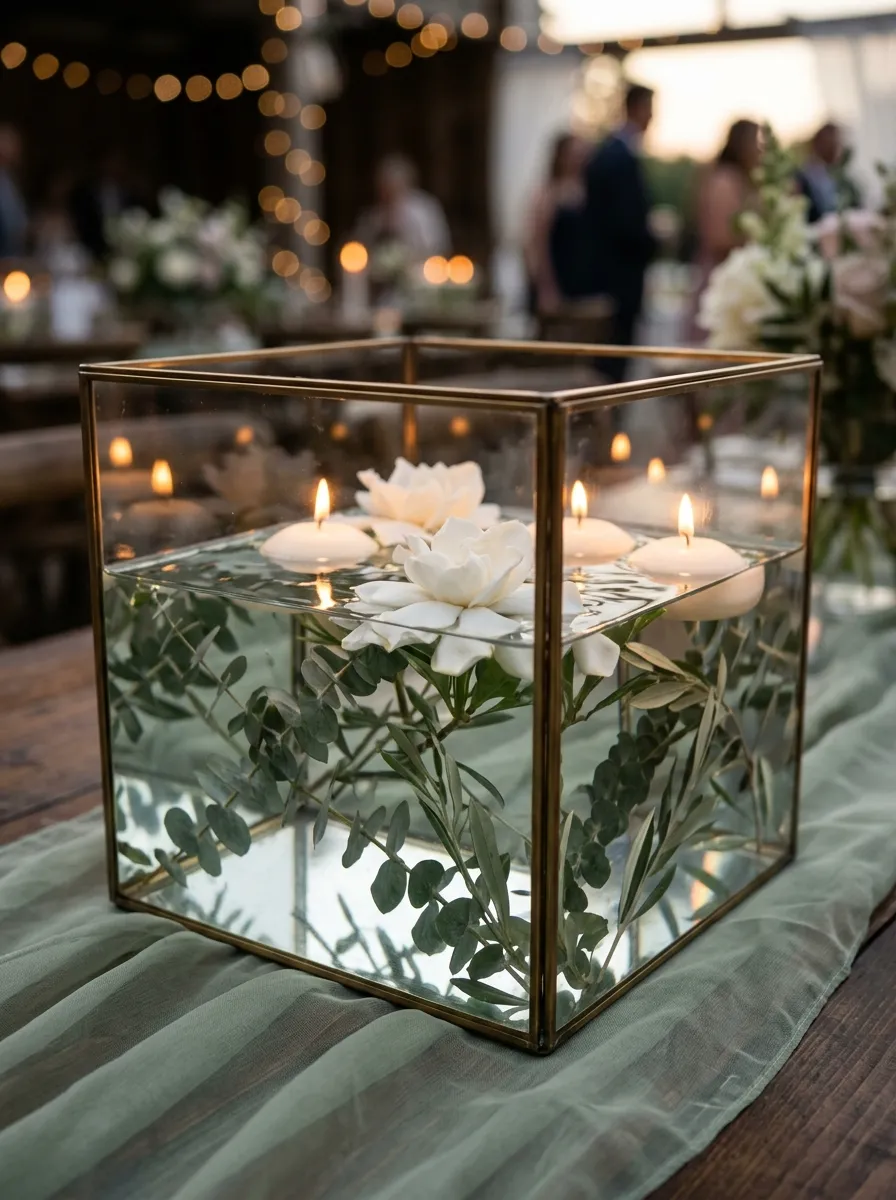
The mirrored glass box centerpiece uses reflective surfaces and clean, modern lines to display floating botanical elements within a sleek glass structure. The design centers on an open-topped, antique mirrored or clear glass vitrine box filled with water, floating ivory gardenia blooms, and submerged sage greenery stems. The reflective mirrored base doubles the visual volume of the leaves and ambient light, casting bright reflections across table settings without requiring bulky arrangements. Submerged stems of spiral eucalyptus and olive leaves showcase their detailed vein structures and silvery coatings through the clear water, giving traditional floral design an artistic twist. This concept works well in contemporary gallery spaces, modern hotel ballrooms, and chic evening venues where clean architectural geometry takes precedence. The enclosed, low-profile box keeps water secure while maintaining unobstructed conversational sightlines across the table.
Prepare a twenty-centimeter square, watertight glass vitrine box featuring a clean brass or antique pewter metal frame, cleaning the glass panels with isopropyl alcohol to remove spots. Pour room-temperature distilled water into the box until it reaches five centimeters below the upper metal rim, adding two drops of clear floral food to preserve clarity. Cut stems of broad silver dollar eucalyptus and olive branch, weighting the cut ends with small lead floral anchors before lowering them to the bottom of the water chamber. Float three large, open ivory gardenia or camellia blooms on the water’s surface, trimming their stems flush with the base of the flower heads so they drift freely. Position four floating white wax disc candles between the blooms, taking care to keep the wicks dry during setup. Set the glass box in the center of the reception table atop a sheer sage organza overlay, lighting the floating wicks shortly before guests enter the space.
Common Beginner Mistakes and How to Avoid Them
A frequent mistake beginners make when creating sage green centerpieces is using weak foliage varieties that wilt quickly without water. Common field sage and culinary herbs soften and droop within hours of being cut, leaving arrangements looking limp before the reception even begins. To prevent this, rely strictly on hardy varieties like silver dollar eucalyptus, seeded eucalyptus, olive branch, or preserved dusty miller, which hold their structure without water for over twelve hours. Another common error is packing containers too tightly with dark green filler, which drowns out the soft, silvery quality of sage and creates heavy, dark focal points. Keep arrangements light and balanced by incorporating pale gray-green tones and leaving open space between branches. In addition, decorators often make centerpieces too tall, blocking the view across the table and disrupting conversation among seated guests. Keep low arrangements under thirty centimeters tall, or elevate tall designs above sixty centimeters on narrow stands so the visual field remains clear. Finally, test all vessels for water leaks well before the wedding to avoid ruined linens and water damage on event day.
Practical Tips for Better Results
Refining your DIY centerpieces requires disciplined flower processing and sound mechanical assembly. Always strip foliage from the bottom five centimeters of every stem to prevent leaves from rotting in water reservoirs, which creates unpleasant odors and clouds the water. When working with floral foam, let the bricks absorb water naturally by floating them on the surface of a bucket rather than forcing them down, which traps air pockets inside and leaves stems without water. Use the natural curve of woody olive and eucalyptus branches to guide the shape of your arrangement, placing curved stems along the edges to create an effortless, organic drape that softens container rims. To keep silver dollar leaves looking fresh and powdery, avoid spraying them with oily leaf shine products, which wash away their natural matte coating and leave them unnaturally glossy. Finally, assemble your arrangements on a rotating turntable or lazy Susan, spinning the centerpiece regularly during construction to verify that the design looks balanced, full, and dimensional from every seat around the table.
Styling, Presentation, or Organization Ideas
Thoughtful centerpiece styling extends across the entire tablescape, uniting your arrangements with the surrounding dinnerware, linens, and paper goods. Layer centerpieces over textured fabric runners—such as crinkled cotton gauze, raw-edge silk ribbons, or rich sage velvet—to introduce depth and soften hard banquet tables. When decorating long banquet tables, use a running tablescape approach: intersperse main floral bowls with smaller satellite accents, including clear bud vases, brass taper holders, and low votive candles to create a dynamic, glowing path down the table. On round tables, ground your centerpieces on circular wooden slices, round marble platters, or vintage brass trays to define the arrangement and catch any accidental water condensation. Coordinate paper details by pairing sage centerpieces with deckle-edge menu cards, soft green place cards with white calligraphy, and matte gold flatware. Surrounding your floral focal points with complementary textures—such as raw earthenware plates, natural wood chargers, and soft linen napkins—immerses guests in a cohesive, calming dining atmosphere.
Budget or Time Planning
Constructing your own wedding centerpieces is an economical choice that delivers elevated results when supported by a realistic preparation timeline and organized budgeting. Sourcing your greenery from wholesale flower markets or online bulk distributors can reduce botanical costs by sixty percent compared to full-service retail floristry. Focus your floral spending strategically: dedicate eighty percent of your botanical budget to hardy, high-volume foliage like eucalyptus, and twenty percent to primary focal flowers like garden roses to maximize visual coverage affordably. Plan your schedule carefully in the days leading up to the celebration: source and condition all fresh stems seventy-two hours prior to the event, construct your foam-based foliage arrangements forty-eight hours ahead, and add delicate cut flowers twenty-four hours before the reception. Store finished centerpieces in a cool, air-conditioned room away from direct sunlight, misting the leaves periodically with water. On the wedding morning, assign an installation team to position vessels, fill water basins, arrange candles, and light wicks thirty minutes before doors open, ensuring a smooth, stress-free setup.
Creative Expansion and Advanced Inspiration
Once you master these ten core sage green centerpiece concepts, you can easily adapt the aesthetic to create unified, site-specific installations throughout your wedding venue. Carry the sage theme beyond the dining tables by using matching foliage bundles to decorate welcome easels, guest book tables, and dessert displays. You can also incorporate subtle fruit accents, tucking pale green seckel pears, fresh white figs, or small clusters of green grapes among eucalyptus garlands to reference classical still-life paintings. Advanced crafters can introduce overhead hanging installations, suspending wide wooden ladders or metal mesh frames draped with weeping eucalyptus and warm Edison bulbs directly above the bridal party table. Consider mixing dried and fresh elements together, blending bleached white ruscus and dried palm fans with fresh sage foliage to create an elevated, multi-dimensional bohemian aesthetic. Adapting these foundational techniques allows you to build an expressive, custom wedding design that celebrates natural botanicals through timeless handmade craftsmanship.