Driftwood wedding centerpieces offer an organic, sculptural elegance that perfectly captures coastal sophistication, modern bohemian aesthetics, and rustic woodland charm. Weathered naturally by salt water, sun exposure, and river currents, driftwood provides unique curvilinear shapes and rich textures that elevate reception tablescapes beyond standard floral arrangements. This comprehensive tutorial details ten unique driftwood centerpiece ideas, guiding decorators through concepts ranging from cascading air plant installations and floral-nested branch runners to geometric brass lantern pairings and illuminated glass hurricane displays. Readers will learn the essential mechanical techniques of wood curation, surface sterilization, stability balancing, floral tube integration, and fire-safe candle styling. Incorporating driftwood allows wedding couples to craft bespoke, artisanal reception decor while reducing reliance on mass-produced containers and high-cost cut florals. Beyond providing immediate visual interest across banquet dining rooms, mastering these structural assembly methods develops practical styling expertise applicable to seasonal home decor, outdoor entertaining, and permanent residential vignettes. By working with accessible supplies such as floral wire, museum putty, clean glass sleeves, and living botanicals, makers of all skill levels can produce high-impact, professional-grade tablescapes. The subsequent sections outline essential preparation workflows, materials checklists, ten two-paragraph project breakdowns, and long-term project planning strategies.
Why This Idea Is Trending or Useful
Sculptural driftwood tablescapes continue to lead modern event decor discussions and Pinterest ideas because they supply exceptional architectural character, sustainable sourcing benefits, and durable physical presence. Contemporary couples increasingly gravitate toward minimalist style environments, where organic timber curves soften industrial brick spaces, beach pavilions, or formal garden tents without generating visual clutter. The functional strength of salvaged wood lies in its longevity: unlike delicate imported flowers that droop in high heat or dry indoor air, cured driftwood branches remain completely stable throughout lengthy celebrations. As a rewarding DIY creative project, foraging or curating salvaged branches enables couples to construct distinct table elements weeks ahead of time, dramatically reducing wedding morning stress. Because the natural branch hollows, grooves, and forks function as built-in cradles for candles and floral tubes, this approach serves as an exceptionally beginner friendly entry point into three-dimensional tablescape design. Utilizing reclaimed timber branches also generates sensible budget ideas, reducing floral volume requirements by substituting expensive blooms with sculptural, textured wood. Furthermore, these sturdy finished centerpieces easily transition into permanent home decor, serving as handsome mantelpiece features, dining runners, or patio accents that preserve wedding memories for decades.
Materials and Preparation
Proper structural preparation and disciplined material sourcing form the foundation for building safe, durable, and balanced driftwood wedding centerpieces. The primary structural components rely on authentic, cured hardwood driftwood branches sourced from coastal shorelines, riverbanks, or reputable craft suppliers, ensuring the wood is dense, dry, and free of internal decay. Pair these timber structures with functional installation vessels, including rubber-capped water tubes, clear glass hurricane chimneys, brass taper cups, heavy floral frogs, and low-profile ceramic dishes. Essential assembly tools include heavy-duty pruning shears, dark green floral bind wire, clear museum wax putty, hot glue sticks, eighty-grit sandpaper, and a stiff wire cleaning brush. When incorporating botanical elements, select durable greenery such as silver dollar eucalyptus, Italian ruscus, and sheet moss, alongside sturdy flowers like white garden roses, ranunculus, and dried seed pods. Fire safety remains a paramount consideration when styling timber branches near open flames; always utilize dripless beeswax candles alongside glass hurricane sleeves that extend at least two inches above the burning wick. Preparation begins by scrubbing gathered wood thoroughly with warm water, drying the branches in sunlight for seven days, and spraying the timber with clear matte wood sealant to encapsulate all natural grain.
1. Cascading Succulent and Air Plant Coastal Branch
Step-by-Step Guide
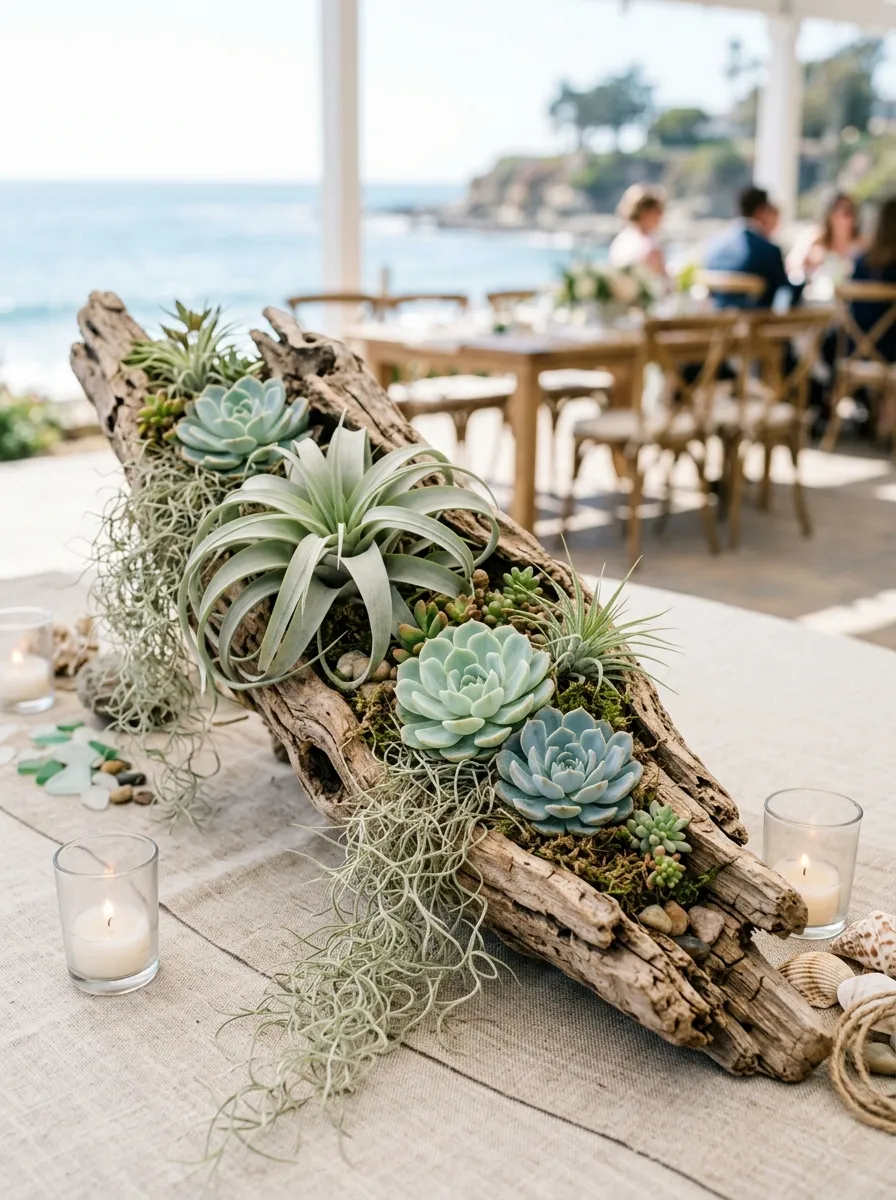
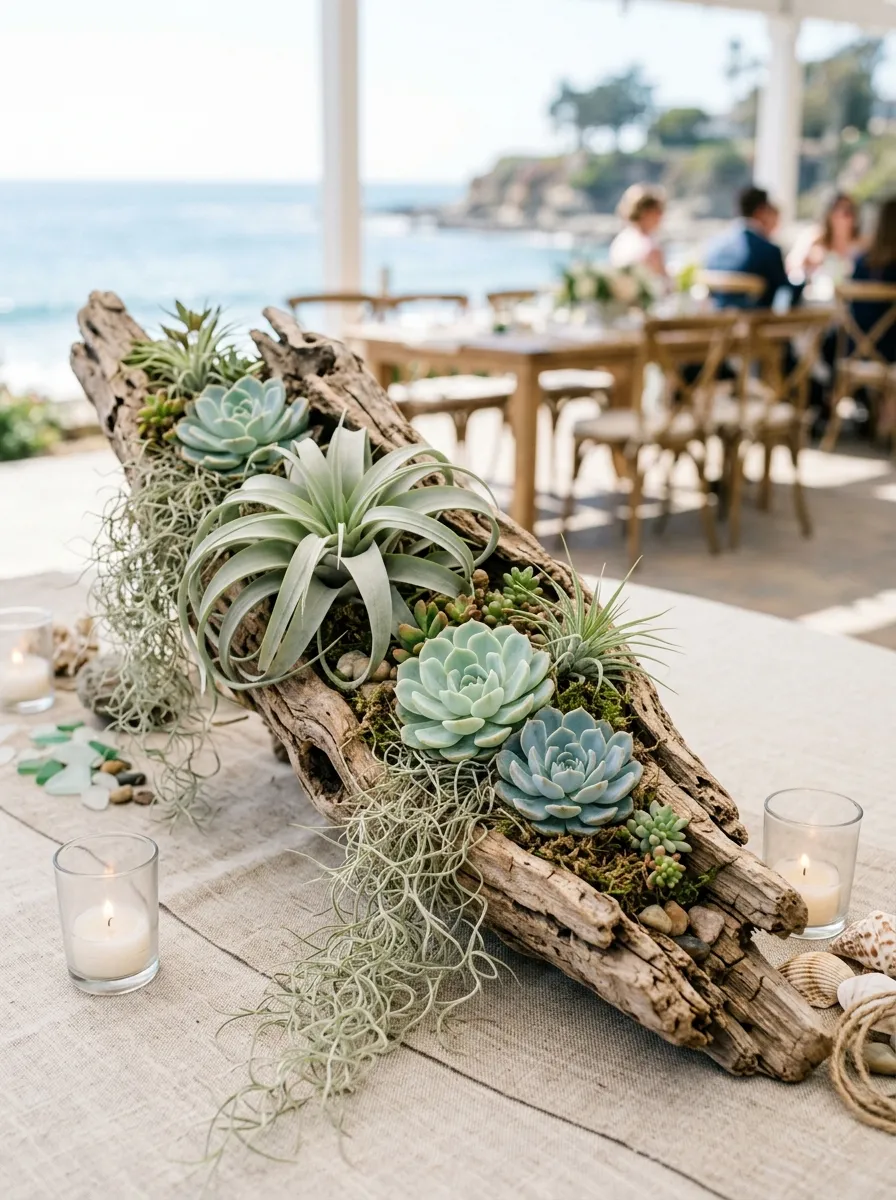
The cascading succulent and air plant branch design merges living desert botanicals with bleached coastal timber to produce a clean, contemporary aesthetic. This centerpiece features an elongated, bleached hardwood driftwood branch characterized by deep weather-worn fissures, twisting wood fibers, and smooth rounded edges. Tucked within the natural hollows and crevices of the branch are various living tillandsia air plants, pale mint echeveria rosettes, and trailing Spanish moss. The silvery-green, dusty tones of the living succulents harmonize effortlessly with the pale driftwood grain, creating a light, modern seaside palette that avoids clichéd nautical accessories. The low horizontal profile hugs the table surface, preserving open sightlines across the dining room while offering dynamic textural contrast from every angle. This self-sustaining botanical arrangement remains pristine without requiring active water reservoirs, making it exceptionally reliable for warm outdoor summer receptions, oceanfront beach weddings, and sunlit greenhouse celebrations.
To construct this living succulent centerpiece, select a flat-bottomed piece of cured coastal driftwood measuring twenty to thirty inches in length, ensuring it rests stably without wobbling. Use a stiff wire brush to clean away loose bark from the internal crevices, wiping the timber clean with a damp microfiber cloth. Position three large xerographica air plants within the widest natural forks of the branch, securing their woody base stems discreetly with clear floral bind wire wrapped around the wood. Nestle smaller pale green echeveria rosettes into the deeper crevices, inserting a dab of non-toxic floral adhesive beneath the root stems to anchor each succulent securely. Drape fine strands of silvery-gray Spanish moss across the wood surface between the succulent groupings, concealing all wire attachment points while mimicking natural maritime growth. Position clear glass votive holders containing eight-hour white tea lights along the table runner flanking the branch, keeping the glass rims three inches away from dry botanicals to ensure safe illumination.
2. Gilded Taper Candlestick and Sculptural Timber Pairing

Execution Process
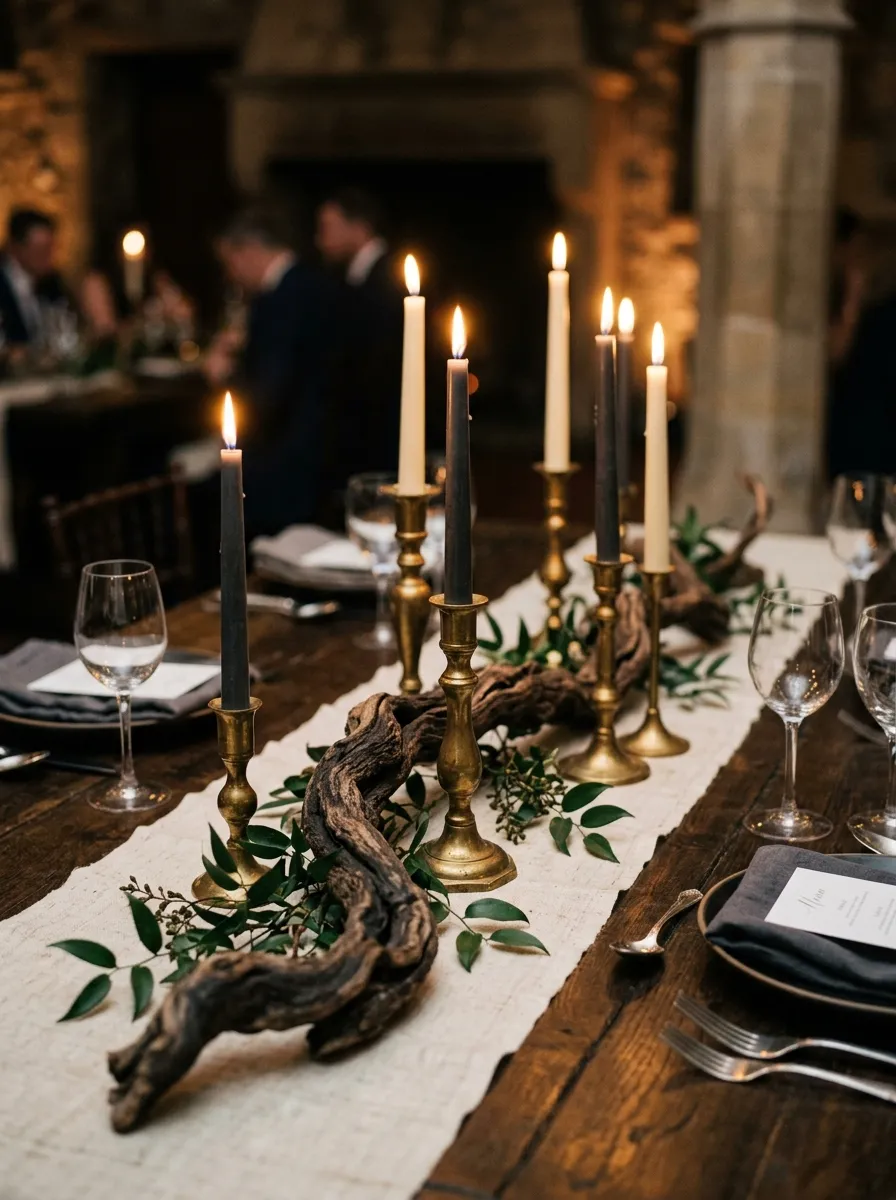
Pairing vintage-style metallic brass candlesticks with the rough, organic contours of dark river driftwood creates an elevated, high-contrast tablescape that balances raw nature with refined formality. This design positions an authentic, twisted driftwood branch down the center of an unbleached raw-silk table runner, interlaced with slender solid brass candlestick holders of varying heights. The deep, weathered charcoal and umber tones of river timber contrast strikingly with the warm polished sheen of the brass, casting glowing metallic reflections onto the timber grooves. Incorporating slender ivory or charcoal-gray beeswax taper candles introduces crisp vertical architectural lines that lead the eye upward, complementing the horizontal flow of the wood. The juxtaposition of refined hardware against rugged timber evokes an upscale woodland lodge aesthetic, making this design exceptionally suitable for autumn vineyard celebrations, historic stone mill receptions, and mountain resort dining rooms.
Begin by selecting an expressive, dark-toned driftwood branch measuring three feet in length, verifying that the central stem bridges the table runner cleanly without tilting. Position five solid brass taper candle holders of graduated heights—ranging from four to twelve inches—along both sides of the wood, tucking the brass bases closely into the curves of the branch. Place dripless beeswax taper candles firmly into each brass cup, applying a pea-sized dot of museum wax putty inside each socket to ensure the tapers stand perfectly plumb. Weave delicate sprigs of preserved dark-green Italian ruscus and bronze copper beech leaves through the negative spaces beneath the lifted curves of the branch, allowing the leaf tips to trail softly onto the table runner. Light the taper candles twenty minutes prior to guest seating, ensuring ambient indoor airflow remains minimal to eliminate wax dripping across the natural wood surfaces.
3. White Garden Rose and Ranunculus Floral Nesting Runner
How to Create
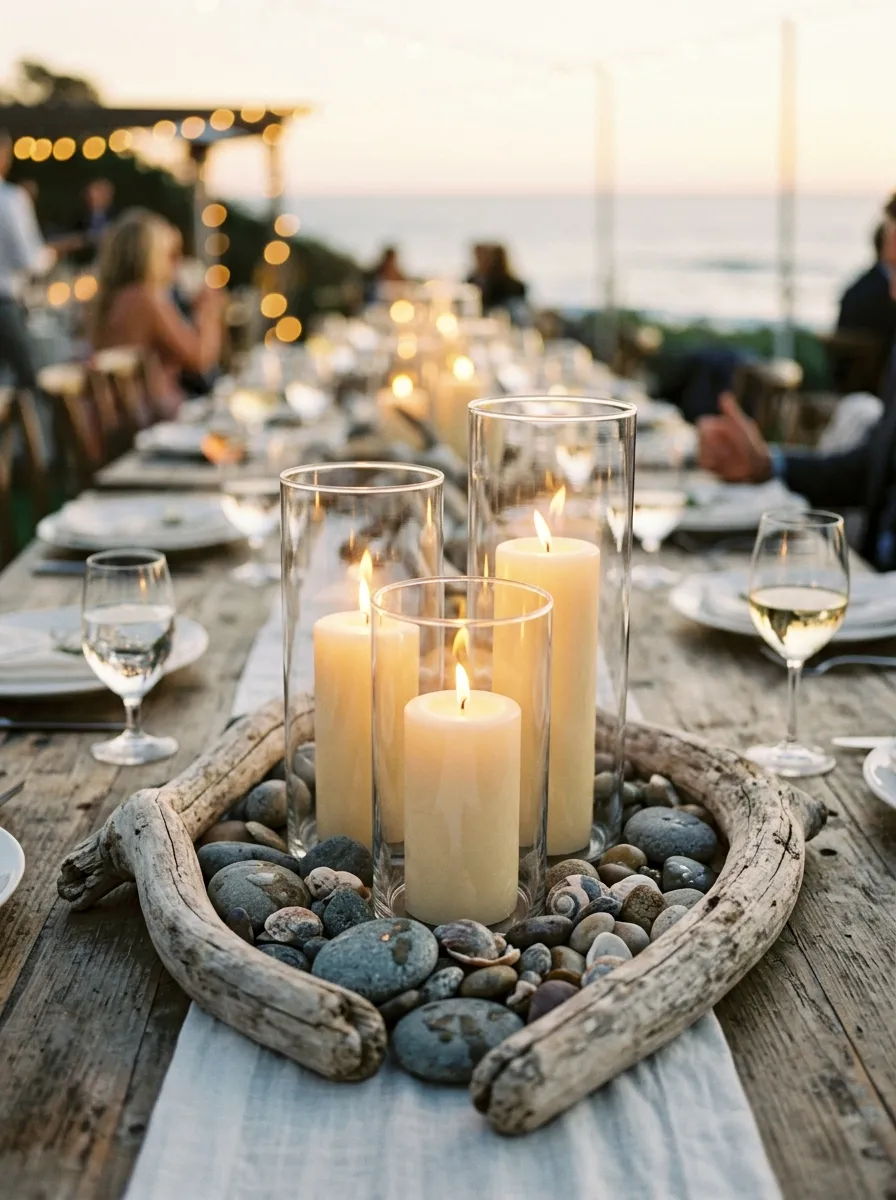
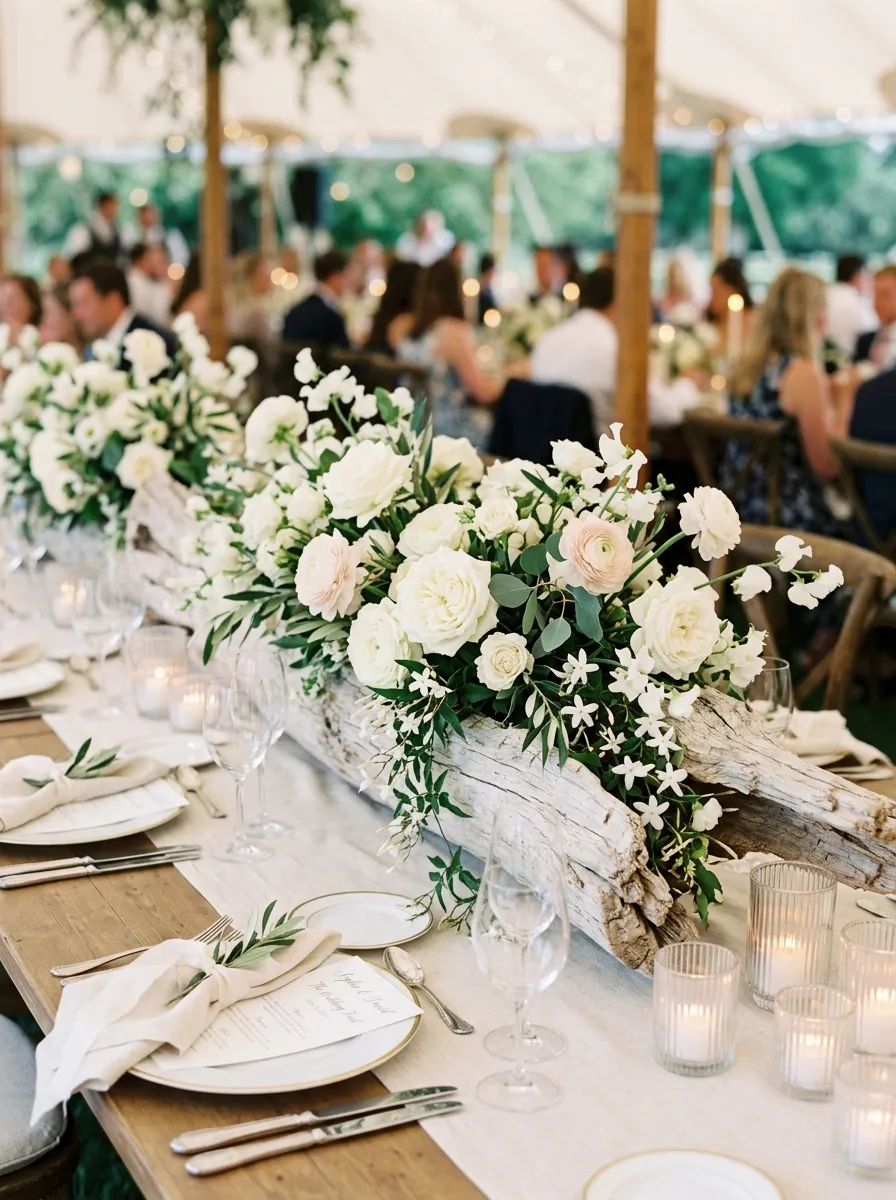
Nesting fresh romantic garden florals directly into the hollows of a textured driftwood log transforms weathered timber into an abundant, living floral arrangement. This concept features a wide, hollowed-out driftwood trunk piece or linear branch cluster that serves as a sculptural container for premium white garden roses, ruffled blush ranunculus, and delicate white sweet peas. The delicate petals and lush, layered blooms contrast dramatically against the rough, fissured bark and bleached fibers of the wood, creating a fine-art botanical centerpiece. The low, elongated structure flows smoothly down rectangular banquet tables, functioning as a continuous floral runner that keeps dining tables spacious and uncluttered. The combination of soft romantic pastels and rugged timber creates an organic, garden-inspired tablescape that suits formal outdoor estate weddings, vineyard banquets, and modern bohemian receptions.
To build this floral-nested centerpiece, source an aged driftwood branch featuring natural internal cavities or depressions, checking that the piece sits completely level on the tabletop. Conceal small, rubber-capped water tubes inside the deeper crevices of the wood, securing the plastic reservoirs to the timber using dark green floral wire or floral clay. Trim stems of fresh white garden roses, quicksand roses, and blush ranunculus at sharp forty-five-degree angles, sliding the conditioned cut ends directly into the concealed water tubes. Intersperse trailing stems of maidenhair fern, jasmine vine, and silver dollar eucalyptus around the blooms, tucking the foliage around the flower stems to completely hide the water tubes from guest view. Nestle several ribbed clear glass votives containing unscented white tealights into the table linen flanking the wooden runner, creating an intimate, illuminated frame for the delicate petals.
4. Glass Hurricane and Pillar Candle Timber Enclosure
Step-by-Step Guide
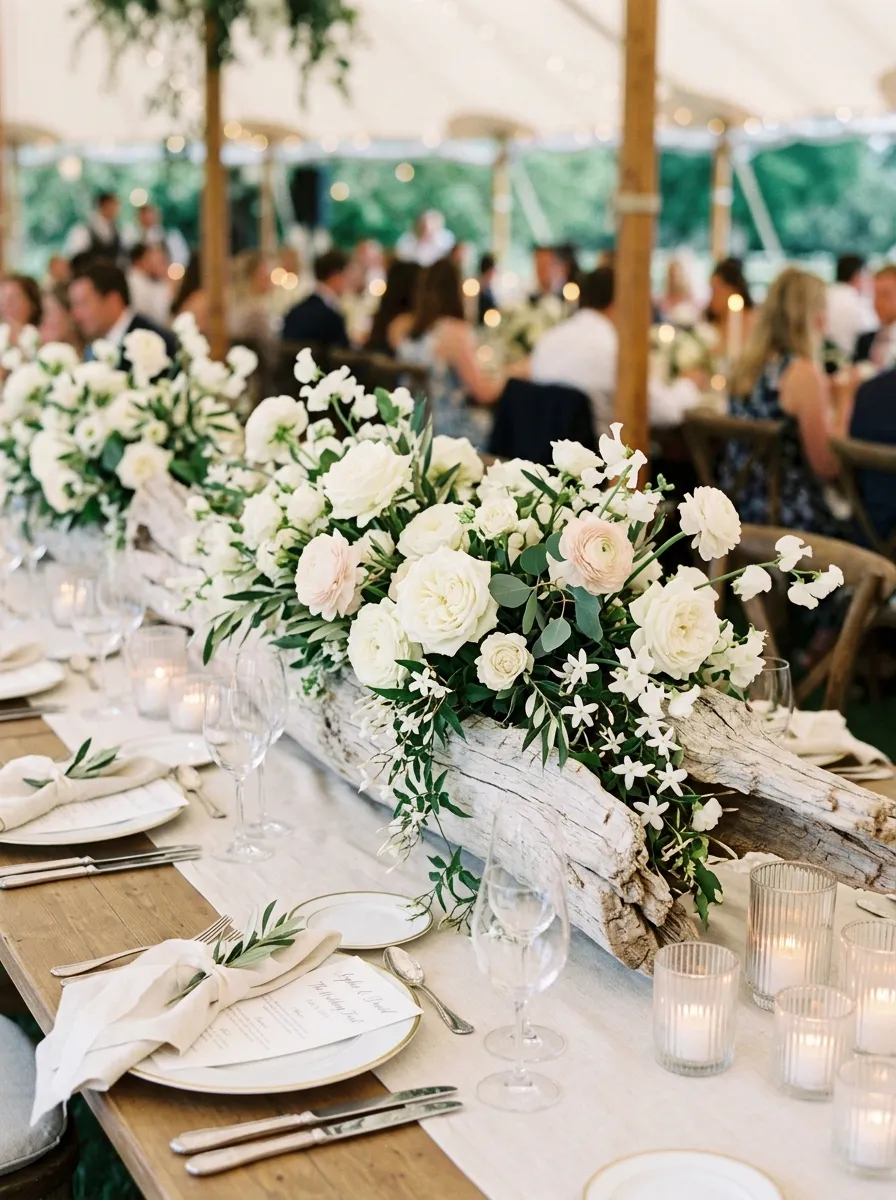
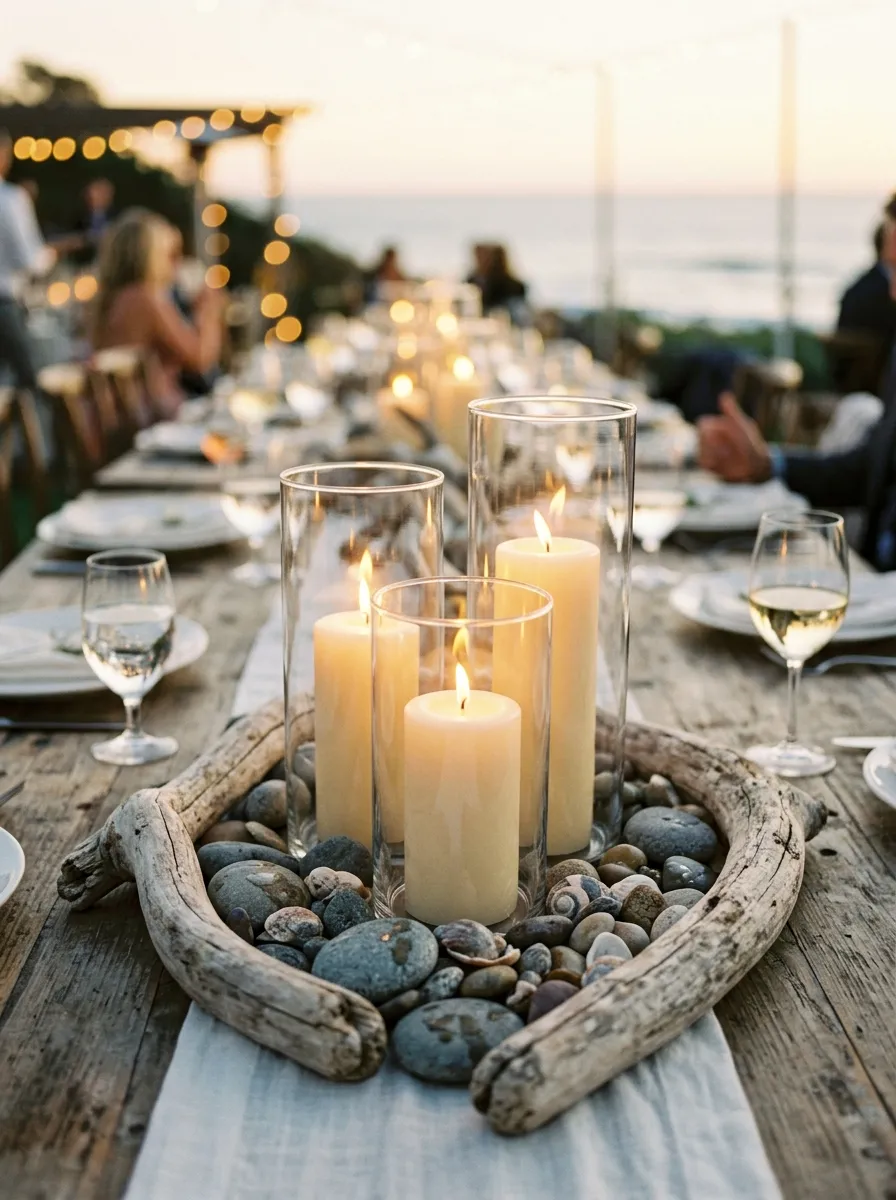
Surrounding tall glass hurricane cylinders with curved driftwood branches creates an illuminated, draft-proof centerpiece that introduces radiant height variation down long tables. This design centers around three graduated glass hurricane sleeves encasing smooth ivory pillar candles, cradled tightly within the protective, embracing curves of weather-beaten coastal driftwood. The clear glass cylinders serve a dual purpose: they amplify the warm golden glow of the candlelight across the table while shielding the flames from outdoor winds and moving venue air currents. The natural gray and bone-white timber hugs the bases of the glass vessels, grounding the reflective glass and establishing a seamless connection between polished tableware and raw coastal elements. This sturdy, architectural design provides exceptional table balance, ensuring the centerpiece remains safe from accidental table bumps on active banquet tables.
To assemble this hurricane-enclosed centerpiece, select two curved driftwood branches that curve naturally inward, forming an open circular or oval cradle when laid together. Place three graduated glass hurricane cylinders measuring six, eight, and ten inches tall within the central space formed by the joined branches. Anchor a three-inch-wide ivory pillar candle into the bottom of each glass cylinder using a dot of clear museum wax putty, ensuring each candle stands straight. Adjust the driftwood branches around the glass walls so the wood rests firmly against the glass without applying excessive structural pressure. Scatter a dense ring of cleaned natural river stones, smooth beach pebbles, and dried pods around the bottom edges of the glass sleeves to lock the cylinders firmly in place. Light the pillar candles fifteen minutes before reception doors open, verifying that wicks are trimmed to one-quarter inch.
5. Architectural Aerial Driftwood Branch Chandelier
Execution Process
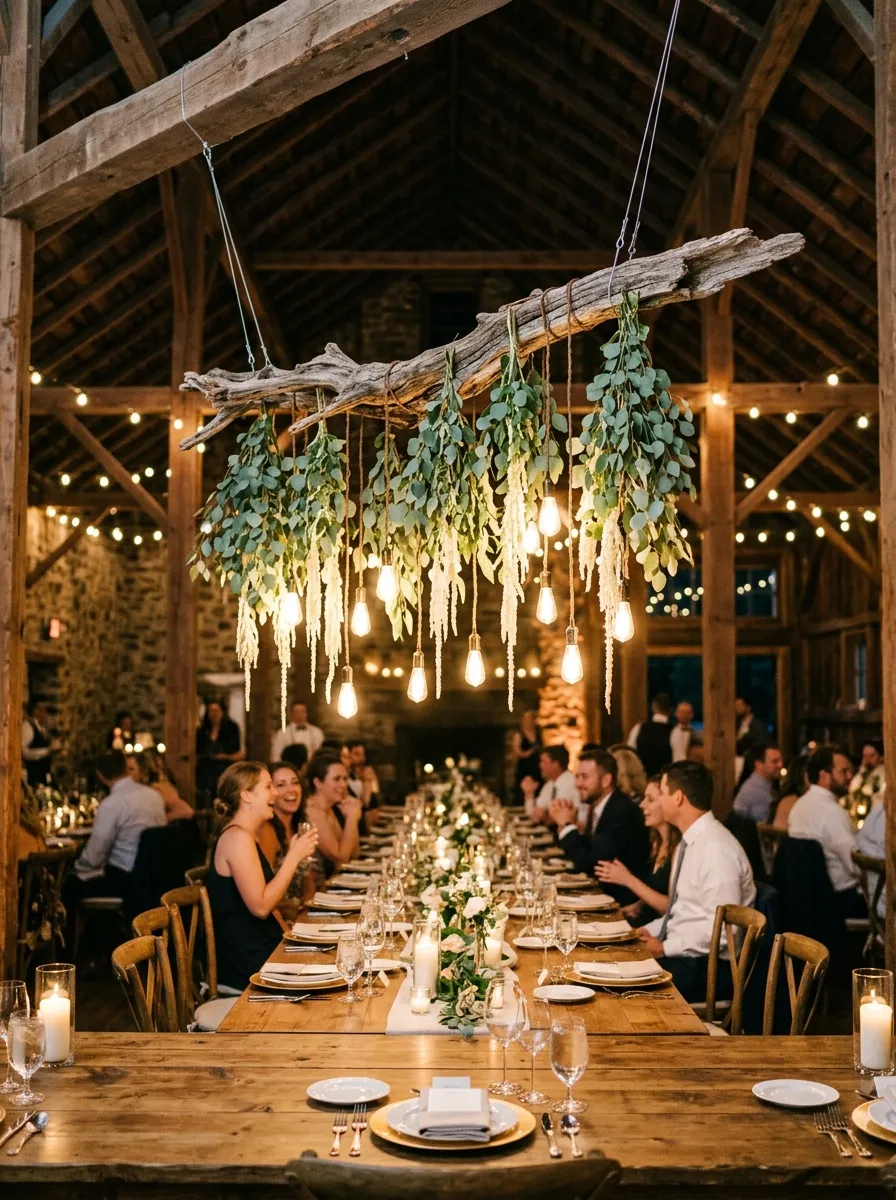
Suspending sculptural driftwood branches horizontally overhead introduces breathtaking architectural scale, dramatic vertical volume, and clear dining surfaces across wedding banquet tables. This aerial installation elevates a massive, five-foot weathered driftwood limb horizontally above the dining table using high-strength steel aircraft cables anchored to structural ceiling beams. Cascading downward from the suspended timber are delicate trails of weeping eucalyptus, hanging amaranthus, string smilax, and warm-white Edison-bulb micro pendants. By raising the primary centerpiece elements into the overhead visual space, the dining table surface remains completely open for dinner plates, wine carafes, and intimate conversation. The natural twist and grain of the elevated wood catches ambient lighting, creating an organic focal point that anchors the room’s architecture. This design suits high-ceilinged industrial venues, rustic barns, and open-air marquee tents.
Begin by selecting an authentic, structurally sound hardwood driftwood branch measuring four to six feet in length, testing its tensile strength to verify it contains no internal rot. Secure two heavy-duty steel eye bolts into the top edge of the branch at balanced third-points, threading high-strength, clear-coated stainless steel aircraft cables through the eyelets. Suspend the branch horizontally from verified venue overhead rigging points, using a bubble level to ensure the limb hangs parallel to the banquet table below at a height of seven feet. Wrap a continuous twenty-foot strand of warm-white micro LED wire along the contours of the suspended wood, concealing the battery pack or power cord along the top spine. Weave long, cascading branches of fresh weeping eucalyptus and hanging white amaranthus around the suspended limb, securing the stems with dark floral bind wire so the foliage drapes gracefully downward toward the dining area.
6. Minimalist Stoneware and Singular Driftwood Ikebana
How to Create
Rooted in the minimalist principles of Japanese Ikebana, this centerpiece celebrates negative space, asymmetric lines, and the refined beauty of singular organic forms. This design mounts an upright, sculptural driftwood root or branch vertically inside a low, unglazed matte-black or stone-white ceramic dish. Emerging alongside the sweeping curves of the wood are two or three precisely positioned botanical stems, such as an exotic anthurium bloom, an arched king protea, or a delicate branch of blooming quince. The quiet restraint of the composition directs attention to the natural twist of the wood, the texture of the ceramic vessel, and the sculptural silhouette of the solitary flower. This refined, contemporary concept integrates seamlessly into gallery-style wedding venues, modern loft spaces, and minimalist outdoor garden dinners, providing an understated artistic statement that avoids visual excess.
To construct this minimalist Ikebana centerpiece, procure a heavy, shallow ceramic bowl measuring eight to ten inches in diameter with an unglazed, textured matte finish. Secure a heavy lead pin frog into the bottom center of the ceramic dish using a dense ring of waterproof floral clay pressed firmly against the dry ceramic basin. Press the flat cut base of an upright, twisting driftwood branch onto the metal pins, ensuring the wood balances vertically without tipping. Pour room-temperature distilled water into the dish until the pin frog is submerged beneath an inch of water. Trim a single long-stemmed anthurium or calla lily at a sharp angle, pressing the stem into the pin frog beside the driftwood so the flower echoes the upward curve of the timber. Scatter several smooth, flat slate stones across the surface of the pin frog to conceal the metal mechanics, creating a calm, meditative tablescape.
7. Geometric Gold Terrarium and Weathered Timber Cluster
Step-by-Step Guide
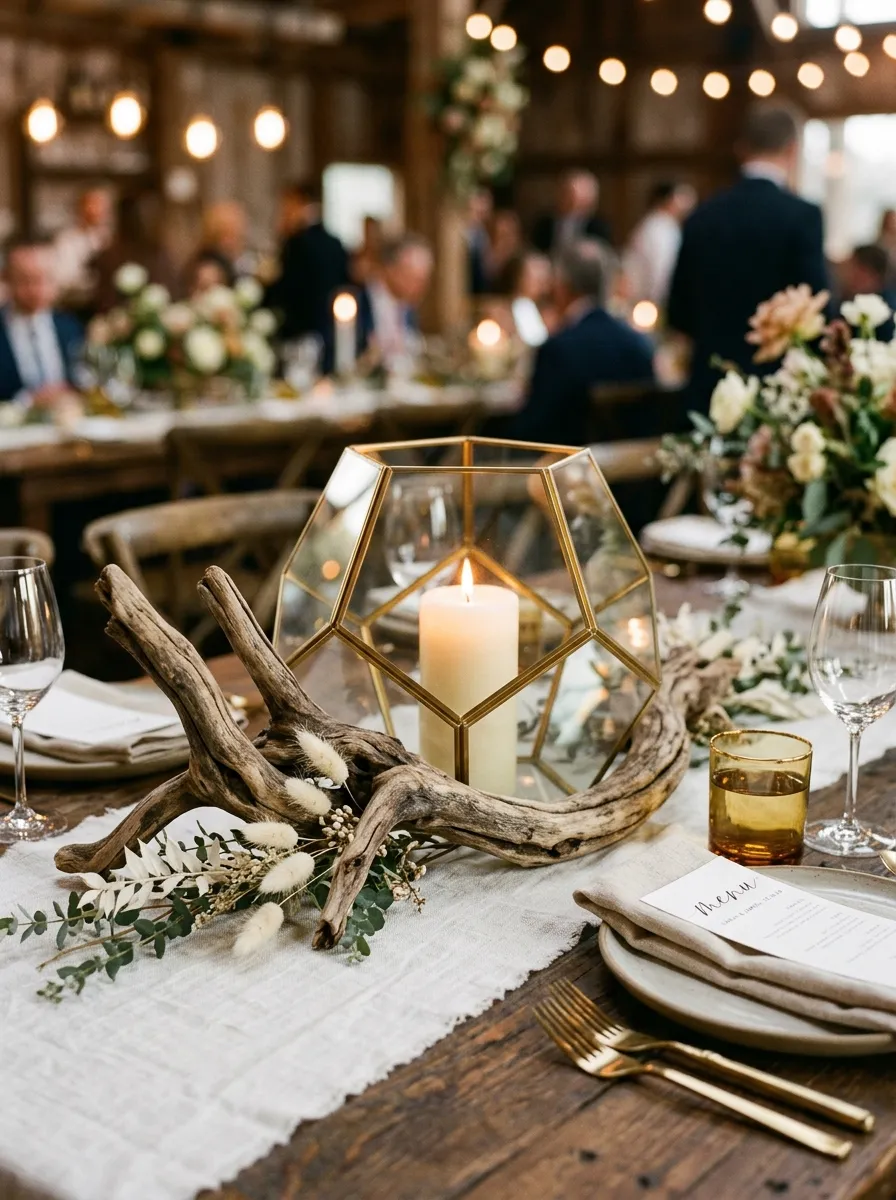
Merging crisp metallic geometry with organic coastal driftwood creates a dynamic, multi-faceted centerpiece that bridges industrial style and natural textures. This design pairs an angular glass-and-brass geometric terrarium with an authentic weathered driftwood root cluster resting alongside its facets. The faceted glass walls of the terrarium reflect warm candlelight and surrounding dining textures, while the organic curves of the adjacent driftwood soften the rigid metal frames. Inside the terrarium, a glowing LED pillar candle or cluster of fairy lights provides safe, enclosed illumination that glimmers through the clear glass panels. The contrasting textures of cold metal, polished glass, and sun-bleached porous wood create an engaging composition that suits modern conservatory weddings, greenhouse venues, and chic urban lofts seeking an updated coastal aesthetic.
To assemble this geometric centerpiece, source a twelve-inch faceted pentagonal or hexagonal brass terrarium, cleaning all glass panels with an ammonia-free glass cleaner and a lint-free cloth. Place an authentic, multi-forked driftwood root piece measuring eighteen inches long beside the terrarium, curving the timber around the base of the metal structure so the two elements form a cohesive unit. Place a three-inch-wide flameless wax pillar candle with an authentic flickering wick inside the terrarium, pressing it down onto a bed of fine white silica sand. Intertwine small sprigs of dried bunny tails, bleached ruscus, and preserved white strawflowers along the junction where the wood touches the terrarium base. Place two small brass tealight holders on the outer table runner opposite the terrarium to balance the visual weight, lighting the candles fifteen minutes before reception entry.
8. Moss-Covered River Driftwood with Wild Woodland Ferns
Execution Process
Woodland-inspired organic styling celebrates the deep green forest canopy, damp riverbanks, and tactile woodland mosses through rich botanical textures. This centerpiece incorporates an authentic piece of river-salvaged driftwood covered with living green pillow moss, nestled among delicate maidenhair ferns, dark green sheet moss, and textural bark fragments. The deep emerald and forest-green tones of the moss contrast with the weathered umber and slate-gray tones of the river wood, creating an arrangement that feels freshly gathered from an ancient forest floor. This low-profile horizontal design provides complete dining visibility across the table while adding natural moisture and rich sensory texture to reception spaces. This earthy tablescape pairs naturally with exposed raw-timber harvest tables, neutral linen runners, and dark stoneware dinner plates, making it an exceptional choice for mountain lodge weddings, forest celebrations, and autumn receptions.
Start by selecting an elongated river driftwood branch measuring thirty inches in length, verifying that the bottom rests flat without rocking on a timber banquet table. Line the central grooves and natural indentations of the wood with small swaths of moistened green pillow moss and preserved reindeer moss, pressing the moss firmly into the crevices using a touch of clear floral adhesive. Tuck tiny two-inch potted maidenhair ferns into the deeper branch recesses, keeping the ferns inside their plastic nursery liners to retain root moisture throughout the evening. Weave long strands of preserved sheet moss along the outer edges of the branch where the wood meets the tabletop, softening the transition from timber to linen. Intersperse clear glass votive cups holding unscented white votive candles along the mossy perimeter, verifying that candle flames remain at least three inches away from all living and preserved plant matter.
9. Bleached Ocean Timber with Clustered Raw Capiz Shells
How to Create
Channeling serene coastal luxury, this centerpiece pairs sun-bleached ocean driftwood with luminous raw capiz shells, white tumbled sea glass, and subtle mother-of-pearl accents. The centerpiece features a smooth, bone-white ocean branch naturally smoothed by ocean surf, displaying pale ivory fibers and clean undulating lines. Surrounding the base of the bleached timber is a relaxed, organic scatter of translucent capiz shells and sea glass fragments that catch directional venue lighting, casting luminous, watery reflections across the table linen. The quiet, monochromatic white-and-sand palette communicates understated beach elegance, avoiding bright blues or novelty shells in favor of quiet, organic luxury. The flat, wide profile stays below guest sightlines, ensuring effortless cross-table conversation while providing a tactile decorative foundation that complements fine crystal glassware and white bone china place settings.
Begin by selecting an ocean-bleached hardwood driftwood branch that has cured to a pale bone-white shade, measuring approximately two feet in length. Position the bleached branch along the central axis of an unbleached open-weave linen table runner, ensuring the branch rests firmly on its base. Scatter fifty to sixty authentic raw capiz shell discs around the perimeter of the timber, allowing the translucent shells to overlap organically like sea foam along a shoreline. Nestle small clusters of frosted white sea glass and miniature raw quartz points among the shells, catching ambient light points across the tablescape. Place four white pillar candles encased in clear, low-profile glass cylinders of varied heights alongside the wood, letting the flickering flames shine through the translucent capiz shells. Light the candles shortly before guest arrival to establish an ethereal seaside atmosphere.
10. Antiqued Mirror Runway with Driftwood and Tea Light Ribbons
Step-by-Step Guide
The antiqued mirror runway centerpiece turns banquet tables into reflective, luminous corridors that amplify the sculptural contours of weathered wood and dancing candlelight. This design lays a series of narrow, beveled-edge antiqued mirror panels end to end down the center of the table, topped with an undulating driftwood branch and a dense ribbon of glass tea lights. The distressed, silvered glass surface reflects the underside of the driftwood, doubling the visual impact of its grain, curves, and knots while scattering dozens of candle flames across the dining room. The flat mirror tiles create a clean, protected foundation that catches stray wax drips, keeping delicate table linens pristine throughout the celebration. This dramatic, high-contrast tablescape bridges rustic outdoor materials and formal ballroom glamour, making it an exceptional choice for evening vineyard receptions, historic industrial lofts, and chic coastal soirees.
To construct this reflective runner, acquire twelve-inch by twenty-four-inch beveled-edge antiqued mirror tiles, cleaning both sides thoroughly with an ammonia-free glass cleaner and a microfiber cloth. Lay the mirror panels end to end along the central spine of the banquet table, applying small adhesive rubber bumpers to the underside corners of each mirror tile to prevent surface scratching. Place an expressive, long-stemmed driftwood branch down the center of the mirrored runway, adjusting the limb so its lifted curves bridge the glass surface cleanly. Arrange twenty to thirty assorted clear, ribbed, and frosted glass tea light cups in an undulating ribbon around the driftwood base, filling each cup with an eight-hour unscented white wax tea light. Light the tea lights twenty minutes before dinner service using a long-reach lighter, creating a dazzling runway of reflections beneath the timber.
Common Beginner Mistakes and How to Avoid Them
The most critical mistake in driftwood centerpiece assembly is failing to properly clean and sanitize foraged wood before placing it on reception dining tables. Natural branches gathered directly from beaches, lake shores, or forests often harbor moisture, sand, microscopic mold spores, and hidden wood-boring insects that emerge under warm indoor reception lighting. Prevent this by scrubbing all foraged wood thoroughly with hot water and mild detergent, followed by soaking or spraying the timber with a ten-percent vinegar solution and allowing it to air-dry completely in direct sunlight for at least seven days. Another frequent error is ignoring physical stability, resulting in top-heavy branches that wobble or tip when guests bump the table during dinner service. Always test the balance of each branch on a flat surface; if a piece rocks, sand the bottom contact points flat with coarse sandpaper, attach concealed adhesive rubber feet, or weigh the base down with lead floral weights. Decorators also frequently underestimate fire hazards when styling open flames near dry, cured timber. Never place exposed taper or pillar candles directly against raw wood; always enclose burning candles within tall glass hurricane chimneys that rise at least two inches above the open flame, or rely on premium LED flameless wax candles with realistic moving wicks. Finally, avoid using oversized branches that encroach upon guest place settings, ensuring a clear eight-inch perimeter remains around all dinnerware and stemware.
Practical Tips for Better Results
Achieving professional, boutique-grade results with driftwood centerpieces relies on disciplined textural contrast, precise mechanical concealment, and cohesive lighting distribution. When designing arrangements without large masses of traditional flowers, focus on contrasting diverse surface textures—such as pairing smooth, weathered wood fibers with glistening cut crystal, polished brass, reflective water, and velvety moss. Always utilize an odd number of focal objects—such as three glass hurricanes, five brass tapers, or three succulent clusters—to create an organic, balanced visual rhythm that feels natural rather than artificially symmetrical. When incorporating fresh cut floral stems into driftwood cavities, conceal your water tubes or wet floral foam blocks beneath dense layers of preserved green sheet moss, securing the foliage with dark green floral wire to maintain the illusion that the blooms are growing naturally from the timber. If using open wax candles, chill your dripless tapers or pillars in a refrigerator for twelve hours prior to the wedding; chilled wax burns significantly slower, remains straighter, and resists messy runs down the wood. Finally, photograph your completed centerpiece prototypes under lighting conditions that match the venue’s actual evening ambiance, verifying that the candlelight provides adequate table illumination without casting harsh shadows across dinnerware.
Styling, Presentation, or Organization Ideas
Integrating driftwood centerpieces into an overall reception design requires thoughtful coordination with table linens, ambient room lighting, and individual place setting details. Pair textured timber branches with tactile natural textiles like washed Belgian linen, raw-edge cheesecloth, or crinkled cotton gauze runners that soften the table surface and catch subtle shadows. Maintain consistent hardware finishes across the tablescape by matching brass candle holders with brushed gold flatware, gold-rimmed glassware, and warm amber water goblets to create a unified design palette. When decorating long banquet tables, alternate between dense decorative wood clusters and open breathing spaces to establish an undulating, rhythmic visual flow down the room. Ensure that menus, place cards, and table numbers coordinate with the organic theme, utilizing deckled-edge cotton paper, calligraphy inks, or small driftwood place card holders that mirror the primary centerpieces. Complete the tablescape by tucking a small botanical accent—such as a single olive sprig, a miniature air plant, or a dried bunny tail—into the fold of each guest’s dinner napkin, extending the organic driftwood aesthetic directly to individual place settings.
Budget or Time Planning
Executing a complete collection of driftwood centerpieces across ten to twenty banquet tables requires organized financial planning, patient supply acquisition, and disciplined production scheduling. Foraging authentic driftwood from local public shorelines or riverbanks yields substantial cost savings, though decorators must confirm local collection regulations beforehand or purchase bulk cured pieces from wholesale floral suppliers several months in advance. Procure reusable glass hurricanes, brass candlesticks, and ceramic dishes gradually through estate sales, thrift shops, and online wholesale event outlets to avoid high retail markups. Organize your assembly schedule using a modular, step-by-step workflow: dedicate the weeks prior to the wedding to cleaning, scrubbing, sealing, and balancing all timber branches; use the day before the event to insert fresh water tubes, attach living air plants, and pack labeled transport containers; and reserve the morning of the wedding for placing the branches, positioning glassware, and lighting candles. Pack all delicate glass hurricanes, bud vases, and ceramic containers inside foam-lined plastic storage totes, labeling each bin by table assignment to streamline reception setup. Planning your decorative workflow systematically ensures a calm, enjoyable decorating experience, producing stunning, cost-effective harvest tablescapes without the stress of rushed, last-minute floral conditioning.
Creative Expansion and Advanced Inspiration
Once you have mastered foundational driftwood centerpiece styling, explore creative variations to expand your organic aesthetic across the entire wedding celebration space. Translate signature tabletop motifs onto peripheral displays, such as styling the welcome entrance table, guestbook station, and dessert display with matching driftwood branches, brass lanterns, and framed calligraphy signs. Transform ceremony spaces by lining the central aisle with matching driftwood root clusters and hurricane candles, or constructing an expansive driftwood ceremony arbor adorned with cascading garden roses and eucalyptus. You can also craft personalized, nature-inspired guest favors that harmonize with your centerpiece style, such as gifting miniature potted succulents planted inside hollowed driftwood chunks or small air plants tied with silk ribbon and calligraphy tags. Experiment with incorporating personal family heirlooms into your reception displays, such as utilizing vintage silver goblets, antique cut-glass carafes, or hand-woven family textiles as unique table runners beneath the wood. Following the wedding celebration, these durable driftwood components can be integrated into your home decor, serving as beautiful mantelpiece accents, entryway displays, and festive holiday tablescapes that preserve cherished memories for years to come.