Herb wedding centerpieces have become a definitive design choice for couples seeking organic beauty, aromatic depth, and sustainable styling on their reception tables. This guide delivers ten comprehensive concepts for incorporating fresh herbs into your event decor, providing structured techniques for table scapes of every aesthetic. You will learn the exact construction methods required to assemble long-lasting botanical displays, ranging from cascading culinary garlands to structured terracotta clusters and modern minimalist glass arrangements. Exploring these concepts provides practical insights into stem conditioning, vessel selection, balance, and spatial organization. Herbs offer unmatched versatility, serving as fragrant focal points, interactive favors for guests, and sustainable alternatives to imported cut flowers. By applying these step by step tutorials, any couple or event planner can produce professional-grade centerpieces that maintain their freshness, hold structural integrity through an entire evening, and bring an artisanal atmosphere to the dining room. Understanding these foundational styling formulas ensures your handmade wedding decorations achieve maximum visual impact while maintaining budget consciousness and environmental responsibility.
Why This Idea Is Trending or Useful
Potted and freshly cut herbs are dominating modern wedding inspiration boards due to their natural alignment with intentional, sensory-rich celebrations. Today’s event aesthetics prioritize authenticity, lush green textures, and immersive sensory details over rigid floral traditions. Fresh herbs like rosemary, sage, thyme, and mint emit subtle, clean scents that enrich the dining room without overwhelming guests or interfering with the served meal. Beyond olfactory appeal, herb-centric designs provide immense practical value for budget-conscious hosts because these plants are widely available, cost a fraction of traditional blooms, and can be potted weeks before the event. This accessibility makes herb centerpieces exceptionally beginner friendly for couples undertaking a DIY approach. Furthermore, live potted herbs eliminate event waste completely, allowing hosts to plant them in home gardens after the reception or gift them to attendees as living favors. Their versatile green tones blend naturally with rustic barn settings, modern industrial lofts, or classical al fresco courtyard dinners, providing an enduring, sophisticated focal point across varied wedding themes.
Materials and Preparation
Flawless botanical presentation begins with careful material sourcing and methodical plant preparation well in advance of the reception setup. When sourcing potted herbs, purchase healthy, pest-free specimens from local nurseries three to four weeks before the wedding, allowing the foliage to acclimate and grow evenly under controlled watering conditions. If you plan to use freshly cut stems for garlands or bud vases, schedule bulk cuttings twenty-four hours ahead, placing stems directly into clean, lukewarm water supplemented with cut-flower nutrients. Essential tools include sharp floral shears, florist tape, unbleached cotton twine, wire clippers, and waterproof vessels or protective trays that prevent water seepage onto linen tables. Preparation planning requires assessing table dimensions, sightlines, and dinner service configurations, ensuring centerpieces remain below eye level so conversations flow across the table. Clean all ceramic pots, glass cylinders, or metal troughs thoroughly to eliminate mineral stains, and line porous planters with lightweight waterproof liners to protect fine table textiles from damp soil and moisture condensation during the event.
1. Weathered Terracotta Herb Trio with Linen Ribbons
Assembly Procedure
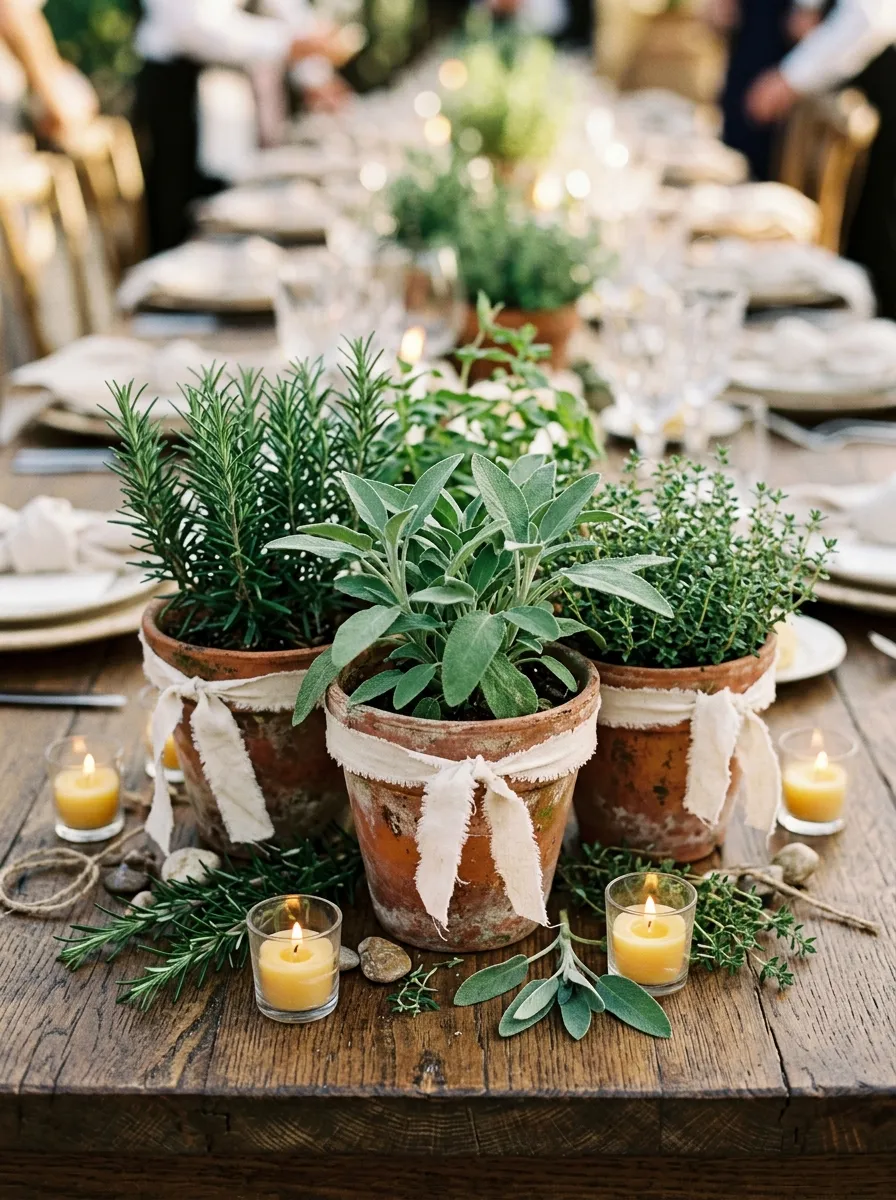
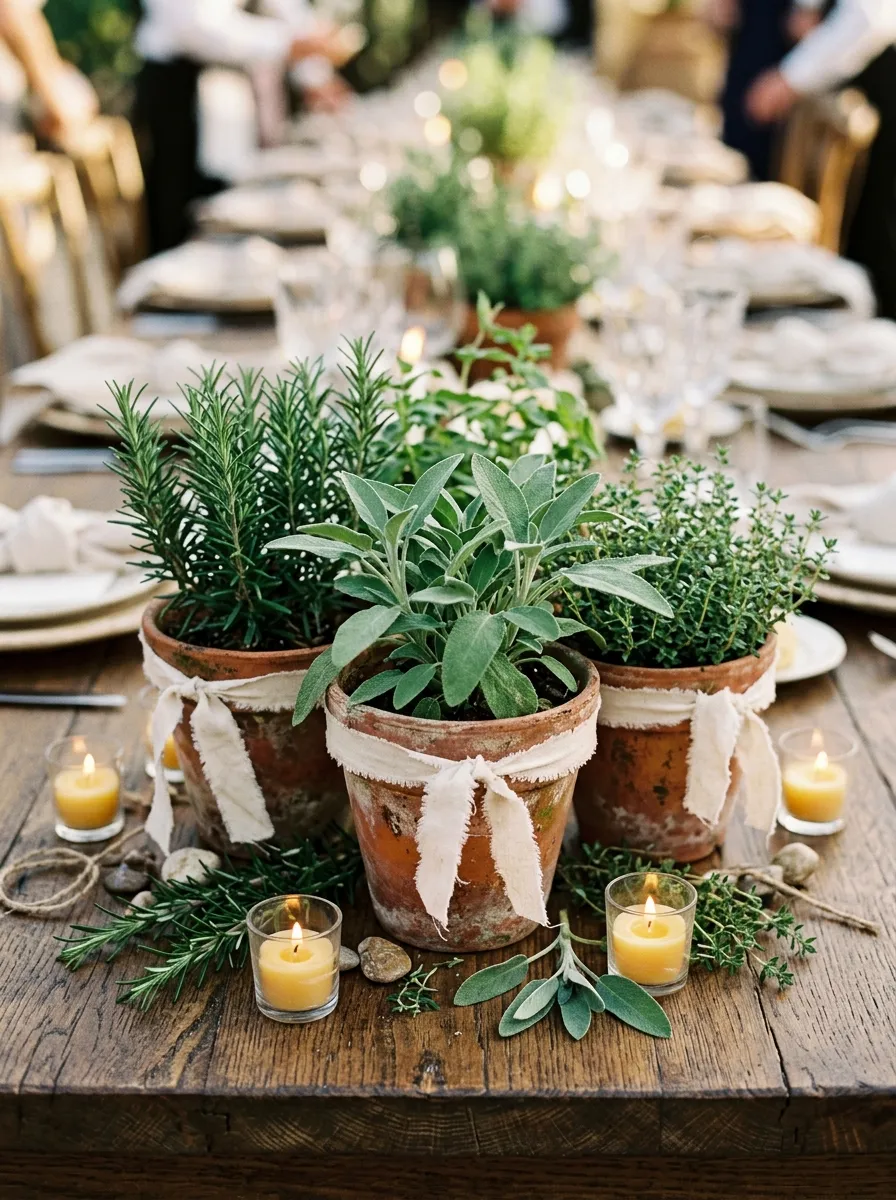
The weathered terracotta herb trio focuses on understated Mediterranean simplicity, utilizing three varying sizes of aged clay pots planted with contrasting culinary herbs to create architectural interest. This design combines the earthy warmth of porous Italian terracotta with the silver-green tones of sage, deep forest spikes of rosemary, and the delicate branching foliage of lemon thyme. The variation in vessel diameter and plant height creates a natural stair-step effect, avoiding rigid symmetry while maintaining an orderly aesthetic. Soft torn linen ribbons in cream or muted olive are knotted around the neck of each pot, softening the clay rims and integrating fine textile textures onto the table. This concept suits rustic vineyard receptions, garden courtyard celebrations, or minimalist farm-to-table dinners where raw, natural textures are celebrated. The unglazed clay absorbs excess moisture, ensuring the root systems stay aerated while keeping the table clean and dry.
To construct this arrangement, select three terracotta pots measuring four, six, and eight inches in diameter, cleaning them lightly with a soft brush to showcase their natural chalky patina. Fill the bottom third of each vessel with lightweight expanded clay pebbles to facilitate drainage, followed by a layer of rich, well-draining potting soil. Gently massage the root balls of your selected herbs, potting the tallest specimen such as upright rosemary into the eight-inch pot, broadleaf sage into the six-inch pot, and creeping thyme into the compact four-inch vessel. Pack the soil firmly around each root crown, leaving one half inch of clearance beneath the rim to prevent spillover during pre-event watering. Cut three strips of raw-edge linen ribbon, wrapping each around the pot collar and tying a single flat tailored knot. Arrange the three pots in an asymmetrical cluster at the center of each table, placing the largest vessel slightly off-center and encircling the base with raw tea lights in clear glass cups.
2. Low-Profile Rosemary and Olive Branch Garland
Execution Process
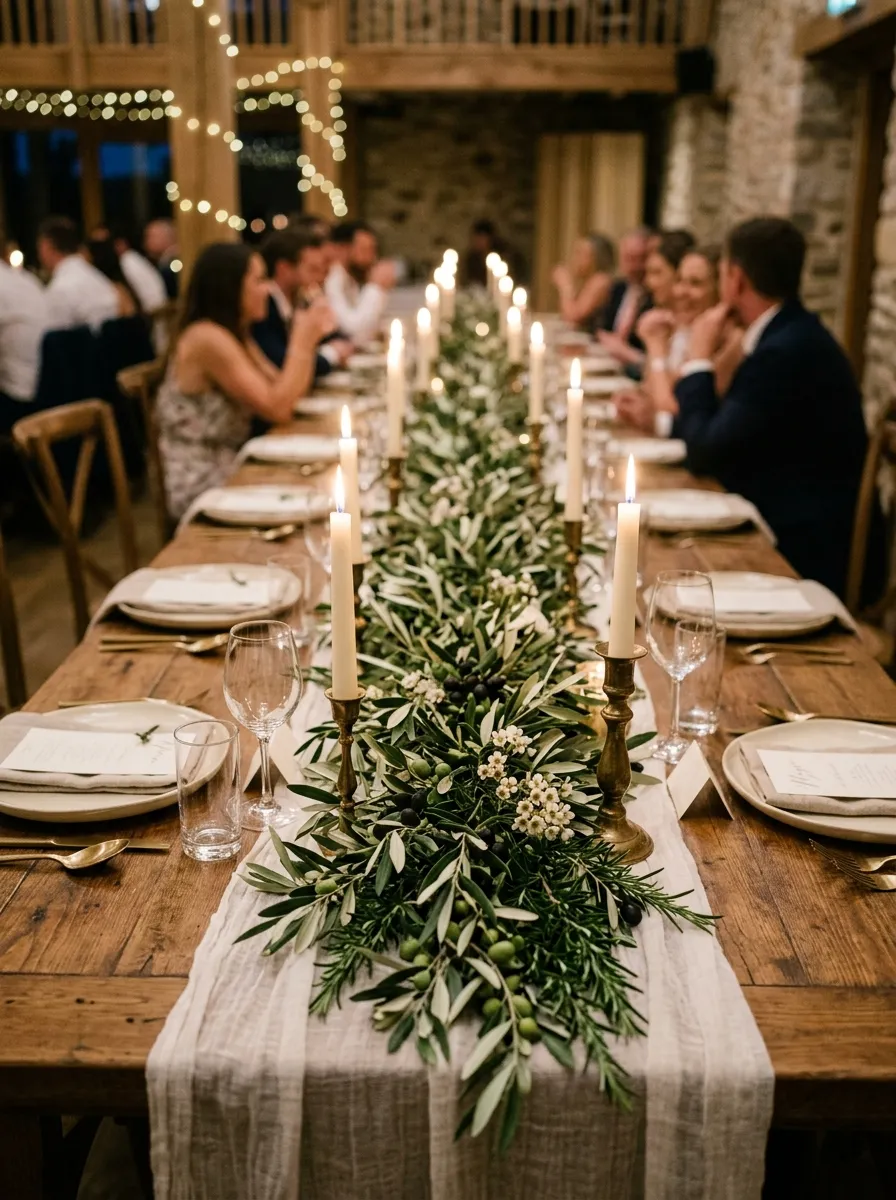
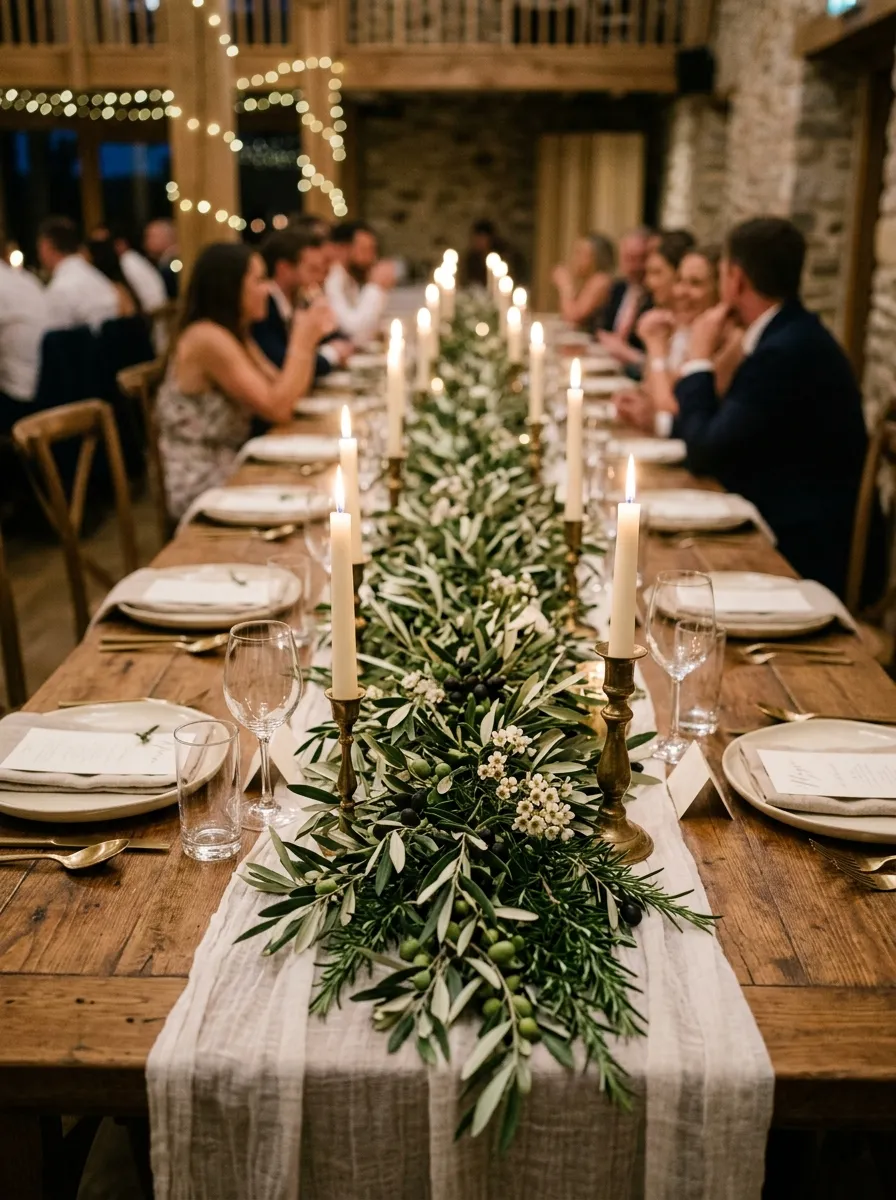
The low-profile rosemary and olive branch garland offers an uninterrupted, aromatic runner designed specifically for long banquet or rectangular harvest tables. This concept lies flat against the tabletop, ensuring sightlines remain entirely open across the dining room while filling the central corridor with rich, woody botanicals. Woody stems of rosemary provide deep needle-like texture and a refreshing herbal base, while silver-toned olive leaves add gentle movement and modern Mediterranean sophistication. The dense, woven structure conceals the floral mechanics completely, providing an upscale, editorial look that flatters bare wood tables or sheer gauzy cheesecloth runners. Because this runner relies entirely on sturdy, woody stems, it resists wilting significantly better than delicate leafy greens, making it reliable for warm outdoor summer weddings or all-day indoor celebrations.
Construct the garland by preparing fifteen-inch base cuttings of fresh olive branches and ten-inch sprigs of mature, stiff-stemmed rosemary. Cut a length of natural jute twine matching the final length of your banquet table minus twelve inches on each end to leave room for place settings. Using paddle wire in a twenty-two gauge dark green finish, bind three to four mixed stems of olive and rosemary tightly against the twine foundation, wrapping the wire firmly around the woody stems three times. Lay the next bundle directly over the bound stems of the first cluster, staggering the foliage to cover the wire completely, and repeat this shingling process along the entire length of the twine. When reaching the final foot of the garland, reverse the direction of the stem bundles and bind them inward so both outer ends display soft leaf tips rather than exposed cut branch ends. Mist the completed runner generously with cool water and store in a sealed plastic bag within a cool room until table installation.
3. Clear Glass Apothecary Bud Vases with Single Herb Sprigs
Setup Method
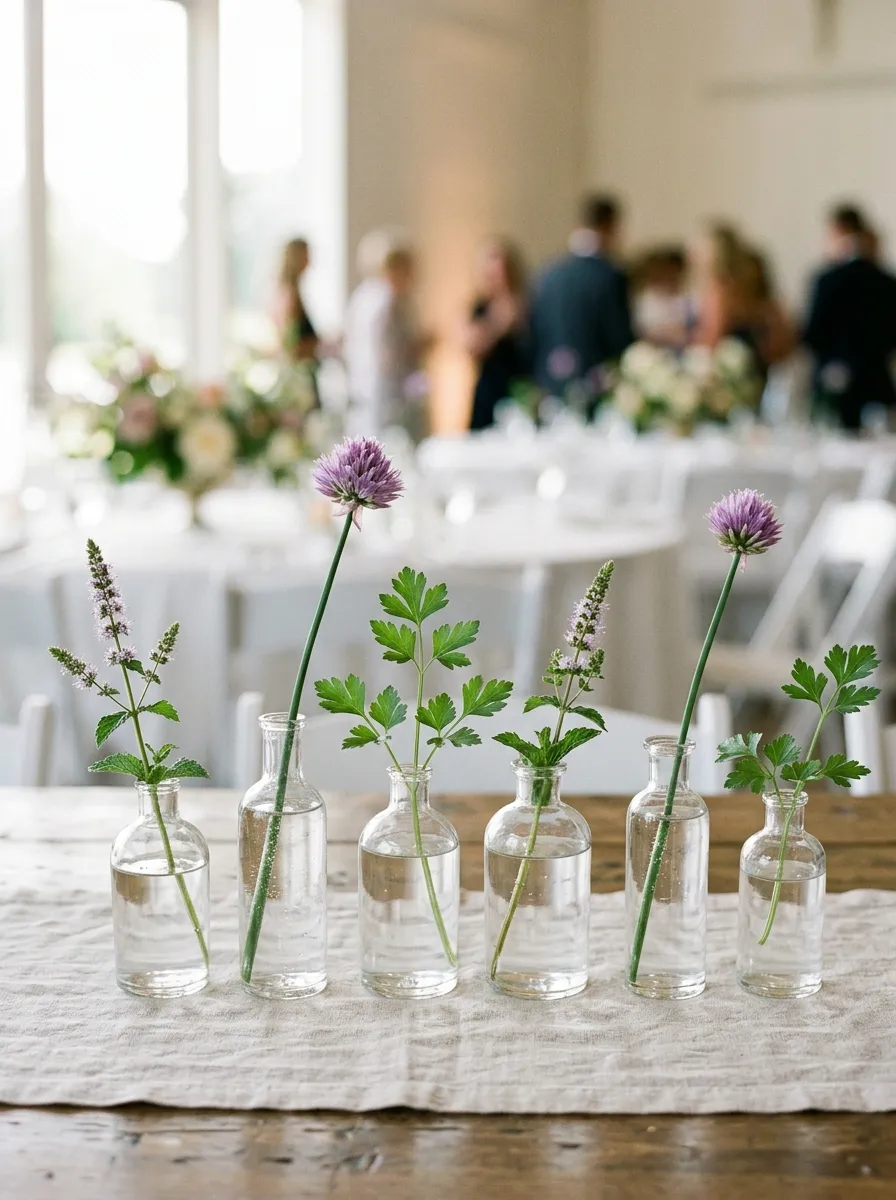
The clear glass apothecary bud vase concept embraces modern minimalist style, relying on repetition, transparency, and delicate negative space to make a commanding visual statement. This arrangement distributes a collection of vintage-inspired or clean-lined laboratory glass vials along the table centerline, each containing pure water and a single sculptural herbal clipping. Plants with expressive growth habits, such as flowering chive globes, tall flowering mint stems, bold flat Italian parsley, and woody oregano stalks, transform the table into a botanical taxonomy exhibit. The simplicity of glass allows natural daylight or ambient candlelight to reflect through the clean water, creating an airy, uncluttered environment ideal for modern art gallery venues or sleek city lofts. This method eliminates visual weight, making it especially effective for narrow dining tables where place settings and family-style sharing platters require abundant surface area.
Begin by collecting five to seven clear glass bottles per table, varying heights between four and eight inches while keeping neck openings narrow to hold single stems upright. Wash each glass vessel with warm water and vinegar to eliminate smudges, water rings, and dust, drying them thoroughly with lint-free microfiber towels. Fill each bottle two-thirds full with filtered room-temperature water mixed with a micro-drop of clear floral preservative to prevent cloudiness throughout the reception. Strip all leaves from the lower three inches of your herb cuttings, ensuring no submerged foliage remains to decay and discolor the water. Trim the base of each stem at a sharp forty-five-degree angle using a clean craft knife, inserting one specific herb variety into each vase to celebrate its distinct silhouette. Space the filled vials in an undulating, zigzag line down the center of the table, leaving four inches of clearance between each bottle to accommodate slender taper candles.
4. Galvanized Metal Farmhouse Herb Trough
Step-by-Step Guide
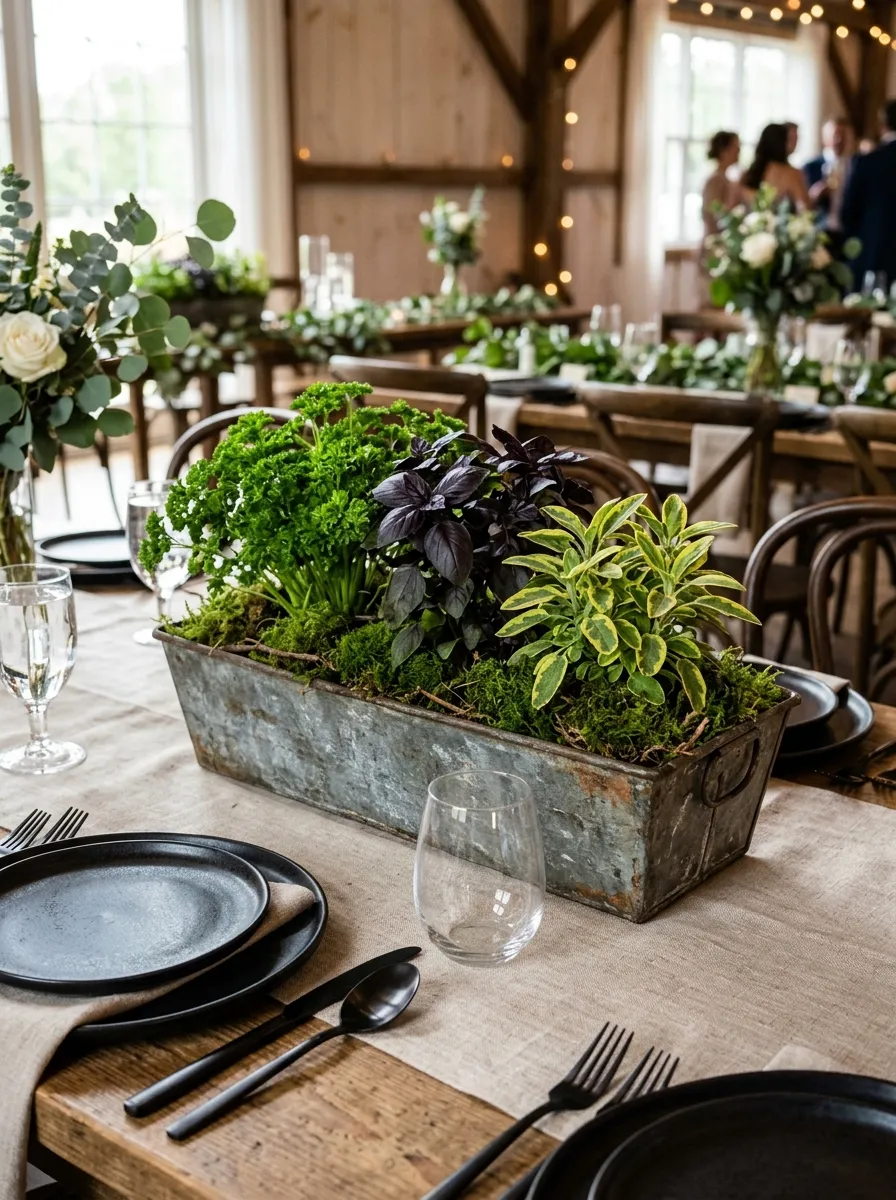
The galvanized metal farmhouse herb trough delivers a grounded, rustic design element with substantial textural contrast and historical charm. This approach features a long, narrow zinc or aged galvanized iron container densely planted with an assortment of culinary greens, forming an indoor window-box aesthetic directly upon the dining table. The cool pewter tones of weathered metal accentuate the vibrant chartreuse of curly parsley, deep purple ruffles of dark opal basil, and variegated foliage of golden sage. The linear shape grounds rectangular tables effectively, providing a cohesive single-piece centerpiece that simplifies reception venue setup and teardown. The industrial farm aesthetic pairs seamlessly with unbleached linen napkins, dark wooden charger plates, and black iron flatware, establishing a relaxed, communal atmosphere for barn weddings, vineyard pavilions, or rural outdoor tents.
To prepare the trough, source narrow galvanized planters measuring approximately sixteen to twenty-four inches in length, four inches in width, and four inches in depth. Apply a continuous bead of silicone sealant along all interior seams if the metal trough is not factory-welded, allowing it to dry fully to guarantee complete waterproofing against table linens. Line the bottom with a two-inch layer of activated charcoal and gravel to absorb excess water, then fill halfway with an airy potting mix rich in perlite. Remove small four-inch nursery herb starts from their plastic pots, arranging them in the trough with upright species like dill or tarragon in the center and cascading varieties like creeping rosemary at the edges. Fill the empty spaces with soil, pressing firmly around the plant crowns, and cover the exposed surface with clean green sheet moss to seal in moisture and present a pristine, finished topsoil layer.
5. Cast Iron Urn with Overflowing Herbaceous Botanicals
Execution Process
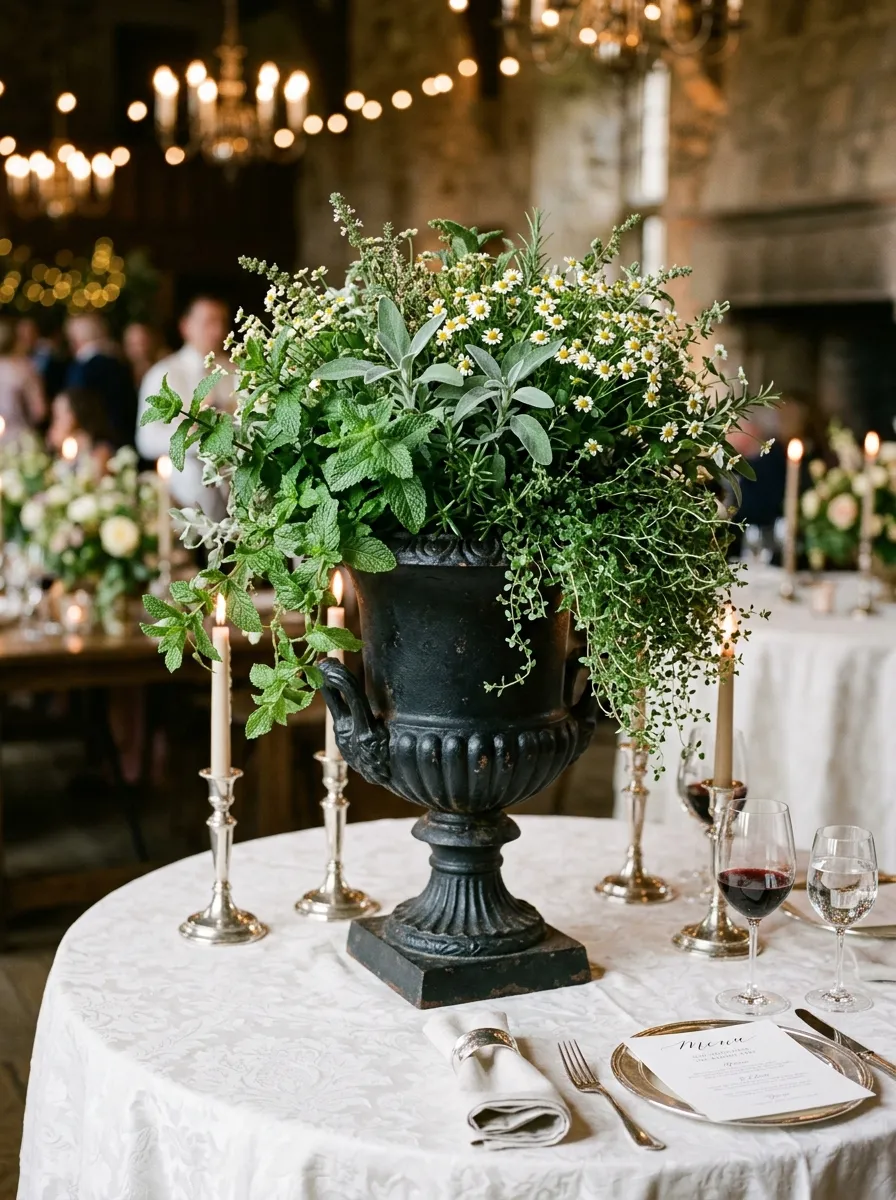
The cast iron urn centerpiece channels old-world European romance, combining classical garden statuary with abundant, spilling herbal foliage to create a lavish focal point. By utilizing an elevated matte black or verdigris pedestal urn, this design raises lush greenery above the tabletop, creating dramatic height without obstructing guest eye contact. The composition relies on dense clusters of broadleaf English mint, weeping winter savory, blossoming sweet marjoram, and sprawling variegated oregano that cascade down the curved edges of the vessel. The contrast between heavy, dark, architectural metalwork and delicate, softly textured leaves brings an air of historic grandeur to classical ballroom settings or formal estate gardens. This arrangement offers the visual drama of a traditional grand floral display while maintaining an earthy, non-traditional botanical signature.
To begin assembly, place a heavy-duty plastic florist bowl that fits snugly into the mouth of the cast iron urn, anchoring it with floral clay to prevent shifting. Cut a block of bio-based floral foam or insert a tightly wound dome of green chicken wire into the bowl, securing it across the rim with waterproof crisscross tape. Fill the container with fresh floral nutrient water until the mechanics are completely submerged. Begin designing the structure by inserting long, arching stems of trailing mint and weeping thyme around the outer perimeter of the wire, angling them downward so their leaves trail toward the tablecloth. Build the central volume by inserting dense, upright branches of common sage, blossoming chives, and flowering basil, working from the outside inward to establish a balanced, domed silhouette. Rotate the urn during assembly to verify that foliage distribution remains uniform from every seating angle, finishing by tucking small clusters of white chamomile or feverfew between the herbal leaves for subtle botanical contrast.
6. Minimalist Concrete Cube Herb Planters
Setup Method
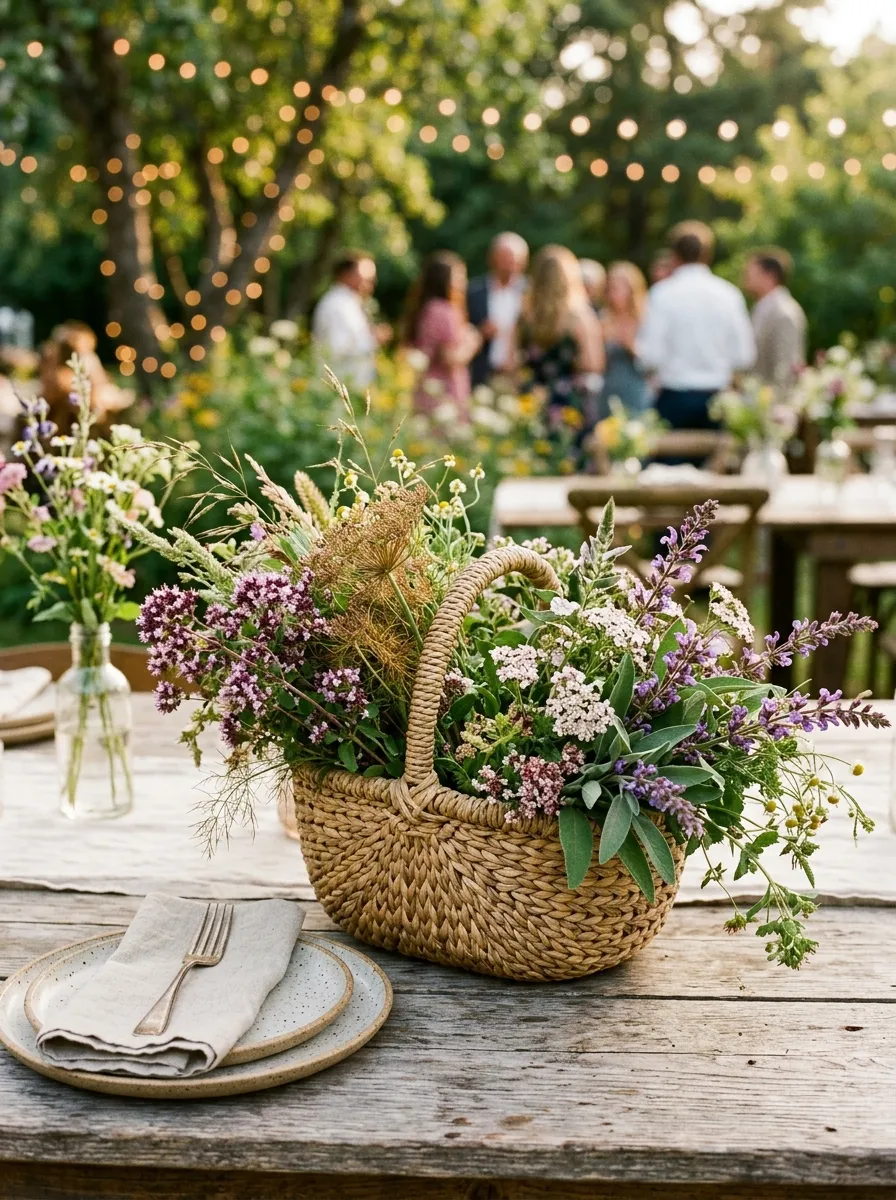
The minimalist concrete cube arrangement merges raw architectural materials with lush botanical textures, establishing a refined centerpiece tailored for contemporary urban venues. This concept uses sharp, square geometric planters cast in pale gray or charcoal concrete, each holding a single, neatly manicured herb specimen. The rigid right angles and smooth industrial surfaces of the concrete provide a stark, intentional frame for the soft, organic structures of lavender, French tarragon, or micro-leaf basil. The subdued neutral color palette of concrete keeps visual focus entirely on the delicate cellular patterns and rich emerald hues of the botanicals. This design serves modern minimalist weddings, industrial loft celebrations, or rooftop dinners where structural simplicity, clean lines, and uncluttered styling are primary aesthetic objectives.
Prepare this arrangement by selecting three identical concrete cubes measuring four to five inches on all sides, ensuring each has an unblemished matte exterior and pre-attached foam base pads to prevent table scratching. If the cubes feature drainage holes, seal them securely using waterproof florist putty, or insert plastic nursery liners to keep moisture contained within the vessel. Plant each cube with a dense, symmetrical herb specimen, centering the root base precisely so the plant foliage expands evenly from the vessel’s geometric core. Top the soil surface with smooth, tumbled river stones or black volcanic pebbles, creating a flat, clean substrate that hides all exposed dirt. Align the three concrete cubes in a straight, parallel row down the center of the table, spacing them precisely two inches apart and flanking the geometric row with sleek glass hurricane cylinders housing white pillar candles.
7. Woven Sweetgrass Basket Overflowing with Wild Herbs
How to Make
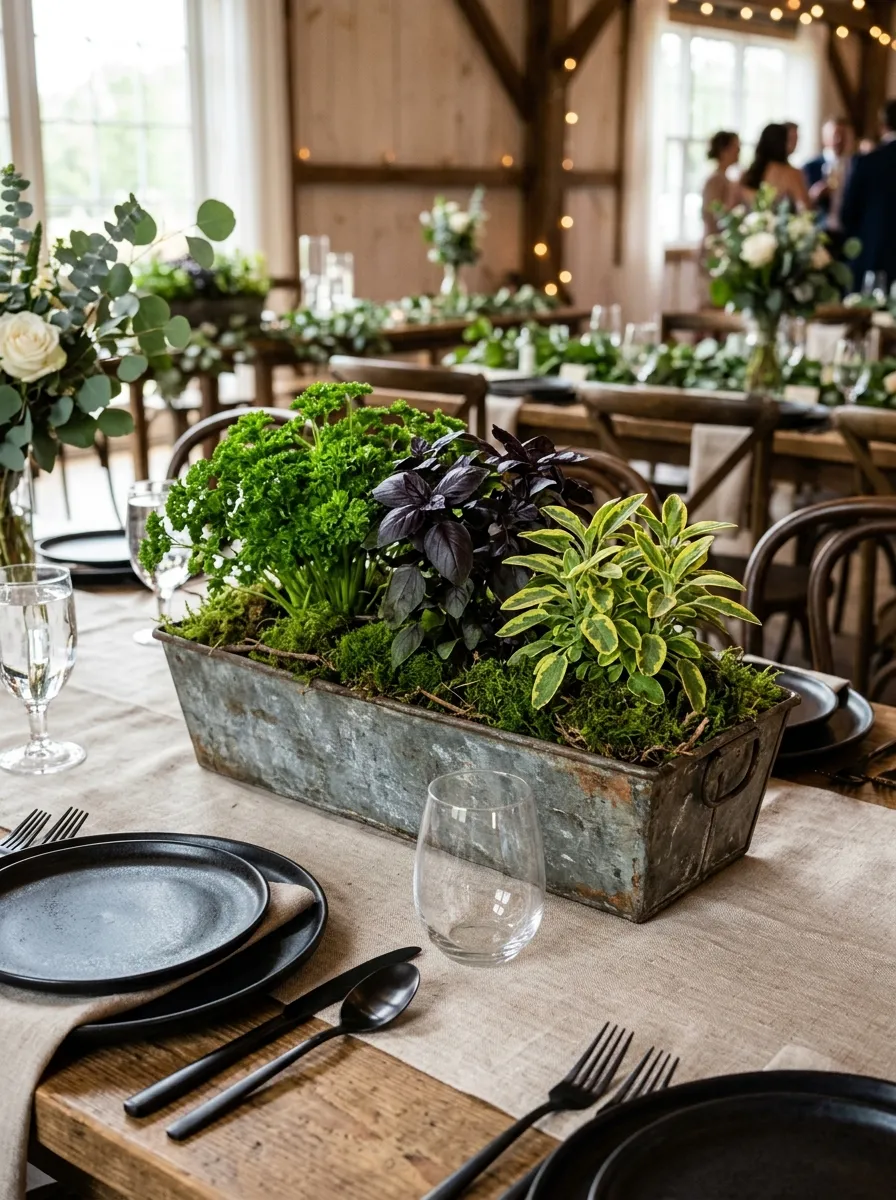
The woven sweetgrass basket centerpiece celebrates organic craftsmanship, combining artisan basketry with an untamed, gathered-from-the-meadow botanical style. This design incorporates low, round woven vessels crafted from natural rush, seagrass, or sweetgrass, filled with a diverse, textured medley of flowering and culinary herbs. The honeyed golden tones of woven dried fiber harmonize naturally with the wild, varied textures of blossoming oregano, feathery fennel frills, flowering coriander, and broadleaf basil. The finished piece resembles a fresh morning harvest from a monastery garden, evoking abundance, warmth, and pastoral elegance. This centerpiece pairs beautifully with raw timber tables, hemmed linen runners, and artisanal ceramic dinnerware, making it an exceptional selection for bohemian woodland weddings, coastal gatherings, or organic farm celebrations.
Begin by selecting a flat-bottomed woven sweetgrass basket measuring roughly eight to ten inches in diameter and three inches in height. Fit the interior with a heavy-gauge clear plastic liner, trimming the edges so they sit just below the basket rim to remain hidden from view. Place a pre-soaked round florist foam block or an anchored wire pin frog inside the liner, filling the bottom inch with clean water. Begin inserting heavier foliage, such as broad stems of sweet basil and dense clusters of lemon balm, around the base to disguise the inner lip of the basket completely. Layer in taller, airy botanicals through the center, inserting bronze fennel frills, flowering cilantro umbels, and purple sage stalks at varying angles to mimic natural field growth. Maintain an asymmetrical, wild silhouette by allowing select flowering herb stems to extend beyond the basket boundary, misting the entire arrangement lightly before guests enter the reception hall.
8. Floating Candle and Submerged Rosemary Cylinder Vases
Assembly Procedure
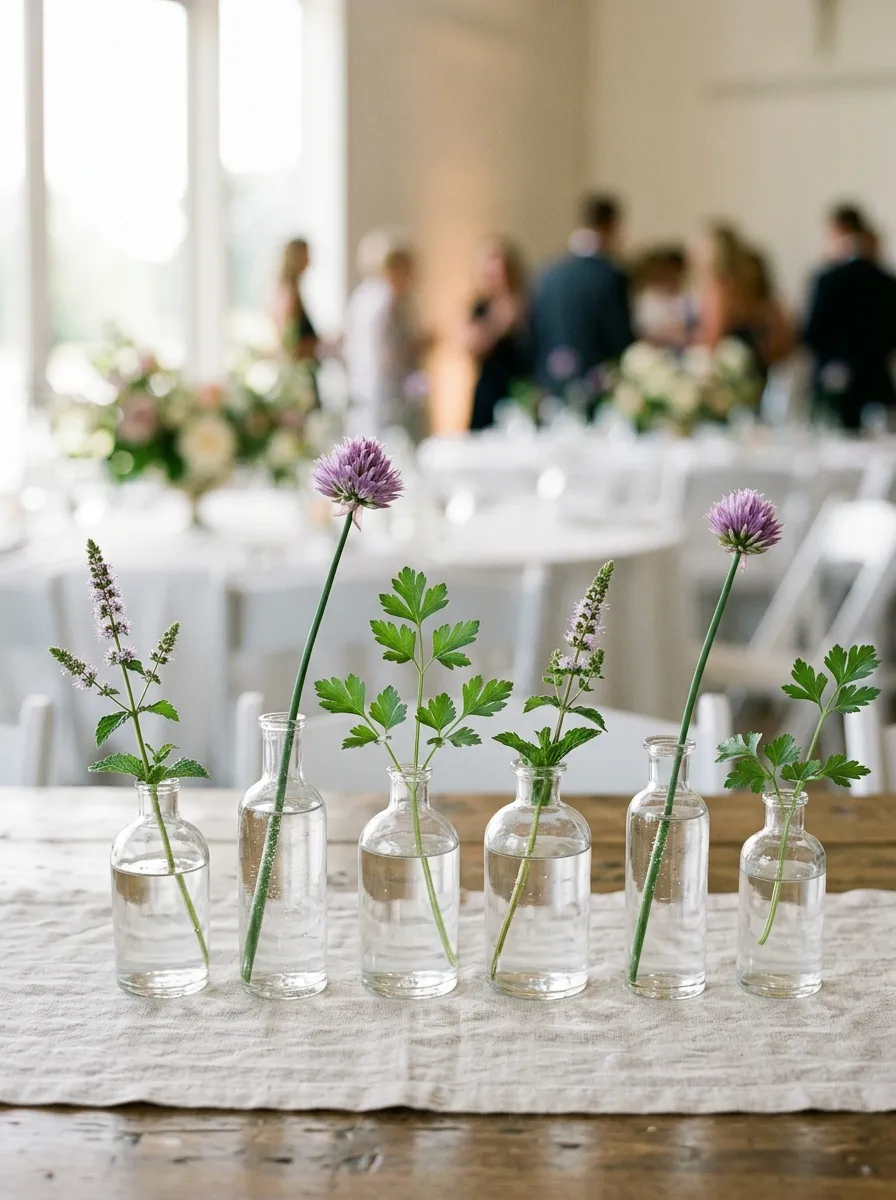
The floating candle and submerged rosemary cylinder centerpiece uses water refraction and illumination to transform humble culinary herbs into dramatic ambient luminaries. This styling strategy involves submerging whole, mature branches of fresh rosemary within tall glass cylinders filled to the brim with crystal-clear water, topped with smooth white floating wax discs. The optical properties of the water magnify the dense green needles of the rosemary, creating an underwater botanical display that glows when the floating candle is lit. Because the plant material remains completely submerged beneath water, this centerpiece is wind-resistant, safe for breezy outdoor evening receptions, and completely fire-safe. The vertical water columns catch and disperse the flickering candlelight, producing a romantic, luminous table corridor that looks sophisticated in low-lit ballrooms, evening garden terraces, or historic brick storehouses.
To execute this installation, gather sets of three clear glass cylinder vases per table in graduated heights, such as six, nine, and twelve inches, with uniform three-inch diameters. Wash the interior of every glass cylinder using distilled water to eliminate cloudiness and mineral streaks that disrupt light clarity. Cut fresh, woody rosemary stalks to match the height of each cylinder minus two inches, selecting straight, robust branches with vibrant needle density. Anchor the base of each rosemary branch inside the vase using clear floral weights or clean, clear glass marbles placed in the bottom of the cylinder to prevent the buoyant stem from floating to the surface. Slowly pour distilled room-temperature water down the inside wall of the glass to avoid creating trapped air bubbles along the rosemary leaves. Gently place a high-burn-time white floating candle on the water surface of each cylinder, arranging the trio in an intimate triangular grouping at the center of the table.
9. Monochromatic Silver Herb Centerpiece in Pewter Bowls
Execution Process
The monochromatic silver herb centerpiece explores a refined, cool-toned botanical palette by exclusively featuring plants with gray, dusty silver, and frosted white foliage. This design utilizes shallow antique pewter bowls or brushed silver compotes filled with silver artemisia, woolly lamb’s ear, curry plant, silver-leaf thyme, and velvety white culinary sage. By eliminating high-contrast primary greens, the composition evokes a dreamy, soft-focus aesthetic that harmonizes with romantic fine-art weddings, winter celebrations, or formal candlelit evening dinners. The cool metallic luster of pewter reflects the velvety textures of the silver leaves, creating a centerpiece of exceptional sophistication and depth. This focused palette flatters white damask linens, cut-crystal glassware, and polished silver cutlery, proving that culinary botanicals can achieve the elegance of classical floral arrangements.
Start by securing a shallow pewter bowl or compote with an eight-inch diameter, placing a small floral cage with an integrated bio-sponge base inside the bowl’s basin. Secure the mechanics to the pewter using waterproof floral tape anchored beneath the rim. Pour prepared floral water into the vessel until the sponge is fully saturated. Cut stems of silver artemisia and dusty curry plant to four-inch lengths, stripping the bottom foliage and inserting them into the base of the sponge to form an airy, horizontal collar around the metal rim. Add dense clusters of broad, velvety white sage and woolly lamb’s ear into the center of the arrangement, angling the broad leaves upward to catch overhead ambient light. Fill any remaining gaps with delicate sprigs of variegated silver thyme and blooming lavender buds, keeping the final arrangement low, mounded, and uniform to create a dense, frosty botanical mound across the table.
10. Tiered Slate and Terracotta Herb Tower
Setup Method
The tiered slate and terracotta herb tower provides a vertical, multi-dimensional display that maximizes table space while introducing an architectural landscape to the dining area. This concept arranges miniature terracotta pots across two circular layers of natural black slate stone separated by a central wooden or stone pillar, creating an elevated miniature garden terrace. Each small pot holds a distinct herbal variety, featuring small tags inscribed with the herb’s botanical name and historical symbolic meaning, such as rosemary for remembrance or mint for hospitality. The deep charcoal slate provides a striking contrast against warm orange clay and vibrant green leaves, establishing an interactive, conversational centerpiece. This vertical structure suits wide round banquet tables where low centerpieces often appear visually lost within the vast open expanse of the tabletop.
Begin assembly by placing a twelve-inch circular natural edge black slate slab flat at the center of the table, backed with protective felt pads to prevent linen abrasion. Position a sturdy, four-inch-tall stained wooden block or solid stone cylinder in the center of the base slate, placing a smaller eight-inch circular slate slab securely on top of the pillar. Arrange five miniature two-inch terracotta pots on the lower slate circle, each potted with a small culinary herb such as dwarf curly parsley, creeping savory, or sweet basil. Place three matching miniature pots on the elevated top slate tier, utilizing slightly taller herbs like upright chives or French lavender to crown the vertical display. Insert small calligraphed kraft paper pick markers into each pot detailing the botanical names, and weave loose sprigs of fresh bay laurel and olive foliage around the slate perimeters to soften the hard stone edges and tie the vertical tiers together.
Common Beginner Mistakes and How to Avoid Them
The most critical mistake made when creating herb centerpieces is selecting tender, soft-leaf herbs that wilt rapidly under warm reception room conditions. Delicate herbs such as cilantro, sweet genovese basil, and chervil lose cellular turgor quickly when cut and placed outside of climate-controlled environments, causing arrangements to droop before guests arrive. Avoid this heartbreak by prioritizing sturdy, woody herbs like rosemary, common sage, winter savory, bay laurel, and mature mint stems, or use rooted live potted specimens instead of cut stems. Another common oversight is failing to properly condition live potted herbs before the event, which leads to dry root balls that pull moisture from the table environment or, conversely, overwatered soil that leaks muddy water through porous pots onto expensive venue linens. Prevent this disaster by soaking potted herbs forty-eight hours prior to table installation, allowing excess water to drain completely in a workspace before wiping the vessel bases dry. Additionally, always line porous ceramic and terracotta vessels with internal waterproof plastic liners or use discrete transparent acrylic drainage saucers beneath every pot to protect rental linens from soil stains and water condensation rings throughout the night.
Practical Tips for Better Results
To achieve florist-grade execution with herb wedding centerpieces, implement professional conditioning protocols that maximize leaf hydration, sheen, and aromatic output. For cut herb stems, execute the split-stem technique on woody botanicals like rosemary and bay; use a sharp craft knife to make a half-inch vertical slit up the base of the cut stem before placing it in water, which significantly enhances water uptake. Keep all cut herbal arrangements in a dark, cool room between fifty-five and sixty degrees Fahrenheit until the morning of the wedding to prevent premature leaf drop and bloom opening. When preparing potted herb centerpieces, dress the exposed potting mix with washed river pebbles, crushed pea gravel, or fresh green sheet moss; covering the soil elevates the arrangement from a standard grocery-store pot to an intentional, high-end decorative object. To stimulate the natural aroma of your centerpieces without bruising the plants, gently brush the tops of the herb foliage with a clean cloth thirty minutes before guest arrival, which breaks the surface essential oil glands and releases a subtle, inviting herbal fragrance into the reception room.
Styling, Presentation, or Organization Ideas
Styling herb centerpieces effectively requires harmonizing botanical textures with the surrounding table elements, dinnerware, and stationery. Pair earthy terracotta and woody rosemary with raw, unbleached linen runners, rustic rattan charger plates, and brushed brass flatware to cultivate an authentic, sun-drenched Mediterranean or Tuscan feast aesthetic. For sleek, modern venues, arrange clear glass bud vases or industrial concrete planters alongside crisp black dinnerware, smoky glass stemware, and structured monochromatic taper candles. Consider weaving interactive elements into the centerpiece design, such as providing handwritten place cards paired with a small sprig of the table’s designated centerpiece herb tied with delicate raw twine. On long harvest tables, alternate between clusters of potted herbs and sprawling low-profile garlands to break up visual monotony, interspersing varied candle heights to add visual rhythm down the table’s corridor. Ensure that your centerpieces never exceed fourteen inches in total vertical height, maintaining open sightlines across the dining room so guests can converse easily without leaning around overgrown greenery.
Budget or Time Planning
Designing wedding centerpieces around fresh herbs offers exceptional financial advantages, but executing them efficiently requires disciplined timeline planning and organized resource allocation. Potted culinary herbs sourced from wholesale plant nurseries or local garden centers typically cost between two and five dollars per specimen, representing a fraction of the cost of standard imported cut floral arrangements. To manage your budget effectively, purchase your growing vessels, terracotta pots, or glass vials in bulk cases well ahead of time, which secures wholesale unit pricing and prevents last-minute retail supply shortages. When structuring your project timeline, purchase and pot your live herbs two to three weeks before the wedding day, providing adequate time for the roots to settle, leaves to orient toward the light, and empty soil gaps to fill with fresh growth. If you are constructing fresh-cut herbal garlands or water-based bud vase arrangements, schedule the stem preparation and vase-filling sessions for the afternoon immediately preceding the wedding day. This workflow limits the stress of event-morning tasks to simple placement and candle styling on the venue tables.
Creative Expansion and Advanced Inspiration
Once you have mastered foundational herb centerpiece assembly, explore advanced design variations that incorporate mixed media, custom typography, and culinary pairings. Integrate fresh citrus fruits like whole Meyer lemons, blood oranges, or seamed pomegranates into herb runners; the vivid yellow and crimson tones provide high-contrast color accents against deep green rosemary and sage. You can also incorporate edible wedding favors directly into the centerpiece framework by potting herbs into small ceramic ramekins stamped with the couple’s monogram, inviting each guest to take their dining table plant home at the end of the evening. For elevated lighting drama, weave micro-fairy lights through dense herbal garlands or suspend large upside-down wooden drying ladders laced with hanging bunches of aromatic lavender and mint directly above the dining tables. Furthermore, bridge the reception decor with the catering experience by featuring the same herbs found in the centerpieces within the signature wedding cocktails, infused bread dipping oils, and main dinner courses, establishing an immersive, cohesive sensory narrative across the entire wedding celebration.