Lantern wedding centerpieces serve as versatile decorative focal points that establish warmth, structure, and visual romance across reception dining tables. Incorporating lanterns into wedding table architecture provides an adaptable alternative to traditional, high-maintenance floral towers that often obstruct guest views. Readers exploring this detailed centerpiece guide will learn how to design, balance, and safely assemble ten distinctive lantern displays suited for varied aesthetic themes. This comprehensive tutorial covers critical logistical elements, including height proportioning, fire safety protocols, botanical anchoring techniques, and illumination methods like LED pillars and wax candles. Mastering these foundational tabletop concepts allows couples, wedding planners, and hobbyists to construct high-end, gallery-worthy arrangements that withstand indoor air conditioning drafts or outdoor coastal breezes. Furthermore, understanding the interplay between glass, metal finishes, reflective light, and fresh foliage guarantees cohesive styling that integrates smoothly with wider venue decoration schemes. By following an orderly step by step planning process, decorators can eliminate guesswork, lower rental overhead, and curate durable, photogenic centerpieces that transition seamlessly from daytime ceremonies to ambient evening dinners.
Why This Idea Is Trending or Useful
Lantern centerpieces remain prominent across modern Pinterest ideas because contemporary event styling prioritizes multi-functional, reusable, and sustainable decor components over single-use floral foam installations. Modern design movements favor clean architectural lines, warm ambient lighting, and natural textures that photograph cleanly without visual clutter. Lanterns provide exceptional practical value because their enclosed chambers protect live flames from wind, meeting strict banquet venue safety codes while maintaining an authentic candlelit aesthetic. From an economic perspective, lantern displays serve as celebrated budget ideas, allowing couples to invest in durable hardware that transitions effortlessly into post-wedding home decor or resells reliably within the bridal community. The creative appeal is equally strong for beginners because lanterns establish an inherent three-dimensional frame, eliminating the advanced floristry skills required to construct self-supporting floral domes. Transforming bare glass lanterns into lush, atmospheric tablescapes requires only basic layering techniques, making this creative project accessible for novice decorators seeking refined, professional results on a realistic schedule.
Materials and Preparation
Proper preparation ensures structural stability, fire prevention, and streamlined setup during the limited decorating window on event mornings. Essential materials include clean glass-paned lanterns constructed from brass, wrought iron, or weathered timber, paired with commercial-grade unscented pillar candles or battery-operated flickering LED pillars. Floristry supplies should feature fresh floral shears, 22-gauge stem wire, green zip ties, water tubes, and saturated mini foam cages or floral pin frogs for fresh foliage integration. Supporting accents encompass washed river gravel, clean silica sand, real-touch faux greenery, satin or velvet ribbon runners, and low glass votive cups. Preparation begins weeks in advance: wipe down all lantern glass panes using a streak-free vinegar solution to eliminate grease, dust, and supplier adhesive marks. Test candle height ratios to confirm the flame tips remain at least four inches below the lantern exhaust vent to prevent soot accumulation. Measure banquet tables accurately, confirming that the base diameter of each lantern setup leaves ample clearance for glassware, table numbers, and plated dinner service.
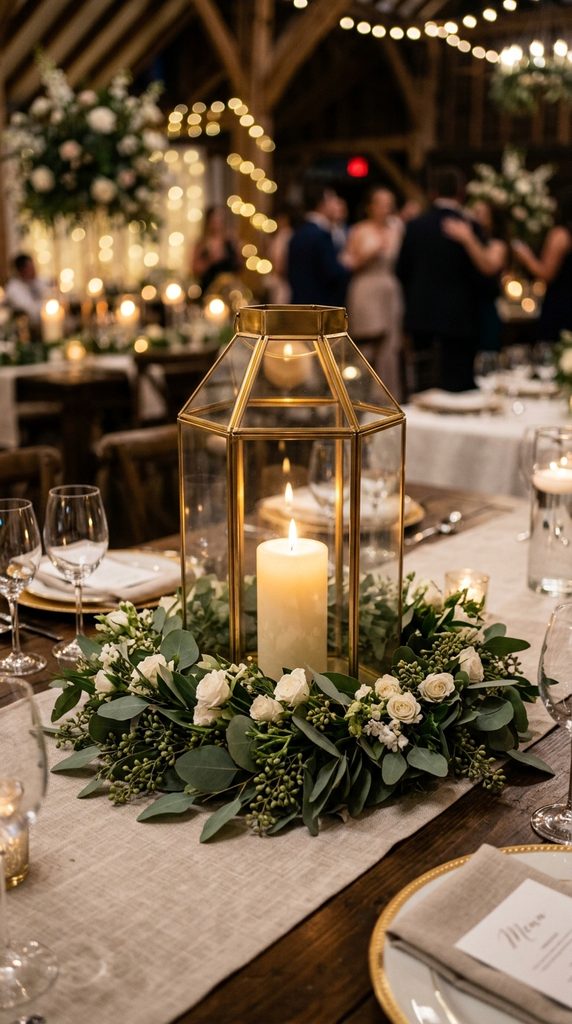
1. Geometric Brass Lantern with Cascading Eucalyptus Garland
Setup Method
The geometric brass lantern paired with cascading eucalyptus represents a cornerstone of modern minimalist style, offering sharp metallic angles softened by silver-toned foliage. The design centers on an open-sided or glass-paneled brass lantern with clean hexagonal or rectangular lines, positioned centrally over an exposed wooden or neutral linen table runner. Long sprigs of silver dollar and seeded eucalyptus encircle the base, with trailing foliage sweeping diagonally across the tabletop to create natural horizontal movement. The reflective gold metal bounces the warm glow of an interior pillar candle, highlighting the chalky, matte texture of the eucalyptus leaves. This design provides visual height without blocking conversation lines across banquet seating. The composition balances modern architectural discipline with organic fluidity, making it equally appropriate for industrial loft spaces, botanical gardens, and contemporary ballroom settings.
Begin the setup by centering a clean, twelve-inch geometric brass lantern on the table runner, ensuring the access door faces away from dominant guest traffic to facilitate lighting. Place an unlit ivory wax pillar candle measuring three inches in diameter and six inches in height into the lantern interior, centering the base precisely. Cut two fresh branches of seeded eucalyptus and two branches of silver dollar eucalyptus to twenty-four-inch lengths, stripping the lower two inches of leaves from each stem. Arrange the eucalyptus branches in a counter-clockwise circle around the lantern perimeter, overlapping the woody stem ends beneath the foliage of the adjacent branch to hide cut points. Secure the overlapping branches with thin lengths of green paddle wire twisted beneath the leaves, anchoring the garland into a cohesive circular ring. Tuck small clusters of white spray roses fitted with miniature water tubes into the inner foliage ring, angling the blossom heads outward to complete the floral surround.
2. Rustic Weathered Wood Lantern with Forest Moss and Pinecones
How to Create
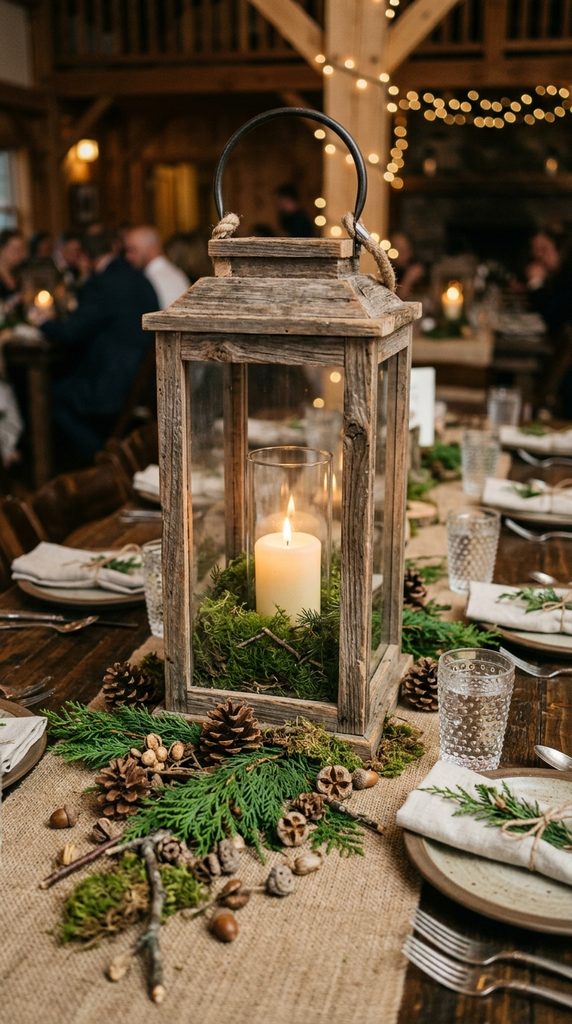
The rustic weathered wood lantern centerpiece introduces grounded, earthy warmth through natural timber framing, deep green ground cover, and textured woodland elements. Constructed from reclaimed pine, distressed barn wood, or bleached cedar, the lantern framework brings architectural substance that suits farmhouse, lodge, or autumn woodland celebrations. The interior floor of the lantern is lined with preserved sheet moss, creating an organic bed that cradles an off-white pillar candle. Surrounding the wooden base, an assortment of natural pinecones, dried seed pods, and rich evergreen sprigs establishes a tactile, forest-floor aesthetic. The interplay between raw wood grain, fibrous moss, and warm illumination creates a cozy, welcoming atmosphere across communal family-style dining tables. The design relies entirely on sustainable, long-lasting botanicals that resist wilting, making it exceptionally reliable for long receptions or high-temperature environments.
Place a distressed wooden lantern measuring fourteen inches tall flat in the center of the reception table on top of a textured burlap or raw linen runner. Open the lantern door and lay a circular piece of preserved forest sheet moss across the interior base, cutting the moss edges to match the interior dimensions cleanly. Press a heavy glass hurricane chimney sleeve directly into the center of the moss bed, and slide an unscented three-by-six-inch pillar candle inside the glass sleeve for fire isolation. Arrange four large open pinecones and six smaller spruce cones around the exterior perimeter of the wooden lantern legs, placing the larger cones at opposite corners for balanced weight distribution. Weave short cuttings of fresh white pine, cedar boughs, and dried scabiosa pods between the cones, tucking the cut stems beneath the wooden base to hold them stationary. Light the central pillar candle thirty minutes before guest arrival using an extended grill lighter.
3. Coastal Driftwood Lantern with Shell Ballast and Pillar Light
Step-by-Step Guide
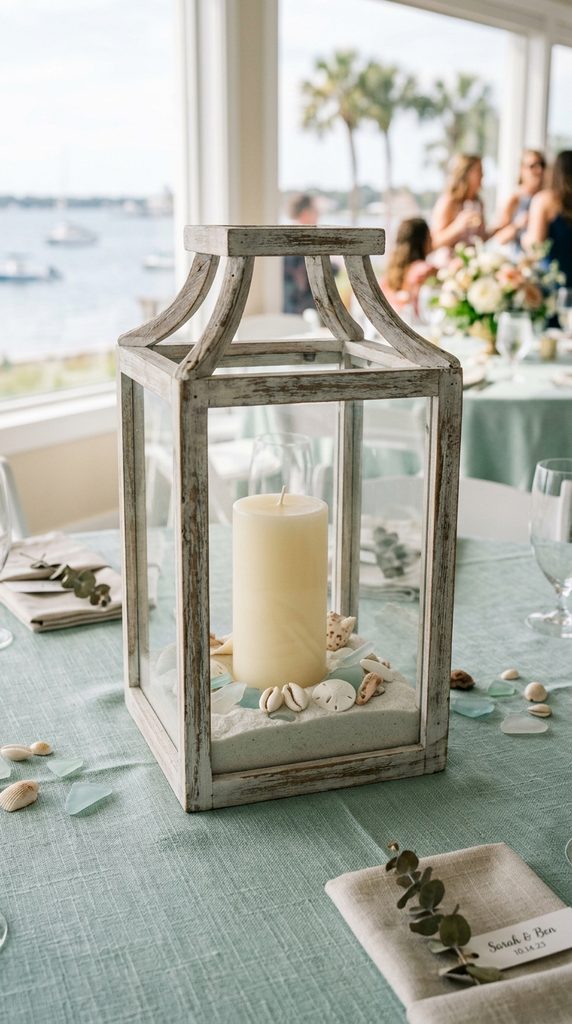
The coastal driftwood lantern centerpiece captures relaxed maritime elegance through bleached natural materials, sandy textures, and marine artifacts. This concept incorporates a pale whitewashed or natural driftwood-framed lantern, emphasizing weathered surfaces that recall sun-bleached coastal boardwalks. The interior bottom of the lantern is covered with fine, white quartz sand, which serves as both an aesthetic beach foundation and a functional, fireproof ballast that stabilizes the central candle. Scattered around the candle base, smooth sea glass pieces, polished clam shells, and miniature bleached starfish add subtle seaside details without appearing cluttered. The glass panes keep drafty ocean breezes from extinguishing the flame during outdoor waterfront receptions. The neutral, sun-warmed color scheme pairs naturally with pale seafoam linens, textured cotton napkins, and slate blue water goblets, evoking a refined coastal atmosphere.
Position a whitewashed, glass-enclosed nautical lantern in the center of the table, ensuring the latch mechanism operates smoothly. Pour two cups of fine, dry white sand through the open door, tilting the lantern gently until the sand forms an even, level two-inch bed across the bottom. Take an ivory, unscented pillar candle measuring three inches wide by five inches tall and press the base firmly into the center of the sand, twisting slightly until the candle sits plumb and rigid. Place five polished white cowrie shells, two flat sand dollars, and a scattering of frosted sea glass fragments around the candle base, keeping all decorative elements at least one inch away from the wick. Close the glass latch securely to protect the arrangement from drafts. Complete the tabletop styling by scattering a handful of small polished sea stones and dried sea lavender sprigs around the exterior wooden base in an asymmetrical, wave-like pattern.
4. Industrial Matte Black Lantern with Suspended Fairy Light Cluster
Execution Process
The industrial matte black lantern centerpiece delivers a sharp, contemporary statement that combines stark metallic geometry with delicate, suspended micro-illumination. The design features a bold, powder-coated black iron lantern with crisp rectangular edges, contrasting strongly against crisp white linens or raw concrete tabletops. Rather than using a traditional wax pillar, the interior chamber is filled with a dense, floating cluster of micro-LED copper fairy lights. The wire string weaves randomly through the interior, creating a starry, three-dimensional web of light that reflects off all four glass panes. This fire-free approach eliminates heat, wax drips, and open flame hazards, complying with the strictest venue regulations while providing continuous, multi-directional illumination for up to twelve hours. The minimalist iron framework anchors the modern design, bringing an urban loft sensibility to evening receptions.
Select a sixteen-inch matte black metal lantern featuring four clean, streak-free glass sides and a top exhaust dome. Open the top hinged door, and take a twenty-foot string of warm-white micro-LED fairy lights powered by an ultra-slim, switch-operated battery pack. Secure the small battery pack to the underside of the lantern’s top metal roof using double-sided mounting tape, ensuring the on-off switch remains easily accessible from the side door. Feed the flexible copper wire downward, coiling and scrunching the wire loosely into overlapping loops to fill the interior space uniformly from bottom to top. The tension of the bent copper wire holds the individual light nodes suspended at various heights inside the glass chamber without falling flat. Close and latch the lantern door firmly. Ring the exterior base with a minimal three-piece grouping of smooth concrete tea light holders or matte black geometric candle cups to extend the industrial aesthetic across the table plane.
5. Romantic Rose Gold Lantern with Lush Peony and Hydrangea Wreath
How to Make
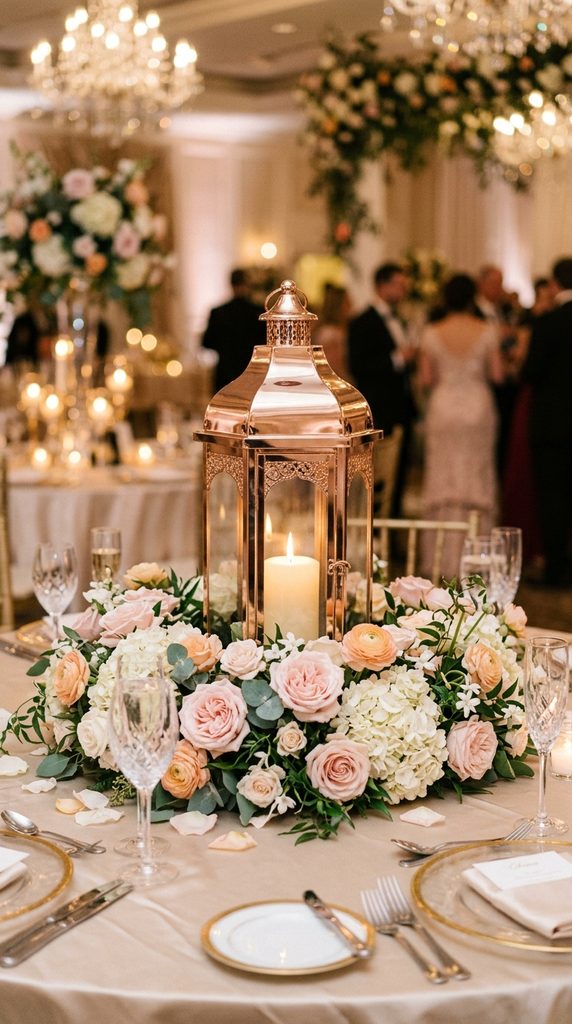
The romantic rose gold lantern centerpiece showcases luxurious, opulent styling through high-shine metallic surfaces and dense, ruffled floral blooms. This design centers around a polished copper or rose gold lantern characterized by a glossy, mirror-like finish that casts warm, blushing reflections across dinnerware. The lantern is nestled directly into the center of a dense, circular floral wreath composed of open garden roses, soft hydrangeas, ranunculus, and delicate trailing jasmine vines. The pastel palette of blush, cream, and soft peach contrasts against the warm metal, creating a soft, romantic tablescape. Elevating the lantern inside the floral wreath gives the arrangement structural height, ensuring the centerpiece commands visual presence on large, circular banquet tables. The enclosure protects the central candle flame, casting a soft, flattering glow across the surrounding flower petals.
Begin by soaking a commercial eight-inch open-center floral foam wreath ring in water treated with liquid floral preservative until fully saturated, draining excess water for fifteen minutes. Set the damp foam wreath onto a clear plastic protective tray to prevent moisture from transferring to venue table linens. Insert conditioned stems of silver dollar eucalyptus and dusty miller into the outer and inner foam borders at a forty-five-degree angle to conceal the plastic mechanics completely. Cut the stems of white hydrangeas, blush garden roses, and pale peach ranunculus to three-inch lengths, inserting the blooms densely into the top surface of the foam until no mechanics remain visible. Lower a polished, twelve-inch rose gold lantern directly into the empty circular center of the completed wreath, ensuring the metallic base rests level against the inner plastic tray. Insert a clean, three-by-six-inch ivory pillar candle into the lantern chamber, lighting the wick prior to the reception grand entrance.
6. Vintage Moroccan Pierced Metal Lantern with Amber Glass Accents
Setup Method
The vintage Moroccan pierced metal lantern centerpiece brings exotic architectural detail, intricate shadow play, and rich bohemian warmth to reception tablescapes. Crafted from antiqued brass, blackened bronze, or punched tin, this lantern features elaborate filigree cutouts and embossed amber or cobalt glass panels. When illuminated from within, the pierced metal patterns project intricate geometric shadows across table runners and guests’ place settings, transforming the dining area into an immersive visual environment. The lantern is accented with low, layered styling elements, such as richly patterned kilim runners, brass tea glasses, and scattered pomegranate fruits. The warm metallic tones and stained glass refract candle glow into deep, amber hues that enrich evening celebrations. This artistic approach suits couples seeking a vibrant, eclectic alternative to standard formal wedding designs.
Place an embossed, antique brass Moroccan lantern with pointed minaret arches centrally on a deeply toned jewel-toned runner. Open the side access door and place a heavy, unscented votive candle encased in thick clear glass onto the interior metal floor. Surrounding the base of the lantern, place four authentic Moroccan gilded tea glasses filled with water, inserting two short-stemmed burgundy dahlias and sprigs of fresh mint into each glass. Scatter whole, ripe pomegranates and dried Turkish figs around the metal base, slicing one pomegranate in half to expose the vibrant ruby seeds for rich organic texture. Interweave a slender, flexible garland of dark Italian ruscus between the fruit and glassware, trailing the leafy ends off the table edges. Light the interior votive candle using a long-reach match, and close the pierced metal latch to project detailed shadow patterns across the surrounding table surfaces.
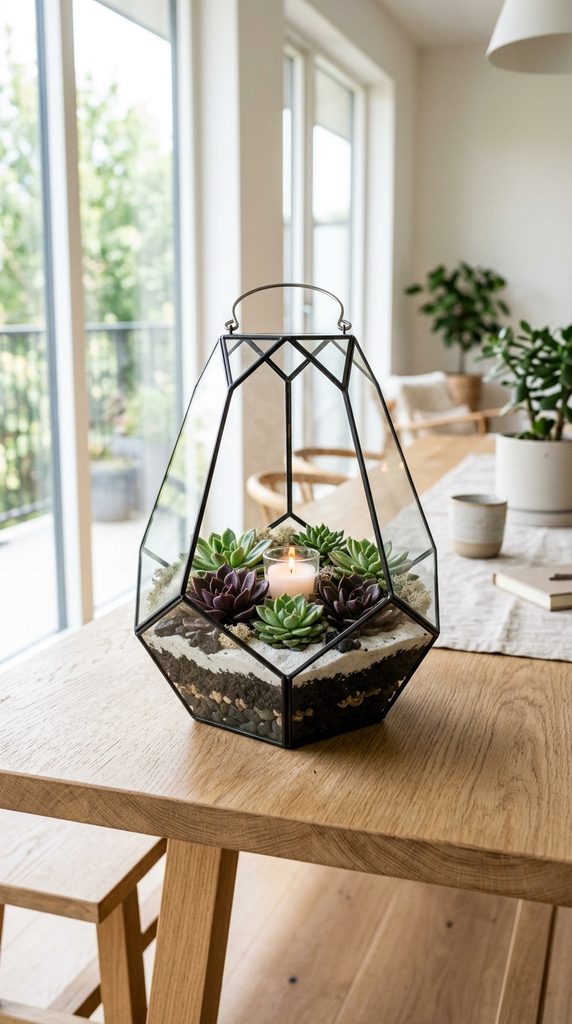
7. Minimalist Terrarium Lantern with Living Succulent Garden
Step-by-Step Guide
The minimalist terrarium lantern centerpiece presents a clean, sustainable design centered around drought-tolerant botanicals, clear glass, and contemporary greenhouse architecture. The terrarium lantern features thin black zinc or brass framing with expansive glass walls, showcasing an organized arrangement of living succulents, porous lava rock, and polished river pebbles. This living centerpiece serves as an eco-conscious alternative to cut flowers, remaining healthy throughout the wedding weekend and transitioning seamlessly into post-event favors for family members. The geometric glass box provides structural transparency that keeps sightlines entirely open across dining tables. Low-profile succulent rosettes introduce sculptural green, plum, and blue-grey tones, pairing effortlessly with modern linen napkins, clear acrylic chairs, and clean ceramic plates. The design celebrates botanical form and zero-waste construction, aligning with mindful event planning principles.
Select an open-top or vented geometric glass terrarium lantern measuring ten inches wide by eight inches tall, ensuring all interior seams are watertight. Pour a one-inch base layer of washed pea gravel or black volcanic rock across the glass floor to provide visual texture and simulate horticultural drainage. Top the gravel with a thin, decorative layer of horticultural white sand, keeping the layered strata clearly visible through the exterior glass walls. Nest three potted echeveria succulents of varying sizes (two-inch, three-inch, and four-inch rosettes) directly into the sand, packing additional sand around their root balls to stabilize the plants. Place a small, battery-operated wax votive candle inside a frosted glass cup between the two smaller succulents, ensuring the flame simulation rests away from living fleshy leaves. Finish by placing three smooth, black tumbled basalt river stones along the sand perimeter to anchor the composition with clean organic contrast.
8. Whimsical Fairytale Glass Cloche Lantern with Preserved Wildflowers
Execution Process
The whimsical fairytale glass cloche lantern captures a storybook aesthetic through bell-shaped glass curves, delicate preserved botanicals, and vintage specimen presentation. A glass cloche or bell jar resting on a turned walnut or slate base functions as a specialized lantern when illuminated with concealed LED bases or micro lights. The interior houses an ethereal botanical composition featuring preserved white larkspur, dried chamomile, bunny tails, and wisps of asparagus fern that appear to grow straight from a mossy base. The enclosed curved glass magnifies the delicate petals while protecting fragile dried florals from passing table drafts. The transparent dome reflects ambient reception chandeliers, creating a luminous, heirloom-grade display suited for intimate gatherings, historic estates, and vintage garden receptions. The enduring nature of dried elements allows planners to assemble these centerpieces weeks in advance, eliminating setup stress on the event day.
Position a turned dark walnut wooden base plate with an eight-inch diameter groove centrally on an airy cheesecloth table runner. Apply a thin disc of non-hardening floral clay to the center of the wooden base, pressing a battery-operated LED circular puck light firmly onto the clay with the switch facing upward. Cover the edges of the light disc with a dense layer of preserved green sheet moss and Spanish moss, allowing the light diode to shine through the center. Insert dried stems of bleached phalaris, preserved white larkspur, miniature starflowers, and delicate ferns into the moss, pushing the woody ends down to hold the stems vertical. Gently lower the clear glass cloche dome over the arrangement, seating the glass rim into the pre-cut circular channel of the wooden base. Wrap a single strand of sheer ivory silk ribbon around the glass dome’s top finial handle, tying a small tailored knot with short hanging tails.
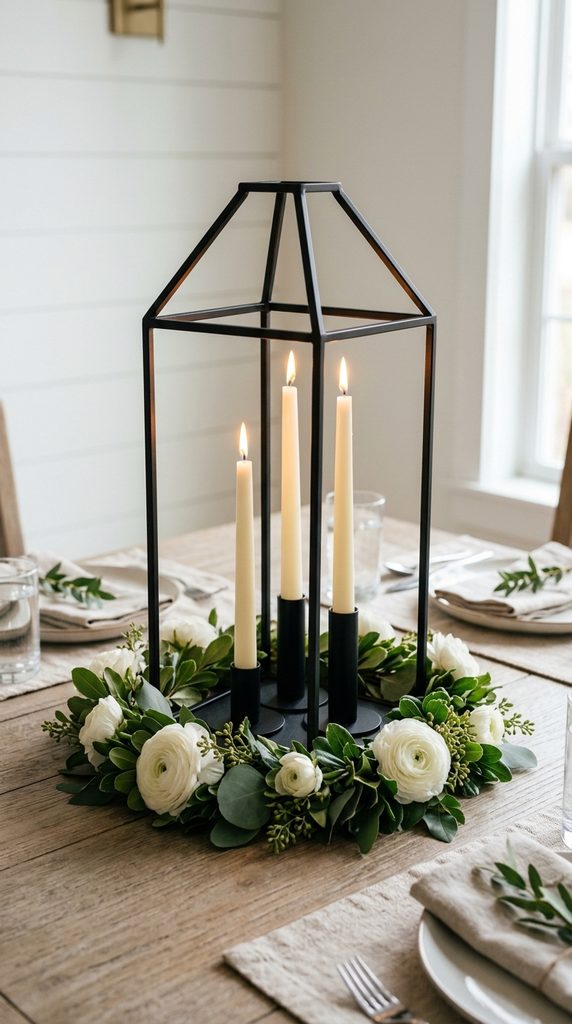
9. Modern Farmhouse Black Open-Frame Lantern with Taper Trio
How to Create
The modern farmhouse open-frame lantern combines stark rural architecture with traditional candle styling, replacing single bulky pillars with a slender trio of vertical tapers. The lantern itself is characterized by a square or rectangular black metal silhouette completely stripped of glass panes, emphasizing negative space and clean visual transparency. Inside, three taper candles of staggered heights rise from individual metal holders, creating dynamic vertical lines that catch the eye. The absence of glass panes prevents reflections, smudges, and soot accumulation, giving guests an unobstructed view of clean, flickering tapers. A crisp, tailored ring of seeded eucalyptus and white ranunculus sits tightly around the base, anchoring the high-contrast iron lines. This design balances contemporary graphic framing with classic wedding warmth, complementing modern barn venues and rustic industrial spaces.
Set a sixteen-inch glassless black metal open-frame lantern on the center of the reception table, verifying that the four corner legs sit level on the tabletop. Place three heavy, weighted brass or matte black taper candle holders of staggered heights (four, six, and eight inches) in a triangular cluster inside the lantern base. Secure a non-drip, standard-diameter ivory taper candle firmly into each holder, pressing candle adhesive putty into the cups if necessary to ensure the tapers stand plumb. Form a dense, narrow garland ring using fresh salal leaves, silver dollar eucalyptus, and three stems of open white ranunculus, wrapping the stems tightly with floral binding wire to maintain an outer diameter of no more than twelve inches. Slip the completed floral ring over the top of the lantern, sliding it down until it rests flat against the exterior bottom frame. Light all three tapers using an extended gas lighter ten minutes before dinner service begins.
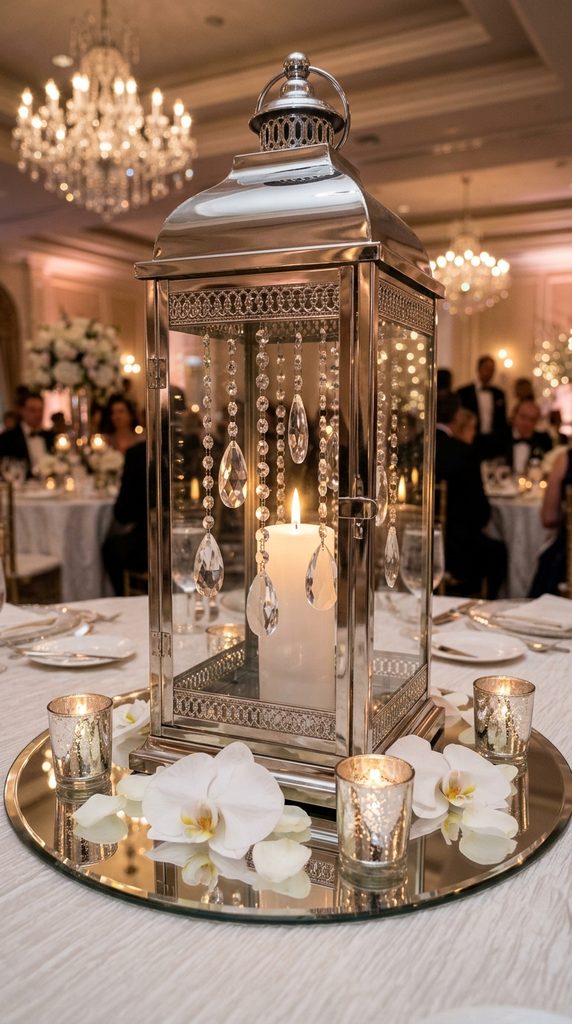
10. Glamorous Mirrored Lantern with Suspended Crystal Drops
Setup Method
The glamorous mirrored lantern centerpiece introduces dramatic luxury through reflective surfaces, crystal light refraction, and formal symmetry. This design features a polished silver, chrome, or mirror-backed lantern with beveled glass panels that catch and multiply candlelight across the banquet table. Suspended inside the upper dome, faceted glass or crystal teardrops hang directly above a thick white pillar candle, catching heat currents and shimmering under ceiling downlights. The lantern rests on a round beveled table mirror, creating an expansive optical reflection that doubles the visual illumination. The base is accented with low silver mercury glass votives, loose white orchid blossoms, and soft hydrangeas. This arrangement adds grandeur and luminosity to classic ballroom receptions, evening winter weddings, and black-tie celebrations where high-impact reflective decor is essential.
Place a twelve-inch round, beveled-edge glass mirror flat in the center of the banquet table, wiping the surface with an anti-static cloth to remove all dust particles. Position an antiqued silver lantern with a mirrored back panel directly in the center of the mirrored base plate. Attach three graduated acrylic or Swarovski crystal teardrop pendants to the interior ceiling crossbars of the lantern using thin silver jump rings, ensuring the lowest crystal hangs at least four inches above the anticipated candle flame height. Center an unscented, high-grade white paraffin pillar candle measuring three inches wide by seven inches tall onto the lantern floor, closing and latching the front door. Position four silver mercury glass votives loaded with four-hour tealights symmetrically around the circular perimeter of the base mirror plate. Lay individual heads of white dendrobium orchids and small sprigs of frosted dusty miller between the votives, letting the petals rest directly against the beveled mirror edge.
Common Beginner Mistakes and How to Avoid Them
The most frequent error in DIY lantern centerpiece design involves underestimating venue fire safety regulations and the physics of candle combustion inside enclosed chambers. Placing a standard wax pillar candle inside a completely sealed, glass-enclosed lantern without sufficient ventilation causes intense heat buildup that melts the candle unevenly, creating messy wax pools and black soot across the glass panes. Always verify that your chosen lanterns feature top exhaust vents, or choose high-grade battery-operated LED pillars with realistic wax coatings and flickering wicks to eliminate fire hazards entirely. Another widespread mistake is assembling arrangements that exceed proper eye-level sightlines, blocking natural guest conversation across round dining tables. Keep tabletop floral wreaths and lower lantern elements below fourteen inches, or use tall, open lanterns that elevate mechanics above twenty-four inches. Furthermore, decorators often use ordinary paper tape or hot melt adhesives to mount greenery to metal lantern frames, which quickly releases when exposed to heat or humidity. Always secure floral mechanics with mechanical fasteners, such as green zip ties, binding wire, or weighted floral rings, ensuring elements remain firmly anchored through transportation and guest handling.
Practical Tips for Better Results
Achieving professional, boutique-quality lantern centerpieces requires careful attention to glass cleanliness, illumination quality, and proportion balance. Clean all lantern glass panes using a 50/50 water and white vinegar solution paired with lint-free microfiber cloths forty-eight hours before the event, packing cleaned lanterns into divided cardboard cartons with bubble wrap to prevent fingerprints during transit. When selecting LED candles, choose units that emit warm white light (2700 Kelvin) rather than cool blue-toned light, ensuring the tablescape casts an authentic, flattering glow across dinnerware and guests’ faces. Always pack an emergency setup kit containing an extended butane lighter, extra batteries, micro-scissors, glass cleaning wipes, and black or brass zip ties to handle last-minute adjustments. If using fresh florals around the base, build the arrangements on waterproof plastic saucers or clear acrylic trays to protect delicate venue table linens from water stains and chlorophyll seepage. Finally, test a complete centerpiece prototype on a fully set table weeks before the wedding, evaluating the lighting effect in both bright daylight and dim evening conditions.
Styling, Presentation, or Organization Ideas
A lantern centerpiece should integrate smoothly into the surrounding dining environment rather than standing as an isolated decorative object. To extend the visual presence of a central lantern, layer coordinating textiles, scattered elements, and ambient lighting outward across the table runner. For long rectangular banquet tables, stagger lanterns of two complementary heights (such as twelve-inch and sixteen-inch models) along a continuous foliage garland, placing smaller brass or glass votives between the main units to create dynamic visual rhythm. On round tables, orient the lantern access door away from the primary room entrance, creating a balanced, 360-degree composition that looks appealing from every seated angle. Integrate custom table numbers directly into the lantern design by applying matte white vinyl decals to the exterior glass panes, or hanging calligraphed cardstock tags from the top handle with silk ribbon. Surround the lantern base with varying textures, pairing smooth metallic finishes with rough linen runners, ribbed glassware, and organic foliage to build a rich, cohesive tablescape.
Budget and Time Planning
Designing lantern centerpieces offers excellent cost efficiency when managed with a structured sourcing plan and timeline. Renting high-end lanterns can cost nearly as much as purchasing them outright; buying wholesale lanterns or sourcing them second-hand from recent couples allows you to recoup up to sixty percent of your investment through post-wedding reselling. To maximize your budget, mix durable faux greenery garlands—such as real-touch eucalyptus—with strategic additions of fresh focal blooms like garden roses or ranunculus, achieving a luxurious look at a fraction of full-florist pricing. In terms of time management, assemble non-perishable components weeks before the wedding: clean glass, install LED candles, and prep base trays in advance. Allocate ninety minutes on the wedding morning for a two-person team to position lanterns, unfurl garlands, and light candles across twenty tables. This streamlined workflow eliminates assembly bottlenecks, allowing the decorating crew to complete table setups quickly and focus on final event preparations.
Creative Expansion and Advanced Inspiration
Once you master basic lantern tablescapes, explore advanced variations that push your venue decor into high-concept styling. Consider suspending lanterns overhead from rustic ceiling beams, metal box trusses, or clear tent structures using heavy natural ropes or aircraft cable, floating a canopy of warm illumination above banquet tables. Experiment with dynamic interior botanical installations, such as wiring miniature trailing orchids to grow organically up the interior metal struts of glassless lanterns, combining living plants with vertical architecture. For outdoor garden celebrations, incorporate solar-powered LED pucks or discreet, timer-controlled micro-spotlights into the lantern roof to cast dramatic architectural shadows through surrounding trees. You can also integrate customized aromatic elements by placing dried lavender bundles, cinnamon sticks, or star anise around the candle base, releasing subtle, welcoming fragrances as the lantern warms. Mastering these versatile styling techniques empowers you to design immersive, memorable event spaces that highlight the timeless romance and architectural beauty of lantern decor.