Antique vessels introduce historical character, sculptural beauty, and refined craftsmanship to wedding reception tables. Using vintage and heritage-style containers establishes an intimate, collected ambiance that modern factory-made glassware…
Antique vessels introduce historical character, sculptural beauty, and refined craftsmanship to wedding reception tables. Using vintage and heritage-style containers establishes an intimate, collected ambiance that modern factory-made glassware cannot replicate. This comprehensive guide outlines professional methods for sourcing, preparing, and arranging floral installations within varied antique vases. Readers will discover structural techniques for stabilizing delicate historical vessels, balancing floral proportions, and selecting harmonious color palettes across reception spaces. Antique wedding vase centerpieces serve as memorable design statements while offering exceptional practical value. These distinctive vessels adapt seamlessly to varied floral mechanics, accommodating traditional water reservoirs, hidden chicken wire armatures, and modern pin frog stabilizers. By exploring these curated concepts, wedding couples, event stylists, and floral designers will master the process of assembling durable, museum-quality table displays. Understanding proper vessel preparation and period-accurate aesthetics guarantees that every centerpiece remains structurally stable, visually balanced, and properly hydrated throughout dinner service and evening dancing. The following ten concepts demonstrate how authentic aged patinas, intricate ceramic finishes, and vintage metals combine with lush botanicals to elevate wedding decor.
Why Antique Vessels Define Modern Tablescapes
Antique vase centerpieces continue to dominate wedding design boards because they provide genuine character and enduring aesthetic elegance. Modern celebration styling favors thoughtful personalization over uniform banquet decor, making vintage containers an appealing choice for intentional hosts. Authentic age marks, surface patinas, and distinctive silhouettes elevate floral displays by introducing physical texture that contrasts beautifully with smooth linens and polished flatware. These vessels possess exceptional DIY value, allowing couples to curate collections over time from estate sales, flea markets, and family heirlooms. This sustainable sourcing method reduces reliance on newly manufactured decor while giving discarded or stored antiques a functional second life. Antique vases are remarkably accessible for beginners, as their intrinsic ornamentation and structural weight carry visual interest effortlessly, requiring fewer floral stems to achieve a luxurious, high-end appearance. Whether styling an intimate countryside gathering, an opulent ballroom reception, or an understated minimalist celebration, historical vessels provide a timeless foundation. Their diverse forms harmoniously unite disparate decor elements, creating memorable visual anchors across varied venue architectures and dynamic celebration layouts.
Materials, Mechanics, and Vessel Preparation
Successful centerpiece construction begins with methodical vessel inspection, thorough surface preparation, and specialized floristry mechanics. Essential materials include clean antique vessels, floral pin frogs, coated wire mesh, waterproof floral tape, shears, and specialized floral food solutions. Because historical ceramic, glass, and metal containers often develop hairline fractures, porous unglazed surfaces, or internal oxidization, proper initial sealing is vital. Before arranging, fill every antique vessel with water and let it rest on heavy absorbent paper for twelve hours to verify watertight integrity. Line compromised, unglazed, or valuable collectible vessels with clear plastic florist liners or fitted glass cups to prevent liquid leaks and surface corrosion. Secure floral pin frogs to vessel interiors using specialized waterproof floral adhesive putty applied to completely dry surfaces. For wide-mouthed urns and compotes, shape coated chicken wire into a sturdy spherical armature, securing the edges beneath the vessel rim with cross-taped strips of clear adhesive. Calculating table dimensions in advance determines appropriate vessel heights, preventing tall floral branches from obstructing guest sightlines or conflicting with seated banquet service.
Idea 1: Victorian Mercury Glass Pedestal Compotes
Step-by-Step Guide
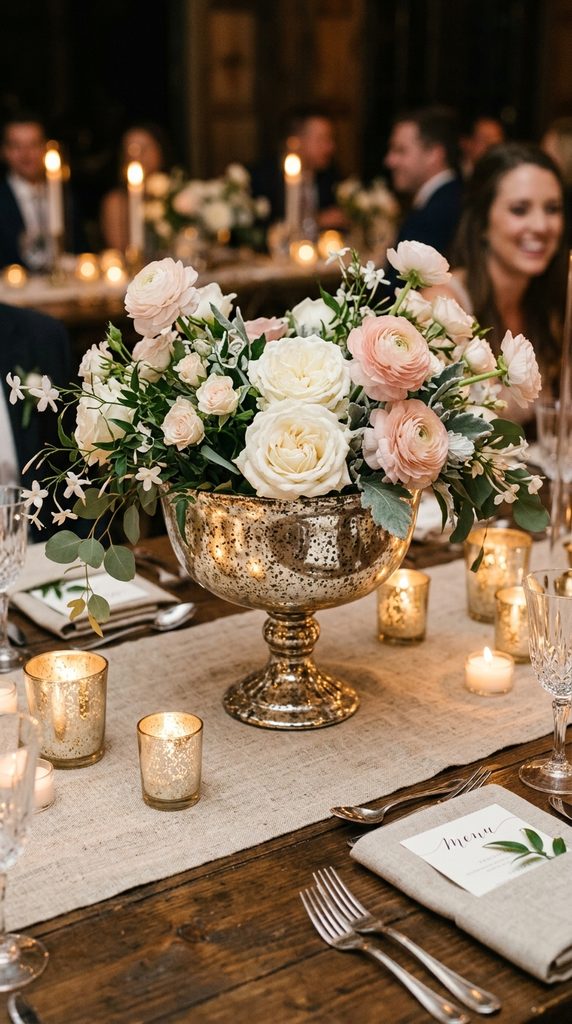
Victorian mercury glass pedestal compotes feature a double-walled silvered construction that reflects candlelight across dinner tables, creating an ethereal glow. The broad, shallow bowl elevates garden roses and cascading greenery, allowing delicate petals to drift naturally over the speckled, mirrored metallic rim. This distinctive reflective finish introduces opulent vintage character while balancing rich floral palettes like burgundy, blush, and ivory. Mercury glass compotes provide exceptional stability for banquet tables, as their weighted pedestals anchor floral mass low to the linen. This design complements romantic evening celebrations, historic manor ballrooms, and winter wedding receptions where warm, flickering light defines the room atmosphere. The slight oxidation and distressed silvering inherent to authentic antique mercury glass bring textural depth that prevents floral arrangements from appearing overly rigid. By lifting floral arrangements three to four inches above table height, these compotes maintain clear conversation lines across the table while delivering maximum visual presence from all dining chairs.
To create this centerpiece, select an authentic or faithful reproduction mercury glass compote with a bowl diameter of eight to ten inches. Inspect the internal silvering, placing a thin, flexible plastic liner inside the bowl to guard the aged metallic coating against water exposure. Cut a three-inch square piece of coated green chicken wire, fold the edges inward to form a domed nest, and place it within the liner. Anchor the wire securely by running a strip of half-inch waterproof floral tape across the bowl opening, adhering the ends firmly to the outer glass rim. Fill the bowl three-quarters full with cool floral nutrient water, and begin your foliage base by inserting trailing eucalyptus stems around the perimeter. Next, insert focal blooms like ivory garden roses and ruffled ranunculus into the central wire grid at varying angles, cutting stems on an angle for superior hydration. Finish the arrangement with delicate sprigs of white sweet peas, positioning the finished compote in the center of the reception table.
Idea 2: French Cobalt Sèvres Porcelain Urns
Execution Process
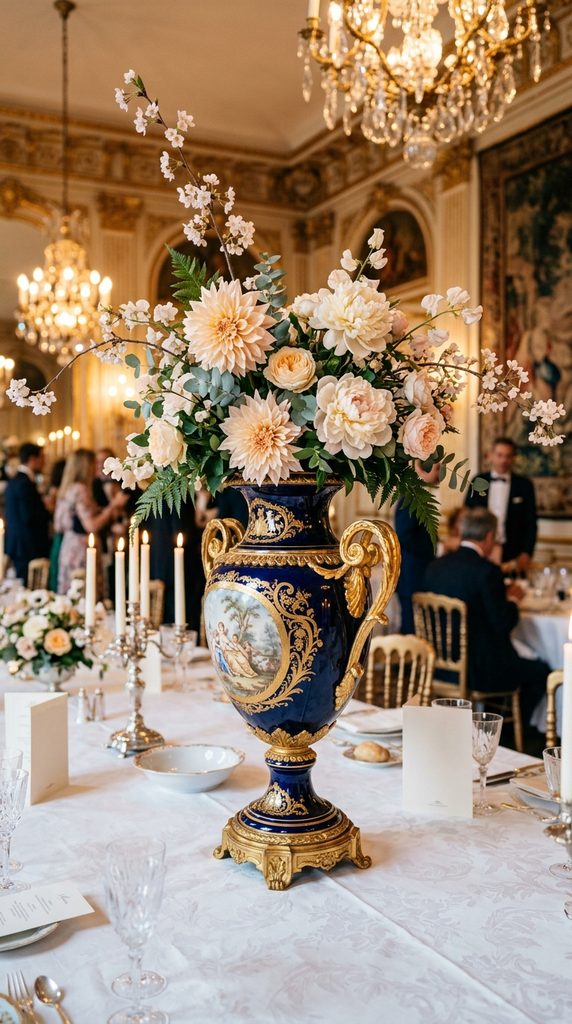
French Sèvres porcelain urns showcase deep cobalt blue glazes, intricate hand-painted heraldic or pastoral cartouches, and polished ormolu bronze mounts. These stately containers evoke the grandeur of historic European châteaux, making them ideal anchors for formal, aristocratic wedding receptions. The saturated royal blue ceramic acts as a complementary foundation for soft peach ranunculus, pale buttercup roses, and cascading golden-leaf foliage. Sèvres urns bring architectural height and artistic formality to large round dining tables or presidential banquet layouts, commanding visual authority within high-ceilinged venues. The gilded bronze handles and pedestal bases pick up surrounding candlelight, adding an opulent metallic sheen that coordinates with formal gold flatware. This centerpiece approach bridges classical antiquity with fresh botanical styling, turning simple reception spaces into curated estate galleries. When paired with neutral, crisp damask tablecloths, these vibrant porcelain urns become unforgettable focal points that highlight structural botanical design, fine porcelain craftsmanship, and rich historical color schemes.
Begin by acquiring a matched pair or single authentic antique porcelain urn, verifying that the handles and footings are structurally secure. Because historical porcelain glazes can be sensitive to moisture and mineral buildup, insert an acrylic or glass cylindrical insert directly into the vessel opening. Insert a brass floral frog into the base of the insert, securing it firmly with non-hardening florist putty to hold dense, woody branches upright. Fill the cylinder with room-temperature water, and establish the structural branch framework using trimmed quince or pear blossom branches that arch outward gracefully. Add cascading clusters of pale peach dahlias and cream peonies around the urn rim, inserting stems directly onto the brass pins to fix their placement securely. Fill empty structural gaps with silver dollar eucalyptus and variegated ivy, allowing several trailing vine ends to twist around the bronze handles. Ensure the final arrangement maintains balance, supporting the vertical silhouette without concealing the painted artistic medallion on the urn face.
Idea 3: Aged Florentine Cast Brass Goblets
How to Make
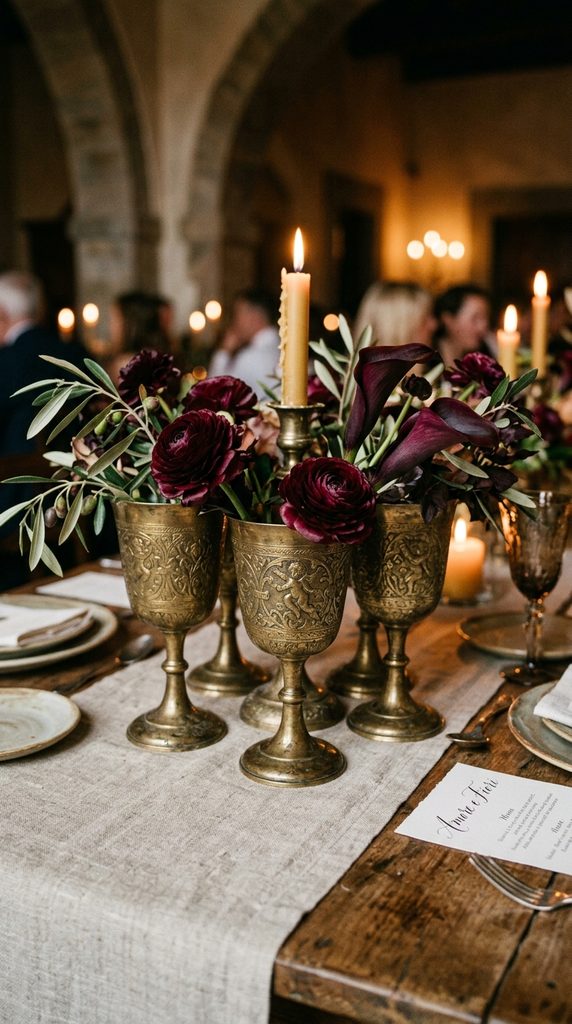
Aged Florentine cast brass goblets bring warm, antique-gold metallic patinas and tactile Renaissance engravings to intimate wedding reception tablescapes. These dense, heavy metal vessels feature baluster stems, flared rims, and intricate chasing that catches soft evening banquet lighting without producing harsh glare. Their compact footprints make them exceptional choices for narrow farmhouse tables, where expansive arrangements might encroach upon dinnerware and shared plates. The deep bronze, gold, and olive undertones of weathered brass harmonize with moody floral selections, including plum hellebores, deep espresso cosmos, and trailing olive branches. Using clusters of brass goblets creates an engaging visual rhythm across long table runners, offering an alternative to single, static centerpiece displays. The natural weight of cast metal makes these goblets virtually impossible to tip over, providing safety for venues with active breezes or lively communal seating. Their rich, historic patina adds artisanal warmth to minimalist, bohemian, or Old-World dining themes.
Collect three to five antique Florentine brass goblets of varying heights and bowl widths, polishing away exterior dust while preserving the aged metal patina. Because brass can react chemically with stagnant water, coat the interior surfaces with a brush-on floral wax sealant or insert snug disposable silicone cups. Cut miniature circles of fine floral wire mesh, pressing one wire bundle into the base of each goblet to serve as a supportive internal armature. Pour nutrient-rich water into the goblets, ensuring liquid levels stay one inch below the rim to prevent accidental spills during movement. Cut dark plum calla lilies, burgundy ranunculus, and dried seed pods to short lengths, inserting stems into the wire armature at thirty-degree angles. Interlock three arranged goblets along the center of a raw linen table runner, weaving loose olive sprigs between the bases to create a unified botanical composition that guides the eye naturally.
Idea 4: Blue and White Ming Style Ginger Jars
How to Create
Classic blue and white porcelain ginger jars bring crisp, graphic contrast, timeless global appeal, and enduring symmetry to modern wedding dining tables. These classic ceramic vessels feature rounded bodies, domed lids, and hand-painted motifs depicting winding lotus vines, double happiness symbols, or dynamic mountain landscapes. The clean white porcelain and deep indigo cobalt create a high-contrast foundation that enhances monochromatic white florals, such as hydrangea clusters, delphiniums, and white garden roses. Ming-style jars fit garden pavilion receptions, seaside celebrations, and elegant marquee weddings, anchoring clean contemporary linens with refined chinoiserie character. Removing the jar lids allows designers to utilize the narrow neck opening to support upright, tall-stemmed branches without complicated interior mechanics. The substantial visual presence of blue and white porcelain grounds reception rooms, directing visual focus toward table centers while unifying overall event colors across guest favors, custom stationery, and ambient decor.
Source smooth porcelain ginger jars ranging from eight to twelve inches tall, safely setting the removable lids aside to display flat on the surrounding table linen. Check the jar interior for hairline fissures by wiping the base clean, then fill the container halfway with fresh water treated with floral preservatives. Because ginger jars possess narrow necks, you do not require chicken wire; instead, form a tight cross-hatch grid across the opening using clear floral tape. Cut sturdy white hydrangea stems at sharp forty-five-degree angles, inserting three blooms into the tape quadrants to build a supportive, domed floral cushion. Thread tall white snapdragons, delicate cosmos, and branches of fresh camellia foliage through the center of the hydrangeas, letting their natural height rise above the porcelain rim. Position the completed jar on the center table point, resting the detached decorative porcelain lid slightly ajar against the vessel base to honor its authentic form.
Idea 5: Hand-Hammered Persian Copper Ewers
Setup Method
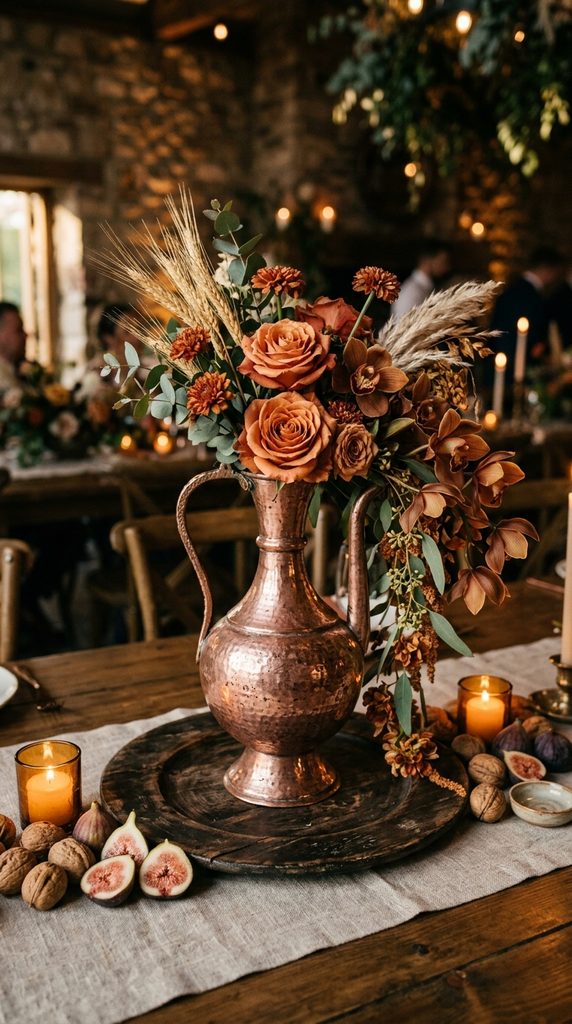
Antique Persian copper ewers feature slender necks, flared pouring spouts, sweeping handles, and hand-hammered relief carvings that introduce exotic, Old-World romance to wedding tables. The warm, burnished copper surfaces develop complex patinas over decades, blending shimmering rose-gold highlights with dark oxidized crevices. These striking silhouettes add vertical architecture without requiring tall floral stems, making them ideal focal pieces for long tables or escort stations. Copper ewers pair naturally with rich autumnal and bohemian wedding aesthetics, contrasting boldly against terracotta linens, pomegranates, and dried florals. The curved pouring spout and high arched handle create asymmetrical profiles that encourage organic, dynamic flower placement. Utilizing copper containers honors historical metalsmithing traditions while providing a grounded, metallic focal point that reflects warm banquet candlelight, casting rich amber hues across dinner plates and surrounding decor.
Begin by selecting an authentic copper ewer with a wide base, ensuring the narrow neck can support flower stems without restricting necessary water flow. Inspect the interior for heavy verdigris oxidation, thoroughly cleaning the vessel with warm water and sealing bare interior copper with waterproof polyurethane to protect fresh stems. Fill the bottom reservoir with water using a slender gooseneck watering kettle, maintaining water depth without spilling over the angled pouring spout. Because ewer necks are narrow, insert two tall stems of dried golden wheat and branching cotinus foliage first, anchoring their stems deep within the base. Slide focal blooms, like deep terracotta garden roses and bronze cymbidium orchids, through the neck opening, resting their heavy blossom heads comfortably against the flared spout. Place the finished ewer on a wooden charger plate, scattering split fresh figs and raw walnut shells around the copper base to emphasize the historic, artisanal aesthetic.
Idea 6: European Enamelware Spatter Pitchers
Step-by-Step Guide
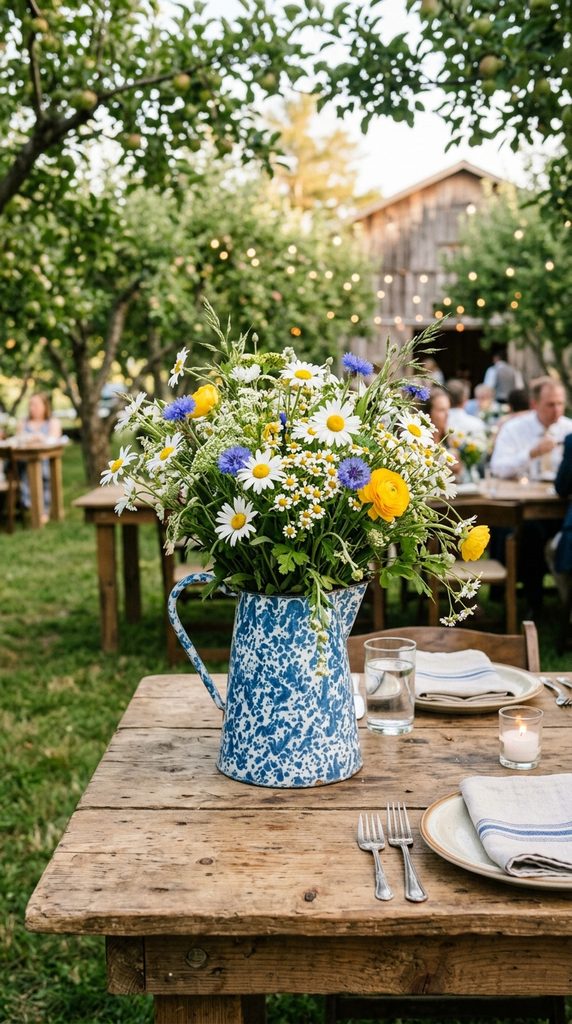
Vintage European spatterware and graniteware enamel pitchers bring playful charm, retro appeal, and relaxed cottage character to outdoor wedding celebrations. These functional historical vessels, made from durable enameled steel, feature mottled spatter patterns in shades of cobalt, forest green, or classic slate gray over white. Their casual, farmhouse appearance suits meadow receptions, barn weddings, and relaxed orchard dinner parties where formal polished metal or fine cut crystal would feel stiff. The broad mouth and sturdy pouring lip of enamel pitchers easily support loose, gathered-from-the-field botanical arrangements, including field daisies, branching chamomile, and wild herbs. Enamelware is completely shatterproof, making it exceptionally practical for transport to remote outdoor venues, windy tent sites, and lakeside docks. Its smooth, non-porous vitreous glass coating is simple to clean, thoroughly watertight, and protects table surfaces against moisture stains throughout the celebration.
Locate vintage enamel pitchers measuring seven to nine inches tall, verifying that rust spots along the interior seams have been stabilized with clear silicone sealant. Wash the interior with warm soapy water to clear residue, drying the outer metal handle and pouring lip with a clean lint-free cloth. Cut a block of bio-degradable floral foam to fit the pitcher interior snugly, soaking the material in water before sliding it into the base. Use sharp floral snips to cut stems of fresh chamomile, blue cornflowers, and yellow ranunculus to varied natural lengths. Insert the floral stems into the foam base, starting with outer greenery to establish an asymmetrical garden silhouette that flows past the pitcher spout. Complete the arrangement by clustering three open white garden roses near the lip, balancing the visual weight of the heavy side handle and creating a relaxed centerpiece for wooden banquet tables.
Idea 7: Edwardian Cut Crystal Celery Vases
Execution Process
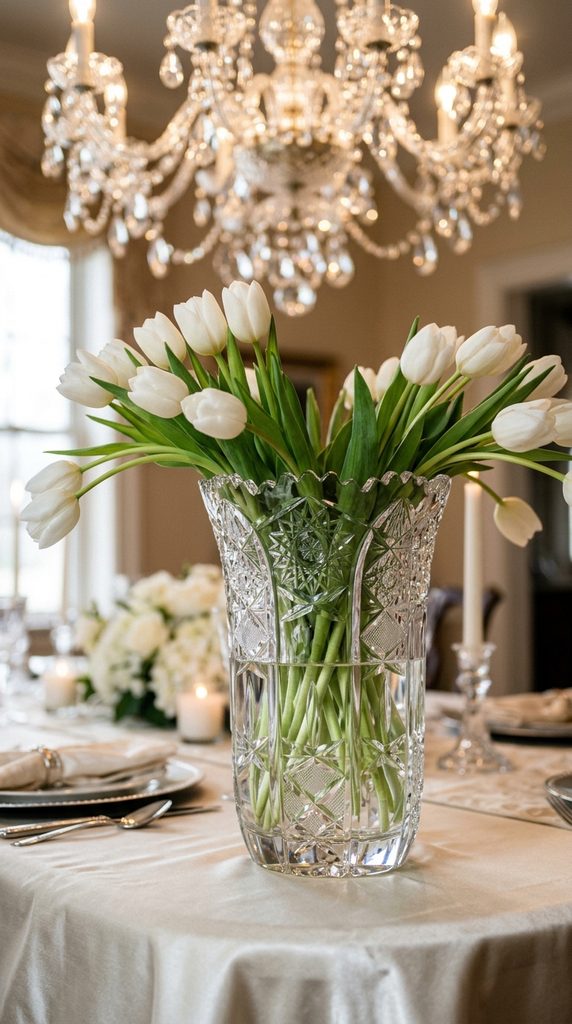
Edwardian cut crystal celery vases showcase deep geometric facet cuts, scalloped serrated rims, and brilliant light-refracting properties that capture evening banquet lighting. Originally designed as high-status Victorian and Edwardian dining accessories, these tall, cylindrical vessels elevate floral arrangements with historical brilliance. The thick, heavy crystal walls sparkle under ambient candlelight, casting complex, dancing patterns across smooth sateen tablecloths and silverware. Celery vases provide an exceptional container for classic white and green floral palettes, where the clarity of lead crystal emphasizes stem placement and water purity. Their upright silhouettes keep floral spreads contained, making them a wonderful choice for bustling banquet tables with shared plates and bread baskets. This style bridges vintage collecting with fresh, modern minimalism, delivering an uncluttered yet formal decorative focal point that enhances estate gatherings, classic country club receptions, and high-end city celebrations.
Source matched Edwardian cut crystal vases, inspecting the faceted rims and footed pedestals to confirm the absence of dangerous sharp chips or glass fractures. Clean the crystal thoroughly using a mild water and white vinegar rinse, hand-drying with microfiber cloths to eliminate mineral spots and achieve radiant clarity. Because the clear crystal reveals interior stems, strip all submerged foliage from your botanical stems to keep the water clear and pristine. Fill the vase two-thirds full with fresh distilled water and a measured dose of clear liquid floral preservative, keeping the water line neat. Gather a tight clutch of long-stemmed white Dutch tulips, trimming the ends evenly and placing them directly into the vase opening. The heavy flared rim will support the curving tulip stems, allowing the blossoms to drape naturally over the faceted glass edges to create a balanced, sparkling focal display.
Idea 8: Classical Greek Terracotta Amphora Urns
How to Make
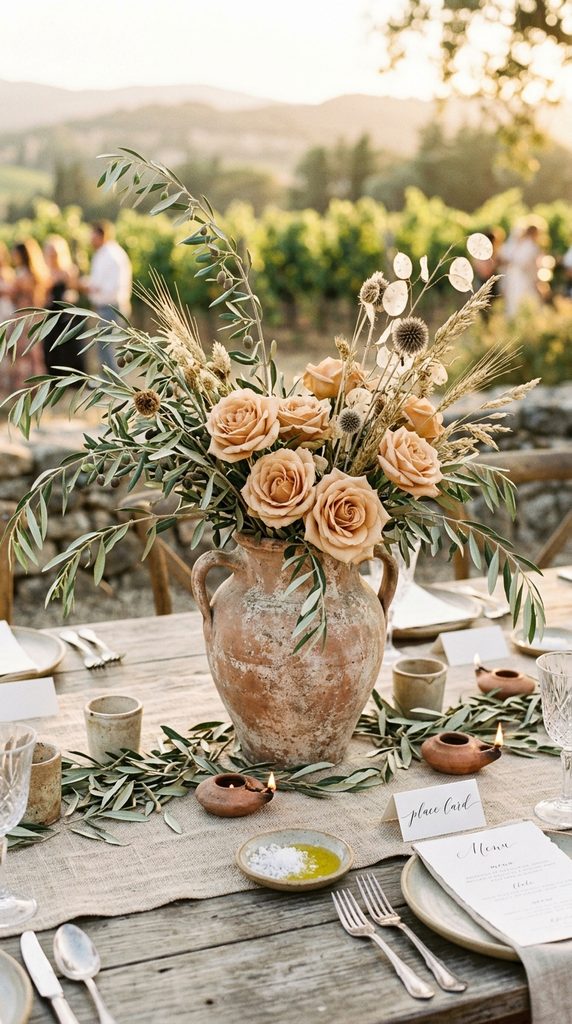
Terracotta amphora urns introduce sun-baked warmth, sculptural balance, and Mediterranean antiquity to modern wedding reception tablescapes. Featuring dual loop handles, tapering bases, and chalky, mineralized clay surfaces, these timeless vessels evoke sun-drenched European olive groves and classical Mediterranean architecture. The porous, matte texture of natural clay absorbs midday sunlight and evening candlelight, providing an earthy visual anchor that grounds vibrant floral arrangements. Terracotta harmonizes effortlessly with muted, warm color palettes, including sun-bleached blush, dusty olive, dried pampas grass, and creamy garden blooms. These historical clay containers suit outdoor vineyard celebrations, coastal courtyard dinners, and modern bohemian weddings, adding architectural substance without requiring high-gloss surfaces. The organic patina of weathered clay introduces an authentic, time-softened feel that softens formal venue settings, bridging contemporary styling with ancient pottery craft across both rectangular and round table designs.
Source stabilized terracotta amphoras featuring flat pedestal bases, verifying that the vessels sit level on flat wooden dining surfaces without rocking. Because unglazed terracotta is porous and absorbs standing water, coat the interior thoroughly with a brush-on liquid rubber sealant, letting it cure for forty-eight hours. Insert a brass floral frog into the sealed bottom, securing it with a generous ring of floral tack to stabilize heavy, woody branches. Fill the amphora with fresh water, and anchor the structural design with two arching branches of fruiting olive wood inserted deep into the brass pins. Add focal flowers by inserting terracotta ranunculus, creamy cappuccino roses, and delicate dried grasses at contrasting heights to complement the twin clay handles. Set the completed amphora on a light linen table runner, finishing the presentation by scattering dried olive leaves and small clay oil lamps around the base.
Idea 9: Ornate Victorian Silver-Plated Tea Urns
How to Create
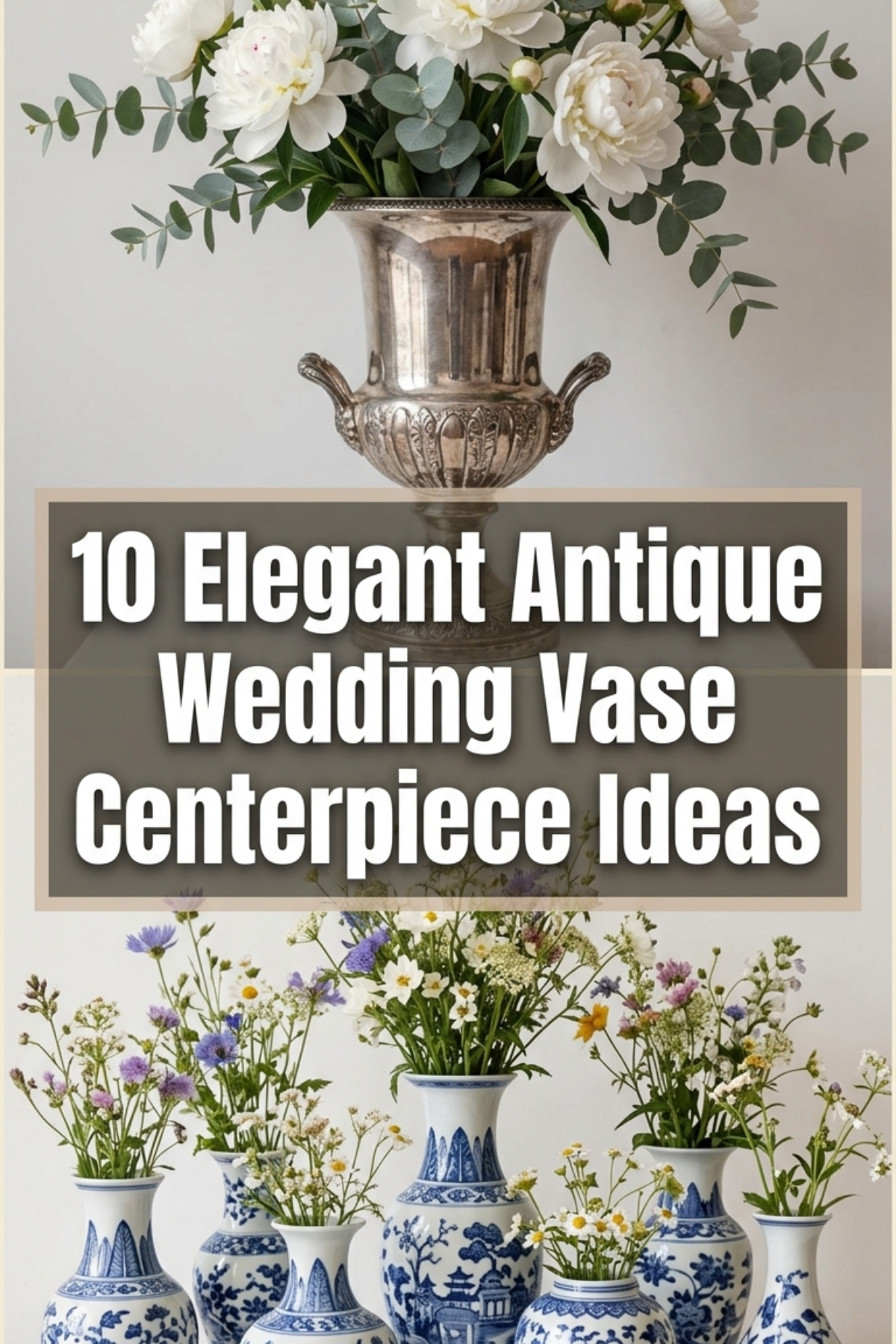
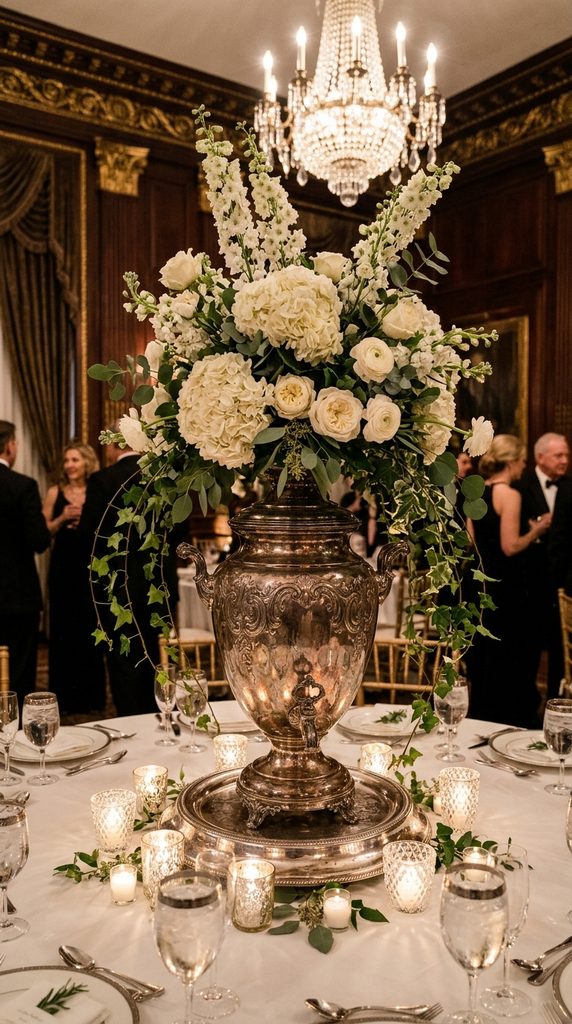
Repurposed Victorian silver-plated tea urns introduce aristocratic drama, vintage craftsmanship, and towering elegance to formal wedding reception tables. These stately vessels feature hand-engraved scrolling acanthus leaves, decorative spigots, pedestal bases, and high-relief finials that showcase Victorian silversmithing skill. The polished silver surface mirrors the ambient hues of the reception space, reflecting flickering candlelight and floral colors to enhance the room’s celebratory atmosphere. Silver-plated urns deliver monumental height, making them perfect visual anchors for grand estate entries, escort card displays, or centerpieces for spacious round banquet tables. Their antique patina, marked by soft charcoal shading within engraved details, brings dimensional depth that flat polished modern silver cannot match. When paired with cascading, romantic floral designs, these tea urns evoke timeless stately home hospitality, delivering a refined focal point that enriches classic black-tie celebrations and historic ballroom receptions.
Procure functional antique silver-plated tea urns, using a non-abrasive silver cream to polish broad surfaces while leaving darker oxidation within carved floral recesses for depth. Disassemble and secure the upper water chamber, verifying that the drainage spigot is tightly closed to eliminate potential water leaks during the event. Place a deep plastic bucket liner into the top chamber, securing a soaked cylinder of floral foam within the liner using waterproof anchor tape. Cut stems of ivory hydrangeas to short lengths, inserting them into the base of the foam to build a dense floral collar that crowns the silver rim. Thread tall white delphiniums, fragrant lilac branches, and cascading ivy tendrils through the center, balancing the urn’s height and allowing greenery to drape softly near the spigot. Position the finished silver urn in the center of the table, flanked by low crystal votive candles to reflect light across the silver engraving.
Idea 10: Rustic Stoneware Salt-Glaze Crocks
Setup Method
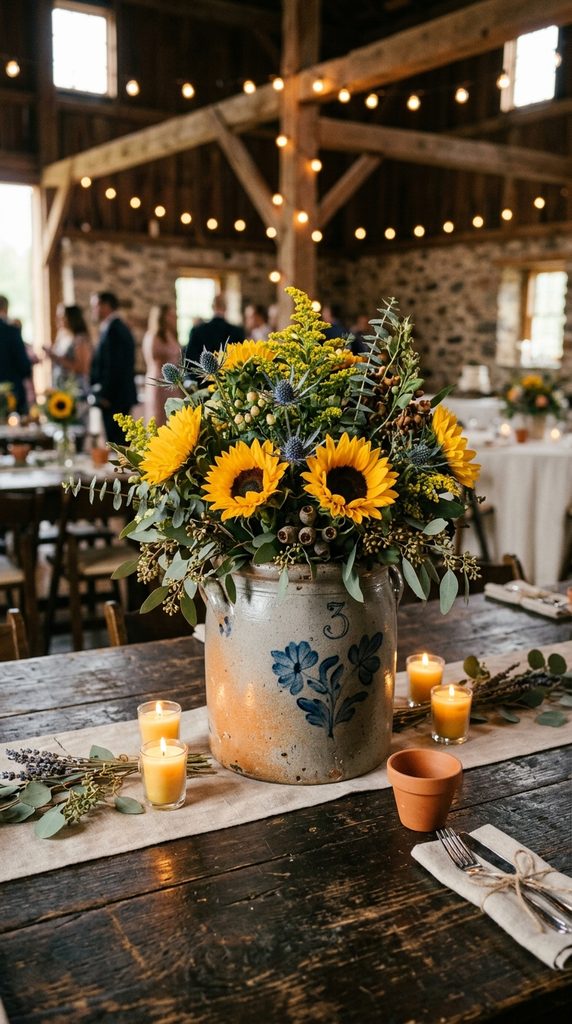
Antique American and European salt-glazed stoneware crocks offer honest functionality, rich artisanal history, and clean geometric profiles for rustic wedding celebrations. These durable ceramic vessels feature neutral gray or warm beige clay bodies, subtle hand-painted cobalt blue floral motifs, and distinctive orange-peel salt textures. Their heavy, cylindrical silhouettes provide dependable structural stability, making them impossible to tip over in active outdoor spaces or breezy marquee tents. Stoneware crocks complement relaxed barn celebrations, country inn gatherings, and modern farmhouse weddings where unpretentious, handcrafted elements take center stage. The neutral tones of stoneware highlight the rich textures of rustic florals, such as golden sunflowers, blue thistle, seeded eucalyptus, and wild grasses. These utilitarian historical pieces infuse modern events with vintage domestic authenticity, offering practical value while serving as durable, sustainable focal points that bring comforting historic charm to wooden banquet layouts.
Gather authentic two-to-three-gallon salt-glazed stoneware crocks, washing the thick interior walls with mild soap and inspecting the base for stability. Because stoneware is completely non-porous and heavy, you can fill the crock with three inches of clean water without requiring specialized interior plastic liners. Form a wide chicken wire dome, folding the ends over the heavy crock rim and securing the wire using two crisscrossed strips of waterproof tape. Cut sturdy sunflowers, blue eryngium thistle, and solidago stems at varying heights, inserting the thick stalks through the wire mesh into the water reservoir. Layer surrounding edges with broad salal leaves and trailing seeded eucalyptus branches, softening the straight, cylindrical silhouette of the heavy ceramic crock. Place the completed crock in the center of a bare timber farmhouse table, surrounding the heavy ceramic vessel with small beeswax votive candles in clear glass cups.
Preventing Common Setup and Handling Mistakes
A frequent mistake when designing with antique vases is overlooking internal water containment, which leads to slow leaks that damage venue tables and fine linens. Historical ceramics, oxidized metals, and estate-sale glassware often feature hidden micro-cracks that release water gradually over several hours. Prevent catastrophic spills by leak-testing every vessel on cardboard twelve hours prior to the wedding, or use fitted internal plastic liners to guarantee containment. Another design error is ignoring container proportions, resulting in top-heavy arrangements that obstruct guest sightlines across dining tables. Centerpieces should stay below fourteen inches for effortless eye contact, or rise well above twenty-four inches on slender pedestals to clear seated vision lines. Crafters often use the wrong floral mechanics; loose, unsupported stems drift in wide-mouthed antique urns, leading to disorganized, sagging arrangements. Always anchor internal frameworks using coated chicken wire armatures, secure floral tape grids, or weighted brass pin frogs affixed with waterproof floral putty. Finally, avoid harsh chemical polishes on aged brass, copper, and silver; aggressive cleaning strips away the historic patina, diminishing the aged character that makes authentic antique centerpieces so compelling.
Professional Styling and Table Coordination
Elevating antique vase centerpieces requires thoughtful table styling that integrates vessels with linens, dining ware, and ambient venue lighting. Pair textured, matte vessels like terracotta amphoras and stoneware crocks with raw-edge linen runners, organic ceramics, and matte black flatware to emphasize artisanal craftsmanship. For reflective containers such as mercury glass, polished silver urns, or cut crystal vases, select smooth satin or damask tablecloths, fine porcelain chargers, and polished crystal stemware to reflect light across the table. Maintain harmonious visual rhythm on long banquet tables by grouping smaller secondary vessels around the primary antique centerpiece. Flank a central antique urn with miniature matching brass goblets, stoneware bud vases, or small crystal vessels to create a balanced tablescape. Incorporate low candlelight using clear glass votives or slender taper candles in complementary vintage candleholders, ensuring the warm flame illuminates the container’s surface details. Position decorative vessels thoughtfully relative to place settings, leaving adequate clearance for water goblets, wine glasses, shared bread baskets, and printed dinner menus.
Practical Floristry Techniques for Vintage Vessels
Working with historical containers requires distinct floristry techniques to keep blooms healthy while safeguarding fragile heirloom finishes. Always cut flower stems on sharp forty-five-degree angles using clean bypass shears, removing lower foliage that would otherwise sit beneath the water line and breed stem-clogging bacteria. When arranging in soft antique metals like pewter or thin copper, wrap the base of brass floral frogs in thin floral tape to prevent the hard metal pins from scratching internal vessel walls. Utilize conditioned, room-temperature floral nutrient water, replacing cloudy water daily if arrangements are prepared forty-eight hours ahead of the event. For wide-mouthed compotes, insert trailing foliage stems first to create an organic, low-profile skirt that conceals mechanical mechanics, tape edges, and vessel rims. Distribute stem weight evenly around the perimeter of the vessel, preventing heavy garden roses or dahlias from shifting the center of gravity and pulling the arrangement off balance. When arranging delicate dried botanicals or fragile bleached grasses, omit water entirely, using dry floral foam or sand-weighted bases to keep dry materials secure and tidy.
Budget Management, Sourcing, and Production Timelines
Building a collection of authentic antique vases requires strategic sourcing, patient collecting, and realistic production planning to maximize your wedding budget. Begin sourcing vessels six to nine months before the wedding date by browsing local estate sales, community thrift outlets, architectural salvage yards, and online vintage auctions. Buying mixed lots of brass goblets, silver-plate containers, or stoneware crocks reduces per-unit costs compared to buying identical matching pairs through specialty antique dealers. Establish a systematic assembly timeline; clean, leak-test, and polish your entire vessel inventory four weeks ahead of the celebration, storing them in padded, divided boxes to prevent transit damage. Plan floral purchases and mechanics acquisition eight weeks ahead, securing wholesale botanical bundles that ship three days before the ceremony to allow tight buds time to open. Arrange sturdy greenery frameworks and mechanical structures forty-eight hours before the reception, inserting fresh focal blooms twenty-four hours ahead to ensure peak visual freshness. On the wedding morning, assign a coordinator to add final water top-offs using a narrow-spout watering can, verifying that every table display remains secure, hydrated, and ready for guests.
Creative Expansions and Advanced Variations
Experienced designers can expand upon classic antique vase centerpieces by exploring mixed-era styling, creative structural hanging, and mixed botanical pairings. Experiment with eclectic collection curation, pairing sleek mid-century milk glass alongside ornate Victorian brass goblets to craft an engaging, time-layered aesthetic across long banquet layouts. For grand entrance foyers or dramatic escort displays, elevate oversized antique urns upon fluted plaster pedestals, surrounding the base with cascading clusters of potted ferns and trailing jasmine vines. Consider suspending lightweight antique vessels, such as miniature silver pitchers or cut-glass cruets, from overhead reception trusses using invisible wire, crafting a floating botanical canopy above dining tables. Integrate edible, historical styling accents by weaving fresh stone fruits, purple figs, split pomegranates, and trailing table grapes around the bases of your antique centerpieces, recalling classical Dutch Masters still-life paintings. As seasons turn, refresh core vessel aesthetics by swapping lush summer peonies for sculptural autumn branches, dried seed pods, or winter evergreens accented with wild berries. The versatility of antique vessels ensures they remain cherished, reusable decor investments that continue to grace homes, dinner parties, and family gatherings for decades beyond the wedding day.