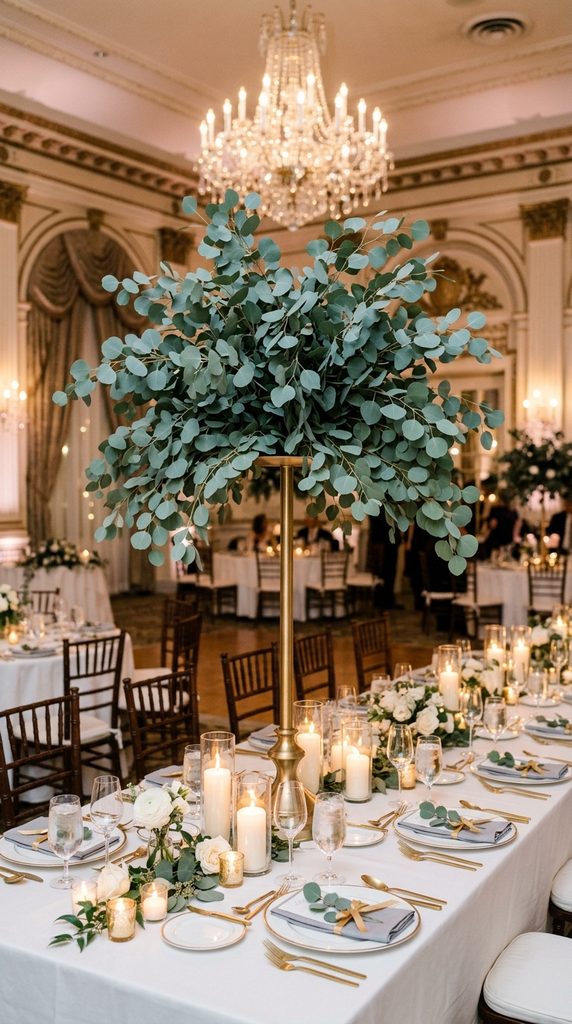
Designing memorable wedding reception tables requires an intentional approach to floral styling, balanced spatial arrangement, and visual texture. Greenery wedding centerpieces have emerged as a dominant design choice,…
Designing memorable wedding reception tables requires an intentional approach to floral styling, balanced spatial arrangement, and visual texture. Greenery wedding centerpieces have emerged as a dominant design choice, offering an elegant, organic alternative to traditional heavy floral arrangements. This complete guide provides practical advice, step by step assembly methods, and actionable design strategies to help you create professional-grade botanical table settings. Readers will explore ten distinct foliage concepts, essential hydration methods, foliage layering techniques, and structural mechanics suitable for varied venue layouts. Beyond their undeniable visual charm, foliage-focused displays provide remarkable versatility across both rustic countryside settings and sleek urban banquet rooms. Working predominantly with fresh leaves, trailing vines, and architectural branches allows decorators to establish cohesive visual flow while significantly reducing standard floral waste. Through clear preparation instructions, budget-conscious planning steps, and sustainable assembly practices, you will learn how to design balanced, long-lasting table arrangements that capture modern botanical elegance with total confidence.
Why This Idea Is Trending or Useful
Modern Pinterest ideas continuously spotlight greenery wedding table decor because contemporary couples prioritize natural textures, understated elegance, and sustainable event styling over rigid, formal centerpieces. Using fresh foliage delivers immense practical value by creating lush, expansive arrangements that hold up exceptionally well under ambient indoor heating or outdoor sun. From an aesthetic perspective, rich tones of emerald, sage, and forest green naturally harmonize with varied linen colors, warm candlelight, and wooden reception tables. For those pursuing a DIY approach, foliage arrangements present an accessible, beginner friendly medium with lower technical demands than fragile, petal-dense flower arrangements. Fresh greenery varieties such as eucalyptus, ruscus, and salal are durable, forgiving to manipulate, and widely available across every season. The organic movement of trailing leaves brings effortless movement to long dining tables, softening rigid geometric table settings. This combination of affordability, structural resilience, and effortless visual sophistication secures greenery as an enduring centerpiece trend.
Materials and Preparation
Assembling durable, fresh botanical centerpieces requires purposeful materials, reliable tools, and consistent hydration management before assembly begins. Essential botanical supplies include diverse foliage textures such as seeded eucalyptus, silver dollar eucalyptus, Italian ruscus, leatherleaf fern, and plumosus asparagus. Gathering proper tools ensures efficient execution: equip your workstation with bypass floral shears, heavy-duty stem strippers, waterproof binding wire, clear floral tape, clean buckets, and pre-soaked floral foam bricks or sustainable wire mesh pin frogs. Prior to styling, process all fresh stems immediately upon delivery: trim the bottoms at a sharp forty-five-degree angle under cool water, remove foliage from the lower third of each branch to prevent bacterial contamination, and let the stems hydrate in clean, floral-food-treated water for at least twelve hours. Planning considerations should factor in table dimensions, ambient room temperature, and guest sightlines to keep sightlines clear across each table. Preparing your materials methodically guarantees that every branch remains fresh, upright, and vibrant throughout the reception.
Idea 1: Flowing Italian Ruscus Table Runner
Step-by-Step Guide
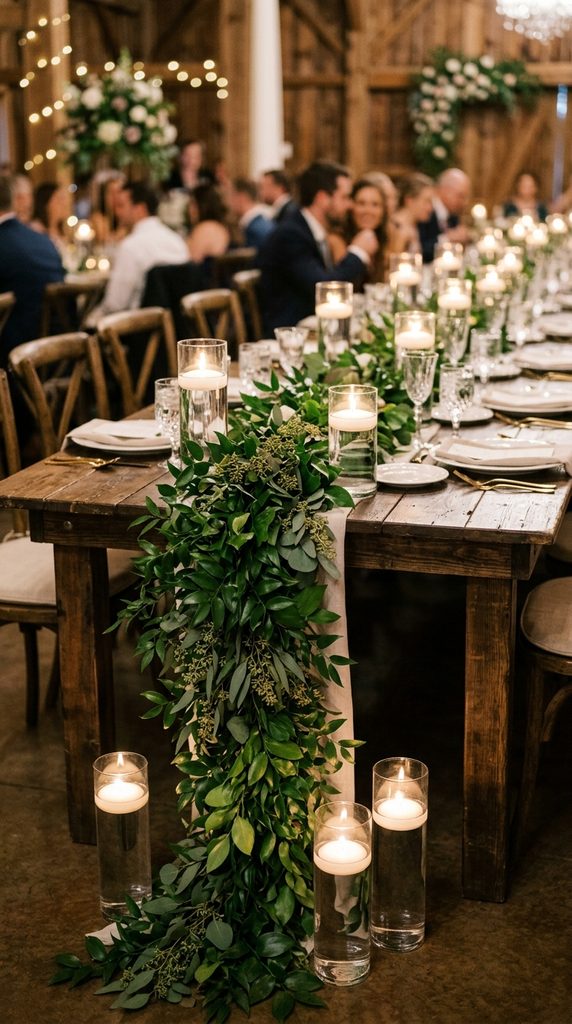
The flowing Italian ruscus table runner creates a clean, continuous botanical pathway along long rectangular dining tables, producing an organic garland look without complex mechanics. This concept relies on the flexible, dark green stems of Italian ruscus, which lay flat against banquet surfaces while providing delicate vertical height through their pointed, glossy foliage. The design delivers a light, airy aesthetic that complements both bare rustic wood tables and crisp linen runners. Its slender profile leaves ample room for glassware, tableware, and shared food platters, making it an exceptionally functional choice for family-style wedding banquets. The deep forest green of the leaves creates a rich contrast against warm ivory taper candles, establishing a classic, sophisticated dining atmosphere.
To build this linear runner, measure the length of your banquet table and cut two long strands of natural jute twine five inches longer than the tabletop surface. Lay two sturdy branches of Italian ruscus end-to-end, overlapping their cut stems by four inches in the center to maintain unbroken leaf coverage. Bind the overlapping stems securely using thin, paddle-bound green florist wire, wrapping tightly around the woody joints. Continue laying down foliage stems, angling alternating branches outward at thirty-degree angles to add width while continuing to wire them along the central twine base. Once the continuous foundation is assembled, position the garland along the table spine and nestle clusters of clear glass cylinder vases holding floating candles directly into the leafy cutouts. Tuck small sprigs of fresh salal or seeded eucalyptus into visible wiring points to conceal your mechanics completely.
Idea 2: Elevated Silver Dollar Eucalyptus Canopy
Execution Process
The elevated silver dollar eucalyptus canopy uses tall, slender metal risers to elevate broad, round foliage high above the dining surface, keeping guest sightlines completely open below. This concept features rounded, powdery blue-green silver dollar eucalyptus branches spraying outward in a soft umbrella shape, producing high visual drama in ballrooms with soaring ceilings. Placing the lush foliage overhead frees up table space for sleek dinnerware and ambient votive candles. The wide, disc-like leaves catch ambient room lighting, casting soft shadows across the place settings below. This architectural display bridges modern minimalism with garden romance, adding vertical elegance without overwhelming the room.
To assemble this elevated arrangement, select a sturdy twenty-four-inch to thirty-inch metal or acrylic pedestal stand featuring a wide, weighted base and a flat top plate. Secure a half-brick of pre-soaked floral foam or a moss-packed wire cage onto the top plate using waterproof anchor tape wrapped firmly in an X-pattern. Trim your primary silver dollar eucalyptus stems to twenty inches, stripping the bottom three inches of leaves clean with floral snips. Insert four primary branches horizontally into the bottom perimeter of the foam block to establish a cascading base perimeter, then insert five central branches vertically into the crown to establish the overall height. Fill the intermediate gaps with angled eucalyptus stems, stepping back frequently to verify symmetrical balance and full circumference coverage. Finish by misting the overhead foliage thoroughly with an anti-transpirant floral spray to lock in cellular moisture before placement.
Idea 3: Submerged Foliage Cylinders with Floating Flame
Setup Method
The submerged foliage centerpiece creates an ethereal aquatic display by encasing fresh botanical stems completely within tall, water-filled glass cylinders topped with flickering floating candles. This concept uses glossy, resilient leaves like monsteras, aspidistra, or curly willow stems curved cleanly against the interior glass walls, letting the water magnify their veins and natural geometry. The refractive properties of water enhance the green color values, turning humble foliage stems into glowing, illuminated sculptures. This clean, modern approach contains all moisture safely inside heavy glass, eliminating wilting risks in dry, climate-controlled ballrooms. Arranging three cylinders of graduated heights together provides balanced asymmetry that grounds round guest tables beautifully.
Execute this design by preparing sets of three clear, heavy-base glass cylinders measuring six, nine, and twelve inches in height. Select pristine, unblemished stems of aspidistra or broad Italian ruscus, trimming the woody stem ends to align with the vertical height of each vessel. Gently curl each leaf inward, sliding it down into the cylinder and letting the natural spring of the blade unroll flush against the glass interior. To prevent the foliage from floating to the surface, anchor the base of each stem under an inch of thoroughly rinsed decorative river stones or transparent acrylic floral marbles. Fill each cylinder with distilled room-temperature water, pouring slowly down the interior wall to minimize micro air bubbles. Place a paraffin-wax floating candle gently onto the water surface of each vessel, lighting the wicks thirty minutes before guests arrive.
Idea 4: Minimalist Fern and Moss Terrarium Cloche
How to Create
The minimalist fern and moss terrarium cloche introduces a vintage botanical laboratory aesthetic through delicate glass bell jars placed over miniature woodlands. This design showcases small potted maidenhair ferns, sheet moss, and textured river stones arranged under transparent glass domes, evoking an intimate greenhouse feel. The fine, lace-like frills of the maidenhair fern contrast against the velvety carpet of preserved pillow moss, creating rich tactile interest on close inspection. The enclosed environment retains high humidity, keeping fragile ferns crisp throughout the wedding celebration. This design is well suited for intimate, vintage-inspired garden weddings or historic estate receptions where historic details are celebrated.
Begin construction by choosing an eight-inch circular base made of natural slate, turned hardwood, or aged brass, topped with a matching high-clearance glass cloche. Position a two-inch plastic potted maidenhair fern slightly off-center on the base plate, securing the pot base with a dab of removable floral putty. Conceal the plastic container by arranging clumps of damp sheet moss and pillow moss around the root ball, misting the moss lightly with clean water to awaken its deep green color. Arrange three smooth, dark river pebbles and a miniature piece of driftwood beside the fern base to complete the natural terrarium landscape. Clean the interior surface of the glass bell jar with a lint-free microfiber cloth to remove dust and fingerprints before gently lowering the cloche over the fern arrangement, letting the glass rest flush against the decorative base.
Idea 5: Geometric Brass Lanterns Filled with Greenery
How to Make
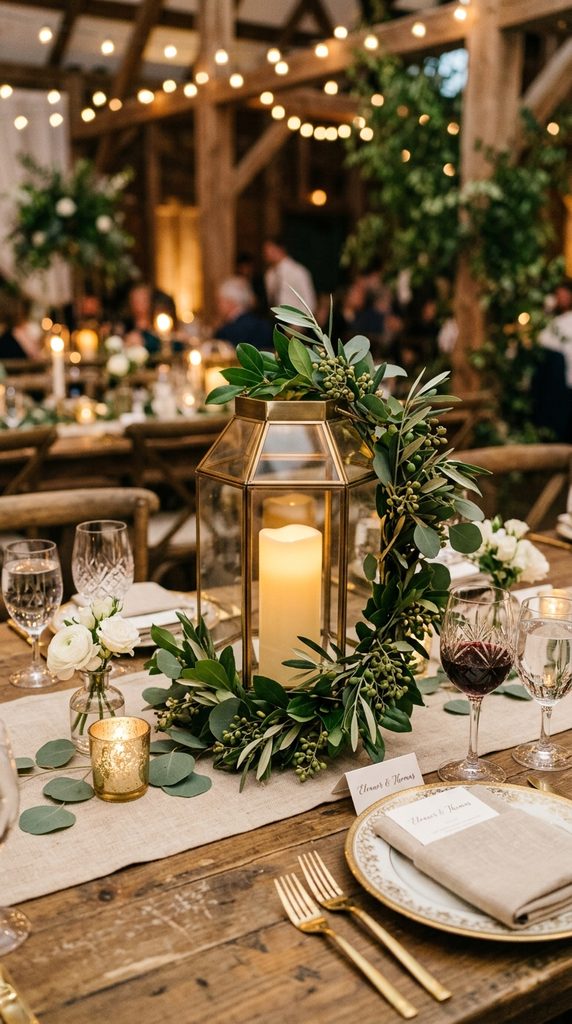
The geometric brass lantern centerpiece pairs polished, clean metallic edges with soft, tumbling foliage, creating an eye-catching focal point for modern industrial settings. This style positions contemporary brass-framed lanterns at the center of the table, wrapping the exterior and base with loose, asymmetric sprays of salal, olive branch, and seeded eucalyptus. The architectural lines of the metal give structural grounding to the wild, flowing botanical elements. The inclusion of a central LED pillar candle emits a warm, golden glow that highlights the leaves without creating a fire hazard against the foliage. This setup works exceptionally well across wooden farm tables and raw concrete surfaces, softening industrial reception spaces.
Prepare this arrangement by setting a twelve-inch or sixteen-inch hexagonal brass glass lantern squarely in the center of the dining table. Place an ivory flameless pillar candle inside the lantern, securing its base to the floor of the lantern with a flat piece of adhesive putty to prevent slipping. Cut short, five-inch sprigs of sturdy salal, seeded eucalyptus, and silver dollar eucalyptus, bundling them into three small hand-tied clusters using floral wire. Affix one floral cluster to the top diagonal frame of the lantern using thin green craft wire, letting the leaves drape down the brass seam. Arrange the remaining two foliage clusters around the external base of the lantern in an S-curve, overlapping the stem ends to build a continuous botanical cuff that frames the base cleanly.
Idea 6: Monochromatic Monster and Palm Foliage Cluster
Step-by-Step Guide
The monochromatic monstera and palm foliage cluster provides a bold, tropical, and sculptural centerpiece that celebrates architectural leaves without needing floral filler. This concept uses oversized monstera deliciosa leaves, fan palms, and areca palm fronds arranged in heavy, low ceramic bowls to produce an asymmetrical, high-impact display. The varied leaf surfaces—from wide, glossy, perforated blades to sharp, linear palm needles—produce rich visual depth using a single color family. The low, horizontal orientation lets guests converse comfortably across round banquet tables while still delivering a dramatic silhouette. This arrangement fits modern coastal celebrations, sleek loft spaces, and contemporary minimalist weddings.
To construct this tropical centerpiece, choose a low, wide-rimmed ceramic dish measuring eight inches across, placing a heavy cast-iron kenzan pin frog firmly in the center with floral adhesive clay. Fill the dish halfway with clean water treated with commercial floral preservative. Take your largest monstera leaf and cut the stem to eight inches at a sharp diagonal, pressing the stem firmly onto the back brass pins of the frog to establish a wide, angled visual base. Cut a fan palm frond to twelve inches and anchor it vertically behind the monstera to introduce height and contrasting linear texture. Fill in the front and sides by pressing smaller palm fronds, glossy aspidistra ribbons, and a small sprig of umbrella fern onto the remaining exposed pins. Check that all stem ends stay submerged in water, and tuck a few dark river pebbles over the brass pins to hide your mechanics.
Idea 7: Cascading Olive Branch and Rosemary Compote
Execution Process
The cascading olive branch and rosemary compote blends Mediterranean garden romance with subtle botanical fragrance, creating an inviting, sensory centerpiece. This design features an elevated footed compote bowl filled with wild, sweeping olive branches, aromatic rosemary sprigs, and soft grey-green eucalyptus, creating an abundant, just-harvested look. The silvery undersides of olive leaves catch ambient candle glow, introducing shifting tones of green and silver as the branches settle. The inclusion of culinary herbs introduces a fresh, delicate aroma that enriches the dining environment without clashing with the meal. This arrangement complements vineyard weddings, outdoor terrace celebrations, and rustic courtyard gatherings.
Assemble this compote arrangement by choosing a six-inch footed stone or ceramic vessel, taping a pre-soaked oasis foam cage or a crumpled ball of chicken wire into the interior using waterproof floral tape. Trim your longest olive branches to fourteen inches, stripping the lower leaves to clear the stem ends for easy insertion. Push four olive branches horizontally into opposite sides of the wire grid, letting them cascade low over the compote rim to create an extended horizontal profile. Insert shorter, denser stems of upright rosemary and seeded eucalyptus into the center of the bowl to build up the crown and add botanical fragrance. Fill the remaining openings with short olive sprigs, angling them outward in multiple directions to achieve a rounded, organic profile. Add clean water into the bowl basin until full, checking that the foam or wire remains well-hydrated.
Idea 8: Suspended Botanical Trellis Cloud
How to Create
The suspended botanical trellis cloud transforms the overhead reception area by hanging voluminous greenery installations directly over banquet tables, creating a memorable canopy effect. This design utilizes lightweight aerial structures woven with smilax vines, leatherleaf fern, plumosus, and eucalyptus to frame the dining space from above. Elevating the main greenery footprint clears the tabletop entirely, allowing for minimalist, clutter-free table settings below while surrounding diners with floating foliage. The delicate, trailing tendrils of smilax fall softly downward, creating movement in response to the hall’s natural air currents. This approach suits spacious venues like industrial warehouses, glass greenhouses, and historic barn rafters.
To build an aerial greenery cloud, construct a sturdy frame from a four-foot by two-foot wire utility grid or an unpainted wooden ladder, suspending it safely from venue ceiling beams using rated steel aircraft cable and carabiners. Wrap pre-soaked, foil-backed foam garland cages or hydration tubes along the structural perimeter, securing them tightly with heavy-duty zip ties. Insert broad leatherleaf ferns and salal branches into the foam base to establish a dense, green foundation that completely hides the underlying grid. Weave long, flexible smilax vines and Italian ruscus through the upper mesh, letting the stems tumble down eighteen to twenty-four inches below the frame toward the tables. Finish by inserting delicate stems of plumosus asparagus and silver dollar eucalyptus into the top surface, creating a soft, floating silhouette that reads as a continuous botanical cloud.
Idea 9: Potted Botanical Herb Garden Cluster
Setup Method
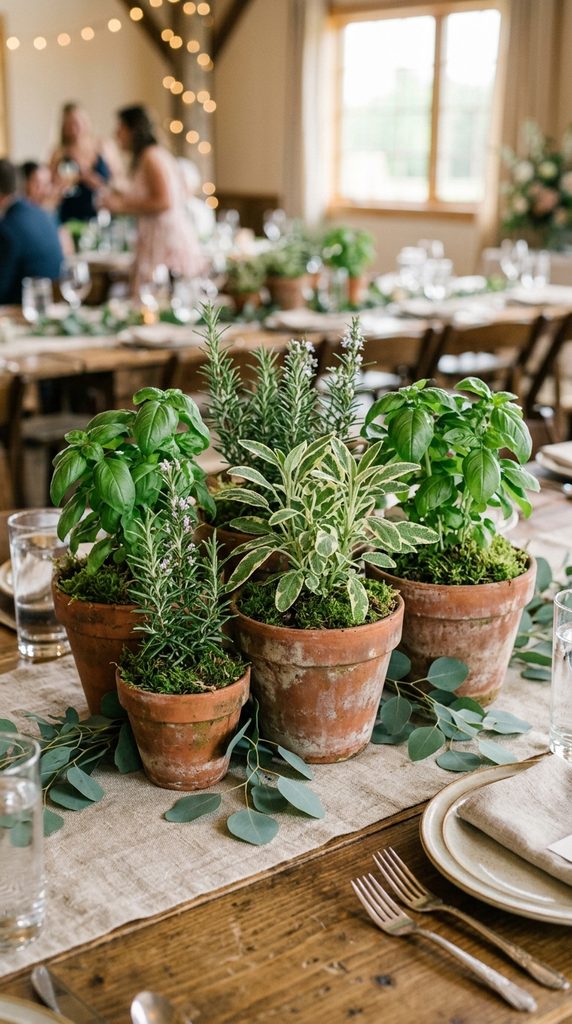
The potted botanical herb garden cluster offers a sustainable, living centerpiece idea by grouping terracotta or ceramic pots filled with fresh growing herbs along the dining table. This concept pairs potted rosemary, sweet basil, silver thyme, and variegated sage to produce a lush, textural display that remains completely fresh without water cages. The warm earth tones of the terracotta containers ground the table, while the contrasting leaf structures of the different culinary herbs create varied visual depth. In addition to their attractive textures, living herbs emit a clean, refreshing fragrance that enhances the dining space. After the reception, these resilient centerpieces can be re-planted or given away to guests as memorable living favors.
Set up this living centerpiece by assembling an odd-numbered grouping of five small, aged terracotta pots measuring between three and five inches in diameter. Pot healthy, established culinary herbs into each container using rich potting soil, covering the soil surface with a thin layer of damp green sheet moss to conceal the dirt cleanly. Place a long natural wood board or a vintage linen runner down the center of the dining table to establish your staging spine. Arrange the potted herbs in a loose, zigzag formation down the runner, placing the tallest rosemary pot in the center and flanking it with the shorter thyme and sage pots. Intertwine fresh sprigs of cut seeded eucalyptus between the pot bases to blend the separate containers into a single, cohesive garden display, and add short glass votive candles into the gaps.
Idea 10: Mixed Greenery Sphere in Vintage Iron Urn
How to Make
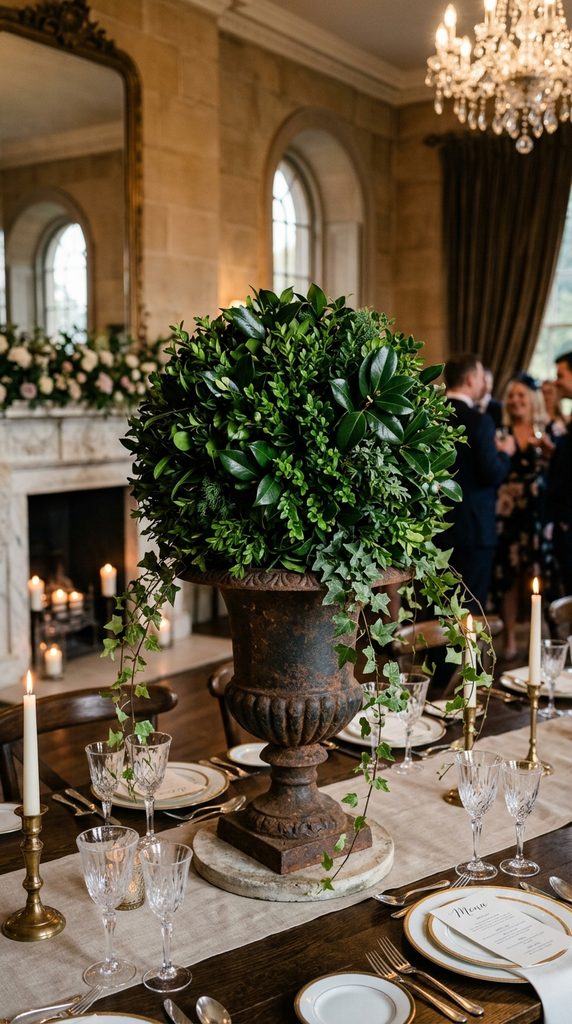
The mixed greenery sphere in a vintage iron urn pairs classical European garden elegance with structured botanical balance. This concept utilizes a weathered cast-iron or stone campana urn holding a dense, rounded mound of mixed foliage textures, including boxwood, camellia foliage, lemon leaf, and ruffled kale. The urn’s elevated pedestal lifts the lush foliage mound off the tabletop, creating a formal presence suited for traditional ballrooms, estate dinners, and country club receptions. The wide range of leaf textures—from tiny, glossy boxwood leaves to broad, waxy camellia branches—creates surface variety within an all-green palette. This compact, contained footprint leaves plenty of space for formal table settings and multiple flatware courses.
To assemble this urn arrangement, place a sturdy plastic liner bowl inside your iron urn, taping a pre-soaked sphere or block of floral foam inside using dark waterproof florist tape. Trim your boxwood and camellia stems to six inches, removing the bottom leaves to ensure clean, secure stems. Begin by inserting boxwood stems evenly across the entire surface of the foam to establish an even, rounded spherical outline. Next, insert glossy camellia foliage and salal leaves into the interior spaces at forty-five-degree angles, building layered depth across the dome. Add two or three stems of trailing English ivy around the lower rim, letting them curve gently over the metal edge to soften the transition from plant to urn. Turn the urn slowly as you work to verify uniform symmetry and complete foam coverage, then mist the completed sphere thoroughly with cool water.
Common Beginner Mistakes and How to Avoid Them
Creating fresh greenery centerpieces presents unique technical hurdles that differ from standard cut-flower arranging. The most critical mistake beginners make is failing to hydrate foliage branches thoroughly before assembly; woody stems require deep water conditioning to prevent droopy, wilted leaves halfway through the reception. Always trim woody stems at an angle, split dense branch ends slightly with shears, and allow the foliage to drink in cool water for a minimum of twelve hours prior to construction. Another widespread issue is ignoring sightline heights; centerpieces placed between fourteen and twenty-four inches directly obstruct cross-table eye contact and conversation. Avoid this by keeping low table runners below twelve inches and raising elevated arrangements above twenty-eight inches using slender stands. Finally, many decorators overlook the visibility of underlying mechanics, leaving green floral foam, plastic cages, or wire ties exposed to guests. Conceal all structural supports by layering secondary flat foliage, such as salal tips or sheet moss, over your anchor points to preserve a professional, organic finish.
Practical Tips for Better Results
Achieving a clean, high-end finish with fresh greenery requires disciplined stem preparation, smart layering, and climate control. When combining multiple foliage varieties, include at least three distinct leaf shapes: combine broad, flat leaves like salal with airy, linear stems like Italian ruscus and textural, rounded elements like seeded eucalyptus. This visual contrast prevents all-green centerpieces from looking flat or unfinished. Always apply an anti-transpirant floral spray over finished arrangements; this coats the foliage in a microscopic protective film that slows moisture loss in dry, air-conditioned banquet halls. When building garlands directly on tables, use pre-measured twine guidelines to keep the runners straight and uniform from table to table. Place all candles inside tall hurricane glass sleeves if your venue has active air conditioning vents, as wandering drafts can cause wax to drip directly onto the leaves. Finally, keep extra buckets of hydrated foliage clippings on-site during installation so you can easily fill any thin spots after the tables are fully set with place cards and glassware.
Styling, Presentation, or Organization Ideas
A thoughtful presentation enhances the visual impact of greenery centerpieces, whether you are dressing simple wood tables or formal draped banquet stations. Combine diverse lighting elements with your foliage displays: nestle clusters of glass-encased pillar candles, delicate ribbed votives, and tall, slender taper candles among the leaves to create glowing highlights and gentle shadows throughout the dinner. Pair your green centerpieces with clean, textured linens like raw linen runners, waffle-weave cotton napkins, or charcoal silk overlays that help the botanical tones stand out. Choose dinnerware and flatware finishes that complement your foliage palette: warm brushed brass and antique gold flatware highlight the warm tones of seeded eucalyptus, while polished silver and modern chrome emphasize the cool, blue-green tones of silver dollar eucalyptus. For clear, organized table setups, display custom deckle-edged paper menu cards, calligraphy table numbers, and small wooden place-card blocks directly against the foliage, integrating the stationery into the overall tablescape.
Budget or Time Planning
Careful planning helps you balance your creative goals with realistic material costs and project timelines, ensuring your wedding decor stays on budget. Sourcing fresh greenery in bulk grower bunches significantly lowers your floral expenses, as foliage costs a fraction of premium garden roses or peonies while covering two to three times the table area. Purchase durable, hardier varieties—such as salal, Italian ruscus, and silver dollar eucalyptus—which can be safely processed and assembled up to forty-eight hours before the event without risk of wilting. Structure your preparation into dedicated, organized blocks: spend two days prior to the wedding unboxing, trimming, and hydrating your stems in clean water buckets. Assemble all foam cages, table runners, and elevated risers on the day before the event, storing the completed pieces in a cool, dark room away from direct sunlight. Reserve the morning of the wedding exclusively for on-site placement, candle positioning, and final moisture misting. This organized schedule prevents last-minute assembly stress and keeps your table arrangements fresh and vibrant for the ceremony.
Creative Expansion and Advanced Inspiration
Once you feel comfortable with basic foliage mechanics, you can explore creative variations that expand the style and seasonal relevance of your table centerpieces. Consider integrating subtle non-floral accents into your greenery displays, such as fresh whole fruits: split pomegranates, green pears, clustered figs, and whole artichokes introduce rich color contrast and old-world still-life elegance to rustic garlands. You can also experiment with mixed-media elements by weaving delicate micro-fairy light strands or natural botanical ribbons through trailing greenery runners, adding an enchanting sparkle after sunset. For autumn or winter celebrations, incorporate preserved elements like dried copper beech foliage, bleached bracken fern, natural seed pods, or foraged pine cones alongside fresh greens to create rich seasonal texture. As the wedding weekend concludes, these resilient centerpieces can easily be bundled into fresh botanical bouquets for guests to take home or composted locally, rounding out a thoughtful, sustainable, and beautiful celebration.