10 White And Green Wedding Flowers Table Centerpieces Ideas
Creating classic white and green floral centerpieces establishes a refined, fresh foundation for wedding reception tables across diverse venue settings. The pairing of crisp ivory, cream, and pure…
Creating classic white and green floral centerpieces establishes a refined, fresh foundation for wedding reception tables across diverse venue settings. The pairing of crisp ivory, cream, and pure white blossoms with varied foliage tones—such as silver eucalyptus, deep ruscus, and soft olive leaves—offers an enduring visual balance that flatters any tablescape. Floral styling requires an understanding of stem support, moisture management, stem elevation, and vessel proportions to ensure arrangements remain vibrant and stable throughout an event. This comprehensive guide outlines ten distinct white and green floral centerpiece concepts designed to elevate wedding reception design, improve tablescape organization, and guide couples and florists through reliable execution. You will discover practical methods for arranging low pedestal bowls, engineering cascading botanical runners, grouping delicate bud vases, and stabilizing elevated floral stands. By learning the mechanics of floral hydration, stem layering orders, and foliage scaffolding, designing custom event arrangements becomes an easy project. These creative ideas combine traditional floral design principles with modern design aesthetics, delivering actionable tutorials and dependable blueprints to bring natural, organic beauty to your wedding reception decor.
+-------------------------------------------------------+
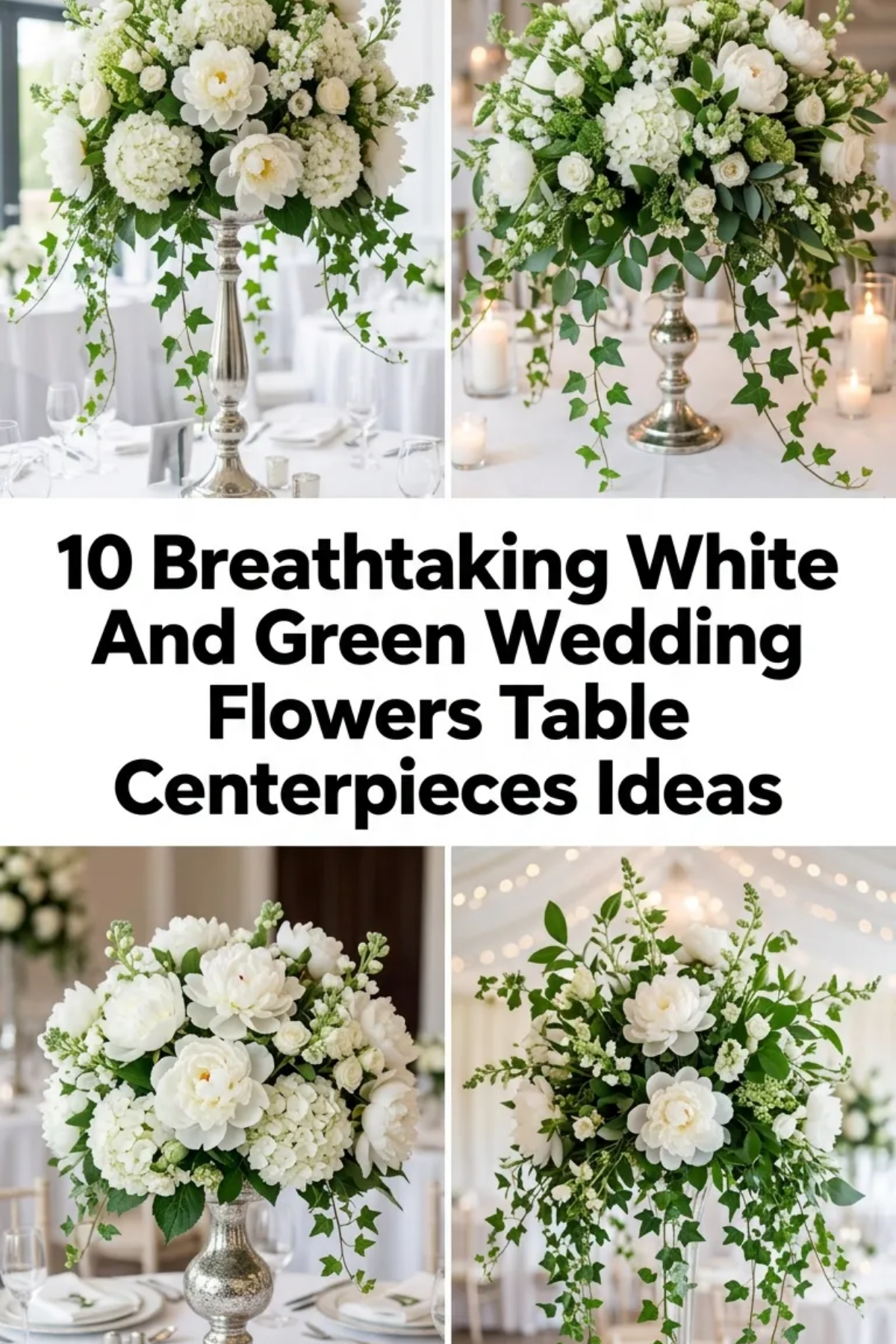
|  WHITE & GREEN FLORAL ARCHITECTURAL MATRIX            |
|                                                       |
|   Upper Canopy: Airy flutter stems (Ranunculus, Scabiosa)|
|   Focal Core: Open garden roses, standard roses, peonies|
|   Framework Base: Silver dollar eucalyptus, salal, ruscus|
|   Vessel Anchor: Ceramic compote, metal pedestal, clear glass|
+-------------------------------------------------------+
Why This Idea Is Trending or Useful
Contemporary Pinterest ideas focusing on wedding tablescapes consistently highlight white and green floral palettes because they offer timeless beauty and adaptable styling. This aesthetic movement holds high practical value, complementing rustic outdoor barns, traditional hotel ballrooms, modern industrial lofts, and seaside terraces with equal elegance. The design relevance centers on using multi-textured foliage to build natural movement, shifting away from tight, stiff floral spheres toward organic, garden-gathered shapes. For beginners planning wedding flowers, this palette provides a beginner friendly framework that forgivingly absorbs subtle variations in flower shades and stem curves. Using white and green materials also supports budget ideas, as abundant foliage, such as salal, plumosus, and eucalyptus, can fill the primary volume of an arrangement, reducing the number of expensive focal blooms needed. Incorporating these organic textures delivers a sophisticated minimalist style that photographs cleanly under diverse event lighting conditions. These trending ideas provide functional, accessible inspiration for couples seeking an elevated, cohesive wedding decor plan that remains memorable and timeless.
Materials and Preparation
Assembling dependable white and green wedding centerpieces requires gathering quality materials and completing thorough floral hydration steps before starting your design. Essential materials include fresh focal flowers such as garden roses, lisianthus, hydrangeas, and ranunculus, paired with foundational greenery like Italian ruscus, seeded eucalyptus, and silver dollar branches. Your core toolkit should include bypass floral shears, stem strippers, floral tape, wire mesh chicken wire, waterproof bowl tape, and clean floral buckets. Preparation begins by cutting all flower stems at an angled forty-five-degree bias under cool running water, stripping lower foliage that would sit beneath the waterline, and allowing blooms to hydrate in clean water with flower food for twenty-four hours in a cool, dark room. Examine vessel heights carefully to ensure completed centerpieces remain either below fourteen inches or above twenty-four inches, keeping sightlines clear for seated guests across the table. Taking these structured preparation steps prevents premature flower wilting, ensures secure stem placement, and creates an organized, stress-free workflow during the arrangement process.
1. Low Footed Compote with Garden Roses and Seeded Eucalyptus
Step-by-Step Guide
The low footed compote arrangement uses an elevated ceramic or metal pedestal bowl to create a balanced, garden-style centerpiece that stays comfortably below eye level for seated guests. This design relies on a domed foliage structure that spills gently over the rim of the bowl, softening the edges of the vessel. Placed inside the greenery are large white garden roses, layered with delicate spray roses and textural seeded eucalyptus to introduce organic movement. The footed base elevates the floral canopy slightly off the linen, allowing ambient candlelight to reflect beneath the vessel and creating a polished, dimensional focal point for circular banquet tables.
To create this centerpiece, cut a square of coated chicken wire twice the width of the compote bowl, form it into a loose three-dimensional pillow, and insert it firmly into the vessel, securing the wire with a cross of waterproof floral tape across the rim. Fill the vessel three-quarters full with fresh water and floral nutrient solution. Insert stems of seeded eucalyptus and Italian ruscus along the perimeter at low angles to establish a balanced horizontal greenery base that conceals the mechanics. Place three large white garden roses in a central triangular grouping, varying their stem heights slightly to build depth. Fill the remaining openings with ivory lisianthus and white ranunculus, allowing several delicate stems to rise higher than the main canopy to create a natural, airy finish.
2. Lush Flowing Italian Ruscus and White Blossom Table Runner
How to Create
A botanical garland runner creates an unbroken, organic path of greenery and flowers that stretches along the length of long wooden farm tables or rectangular banquet setups. This centerpiece design replaces individual contained vessels with a flowing bed of interwoven foliage, allowing guests along the entire table to enjoy continuous floral details. Deep green Italian ruscus provides a flexible, dense base, while sprigs of silver dollar eucalyptus add soft contrasting texture and dimension. Nestled directly into the foliage beds are clusters of white blooms, creating a romantic, woodland-inspired look that integrates easily with taper candles, pillar holders, and low votives.
+-------------------------------------------------------+
|  BOTANICAL RUNNER COMPOSITION                         |
|                                                       |
|   Base Foundation: Overlapping stems of Italian ruscus |
|   Textural Fill: Silver dollar eucalyptus & olive leaf|
|   Floral Accents: Water-tubed white roses & carnations |
|   Lighting Path: Staggered glass taper candle chimneys |
+-------------------------------------------------------+
Begin by clearing the center of the table and establishing a straight central line with a linen table runner or bare polished wood. Lay stems of fresh Italian ruscus along the table length, overlapping the stem ends by four to six inches and wiring them together using green floral wire to form a continuous base. Weave secondary sprigs of silver dollar eucalyptus and olive foliage into the ruscus, angling leaves outward to build a soft, wide perimeter. Prepare white standard roses, spray roses, and carnations by placing individual stems into clear water tubes. Tuck these water-tubed flowers into the greenery beds at repeating, natural intervals, angling the blooms upward and outward to hide the plastic tubes and achieve an abundant, freshly gathered look.
3. Clustered Glass Bud Vases with Single-Stem Florals
Execution Process
Clustering assorted clear glass bud vases provides a minimalist, contemporary centerpiece solution that distributes floral details evenly across long tables or small cocktail surfaces. By using individual stems or small groupings of blooms per bottle, this concept highlights the unique natural form, delicate petal shape, and slender stem curve of each flower. Clear glass vessels reflect light across the table, maintaining an open, uncluttered appearance that feels modern and intentional. This design is budget friendly and beginner friendly, requiring no floral foam or complex support mechanics while offering versatile layout options that adapt to any table dimension.
        .---.
      .'     '.    <- Single Arching White Sweet Pea
     /  |  \   \
    | [Clear Glass]| <- Fluted Vintage Bud Vase
    | [Water Fill ]| <- Crisp Filtered Water Line
     \_______'-'   <- Scattered Votive Candle Glow
Collect eight to twelve clean glass bud vases in varying heights between four and eight inches, featuring assorted shapes such as ribbed cylinders, vintage apothecary jars, and slender-necked bottles. Arrange the vases along the center of the table in a loose, zigzag line, leaving two to three inches of space between adjacent vessels for votive candles. Trim fresh white sweet peas, single garden roses, anemones, and white lisianthus stems to varying heights, ensuring each bloom extends one to three inches above its respective vase opening. Insert one to two floral stems into each bottle, adding a single sprig of delicate plumosus fern or olive foliage to create soft green accents that unify the collection.
4. Architectural Elevated Metal Candelabra Arrangement
Setup Method
An elevated floral candelabra arrangement uses a tall, slender metal stand to lift a full display of white blossoms and trailing greenery high above the reception table. By suspending the bulk of the floral weight between twenty-four and thirty inches above the tabletop, this design leaves table sightlines open, allowing guests to converse easily across the table. A lush base of hydrangea, cascading dendrobium orchids, and trailing amaranthus creates visual grandeur, making it a natural choice for high-ceilinged venues, historic ballrooms, and formal tented receptions. The elevated stand draws the eye upward, highlighting venue architecture while keeping the table surface functional for family-style dining.
+-------------------------------------------------------+
|  ELEVATED CANDELABRA SPECIFICATION                    |
|                                                       |
|   Crown Base: Pre-soaked floral foam block in tray    |
|   Hydration Fill: White hydrangeas & open roses       |
|   Cascading Drop: Trailing white orchids & plumosus   |
|   Support Column: 30-inch slender brushed metal stand |
+-------------------------------------------------------+
Secure a plastic floral design dish fitted with a thoroughly soaked, reinforced brick of floral foam onto the top plate of a thirty-inch metal stand using waterproof pot tape. Insert heavy stems of salal, broad-leaf ruscus, and leatherleaf fern horizontally and downward into the sides of the foam to conceal the mechanics and establish an abundant green collar. Insert large white hydrangeas into the center and corners of the foam to establish an even moisture base and create uniform fullness. Work white standard roses, snapdragons, and stock into the top of the foam to build vertical height, finishing by inserting trailing white dendrobium orchids and weeping eucalyptus along the bottom edges to create a dramatic, floating cascade.
5. Terrarium Lantern with Enclosed Foliage and White Flora
Step-by-Step Guide
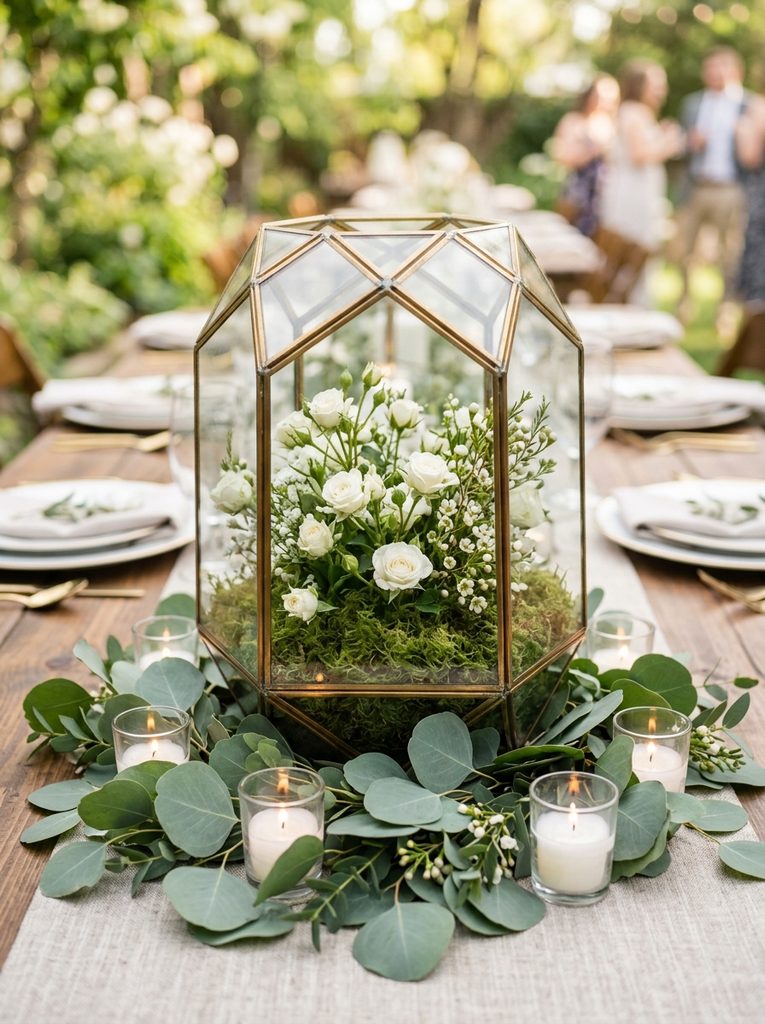
The terrarium lantern centerpiece uses geometric glass and brass lanterns to frame botanical elements, delivering an understated, modern design that is especially well suited for outdoor and coastal weddings. Enclosing white flowers, moss cushions, and delicate greenery inside a structured glass container protects delicate petals from outdoor breezes while creating a clean, architectural silhouette. Surrounding the lantern with a low wreath of eucalyptus and scattered tea lights integrates the hard metal lines into the softer organic textures of the surrounding tablescape. This centerpiece design is durable and practical, allowing for easy transportation and fast setup on event days.
Select a twelve-to-sixteen-inch tall brass or matte black geometric lantern featuring an opening side door and clean glass panels. Line the base of the lantern interior with a flat layer of preserved sheet moss to establish an organic green foundation. Secure small floral water tubes containing white spray roses, mini calla lilies, and sprigs of myrtle within the moss base, positioning blooms at varied angles to create a miniature garden vignette inside the glass. Close the lantern door securely and place the lantern in the center of the table. Form a loose, circular wreath around the lantern’s exterior base using loose stems of silver dollar eucalyptus, tucking small white waxflower blossoms and glass votive candles into the outer foliage ring.
6. Monochromatic White Hydrangea and White Rose Sphere
How to Make
The monochromatic white hydrangea and rose sphere provides a classic, dense floral arrangement that emphasizes symmetry, structured fullness, and clean visual lines. Large white mophead hydrangeas serve as the structural and moisture-retaining foundation of this design, naturally supporting smaller focal blooms like premium standard roses, double lisianthus, and white spray roses. Dark, glossy lemon leaf foliage is used sparingly around the outer rim of the vessel, creating a subtle green collar that frames the pale floral sphere. This timeless arrangement works well on round banquet tables, offering a clean, formal aesthetic that pairs seamlessly with traditional china and polished silverware.
+-------------------------------------------------------+
|  SPHERICAL FLORAL PROPORTIONS                         |
|                                                       |
|   Dome Crown: Closely clustered white standard roses  |
|   Mid-Level Fill: Mophead hydrangea supportive heads  |
|   Rim Collar: Glossy lemon leaf & variegated pitt     |
|   Vessel Anchor: Low silver bowl or ceramic cylinder  |
+-------------------------------------------------------+
Place a soaked floral foam cylinder into a low silver bowl or white ceramic container, shaving the top corners of the foam at a forty-five-degree angle to create a beveled dome. Insert trimmed stems of glossy salal and variegated pittosporum horizontally into the base of the foam to establish a clean perimeter ring that rests on the rim. Cut three large white hydrangeas to five inches in length and insert them into the foam at equal distances around the central axis, allowing their petals to form a continuous base. Push long-stemmed white roses and white lisianthus blooms directly between the hydrangea petals into the underlying foam, distributing them evenly to form a smooth, uniform dome of flowers.
7. Floating White Water Lilies and Submerged Foliage Cylinders
Execution Process
Submerged foliage arrangements inside clear glass cylinders combine minimalist lines with the reflective properties of water, making them ideal for modern evening receptions. Submerging broad green leaves—such as monstera, folded aspidistra, or spiraling curly willow—inside water-filled glass vases magnifies the natural details of the foliage. Floating white water lilies, gardenias, or open roses on the water’s surface completes the vertical display, creating a clean contrast between green stems and luminous white petals. When paired with floating candles, these arrangements produce a soft glow across the tablescape, delivering high visual drama with minimal floral materials.
       .---.
     .'     '.     <- Floating White Rose / Candle
    /  Water  \
   |  [Leaf]   |   <- Submerged Curved Aspidistra Leaf
   |  =========|
    \  Cylinder/   <- Weighted Glass Anchor Base
     '-------'
Select a trio of heavy-base glass cylinder vases measuring eight, ten, and twelve inches in height, ensuring the interior glass is completely spotless. Submerge a large, clean aspidistra leaf or broad calathea leaf inside each cylinder, curling the leaf into a spiral against the interior wall, and anchoring the stem base with clear glass marbles or river stones. Fill the cylinders with room-temperature distilled water, using a slender wooden dowel to release any small air bubbles trapped on the leaf surface. Gently place a single, fully open white gardenia or floating garden rose onto the water surface of each vase, positioning floating disc candles directly alongside the blossoms. Arrange the three cylinders in a tight cluster at the center of the table.
8. Hanging Floral Chandelier with Cascading Greenery
Setup Method
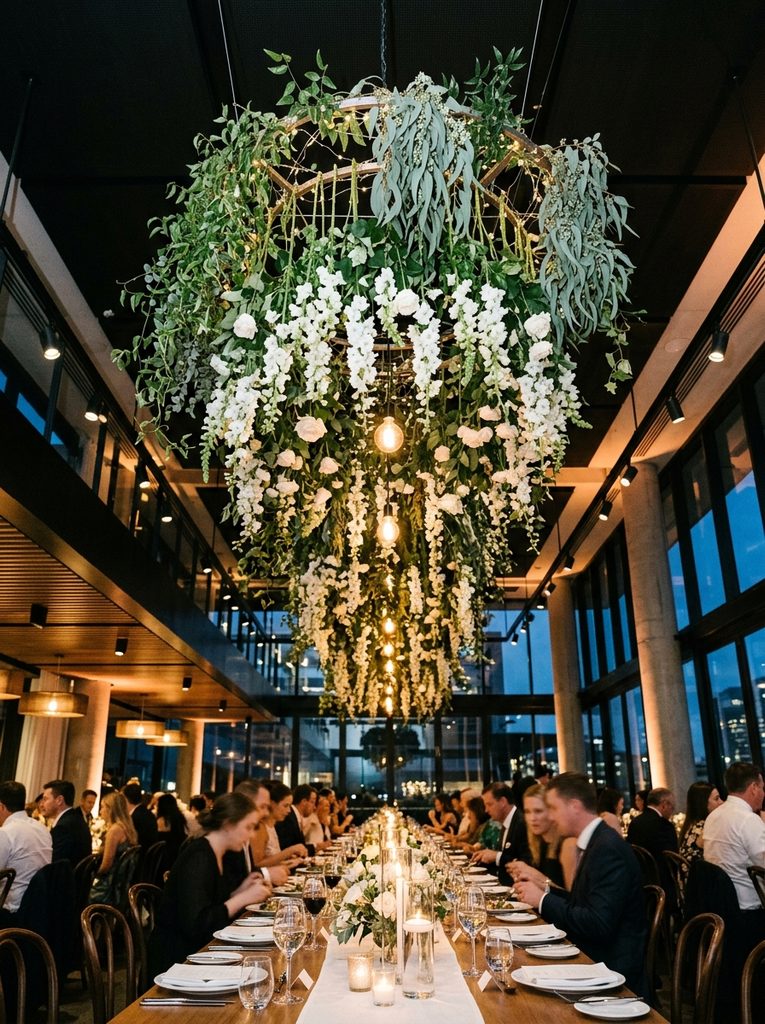
A hanging floral chandelier suspended directly above the reception table creates a dramatic overhead installation that leaves the entire tabletop clear for place settings and dining service. A lightweight suspended frame of chicken wire or natural birch poles provides the base for trailing eucalyptus, smilax vines, and hanging white blooms. The greenery drapes downward toward the tabletop, creating an intimate canopy effect that visually lowers high ceilings and defines the dining zone. This design is especially practical for wide banquet tables or family-style dinner setups, maximizing decorative impact without occupying table space.
Suspend a lightweight, four-foot rectangular wooden frame horizontally from secure ceiling structural points using high-tensile steel aircraft cable and carabiners, verifying the structure is level. Wrap the frame tightly in chicken wire, binding the wire edges with zip ties to create a continuous mesh platform. Weave long, flexible vines of fresh smilax and trailing ivy throughout the wire base, allowing the ends to drape two to three feet below the frame. Insert water-tubed white snapdragons, delphinium, and long-stemmed white roses into the top of the chicken wire mesh, angling stems downward through the grid openings so the blooms emerge naturally among the trailing vines.
9. Textured Wooden Trough with White Blooms and Herbaceous Greens
Step-by-Step Guide
The wooden trough centerpiece uses a narrow, elongated wooden container to create a rustic, garden-style arrangement well suited for long farm tables. This concept pairs white florals with textured, fragrant greenery—such as rosemary sprigs, mint leaves, and silver sage—introducing pleasant scent alongside visual texture. The linear wooden vessel provides stability and continuous floral coverage down the center of the table without overwhelming the width of the setting. The mix of garden roses, delicate scabiosa, and velvety dusty miller creates a relaxed, collected aesthetic that feels organic and welcoming.
Line a thirty-inch natural pine or cedar planter box with a heavy-duty plastic liner, securing the edges with a staple gun beneath the interior rim. Insert two pre-soaked, shaped blocks of floral foam into the trough, securing them with waterproof bowl tape crossed over the top. Insert sprigs of fresh rosemary, culinary mint, and silver dusty miller along the perimeter, letting them spill over the wooden edges to soften the container’s straight lines. Intersperse white spray roses, ivory garden roses, and small clusters of white feverfew throughout the foam, keeping the overall height under ten inches to preserve open conversation sightlines across the table.
10. Minimalist Single-Variety Olive Branch and White Rose Bowls
How to Create
The minimalist olive branch and white rose arrangement pairs silvery green Mediterranean foliage with structured white blossoms in low, contemporary bowls. Olive branches provide elegant branch structure, muted sage-green tones, and delicate leaf clusters that establish an airy, architectural silhouette. Using a single foliage variety paired with classic white blooms creates a focused, sophisticated design that fits modern minimalist celebrations. Placing this pairing in low matte stoneware or raw concrete bowls balances organic softness with clean contemporary materials, keeping the focus on texture, form, and natural elegance.
Secure a heavy brass floral pin frog (kenzan) to the bottom of a shallow, matte-white stoneware bowl using floral adhesive putty pressed firmly onto the dry ceramic base. Fill the bowl two-thirds full with fresh water and floral nutrient solution. Cut three architectural olive branches to varied lengths, trimming lower leaves to expose clean woody stems, and press them firmly onto the metal pins at asymmetrical angles to create a natural, sweeping branch framework. Trim five premium white garden roses to short, graduated lengths and seat them closely around the base of the brass pin frog to cover the mechanics, allowing the olive branches to frame the blooms in a clean, modern composition.
Common Beginner Mistakes and How to Avoid Them
When designing white and green wedding centerpieces, beginners often make mechanical and aesthetic errors that can affect the longevity and visual balance of the arrangements. The most common mistake is failing to remove lower foliage from stems before placing them in water, which allows decaying leaves to introduce bacteria, clouding the water and causing blossoms to wilt prematurely. Always strip all leaves from the lower two-thirds of every stem before assembling arrangements. Another frequent error is building centerpieces too tall, creating visual barriers that block conversation between seated guests; ensure low centerpieces stay under fourteen inches, or elevate them on tall stands above twenty-four inches. Additionally, many beginners crowd flowers too tightly in an attempt to create fullness, which crushes delicate petals and prevents closed blooms from opening naturally. Allow sufficient space between individual stems so blooms can expand fully, creating an organic, dimensional shape that highlights the natural beauty of each flower.
Practical Tips for Better Results
Achieving professional, floristry-grade results with white and green centerpieces depends on disciplined flower care, quality mechanics, and careful event preparation. Store your prepared flowers in a climate-controlled room between sixty and sixty-five degrees Fahrenheit, keeping them away from direct sunlight, heating vents, and ripening fruit that releases ethylene gas. When working with delicate white blooms like garden roses and ranunculus, leave the outer protective guard petals in place during construction, removing them gently only during final table setup to prevent accidental bruising. Use coated chicken wire rather than floral foam whenever possible; wire mesh allows for natural stem angles, supports easy water changes, and reduces environmental waste while holding thick woody stems securely. Keep clean spray mister bottles and micro-shears in an event-day touch-up kit to quickly refresh foliage surfaces and trim dry stem tips before guests enter the reception space.
Styling, Presentation, or Organization Ideas
Organizing your reception tablescapes thoughtfully ensures your white and green floral arrangements integrate seamlessly into the overall room design. Pair cool-toned foliage—such as silver dollar eucalyptus and dusty miller—with crisp white linens, brushed silver flatware, and clear glass accents to create an airy, contemporary aesthetic. Conversely, pair warm foliage like Italian ruscus, myrtle, and olive branches with ivory table runners, textured ceramic plates, and warm brass candle holders for a softer, organic look. Distribute fluted glass votives and slender taper candles with protective glass chimneys at varied heights along the table to illuminate the green leaves and cast a warm glow through pale petals. Number your vessels and arrange them by table zone during morning venue delivery, streamlining setup and ensuring centerpieces are placed efficiently across all reception tables.
Budget or Time Planning
Designing wedding centerpieces on a practical budget requires realistic financial planning and structured scheduling during event week. Rather than choosing expensive imported blooms for the entire arrangement, allocate sixty percent of your floral volume to cost-effective foliage varieties, using premium white garden roses, peonies, or ranunculus strategically as focal accents. Source hearty greenery like salal, leatherleaf, and plumosus fern in bulk, as these hold up well and can be arranged further in advance without wilting. Structure your preparation across three distinct days: process and hydrate all wholesale flowers on Thursday, assemble vessels and greenery frameworks on Friday, and insert delicate focal blooms on Saturday morning before transport. Working in structured, repeatable steps keeps the floral process organized, prevents last-minute assembly stress, and ensures flowers arrive at the venue looking fresh and vibrant.
Creative Expansion and Advanced Inspiration
Expanding on foundational white and green centerpiece designs allows for creative personalization through subtle seasonal accents and dynamic floral textures. Incorporate seasonal fruit accents—such as small green pears, cut white figs, or pale green grapes nestled along the base of foliage runners—to introduce rich, painterly texture to vineyard and autumn tablescapes. Experiment with subtle textural dried elements, like bleached bunny tails, dried white lunaria pods, or preserved white ruscus, weaving them into fresh green arrangements for modern contrast. For evening weddings, consider weaving micro-strand warm-white LED fairy lights directly into dense greenery runners, creating an ambient glow that illuminates foliage details as overhead room lights dim. These creative techniques personalize classic palettes, transforming timeless white and green florals into engaging, artistic centerpieces tailored to your wedding style.