Designing an unforgettable reception space begins with creative event styling that moves beyond standard commercial blooms. Curating a series of 10 boho non-floral wedding centerpiece ideas allows couples to craft memorable tablescapes using dried foliage, organic textures, and warm ambient light. Throughout this guide, you will learn how to balance scale, combine natural fibers, and construct lasting focal points for dining areas. Non-floral centerpieces solve practical event logistics because they eliminate the risk of wilting petals under high temperatures or sudden drafts. This guide breaks down structural frameworks, essential craft components, and assembly workflows that make high-end event decor achievable for any host. In addition to aesthetic versatility, using dry botanical pods, minerals, ceramics, and architectural glass ensures that your tables remain intact from the initial reception through late evening dancing. By shifting the decorative focus toward earthy neutrals, woven accents, and glowing candles, your event achieves a timeless ambiance that guests naturally photograph. These practical concepts provide actionable blueprints that reduce stress, simplify your schedule, and produce cohesive tablescapes tailored to modern bohemian sensibilities.
Why Non-Floral Bohemian Tablescapes Are Trending
Non-floral centerpieces dominate modern event styling boards because they blend functional reliability with a relaxed, design-forward aesthetic. Fresh cut flowers often incur steep preservation expenses, require cold transport, and demand complex morning hydration schedules that add unnecessary event friction. In contrast, dried grasses, terra cotta elements, natural stone, and flickering glass lanterns offer sustainable design longevity without compromising visual texture. Bohemian design values authenticity, organic imperfection, and varied tactile layers, making dried elements and raw ceramics naturally suited to this creative theme. Beginners appreciate this approach because non-floral installations allow for advance preparation weeks before the wedding date arrives. This eliminates stressful last-minute morning setup, giving planners complete creative control over table balance ahead of time. Moreover, guests enjoy unobstructed sightlines across dinner tables when centerpieces rely on sculptural horizontal arrangements rather than oversized, dense floral walls. The resulting atmosphere feels intimate, grounded, and curated, aligning directly with contemporary interior design movements that celebrate raw nature, earth-toned textiles, and thoughtful minimalist styling.
Essential Materials and Table Preparation Workflow
Creating durable centerpieces requires organized sourcing, material preparation, and accurate space planning prior to final tablescape assembly. Essential components include varied glass vessels, matte ceramic jugs, dried palm spears, bleached bunny tails, unrefined wooden bases, and smoke-free pillar candles. Core craft tools involve heavy-duty wire snips, natural jute twine, floral adhesive putty, sand weights, and tailored linen table runners. Begin preparation by gathering complete sample sets to build a single mock arrangement, testing the overall visual footprint on standard banquet tables. Measure the distance between dinner place settings to guarantee that glassware, cutlery, and family-style platters fit comfortably around the centerpiece perimeter. Clean all glass cylinders with alcohol wipes to eliminate smudges or fingerprints that might distort flickering candlelight during evening receptions. If working with feather-light dried grasses, weight the vessel bottoms with clean river stones or quartz sand to prevent accidental tipping. Store completed modules in protective cardboard dividers kept in low-humidity rooms until wedding day transportation begins.
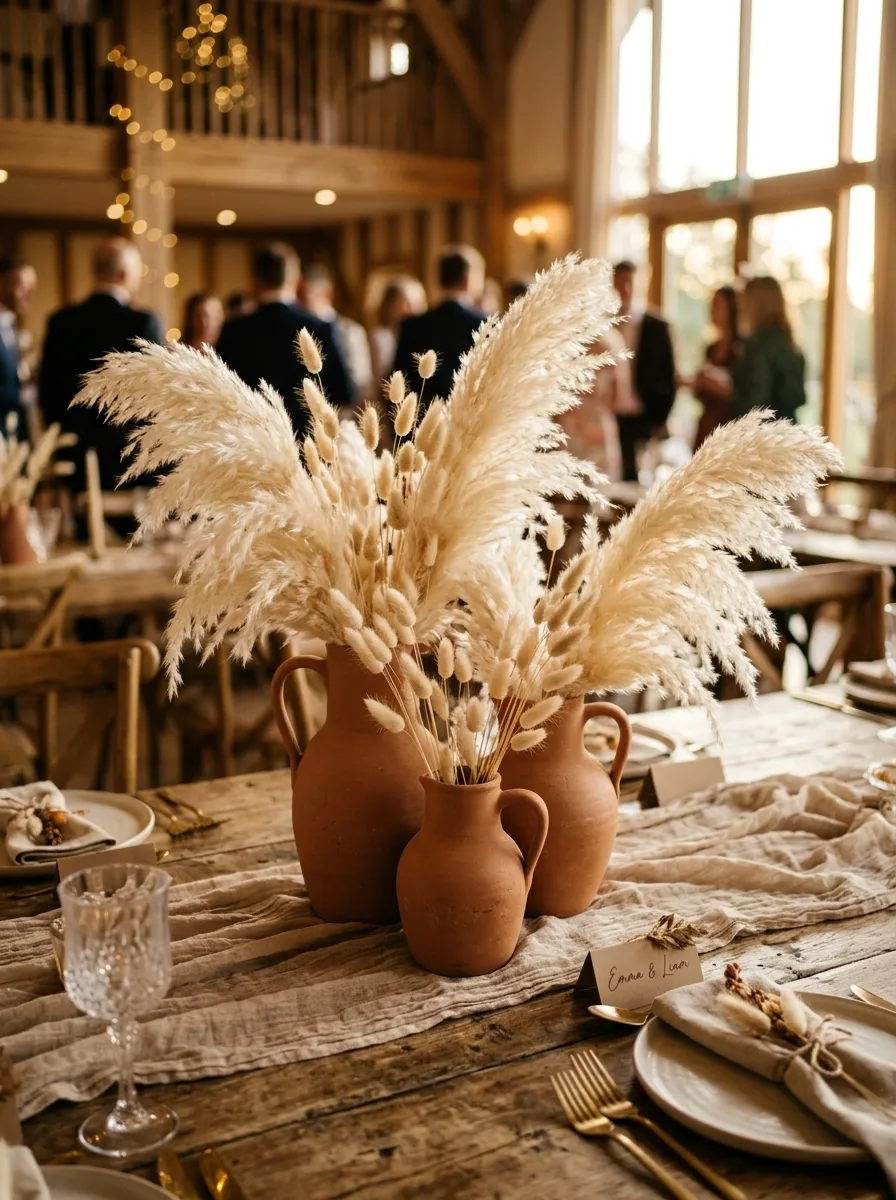
1. Bleached Pampas Grass and Terracotta Cluster
How to Create
Paragraph 1
The bleached pampas grass and terracotta cluster design combines dramatic vertical plumes with grounded, sun-baked clay vessels for an authentic rustic aesthetic. This arrangement pairs creamy white dried pampas plumes with matte rust-toned earthenware jugs of varying heights to establish dimension. The soft, billowy tips of the ornamental grass contrast sharply with the dense, chalky texture of raw terracotta ceramic finishes. Because the components contain no water, the arrangement remains feather-light and easy to transport to both indoor and outdoor venues. This concept introduces visual warmth to plain white tablecloths, making it particularly suitable for desert ceremonies, barn venues, or minimalist industrial lofts. The natural movement of the plumes catches ambient air currents, lending subtle kinetic life to dining spaces without blocking conversations across the table.
Paragraph 2
To build this arrangement, select three complementary terracotta jugs measuring six, eight, and ten inches in height with narrow necks. Trim the stiff lower stems of your bleached pampas grass using sharp hand pruners, graduating stem lengths to match each vessel. Insert a base layer of fine gravel or washed sand into each jug to ensure absolute stability on the tabletop. Arrange three to four fluffy pampas stems into the tallest vessel, allowing the plumes to flare outward in a natural spray. Place single, shorter stems into the two companion jugs, keeping the overall silhouette organic, asymmetrical, and balanced. Cluster the three completed vessels tightly together off-center atop a textured gauze runner, finishing the setup by placing two neutral tea lights nearby.
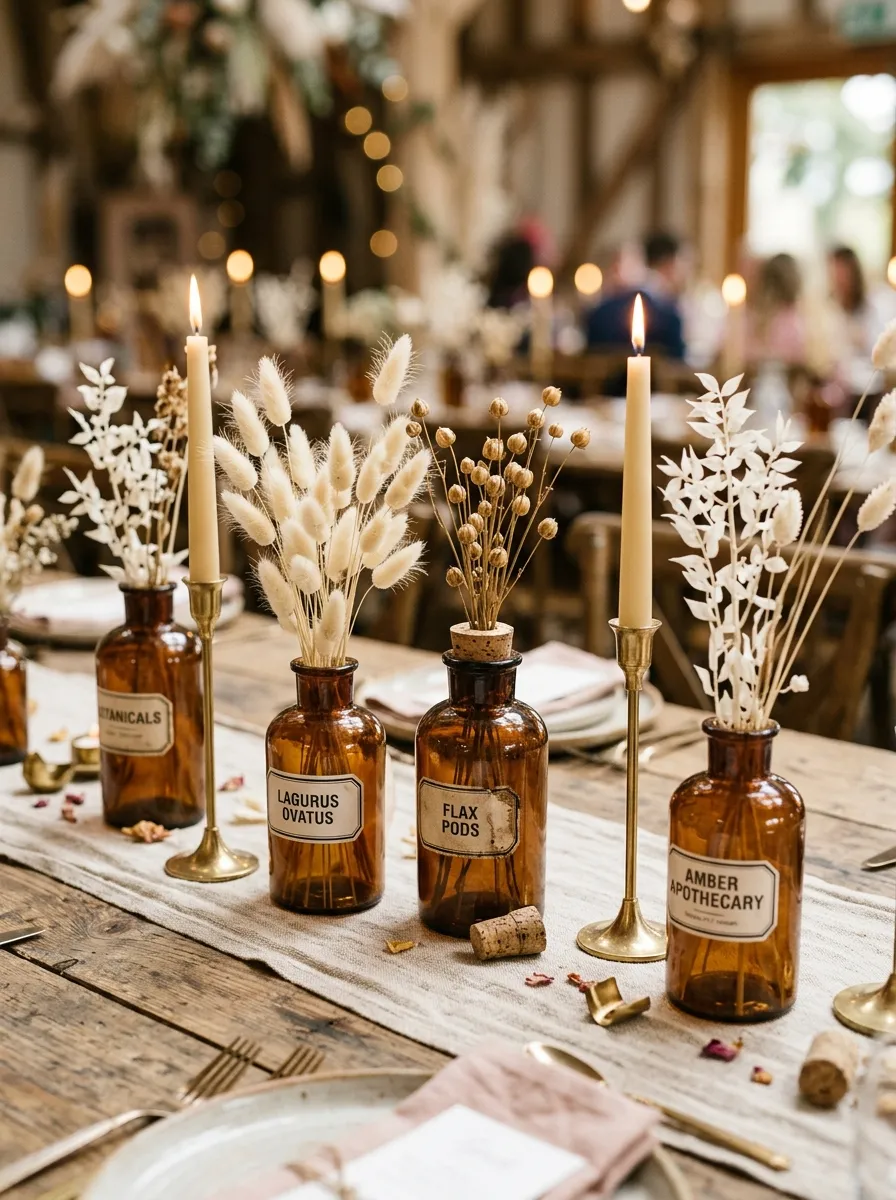
2. Amber Glass Apothecary Bottles with Dried Lagurus
How to Create
Paragraph 1
The amber glass apothecary bottle concept features rich, honey-toned glass vessels filled with delicate dried bunny tails, seed pods, and bleached botanical stems. This design relies on the repetition of vintage-style medicine bottles distributed along the length of banquet tables to create a continuous decorative line. The warm translucence of amber glass captures sunlight during daytime receptions and glows warmly under the evening light of surrounding candles. By avoiding single, massive center arrangements, this low-profile configuration preserves clear sightlines across narrow rustic wooden farm tables. The simplicity of single botanical stems nestled into vintage glass evokes a refined apothecary aesthetic that feels both nostalgic and distinctly modern.
Paragraph 2
Gather five to seven amber glass bottles per table, varying the vessel shapes between square, cylindrical, and wide-shouldered laboratory profiles. Clean each bottle thoroughly, allowing the interior glass to dry completely to prevent moisture buildup around delicate dried stems. Cut stems of dried lagurus, flax pods, and miniature star flowers so they stand one and a half times the height of their respective bottles. Place two to three stems into each vessel, varying the stem angles to achieve a relaxed, effortless botanical spread. Space the filled amber bottles evenly down the center of an unironed oatmeal linen runner, alternating them with slim brass candle holders. Secure each bottle base to the table using a small pea-sized dot of removable adhesive putty to prevent accidental shifting.
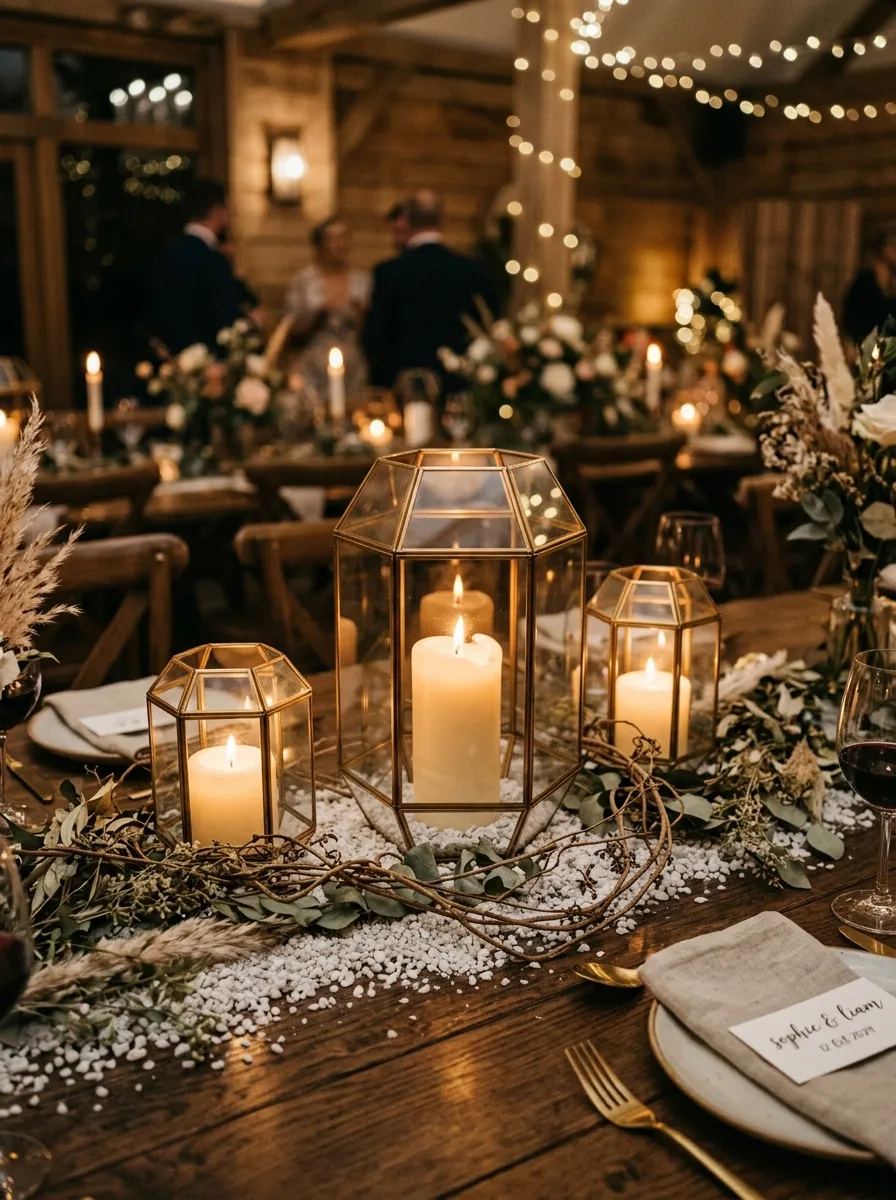
3. Geometric Brass Lanterns with Pillar Candles
How to Create
Paragraph 1
Geometric brass lanterns offer an architectural, modern bohemian design that provides substantial structural interest while bathing dining tables in warm illumination. This layout uses faceted metallic frames featuring clean glass panes, paired with ivory pillar candles resting upon beds of natural seed heads or stone. The warm gold patina of the brass finish complements natural wood surfaces and warm neutral textiles without appearing overly formal. By enclosing the candle flames safely behind glass walls, this design provides exceptional fire safety for breezy outdoor receptions or covered patio spaces. The sharp geometric lines balance soft table fabrics, creating a polished bohemian ambiance that transitions seamlessly from daylight to evening celebrations.
Paragraph 2
Select three faceted brass lanterns per table, choosing one large statement piece and two smaller companion lanterns to form a triangular centerpiece. Open the lantern doors and line the bottom bases with a half-inch layer of crushed ivory marble chips or dried golden wheat berries. Place an unscented, high-grade paraffin pillar candle firmly into the center of each lantern base, pressing it into the aggregate layer. Ensure candle wicks sit safely below the upper lantern ventilation openings to prevent heat damage or soot accumulation on the brass frame. Position the lanterns along the center of the table, turning the angular glass facets outward to catch ambient room reflections. Complete the presentation by weaving a delicate strand of dried willow vine loosely around the lantern bases.
4. Sculptural Driftwood and Desert Agave Roots
How to Create
Paragraph 1
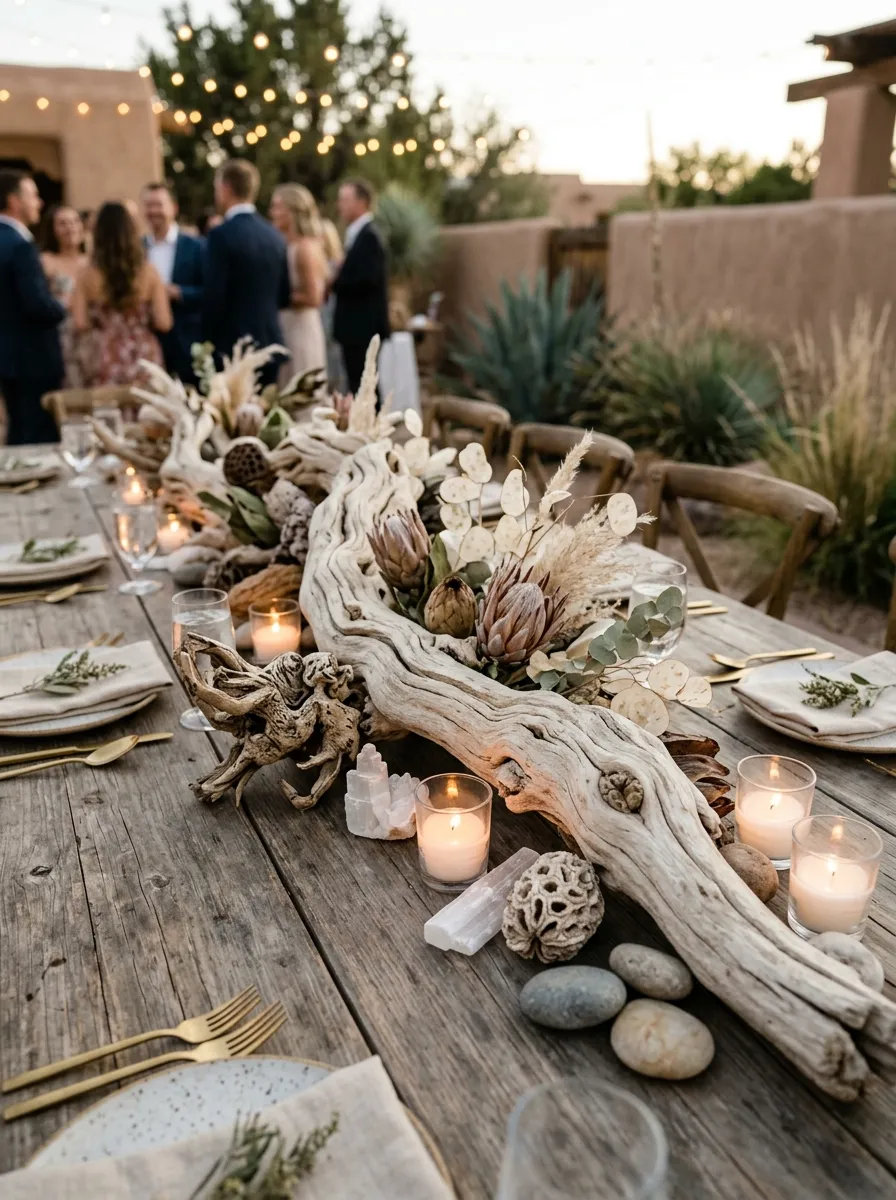
The sculptural driftwood and desert root arrangement celebrates raw organic forms, providing a low-profile centerpiece rich in earthy character and natural movement. This horizontal installation utilizes weathered manzanita branches, sea-worn driftwood pieces, or sandblasted grapevines running directly down the center of the table surface. The twisting, fibrous grain of natural wood provides an earthy alternative to conventional table floral runners. It brings a grounded coastal or desert bohemian aesthetic that feels collected, rugged, and sculptural. Because the entire display lies low against the table surface, it provides an open atmosphere that encourages lively guest engagement and relaxed dining throughout the evening.
Paragraph 2
Source seasoned, sandblasted wood segments measuring approximately eighteen to twenty-four inches in length, ensuring all bark residue and loose dirt are removed. Lay the primary branch along the center of the table, angling the sculptural curves to create natural hollows and resting points. Nestle preserved faux succulents or dried curly pods into the branch crevices, securing them inconspicuously with small drops of hot craft glue. Place smooth river pebbles or small raw selenite crystals around the perimeter of the wood to anchor the piece visually against the table runner. Intersperse clear glass votive holders closely within the branch contours, ensuring bare flames remain at least three inches away from the wood surface.
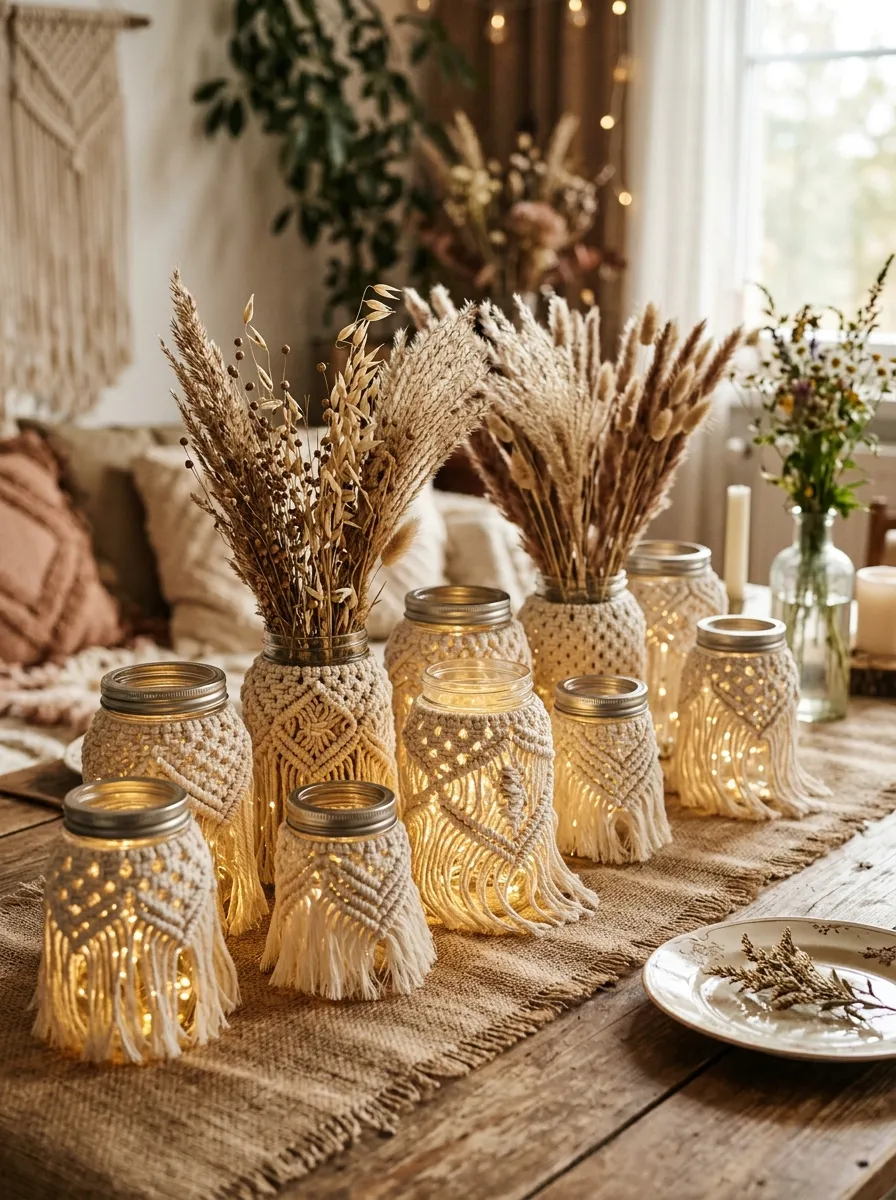
5. Macramé Wrapped Mason Jars and Reeds
How to Create
Paragraph 1
Macramé wrapped mason jars combine classic utility glassware with intricate textile knotting to produce a soft, tactile centerpiece arrangement. This concept features ordinary wide-mouth glass jars encased in custom-tied cotton cord sleeves showcasing chevron, diamond, and fringed tassel patterns. The dense fiber knots add distinct bohemian character while diffusing the light cast by interior votives or supporting tall wild reeds. This design is exceptionally practical for budget-minded couples, as standard canning jars can be acquired affordably and customized well in advance. The tactile presence of raw ecru cotton cord coordinates seamlessly with fringed table linens, woven rattan chargers, and relaxed outdoor reception settings.
Paragraph 2
Prepare clean glass jars by knotting custom sleeves using three-millimeter single-strand natural cotton cord, securing the top loops beneath the glass threading. Trim the bottom cord fringes flush with the jar bases, using fabric shears to achieve clean, crisp textile edges around the perimeter. Fill half of the macramé jars with battery-operated warm fairy lights or clean tea light candles resting on sand beds. In the remaining jars, place upright bundles of dried reed grass, wild oats, and preserved thistle stems trimmed to uniform heights. Arrange the alternating candle and reed jars in a zigzag pattern down the center of the dining table over raw burlap or linen. Ensure the fringed macramé edges sit flat against the table surface to maintain a clean, professional finish.
6. Sliced Agate Geodes and Brass Candlesticks
How to Create
Paragraph 1
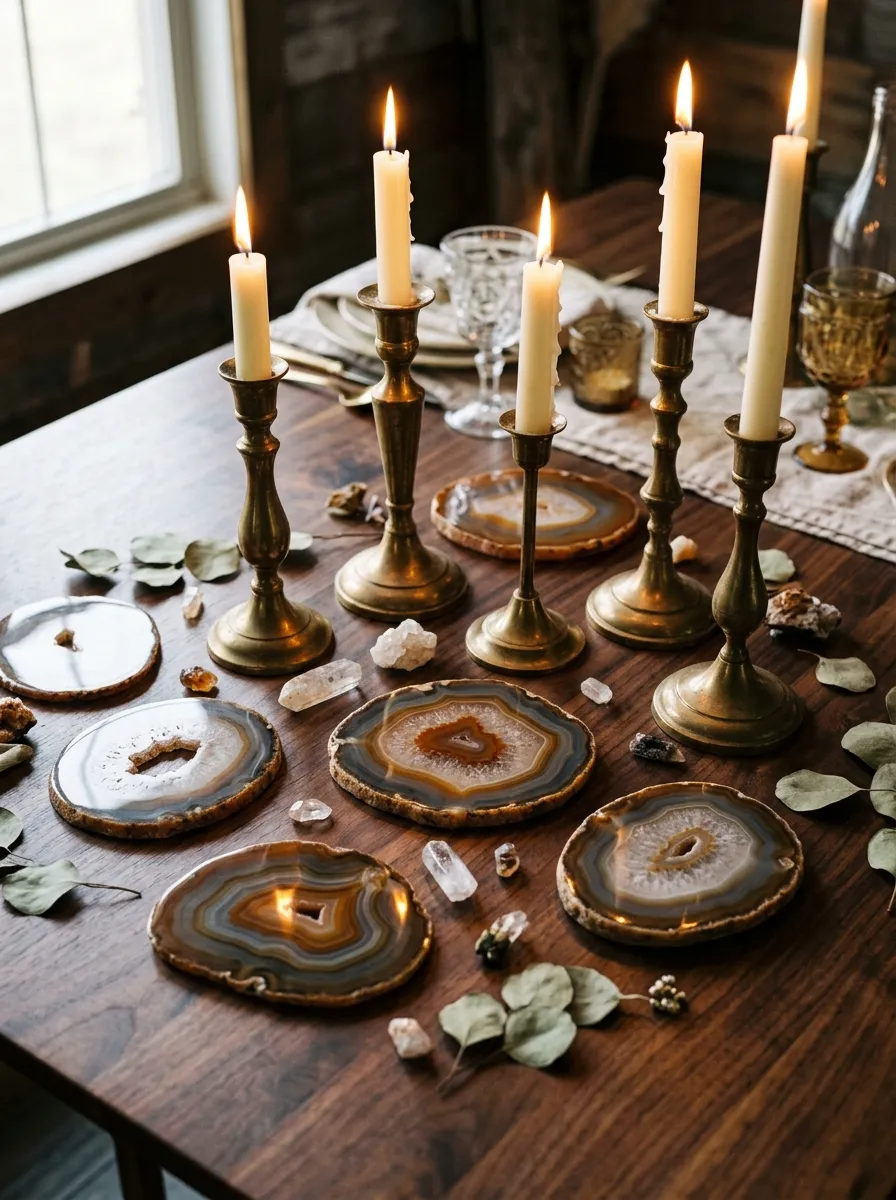
The sliced agate geode and brass candlestick tablescape introduces geological beauty, crystal clarity, and opulent vintage metallic tones to the bohemian wedding aesthetic. This luxurious concept pairs polished, natural-edge agate slices laid flat on the table with tall, slender taper candles set in mismatched vintage brass holders. The varied translucency, internal crystalline rings, and earthy banding of natural agate slices create unique conversation pieces for seated guests. This design departs from muted rustic elements, incorporating refined bohemian glamor through reflective stone surfaces and bright metallic accents. It works exceptionally well on dark walnut tables or deep slate tablecloths, where the natural mineral patterns and warm candle reflections stand out distinctly.
Paragraph 2
Acquire authentic polished agate slices measuring between five and seven inches across in natural earth shades such as amber, slate, or soft quartz. Place three to four agate slabs flat down the center of each table, using them as decorative coasters for glass votive candles. Intersperse slender brass candlestick holders between the stone slices, choosing holders with varied heights ranging from four to ten inches. Insert standard drip-free taper candles in shades of ivory, terracotta, or muted sage into the brass holders, securing the bases firmly with wax dots. Scatter tiny, raw mineral chips or miniature clear quartz points around the main agate slabs to visually tie the geometric elements together. Light the tapers just before guests enter the dining room to create warm glowing highlights across the polished stone.
7. Woven Rattan Trays with Textured Ceramic Sculptures
How to Create
Paragraph 1
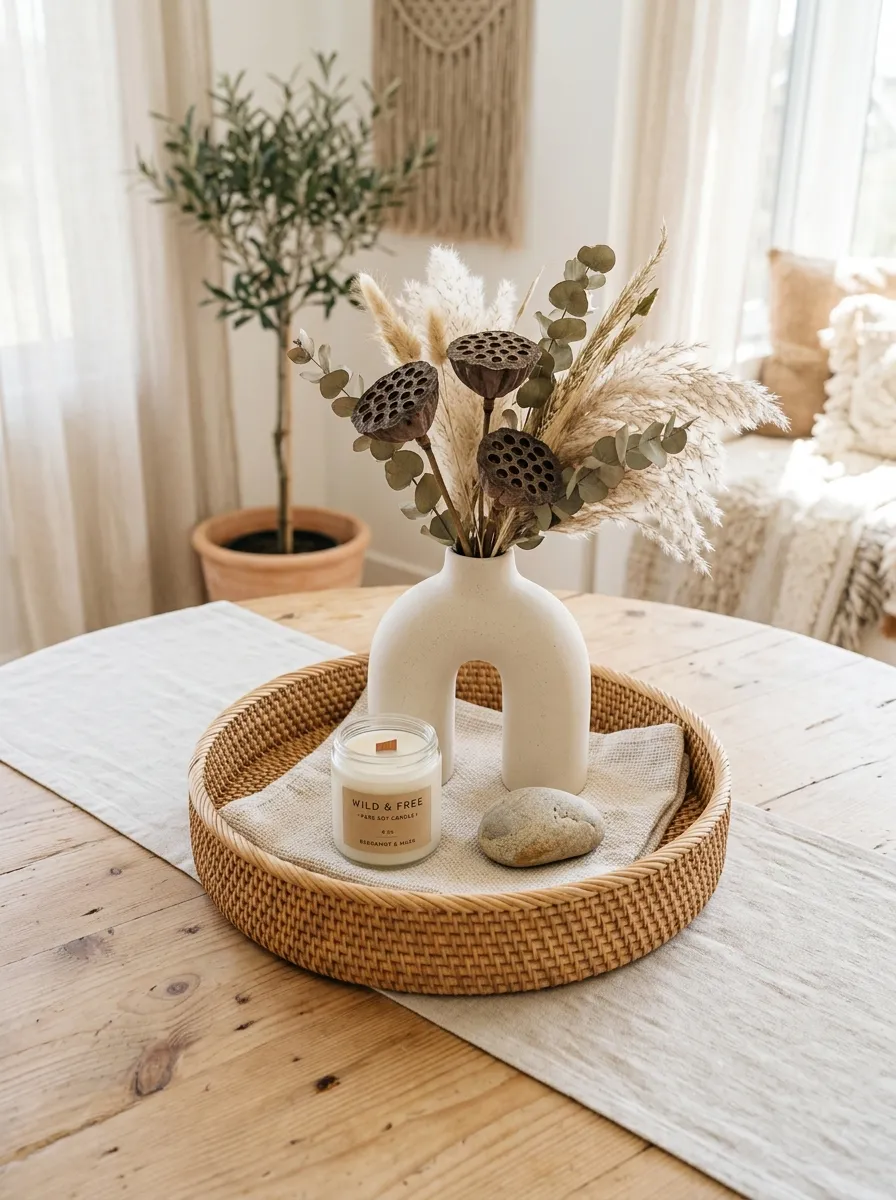
Woven rattan trays containing textured ceramic vessels offer an organized, self-contained centerpiece design that brings artisanal warmth to round reception tables. This layout utilizes shallow circular wicker, seagrass, or rattan trays to consolidate various decorative elements into a single cohesive, functional focal unit. Inside the tray, modern unglazed stoneware pieces, abstract ceramic arches, and dried pod stems sit harmoniously within defined boundaries. The combination of natural basketry weaves and smooth, chalky ceramic surfaces produces a layered, textural statement rooted in modern Scandinavian-bohemian styling. This design simplifies event breakdown significantly, as staff can transport the entire centerpiece assembly as a single balanced unit at the end of the reception.
Paragraph 2
Position an eleven-inch round woven rattan tray with low side walls in the exact center of each guest table. Place a matte off-white ceramic arch vase or donut vase off-center within the woven perimeter to serve as the primary anchor. Insert two dried lotus pods and three stems of preserved bleached ruscus into the ceramic vessel opening to provide height. Balance the remaining tray surface by adding a small poured soy candle in a matching ceramic vessel alongside a smooth, polished palm stone. Ensure that the total height of the ceramic assembly does not exceed fourteen inches, preserving clear lines of vision across the table. Adjust the tray placement so the surrounding place settings frame the woven perimeter evenly on all sides.
8. Preserved Eucalyptus Garlands with Wooden Lanterns
How to Create
Paragraph 1
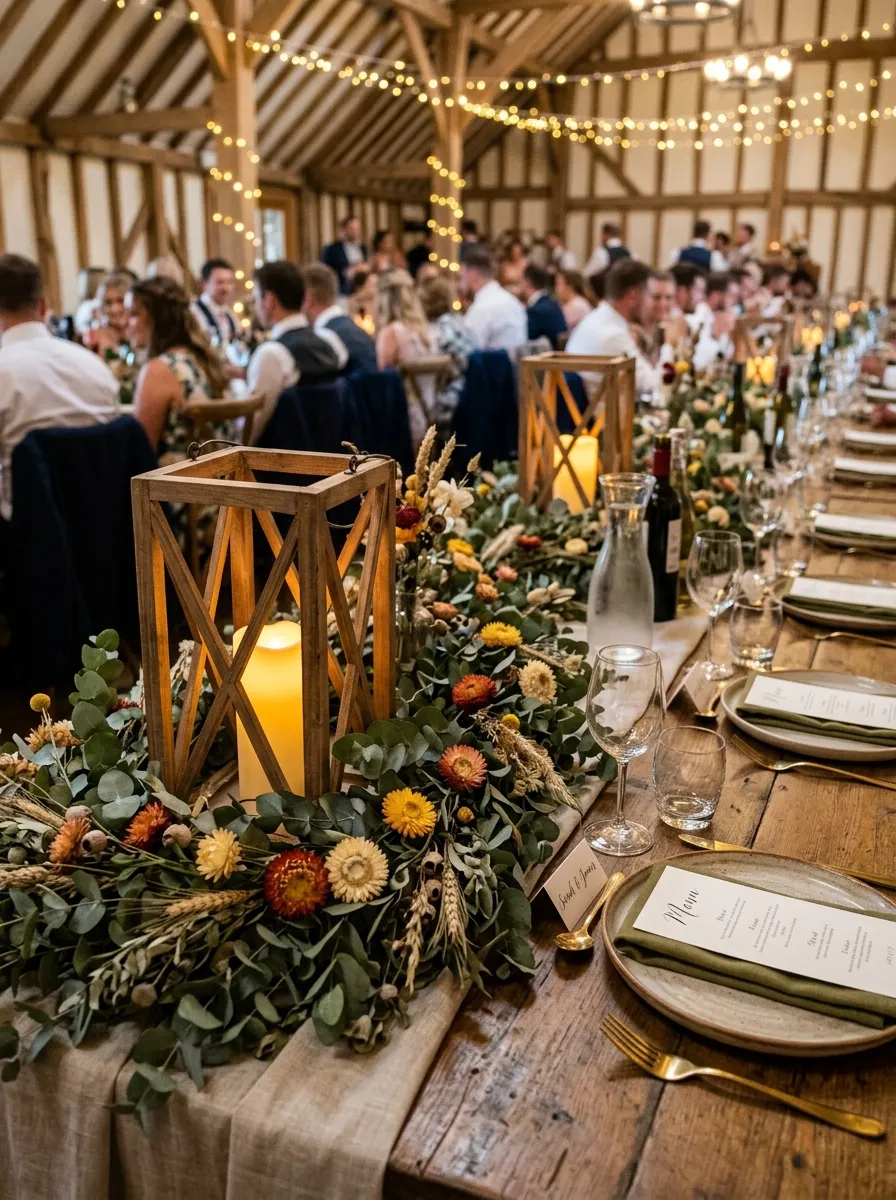
The preserved eucalyptus garland and wooden lantern arrangement provides an evergreen-inspired bohemian centerpiece that requires zero water or refrigeration to maintain its appearance. Using chemically preserved spiral and silver dollar eucalyptus, this long horizontal runner retains its supple flexibility, rich green hue, and natural leaf shape permanently. The lush botanical runner weaves around rustic, open-sided wooden lanterns constructed from weathered pine, cedar, or raw oak. This design bridges the gap between classic garden greenery and bohemian styling, making it a versatile choice for vineyard, meadow, or barn settings. The matte green foliage softens the linear geometry of the wooden lantern frames, establishing an inviting, balanced tablescape that lasts through the longest celebrations.
Paragraph 2
Lay a full six-foot preserved eucalyptus garland down the spine of a banquet table, fluffing the individual leaf branches to create volume. Position two open-frame wooden lanterns at the one-third and two-thirds marks along the length of the botanical garland. Place a tall, battery-operated LED pillar candle with a realistic flickering flame inside each wooden lantern, securing it to the internal base. Tuck small clusters of dried white strawflowers, dried flax, and cinnamon sticks into the eucalyptus vine near the lantern bases to introduce contrasting textures. Thread the leafy garland ends gracefully off the table edges, allowing them to drape three inches down the sides for a finished look. Inspect the length of the garland to ensure no artificial stems or internal floral wires remain exposed to view.
9. Monochromatic Terracotta and Clay Bud Vase Runners
How to Create
Paragraph 1
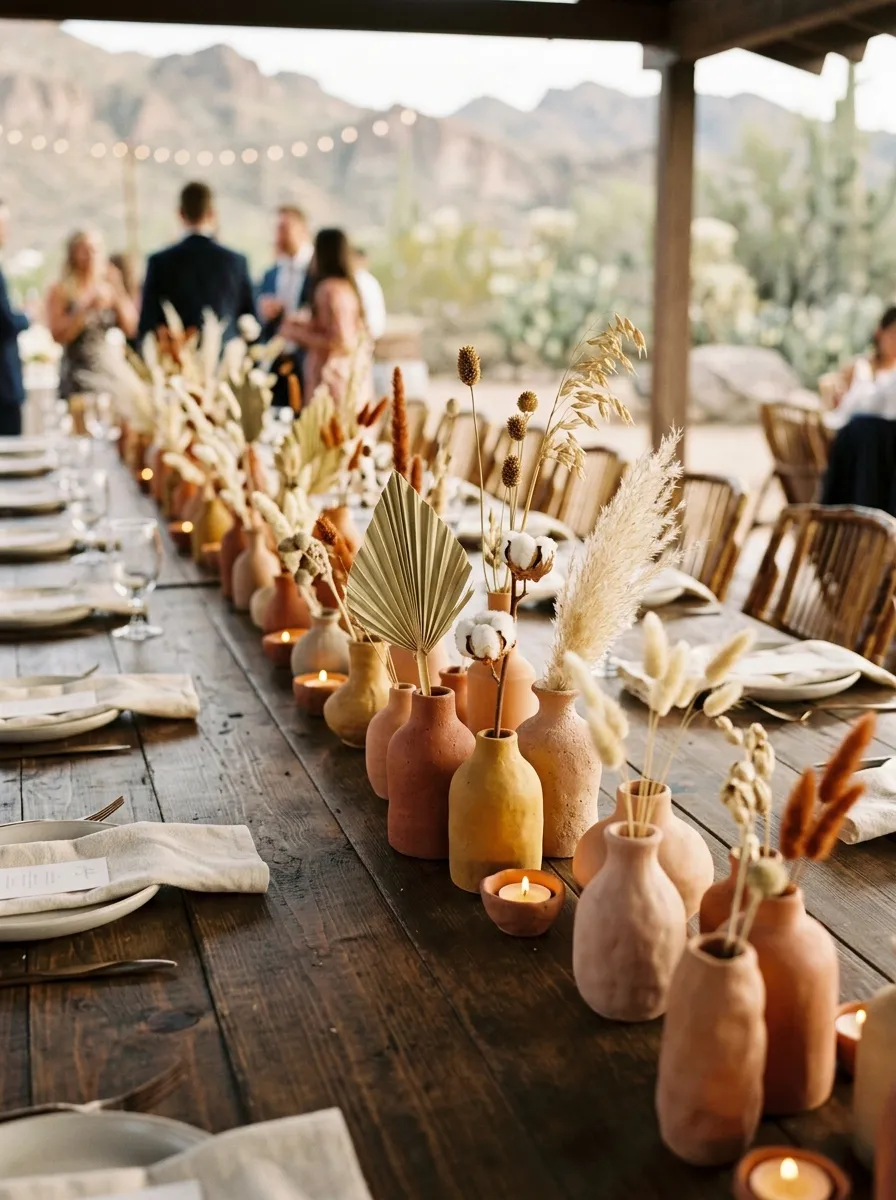
The monochromatic terracotta bud vase runner establishes a cohesive, color-blocked centerpiece layout that emphasizes earth-toned minimalism and refined artisanal pottery. This design utilizes a series of small, varied clay vessels finished in harmonious hues of terracotta, warm sand, blush ochre, and brick red. Each vessel holds a single architectural dried stem, such as a dried banksia bloom, palm spear, or textured cotton pod. By repeating similar clay materials down the table in a concentrated sequence, the arrangement creates a striking visual impact through color consistency rather than sheer bulk. This modern aesthetic suits contemporary desert weddings, outdoor courtyards, and minimalist gallery venues seeking clean architectural style.
Paragraph 2
Assemble seven to nine miniature unglazed clay bud vases per table, selecting varied silhouettes including spheres, slim cylinders, and angular flasks. Arrange the vases along the center of the table in a gentle, winding wave pattern, keeping spacing between vessels within three to four inches. Trim individual dried botanical stems, such as sun palms, preserved lunaria, and sorghum seed heads, to heights between five and eight inches. Place a single dried stem into each bud vase, alternating textures so bold leafy shapes sit adjacent to delicate, airy seed pods. Fill any gaps along the terracotta line with low, raw clay pinch pots containing unscented wax tea lights. Check the final line from both ends of the table to ensure the serpentine layout flows smoothly without disrupting place settings.
10. Floating Candles in Cylinder Vases with Decorative Sand
How to Create
Paragraph 1
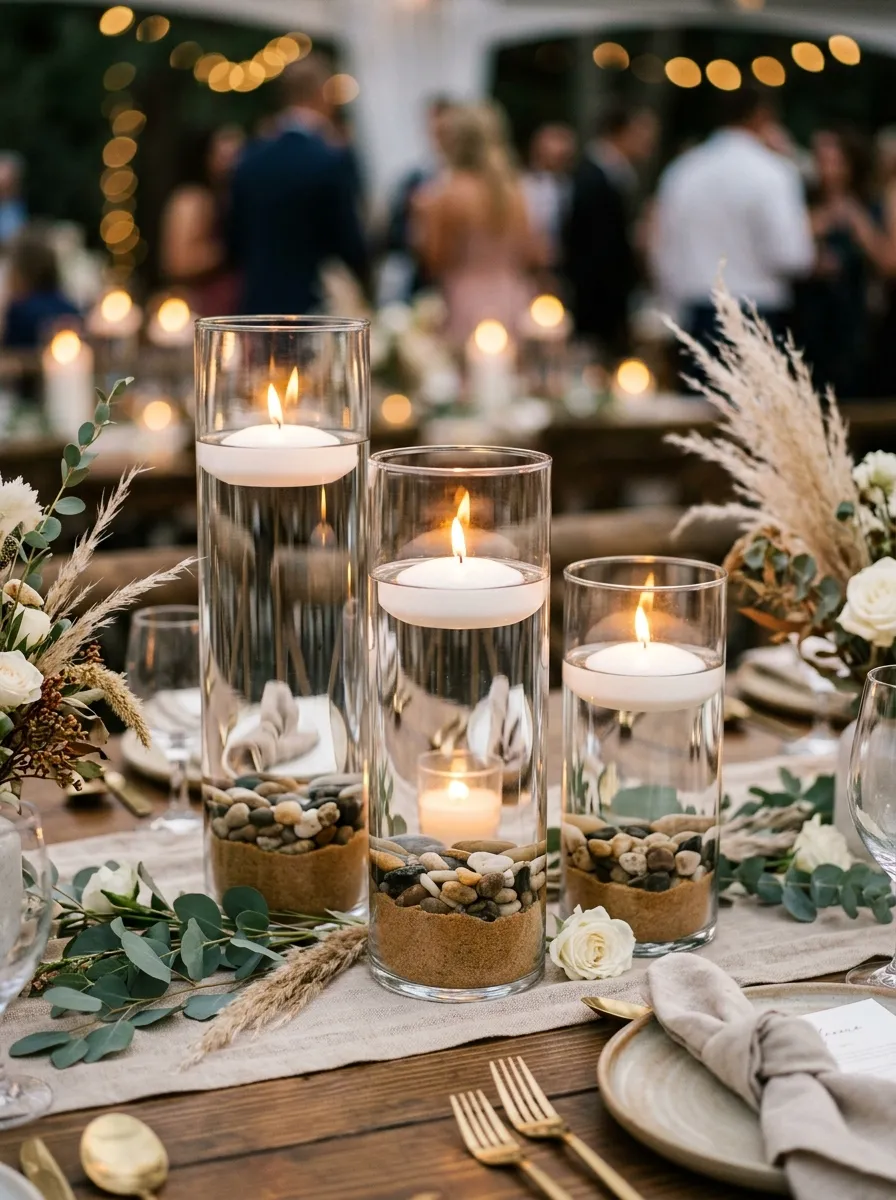
The floating candle and decorative sand centerpiece offers a tranquil, illuminated focal point that uses the clean clarity of glass to elevate bohemian earth tones. This design features tall glass cylinder vases filled with layers of fine desert sand, natural river pebbles, and crystal-clear water topped with floating wax discs. The transparent glass allows the striated sand layers to remain visible, while the elevated candle flame reflects downward through the water column. This concept provides clean ambient lighting without requiring complex maintenance, offering a modern interpretation of serene desert oasis motifs. It provides visual weight at the center of the table while maintaining a clean, contemporary profile that complements light linen runners and minimalist tableware.
Paragraph 2
Choose a trio of heavy-base glass cylinder vases measuring six, eight, and ten inches in height with four-inch diameters. Pour fine-grain desert sand or crushed sandstone into the base of each cylinder, creating a level foundation approximately two inches deep. Slowly pour room-temperature distilled water down the interior side of the glass using a funnel to avoid disturbing the compacted sand layer. Allow the water to settle until crystal clear, stopping two inches below the top rim of each cylinder. Gently place a three-inch white floating candle disc onto the surface of the water, ensuring the wick stays completely dry during placement. Cluster the three filled cylinders in the center of the table, lighting the floating wicks thirty minutes prior to guest seating.
Common Beginner Mistakes and How to Avoid Them
Assembling non-floral centerpieces involves specific structural challenges that can compromise your tablescapes if overlooked during the planning phase. A frequent error is misjudging the final height of tall grasses and stems, which can block sightlines and make table conversation difficult for seated guests. Always sit in a dining chair while assembling your mock centerpiece, verifying that elements above fourteen inches remain airy, slender, and visually open. Another common mistake is failing to anchor lightweight dried stems securely, leaving them susceptible to falling over from air conditioning drafts or passing foot traffic. Counteract this instability by adding clean sand, pea gravel, or decorative pebbles to the bottoms of all lightweight vessels before inserting stems. Additionally, avoid overcrowding dining tables with excessive small decor pieces, which leaves insufficient room for bread baskets, water carafes, and dinnerware. Finally, test real candle arrangements beforehand to ensure bare flames do not sit close to dry grasses, opting for glass hurricane cylinders or high-grade flameless LED pillars whenever working near combustible botanical materials.
Practical Tips for Better Styling and Cohesion
Achieving a professional, high-end look with non-floral centerpieces depends on thoughtful attention to scale, color harmony, and textural variety. Stick to a defined palette of three to four complementary tones, such as warm terracotta, ivory, natural unbleached flax, and matte brass, to maintain a unified visual story. Mix varied surface textures across your table components, balancing rough earthenware ceramics against polished glass, smooth river stones, and soft woven fabrics. Use a handheld steamer on your linen table runners prior to placing any decor, as deep fold lines can distract from your centerpiece design. When placing stem elements into bud vases, angle the pieces slightly outward to mimic how plants grow naturally in the wild, avoiding rigid vertical lines. If using real wax candles, chill them in a refrigerator the day before the event to slow their burn rate and minimize messy wax drips on table linens. Photograph your completed sample table from both standing and seated eye levels using your smartphone to confirm that the arrangement feels balanced from every guest perspective.
Presentation, Layout, and Table Organization
Organizing your reception tables requires thoughtful coordination between decorative centerpieces, practical dinnerware, and the overall flow of the event room. For long rectangular banquet tables, assemble your centerpieces in low, continuous horizontal runners to visually elongate the space while keeping sightlines clear. For circular dining tables, concentrate your design within a single centralized circular footprint, maintaining at least fourteen inches of clear space around the perimeter for dinner plates and glassware. Anchor your centerpiece groupings using textured fabric foundations, such as cheesecloth, frayed cotton ribbons, or fringed burlap runners, to visually unify individual items. Coordinate metallic elements throughout the space, matching centerpiece brass candle holders with cutlery or metallic foil accents on menu cards. Ensure table numbers integrate naturally into the centerpiece cluster rather than perching awkwardly on top, using materials like printed handmade paper or etched stone slabs. Space your tables evenly across the room, leaving ample room between chairs so guests and banquet servers can move comfortably without disturbing delicate centerpieces.
Budget Management and Assembly Timelines
Non-floral centerpieces provide clear financial and logistical advantages over fresh floral designs, allowing for efficient budget management and flexible assembly schedules. Dried botanical materials, raw ceramics, and vintage glass vessels can be purchased in bulk months ahead of time, spreading event costs across your entire planning calendar. To maximize your styling budget, purchase standard clear glass bottles in bulk and paint them with textured terracotta paint to achieve an artisanal ceramic appearance at minimal cost. Establish a realistic preparation timeline by purchasing all core dry materials six to eight weeks before the wedding day arrives. Assemble non-floral arrangements, pre-cut botanical stems, and prep candles in clean storage boxes up to three weeks before the event, eliminating last-minute morning setup stress. Group components into labeled, table-specific plastic storage bins with handles, ensuring setup teams can place complete centerpiece modules onto designated tables rapidly. This advanced preparation frees your schedule on the morning of the wedding, allowing your team to focus on lighting wicks, adjusting table runners, and fine-tuning details.
Creative Variations and Advanced Adaptations
Once you understand basic non-floral styling methods, you can adapt these concepts to suit diverse themes, seasons, and architectural environments. For an autumn reception, incorporate dried rust-colored sorghum, ornamental wheat sheaves, and miniature raw squash around matte ceramic vessels to celebrate the harvest season. For an industrial loft venue, contrast delicate dried grasses with raw concrete bud vases, blackened iron candle holders, and clear filament bulb installations suspended overhead. You can also incorporate aromatic dried elements, such as star anise pods, dried lavender bundles, and whole cinnamon sticks, to provide a subtle, natural fragrance across your dining space. For outdoor seaside receptions, replace desert botanicals with bleached sea fans, collected sun-bleached coral fragments, and tumbled sea glass accents arranged around glowing candle jars. Incorporating hanging overhead elements, such as dried palm clouds or woven bamboo pendant shades suspended above the tables, introduces dramatic vertical height without cluttering tabletop dining surfaces. These creative adaptations allow you to transform fundamental bohemian concepts into personalized, memorable installations that reflect your celebration style.