Feather wedding centerpieces have established themselves as an innovative design movement within modern event styling, offering an airy, sculptural alternative to conventional floral arrangements. This comprehensive tutorial explores ten distinct feather centerpiece concepts, breaking down the exact mechanics, material pairings, and assembly techniques required to create high-impact reception tablescapes. Readers will discover how to source ethically gathered plumes, balance varied structural textures, incorporate ambient illumination, and anchor modular elements to build cohesive tablescapes. Handcrafting these tabletop focal points provides an approachable method for achieving a personalized aesthetic while exercising complete control over event budgets and timelines. Reinterpreting decorative plumage transforms natural plumes into sculptural works of art that complement romantic, contemporary, and vintage venue aesthetics alike. Mastering these structural design principles enables couples and stylists to produce stable displays that remain pristine throughout long celebrations without drooping in warm indoor climates. By following systematic steps for foundation stabilization, plume density grading, and height balancing, anyone can execute polished DIY wedding centerpieces with complete technical precision.
Why This Idea Is Trending or Useful
The surge in popularity of feather wedding centerpieces across modern Pinterest boards stems from their exceptional durability, visual lightness, and budget-friendly accessibility. Traditional cut blooms frequently wilt under dry banquet hall air conditioning, require constant hydration, and introduce unpredictable vendor delivery timelines. Natural and ethically sourced feathers, by contrast, maintain their structural form indefinitely, completely eliminating the risk of midday drooping or water leakage across rental linens. Their soft, fibrous vanes catch ambient room drafts dynamically, introducing subtle kinetic movement across dining spaces that rigid arrangements cannot match. From a DIY perspective, these designs offer unmatched accessibility for beginners because they bypass delicate floristry hydration techniques and perishable stem processing. Plumes can be gathered across varied seasons, color-matched to exact stationery palettes, and assembled weeks ahead of the wedding date without refrigeration. Furthermore, repurposing feathers post-celebration into seasonal home decor or millinery projects establishes these centerpieces as sustainable, high-utility options that eliminate post-event floral waste.
Materials and Preparation
Achieving an upscale, balanced finish when building feather centerpieces requires deliberate material procurement and thorough workspace preparation. Essential foundational hardware includes heavy Eiffel Tower vases, low ceramic compotes, brass kenzan frogs, wire cages, and cast metal candelabras. Decorative components range from premium ostrich drabs, pheasant tail quills, and spotted guinea plumage to micro-wire fairy lights, floral clay, and dry floral foam blocks. Preparation begins by steaming all feather bundles using a handheld garment steamer held six inches away, restoring flattened vanes to their natural fluffiness. Sort plumage by length, curvature, and density into divided craft trays, trimming quill ends to uniform lengths with heavy-duty wire cutters. Check that all glassware and metallic vessels are thoroughly cleaned with an alcohol solution and dried with microfiber towels to eliminate fingerprints and dust. Establishing an organized assembly-line space ensures each table arrangement maintains balanced visual proportions and uniform stem angles before final venue deployment.
1. Towering Art Deco Ostrich Feather Eiffel Tower Vase
Step-by-Step Guide
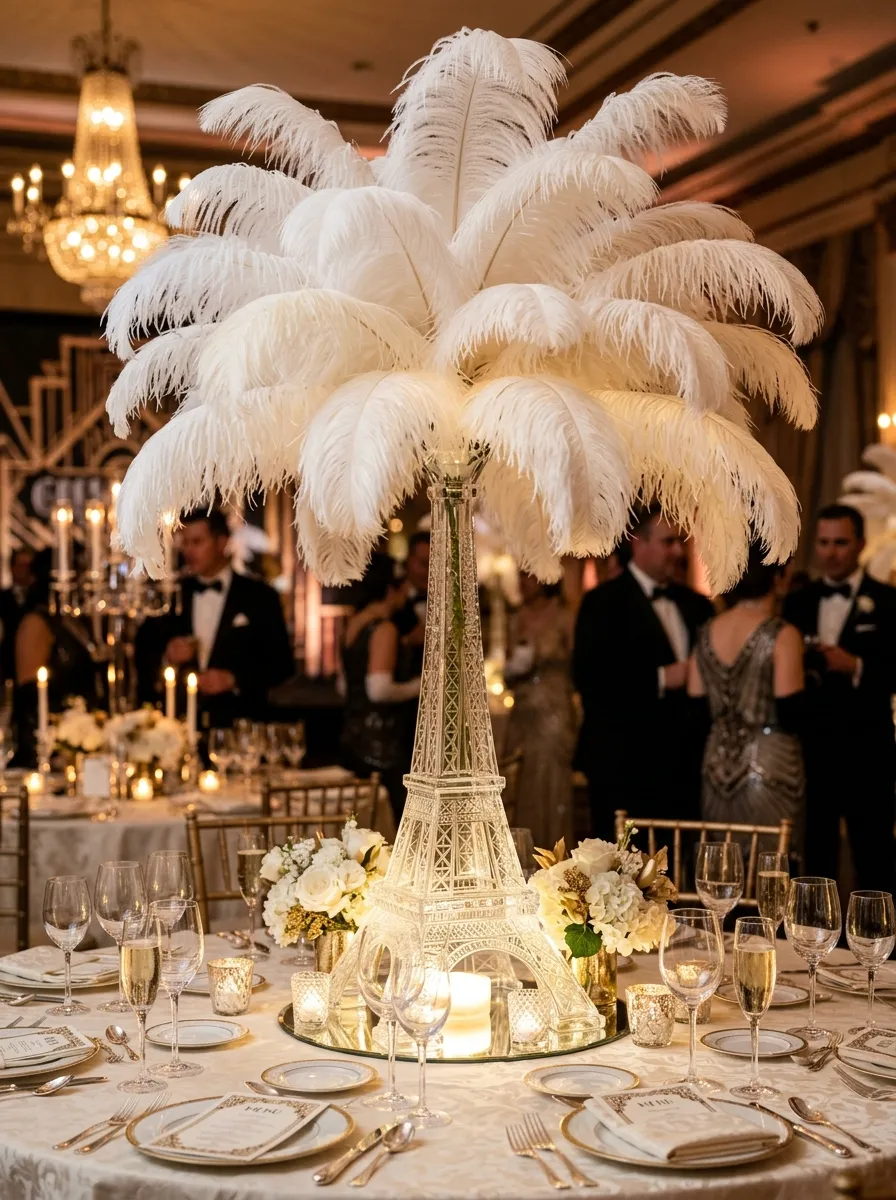
The towering Art Deco ostrich feather centerpiece revives the classic glamour of 1920s banquet design, utilizing elongated plumes to create a dramatic architectural canopy above reception tables. The core concept centers on slender, twenty-four-inch Eiffel Tower glass vases that support a dense cascade of soft ostrich drabs flowing outward in all directions. Because the slender glass stem elevates the plumage well above eye level, guests can converse freely across dining tables without visual obstruction. Combining pristine white, champagne, and soft ivory plumes creates an opulent silhouette that reflects ambient ballroom chandeliers. The gentle natural curve of the feathers introduces organic movement, softening the hard lines of high-ceiling banquet spaces. This design brings balanced elegance to vintage hotel ballrooms, historic theater venues, and formal black-tie celebrations.
Begin by securing a specialized bouquet holder or a firm dry floral foam cone onto the top opening of a heavy-base Eiffel Tower glass vase, locking the holder in place with clear floral adhesive tape. Starting at the lowest perimeter of the foam cone, insert sixteen-inch ostrich feathers horizontally with their natural curves arching downward toward the table surface. Move upward to the middle tier, inserting eighteen-inch plumes at a forty-five-degree angle to build volume and cover mechanical foam gaps. Complete the top crown by placing twenty-inch upright plumes into the center peak, allowing their fluffy tips to splay outward naturally. Wrap the neck of the glass vase with a strand of faux pearls or metallic ribbon to conceal the foam junction cleanly. Place the completed tower in the center of the table, illuminating the base with three warm-white LED uplights.
2. Minimalist Ceramic Dish with Sculptural Goose Quills
Execution Process
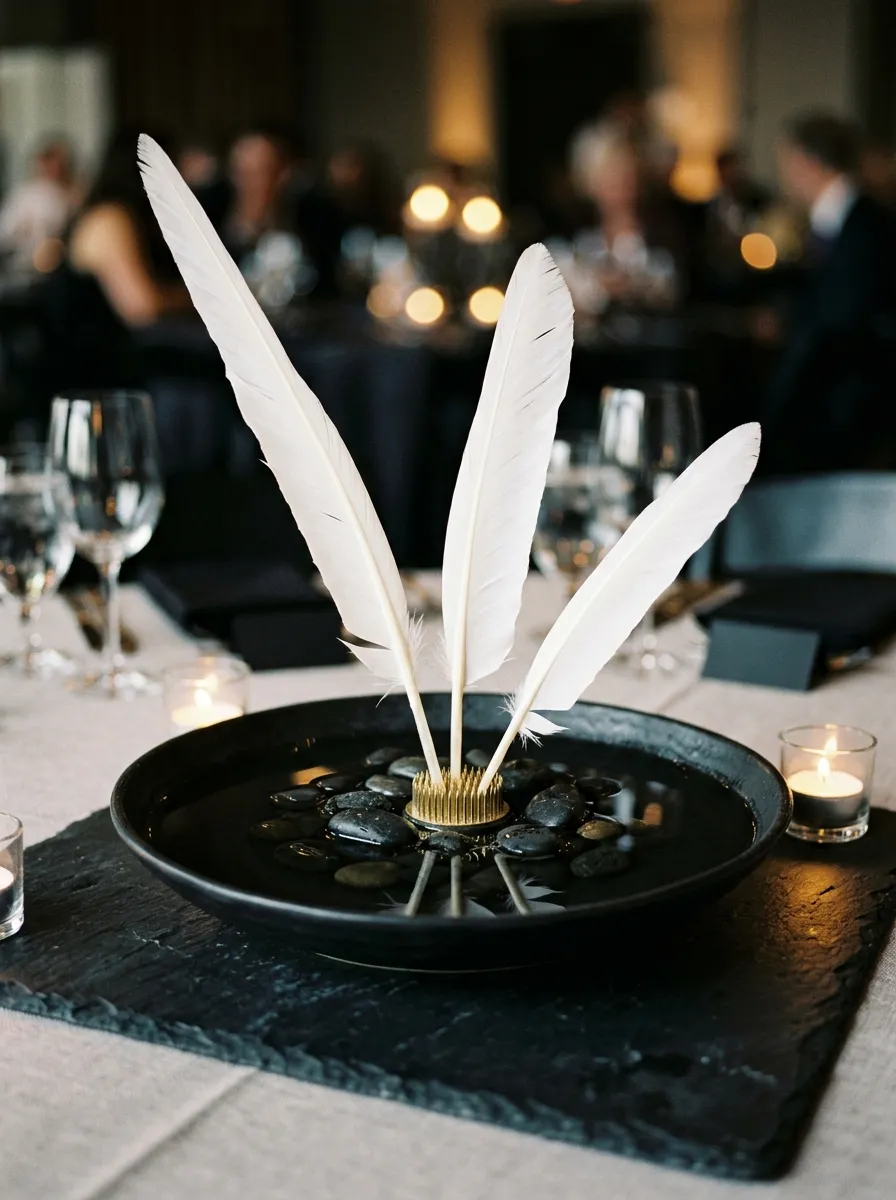
The minimalist ceramic dish centerpiece uses negative space, architectural line work, and strict restraint to establish a clean, contemporary aesthetic. This concept arranges three to five stiff, natural white goose pointer quills upright within a shallow, matte-black ceramic dish. Rather than filling the vessel with dense volume, this design emphasizes the clean diagonal silhouette of each individual feather vane against an open water surface. The reflective pool created by the shallow dish mirrors room light, casting delicate linear shadows across surrounding banquet linens. This horizontal orientation preserves dining space on compact tables, making it an ideal choice for modern art galleries, industrial lofts, and urban warehouse venues. The understated silhouette fits naturally into contemporary Scandinavian design and Japanese-inspired wedding themes.
Select a wide, eight-inch shallow ceramic dish with a matte-black glazed interior and a flat, leak-proof base. Place a heavy, round brass pin frog, or kenzan, into the center of the dish, securing the metal base with waterproof floral putty pressed firmly against the dry vessel floor. Trim the quill tips of three long white goose feathers at sharp angles using a utility knife to facilitate insertion into the metal pins. Press the feathers firmly into the brass kenzan at deliberate, asymmetrical diagonal angles, creating an open fan shape that draws the eye upward. Pour room-temperature distilled water into the dish to submerge the brass pins completely, hiding the mounting mechanics beneath a clean water line. Float two smooth black river stones over any visible brass hardware, then arrange three low glass tea lights around the perimeter.
3. Bohemian Pampas Grass and Pheasant Plume Terracotta Vessel
Setup Method
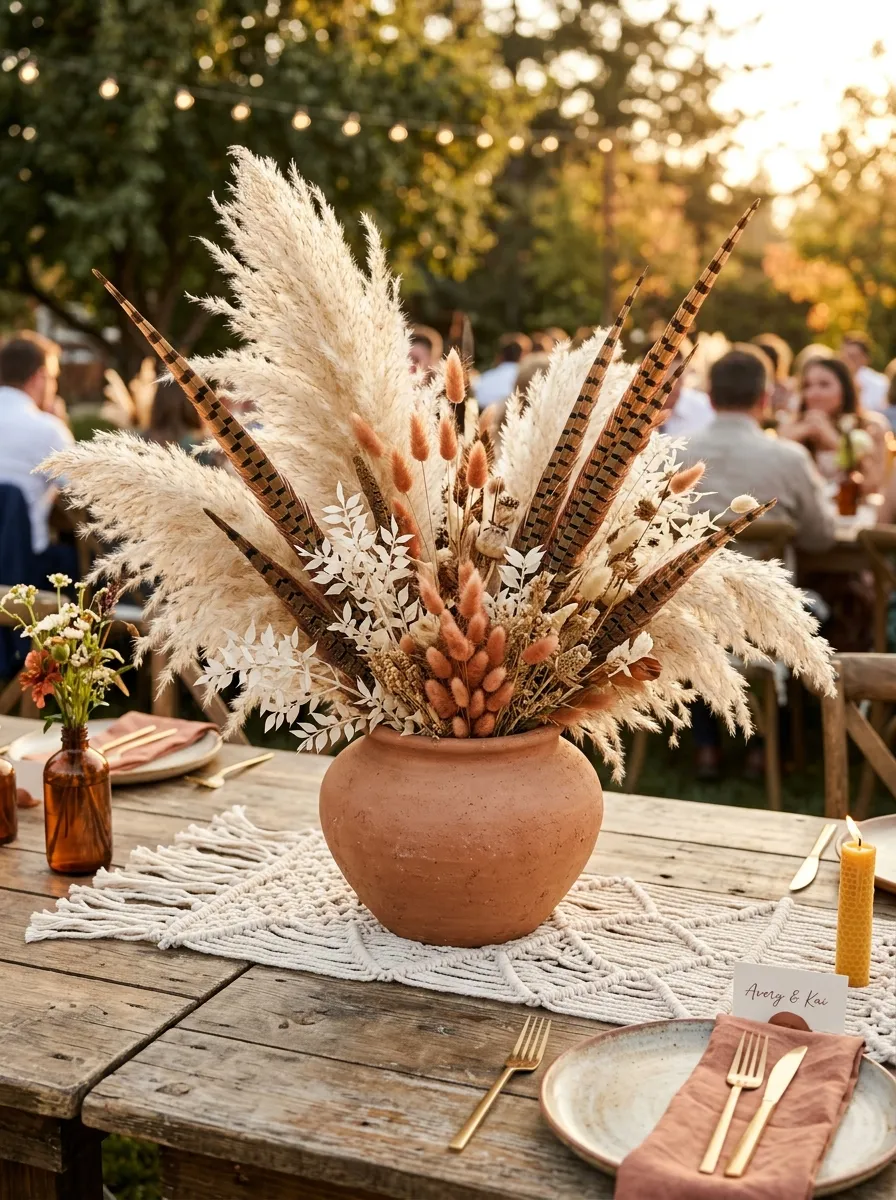
The bohemian pampas grass and pheasant plume centerpiece combines rustic desert tones with rich, striped wildlife plumage to create an organic, textural display. This design features an unglazed terracotta urn filled with fluffy dried pampas plumes, copper-toned bunny tails, and long ring-necked pheasant tail feathers. The contrast between soft, cloud-like pampas grass and the rigid, graphic banding of natural pheasant quills produces a layered tablescape that complements outdoor celebrations. By resting directly on the tabletop in a wide-mouth pot, the arrangement establishes an earthy visual weight that anchors linen-draped dining tables. The warm amber, ochre, and chestnut tones harmonize naturally with rustic wooden chairs, raw macrame runners, and terracotta dinnerware. This layout functions exceptionally well in desert botanical gardens, vineyard estates, and open-air autumn barn receptions.
Source an eight-inch wide unglazed terracotta pot, sealing the interior with a coat of craft sealer to prevent dry dust from shedding onto table surfaces. Cut a block of dense dry floral foam to fit snugly inside the pot cavity, securing it with floral tape pulled across the rim in an X-pattern. Insert three tall stems of bleached pampas grass into the rear center of the foam, fanning their plumes outward to establish the maximum vertical height. Layer five natural pheasant tail feathers through the central core, positioning the longest barred quills so their striped patterns remain visible from all seated angles. Fill the lower perimeter with fluffy dried bunny tails, preserved flax seed pods, and bleached ruscus to conceal all exposed foam. Check that the final arrangement remains balanced and does not tip forward when placed on a level table.
4. Floating Candle Basin with Bleached Marabou Rims
How to Create
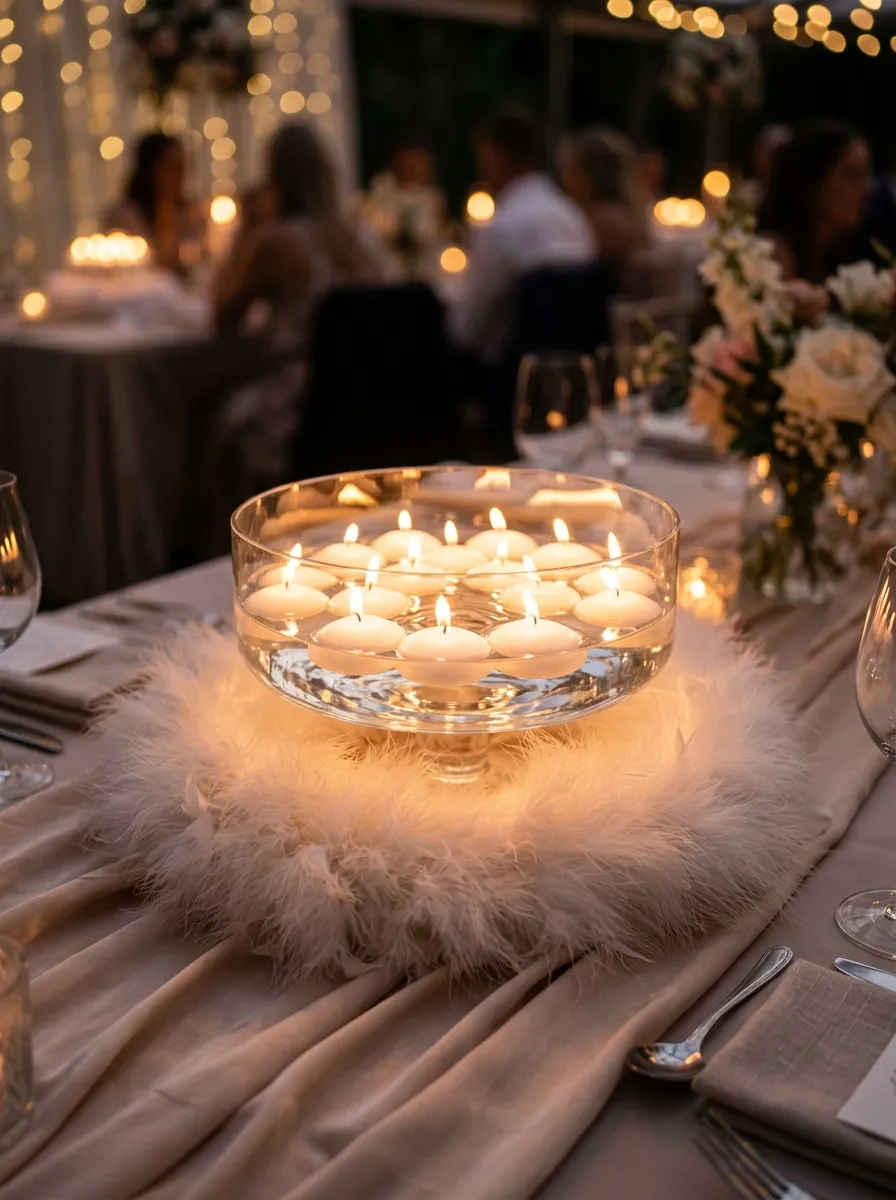
The floating candle basin with bleached marabou rims uses light reflection, gentle water movement, and plush feather textures to deliver a romantic centerpiece. A wide, shallow clear glass compote is filled with distilled water and floating wax candles, while its outer base is encircled by a dense wreath of bleached marabou feathers. The buoyant, downy texture of marabou absorbs surrounding candlelight, producing a soft halo effect that softens the perimeter of the glass basin. Because the candle flames remain safely contained behind glass walls, this design provides the warm glow of living fire without risking feather contact. The low-profile silhouette leaves sightlines clear across banquet tables, making it practical for communal dining. This design works well in ballroom venues, winter gatherings, and intimate indoor spaces where ambient lighting sets the mood.
Position a twelve-inch shallow glass bowl in the center of the reception table over a neutral silk runner. Cut a circular base from stiff craft cardstock matching the diameter of the glass bowl, cutting out the inner center to form a flat two-inch collar ring. Using low-temperature craft hot glue, adhere dense white marabou feather trims in overlapping concentric rows along the cardstock ring until the base appears thick and seamless. Slide the completed feather collar underneath the glass bowl so the downy plume tips frame the bottom glass edge. Fill the glass bowl two-thirds full with distilled water using a narrow-spout pitcher to avoid spilling onto the feather collar. Place three large white floating disc candles onto the water surface, ensuring the wicks stay dry, and ignite them twenty minutes before guest arrival.
5. Gilded Geometric Lantern with Peacock Eye Accents
Step-by-Step Guide
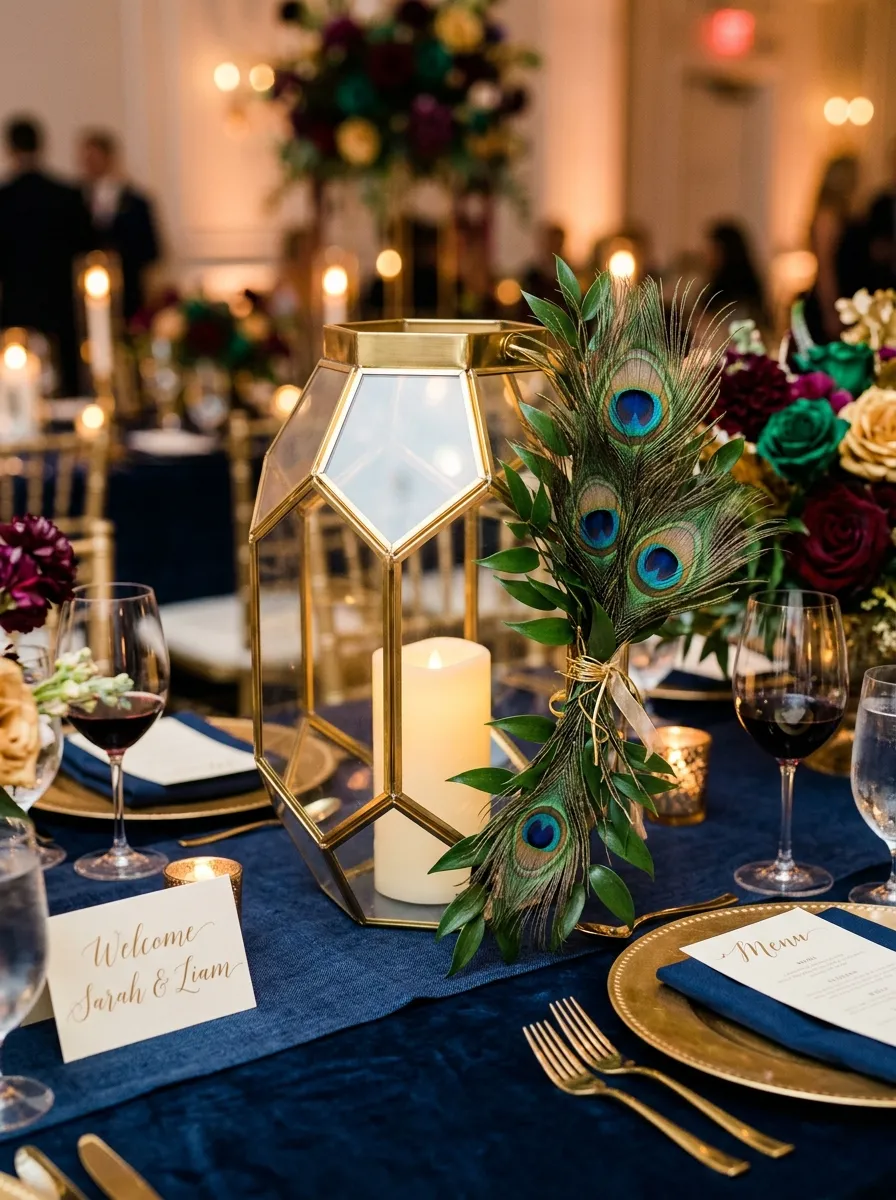
The gilded geometric lantern centerpiece brings sharp metallic lines and vivid jewel tones to the wedding table, balancing industrial brass with iridescent feathers. This design utilizes a faceted brass and glass lantern housing a flameless LED pillar candle, accented at its base with naturally shed peacock eye feathers and deep emerald foliage. The natural iridescence of peacock feathers—shifting from turquoise to deep royal blue and gold—catches ambient light, adding richness without requiring fresh floral stems. The glass lantern panels shield the display while framing the glowing candle core, making it an excellent choice for evening celebrations and modern urban rooftops. This design pairs naturally with dark navy tablecloths, gilded flatware, and modern geometric stationery.
Select a fourteen-inch multifaceted brass lantern with clear glass panes and an accessible top door. Place a three-by-six-inch ivory LED pillar candle equipped with an automatic timer inside the lantern center, securing its base with an adhesive foam dot. Arrange four trimmed peacock eye feathers in an asymmetrical fan across the lower front corner of the lantern, using clear floral adhesive tape to bind the quill stems together. Tuck sprigs of preserved dark-green Italian ruscus and gilded eucalyptus leaves around the feather stems to hide the tape wrap. Secure the botanical and feather bundle to the interior corner of the lantern using a discreet strip of double-sided mounting tape. Close the lantern door, clean any smudges from the exterior glass with a microfiber cloth, and activate the candle switch.
6. Architectural Pedestal Compote with Cascading Guinea Fowl Feathers
Setup Method
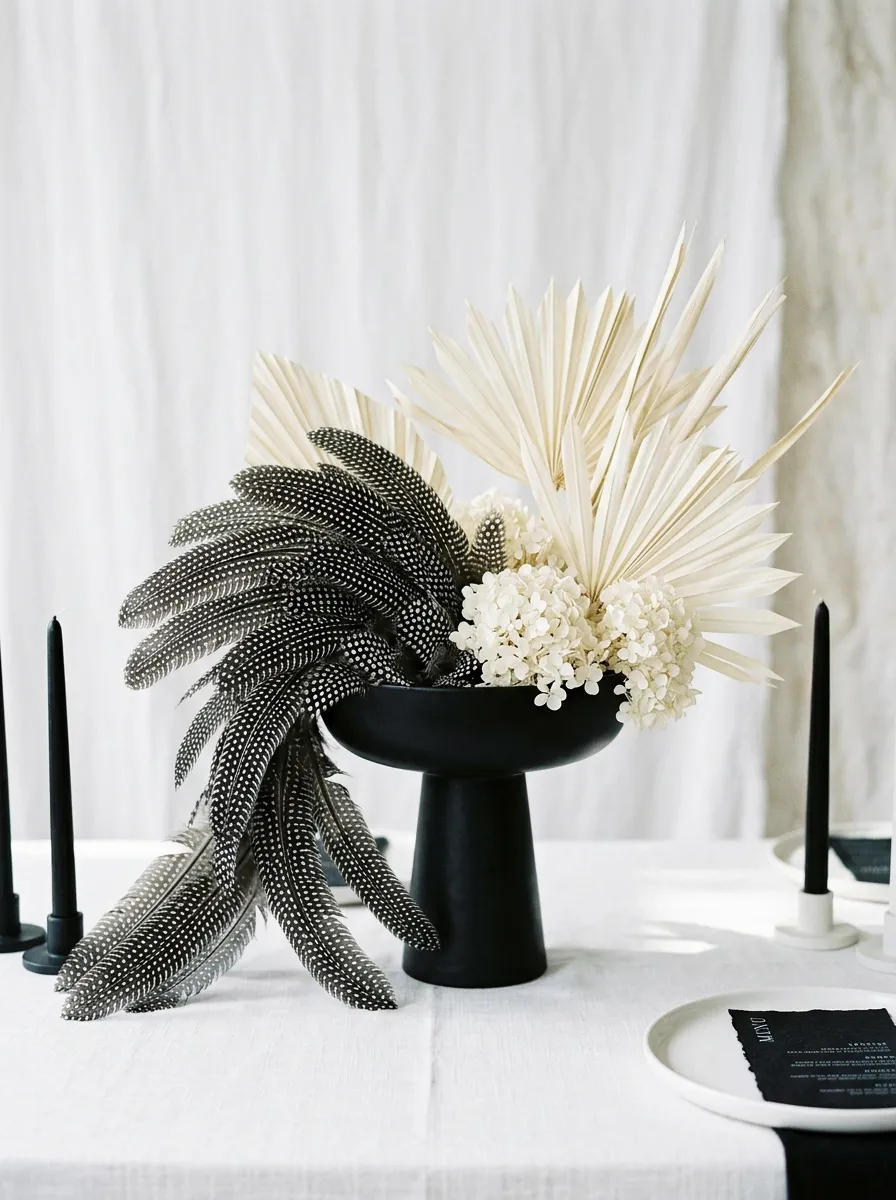
The architectural pedestal compote with cascading guinea fowl feathers uses high-contrast monochrome patterns to create an artistic tabletop arrangement. The design features a fluted matte-black or stone compote dish filled with black-and-white spotted guinea fowl feathers, accented with deep charcoal palm spears and bleached white fern fronds. The fine polka-dot pattern of guinea plumage introduces detailed graphic texture that draws the eye upon closer inspection, contrasting with larger backdrop leaves. Elevating the compote on a slender pedestal lifts the textural volume several inches above the tabletop, creating visual lightness while leaving dining space clear for wine glasses and shared platters. This design works exceptionally well in contemporary galleries, historic estates, and modern minimalist settings where bold patterns elevate neutral palettes.
Begin with a ten-inch diameter footed ceramic compote dish with a wide, shallow basin. Place a four-inch disc of dry gray floral foam into the center of the vessel, anchoring it securely with waterproof floral tape crossed over the rim. Insert dried bleached palm spears at the back of the foam, fanning them upward to create a structured background frame. Cut the stems of fifteen spotted guinea fowl plumage feathers to six inches, inserting them in dense clusters around the center and front of the foam. Angle the outermost feathers downward so their spotted tips spill over the compote rim, softening the transition between vessel and table. Fill remaining gaps with preserved white hydrangea florets and dried dark broom bloom, ensuring all mechanical tape remains hidden. Place the compote in the table center over a crisp white linen cloth.
7. Industrial Matte Black Cylinder with Dipped Gold Goose Feathers
Execution Process
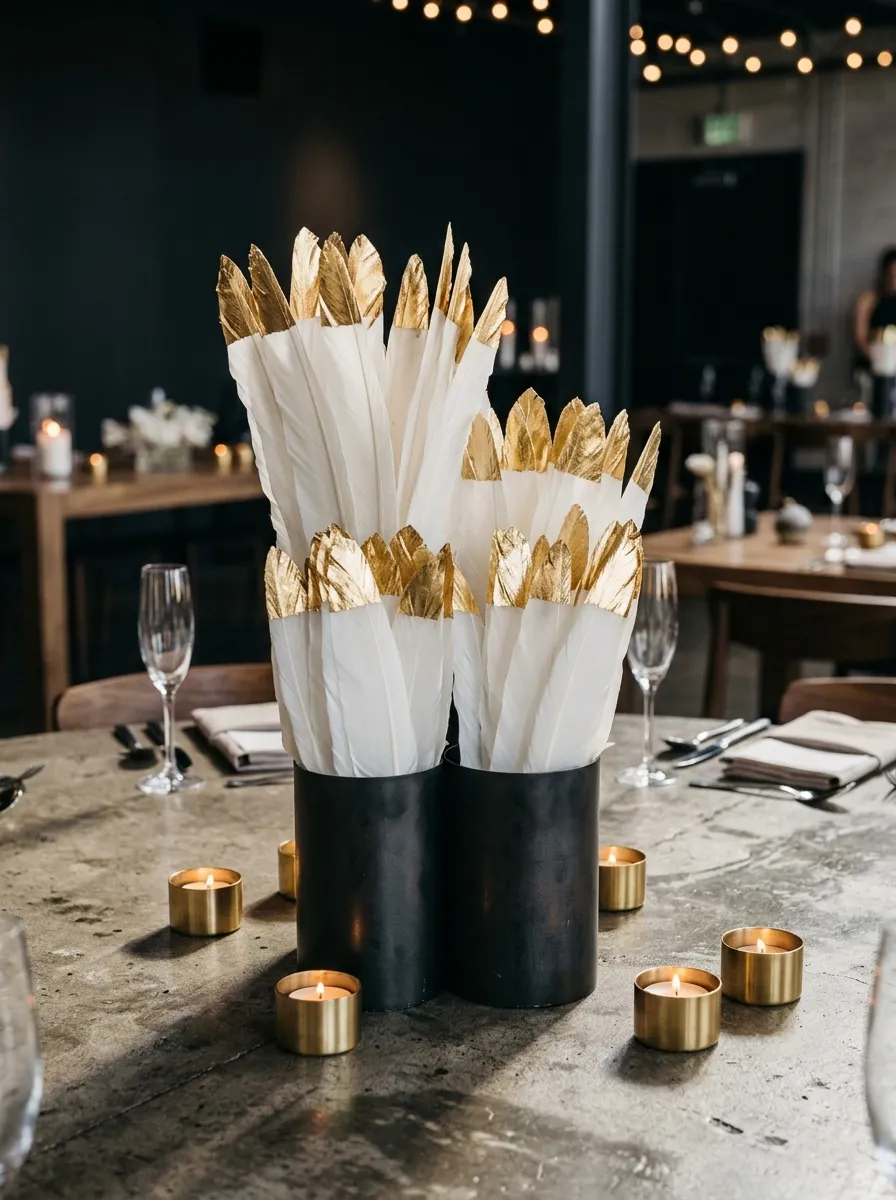
The industrial matte black cylinder centerpiece pairs stark modern geometry with luxurious metallic accents, offering a sleek, contemporary tablescape. This design utilizes tall, powder-coated matte-black metal or ceramic cylinders supporting a vertical spray of stiff white goose quills whose top tips have been dipped in metallic gold leaf. The sharp contrast between the deep black container, clean white feathers, and reflective gold tips creates a modern statement piece with minimal visual clutter. The vertical lines draw the eye upward without blocking across-the-table views, making it well suited for narrow banquet tables and modern loft venues. This design is exceptionally durable, easy to pack, and quick to set up across dozens of reception tables.
Source three cylindrical metal vases measuring eight, ten, and twelve inches in height with a uniform three-inch diameter. Prepare twenty white goose flight feathers by taping a straight line two inches below each tip using low-tack painter’s tape. Brush metallic gold gilding paint evenly across the exposed tips, allowing the paint to cure for thirty minutes before peeling away the tape to reveal sharp boundaries. Place a cylindrical insert of dry floral foam into the base of each black vase to provide friction and support for the quills. Insert five gilded feathers into each cylinder at slightly varied elevations, keeping the quills upright and parallel to the vase walls. Arrange the three cylinders in a tight cluster in the center of the dining table, surrounding the bases with polished brass tea light holders.
8. Woodland Birch Log Runner with Natural Turkey and Quail Feathers
How to Create
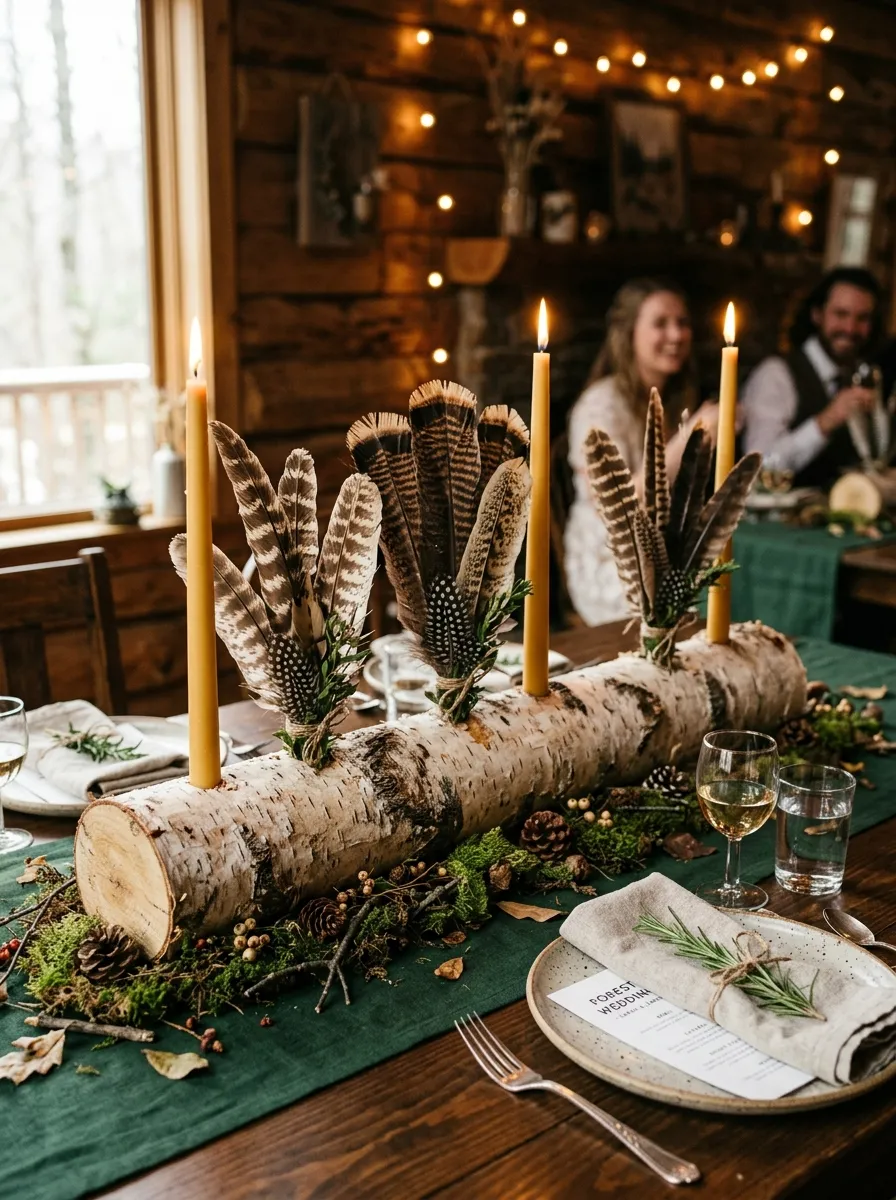
The woodland birch log runner centerpiece uses raw organic timber to ground delicate gamebird plumage, creating a rustic-contemporary tablescape for long banquet tables. This design repurposes kiln-dried white paper birch logs, planed flat along their base and drilled with small vertical holes to hold feather stems, slender taper candles, and dried botanical sprigs. The chalky white bark and textured fissures of the birch logs contrast cleanly against the barred patterns of eastern wild turkey feathers and spotted quail plumes. Because the wooden runner maintains a low horizontal profile along the table center, it allows for open conversation and easy passing of food. This design brings cozy woodland warmth to mountain lodges, autumn vineyard receptions, and rustic barn celebrations.
Obtain two twenty-four-inch white birch log sections with natural bark intact, ensuring the bottoms are planed flat to prevent rolling on dining tables. Drill five evenly spaced half-inch holes along the top ridge of each log, inserting small brass candle grommets into three holes and leaving two holes open for feather inserts. Place non-drip beeswax taper candles into the brass grommets, pressing firmly to ensure vertical alignment. Bundle three barred turkey feathers with two smaller quail plumes, binding their lower quills with brown florist tape, and slide the stem bundles into the open drilled holes. Lay the two birch logs end-to-end down the center of the table over a raw-edged moss-green linen runner. Weave preserved forest moss and miniature pinecones around the log bases to complete the woodland display.
9. Vintage Mercury Glass Flute with Soft Marabou Puffs
Step-by-Step Guide
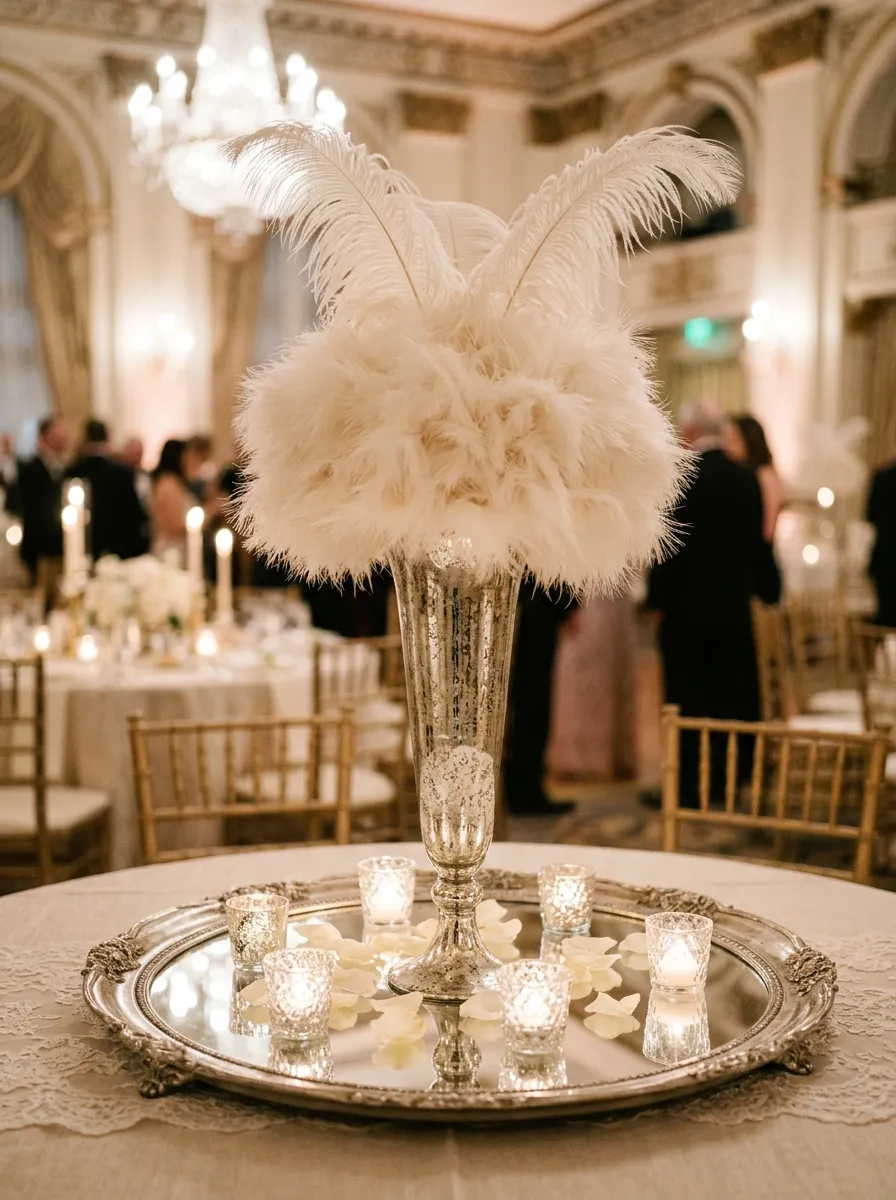
The vintage mercury glass flute centerpiece blends antique romance with playful cloud-like textures, establishing an intimate tablescape for formal evening receptions. This concept uses slender, fluted mercury glass vases that catch candlelight across their dappled silver surfaces, topped with a dense sphere of soft marabou and ostrich down. The contrast between the cool, reflective glass and the soft plumage creates an arrangement that feels luxurious and delicate. Because the fluted vase features a narrow footprint, it leaves ample space on circular dining tables for glassware, bread plates, and formal place settings. This design works exceptionally well in historic private estates, romantic ballroom venues, and winter weddings where soft textures enhance the warm, celebratory atmosphere.
Clean a twelve-inch tall fluted mercury glass vase with a lint-free microfiber cloth to remove dust and fingerprints. Push a small three-inch sphere of dry polystyrene foam halfway into the mouth of the vase, securing it around the rim with a strip of clear floral tape. Take clusters of bleached ivory marabou plumes, trimming their quill bases to two inches using sharp craft scissors. Insert the marabou quills symmetrically into the foam sphere, working from the outer rim inward until the foam is completely concealed beneath a seamless downy ball. Insert three short ostrich feathers into the top center, letting their wispy tips arch gracefully over the marabou puff. Position the vase in the center of the table atop an ornate silver mirror plateau, surrounding it with crystal-cut votives.
10. Coastal Bleached Driftwood Branch with Floating Swan Feathers
Setup Method
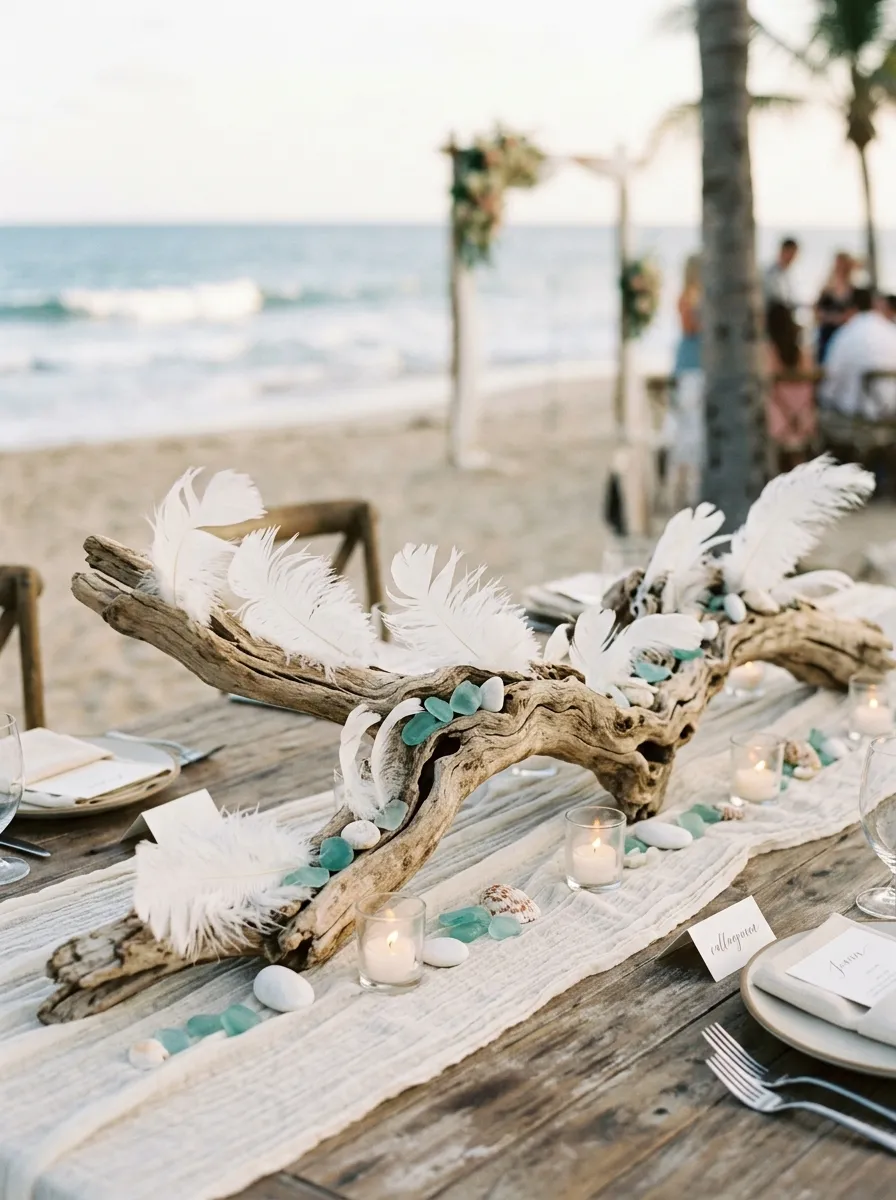
The coastal bleached driftwood branch centerpiece uses weathered coastal materials to create a serene, organic tablescape suited for waterfront and seaside celebrations. A central piece of sun-bleached coastal driftwood forms an organic base, around which delicate white swan and goose plumage is arranged to mimic sea foam and resting coastal birds. The pale wood grain and natural contours of the driftwood anchor the table without requiring heavy floral bulk or formal ceramics. Accenting the wood with smooth sea glass shards, white quartz pebbles, and soft white feathers establishes an airy palette that complements shoreline breezes. This low-profile design sits flush against the table runner, making it ideal for outdoor tented receptions, coastal pavilions, and beachside dining.
Select a clean, sandblasted piece of coastal driftwood measuring twenty to thirty inches in length, ensuring all loose debris is brushed away. Lay the driftwood along the center of the dining table over a raw-edged ivory cheesecloth runner, orienting its natural curves along the table length. Use clear floral adhesive dots to anchor seven natural white swan feathers along the natural crevices and hollows of the driftwood branch. Tuck delicate sprigs of dried white sea lavender and pale air plants around the feather quill bases to hide the adhesive points. Scatter tumbled aqua sea glass gems and smooth white beach stones along the edges of the driftwood where it meets the table runner. Place four low glass votive cups with burning soy candles alongside the wood to illuminate the white plumage.
Common Beginner Mistakes and How to Avoid Them
The most widespread mistake when designing DIY feather centerpieces is neglecting base stability, leading to top-heavy arrangements that tip over when tables are bumped. Tall plumes like ostrich and peacock feathers act like sails, catching indoor drafts from air vents and creating leverage that can topple light glass vases. To prevent this, always weight container bases with glass marbles, metal ballast, or river stones, and use broad-base vessels for tall displays. Another common error is using unsteamed, compressed feathers directly from shipping packages, which leaves the centerpiece looking flat and sparse. Take time to steam each plume gently over a kettle or garment steamer to expand the vanes fully before arranging. Beginners also frequently place untreated, flammable feathers too close to open candle flames, creating a serious fire hazard. Always enclose burning wicks inside tall glass hurricane cylinders that extend several inches above the flame, or use high-quality flameless LED candles instead. Finally, avoid mixing too many clashing feather species in a single arrangement; stick to a cohesive palette of two or three complementary plume textures to maintain an elegant, intentional aesthetic.
Practical Tips for Better Results
To achieve clean, professional results in your feather centerpieces, focus on grading plume lengths systematically to create balanced, symmetrical silhouettes. When assembling spherical or cascading designs, measure and sort feathers into three distinct size tiers—short, medium, and long—before inserting them into your foam armature. This ensures that the longest plumes form a graceful outer rim while shorter feathers build fullness and conceal mounting mechanics in the center. If feathers appear slightly dusty or oily, dust them lightly with cornstarch and shake them clean, or wipe stiff quills with an alcohol pad to restore their clean matte finish. When working with dyed plumage, test for colorfastness by pressing a damp white cloth against a sample feather, ensuring pigments will not bleed onto expensive rental table linens. Use low-temperature craft hot glue or florist clay rather than high-heat glue guns when securing quills to foam, as extreme heat can melt delicate feather shafts. Finally, step back and evaluate the centerpiece from seated eye level on all four sides to confirm that guest sightlines remain open and balanced across the entire dining table.
Styling, Presentation, or Organization Ideas
Styling feather centerpieces effectively requires treating the entire tabletop surface as a single visual canvas that connects with the broader room decor. Anchor your centerpieces with textured fabric runners—such as raw-edged silk chiffon, heavy velvet, or natural linen—to frame the feather displays and prevent smooth vessels from sliding on banquet tables. Pair central feather arrangements with varied accent lighting, arranging clear glass tea lights, fluted votives, and tall taper candles at alternating heights to create a warm, multidimensional glow across the table. Coordinate table paper goods, such as menus, table numbers, and place cards, with your feather motifs by incorporating embossed quill illustrations, metallic wax seals, or deckled-edge cotton cardstock. When decorating long banquet tables, repeat your centerpiece motif every four feet, filling intermediate spaces with low greenery or small clusters of coordinating feathers to maintain visual continuity down the line. Finally, carry your feather materials into surrounding venue spaces—such as the escort card display, lounge tables, and bar top—to weave a cohesive design narrative throughout the entire event space.
Budget or Time Planning
Creating your own feather centerpieces offers significant savings compared to traditional wedding floristry, provided materials are sourced strategically and assembly timelines are managed with care. To maximize budget efficiency, purchase feathers in bulk wholesale packs directly from commercial millinery suppliers rather than buying small, expensive craft-store packages. Sourcing foundational vessels—such as Eiffel Tower vases, compote bowls, and metal lanterns—from bulk event rental companies or secondhand wedding marketplaces significantly lowers your upfront hardware investment. Establish a structured production schedule: clean glassware, sort feather bins, and pre-wire hanging elements four to six weeks prior to the wedding date, storing pre-assembled components in sturdy, labeled plastic storage totes away from direct sunlight. If incorporating fresh greenery alongside feathers, schedule that final layer of assembly for thirty-six hours before the ceremony to maintain fresh botanicals. Working in focused, assembly-line stages—such as prepping vessels, securing structural bases, and placing plumes—streamlines the crafting process, saving valuable hours during the final days of wedding preparation.
Creative Expansion and Advanced Inspiration
Once the foundational assembly techniques are mastered, crafters can explore advanced customizations to elevate their feather wedding centerpieces further. Consider applying custom metallic finishes, using water-based gold leaf sizing and loose variegated metal leaf sheets to transform quill tips into bespoke, hand-gilded art objects. Advanced makers can also explore custom ombre dyeing, dipping natural white plumes into fabric dye baths to create subtle gradients that match precise wedding color palettes. You can also experiment with suspended ceiling installations, wiring natural manzanita branches or circular wire rings above the tables to hang delicate floating feathers and trailing crystal strands from high-tensile aircraft cables. Post-event, centerpieces can be repurposed into holiday tree toppers, decorative wall hangings, or millinery accessories, preserving the joy of your celebration for years to come. These creative adaptations transform everyday decorative materials into meaningful, enduring reminders of your wedding celebration.