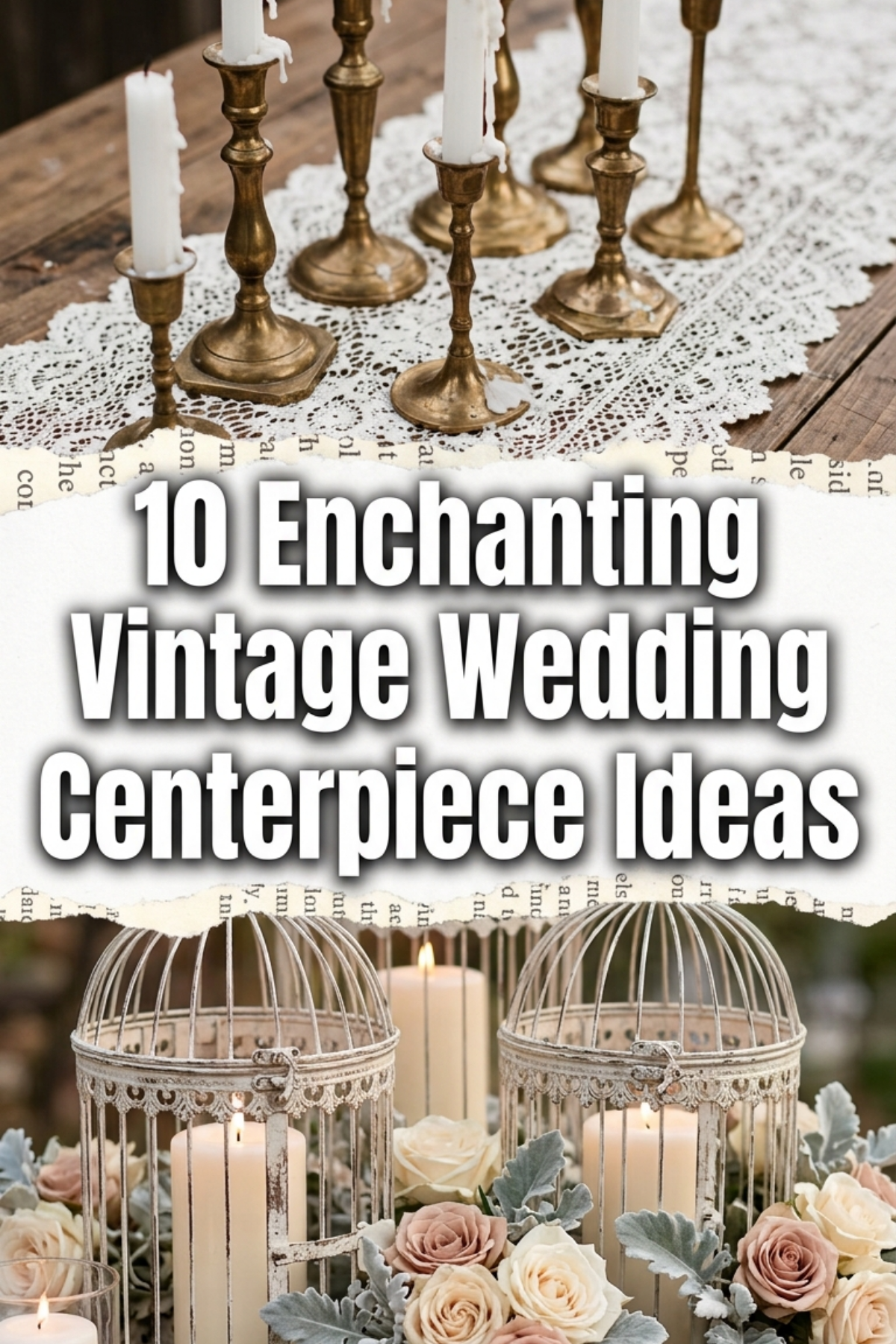
Vintage table styling transforms classic wedding receptions through balanced illumination, antique textures, and layered historical character. Designing focal displays around soft candlelight introduces timeless warmth, visual depth, and an intimate ambiance to banquet seating and guest tables. This comprehensive guide outlines ten structured vintage wedding candle centerpiece concepts that pair classic illumination with period-accurate vessels, architectural metals, aged wood, and organic accents. Readers will discover clear fabrication methods, dimensional guidelines, and balanced styling practices required to assemble professional-grade decorative displays. Developing these custom tabletop accents provides event planners, decorators, and couples with complete visual control over their reception aesthetic while substantially lowering floral and rental costs. In addition to technical assembly steps, this tutorial details essential safety protocols, structural stabilization, and proportion control across circular, rectangular, and banquet seating arrangements. Mastering these foundational centerpiece techniques equips decorators with practical crafting capabilities that transition easily from event production to heirloom home decor. By exploring tactile materials such as antiqued brass, mercury glass, cut crystal, and distressed stoneware, decorators can produce coherent, visually dynamic tablescapes suited to diverse reception environments.
Why This Idea Is Trending or Useful
Aged decorative displays centered around candlelight continue to dominate modern event planning, consistently ranking among the most shared Pinterest ideas for wedding inspiration. The practical value of this approach lies in the dependable, radiant illumination candles generate, which softens overhead venue fixtures and complements architectural event photography. From a design standpoint, vintage motifs blend classic warmth with modern design sensibilities, integrating weathered metals and patinated glass alongside clean linens and understated dinnerware. The tactile appeal of curated antique vessels resonates with decorators who favor artisanal character, textural contrasts, and layered visual interest over mass-produced accents. As a versatile DIY creative project, candle-based displays eliminate the rapid wilting, strict temperature controls, and expensive refrigeration schedules associated with fresh botanical arrangements. Handcrafted candle arrangements remain exceptionally beginner friendly because they require basic layout planning, straightforward surface treatments, and zero complex structural engineering. Furthermore, couples and planners seeking sustainable budget ideas can source authentic vintage elements from second-hand markets or repurpose completed arrangements into long-term residential decoration, maximizing utility while minimizing decorative waste.
Materials and Preparation
Thorough preparation and material curation ensure a smooth, efficient assembly process for reception centerpieces. Essential illumination components include unscented paraffin or soy pillar candles, standard tapered tapers, tea lights, and enclosed votives in warm cream or ivory tones. Vessels form the visual anchor of each display; collect fluted mercury glass cups, tarnished brass candelabras, ornate pedestal bases, pressed-glass compotes, and aged timber crates. Supporting tools must include heavy-duty utility shears, craft wire cutters, low-temperature glue guns, museum wax or floral adhesive putty, and metal-grade glass cleaners. Botanical accents like dried seed pods, preserved boxwood, dusty eucalyptus, and garden roses soften hard architectural vessels and create balanced transitions. Preparation begins by assessing table dimensions, linen textures, and seating capacities to establish safe centerpiece proportions. Group vessels by height, metal finish, and glass tint across dedicated preparation tables to streamline assembly. Clean and dry all glass surfaces thoroughly, removing historical wax buildup, greasy residues, and dust before securing candles. Finally, calculate burn durations against your reception schedule to select appropriate wick compositions and vessel heights.
1. Antiqued Brass Candelabra with Wax Drips and Botanical Garlands
Step-by-Step Guide
The multibranched brass candelabra embodies old-world grandeur, drawing the eye upward with elevated vertical geometry and warm metallic luster. Incorporating five-arm or three-arm candelabras establishes a regal, historic atmosphere suitable for formal dining rooms, historic estates, and heritage ballrooms. Authentic brass develops a natural matte patina over decades, diffusing light across its ornate baluster stems and scrolling arms. Controlled natural wax drips along the candle columns add tactile, historical authenticity without leaving untidy residues on reception linens. Balancing this metallic structure with soft, trailing greenery creates a grounded organic base that softens the solid metal form. Preserved smilax, silver dollar eucalyptus, and antique garden roses can weave loosely around the base pedestal, creating a seamless connection to the tabletop. The height of the candelabra ensures that the radiant candle flames rest well above eye level, maintaining open sightlines for seated guests. This timeless design functions as an adaptable focal anchor that pairs effortlessly with fine bone china, cut crystal glassware, and heavy linen runners.
Assemble this centerpiece by anchoring an eighteen-inch antiqued brass candelabra onto the center of the reception table. Secure ten-inch, non-drip ivory taper candles firmly into each branch cup using small discs of floral adhesive putty to prevent leaning. To achieve a realistic antique appearance before the event, light a sacrificial candle and tilt it slightly to let controlled wax droplets cascade down the primary tapers. Allow these exterior wax formations to cool completely before continuing the table setup. Cut preserved salal leaves and olive branches into ten-inch lengths, weaving them around the wide circular foot of the metal stand. Secure the foliage ends with thin floral wire to construct a continuous, circular wreath that encircles the pedestal base without climbing high up the stem. Nestle miniature spray roses and dried botanical berries into the green ring to add subtle tonal contrast. Inspect the vertical alignment of each taper candle to guarantee upright stability, ensuring complete structural balance and flame clearance across the dining table.
2. Weathered Wood Lantern Trio with Clustered Pillar Candles
Execution Process
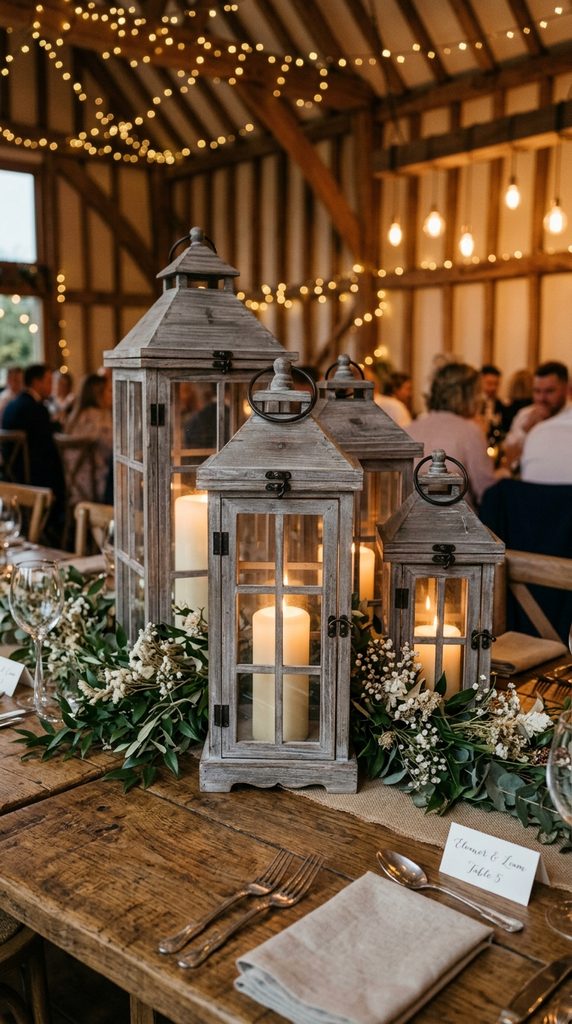
Rustic wooden lanterns introduce geometric structure, architectural warmth, and country charm to long banquet tables and outdoor garden gatherings. Utilizing a staggered trio of square or hexagonal timber frames adds visual dimension through varying roof lines, glass panes, and iron latch details. The natural distressing of reclaimed barn wood or weathered gray cedar provides an earthy, tactile contrast to smooth ivory wax candles. Enclosing pillar candles within clear glass panes shields the burning wicks from cross-drafts, guaranteeing a continuous, stable flame during outdoor dining. This structural layout works exceptionally well along the center of rectangular farmhouse tables, filling horizontal space without appearing visually dense or cluttered. Placing three distinct lantern sizes together establishes an organic, asymmetrical focal cluster that feels intentional and relaxed. Surrounding the lantern bases with muted river stones, dried seed stems, and trailing ivy grounds the wooden vessels directly onto natural wood or woven runners. The protective glass walls also establish an essential fire safety perimeter around high-traffic banquet settings.
Construct this three-piece lantern arrangement by placing three weathered wood lanterns measuring eighteen, fourteen, and ten inches in height diagonally along the table center. Open the glass access doors and clean the interior panes thoroughly using a lint-free microfiber cloth and glass cleaning solution. Place three-inch-wide soy pillar candles inside each lantern, adjusting heights from four to eight inches to match the proportions of each frame. Anchor the flat bottom of each wax candle to the interior lantern floor with a thin disc of double-sided adhesive wax tape. Close the latching mechanisms securely to shield the wicks from wind exposure and table movements. Intertwine fresh Italian ruscus and seeded eucalyptus along the outer bases of the lanterns, running the stems in an S-shaped curve between the wooden frames. Scatter several white dried botanical pods and miniature wooden spools along the green runner to enrich the aged countryside theme. Complete the assembly by ensuring all candles stand centered under their ventilation chimneys.
3. Clustered Mercury Glass Votives with Cut Crystal Candlesticks
How to Make
Mercury glass votives paired with multifaceted cut crystal candlesticks generate an opulent play of refracted light, reflective surfaces, and sparkling textures. The distinctive speckled, silvered interior of mercury glass softens standard tea light illumination, casting intricate, dappled shadow patterns across table linens. Integrating varied heights of clear cut-glass candlesticks creates an undulating skyline that introduces vertical energy without obstructing cross-table conversation. This design concept complements romantic, vintage-luxe themes, vintage garden soirees, and evening ballroom receptions featuring fine embroidered textiles and polished silverware. The combination of mercury glass and lead crystal produces a multifaceted vintage look that catches every movement of the ambient reception lighting. By clustering numerous small illumination points rather than relying on a single large vessel, the display distributes warm light across the entire dining area. This flexible design easily adapts to round banquet tables, oval settings, or long family-style banquet configurations, making it a reliable solution for varied venue layouts.
Begin the setup by spreading a sheer lace or muted silk table runner down the middle of the dining surface to anchor the glassware. Arrange five cut-glass candlesticks of varying heights, ranging from four to ten inches, in an irregular zigzag pattern down the center. Affix ten-inch standard taper candles into the crystal sockets, employing museum wax discs to secure the tapers firmly in place. Distribute eight to ten fluted mercury glass votive cups around the crystal stems, ensuring an even distribution of silver, champagne, and antique bronze tones. Drop standard unscented tea light candles or long-burning votives into the base of each mercury cup. Layer small sprigs of dusty miller, white ranunculus blooms, and dried baby’s breath between the glassware bases, keeping the botanical elements low to avoid crowding the glass. Verify that all taper wicks and votives maintain a clear three-inch safety zone away from floral leaves and fabric edges to guarantee safe, continuous burning throughout the evening.
4. Ornate Silver Teapot Vessel with Overflowing Floral Pillars
Step-by-Step Guide
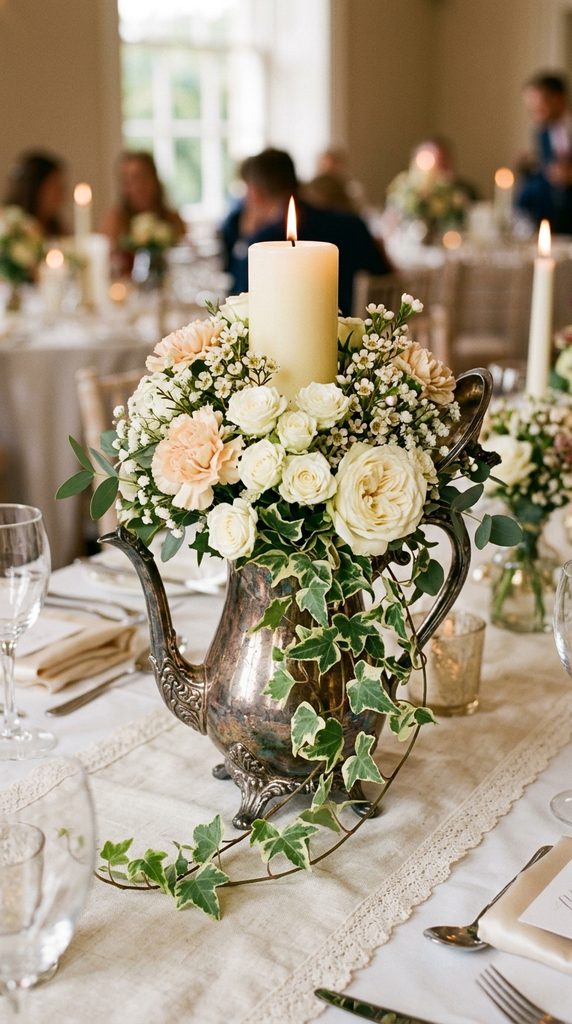
Repurposing authentic vintage hollowware, such as tarnished silver teapots, creamers, and coffee urns, infuses high-tea whimsy and storied antique elegance into tablescapes. The soft patina of gently worn silver plating reflects flickering candlelight with an understated, pearlescent glow that polished chrome cannot achieve. Using a wide, hollow teapot as a vessel allows decorators to combine pillar candles with lush, cascading florals inside a single, self-contained unit. This arrangement serves as a delightful conversation piece, evocative of historic English manors, garden tea parties, and period drawing-room gatherings. The curved spout, ornate scroll handles, and hinged lid details introduce dynamic sculptural lines that contrast with the upright pillar candle. Balancing the metallic vessel with cascading blossoms like hanging amaranthus, tea roses, and ivy softens the metal while introducing natural, garden-inspired texture. This self-contained centerpiece is ideally scaled for round dining tables, sweetheart tables, or auxiliary reception stations like guestbook and dessert tables, where surface space is limited.
Prepare this arrangement by sourcing a vintage silver-plated teapot featuring a hinged lid or an open circular top rim. Polish the exterior lightly using a soft cotton cloth, intentionally leaving darker oxidation inside the engraved floral patterns to accent its age. Cut a block of dense, dry floral foam to fit snugly within the teapot cavity, leaving one inch of space below the container rim. Carve a circular recess in the center of the foam block to secure a two-inch-wide ivory pillar candle, inserting it until seated firmly. Wrap the candle base in clear plastic wrap to shield the wax from contact with wet floral foam or adhesive residues. Insert short stems of hydrated white spray roses, pale peach carnations, and trailing variegated ivy around the candle base, packing the stems tightly into the foam. Allow the trailing ivy and sweet pea tendrils to spill over the teapot spout and down across the table surface. Ensure the candle wick extends at least two inches above the surrounding floral blooms.
5. Industrial Reclaimed Brick Mold with Recessed Candle Tapers
Execution Process
Early twentieth-century industrial artifacts provide an intriguing, grounded contrast to soft wedding decor through weathered timber, rusted iron banding, and sturdy box profiles. Repurposed wooden brick molds, originally used in manual brickmaking, feature natural tool marks, weathered grain, and historical manufacturer stamps. Converting these double- or triple-compartment containers into horizontal candle centerpieces results in an understated, structural display ideal for urban lofts, restored warehouses, and barn settings. The heavy rectangular proportions sit low to the table, ensuring zero sightline obstruction while providing exceptional resistance to accidental tipping. Pairing dark, aged wood with modern white or taupe tapers creates a balanced aesthetic that feels functional and refined. Dried wheat stems, seed pods, and preserved moss fill the internal compartments, adding tactile botanical diversity that honors the industrial theme. This durable wooden structure is especially suited for family-style dining setups, leaving ample clearance for serving platters, shared wine carafes, and flatware.
Source an authentic two- or three-compartment wooden brick mold measuring roughly twelve inches in length and four inches in height. Clean the interior wood grain thoroughly using a stiff bristle brush to remove loose soil, coating the timber with mineral oil to enrich the deep wood tones. Cut dense floral foam blocks to fill two-thirds of each compartment, pressing the foam flush against the interior walls. Insert heavy-duty metal taper candle stakes firmly into the center of each compartment’s foam base, ensuring the metal prongs penetrate the wood bottom. Press eight-inch ivory taper candles straight into the metal candle stakes, verifying that all candles stand aligned and parallel along the horizontal plane. Pack dried Spanish moss and preserved green reindeer moss tightly over the foam base to fully conceal the mounting mechanics. Nestle small dried thistle blooms, dried flax pods, and miniature pinecones into the moss bed around each candle base. Confirm that all moss rests well below the candle cups to maintain absolute flame clearance.
6. Mismatched Amber Glass Bottle Runner with Slender Tapers
How to Make
Vintage amber apothecary bottles, medicine jars, and beverage vessels introduce rich golden hues, earthy warmth, and vintage pharmacy charm to reception tables. The amber glass filters candle illumination into warm golden tones, creating a cozy atmosphere across dining spaces. Using diverse bottle shapes, neck circumferences, and relief-molded lettering produces visual rhythm that captures interest without feeling cluttered. Arranged in a continuous, winding runner down the center of long farmhouse tables, this layout creates an informal, curated aesthetic reminiscent of botanical laboratories. The slender profile of bottle openings makes them natural holders for standard taper candles, creating a minimalist yet textured centerpiece. Complementing the amber tones with dried floral sprigs and simple linen runners accentuates the early-century aesthetic. This approach is practical for decorators who enjoy collecting individual elements over time, resulting in a display full of authentic personality.
Collect twelve to fifteen vintage amber glass bottles ranging between six and ten inches in height with narrow neck diameters. Clean each bottle inside and out using warm water and degreasing soap, removing old adhesive labels with a non-abrasive scraper. Select standard eight-inch taper candles in complementary shades like off-white, terracotta, or deep olive green. If the candle bases are too wide for the bottle mouths, gently pare down the lower wax rim using a craft knife until they slide securely into the necks. Secure each taper candle into its bottle by applying two drops of warm melted wax inside the opening, pressing the candle down firmly until the wax sets. Arrange the bottles down the center of a washed linen table runner, alternating bottle heights and shapes to create an undulating path. Weave small stems of dried bunny tails, preserved silver grass, and olive sprigs loosely around the bases of the amber bottles to frame the presentation.
7. Distressed Architectural Stone Compote with Multi-Wick Pillar
Step-by-Step Guide
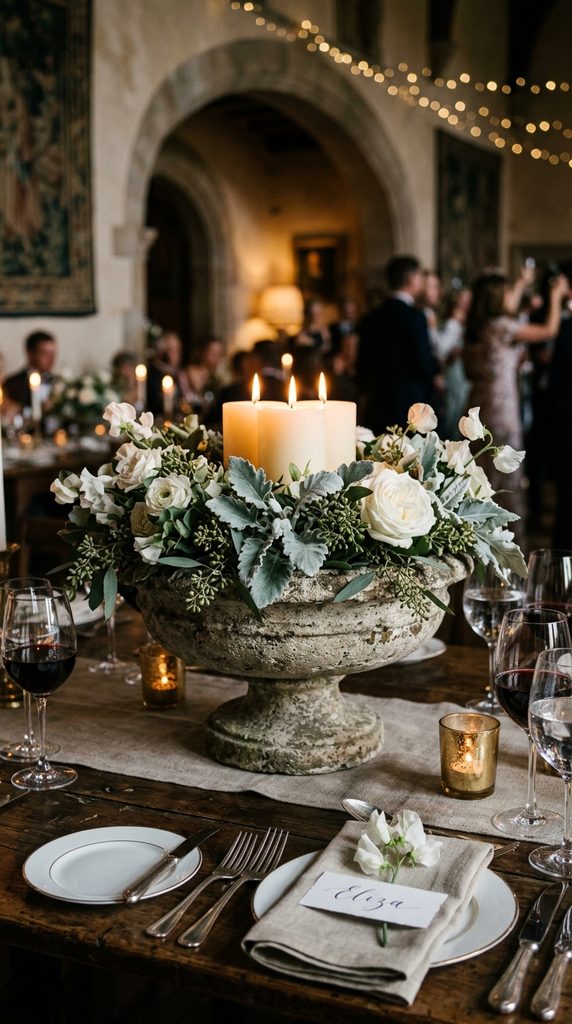
Stoneware compotes, cast stone pedestals, and weathered concrete vessels offer classical weight, architectural texture, and enduring substance to formal wedding reception tables. The rough, matte exterior of cast stone compotes contrasts gracefully with smooth candle wax, polished tableware, and delicate glassware. Featuring a wide, elevated bowl, this centerpiece raises the candle display above the table plane, leaving ample room below for place settings and menus. Using a substantial multi-wick pillar candle creates a broad, stable flame source that casts a bright, warm glow across the entire table. This European-inspired design evokes the timeless beauty of Mediterranean courtyards, neoclassical estates, and historic manor gardens. The muted limestone, warm gray, or terra-cotta hues of the vessel establish an earthy palette that complements dried foliage, fresh citrus accents, and trailing vines. The physical heft of stone containers guarantees stability, preventing movement or accidental tipping in breezy outdoor or tented settings.
Begin with a ten-inch-diameter distressed stone or cast concrete compote featuring a low, sturdy pedestal foot. Line the interior basin with a clear, flexible plastic liner to protect the porous stone from oil, moisture, and hot wax saturation. Place a substantial five-inch-wide, three-wick ivory pillar candle in the center of the compote bowl, anchoring it with several heavy-duty adhesive dots. Cut a ring of wet floral foam to fit the perimeter space between the candle and the compote rim, ensuring the foam sits two inches below the candle top. Saturate the foam with water, then insert short stems of seeded eucalyptus, olive foliage, and dusty silver dollar branches to form a full botanical foundation. Add white garden roses, ranunculus, and delicate sweet peas into the foliage ring, angling the stems outward to soften the heavy stone rim. Ensure the flowers remain lower than the candle wicks to protect delicate petals from heat damage during the reception.
8. Clustered Vintage Book Spines Supporting Brass Candlesticks
How to Make
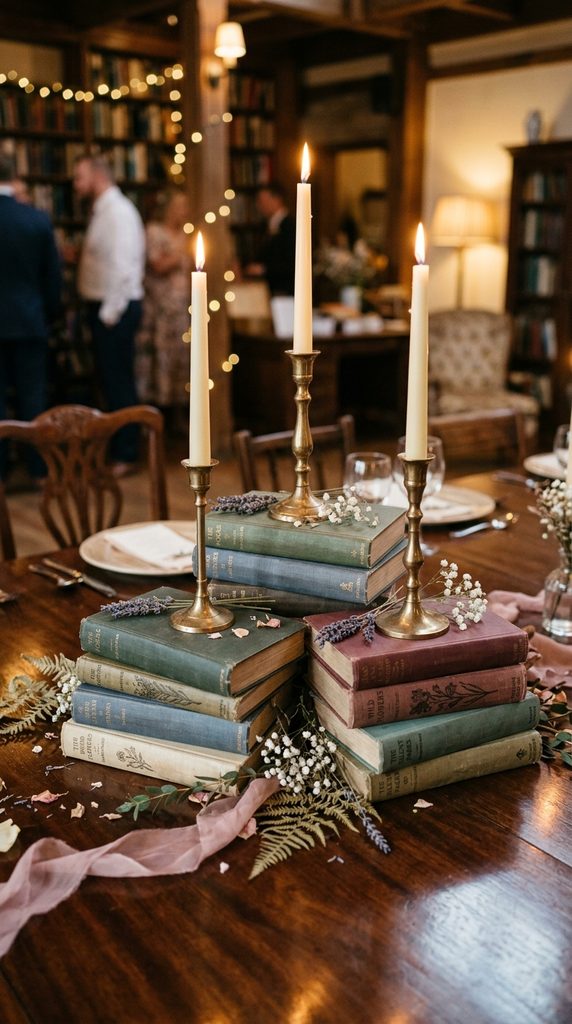
Stacking cloth-bound antique books beneath slender brass candlesticks introduces literary romance, nostalgic height, and rich library character to reception tables. The faded textile covers, gilded typography, and deckled paper edges of classic books add layered texture that complements vintage aesthetic themes. Varying the stack heights by grouping books in sets of two, three, and four creates an undulating landscape across the table, drawing the eye to different levels. This styling approach is ideal for historic library venues, academic clubs, or celebrations celebrating literature and vintage design. Brass candlesticks set atop decorative book stacks catch soft reflections, elevating standard taper candles into prominent focal points. Surrounding the literary stacks with scattered dried botanical pressings, antique skeleton keys, and silk ribbon tails reinforces the narrative theme. The stable, flat surfaces of hardcover volumes provide reliable bases for candle hardware, combining creative styling with functional structural balance across banquet tables.
Gather twenty to thirty genuine vintage hardcover books featuring muted cover tones such as slate blue, forest green, dusty burgundy, and aged cream. Wipe the book covers with a dry cloth to clear dust, removing any torn paper jackets to highlight the embossed cloth boards. Form small clusters along the center of the table, stacking books horizontally in groupings of two or three volumes based on complementary widths and color palettes. Place slender mid-century brass candlesticks measuring between six and eight inches directly on the upper book of each stack. Anchor the flat base of each brass holder to the book cloth using removable museum putty to ensure structural stability. Insert standard ivory tapers into each candlestick holder, aligning them vertically to prevent tilting. Tuck sprigs of dried lavender, delicate ferns, and satin ribbon tails between the stacked book layers, letting the botanical tips spill gracefully toward the table linen. Keep the wax drip trays clear of combustible paper surfaces.
9. Antique Silver Pedestal Compote with Floating Candle Basin
Step-by-Step Guide
Floating candle arrangements housed within shallow antique silver compotes offer fluid motion, cooling visual balance, and radiant light reflection. The mirror-like surface of still water multiplies the flickering candlelight, while the silver-plated rim casts a warm perimeter shimmer across the table. Floating smooth disc candles directly on water introduces an active, dynamic element that responds gently to ambient air currents. This design works wonderfully for warm-weather garden weddings, evening terrace receptions, or historic ballroom events where floral arrangements might otherwise wilt. The wide water reservoir functions as a built-in safety barrier, cooling the candles and eliminating open-flame fire risks from falling wax drips. Combining floating wax discs with submerged botanicals, like white orchid blossoms or whole garden roses, introduces artistic depth beneath the water line. The elevated compote stem preserves valuable table space while lifting the light directly into the primary field of vision of seated guests.
Select a polished silver-plated pedestal bowl or shallow fruit compote measuring twelve to fourteen inches across the rim. Inspect the bowl for water retention by filling it with clean room-temperature water, ensuring there are no leaks through older solder seams or structural joints. Cut the stems of three fresh garden roses or magnolia blooms flush to the base of their calyxes, placing them gently onto the water surface alongside several sprigs of floating baby’s breath. Place four three-inch smooth white floating disc candles symmetrically between the floral blooms, taking care to keep the wicks completely dry during placement. Add two tablespoons of distilled white vinegar to the water to maximize clarity and prevent bubbles from accumulating on submerged stems. Position the filled compote on the center of the table over a protective cloth coaster to prevent condensation rings from transferring to delicate linens. Confirm that the floating wicks rest well clear of the floating rose petals before lighting.
10. Distressed Metal Wire Cloche over Taper Grouping and Dried Florals
Execution Process
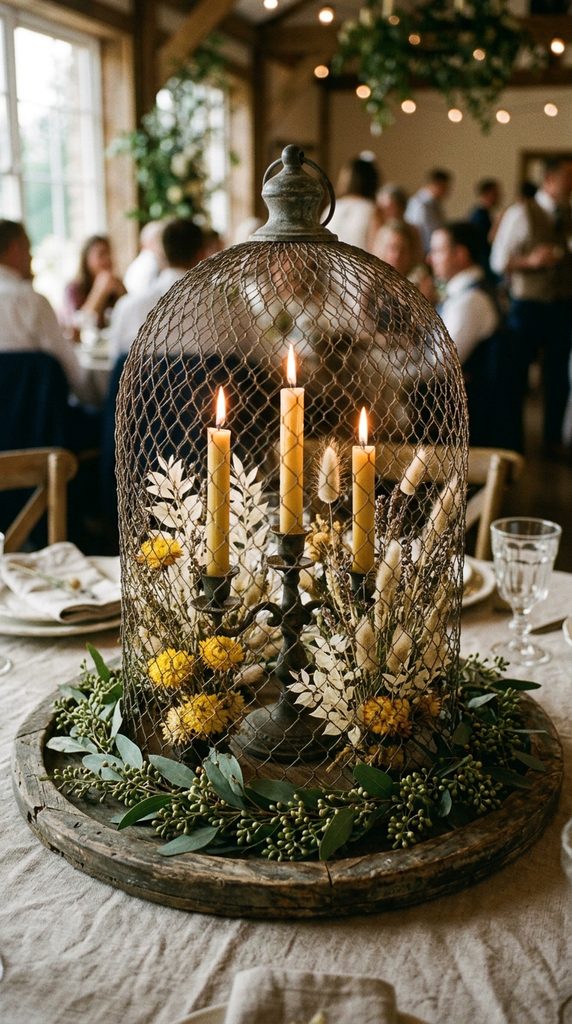
Decorative wire cloches and antique poultry-wire cages introduce vintage garden architecture, airy transparent geometry, and pastoral French country charm to wedding tables. The woven metal mesh filters the candlelight while maintaining full visibility of the interior arrangements from all angles. Enclosing candle groupings under a dome establishes an intriguing cabinet-of-curiosities aesthetic that feels intentional, artistic, and unique. The aged zinc, verdigris, or rusty iron patina of the wire contrasts gracefully with smooth wax columns and delicate dried florals. This structure protects the interior elements from accidental disturbances on crowded reception tables. The open wire mesh ensures proper ventilation for safe candle burning while adding structural height and presence. Surrounding the base of the metal cloche with preserved floral wreaths, dried seed heads, and aged botanical tags anchors the domed structure directly into the table setting.
Choose a domed metal wire cloche with an open mesh weave measuring fifteen inches in height, paired with a matching zinc or weathered wood display tray. Position a three-point metal taper holder in the center of the display tray, anchoring the base with heavy-duty floral adhesive. Insert three graduated beeswax taper candles into the sockets, ensuring the tallest candle tip maintains a four-inch clearance beneath the roof of the wire cloche. Weave dried floral elements, such as strawflowers, bleached ruscus, dried starflowers, and preserved bunny tails, around the base of the metal candle holder. Lower the wire cloche carefully over the candle grouping, confirming that the mesh walls do not touch the tapers or surrounding dried florals. Secure the rim of the cloche to the display tray using four discrete twists of dark craft wire to prevent accidental movement. Complete the arrangement by encircling the outer metal base with a fine ring of seeded eucalyptus.
Common Beginner Mistakes and How to Avoid Them
The most critical oversight in candle centerpiece design is neglecting table clearance and fire safety parameters. Placing unprotected candle flames near dry, airy botanicals like baby’s breath or pampas grass creates serious combustion hazards that must be avoided. Always maintain a minimum clearance of three to four inches between open flames and any decorative botanical elements or sheer fabrics. Another common error is using standard, non-stabilized taper candles without adequate adhesive support, which often leads to crooked, leaning tapers that drip wax unevenly across table runners. Utilize professional floral adhesive putty or museum wax in every candle socket to secure complete vertical alignment. Many decorators also make the mistake of using heavily scented paraffin wax, which interferes with dinner service and can cause discomfort for allergy-sensitive guests; select unscented soy or refined paraffin candles exclusively. Additionally, failing to account for venue air currents from open windows, air conditioning vents, or movement corridors causes candles to burn down rapidly and unevenly. Shield sensitive flame points within glass hurricane shades, deep lanterns, or high-sided compotes whenever air movement is anticipated.
Practical Tips for Better Results
Achieving professional, gallery-quality results relies on thoughtful finishing techniques and precise preparation. Trim all candle wicks to precisely one-quarter inch before lighting; this controls flame height, reduces unseemly black smoke, and prevents rapid, uneven wax pooling. When working with vintage brass or silver vessels, apply a thin coat of clear carnauba wax or glass sealant to interior surfaces; this makes post-event wax removal effortless, allowing hot wax drops to peel away cleanly without damaging antique finishes. Use battery-operated micro-LED fairy lights beneath submerged or enclosed glass arrangements where real flames would create excessive ambient heat or clearance difficulties. To keep taper candles standing straight throughout long receptions, run warm water over candle bases for ten seconds before inserting them into tight holders; the softened wax conforms easily to the socket before firming up. When sourcing vintage glassware, search for pieces with heavy, molded bases that lower the center of gravity, which helps prevent accidental tipping when tables are bumped. Finally, store completed candle assemblies in temperature-controlled spaces prior to the event to keep natural waxes from softening or warping.
Styling, Presentation, or Organization Ideas
Effective presentation depends on how comfortably your centerpieces integrate with surrounding dinnerware, linens, and venue architecture. Coordinate vessel finishes with the broader reception hardware: pair warm brass candelabras with gold-rimmed china and flatware, or match mercury glass and tarnished silver with cool slate linens and polished silverware. For long banquet tables, alternate between tall focal structures, such as candelabras or lanterns, and low accent elements, like amber bottles or bud vases, to create an undulating horizon across the room. Ensure that primary floral and candle clusters stay either below fourteen inches or above twenty-four inches from the tabletop; this keeps eye-level sightlines open across the table so guests can converse naturally. Complement candlelight by styling textured fabrics, such as raw linen runners, crushed velvet, or antique lace overlays, which catch flickering illumination and add depth to table photography. Arrange place cards, calligraphed table numbers, and vintage menu cards close to the candle bases so the radiant glow highlights personalized stationery details throughout the evening meal.
Budget or Time Planning
Executing cohesive centerpieces across ten to twenty guest tables requires disciplined budget allocation and organized production timelines. Minimize costs by sourcing authentic antique vessels gradually through flea markets, estate liquidations, and thrift centers rather than purchasing expensive retail reproductions. Plan an acquisition schedule starting six to nine months prior to the wedding date, collecting matching or complementary vessels across focused shopping trips. Buying taper and pillar candles in bulk quantities from wholesale event suppliers saves between thirty and fifty percent compared to retail specialty craft stores. Create a dedicated workspace at home to assemble non-perishable components—such as cleaning glassware, pre-attaching candles, and arranging dried florals—four to six weeks before the event. Catalog completed arrangements inside heavy-duty, labeled storage boxes lined with bubble wrap, organizing them by table number for quick venue distribution. On the wedding day, assign two designated coordinators equipped with long-reach butane lighters to ignite all centerpieces thirty minutes before guest arrival, ensuring an organized and timely debut for reception seating.
Creative Expansion and Advanced Inspiration
Once you have mastered foundational candle centerpiece designs, explore advanced creative variations to extend the vintage aesthetic throughout your event space. Adapt signature tabletop designs into coordinating accent pieces for peripheral stations, such as guestbook desks, cocktail lounge tables, and bar counters. Craft hanging chandelier displays by suspending weathered wooden ladders or circular iron rings over bridal party tables, wrapping the frame with lush greenery and hanging glass candle globes. Extend your antique vessel theme to custom ceremony markers by lining aisle runners with staggered clusters of large floor lanterns and oversized pillar candles set inside weathered wooden crates. Consider pairing historic candle displays with modern custom details, such as personalized wax seal stamps pressed into place cards or hand-dipped ombre tapers tinted to match your bridal party colors. Following the wedding celebration, these timeless vintage vessels can be easily incorporated into residential interior decor or gifted to wedding party members as meaningful, handcrafted keepsakes that preserve the memory of your celebration.