Designing memorable wedding reception tables requires an intentional approach to botanical selection, balanced spatial distribution, and tactile interest. Dried grass wedding centerpieces have emerged as a prominent styling…
Designing memorable wedding reception tables requires an intentional approach to botanical selection, balanced spatial distribution, and tactile interest. Dried grass wedding centerpieces have emerged as a prominent styling approach, delivering sculptural forms, warm neutral palettes, and organic silhouettes that enrich dining areas. This comprehensive tutorial delivers practical directions, step by step assembly methods, and actionable design strategies to help decorators build professional-grade table installations. Readers will explore ten unique dried grass concepts, structural vessel pairings, dry mechanics management, and proportion guidelines suited for diverse venue layouts. Beyond their visual aesthetic, preserved grasses provide exceptional durability, remaining completely stable under dry indoor heating, intense sunshine, or breezy outdoor conditions without wilting. Working with natural plumes, wheat stalks, and ornamental seeds eliminates the continuous water needs of cut fresh stems, significantly reducing day-of coordination stress. Through clear preparation instructions, budget ideas, and sustainable assembly practices, you will learn how to design balanced, long-lasting table arrangements that capture modern design principles with absolute technical confidence.
Why This Idea Is Trending or Useful
Foliage arrangements highlighting preserved elements continuously lead modern Pinterest ideas because contemporary couples favor sustainable event styling, textural depth, and calm neutral palettes over traditional formal centerpieces. Using preserved grasses provides remarkable practical value by eliminating water spills, refrigeration requirements, and petal drop throughout long banquet celebrations. From a design perspective, tones of bleached ivory, warm wheat, camel, and pale taupe naturally harmonize with exposed wood tables, raw linen runners, and ambient candlelight. For those pursuing a DIY approach, dried arrangements represent an accessible, beginner friendly creative project with none of the time pressure associated with perishable blooms. Preserved plumes like pampas, bunny tails, and sea oats are lightweight, structurally sturdy, and easy to handle days in advance of the event. The light, airy motion of feathery plumes softens clean architectural room lines, adding effortless movement to banquet spaces. This combination of advance preparation, structural longevity, and sophisticated visual interest ensures dried grasses remain an enduring trend in modern wedding decoration.
Materials and Preparation
Assembling durable, elegant dried grass centerpieces requires purposeful materials, reliable tools, and systematic sorting before construction begins. Essential botanical supplies include diverse dried grass varieties such as bleached mini pampas grass, natural bunny tails, dried phalaris canary grass, wild sea oats, and bleached broom bloom. Gathering proper tools ensures efficient execution: equip your workstation with heavy-duty floral snips, wire cutters, dry floral foam blocks or reusable metal flower frogs, paper-covered floral wire, and aerosol hairspray or botanical sealer. Prior to styling, process all dried bundles by gently shaking plumes outdoors to dislodge loose seeds or shed particles, lightly misting feathery tips with hairspray to lock fibers in place. Sort your stems by length, thickness, and tonal value into upright jars to keep your workspace functional and tidy. Planning considerations must factor in table width, ceiling clearance, and seated guest sightlines to prevent obstructive arrangements. Preparing your materials methodically guarantees that every display remains structurally stable, balanced, and visually refined throughout the entire wedding day.
Idea 1: Architectural Bleached Pampas Cloud
Step-by-Step Guide
The architectural bleached pampas cloud centerpiece establishes a bold, voluminous focal point that brings airy romance to round banquet tables. This design utilizes densely packed, ivory-bleached mini pampas plumes arranged radially to create a soft, spherical cloud that appears to hover just above the tabletop. The monochromatic, pale hue reflects ambient banquet lighting, introducing subtle brightness that complements minimalist style and modern industrial venue spaces. Because pampas plumes possess exceptional volume relative to their weight, this concept fills visual space without requiring heavy supporting hardware or costly structural armatures. The soft texture provides a pleasant tactile contrast against smooth stone surfaces, glossy ceramic plates, and polished silverware.
To assemble this cloud arrangement, secure a dry floral foam cylinder into the center of a low, wide-lipped ceramic dish measuring six inches in diameter using waterproof floral tape. Begin cutting your primary bleached pampas plumes to a uniform length of ten inches, stripping away any coarse lower leaves to expose clean woody stems. Insert six primary plumes horizontally around the bottom perimeter of the foam to establish an even circular boundary that skims the vessel rim. Continue inserting plumes at forty-five-degree angles toward the center, working in concentric rings until reaching the top dome. Insert three upright plumes into the center crown to complete the dense spherical silhouette. Finish the installation by lightly misting the entire cloud with aerosol hairspray from twelve inches away, sealing the tiny plume fibers against ambient venue airflow.
Idea 2: Minimalist Fluted Bud Vase Runner
How to Create
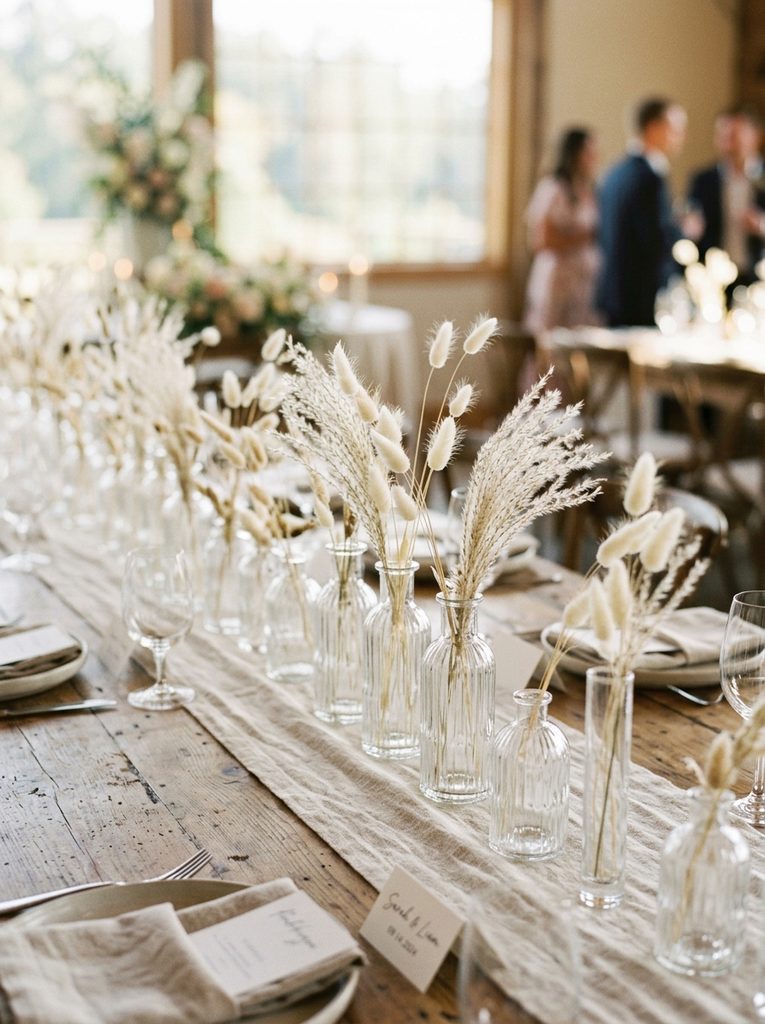
The minimalist fluted bud vase runner reinterprets traditional continuous floral garlands by distributing slender glass vessels down the center of long banquet tables, each holding small sprigs of textured dried grass. This design combines ribbed or fluted clear glass bottles with delicate grasses like natural bunny tails, bleached phalaris, and fine feather reed grass. The open negative space between vessels creates a light, rhythmic aesthetic that highlights individual stem forms without cluttering dinnerware. The vertical ridges on the glassware bend candlelight, adding gentle shimmer to the table. This concept works exceptionally well on bare oak tables or neutral gauze table runners, bringing an understated touch to rustic elegant settings.
To build this linear arrangement, gather seven to nine fluted glass bud vases ranging from four to seven inches in height for every eight-foot table segment. Arrange the empty vases along a relaxed zigzag path down the table center, maintaining approximately six to eight inches of spacing between adjacent vessels. Select three complementary dried grass textures, cutting the stems with sharp floral shears so they stand one and a half times the height of their respective vases. Place three bunny tail stems into the shortest vases, allowing their rounded fluffy heads to cluster near the glass mouth. Insert two longer stems of bleached phalaris and airy feather reed grass into the taller bottles, angling the heads outward to catch natural light. Nestle ribbed glass tealight holders between the vases to illuminate the plumes from below.
Idea 3: Monochromatic Golden Wheat Sheaf
Execution Process
The monochromatic golden wheat sheaf centerpiece channels agricultural heritage through an upright, freestanding bundle of natural wheat stalks tied with raw silk ribbon. This concept relies on the dense, linear repetition of golden wheat heads, creating a clean cylindrical column that sits directly on the tabletop without requiring a vase. The warm amber tone of natural wheat brings warmth to neutral tables, evoking autumn harvests, vineyard gatherings, and countryside celebrations. The self-supporting structure provides high stability and leaves a compact footprint on dining tables, maximizing space for shared family-style meal platters. The simplicity of the silhouette embodies modern rustic style, celebrating raw agricultural texture through disciplined geometric presentation.
Begin construction by selecting approximately eighty to one hundred dried wheat stalks of uniform thickness, stripping away the lower outer husks to yield smooth, bare stems. Gather the wheat heads into a tight, level bundle, tapping the cut base firmly against your tabletop to ensure every stem sits flush at the bottom. Secure the bundle tightly at the center point using wrapped florist wire, pulling the wire snug so the individual stems cannot slide out of alignment. Wrap a two-inch-wide raw-edge silk ribbon in warm champagne or ivory directly over the wire band, knotting the fabric with short tails. Use heavy shears to trim the bottom stem ends into a flat, level surface four inches below the ribbon wrap. Gently flare the wheat heads outward with your fingertips, resting the completed sheaf upright directly on the table.
Idea 4: Terracotta Compote with Cascading Wild Oats
How to Make
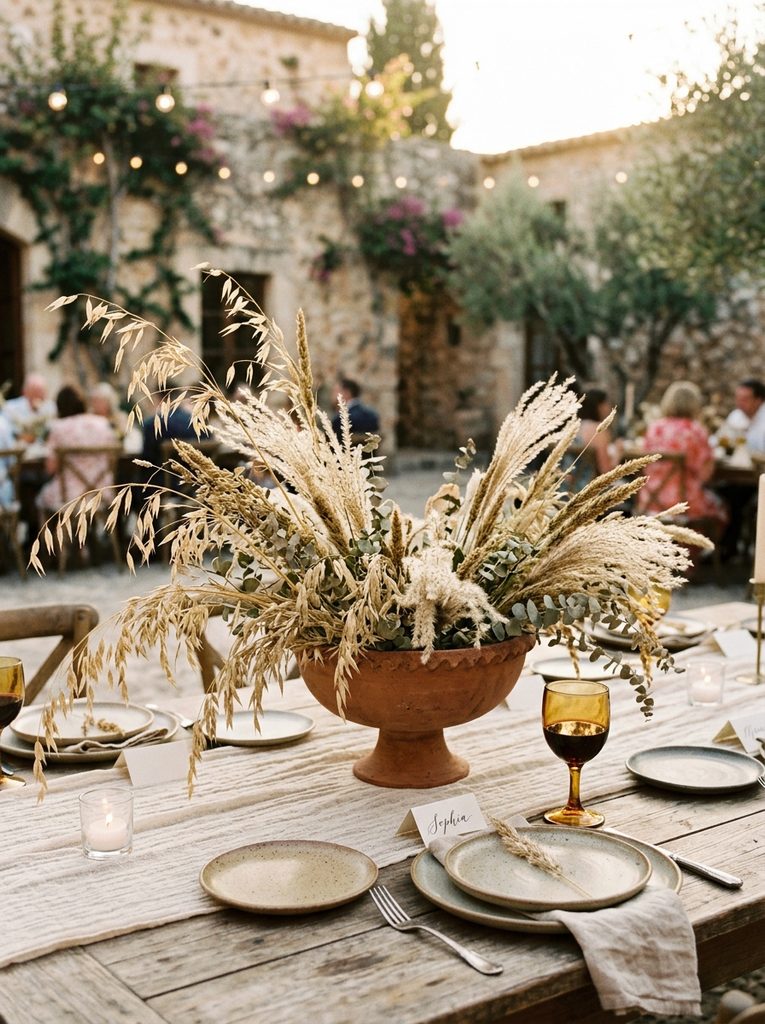
The terracotta compote centerpiece with cascading wild oats brings Mediterranean warmth to wedding tables by combining warm earthenware vessels with graceful, arching grass foliage. This concept utilizes a low, footed compote bowl in raw terracotta, filled with arching stems of dried wild sea oats, bleached miscanthus, and textured spear grass. The drooping, pendant-shaped seed heads of sea oats introduce natural movement that cascades over the container rim, softening the transition between vessel and tabletop. The earthy terracotta finish grounds the airy grasses, producing a sun-drenched aesthetic suited for coastal celebrations, vineyard dinners, and outdoor courtyard receptions. The horizontal shape keeps visual sightlines completely clear across dining tables.
To make this compote display, place a small block of dry floral foam or a heavy brass kenzan pin frog in the center of an eight-inch terracotta compote dish, securing the base with floral adhesive putty. Begin by inserting your longest sea oat stems horizontally into the sides of the foam, letting the heavy seed clusters drape downward four to six inches past the container lip. Cut three stems of upright spear grass to nine inches, inserting them into the rear center of the foam to establish subtle vertical presence. Fill the remaining central area with short sprigs of bleached miscanthus and dried stipa grass, angling the stems outward in a fan shape to hide the mechanics. Rotate the bowl continuously as you insert stems to verify balanced visual weight and full perimeter coverage from all sides.
Idea 5: Elevated Brass Pedestal with Feather Reed Canopy
Setup Method
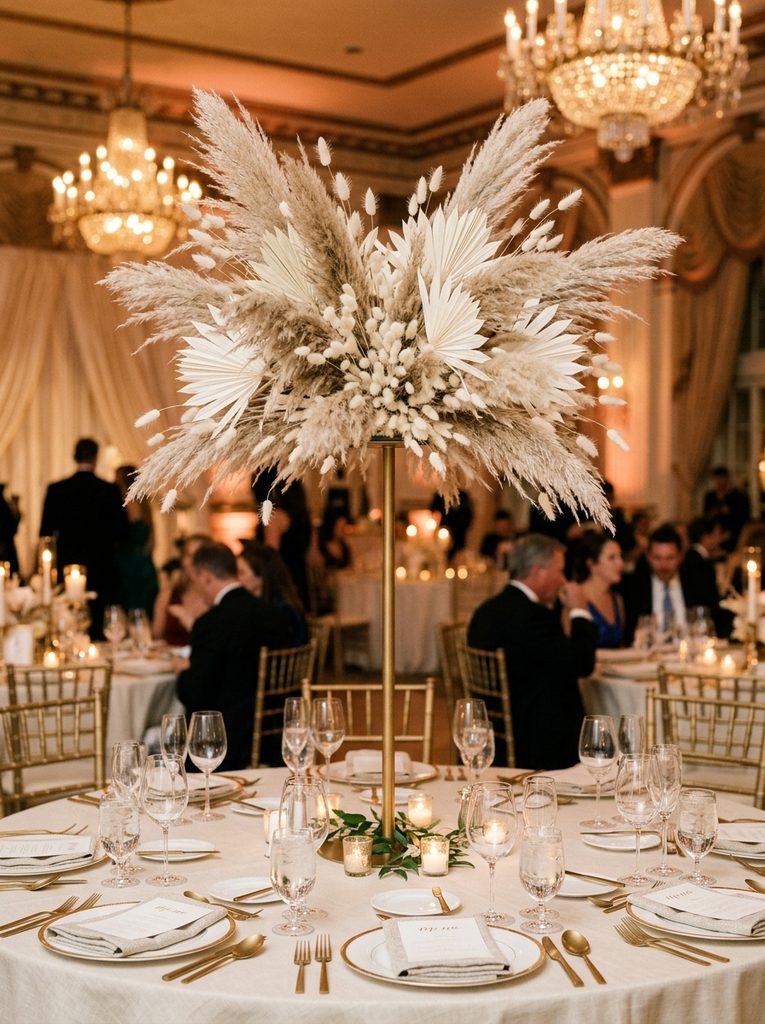
The elevated brass pedestal centerpiece uses tall, slender metal risers to lift dynamic dried grass canopies high above the dining surface, preserving unobstructed conversation lines below. This design features an elongated brass stand standing twenty-four to twenty-eight inches high, topped with an outward-flaring spray of feather reed grass, bleached bunny tails, and golden palm spears. Elevating the arrangement draws the eye upward toward venue ceiling details while leaving table surfaces open for place settings, menu cards, and wine service. The metallic gold of the brass pedestal catches ambient candlelight, echoing the warm undertones of the dried botanical stems. This formal configuration brings contemporary grandeur to grand ballrooms, historic estates, and industrial loft venues.
Prepare this elevated arrangement by mounting a rigid dry floral foam cage firmly onto the top plate of your tall brass stand using clear anchor tape in an X-pattern. Trim twelve stems of dried feather reed grass to eighteen inches, stripping the lower ends to ensure clean insertion points into the foam block. Insert the reed stems around the outer edge of the foam cage at a forty-five-degree upward angle, establishing a wide, symmetrical canopy shape. Add bleached sun palms into the center of the canopy, cutting their stems short so the broad pleated blades act as an anchor point. Fill all intermediate gaps with clustered stems of ivory bunny tails and bleached broom bloom to hide the foam cage completely. Inspect the stand from below at eye level, ensuring no wire mechanics or unadorned foam patches remain visible.
Idea 6: Woven Rattan Lantern with Dried Plume Cuffs
How to Create
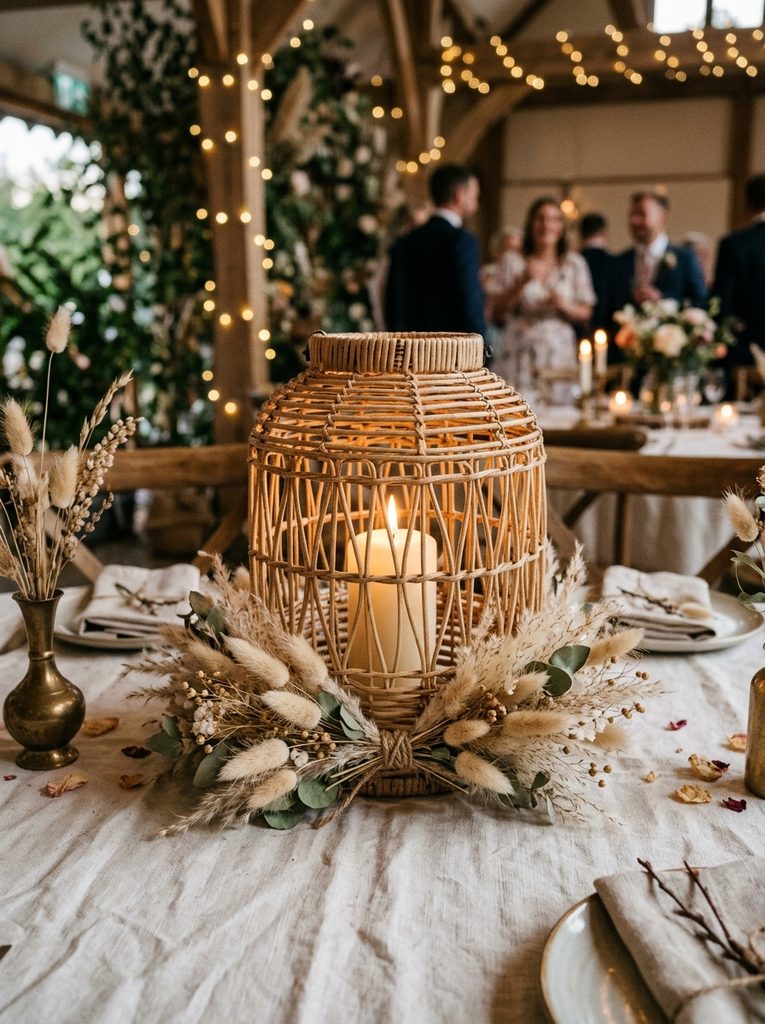
The woven rattan lantern centerpiece pairs warm open-weave woodwork with soft botanical accents, creating a relaxed, textured table display. This concept places an open-mesh bamboo or rattan lantern in the center of the table, wrapping the external base with an asymmetrical cuff of dried bunny tails, quaking grass, and bleached linum. The architectural lines of the woven wood provide structural grounding, while the delicate grasses soften the lantern frame. The internal glass hurricane chimney holds a warm LED pillar candle that illuminates the grasses from behind, casting delicate shadows across table linens. This setup works exceptionally well in relaxed bohemian, coastal, or barn reception venues where warm lighting sets the atmosphere.
Execute this design by selecting a ten-inch cylindrical woven rattan lantern with an open-latticed weave, placing an ivory LED candle securely within its internal glass cylinder. Form two small botanical sprays by bundling five stems of natural bunny tails, three stems of quaking grass, and two stems of bleached linum together, binding the base with brown paper wire. Fasten one bundle to the lower exterior rim of the lantern using thin craft wire threaded through the woven reeds, letting the plume tips follow the natural curve of the lantern base. Position the second bundle on the opposite lower side, overlapping the stem ends to create a continuous botanical crescent around the lantern. Smooth the plume tips around the base, ensuring no loose stems obstruct the table surface or contact any warm surfaces.
Idea 7: Sculptural Sun Palm and Pampas Fans
Step-by-Step Guide
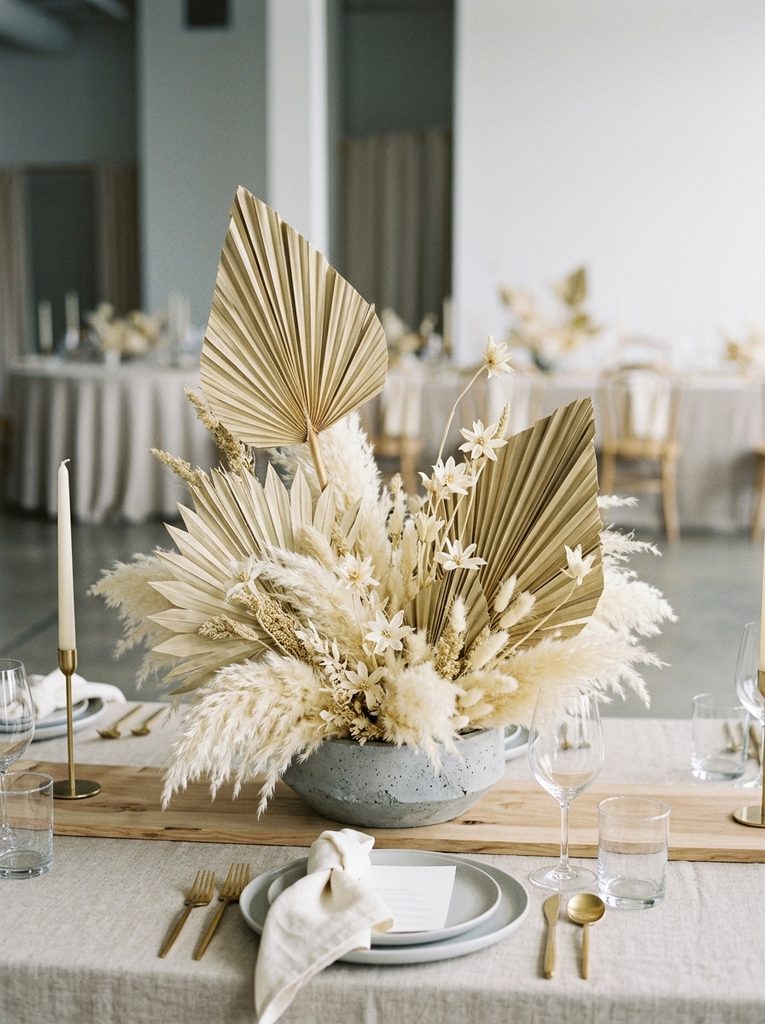
The sculptural sun palm and pampas fan centerpiece emphasizes modern geometric design through the contrast of sharp pleated palm blades against soft, feathery pampas plumes. This design utilizes dried natural sun palms trimmed into sharp geometric fans, nestled among soft clusters of bleached pampas grass inside a low stone or concrete bowl. The crisp diagonal pleats of the palm fronds introduce an artistic, gallery-inspired element that elevates the surrounding loose grasses into a deliberate graphic composition. Styled in neutral monochrome tones like sand, chalk, and pale tan, the arrangement fits effortlessly into contemporary minimalist style celebrations. The durable components maintain their architectural shapes without bending or drooping throughout the event.
To construct this modern piece, secure a dense block of dry floral foam inside a matte stone vessel measuring seven inches wide using floral putty. Take three dried sun palm spears, trimming two blades down with sharp shears into clean angular shield shapes while leaving the center palm in its natural fan form. Insert the central palm vertically into the back of the foam block, flanking it with the two trimmed shields angled thirty degrees outward to establish an architectural fan backdrop. Insert short, dense sprigs of bleached mini pampas grass into the base of the foam directly in front of the palm blades, building a soft, cloud-like floor that conceals the stem bases. Finish the design by tucking small clusters of dried star flowers around the front perimeter, creating layered depth across the arrangement.
Idea 8: Natural Linen Runner with Foraged Grass Swags
Execution Process
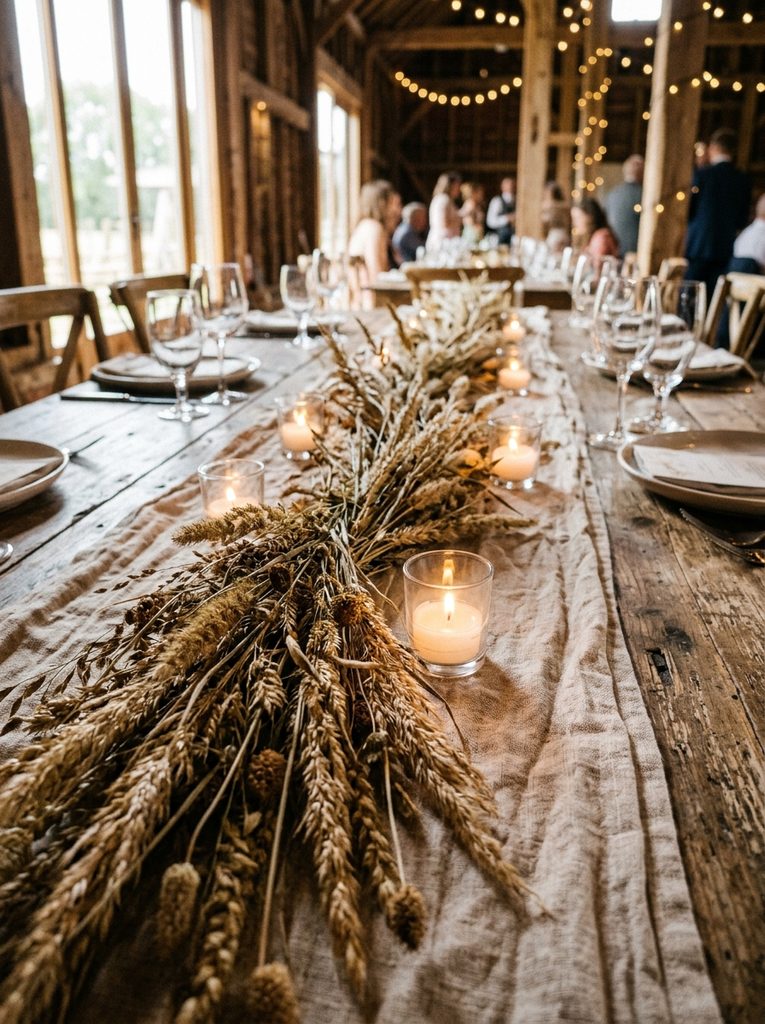
The natural linen runner with foraged grass swags brings informal meadow charm to banquet tables through a low, continuous garland of textured field grasses. This concept utilizes long, flexible bundles of dried switchgrass, prairie dropseed, wild brome, and meadow foxtails laid along the center spine of a rough-edged linen runner. The relaxed, horizontal layout flows naturally along long tables, softening straight banquet lines with field-inspired texture. The varied golden and pale green tones of foraged meadow grasses reflect afternoon sunbeams, establishing a warm, grounded atmosphere suited for outdoor tented receptions and historic farm venues. The low profile keeps sightlines open while leaving ample space for shared table settings.
To build this continuous runner, measure the length of your dining table and lay down an unbleached linen runner, gathering the fabric gently into organic ripples down the center. Assemble small, uniform bundles of foraged dried grasses, combining three stems of switchgrass, two stems of prairie dropseed, and three stems of wild brome, wrapping the stem bases with green paddle wire. Lay the first bundle flat on the runner at one end of the table, placing the second bundle directly over the stems of the first with a four-inch overlap to hide the wire. Continue wiring and overlapping bundles along the table spine until reaching the opposite end, reversing the direction of the final bundle so plume tips point gracefully off both table edges. Tuck small dried flax pods into visible seams to ensure full coverage.
Idea 9: Matte Ceramic Pitcher with Feather Grass Spray
How to Make
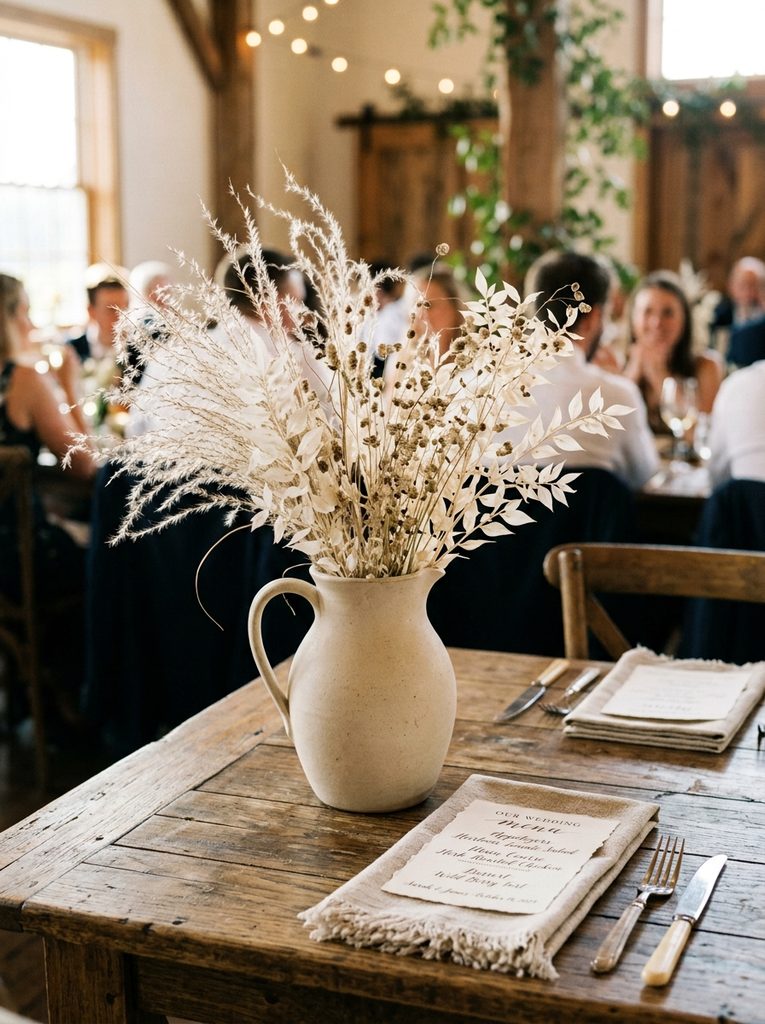
The matte ceramic pitcher centerpiece with feather grass brings rustic pottery charm to wedding reception tables through an upright, relaxed botanical spray. This concept utilizes an unglazed stoneware or ceramic jug in warm cream or soft sand, holding an airy collection of dried feather grass, natural quaking grass, and bleached ruscus leaves. The generous handle and curved spout of the pitcher introduce handcrafted domestic warmth, providing an inviting focal point for family-style wedding tables. The delicate seed heads of feather grass sway gently with indoor air currents, introducing subtle motion that catches the eye. This straightforward container arrangement brings artisanal character to historic barns, country inns, and relaxed garden venues.
Assemble this pitcher arrangement by selecting an eight-inch ceramic pitcher with a wide, stable base, placing a dry floral foam cylinder inside the neck to hold stem positions firmly. Cut your primary feather grass stems to fourteen inches, inserting them into the center of the foam so they stand upright with a natural, gentle outward tilt. Add five stems of quaking grass around the rim of the pitcher, allowing the nodding seed heads to drape naturally over the spout and handle. Insert three stems of bleached preserved ruscus leaves along the front to introduce flat foliage contrast against the airy grass needles. Adjust the heights of individual stems until the arrangement appears loose and gathered, then wipe the exterior ceramic walls clean with a microfiber cloth to remove any botanical dust before placing it on the table.
Idea 10: Geometric Smoked Glass and Golden Bunny Tails
Setup Method
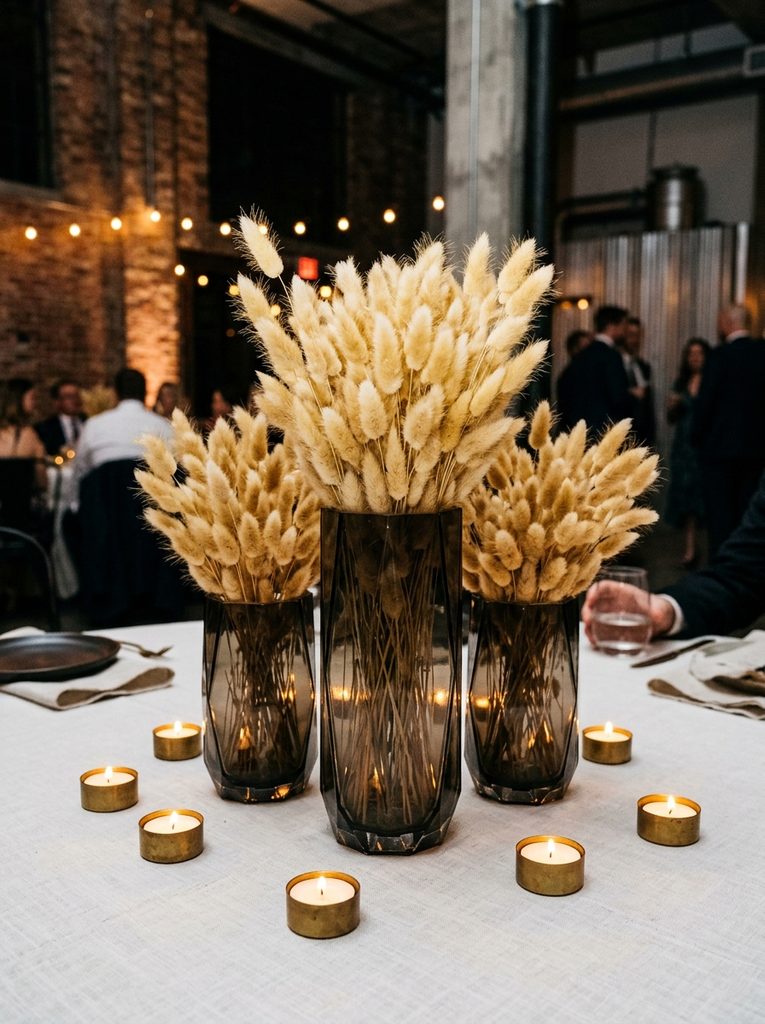
The geometric smoked glass and golden bunny tail centerpiece blends contemporary industrial design with soft botanical textures, creating a modern, high-contrast display. This concept features faceted smoked glass cylinders or hexagonal terrarium jars holding dense, level clusters of natural golden bunny tails. The translucent, tinted walls of the smoked glass add visual weight and moody sophistication, creating a rich backdrop for the soft, velvety heads of the bunny tails. The juxtaposition of hard, angular glass surfaces against plush botanical plumes delivers a refined visual balance that suits urban loft weddings and evening dinners. The compact footprint makes this arrangement exceptionally versatile across varied table sizes.
Begin preparation by cleaning the interior and exterior of three faceted smoked glass jars using glass cleaner and a lint-free cloth to eliminate fingerprints. Measure the height of the vessels, trimming eighty stems of natural dried bunny tails so their fluffy heads sit two inches above the top glass rim. Group the stems into a dense, circular bunch in your hand, wrapping a small clear elastic band around the lower stems to keep the bundle tight and organized. Drop the grouped bunch into the smoked glass cylinder, letting the elastic band rest concealed below the vase collar while the soft plume heads flare naturally over the glass edge. Repeat this process for two companion vases of slightly lower heights, arranging the completed trio in a tight cluster in the center of the table surrounded by brass-encased tealights.
Common Beginner Mistakes and How to Avoid Them
Working with dried grasses presents unique technical challenges that differ significantly from fresh flower arranging. The most frequent beginner mistake involves failing to stabilize brittle plume fibers before assembly, resulting in excessive shedding that covers table linens, plates, and guest clothing in fine lint. Prevent shedding by taking all dried plumes outdoors several days before the event, shaking them gently to remove loose seeds, and applying a light, even coat of aerosol hairspray or botanical sealer. Another common issue is disregarding vertical scale; tall, dense grass displays placed between fourteen and twenty-two inches directly block cross-table sightlines, frustrating dinner guests. Avoid this by keeping low compotes and bud vases below twelve inches, or elevating large installations above twenty-six inches using slender stands. Finally, many decorators overlook the flammability of dried grasses, placing bare open-flame candles directly adjacent to dry, feathery plumes. Protect your reception by encasing all open flames inside tall glass hurricane sleeves that extend at least three inches above candle wicks, maintaining a safe six-inch buffer from all dry stems.
Practical Tips for Better Results
Achieving a polished, store-bought finish with dried grass centerpieces relies on disciplined stem sorting, balanced texturing, and smart storage practices. When combining dried varieties, always incorporate at least three contrasting textures: pair wide, flat elements like sun palms with airy, feathery plumes like pampas, and ground the arrangement with dense seed heads like bunny tails or wheat. This textural variety prevents monochromatic neutral displays from appearing two-dimensional or flat under artificial venue lighting. Store your finished dried arrangements in sturdy cardboard boxes inside a dark, climate-controlled room until installation day; sunlight causes natural colors to fade unevenly, while humid storage areas soften brittle stems and cause drooping. When cutting dried woody stems, use sharp bypass shears rather than standard kitchen scissors to prevent crushing the delicate fiber channels. If plumes appear flattened after shipping or storage, gently warm them with a handheld hair dryer set to low heat from twelve inches away while rotating the stem; this plumps the tiny branches without causing damage. Finally, always pack extra pre-trimmed stems in your on-site kit to easily fill any gaps after table setup.
Styling, Presentation, or Organization Ideas
A thoughtful presentation enhances the visual appeal of dried grass centerpieces, whether you are styling a formal ballroom or a relaxed meadow reception. Layer varied lighting elements around your dry arrangements: group clear glass votives, ribbed tea-light holders, and tall glass hurricanes holding ivory pillar candles to cast warm highlights through the airy grass plumes. Pair dried grasses with textured, tactile linens like rough-edged linen runners, raw cheesecloth overlays, or washed cotton napkins, which echo the organic, unrefined quality of the botanicals. Choose tableware finishes that complement the warm neutral tones of preserved grasses: matte stoneware plates, antique brass flatware, and amber glassware draw out the rich camel, wheat, and beige undertones of the stems. For an organized, cohesive reception room, alternate centerpiece styles across tables—placing tall elevated canopies on half the tables and low bud vase runners on the others—to create dynamic visual rhythm across the venue while optimizing rental decor budgets.
Budget or Time Planning
Careful project planning helps you manage craft expenses while organizing your schedule efficiently, making dried grass centerpieces an economical and stress-free decor choice. Dried botanicals can be purchased in bulk wholesale boxes months in advance of the wedding, protecting your budget from seasonal price spikes and delivery delays that often impact fresh cut flowers. Furthermore, preserved grasses do not require last-minute cold storage, specialized transport vehicles, or day-of water management, drastically reducing logistical labor costs on the wedding morning. Structure your assembly schedule into organized, stress-free stages weeks ahead of the event: spend an afternoon unboxing, sorting, and sealing plumes with hairspray. Dedicate subsequent studio sessions to building foam foundations, trimming stems, and styling complete centerpieces into their vases, packing the completed arrangements carefully into labeled moving boxes. On the wedding day, setup requires simply setting the pre-made arrangements on designated tables and lighting candles, allowing you to complete reception decor in a fraction of the time needed for fresh floral setups.
Creative Expansion and Advanced Inspiration
Once you master basic dried grass centerpieces, you can explore creative variations that expand the style, scale, and functional life of your wedding decor. Consider incorporating delicate dried florals—such as bleached ruscus, white strawflowers, preserved baby’s breath, or dried banksia—into your grass arrangements to introduce subtle floral forms within the neutral palette. You can also experiment with dynamic mixed-media styling by adding hand-dyed silk ribbons, woven paper cords, or natural wood beads along your vessel necks to introduce rich artisan textures. Another striking approach involves scaling these designs for ceremony decor: cluster large urns filled with tall pampas and sea oats at the start of the wedding aisle, later moving the arrangements to flank the reception head table or photo backdrop. After the wedding celebration concludes, these durable dried arrangements can be repurposed as lasting home decor accents, shared with family members as keepsakes, or donated without any water cleanup. These sustainable qualities ensure your wedding decor remains beautiful, practical, and enduring long after the event ends.