Bohemian wedding styling has established itself as an enduring celebration aesthetic across digital inspiration platforms, celebrated for its layered organic textures, warm earthy palettes, and relaxed romantic ambiance. This detailed guide presents ten distinct boho wedding reception decor concepts designed to help couples and event planners craft an unforgettable aesthetic without unnecessary complexity. Readers will discover clear formulas for arranging natural dried florals, building low-profile lounge spaces, installing textured macramé backdrops, and setting curated vintage tablescapes. Learning how to properly combine diverse materials such as rattan, raw linen, terra-cotta, and brass transforms conventional banquet halls or open-air settings into deeply personal environments. Beyond visual appeal, executing these creative ideas provides substantial budget flexibility, as many components double as long-lasting home decor after the festivities conclude. Each featured concept provides practical guidelines on scale, balance, and physical arrangement, ensuring every structural installation remains functional for guests while maximizing photographic impact. With careful planning and attention to tactile contrasts, anyone can produce professional-tier event styling that feels effortlessly elevated, welcoming, and timelessly artistic throughout the entire celebration.
Why This Idea Is Trending or Useful
The bohemian design movement remains a dominant decorative style on wedding planning boards because it redefines traditional luxury through authentic craftsmanship, sustainability, and sensory warmth. Unlike rigid formal layouts, boho decoration prioritizes comfortable hospitality, encouraging guests to relax in fluid spaces furnished with woven floor cushions, layered kilim rugs, and ambient candle clusters. Its practical value stems directly from structural adaptability; these design elements look equally cohesive within industrial warehouse lofts, rustic timber barns, sunlit gardens, or open coastal dunes. For modern couples seeking sustainable alternatives, using preserved botanical elements, upcycled amber glassware, and reusable natural textiles significantly minimizes single-use waste. From a DIY perspective, boho accents offer exceptional accessibility for beginners because organic arrangements do not require the strict geometric symmetry demanded by classical ballrooms. The intentional mix of slightly mismatched textures, asymmetrical floral installations, and hand-torn raw fabrics forgives minor placement inconsistencies while enhancing character. Consequently, couples achieve a high-end, bespoke visual presentation on realistic budget allocations while enjoying the rewarding process of crafting personalized details.
Materials and Preparation
Achieving an authentic bohemian celebration environment demands deliberate planning, thoughtful sourcing, and thorough logistical preparation long before the installation day arrives. Essential base materials include naturally dried florals such as pampas grass, palm spears, bunny tails, bleached ruscus, preserved eucalyptus, and neutral garden florals. Supporting structural components require jute rope, wooden dowels, brass geometric vessels, vintage stoneware, terracotta planters, woven rattan lanterns, and natural textiles like washed linen and cheesecloth. Essential event tools include heavy-duty floral shears, green paddle wire, reusable cable ties, command hooks, weighted ground bases, and safety-approved glass hurricane sleeves for open flames. Planning considerations require inspecting venue dimensions, identifying secure ceiling or truss rigging points, and reviewing local wind restrictions for open-air environments. Organizing components into labeled transparent bins categorized by reception zone—such as welcome entrances, dining tables, lounge areas, and dessert displays—dramatically speeds up day-of-event execution. Inspect every rented or thrifted vessel beforehand to guarantee clean, dry surfaces, and draft a realistic assembly timeline that allows calm, deliberate styling well before the arrival of arriving guests.
1. Idea 1: Dried Pampas Grass Ground Arches
How to Create
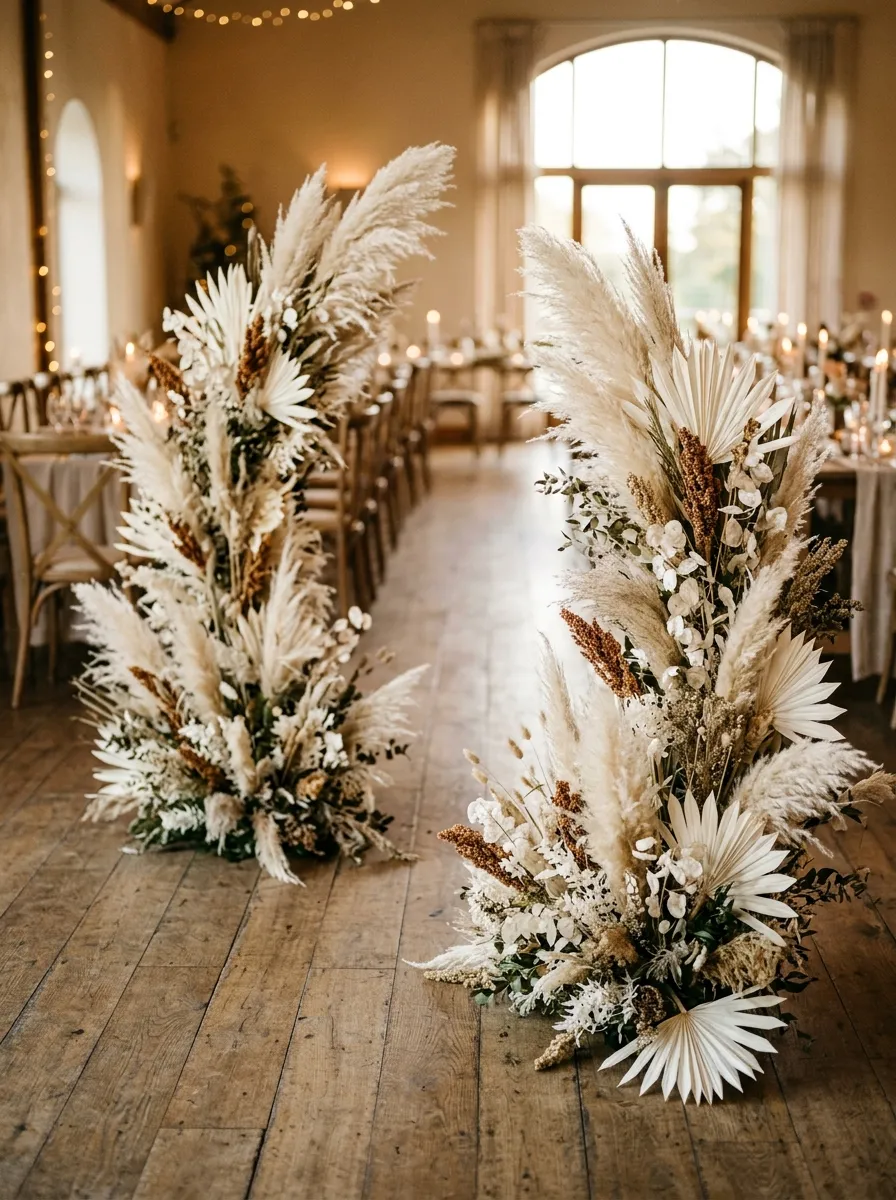
Dried pampas grass ground arches provide a dramatic, frame-free floral focal point that enhances entranceways, sweetheart tables, or musical performance zones without requiring complex overhead rigging. This concept uses two freestanding, crescent-shaped floral bases packed with feathery ivory plumes, sun-bleached fan palms, and preserved neutral greenery arranged in soft ombré gradients. The low ground placement allows open sightlines across the dining room while creating a photographic background that frames seated couples naturally. The sculptural plumes introduce vertical height and architectural softness, transforming plain floor surfaces into grounded botanic displays that anchor the surrounding reception layout. By eliminating rigid metal poles or archway crossbars, the design creates an effortless, organic silhouette that appears to grow directly from the floorboards or lawn. Earthy tones blend smoothly with warm timber accents, natural jute rugs, and vintage amber glassware across adjacent spaces.
Begin by securing two heavy, curved metal or wooden bases to the floor, weighing each down with discreet sandbags or flat metal weights to prevent shifting. Insert dense blocks of dry floral foam firmly into the base trays, securing them horizontally with crossed strips of waterproof floral tape. Cut thirty to forty large pampas grass stems at staggered heights using sharp hand pruners, ensuring the tallest central plumes measure between five and six feet tall. Insert the primary structural stems firmly into the foam core, fanning outward at thirty-degree angles to establish a sweeping, crescent perimeter. Infill the secondary interior layer with bleached sun palms, dried sorghum, bunny tails, and preserved ruscus stems to obscure the mechanics completely. Mist the finished pampas plumes lightly with strong aerosol hairspray to lock the delicate seeds in place and prevent shedding under venue air circulation systems.
2. Idea 2: Low-Seated Moroccan Picnic Lounge
Setup Method
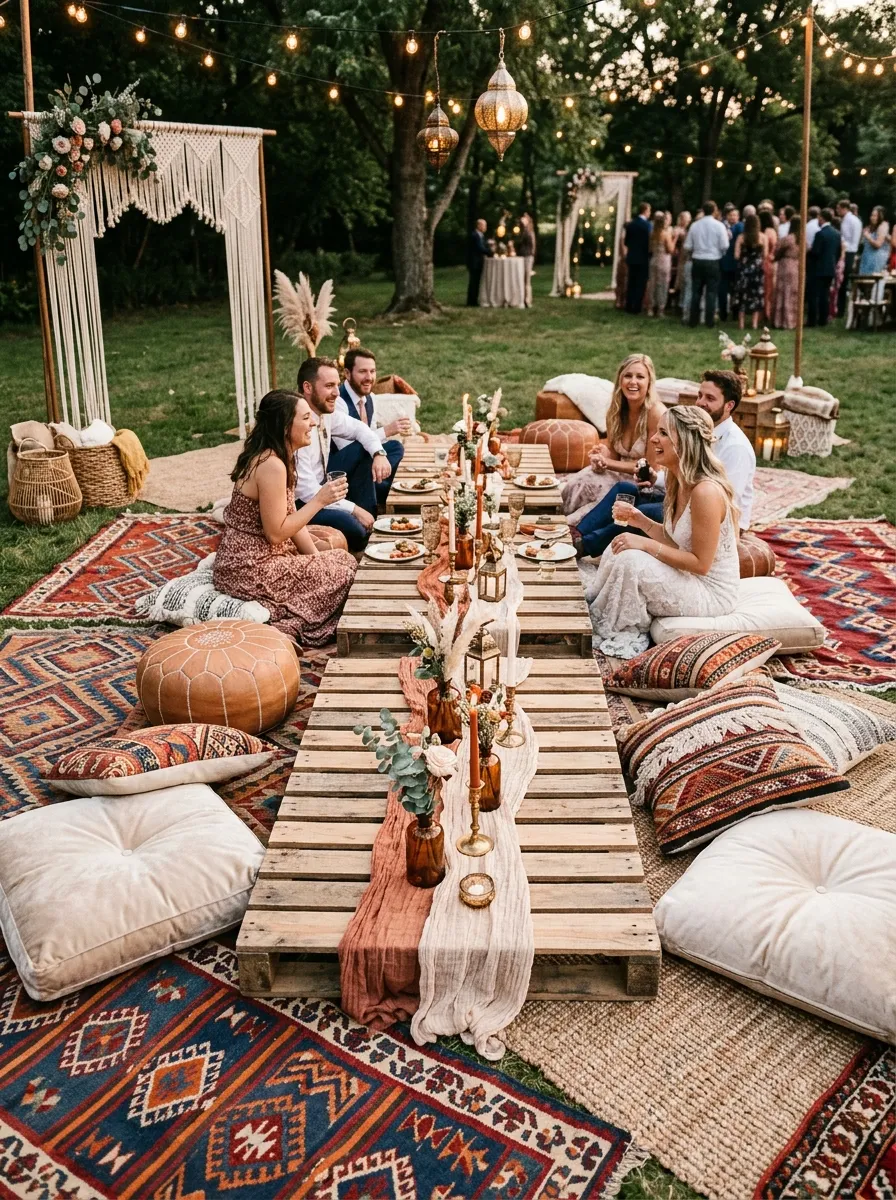
The low-seated Moroccan picnic lounge introduces an intimate, relaxed gathering zone that breaks up standard banquet seating with textured bohemian comfort. This lounge setup replaces tall commercial tables with low-profile reclaimed wood pallets or raw timber surfaces, surrounded by layered vintage rugs, floor cushions, and leather poufs. The design invites guests to converse casually during the cocktail hour or late-night dessert service, fostering an informal yet luxurious social atmosphere. Visual balance is achieved by overlapping handwoven Berber rugs, faded kilim patterns, and solid jute mats beneath low tables dressed with low brass candlesticks. Earthy terracotta, muted blush, saffron, and cream textiles provide warm visual contrast against natural wood grains. The low vertical footprint ensures clear views across the entire reception space while giving photographers dynamic, varied heights to capture throughout the party.
Start by clearing a dedicated twenty-foot by fifteen-foot zone near the reception perimeter, laying down a foundation layer of durable, flat-woven neutral jute carpets. Overlap three to five authentic vintage wool kilim rugs diagonally across the jute foundation, securing corners with double-sided carpet tape to prevent tripping hazards. Arrange two sanded, low-profile reclaimed wood pallet tables down the center, ensuring the timber tops are sealed to prevent splinters. Surround the tables with an assortment of square woven floor cushions, oversized velvet pillows, and tan leather Moroccan poufs, spacing each seating spot approximately eighteen inches apart. Run an unhemmed, crinkled gauze runner down the center of each low table, anchoring it with low ceramic bud vases and small amber tea light holders. Ensure safe clearances of at least four feet around the perimeter so guests can easily transition into and out of the seating space.
3. Idea 3: Macramé Curtain Photobooth Backdrop
Step-by-Step Guide
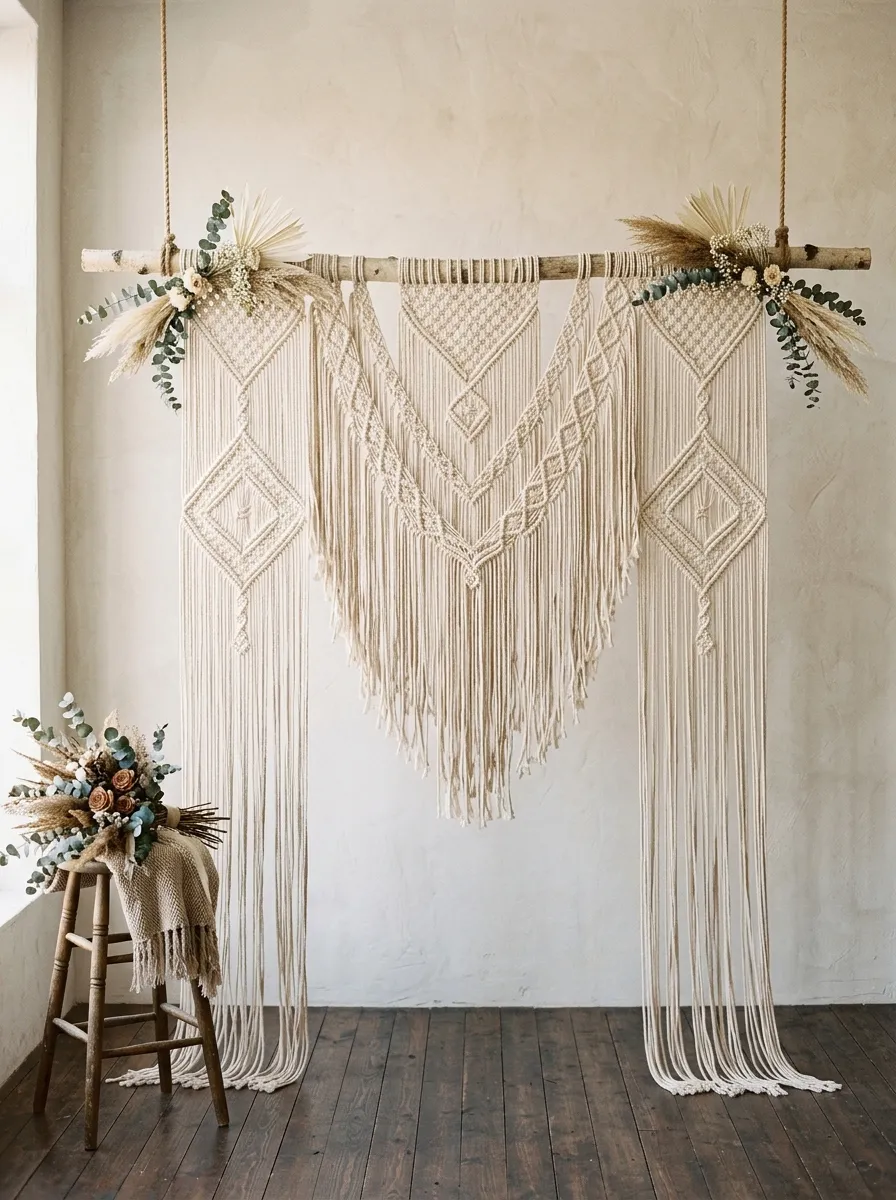
A macramé curtain backdrop delivers intricate handcrafted texture, serving as a dedicated photo station, ceremony repurpose feature, or head-table accent. This concept features a large-scale wall hanging constructed from thick, unbleached cotton cord knotted into geometric chevron patterns, flowing diamonds, and soft hanging fringe. Suspended from a natural fallen branch, copper pipe, or sanded timber dowel, the curtain introduces artisanal craftsmanship that softens industrial or minimalist venue walls. The off-white fiber absorbs warm event lighting beautifully, creating soft, natural shadows that add depth to guest portraits without producing reflective glare. The open-weave knotted design allows subtle background colors or greenery installations behind the piece to show through gently, blending the textile into the room’s overarching palette. Its durable, flexible construction makes it easy to transport and quick to install across various reception spaces.
Select an eight-foot-long natural birch branch or solid wooden dowel with a two-inch diameter, inspecting the wood to ensure it is clean, dry, and structurally sound. Cut multiple lengths of four-millimeter braided cotton cord, measuring each piece to four times the intended finished backdrop drop length. Mount the cords onto the branch using standard lark’s head knots, spacing them evenly across a six-foot central hanging span. Work repeating rows of square knots and alternating half-hitches across the upper section to construct a continuous lattice pattern of linked diamonds. Leave the lower three feet of cords unknotted, brushing the tips gently with a wide-tooth comb to create a soft, textured fringe along the bottom edge. Mount the branch securely onto a freestanding wooden frame or sturdy backdrop stand using concealed heavy-duty zip ties, dressing the top corners with clusters of dried eucalyptus.
4. Idea 4: Terracotta and Amber Tablescape
How to Make
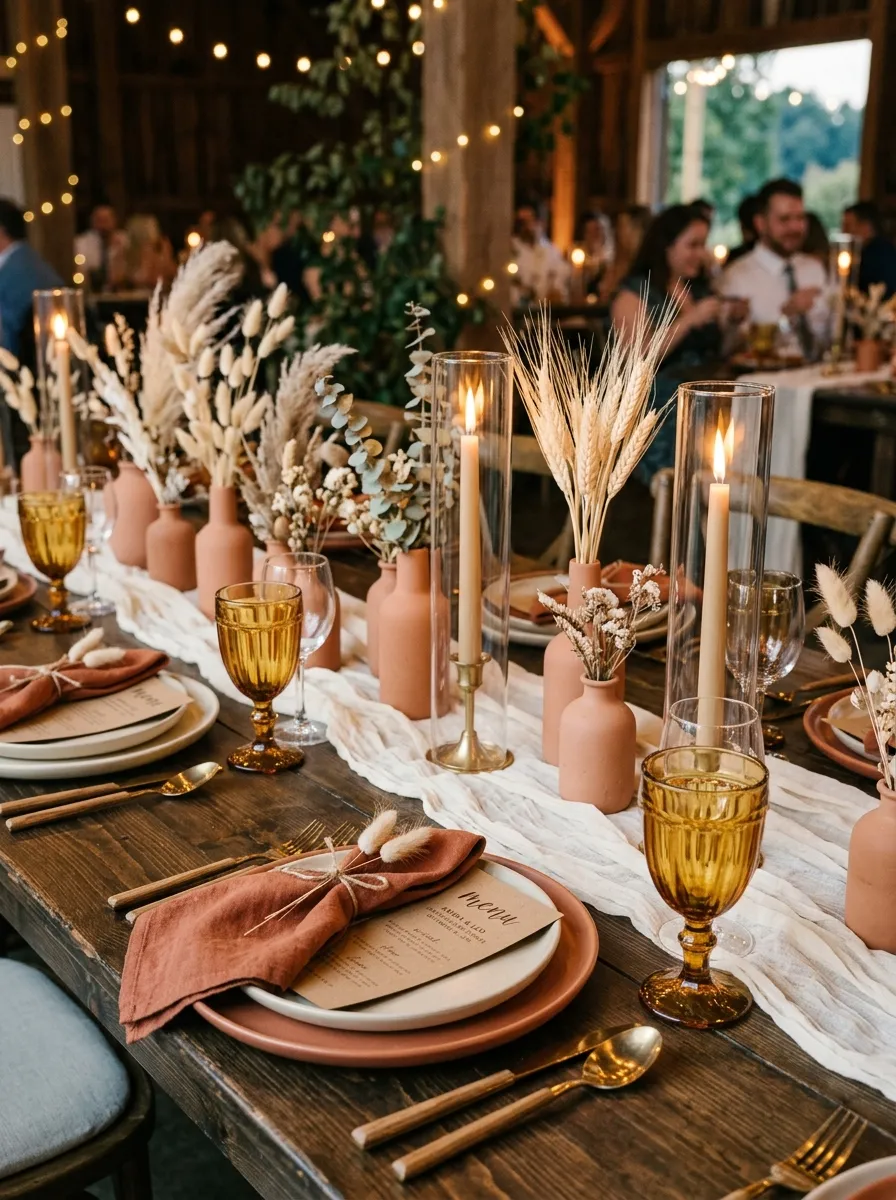
The terracotta and amber tablescape introduces warm, sun-baked desert hues to dining settings through unglazed clay vessels, ribbed colored glassware, and raw linen runners. This styling approach emphasizes organic minimalism, swapping traditional high-gloss porcelain for textured matte ceramics and vintage amber-tinted water goblets. The rich rust-orange, caramel, and ochre color palette creates a cozy visual anchor down the length of long wooden farm tables, catching low candlelight across every place setting. Low centerpiece heights allow guests to converse effortlessly across the table, eliminating visual barriers while maintaining an abundant, curated look. The pairing of unglazed clay with warm colored glass adds dynamic contrast between smooth, light-catching surfaces and earthy, porous textures. The resulting tablescape feels grounded, sophisticated, and authentic, coordinating smoothly with neutral dried floral stems and natural wood finishes.
Begin by draping an ivory, unbleached cheesecloth or raw-edged linen runner along the center of the wooden reception table, gathering the fabric into loose, natural folds. Position small, unglazed terracotta pots and fluted bud vases in alternating clusters of three along the entire length of the textile runner. Fill each vessel with small groupings of dried bunny tails, mini terracotta bunny grass, bleached wheat stems, and single focal garden roses. Place vintage amber-colored glass water goblets and ribbed wine glasses at each place setting, framing modern matte stoneware dinner plates. Insert tall, ribbed taper candles in neutral beige, terracotta, and soft honey shades into heavy ceramic candleholders, placing each inside an eight-inch clear glass chimney sleeve for flame safety. Complete the place settings with hand-torn cardstock menu cards written in minimalist typography, resting each piece over a folded cotton napkin tied with a simple jute strand.
5. Idea 5: Suspended Rattan Lantern Canopy
Execution Process
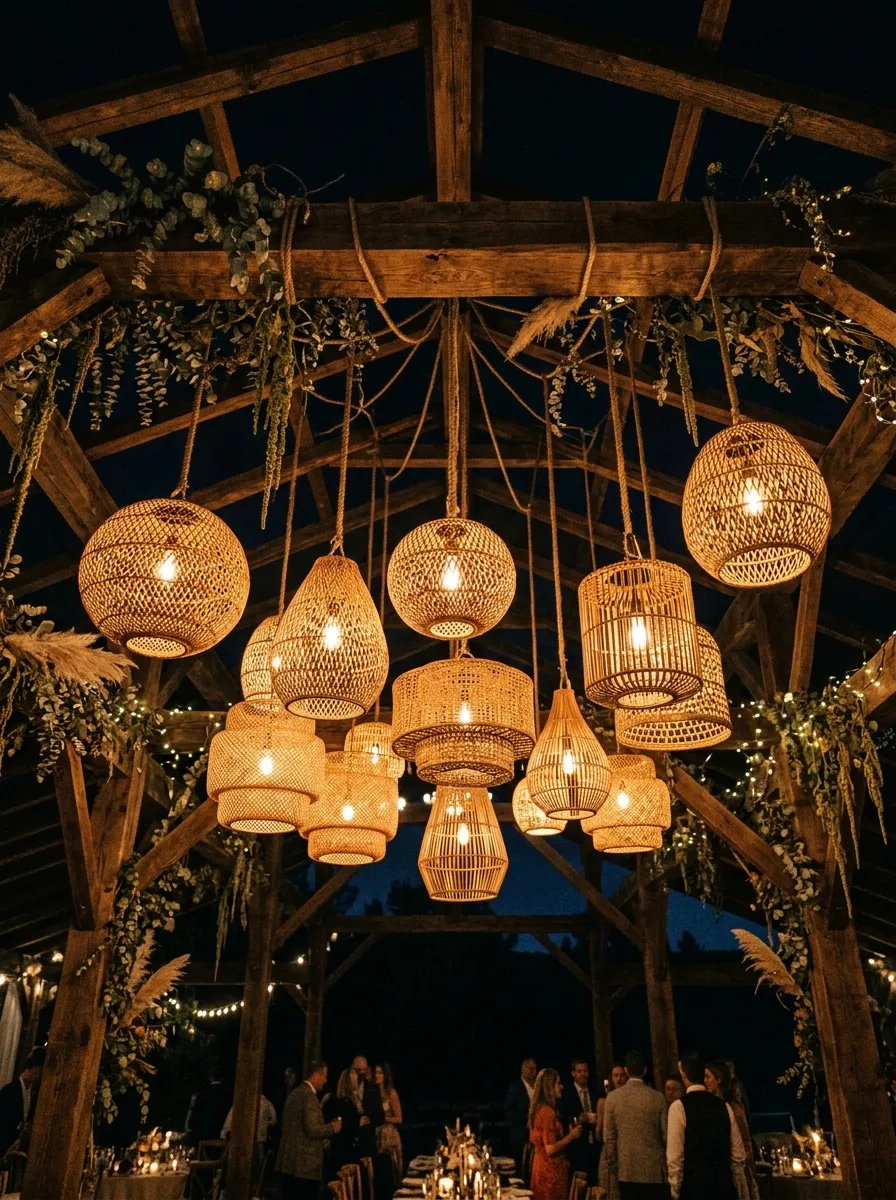
A suspended rattan lantern canopy transforms cavernous venue ceilings into an intimate, warm architectural feature using varying shapes of woven wicker and bamboo pendants. Clustered wicker shades hang at staggered drop lengths over the central dance floor, head table, or bar area, introducing rich texture overhead. The natural woven materials soften rigid industrial beams, barn rafters, or open-air tent frameworks, bringing the visual ceiling line down to create a cozy, enclosed atmosphere. When lit from within by low-wattage warm LED bulbs, the intricate basket weaves cast geometric shadows across surrounding surfaces, adding dynamic movement to the celebration. The neutral sand, honey, and caramel tones of the woven fibers tie into the bohemian furniture and tabletop styling below. This overhead installation creates an impressive visual impact that anchors the entire room and produces breathtaking wide-angle reception photographs.
Calculate the load-bearing capacity of the venue ceiling trusses or crossbeams, renting a scissor lift or sturdy scaffolding to guarantee safe, level access across the installation zone. Secure high-strength aircraft cable horizontally between support pillars to create solid mounting tracks across the overhead space. Select twelve to eighteen lightweight woven rattan, wicker, and bamboo lantern shades in alternating bell, dome, and spherical silhouettes. Wire commercial-grade warm-white LED filament pendant cords through the top apertures of each shade, using plastic safety strain reliefs to lock the wiring in position. Suspend the lanterns from the aircraft cables using steel carabiners, staggering the drops between eight and twelve feet above the finished floor level to build a dynamic, floating landscape. Thread dried smilax vines or preserved plumosa fern along the suspension cables to conceal visible wires, testing all lighting circuits thoroughly before beginning ground-level table setups.
6. Idea 6: Vintage Brass Candlestick River
Setup Method
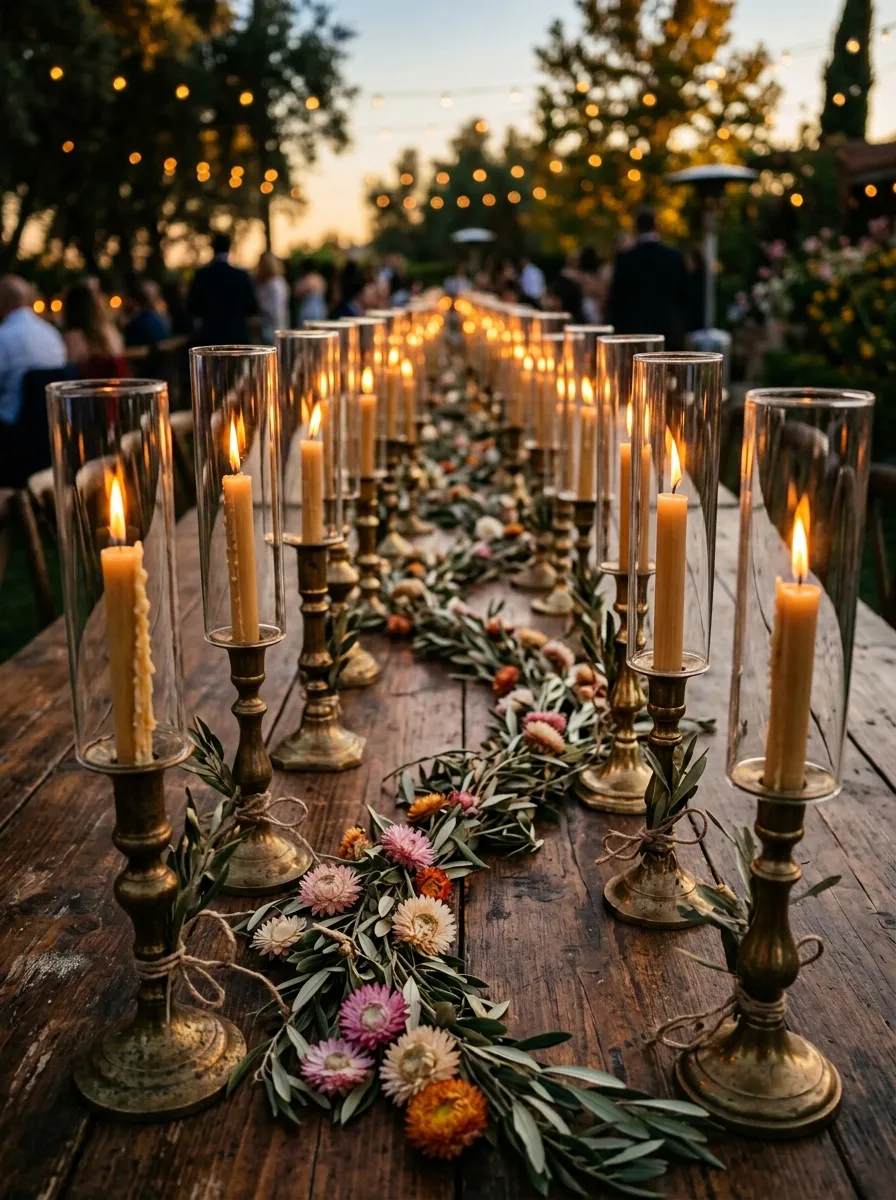
The vintage brass candlestick river uses dozens of mismatched heirloom candle holders to create an unbroken ribbon of living flame down long reception dining tables. This styling concept draws from romantic vintage bohemia, contrasting the varied patinas of antique brass with natural unrefined beeswax tapers. The repetition of slender vertical candles creates an elegant rhythm across the room, bathing dinner guests in a soft, flattering golden glow. The reflective metallic surfaces catch light from neighboring candles, bringing subtle brightness to unfinished wooden banquet tables without demanding bulky floral displays. Varying candlestick heights prevent the layout from feeling rigid or formal, preserving the organic, collected aesthetic characteristic of modern bohemian gatherings. This design works exceptionally well for evening receptions, outdoor garden dinners, and indoor warehouse settings where warm lighting establishes the foundational ambiance.
Source thirty to forty genuine vintage brass candlesticks per eight-foot banquet table, gathering heights from four to twelve inches with round, square, and hexagonal bases. Polish the brass lightly with a gentle metal cleaner, leaving natural patina in the recessed details to preserve authentic vintage character. Insert pure beeswax or dripless ivory taper candles into every socket, using melted wax drops or floral adhesive putty in the base cups to keep each candle plumb. Position the candlesticks down the center of the table in an organic, meandering S-curve pattern, clustering taller pieces toward the middle and tapering to shorter holders at the ends. Weave delicate sprigs of dried olive branch, silver dollar eucalyptus, and dried strawflowers around the brass bases, keeping foliage clear of potential drip zones. Cover every taper with an open-ended glass hurricane sleeve that extends at least two inches above the wick to satisfy venue fire codes.
7. Idea 7: Raw Timber Welcome Station
Step-by-Step Guide
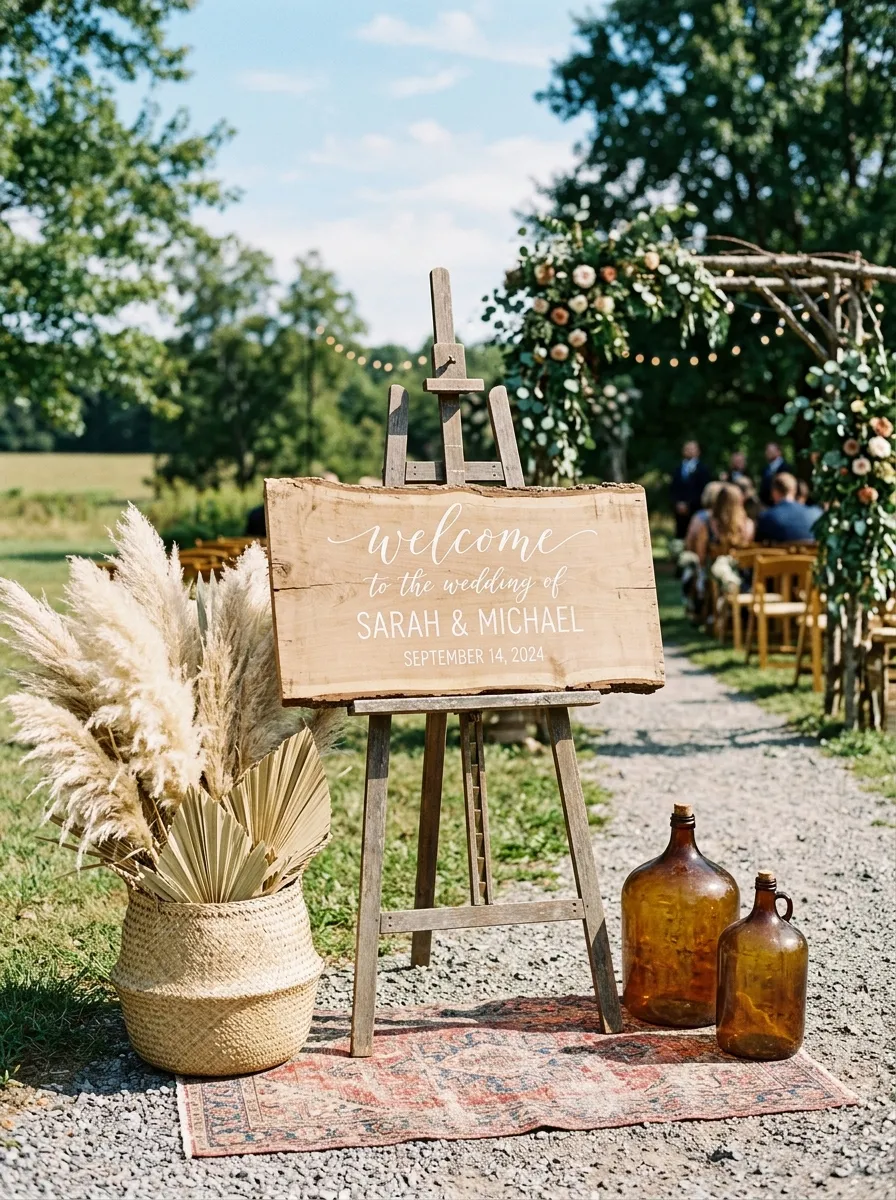
The raw timber welcome station greets guests with a curated mix of natural wood textures, hand-lettered signage, and botanical arrangements that set the tone for the reception. The display features a live-edge wooden board or framed linen canvas mounted on a sturdy timber easel, paired with vintage demijohn jugs and woven floor baskets. It serves the practical purpose of directing guests toward cocktails, seating charts, or guestbooks while introducing the event’s design language right at the entrance. The pairing of rough bark edges, smooth hand-lettered script, and delicate dried foliage provides immediate tactile contrast that captures attention. Placing the welcome feature near entry pathways creates a natural transition zone where attendees can pause, check details, and prepare for the celebration ahead. Its sturdy footprint withstands high foot traffic and outdoor breezes, maintaining clean visual balance throughout the arrival window.
Select an unfinished live-edge slab of cedar, oak, or walnut measuring approximately three feet tall by two feet wide, sanding the face smooth while leaving the bark edges intact. Apply custom hand-lettered calligraphy or crisp vinyl lettering in clean off-white or matte black ink, displaying the couple’s names, celebration date, and a warm welcome note. Mount the wood slab onto an adjustable wooden artist’s easel, securing the back brace with a concealed sandbag to maintain stability against accidental bumps. Place a large woven seagrass belly basket filled with tall pampas plumes and dried fan palms at the left base of the easel. Set two vintage amber glass demijohn jugs of differing heights on the right side, inserting single dried protea stems into their narrow necks. Lay a small vintage Turkish runner beneath the entire vignette to delineate the greeting space from the surrounding venue floor cleanly.
8. Idea 8: Repurposed Vintage Rug Aisle Runner
Execution Process
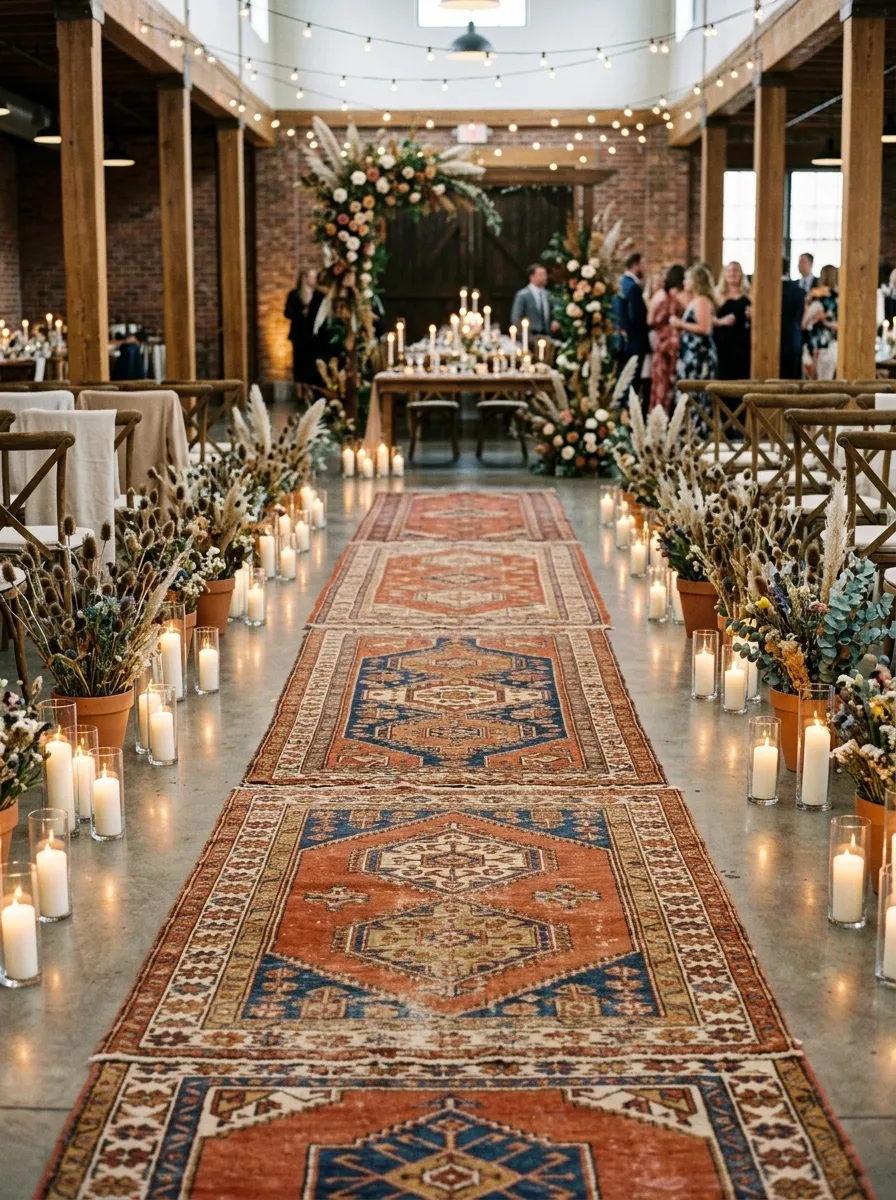
Repurposing vintage rugs into an interconnected reception runner transforms main walkways, head-table approaches, or dance floor transitions into a rich runway of historical pattern. This concept layers multiple antique Persian, Turkish, and Caucasian wool rugs end-to-end, creating an eclectic, continuous path through the reception space. The deep jewel tones, sun-faded corals, terracottas, and indigos woven into traditional carpets bring grounding color into neutral, minimalist event venues. Each carpet features unique geometric medallions and organic motifs, adding character and warmth to concrete warehouse floors, manicured lawns, or painted barn boards. The substantial weight of authentic wool rugs ensures they stay flat under heavy foot traffic, minimizing ripples during dynamic celebration entrances. This design bridges ceremony and reception aesthetics seamlessly, allowing couples to repurpose their ceremony aisle carpets directly into the evening layout to maximize value.
Collect six to ten authentic vintage wool runners with matching color palettes and widths between two and a half to three feet, inspecting all fringes and bindings for sound condition. Vacuum both sides of every rug thoroughly before transport to eliminate dust and ensure clean contact with the venue floor. Begin placement at the main reception entrance or the head-table approach, laying the longest and heaviest central carpet down first along the primary axis. Overlap subsequent rugs by six to twelve inches over the ends of preceding pieces, alternating geometric medallion patterns with subtle floral motifs to maintain visual balance. Secure every overlapping seam and the outer perimeter edges directly to the floor using heavy-duty indoor carpet tape to prevent shifting and tripping. Dress the outer margins of the rug path with low ceramic vessels containing dried thistle, pampas grass, and pillar candles enclosed within protective glass cylinders.
9. Idea 9: Boho Cake Vignette with Floating Shelves
How to Make
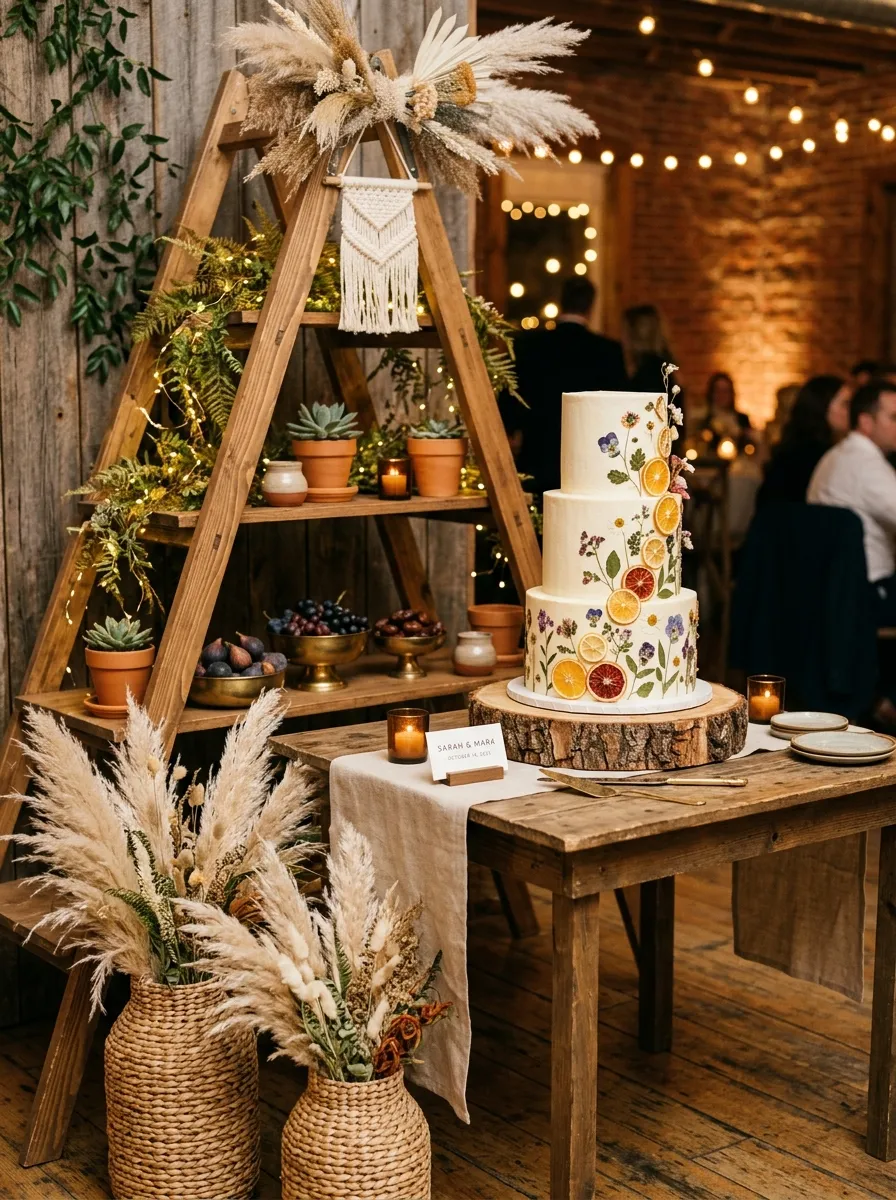
A bohemian dessert station with floating timber displays turns the wedding cake into a sculptural focal point rather than a simple food service table. This idea positions the cake upon an organic wooden pedestal, framed by freestanding wooden ladders or floating shelves styled with dried botanicals, vintage brass props, and pillar candles. The layered arrangement creates vertical interest, drawing eyes upward and transforming a simple culinary dessert into an architectural display. Textural contrasts between smooth cake frosting, rough wood grains, soft dried palms, and shiny brass details elevate the presentation into an engaging experience for guests. The open, multi-tiered structure also accommodates cupcakes, artisanal favor boxes, or floral arrangements alongside the centerpiece dessert. This dedicated station breaks up uniform table rows across the room, functioning as an artistic visual break within the broader reception layout.
Assemble a sturdy, sanded timber display hutch or a set of open wooden A-frame display shelves, anchoring the back frame firmly to prevent wobble. Place a solid, live-edge tree slice cake stand with a sealed, food-safe surface on the central shelf at standard viewing height. Position the wedding cake onto the pedestal, decorating the tiers with edible dried petals, dehydrated citrus wheels, and delicate bunny tail sprigs. Style the surrounding upper and lower shelves with alternating vignettes of small potted succulents, unglazed clay bud vases, and vintage brass bowls filled with fresh figs and grapes. Weave a strand of warm LED fairy lights hidden within preserved plumosa fern along the structural wooden uprights, concealing battery packs beneath folded linen cloths. Flank the base of the shelving unit with two floor-standing woven baskets filled with tall pampas grass plumes to tie the dessert station into the surrounding decor.
10. Idea 10: Rattan Peacock Chair Sweetheart Table
Setup Method
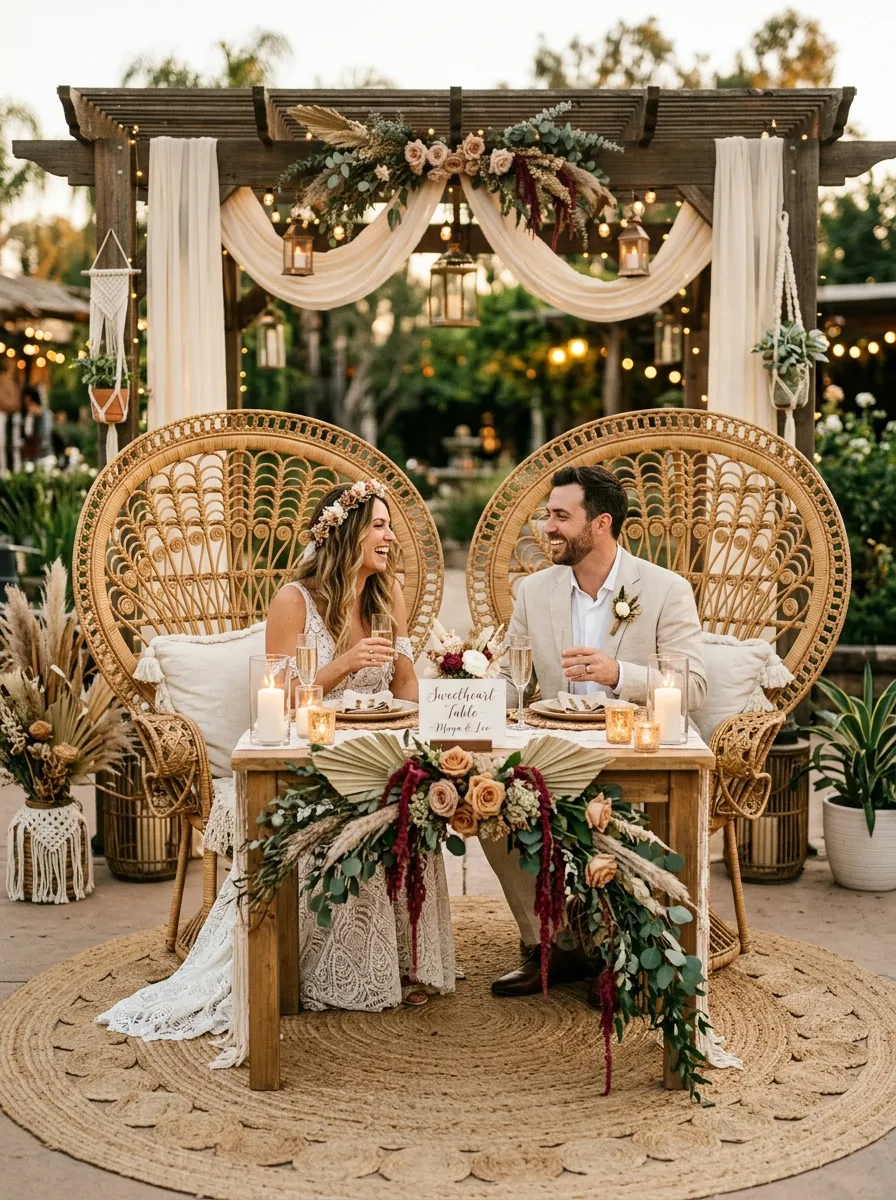
The rattan peacock chair sweetheart table pairs historic bohemian furniture design with lush organic floral styling to create a focal point for the newlyweds. The centerpiece of this design is a pair of high-backed vintage rattan peacock chairs, famous for their intricate woven fan backs and regal silhouette. Positioned behind a low, unadorned natural wood table, the chairs frame the couple with intricate woven patterns that stand out cleanly in wide reception photography. The open-weave wicker lets light pass through, keeping the large chairs from feeling visually heavy or overwhelming the intimate table setting. The warm honey-toned rattan coordinates effortlessly with natural floral elements, dried palm installations, and soft textile runners used across the reception. This dedicated seating zone honors the couple with a comfortable, stylish perch from which to enjoy their celebration while surrounded by bespoke handcrafted artistry.
Place a four-foot natural wood sweetheart table on a round woven jute rug, positioning the setup with an unobstructed sightline toward guest seating and the dance floor. Position two vintage high-backed rattan peacock chairs behind the table, adding neutral cream linen seat cushions for ergonomic comfort during the multi-course dinner. Drape a loose, raw-edged terracotta or champagne linen runner across the tabletop, letting the fabric pool softly onto the floor at both ends. Fasten a low, crescent-shaped floral spray across the front rim of the table using floral foam cages secured with protective non-marking table clamps. Pack the floral base with dried spear palms, quicksand roses, dried pampas plumes, and hanging amaranthus that cascades toward the rug below. Place two personalized stoneware plates, vintage mother-of-pearl cutlery, and custom linen napkins on the table to complete the curated sweetheart display.
Common Beginner Mistakes and How to Avoid Them
One of the most common mistakes in DIY bohemian wedding styling is ignoring scale and physical balance, which can lead to sparse, disorganized displays. Beginners often buy small bunches of pampas grass or mini bud vases that look completely lost when placed inside expansive reception venues with tall ceilings. To avoid this, always measure venue dimensions beforehand and create dense, layered clusters rather than scattering individual stems thinly across wide surfaces. Another frequent error is forgetting practical guest comfort, such as using rough burlap runners that scratch bare forearms or packing table centers so full that guests cannot see across to converse. Keep tabletop floral arrangements either below twelve inches or elevated well above eye level on slender metal risers to keep sightlines clear. Additionally, failing to secure tall arrangements against drafts or foot traffic poses serious safety risks; always weigh down upright floral bases with hidden sandbags or steel plates. Finally, check local fire regulations regarding open tapers; unshielded candles can easily catch feathery pampas grass, so always enclose live flames within glass hurricane sleeves that extend safely past the wick.
Practical Tips for Better Results
Achieving a cohesive, professional bohemian wedding design requires paying close attention to tactile contrasts, tonal palettes, and deliberate material repetition throughout the event space. Instead of using dozens of competing colors, select a focused palette of three to four primary shades—such as warm ivory, sand, terracotta, and soft dusty rose—punctuated by natural timber and brass accents. This disciplined color control ensures that diverse textures, from chunky macramé knots to smooth amber glassware, feel unified rather than chaotic across different zones. When building floral arrangements, cut your stems at staggered heights and layer from back to front, using large palms as a backdrop before adding delicate grasses and focal flowers to create real depth. Save valuable time during wedding morning setup by tying individual napkin wraps and assembling dry floral groupings into durable, pre-taped foam cages days ahead of the event. Spray all dried grasses and pampas plumes thoroughly with firm-hold hairspray outdoors before transport to lock shedding seeds in place under indoor ventilation fans. Finally, incorporate dimmable warm-toned lighting across all reception fixtures, as amber bulbs enhance natural wood grains and earthy textiles far better than cool, bright lights.
Styling, Presentation, or Organization Ideas
Organizing your reception styling by distinct functional zones creates an intuitive, visually engaging experience that encourages guests to explore the celebration space naturally. Begin by designing a high-impact welcome zone near the entrance, using a raw timber sign and a patterned runner to introduce the bohemian aesthetic immediately upon arrival. Carry that visual language into the cocktail hour with a low-seated lounge area, arranging woven rugs, leather poufs, and rattan lanterns into cozy, circular conversation pods. For the main dining space, alternate between two complementary tabletop layouts—such as long wooden farm tables with trailing runners alongside round tables featuring ceramic centerpieces—to add dynamic rhythm across the room. Keep communal stations like the guestbook, dessert display, and photo booth visually connected by repeating signature materials, such as vintage brass accents, unglazed terracotta vessels, and pampas grass sprays. Use clear, unified signage throughout every area, opting for frosted acrylic or handmade torn-edge deckle paper framed in light natural wood to keep typography consistent. When styling dessert tables, use varying platform heights to showcase artisanal baked goods alongside natural floral vignettes, turning the food display into an artistic installation that doubles as decor.
Budget or Time Planning
Managing your budget and preparation schedule efficiently ensures your bohemian wedding reception comes together smoothly without unexpected expenses or last-minute installation stress. Start by auditing household items, thrift shops, and online vintage marketplaces to source amber glassware, brass candlesticks, and woven baskets at a fraction of standard event rental rates. Buying preserved pampas plumes, bunny tails, and dried palms in bulk months ahead saves significant money, as these durable botanicals do not require refrigerated storage or last-minute hydration like fresh cuts. Map out a comprehensive, week-by-week DIY timeline that schedules cord knotting, signage lettering, and vessel cleaning during early planning phases, leaving the final week clear for packing and vehicle loading. Divide your decor inventory into labeled, transparent storage bins organized strictly by reception zone, including an emergency styling kit stocked with floral wire, clear tape, cable ties, command hooks, and lighters. On setup day, designate specific tasks to helper teams—assigning one crew to tabletop textiles and another to overhead lantern rigging—to complete your transformation efficiently. This structured approach avoids logistical bottlenecks and ensures every handcrafted detail is styled safely, securely, and beautifully well before the first guests arrive.
Creative Expansion and Advanced Inspiration
Once you master foundational bohemian styling techniques, you can expand your design by weaving in advanced architectural elements, mixed-media accents, and innovative lighting techniques. Experiment with hanging geometric floral chandeliers constructed from welded brass hexagons or nested rattan spheres, suspending them directly above dance floors or banquet runs to create dramatic overhead centerpieces. Integrate custom neon typography—displaying a meaningful quote, lyric, or your shared surname—mounted directly over a textured pampas grass wall to blend modern industrial styling with soft botanical fibers. You can also explore richer color palettes by introducing deep jewel tones like midnight indigo, forest emerald, or burnished copper alongside traditional neutral sand and terracotta shades for an opulent mood. Incorporate artisanal ceramic details, such as custom hand-thrown stoneware plates or personalized ceramic place cards stamped with delicate botanical impressions, which guests can take home as memorable celebration keepsakes. Try adding delicate water features, such as low stone bowls with floating blossoms and submerged river stones near lounge areas, to introduce soothing ambient sounds to outdoor garden venues. These thoughtful, creative touches elevate standard boho decor into a bespoke, multi-sensory environment that reflects your shared personal story with timeless artistic flair.